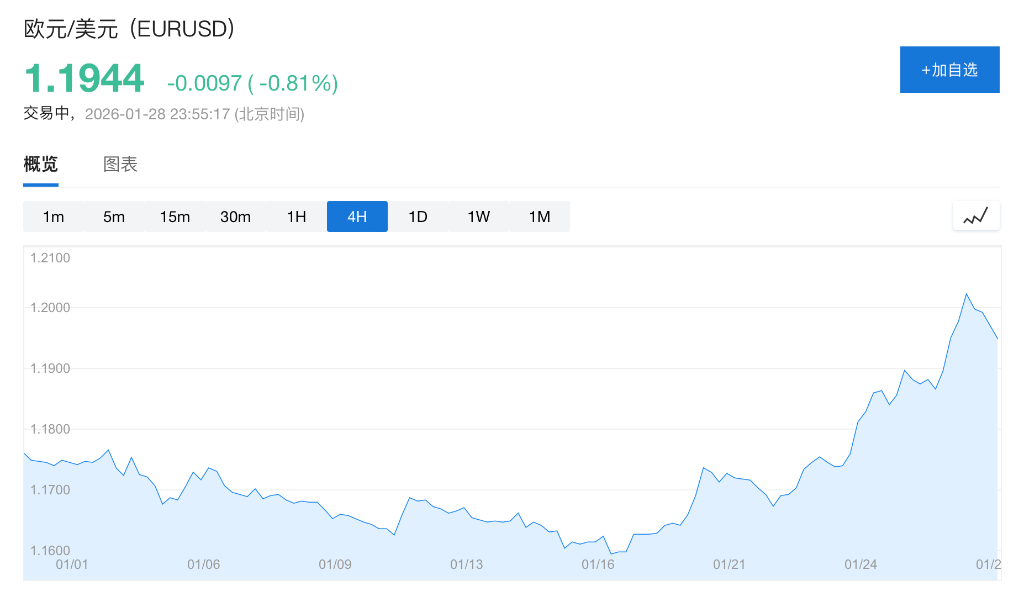
欧元升值

Search documents
欧洲央行管委Demarco称欧元若达到1.25美元 “也并非世界末日”
Xin Lang Cai Jing· 2026-02-19 15:06
Demarco还表示,鉴于美国近期事件,投资者可能正调整投资组合以减少美元配置。"若希望欧元在国 际舞台发挥更强作用,一定程度的升值可能是必然结果。"他如是说。 欧洲央行管理委员会成员Alexander Demarco向Econostream表示,若欧元进一步升值至1.20美元以上, 欧洲央行也不必过度担忧。 多数欧洲央行官员淡化了欧元近期升值对通胀的潜在压力。副行长Luis de Guindos去年七月曾表示, 1.20美元的汇率水平"完全可以接受",但更高汇率"将复杂得多"。 Demarco在周四发表的采访中称,"过往研究表明,均衡汇率可能在1.20至1.25美元左右,当前汇率距该 水平仍有一定距离。即便达到该水平,也并非世界末日。" 责任编辑:陈钰嘉 Demarco还表示,鉴于美国近期事件,投资者可能正调整投资组合以减少美元配置。"若希望欧元在国 际舞台发挥更强作用,一定程度的升值可能是必然结果。"他如是说。 Demarco在周四发表的采访中称,"过往研究表明,均衡汇率可能在1.20至1.25美元左右,当前汇率距该 水平仍有一定距离。即便达到该水平,也并非世界末日。" 多数欧洲央行官员淡化了欧元近期升值 ...
欧洲央行管委:欧元升值对经济影响仍有待观察 当前无需采取行动
智通财经网· 2026-02-13 09:00
不过,他确实对经济持续疲软导致企业和消费者更难应对表示担忧,"我非常担心的是,欧元在过去一 年走强,不是因为欧元区经济走强,而是因为不确定性增加、美元走弱"。 与美国和中国相比,欧洲的问题是竞争力低下,如果这个问题得到解决,也会提高经济对货币走强的容 忍度。在拉加德及她之前的历任欧洲央行行长多年敦促下,欧洲各国元首终于逐步采取行动。他们在周 四讨论了加强欧盟经济基础的路线图。 卡扎克斯还表示,欧洲央行的货币政策设定目前是合适的,通胀前景的风险"可能仍然平衡"。他补充 道:"我们也完全有能力在必要时向任何方向行动,但现在不是时候。"欧洲央行上周将存款利率维持在 2%不变,经济学家和交易员均预期短期内不会有所动作。 智通财经APP获悉,欧洲央行管理委员会成员、拉脱维亚央行行长马丁斯·卡扎克斯表示,欧洲央行仍 在观察2025年开始的欧元升值对经济造成多大程度的影响。卡扎克斯在接受采访时称,根据估算,汇率 变动传导大约需要12个月,"我们可能会在晚春时节看到去年欧元升值的全面影响"。 2025年上半年,欧元升值14%,原因是美国总统特朗普在贸易关税问题上反复无常,削弱了市场对美元 的信心,并加剧了全球不确定性。今年早 ...
欧元走强 欧央行维持利率不变
Jin Tou Wang· 2026-02-09 13:23
Group 1 - The euro has appreciated significantly against both the Chinese yuan and the US dollar, reaching multi-year highs, driven by a combination of internal and external factors affecting its short-term and long-term outlook [1] - The European Central Bank (ECB) decided to maintain key interest rates unchanged, reflecting a balance between ongoing inflation decline and economic resilience, with the current inflation rate in the eurozone at low levels [1] - ECB President Lagarde emphasized the need to monitor wage pressures that could delay the decline in inflation, indicating that the current monetary policy is suitable for the existing economic conditions [1] Group 2 - The appreciation of the euro has negatively impacted eurozone exports and economic growth, particularly affecting core countries where manufacturing export competitiveness has declined [2] - Despite some resilience in the eurozone economy, challenges remain due to the euro's appreciation, geopolitical tensions, and trade uncertainties, with the EU predicting moderate growth and downward pressure in the next two years [2] - Strong domestic demand in the eurozone, including increased consumption and improved employment, has partially offset export drag, supported by fiscal expansion and increased defense spending [2]
欧元走强与关税阴影下,欧洲央行连续第五次按兵不动
Sou Hu Cai Jing· 2026-02-05 13:50
欧洲央行在声明中未就下一步政策行动提供指引,重申将依据未来数据作出判断。央行表示,尽管全球 环境充满挑战,欧元区经济仍展现出一定韧性,但前景依然高度不确定,尤其受到贸易政策不明朗和地 缘政治紧张局势的影响。 官员们正密切关注欧元升值对出口竞争力和通胀前景的影响。随着关税风险再度浮现,外部环境的不确 定性正在加大,可能对经济增长和物价形成双重压力。 欧洲央行周四决定将存款利率维持在2%不变,这是自去年6月以来连续第五次暂停降息。货币政策制定 者正在评估欧元大幅升值和特朗普关税威胁重现所带来的经济影响。 根据声明,欧元区欧洲央行存款便利利率现为2%,边际贷款利率2.4%,主要再融资利率2.15%,均符合 预期和前值。 欧元区1月通胀率降至1.7%,低于欧洲央行2%的目标。据欧盟统计局周三公布的数据,这一降幅主要得 益于能源成本下降和欧元走强。核心通胀率从去年12月的2.3%降至2.2%,创2021年10月以来最低水 平。 欧洲央行预计2026年通胀率平均为1.9%,而2025年为2.1%。尽管通胀暂时低于目标,但该行认为这一 现象只是暂时的。 野村分析师Andrzej Szczepaniak表示,他预计欧洲央行下 ...
欧洲央行利率决议今晚来袭!料连续第五次按兵不动 地缘局势动荡及强势欧元成最大烦恼
Zhi Tong Cai Jing· 2026-02-05 06:53
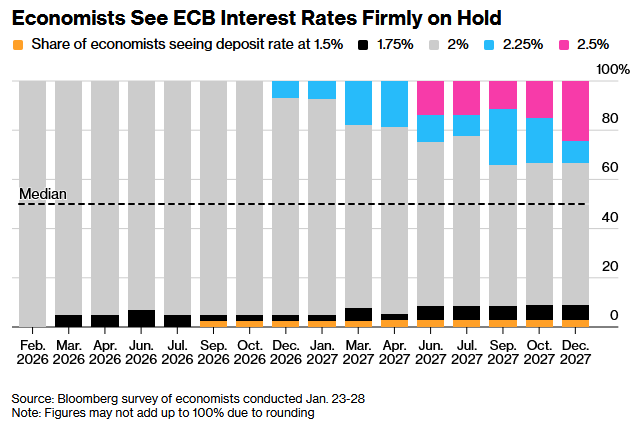
欧洲央行将于北京时间周四21:15公布最新利率决议。尽管近期全球紧张局势加剧且欧元走强,但欧洲 央行判断这些因素尚未使经济偏离轨道,并预计将在此次政策会议上连续第五次维持利率不变。对经济 学家的调查显示,所有受访者都预计欧洲央行周四将把存款机制利率维持在2%不变。与此同时,分析 师和市场预计,欧洲央行将维持该利率直至明年年底,且2026年加息的可能性正在降低。 欧洲央行的政策制定者正在消化2026年初纷繁复杂的一系列事件,包括美国当局对美联储独立性的威 胁、强行抓捕委内瑞拉总统马杜罗、以及美国总统特朗普关于加征关税关税的最新威胁——此次矛头指 向格陵兰。其结果是美元走弱,并一度将欧元推升至2021年以来的最高水平。在欧洲经济看似站稳脚跟 之际,这可能给该地区的出口商带来麻烦,并将通胀率进一步拉低至欧洲央行2%的目标水平以下,尽 管油价和天然气近期的价格上涨正在抵消这一风险。 尽管投资者也预计欧洲央行本次会议上不会调整利率,但他们认为今年再次降息的可能性更大,同时市 场定价显示未来更长时间后加息的可能性更高。 由于没有最新的经济预测来帮助指引方向,欧洲央行行长拉加德可能会在利率决议公布后的新闻发布会 上保持政策 ...

通胀降温趋势确立 欧洲央行观望立场强化
Xin Hua Cai Jing· 2026-02-04 14:03
Group 1 - Eurozone inflation has decreased to its lowest level in over a year, with January's rate at 1.7%, indicating a trend of cooling inflation [1] - Core inflation, excluding volatile items like energy and food, has dropped to 2.2%, suggesting persistent weakness in inflation [1] - France's inflation rate fell to a five-year low of 0.4%, while Italy's rate decreased to 1.0%, indicating a general reduction in price pressures across the Eurozone [1] Group 2 - The European Central Bank (ECB) is expected to maintain interest rates unchanged in its upcoming meeting, with no immediate action anticipated due to the current inflation data [1][2] - Analysts suggest that the ECB may express concerns about the recent strength of the euro, which could impact inflation expectations [2][3] - The euro's appreciation against the dollar is partly attributed to uncertainties surrounding U.S. policies and concerns over the independence of the Federal Reserve [2]
美元走弱推升欧元 欧洲经济复苏承压
Xin Lang Cai Jing· 2026-02-01 10:02
凯投宏观欧元区副首席经济学家杰克·艾伦-雷诺兹说,欧元升值直接削弱欧洲制造业出口竞争力,是当 前影响欧洲经济复苏的重要因素。 在对出口依赖度较高的欧洲国家,欧元升值的影响更加明显。德国长期以出口拉动经济增长,制造业在 经济结构中占据核心地位。德国总理默茨指出,美元走弱已对德国产品出口带来显著压力,使得企业在 国际市场上的价格竞争力下降。德国批发和外贸协会主席迪尔克·扬杜拉说,中型企业对冲能力有限, 更难应对汇率波动带来的成本上升。近年来,德国经济在经历连续两年衰退后仅出现有限回升,在外部 需求承压和国际竞争加剧背景下,欧元升值进一步压缩企业盈利空间。 美元疲软也通过金融渠道对欧元区经济形成潜在压力。德国联邦金融监管局局长马克·布兰森表示,金 融市场可能质疑美元作为全球储备货币的地位,而欧洲银行依赖美元短期再融资偿还债务的机制在市场 波动下或出现"流动性瓶颈"。 欧洲央行货币政策正面临新的考验。意大利欧洲政策制定研究所分析认为,欧洲长期利率高于名义经济 增速,欧洲央行加快缩减资产负债表,而美联储缩表放缓,使美元相对宽松,从而推动资金流入欧元区 市场,加剧欧元升值。欧洲央行行长拉加德指出,由于欧元债券和股票市场规 ...
综述丨美元走弱推升欧元 欧洲经济复苏承压
Sou Hu Cai Jing· 2026-02-01 08:10
凯投宏观欧元区副首席经济学家杰克·艾伦-雷诺兹说,欧元升值直接削弱欧洲制造业出口竞争力,是当 前影响欧洲经济复苏的重要因素。 新华社贝尔格莱德2月1日电 综述|美元走弱推升欧元欧洲经济复苏承压 在对出口依赖度较高的欧洲国家,欧元升值的影响更加明显。德国长期以出口拉动经济增长,制造业在 经济结构中占据核心地位。德国总理默茨指出,美元走弱已对德国产品出口带来显著压力,使得企业在 国际市场上的价格竞争力下降。德国批发和外贸协会主席迪尔克·扬杜拉说,中型企业对冲能力有限, 更难应对汇率波动带来的成本上升。近年来,德国经济在经历连续两年衰退后仅出现有限回升,在外部 需求承压和国际竞争加剧背景下,欧元升值进一步压缩企业盈利空间。 新华社记者金丹依 美元疲软也通过金融渠道对欧元区经济形成潜在压力。德国联邦金融监管局局长马克·布兰森表示,金 融市场可能质疑美元作为全球储备货币的地位,而欧洲银行依赖美元短期再融资偿还债务的机制在市场 波动下或出现"流动性瓶颈"。 近期美元持续走弱,引发欧洲经济体广泛关注。截至1月31日,欧元对美元汇率为1比1.19,维持在高位 附近震荡,此前1月27日曾一度突破1比1.20,为2021年6月以 ...
美元走弱推升欧元 欧洲经济复苏承压
Xin Hua She· 2026-02-01 05:34
新华社贝尔格莱德2月1日电综述|美元走弱推升欧元欧洲经济复苏承压 多位欧洲央行政策制定者对欧元快速升值表达担忧。欧洲央行副行长路易斯·德金多斯指出,若汇率进 一步升高,政策操作将面临更大复杂性。法国央行行长弗朗索瓦·维勒鲁瓦·德加约表示,美元走软反映 出市场对美国经济政策信心下降,但欧元升值可能进一步压低物价增长,这在当前通胀水平已经低于欧 洲央行2%目标的情况下尤为不利。奥地利央行行长马丁·科赫尔认为,欧元升值可能迫使欧洲央行重新 评估货币政策立场,应对经济增长和价格稳定的双重压力。 欧洲央行货币政策正面临新的考验。意大利欧洲政策制定研究所分析认为,欧洲长期利率高于名义经济 增速,欧洲央行加快缩减资产负债表,而美联储缩表放缓,使美元相对宽松,从而推动资金流入欧元区 市场,加剧欧元升值。欧洲央行行长拉加德指出,由于欧元债券和股票市场规模有限,金融体系难以完 全吸收短期资金流入,进一步加大欧元升值压力。 欧元升值已对欧洲出口和经济增长产生实质性影响。欧盟统计局1月发布的报告数据显示,2025年11月 欧元区对世界其他国家和地区的出口额约为2402亿欧元,同比下降3.4%,贸易顺差从2024年11月的154 亿欧 ...
欧元升破1.20关口创五年新高,看涨狂潮令欧央行“左右为难”
Hua Er Jie Jian Wen· 2026-01-28 17:03
欧元近期持续走强,已突破1.20美元心理关口,创下2021年以来新高。此轮主要受美元走弱推动的升势,正将欧洲央行置于一个棘手的政策困 境。 投资者加码看涨押注 据熟悉交易情况的外汇交易员透露,宏观投资者与对冲基金本周已显著增持看涨欧元的期权头寸。存管信托与结算公司数据显示,过去一周交易 的欧元期权中,约十分之一的目标是押注欧元在6月底前升破1.25美元。 荷兰国际集团外汇策略主管Chris Turner指出: 欧元的快速升值将通过压低进口成本来抑制通胀,这直接冲击了欧洲央行维持物价稳定的核心任务基础,迫使决策者在矛盾的目标间进行权衡: 是因汇率对通胀的压制效应而考虑转向宽松,还是为确保持久的价格稳定而坚持现有紧缩立场,同时承受本币过度走强给经济带来的额外压力。 市场情绪明显倾向于继续看涨欧元。期权市场活动活跃,短期押注达到数月来的高位,部分长期合约甚至押注欧元将在6月底前升至1.25美元水 平。 "欧元走强是威胁欧洲央行中性政策前景的因素之一。近期的价格走势意味着,鸽派决策者可能有理由担忧,更强势的欧元或将导致通 胀率无法达到目标区间的下限。" 法国农业信贷银行外汇策略主管瓦伦丁·马里诺夫指出,未来走势的关键 ...