
硬折扣模式

Search documents
美团快乐猴3店齐开,进入商业模式验证阶段
Xin Lang Cai Jing· 2026-03-28 13:38
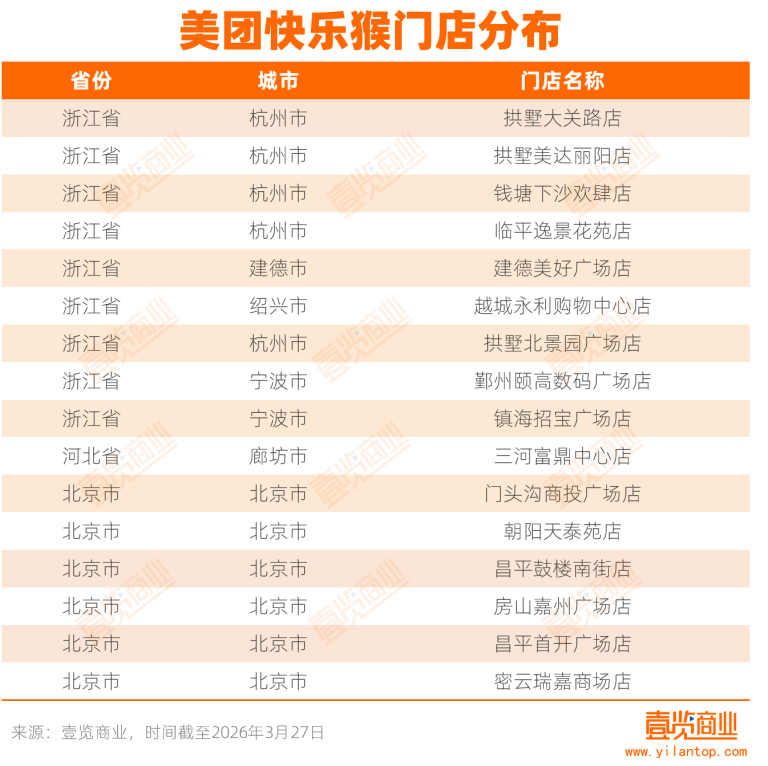
Core Viewpoint - Meituan is accelerating its expansion in the hard discount sector with the opening of three new stores in Ningbo and Beijing, bringing the total to at least 16 stores nationwide, indicating a significant step in its retail strategy [1][2]. Group 1: Store Expansion - Meituan's "Happy Monkey" brand has officially entered the Ningbo market with the opening of three new stores, increasing its total to at least 16 operational stores [1]. - The distribution of these stores shows a strong presence in Zhejiang Province, with 9 stores, followed by 6 in Beijing and 1 in Hebei [1][2]. - The brand's first store opened in Hangzhou on August 29, 2025, and has since expanded to cover six cities in East and North China within seven months [2]. Group 2: Market Strategy - Happy Monkey is adopting a "high-quality low-price" hard discount model, operating entirely under Meituan's control, which ensures consistency in product quality and operational standards [2]. - The brand is also making significant moves into the South China market, with recruitment for various positions indicating a systematic approach to expansion [3][6]. - The first store in Guangdong is set to open in April, with additional locations in Guangzhou also planned for the same month [6]. Group 3: Competitive Landscape - The expansion of Happy Monkey is part of a broader trend where hard discount supermarkets are increasingly competing across regions, with brands like Aoleqi and Superbox also expanding their footprints [8][9]. - As of March 27, 2026, Aoleqi has 100 stores, Superbox has 437, and Meituan's Happy Monkey has 16, highlighting the competitive dynamics in the market [8]. - The ongoing expansion efforts by various brands suggest a shift in market dynamics, with increased competition likely leading to better products and prices for consumers [9].


万辰集团(300972):门店数量快速增加,盈利表现亮眼
HUAXI Securities· 2026-03-23 07:49
Investment Rating - The investment rating for the company is "Accumulate" [1] Core Insights - The company achieved a revenue of 51.459 billion yuan in 2025, representing a year-on-year increase of 59.17%, and a net profit of 1.345 billion yuan, up 358.09% year-on-year [2] - The total number of stores exceeded 18,000, with a net increase of 4,118 stores compared to the end of 2024, indicating significant expansion and operational efficiency [2] - The average revenue per store in 2025 was 3.13 million yuan, showing a decline of 6.9% year-on-year, but the profitability is gradually recovering [2] - The company plans to distribute a cash dividend of 8.50 yuan per 10 shares to all shareholders [2] Summary by Sections Financial Performance - The company’s gross profit margin improved to 12.4% in 2025, with a net profit margin of 4.98%, an increase of 2.28 percentage points year-on-year [4] - The net profit for the company's volume business reached 2.533 billion yuan in 2025, a year-on-year increase of 195% [4] - The company forecasts revenue for 2026 to be 64.481 billion yuan, with an EPS of 10.89 yuan, reflecting a strong growth trajectory [7] Business Expansion - The company’s store count reached 18,314, covering all 30 provinces, autonomous regions, and municipalities in China, with a focus on expanding in key regions [2] - The company is enhancing its competitive advantage by deepening its volume business and expanding its product matrix to include non-snack essentials [5] - The company is also pursuing an H-share listing to enhance its international strategy and plans a mid-term dividend payout of up to 50% [6] Market Position - The company has become the first snack chain brand in the industry to exceed 10,000 stores, leading in GMV [4] - The company is leveraging its supply chain efficiency and digital systems to improve profitability and reduce costs [4] - The registered member count is nearing 190 million, with over 140 million active transaction members, indicating strong customer loyalty [2]
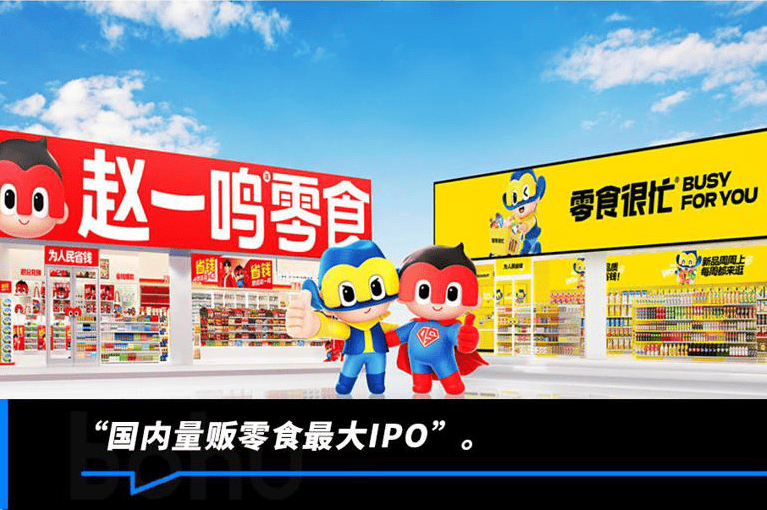
零食很忙港股上市:社交电商+硬折扣突围
Sou Hu Cai Jing· 2026-02-04 06:33
Group 1 - The core company "Mingming Hen Mang" achieved a market capitalization exceeding 80 billion HKD after its listing, becoming the first stock in the Hong Kong snack retail sector [1] - The business model focuses on "earning small profits through scale and saving big costs through efficiency," relying on a franchise model without charging franchise or management fees [3] - The company operates 21,000 stores nationwide, leveraging bulk purchasing to achieve profitability despite low margins on individual products [3] Group 2 - The supply chain efficiency is highlighted by direct connections to over 2,500 food manufacturers, eliminating intermediaries, and maintaining a rapid inventory turnover of just 11 days [3] - The low-price strategy is supported by a streamlined product offering, with each store carrying only 1,000 to 2,000 popular items, and cost-saving measures such as minimal store decor and self-service checkouts [3] - The entry of major players like Alibaba, Meituan, and JD into the hard discount market indicates a shift from price competition to a focus on efficiency and customer loyalty [3][4] Group 3 - The demand for social e-commerce solutions is increasing among hard discount clients, with a focus on community engagement and data tracking to enhance operational efficiency [4] - The listing of "Mingming Hen Mang" signifies market recognition of the hard discount model, while competition is evolving to prioritize operational efficiency and customer engagement strategies [4] - Social e-commerce is expected to become a standard for hard discount players, positioning the company at a critical growth juncture [4]
一天开四店!突然狂奔的奥乐齐,要抢谁的饭碗?
Sou Hu Cai Jing· 2026-02-03 15:07
Core Insights - The article discusses the recent opening of four new Ole' supermarket locations in Nanjing, increasing the total number of stores to 95, just shy of the 100-store milestone [1] - Ole' focuses on providing high-quality products at competitive prices, with several promotional items significantly undercutting market prices, such as Chilean cherries at 88 yuan for 2.5 kg, which is over 30% cheaper than similar products [1][2] Expansion Strategy - Ole' follows a strategy of "steady refinement and rapid replication" in its expansion within the Chinese market, concentrating on Shanghai until 2025 before accelerating growth into other regions like Suzhou and Wuxi [2] - The establishment of a distribution center in Wuxi is crucial for supporting this expansion, enhancing product turnover efficiency and ensuring reliable supply for stores [2][3] Market Positioning - The new stores create a service network covering major population areas in Nanjing, filling a gap in the market and establishing a dual-core strategy with Shanghai and Nanjing as focal points [3] - Compared to local competitors like Hema and Meituan, Ole's expansion appears conservative, with a much slower store opening rate [3] Competitive Advantage - Ole' emphasizes a unique value proposition of offering high-quality products at lower prices, which aligns with consumer desires for value [4][6] - The company leverages its private label products to maintain quality while keeping prices low, focusing on reducing additives and ensuring transparency in ingredient lists [7][10] Operational Efficiency - Ole' employs a "hard discount" model that redefines supermarket operations, focusing on a streamlined selection of products to enhance efficiency [8][10] - The company's operational model is built on a high percentage of private label products, allowing for better control over production and pricing, which contributes to its competitive edge [8][10] Consumer Insights - The article highlights a shift in consumer expectations towards value and quality, suggesting that Ole's approach resonates with a broader market trend [11] - Ole's sustainable low pricing is attributed to systemic efficiencies rather than temporary promotional tactics, emphasizing the importance of product quality and operational optimization [10]

鸣鸣很忙20260202
2026-02-03 02:05
Summary of Key Points from the Conference Call Industry Overview - The snack wholesale store industry in China is rapidly developing due to several factors, including supply chain advantages, declining distribution costs, standardization of snack categories, high repurchase frequency, and consumer habits influenced by population density [2][6][7]. Company Insights Mingming Hen Mang - Mingming Hen Mang is a leading player in the snack wholesale industry, benefiting from industry trends by controlling costs through improved supply chain efficiency and product selection logic [2][10]. - The company plans to expand its store count significantly, with expectations to exceed 32,000 stores under neutral conditions and potentially reach 38,000 stores under optimistic scenarios by 2025 [21][22]. - Revenue is projected to surpass 100 billion yuan and net profit to exceed 4.2 billion yuan by 2027, indicating strong growth potential [22]. Sam's Club - Sam's Club has achieved success in the Chinese market by offering high-quality products, a streamlined SKU strategy, and leveraging a strong product development team to enhance supply chain efficiency [11][12]. Other Competitors - Other brands like Aoleqi and Hema NB are also adapting to the market by implementing unique strategies, such as Aoleqi's focus on private labels and low-cost operations, which serve as models for emerging snack wholesale stores [17][19][20]. Key Strategies and Trends - The snack wholesale store model has evolved through three stages: small high-margin stores, larger stores with declining margins, and the emergence of large-scale low-margin stores post-pandemic [8][9]. - The cost structure has been redefined to a "10+20" model, where backend costs account for 10% and franchise/store costs for 20%, significantly lowering distribution costs [6][8]. - The introduction of private label products and channel-specific offerings has helped maintain overall gross margins while providing competitive pricing to consumers [4][6]. Consumer and Market Dynamics - Snack wholesale stores cater to concentrated consumer demand for snacks, offering a wide variety of products at competitive prices, which enhances customer satisfaction and loyalty [4][5]. - The industry benefits from the high repurchase frequency of snack products, making it an ideal category for chain operations [7][20]. Challenges and Considerations - Expanding into multiple categories poses challenges, including managing different product frequencies and complexities in supply chain management [20]. - The competitive landscape is evolving, with major players like Mingming Hen Mang and Wancheng engaging in strategic positioning to minimize direct competition and stabilize market dynamics [23]. Conclusion - The snack wholesale industry in China is poised for continued growth, driven by innovative business models, effective supply chain management, and strategic expansion plans from leading companies like Mingming Hen Mang and Sam's Club [2][10][22].
穿499元的鞋,敲千亿市值的钟,港股最低调的CEO诞生了
Sou Hu Cai Jing· 2026-01-31 06:54
Core Viewpoint - The article highlights the low-key yet impactful market entry of "Mingming Hen Mang," China's largest snack retail chain, emphasizing its rapid growth and unique business model under the leadership of founder Yan Zhou [2][4][16]. Company Overview - "Mingming Hen Mang" was founded by Yan Zhou and partners in 2017, starting from a small 40-square-meter store in Changsha, and has grown to over 20,000 stores nationwide by 2025 [4][12]. - The company focuses on providing affordable snacks, with 59% of its stores located in county towns and rural areas, reflecting its commitment to accessibility [4][12]. Financial Performance - For the first nine months of 2025, the company's Gross Merchandise Value (GMV) reached 66.06 billion RMB, with revenue of 46.371 billion RMB, marking a year-on-year growth of 75.2% [6]. - Adjusted net profit for the same period was 1.81 billion RMB, a significant increase of 240.8% compared to the previous year [6][7]. Business Model - The company operates on a low-margin, high-volume model, achieving a gross margin of 9.3% and a net margin of 3.1% in recent years, which is notably lower than typical margins in the real estate sector [6][7]. - "Mingming Hen Mang" emphasizes efficiency by directly connecting with manufacturers, reducing inventory turnover days to 11.6 days, and offering prices approximately 25% lower than traditional supermarkets [10][12]. Competitive Advantages - The company boasts a diverse product selection with 3,380 SKUs, 25% of which are customized, and offers a higher SKU count per store compared to similar-sized supermarkets [12]. - The franchise model is designed to be accessible, with less than 0.5% of revenue coming from franchise fees, allowing for rapid expansion from 1,902 stores in 2022 to 21,000 by late 2025 [12][14]. Strategic Vision - Yan Zhou's mission is to help consumers save money, support franchisees, and enhance employee value, aiming to position "Mingming Hen Mang" as a foundational commercial infrastructure in society [14][16]. - The company seeks to become a local go-to for affordable snacks, aligning its business goals with social functions, which distinguishes it from typical commercial enterprises [16].
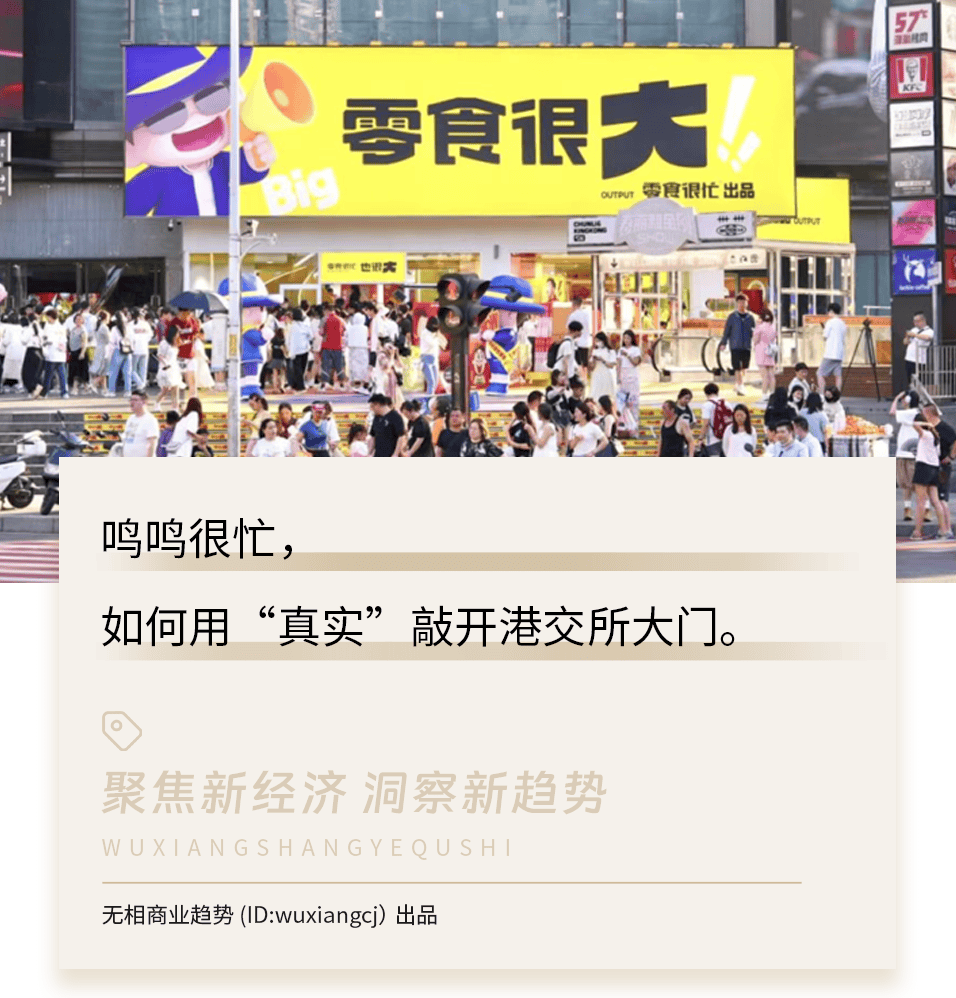
零食量贩行业:效率重塑的下半场
BOCOM International· 2026-01-30 10:25
Investment Rating - The report indicates a positive outlook for the snack wholesale industry, transitioning from rapid expansion to a focus on operational efficiency and high-quality growth [6][10]. Core Insights - The snack wholesale industry is experiencing a transformation from a land-grabbing phase to a deep operational phase, driven by a hard discount model that effectively reconstructs the value chain [6][11]. - The market size of the snack wholesale industry has surged from 7.3 billion RMB in 2019 to an estimated 129.7 billion RMB in 2024, reflecting a compound annual growth rate (CAGR) of 77.9% [19][24]. - The competitive landscape is dominated by two major players, "Mingming Hen Mang" and "Wancheng Group," which together hold over 70% market share, indicating a stable "dual strong" market structure [8][10]. Market Size and Growth Potential - The overall snack market in China is projected to grow from 3.2 trillion RMB in 2019 to 4.0 trillion RMB in 2024, with a CAGR of 5.0% [19][24]. - The snack wholesale segment is expected to reach a market size of 6.1 trillion RMB by 2029, with a continued CAGR of 36.5% from 2024 to 2029 [24][30]. - The potential number of stores in the snack wholesale market is estimated to reach 67,000, indicating over 30% growth potential from current levels [30][31]. Competitive Landscape and Key Players - The industry has formed a high concentration "dual strong" structure, with "Mingming Hen Mang" focusing on southern China and "Wancheng Group" dominating the eastern regions [8][10]. - Both companies have rapidly expanded their store networks, with each surpassing 15,000 stores by September 2025, leveraging economies of scale and digital operations to enhance profitability [10][44]. Operational Strategies - The snack wholesale industry emphasizes efficiency through a streamlined supply chain, reducing the markup rate significantly compared to traditional retail channels [11][54]. - The operational model relies on a franchise-driven expansion strategy, which has enabled rapid scaling while maintaining low closure rates [44][48]. - Digital tools are utilized for precise site selection and operational support, enhancing the success rate of new stores and ensuring consistent service quality across locations [52][55]. Product Strategy - The product strategy involves a layered approach, combining traffic-driving products with high-margin items and differentiated offerings, including private label products [37][42]. - The average store carries approximately 1,800 to 2,000 SKUs, with a high turnover rate facilitated by frequent product updates [38][39]. Future Trends - The industry is expected to evolve towards community-based all-category discount supermarkets, expanding product offerings beyond snacks to include essential goods [9][35]. - Innovations in product categories and private label development are anticipated to enhance revenue potential and profitability [10][35].
900亿市值,2万家门店,红杉、腾讯看中的「零食大王」上市了
36氪· 2026-01-28 09:28
Core Viewpoint - The article highlights the journey of Yan Zhou, CEO of "Ning Ning Hen Mang," a snack retail company that has rapidly expanded in the Chinese market, culminating in its successful IPO on the Hong Kong Stock Exchange. The narrative emphasizes the company's unique positioning in the mass consumer market and its strategic decisions that led to significant growth despite a challenging investment environment [4][10][12]. Company Overview - "Ning Ning Hen Mang" was founded in 2017 in Changsha, Hunan, by Yan Zhou and his co-founders, focusing on affordable snacks for the mass market, which was largely underserved [8][29]. - By 2025, the company had nearly 20,000 stores and achieved a GMV of 661 billion yuan, with revenues of 464 billion yuan, comparable to major supermarket chains [8][9]. Investment and Financing - The company completed its A-round financing in April 2021, attracting investments from prominent firms like Sequoia Capital and High Glory, despite a downturn in the new consumption investment landscape [8][24]. - The IPO in January 2025 was marked by a significant international subscription rate of 44.44 times, the highest for a consumer IPO in Hong Kong in two years, raising a total of 36.7 billion HKD [9][10]. Market Strategy - Yan Zhou's strategy involved focusing on the largest consumer group in China, which consists of middle-income households, and creating a retail environment that emphasizes cleanliness and emotional value rather than just low prices [21][27]. - The company adopted a rigorous selection process for franchisees, ensuring that only committed individuals could open stores, which helped maintain quality and brand integrity [27][28]. Competitive Landscape - The article discusses the competitive dynamics in the snack retail sector, particularly the rivalry with Zhao Yiming's snack brand, which led to a merger between the two companies in late 2023. This merger was seen as a strategic move to consolidate market power amid increasing competition [40][42]. - Following the merger, the combined entity aimed to operate over 10,000 stores, achieving a significant milestone in the industry [42][43]. Future Outlook - The article suggests that "Ning Ning Hen Mang" is well-positioned to capitalize on the growing demand for affordable snacks in both urban and rural markets, with a focus on emotional satisfaction and consumer experience [21][46]. - The company’s growth trajectory and strategic decisions are expected to attract further investment interest as it continues to expand its footprint across China [45][46].

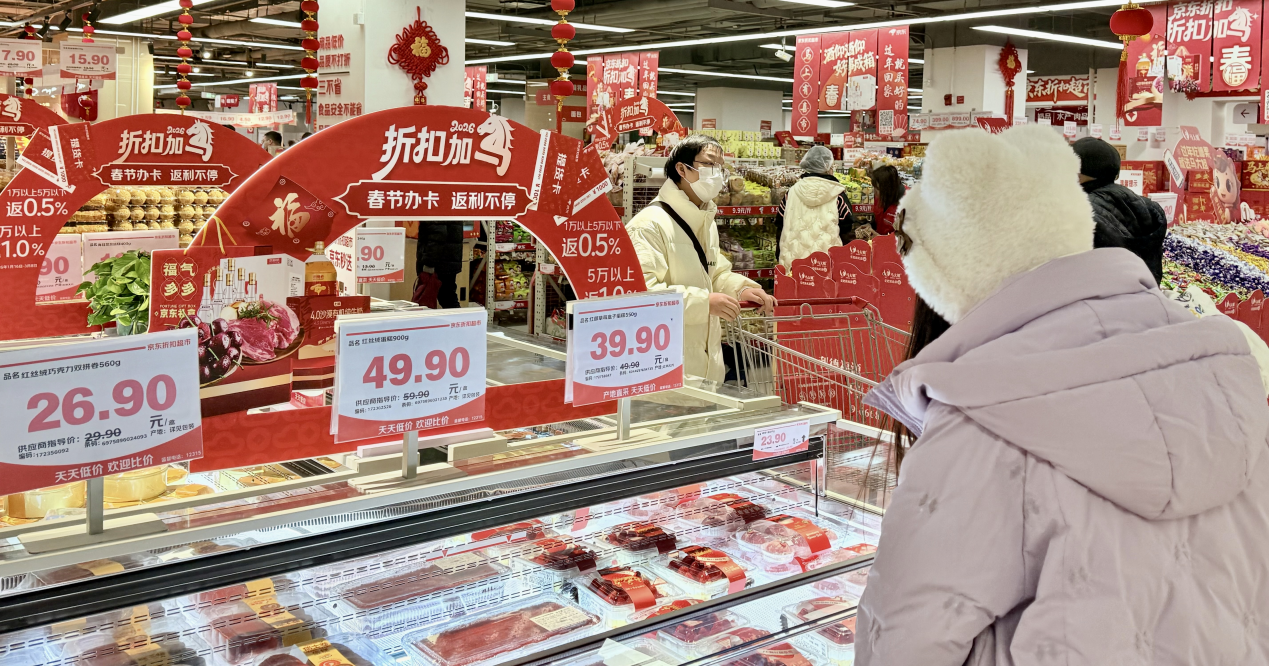
超百名幸运儿抱走马年金钞!京东折扣超市年货节掀起新春好运潮
Jin Rong Jie· 2026-01-28 06:49
Core Insights - The article highlights the launch of the "2026 Year of the Horse Gold Note Lottery" as part of JD Discount Supermarket's New Year Festival, emphasizing the theme of "good quality, real discounts" [1][3] - JD Discount Supermarket aims to provide local flavors and affordable options for consumers during the festive season, showcasing a variety of traditional dishes and gift boxes [5][12] Group 1: Promotional Activities - The "2026 Year of the Horse Gold Note Lottery" will run until February 1, allowing customers who spend over 168 yuan to participate, with a 100% winning rate and a chance to win exclusive gold notes [3] - The lottery has already seen hundreds of winners, enhancing the shopping experience for consumers who initially came for New Year goods [3] Group 2: Localized Offerings - JD Discount Supermarket has collaborated with Qixian Private Kitchen to create a unique "Family Reunion Dinner" series featuring nine traditional dishes specific to Suqian, Jiangsu, including heritage items like Huang Gou Pig Head Meat and various fish dishes [5][7] - The offerings are designed to capture local culinary culture while providing convenience and affordability for modern families [7] Group 3: Pricing Strategy - The supermarket's pricing strategy is based on a "everyday low price" model, ensuring that discounts are not temporary but reflect consistent value through supply chain management and bulk purchasing [8] - Popular items such as pork and eggs are offered at prices consistent with regular pricing, allowing consumers to enjoy high-quality products without waiting for promotions [8] Group 4: Consumer Experience - JD Discount Supermarket has become a preferred destination for consumers preparing for the New Year, with a focus on quality, affordability, and a pleasant shopping experience [10][12] - The stores are experiencing high foot traffic, indicating consumer approval of the hard discount model and the overall shopping experience [10]

零食量贩行业深度报告-万店争霸与供应链革新的增长破局
2026-01-28 03:01
Key Points Summary of the Snack Retail Industry Conference Call Industry Overview - The snack retail industry is experiencing rapid growth, with sales projected to increase from 29 trillion to 37 trillion yuan from 2019 to 2024, driven primarily by lower-tier cities [1][2] - Offline channels will dominate, accounting for 80% of sales by 2024, establishing a solid foundation for snack retail [2] Core Competitiveness - Price advantage is the core competitive edge of snack retail stores, with prices typically 20%-25% lower than other supermarkets and up to 50% lower than traditional retail [2][4] - The business model focuses on low margins and high turnover, utilizing direct supply from manufacturers to reduce costs [4] - Simplified SKU management, with around 2,000 SKUs, enhances cash flow and turnover rates [3][9] Financial Metrics - Leading snack retail stores have a gross margin of approximately 15%, which is lower than supermarkets (20%) and convenience stores (23%-24%), but benefit from lower procurement and operational costs [7] - For example, a leading store has an average daily transaction value of 35.8 yuan and a daily GMV of about 14,000 yuan, with a gross margin of 18% [9] Supply Chain and Operational Efficiency - The hard discount model focuses on efficiency by stabilizing the supply chain and reducing SKU counts, while the soft discount model combines hard discount advantages with higher gross margins (25%-30%) through customized products [8] - Snack retail stores can achieve cash purchases due to strong channel power, abundant funds, and high SKU standardization, unlike supermarkets which struggle with fresh produce and regional products [10][12] Future Trends - The snack retail industry is expected to continue its rapid growth, driven by high cost-performance, frequent new product launches, and simplified SKU management [5][6] - There remains significant untapped potential in lower-tier markets, which will be a major growth driver [5] Market Competition - The competitive landscape is evolving, with a dual oligopoly forming as regional companies exit the market while leading firms strengthen their positions [15] - The average customer transaction value is declining due to increased competition, but overall order numbers and daily orders per store are still growing [15] Expansion and Product Development - Future growth will be influenced by the expansion of store numbers, with estimates suggesting 60,000 to 80,000 new stores could be opened nationwide [16] - Companies are encouraged to diversify product categories and improve SKU management and private label development to enhance competitiveness [16] Conclusion - The snack retail industry is poised for continued growth, supported by strategic pricing, efficient supply chain management, and the ability to adapt to market changes. Companies that innovate and meet consumer demands will capture larger market shares in the future [6][16]