
经营者集中反垄断审查

Search documents
市场监管总局详解反垄断审查制度规则新进展
Xin Jing Bao· 2026-02-11 10:40
Core Viewpoint - The introduction of the "Non-Horizontal Operator Concentration Review Guidelines" marks a significant step towards professionalization, refinement, and standardization of antitrust review processes in China, enhancing the regulatory framework for operator concentration [1][2]. Group 1: Background and Purpose of the Guidelines - The guidelines were developed based on three main considerations: improving the system, enhancing expectations, and sharing experiences [2]. - Since the implementation of the antitrust law, thousands of non-horizontal operator concentration transactions have been reviewed, leading to the approval or prohibition of over 30 cases with restrictive conditions, thus accumulating valuable enforcement experience [2]. - The guidelines clarify the competitive risks and assessment points associated with non-horizontal concentrations, helping entities better understand the risk boundaries of mergers and acquisitions [2]. Group 2: Systematic Progress in Antitrust Review - Since the new antitrust law was implemented in 2022, a comprehensive regulatory framework has been established, consisting of one law, one administrative regulation, and two departmental rules, supported by multiple specific guidelines and standards [2]. - The review process has been enhanced by revising the "State Council's Regulations on the Standards for Reporting Operator Concentration," significantly raising the reporting revenue threshold, which exempts many small and medium-sized mergers from reporting [3]. - The introduction of the "Administrative Penalty Discretionary Guidelines for Illegal Implementation of Operator Concentration" ensures that enforcement is transparent, fair, and consistent [3]. Group 3: Compliance and Guidance - The release of the "Antitrust Compliance Guidelines for Operator Concentration" provides actionable compliance pathways for enterprises [3]. - The "Overseas Antitrust Compliance Guidelines" aim to bridge the information gap regarding overseas antitrust compliance, helping companies mitigate risks associated with foreign antitrust regulations [3].
市场监管服务经济高质量发展有新举措
Xin Lang Cai Jing· 2026-02-05 22:20
Group 1 - The core viewpoint of the articles emphasizes the importance of optimizing the consumer environment in China as a key strategy to boost consumption and economic development [1][2][3] - The State Administration for Market Regulation (SAMR) has launched a three-year action plan to enhance the consumer environment, which has already shown preliminary results [1] - In 2025, SAMR received 26.46 million complaints and reports, recovering economic losses of 4.35 billion yuan for consumers, and recalled 8.236 million consumer goods [1] Group 2 - SAMR plans to establish "reassuring consumption" zones and develop related standards and policies to create trustworthy markets and scenic areas for consumers [2] - The focus will be on enhancing traditional industries and promoting high-quality service sector development, addressing new consumer demands for safety, quality, and sustainability [2] - In 2025, SAMR will conduct special actions to rectify the abuse of power and limit competition, with a significant increase in the number of cases investigated and resolved [3] Group 3 - The SAMR is responsible for antitrust reviews of mergers and acquisitions, balancing support for resource consolidation with the prevention of monopolies [4] - In 2025, SAMR reviewed 706 merger cases, a 9.8% increase year-on-year, with 83% of cases concluded within 30 days [4] - The agency aims to enhance the efficiency and quality of merger reviews while ensuring market competition and protecting supply chain security [4]
市场监管服务经济高质量发展有这些举措
Xin Lang Cai Jing· 2026-02-05 19:12
Core Viewpoint - The State Administration for Market Regulation (SAMR) is focusing on optimizing the consumption environment as a key strategy to boost consumption, with a three-year action plan starting in 2025 that has already shown preliminary results [1][2]. Group 1: Consumption Environment Optimization - SAMR has released over 210 national standards for major consumer goods and services, including home appliances, furniture, and cultural tourism, to enhance service quality [1]. - The "Iron Fist" action was launched to address consumer pain points, resulting in 26.46 million complaints received and 4.35 billion yuan in economic losses recovered for consumers in 2025 [1]. Group 2: Consumer Safety and Quality Standards - Future initiatives will include the establishment of "reassuring consumption" zones and the development of related standards to create trustworthy markets and scenic areas [2]. - SAMR plans to focus on upgrading national standards for consumer goods to meet new demands for safety, quality, and sustainability, thereby enhancing the compatibility of supply and demand [2]. Group 3: Market Competition and Regulation - SAMR is committed to eliminating local protectionism and correcting improper market interventions, with a 34% increase in investigations and a 32% rise in case resolutions in 2025 [3]. - The agency addressed 5,918 cases of illegal charges by government departments and other entities, recovering 1.35 billion yuan for enterprises [3]. Group 4: Antitrust and Mergers - SAMR is responsible for antitrust reviews of mergers and acquisitions, supporting resource consolidation while preventing monopolies [4]. - In 2025, SAMR reviewed 706 merger cases, a 9.8% increase from the previous year, with 83% resolved within 30 days [4].
事关消费环境建设、公平竞争等 市场监管服务经济高质量发展有这些举措
Xin Hua Wang· 2026-02-05 12:35
Core Viewpoint - The National Market Supervision Administration (NMSA) is implementing measures to enhance the consumption environment and promote fair competition, aiming for high-quality economic development in China [1][3]. Group 1: Consumption Environment Improvement - The NMSA has launched a three-year action plan to optimize the consumption environment, which has shown preliminary results [3]. - Over 210 national standards for major consumer goods and service sectors have been established, including those for home appliances, furniture, and cultural tourism [3]. - The "Iron Fist" action has been initiated to address consumer pain points, resulting in 26.46 million complaints received and 4.35 billion yuan in economic losses recovered for consumers in 2025 [3][4]. Group 2: Fair Competition and Market Regulation - The NMSA is focusing on eliminating local protectionism and correcting improper market interventions to facilitate economic circulation [5]. - In 2025, the NMSA investigated 5,918 cases of illegal charges by government departments and other entities, imposing fines totaling 347 million yuan and refunding 1.35 billion yuan to businesses [5]. - The NMSA has reviewed over 12,000 important policy measures to ensure compliance with national market standards and fair competition [5]. Group 3: Antitrust and Mergers - The NMSA is responsible for antitrust reviews of mergers and acquisitions, balancing support for resource consolidation with the prevention of monopolies [6][7]. - In 2025, the NMSA concluded 706 merger cases, a 9.8% increase year-on-year, with 83% of cases resolved within 30 days [7]. - The NMSA is committed to enhancing the efficiency and quality of merger reviews while ensuring market safety, particularly in critical sectors like semiconductors and shipping [7].

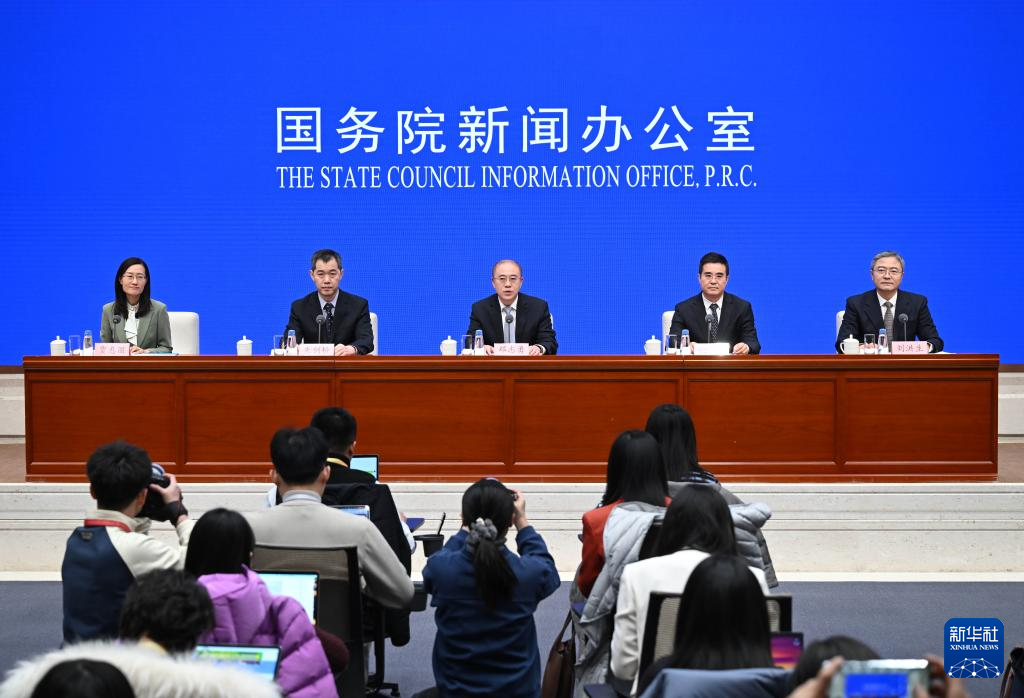
市场监管总局:2025年组织开展汽车、互联网平台等领域200余家企业海外合规培训
Ren Min Wang· 2026-02-05 06:49
Core Viewpoint - The State Administration for Market Regulation (SAMR) is enhancing its antitrust review process for business mergers and acquisitions, aiming to foster a competitive market environment and support high-quality economic development by 2025 [1][2]. Group 1: Service Improvements - SAMR is establishing a "bridge of service" to reduce costs and clarify directions for enterprises in merger applications, including a classification and grading review system and a tool for self-assessing administrative penalties [1]. - The introduction of the "Administrative Penalty Self-Calculator" and the publication of guidelines for merger applications aim to create a transparent and predictable policy environment for businesses [1]. Group 2: Acceleration of Review Process - In 2025, SAMR concluded 706 merger cases, a 9.8% increase year-on-year, with 83% of cases resolved within 30 days during the preliminary review phase [2]. - The focus on key sectors such as automotive, photovoltaic, and lithium battery industries emphasizes a balance between expedited reviews and maintaining quality standards [2]. Group 3: Regulatory Enforcement - SAMR has taken a firm stance in critical sectors like semiconductors and shipping, approving five merger applications with conditions and prohibiting one to safeguard fair competition [2]. - The agency has publicly addressed four illegal merger cases, imposing fines totaling 6.95 million yuan [2]. Group 4: Support for Overseas Expansion - SAMR is assisting domestic companies in navigating foreign antitrust reviews during overseas mergers, providing training for over 200 companies in sectors like automotive and integrated circuits [2]. - The agency aims to help domestic enterprises avoid risks and ensure stable international operations by interpreting foreign legal regulations and sharing typical case studies [2]. Group 5: Future Outlook - By 2026, SAMR plans to continue refining its merger review system to enhance efficiency and quality, aiming to stimulate market vitality while safeguarding the competitive environment [2].
市场监管总局:开展经营者集中反垄断审查 “简案快审”“要案精审”
Xin Lang Cai Jing· 2026-02-05 04:46
Core Viewpoint - The State Administration for Market Regulation (SAMR) is enhancing its antitrust review process for business concentrations, which includes mergers and acquisitions, to support resource integration while preventing monopolistic practices and maintaining competitive order [1][2]. Group 1: Service Improvement - SAMR is establishing a "bridge of service" to reduce costs and clarify directions for enterprises applying for merger approvals. This includes a classification and grading review system, formal delegation of local reviews, and the introduction of tools like the "administrative penalty self-calculator" for better understanding [1]. - New guidelines and a historical case database have been released to provide a transparent and predictable policy environment for enterprises [1]. Group 2: Review Acceleration - In 2025, SAMR concluded 706 cases of business concentration reviews, a 9.8% increase year-on-year, with 83% of cases resolved within 30 days during the preliminary review phase. This is particularly focused on key sectors like automotive, photovoltaic, and lithium batteries [2]. Group 3: Regulatory Enforcement - SAMR has taken a firm stance in critical sectors such as semiconductors and shipping, approving five cases with conditions that could harm fair competition and prohibiting one case, thereby ensuring the safety of supply chains [2]. - The agency has publicly addressed four illegal business concentration cases, imposing fines totaling 6.95 million yuan [2]. Group 4: Support for Overseas Expansion - SAMR is assisting domestic companies in navigating foreign antitrust reviews during overseas mergers and acquisitions. This includes training for over 200 companies in sectors like automotive and integrated circuits, along with the publication of typical case studies to help mitigate risks [2].
市场监管总局:高效审查经营者集中 护航企业并购与公平竞争
Yang Shi Xin Wen· 2026-02-05 02:47
Core Viewpoint - The State Administration for Market Regulation (SAMR) is enhancing its antitrust review process for business concentrations, which includes mergers and acquisitions, to support resource integration while preventing monopolistic practices and maintaining competitive order [1][2]. Group 1: Service Improvements for Enterprises - SAMR is establishing a "bridge" to reduce costs and clarify directions for enterprises applying for business concentration, including a classification and grading review system and a tool for self-assessing administrative penalties [2]. - The introduction of the "business concentration application norms" and "non-horizontal business concentration review guidelines" aims to provide a transparent and predictable policy environment for enterprises [2]. - A historical case database with over 6,000 entries is now available for real-time consultation to assist enterprises in compliance [2]. Group 2: Acceleration of Review Processes - In 2025, SAMR concluded 706 cases of business concentration, a year-on-year increase of 9.8%, with 83% of cases resolved within 30 days during the preliminary review phase [2]. - The focus on key sectors such as automotive, photovoltaic, and lithium batteries emphasizes a balance between expedited reviews and maintaining quality standards [2]. Group 3: Regulatory Enforcement - SAMR has approved five business concentration applications with conditions to protect fair competition and prohibited one case, particularly in critical sectors like semiconductors and shipping [2]. - The agency has publicly addressed four illegal business concentration cases, imposing fines totaling 6.95 million yuan [2]. Group 4: Support for Overseas Expansion - SAMR is assisting domestic enterprises in navigating foreign antitrust reviews during overseas mergers and acquisitions, providing training and guidance on international legal frameworks [2]. - Over 200 enterprises in sectors such as automotive and integrated circuits have participated in compliance training to mitigate risks associated with international operations [2].
市场监管总局:2025年完成经营者集中反垄断审查706件
Yang Shi Xin Wen· 2026-01-29 07:06
Core Insights - The State Administration for Market Regulation concluded 706 cases of operator concentration in 2025, marking a 9.8% increase from the previous year, with 687 cases approved unconditionally, 13 withdrawn, 5 conditionally approved, and 1 prohibited [1] Summary by Categories Case Characteristics - A total of 614 cases were simple cases, accounting for approximately 89.4% of the total. In the preliminary review phase, 591 cases were concluded without further review, representing about 86.0% [2] Transaction Amounts - The total transaction amount for unconditionally approved operator concentrations exceeded 3 trillion yuan, with 213 cases between 100 million and 1 billion yuan (31.0%), 187 cases between 1 billion and 10 billion yuan (27.2%), 59 cases between 10 billion and 100 billion yuan (8.6%), and 3 cases over 100 billion yuan, the highest being 373.55 billion yuan [3] Types of Concentration - Domestic enterprises accounted for the majority with 407 cases (59.2%), while foreign enterprises had 190 cases (27.7%), and mixed domestic and foreign enterprises had 90 cases (13.1%) [4] Ownership Structure - The concentration involved various ownership types, with state-owned enterprises participating in 379 cases (55.2%), foreign enterprises in 297 cases (43.2%), and private enterprises in 244 cases (35.5%) [5] Industry Distribution - The manufacturing sector had the highest concentration with 247 cases (36.0%), followed by water, electricity, gas, and heat production and supply with 74 cases (10.8%). Other active sectors included finance, transportation, wholesale and retail, IT services, real estate, and business leasing. Within manufacturing, the automotive sector led with 41 cases (16.6%), primarily in auto parts manufacturing [6] Transaction Types and Patterns - Horizontal concentrations involving competitors accounted for 395 cases (57.5%), while vertical concentrations involving upstream and downstream enterprises made up 288 cases (41.9%), and mixed concentrations were 196 cases (28.5%). Concentrations through equity acquisition were 379 cases (55.2%), joint ventures 301 cases (43.8%), and new mergers or asset acquisitions 26 cases [7] Geographic Distribution - Companies involved in operator concentrations came from over 30 countries and regions, with foreign enterprises primarily from Japan, the USA, the UK, Singapore, and France [8] - In China, the top five provinces (or municipalities) for registered enterprises participating in concentrations were Beijing, Jiangsu, Guangdong, Zhejiang, and Shanghai [9]
索通发展股份有限公司关于收到《经营者集中 反垄断审查不实施进一步审查决定书》的公告
Zhong Guo Zheng Quan Bao - Zhong Zheng Wang· 2025-12-04 08:36
Group 1 - The core point of the announcement is that the company has received a decision from the National Market Supervision Administration stating that no further antitrust review will be conducted on the establishment of a joint venture with Huayang New Materials Technology Group [2] - The joint venture, Shanxi Suotong Huayang Carbon Materials Co., Ltd., aims to build a 200kt/a high current density energy-saving carbon material and waste heat power generation project in Yangquan City, Shanxi Province [1][2] - The establishment of this joint venture is intended to enhance the company's prebaked anode production capacity, strengthen market competitiveness, and improve the overall efficiency of the industrial cluster [1][2] Group 2 - The company will fulfill its information disclosure obligations in accordance with relevant securities regulatory requirements as the situation progresses [2] - Investors are encouraged to pay attention to the company's announcements on the Shanghai Stock Exchange and designated information disclosure media [2]

市场监管总局公布3起经营者集中反垄断审查典型案例
Yang Shi Wang· 2025-12-04 03:23
Core Viewpoint - The article discusses the announcement by the State Administration for Market Regulation (SAMR) regarding the publication of typical cases of operator concentration, aimed at enhancing compliance and transparency in mergers and acquisitions [1] Group 1: Case Summaries - Case 1: Hangzhou State Capital Investment Operation Co., Ltd. acquired shares of Zhejiang Yingde Holding Group Co., Ltd. The review focused on horizontal concentration, with a combined market share exceeding 15% in the domestic atmospheric gas supply market, leading to unconditional approval [2][3] - Case 2: Gaoji Pharmaceutical Co., Ltd. acquired shares of Tianji Pharmacy Chain Co., Ltd. and three other companies. The review focused on both horizontal and vertical concentration, with a combined market share exceeding 25% in the pharmaceutical retail market in Xiangyang, resulting in unconditional approval [8][9] - Case 3: Ouyie Chain Gold Recycling Resources Co., Ltd. acquired shares of Hebei Grey En New Materials Co., Ltd. The review focused on horizontal and vertical concentration, with a combined market share exceeding 15% in the recycled steel raw materials and crude steel markets, leading to unconditional approval [21][22] Group 2: Market Analysis - In the atmospheric gas supply market, the combined market share of Hangzhou State Capital and Zhejiang Yingde was calculated based on bidding data, showing a market share of 25-30% based on production capacity and 30-35% based on project numbers, indicating a moderate level of concentration [5][6] - In the pharmaceutical wholesale market, both the acquirer and the target had a market share of 0-5%, indicating no market control post-merger. In the online pharmaceutical retail market, the combined share was 10-15%, also indicating no market control [13][14] - In the recycled steel raw materials and crude steel markets, the combined market share was 15-20%, with HHI indices below 1000, indicating low market concentration and no significant change in market structure post-merger [24][25] Group 3: Competitive Dynamics - The competitive analysis in the atmospheric gas supply market indicated that both companies faced effective competition from other suppliers, with a significant number of projects lost to competitors, ensuring no anti-competitive effects post-merger [6][7] - In the pharmaceutical retail market, the analysis showed that the acquirer did not have significant control over the market, with low entry barriers and the presence of new entrants, ensuring competitive dynamics remained intact [17][19] - In the recycled steel market, the analysis concluded that the concentration would not lead to anti-competitive effects due to the low market shares and the presence of numerous competitors, ensuring effective competition [26]