
舆论战

Search documents
“快艇交火事件”加剧美古关系紧张态势
Xin Lang Cai Jing· 2026-02-27 07:05
美国对委内瑞拉发动大规模军事打击后,总统特朗普多次暗示古巴或成为下一个关注目标。分析人士认 为,此次事件或将美古关系的紧张程度从高压状态推向某种临界状态。 古巴哈瓦那湾的 炼油厂码头 新华社 发 在美国政府对古巴实施石油禁运之际,一起交火事件让两国关系进一步紧张。 复旦大学美国研究中心教授张家栋认为,这一事件与美古关系联系起来看,不排除舆论战的可能。鉴于 美国曾将古巴列入"支持恐怖主义国家"名单,而古巴现在反过来指控美国可能支持了针对古巴的恐怖主 义活动,更像是一种舆论上的反击。"但是,本次事件造成了人员伤亡,这在过去的美古关系中是非常 罕见的,因此不应低估这一事件的后续影响。" 综合新华社及央视报道,古巴政府25日通报称,一艘美籍快艇当天闯入古巴领海并同执法人员发生交 火,快艇上10名武装人员4死6伤。事后,美国国务卿鲁比奥否认有美国政府人员参与其中。 美国佛罗里达州总检察长詹姆斯·尤思迈耶25日称,他已指示州检方与有关方面合作,着手调查这一事 件。目前,这些涉事人员的身份和动机将是美国调查的核心。 古巴外交部副部长德科西奥26日表示,美方已表示愿意配合,共同查明美籍快艇闯入古巴领海事件真 相。据不愿公开姓 ...


中美世纪大博弈出现了第三者
Xin Lang Cai Jing· 2026-02-23 08:23
· 中国:代表增量挑战者,推动多极化与新发展模式。 · AI:代表变量加速器,作为非人主角,指数级地重塑所有战场的游戏规则。 百年未有之大变局,中美之外的第三者已经出现,"三国"时代已经来临。 世纪大博弈的主角:三重博弈 我国战略反攻以来,AI以眼花缭乱的速度介入了中美大博弈。 美国、中国、AI已经并列成为百年变局的三大主角。 · 美国:代表存量主导者,力图维系全球霸权。 决定未来世界运行规则的"基础设施"涵盖五大维度,涉及:物理层、生物层、空间层、数字层、共识 层: 1. 算力(数字层基石) 三者的关系是:中美通过AI这个新维度展开竞争,而AI的发展又在不断反客为主,重塑竞争的性质。 ⚔️ 三国演义之战场:四大战场联动 四大战场之间并非孤立,而是高度联动、互为支撑。 · 科技战是制高点,决定未来权力归属。 · 金融资本战是胜负手,关乎资源调配的效力。 · 贸易战是基本盘,争夺市场规模与产业链控制权。 · 舆论战是合法性与认知权的较量。 这四大战场形成闭环:科技突破 → 重塑贸易规则 → 影响金融地位 → 通过舆论强化叙事 → 反哺科技投 入。AI作为主角,正同时赋能并颠覆这四条战线。 五大卡位战:卡位五大关 ...

伊朗军事专家:美国和以色列正对伊朗发动“混合战争”
Yang Shi Xin Wen· 2026-01-15 00:18
Group 1 - The Iranian government has urged the US and Israel to cease actions that destabilize Iran, with military expert Mughadam stating that a "hybrid war" is being waged against Iran [1] - Mughadam claims that the US and Israel are using military strikes, economic sanctions, and terrorism to undermine Iran's economic and social stability, increasing the risk of war [1] - Iran is preparing for a preemptive strike if intelligence indicates an imminent attack from the US or Israel, with a stockpile of approximately 2,000 missiles capable of reaching Israel and US military bases in the region [1] Group 2 - Analysis indicates that the US and Israel's plan to weaken Iran consists of two phases: the first phase involves military strikes, while the second phase focuses on psychological and media warfare to test Iran's societal resilience [2] - In light of these external threats, Iran is advised to implement practical policies to stabilize its economy and improve living conditions [2]
万幸中国没帮俄罗斯,瞧美国给我们挖的三大陷阱,一个比一个致命
Sou Hu Cai Jing· 2026-01-03 12:35
Group 1 - The ongoing geopolitical tensions, particularly the Russia-Ukraine conflict, have significant implications for global trade and economic stability, with the U.S. targeting both Russia and China through sanctions and economic measures [1][3][5] - The U.S. has expressed concerns over China's potential support for Russia, threatening sanctions against Chinese companies and assets if they provide any substantial aid [3][9] - The G7 countries have indicated support for imposing tariffs on nations that assist Russia, which could disrupt China's export-driven economy and supply chains [5][7] Group 2 - Despite the sanctions and pressures, China's trade with the U.S. and other countries has continued to grow, demonstrating resilience in its economic performance [11][12] - The sanctions against Russia have inadvertently strengthened the economic ties between China and Russia, with China becoming a major buyer of Russian energy [12][22] - Western media narratives have attempted to portray China as a threat, but China's diplomatic stance has remained neutral, advocating for peace and dialogue [16][18][20] Group 3 - The long-term implications of the Russia-Ukraine war suggest that the conflict may continue to drain resources, with the U.S. aiming to keep China entangled in the situation [23][25] - China's focus on domestic demand and high-tech industries has allowed it to maintain economic growth despite external pressures, with significant investments in semiconductor manufacturing [25][26] - The ongoing economic challenges faced by the U.S. and its diminishing global influence may ultimately backfire, revealing vulnerabilities in its approach to international relations [25][26]
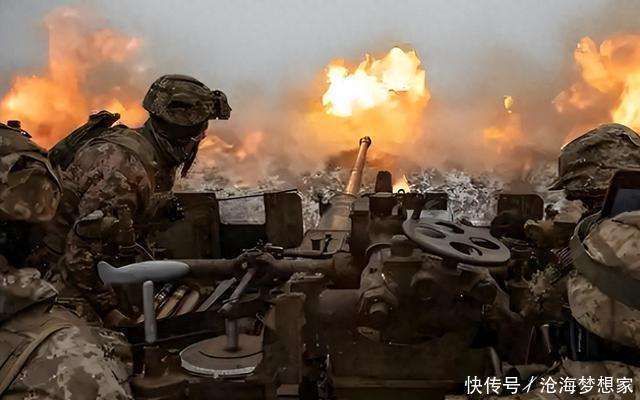
刚刚!俄罗斯,发动大规模打击!泽连斯基,突然宣布!
券商中国· 2026-01-03 03:33
Core Viewpoint - The article discusses the recent escalation of military actions between Russia and Ukraine, highlighting significant retaliatory strikes by Russia against Ukrainian military and energy infrastructure, as well as changes in Ukraine's defense leadership [1][2][6]. Group 1: Military Actions - On January 2, the Russian Ministry of Defense announced large-scale retaliatory strikes against Ukrainian military enterprises and energy facilities, using high-precision weapons including the "Dagger" hypersonic missile [1][3]. - The strikes targeted various Ukrainian military assets, including transport and port infrastructure, missile engine production facilities, drone production sites, and ammunition depots [2][3]. - In the past week, Russian forces gained control of nine settlements in Donetsk and Zaporizhzhia regions, and shot down a Ukrainian Su-27 fighter jet [3]. Group 2: Casualties and Accusations - A large-scale drone attack by Ukraine on January 1 resulted in significant civilian casualties in Kherson, with 27 reported dead and 31 injured [3]. - The Russian Foreign Ministry condemned Ukraine's drone attacks on civilian targets, holding Western leaders accountable for supporting Ukraine [3]. - Ukraine's military spokesperson stated that all airstrikes were aimed at military targets and complied with international humanitarian law [3]. Group 3: Leadership Changes in Ukraine - Ukrainian President Zelensky announced a restructuring of the Ministry of Defense, appointing First Deputy Prime Minister Mykhailo Fedorov as the new Defense Minister [6]. - Fedorov is noted for his involvement in Ukraine's drone production and digital transformation efforts [6]. - Additional personnel changes were made, including the dismissal of military intelligence leaders and their reassignment to other roles [6]. Group 4: Escalation of Drone Warfare - The frequency of drone strikes between Russia and Ukraine has increased, with both sides aiming to demonstrate military strength to enhance their negotiating positions [6][7]. - The ongoing drone warfare is accompanied by a battle of narratives, with both sides accusing each other of targeting civilian areas and attempting to shift blame for the conflict [7].
无人机攻防与舆论战交织 俄乌博弈进入新阶段
Yang Shi Xin Wen· 2026-01-02 17:32
Core Viewpoint - The frequency of drone strikes between Russia and Ukraine has increased as of 2026, with both sides aiming to demonstrate their strength to enhance their positions in negotiations, despite a lack of willingness to compromise on core issues [1] Group 1: Increased Drone Strikes - Both Russia and Ukraine have escalated their drone attacks, with Russia conducting large-scale strikes against Ukraine and Ukraine launching significant attacks on Russian rear areas [1] - The mutual drone strikes are seen as a strategy to showcase military capabilities and strengthen negotiating positions [1] Group 2: Propaganda Warfare - The recent drone attacks have been accompanied by a propaganda battle, becoming a new focal point in the Russia-Ukraine conflict [1] - Russia accused Ukraine of attacking the Russian presidential residence, which Ukraine promptly denied, leading to a stalemate in narratives [1] - Both sides are attempting to shift the blame for the lack of peace onto each other, aiming to strengthen their negotiating leverage [1]
美国称13位华人富豪,在美资产8万亿?恶意造谣的背后有何阴谋?
Sou Hu Cai Jing· 2025-12-06 02:55
Core Viewpoint - The claim that 13 Chinese billionaires in the U.S. possess a total of $8 trillion in assets is widely regarded as a fabricated rumor, raising questions about its authenticity and underlying motives [1][5][6]. Group 1: Asset Claims and Comparisons - The reported $8 trillion is an astronomical figure, significantly exceeding the total wealth of the top ten Chinese billionaires in the 2024 Hurun Global Rich List, which amounts to only 813 billion RMB [3]. - If the 13 billionaires truly had $8 trillion, each would average $615.3 billion, a sum sufficient to make any one of them the richest person globally, highlighting the implausibility of the claim [3]. Group 2: Economic Context - The $8 trillion figure is nearly half of China's GDP, which surpassed $17 trillion in 2023, and exceeds the combined GDP of Japan and Germany for the same year [5]. - The strict foreign exchange management policies in China, which limit individuals to converting only $50,000 annually without extensive documentation, make it nearly impossible for these billionaires to transfer such vast sums abroad [5]. Group 3: Regulatory Environment - China has established anti-corruption cooperation agreements with multiple countries, allowing for the recovery of illicit funds, which would complicate any attempts by these billionaires to move large amounts of wealth [6]. - The U.S. has intensified scrutiny of Chinese billionaires, with some facing severe penalties for alleged money laundering, indicating a trend of targeting their wealth to address U.S. fiscal challenges [8]. Group 4: Geopolitical Implications - The U.S. may be leveraging this narrative to create domestic discord and foster resentment towards wealthy Chinese individuals, potentially destabilizing social harmony in China [10]. - In response to these tactics, China is encouraged to accelerate its de-dollarization efforts and enhance its economic strength through increased investment in technology and collaboration with emerging markets [12][15].
外资败逃A股!一场阳谋
雪球· 2025-12-01 07:58
Group 1 - The article questions the intelligence of foreign capital, suggesting that it often engages in a "buy high, sell low" strategy, particularly during market downturns [5][6]. - It highlights a significant decline in foreign investment in China's real economy in 2023 and 2024, which some interpret as a lack of interest in China [10][11]. - The article emphasizes that foreign capital flows are influenced by interest rates, noting that after interest rate hikes in the US and Europe, capital outflow from China is not surprising due to lower domestic rates [12][13]. Group 2 - The article distinguishes between trading-oriented foreign capital, which has been rapidly exiting the A-share market, and long-term investment funds, which continue to flow in [22][26]. - It points out that while active funds have withdrawn over $16 billion from A-shares since 2023, passive funds are slowly entering, indicating a shift towards long-term investment [24][28]. - The article suggests that the increasing presence of long-term capital, such as state-owned enterprises and insurance funds, is beneficial for the A-share market's stability and growth [31][32]. Group 3 - The article discusses the dual nature of foreign capital, noting that while patient capital is welcomed, speculative capital is not, as it can lead to market instability [39][40]. - It raises concerns about the influence of foreign capital on domestic markets, particularly in the context of geopolitical tensions and the potential for financial manipulation [41][42]. - The article argues that the current low proportion of foreign capital in China mitigates the impact of potential crises in the US, suggesting that China could even benefit from such situations [68][72]. Group 4 - The article concludes that the recent withdrawal of foreign capital is complex, driven by both external political factors and domestic policies aimed at attracting long-term investment [71][72]. - It asserts that China does not lack capital but rather needs patient capital that can support economic transformation and upgrading [73][74]. - The article encourages a positive outlook on foreign capital withdrawal, emphasizing the importance of aligning with like-minded investors for sustainable growth [75].

凭啥,贾国龙就不能回击罗永浩?
Hu Xiu· 2025-09-12 04:45
Group 1 - The public sentiment towards Jia Guolong's confrontation with Luo Yonghao is largely negative, questioning the rationale behind his actions [1][2] - Luo Yonghao expressed confusion and fatigue over the situation, indicating that he finds the confrontation unnecessary [2][4] - There is a perception that Jia Guolong, as a prominent restaurant owner, should not engage in disputes with influential figures like Luo Yonghao, as the odds are against him [5][11] Group 2 - The underlying logic suggests that one should only engage in battles they can win, highlighting the disparity in influence between Jia Guolong and Luo Yonghao [6][10] - Observers believe that Jia Guolong's response may inadvertently reveal operational secrets about his restaurant chain, which could be detrimental to his business [13][16] - The public's concern seems to stem from a desire to protect the status quo of perceived business practices, even if they are not entirely transparent [14][15] Group 3 - Luo Yonghao's past experiences of standing up to bullies are referenced to illustrate the importance of asserting oneself in the face of adversity [17] - The discussion raises questions about consumer rights to know the origins of food products, particularly regarding pre-prepared dishes served in restaurants [18][19] - The narrative suggests that consumers may prefer to remain unaware of certain business practices to maintain a sense of comfort regarding their dining experiences [16][19]

开战在我,终战在彼:为什么你说了不算?
Hu Xiu· 2025-08-31 00:29
Group 1 - The core idea of the article revolves around the principle "the initiator of war controls the start, while the opponent controls the end" [1][2][5] - The historical context of the Pacific War illustrates that Japan underestimated the United States' strategic resolve and industrial capacity, leading to a deviation from their initial war objectives [4][5] - The article emphasizes that modern warfare often begins with limited goals, but can escalate uncontrollably, as seen in historical examples like World War I and the Vietnam War [6][7][8] Group 2 - In the context of business competition, the principle "the initiator of war controls the start, while the opponent controls the end" applies, highlighting the challenges of ending competitive conflicts [12][14] - The example of the food delivery market illustrates how companies like JD.com and Meituan engage in competitive battles, where the control of the endgame shifts among players like Alibaba and Pinduoduo [13][15][20] - The article notes that the ultimate control over the competition may also lie with regulatory bodies, which can intervene if competition becomes disorderly [21] Group 3 - The concept of "the initiator of war controls the start, while the opponent controls the end" is also relevant in public opinion battles, where initial control can lead to unforeseen consequences [23][25] - The case of the Wuhan University library controversy demonstrates how the initiator can lose control over the narrative, leading to backlash [24][25] - The article discusses how silence and restraint can preserve the "endgame control" in public opinion scenarios, as seen with Nongfu Spring's response to controversies [27][28] Group 4 - In investment, the principle is reflected in the saying "buying is easy, selling is hard," where the buyer initiates the action, but market conditions dictate the outcome [30][31] - Experienced investors prepare for various scenarios, ensuring they have strategies in place to manage their exit points effectively [32][33] - The article highlights that successful investors often focus on long-term strategies, allowing them to navigate market fluctuations without the pressure to sell prematurely [34][35]


