
CCUS技术

Search documents
巴彦油田攻坚记
Xin Lang Cai Jing· 2026-02-15 08:33
Core Viewpoint - The Ba Yan Oilfield is recognized as the youngest billion-ton oilfield in China, showcasing advancements in carbon capture, utilization, and storage (CCUS) technology to enhance oil extraction while promoting green transformation [1] Group 1: Technology and Innovation - The CCUS technology team at Ba Yan Oilfield has a significant portion of its workforce, nearly one-third, choosing to work during the Spring Festival to support the oilfield's operations [1] - The team injects carbon dioxide into geological formations nearly 8,000 meters deep, which not only aids in oil extraction but also ensures permanent carbon storage [1] Group 2: Environmental Impact - The oilfield has achieved a carbon reduction effect equivalent to planting 2 million trees through the injection of 170,000 tons of carbon dioxide [1] - The commitment to environmental sustainability is highlighted by the continuous dedication of employees who have not returned home for three consecutive Spring Festivals [1] Group 3: Energy Security and Transition - The efforts at Ba Yan Oilfield reflect a broader narrative of energy security in China, emphasizing the importance of transitioning to greener energy practices while maintaining oil production [1]
双碳-政策专家电话会
2026-02-11 15:40
Summary of Key Points from the Conference Call on Carbon Neutrality Policies Industry Overview - The conference focused on China's carbon neutrality policies, particularly the chemical and petrochemical industries, and their implications during the 14th Five-Year Plan (2021-2025) period [1][2]. Core Points and Arguments 1. **Carbon Peak and Neutrality Goals**: China aims to peak carbon emissions around 2028 and achieve a 7%-10% reduction in emissions by 2035 after reaching the peak. The long-term goal is carbon neutrality by 2060 [2][10]. 2. **Strict Control Measures**: The chemical and petrochemical industries will face stringent controls, including local carbon budget assessments, inclusion in carbon markets, and enhanced carbon management practices [1][2]. 3. **New Mechanisms for Energy Consumption Control**: A dual control mechanism for energy consumption will be implemented, focusing on total volume control rather than just intensity, with strict evaluations at the local government level [6][5]. 4. **Expansion of Carbon Market**: By 2027, eight high-energy-consuming industries will be included in the national carbon market, with a combination of free and paid quota distribution methods to enhance emission reductions [1][9]. 5. **Challenges from Climate Change**: The chemical industry faces challenges from climate change and extreme weather, necessitating a shift from coal to renewable resources and the adoption of technologies like Carbon Capture, Utilization, and Storage (CCUS) [1][10]. 6. **Carbon Market Development**: The national carbon market has been steadily advancing since its establishment in 2021, with plans to tighten quota issuance requirements starting in 2027 [1][11]. 7. **Support for Enterprises**: The government will provide multi-dimensional support for enterprises to reduce emissions, including financial subsidies, green loans, and trading profits from carbon credits [25][26][27]. Additional Important Content 1. **New Project Approval**: New capacity additions require approval from the National Development and Reform Commission (NDRC), ensuring that total emissions do not exceed provincial limits [3][14]. 2. **Carbon Footprint Accounting**: A carbon footprint accounting system will be established for products to comply with international standards, such as the Carbon Border Adjustment Mechanism (CBAM) [5][10]. 3. **Monitoring and Data Collection**: Real-time monitoring of carbon emissions data is being improved, with expectations for more accurate data collection by 2027 [23][29]. 4. **Market Mechanisms for Emission Reduction**: The government will implement market mechanisms to encourage emission reductions, including voluntary reduction projects and the ability for non-regulated enterprises to participate in the carbon market [8][9]. 5. **Long-term Industry Transition**: The chemical industry, heavily reliant on coal, is expected to gradually reduce its coal usage from over 56% to lower levels, with a focus on sustainable development through carbon cost integration [19][20]. This summary encapsulates the critical insights and implications of the conference call regarding China's carbon neutrality policies and their impact on the chemical and petrochemical industries.
中国石油申请二氧化碳驱替方式下油藏剩余油表征方法专利,能够方便、准确、快速有效的定量化预测二氧化碳驱替前缘分布
Sou Hu Cai Jing· 2026-02-06 02:57
Core Viewpoint - China National Petroleum Corporation (CNPC) has applied for a patent related to a method for characterizing residual oil in oil reservoirs under carbon dioxide flooding, which is expected to enhance the economic benefits of carbon capture, utilization, and storage (CCUS) technology in aging oil fields [1]. Group 1: Patent Application - CNPC has filed a patent titled "A Method for Characterizing Residual Oil in Oil Reservoirs under Carbon Dioxide Flooding," with publication number CN121456242A, and the application date is August 2024 [1]. - The patent describes a method that includes steps for extracting the lower limits of carbon dioxide flooding reservoir properties at different development stages and quantifying the remaining oil in the block [1]. - The beneficial effects of this invention include the ability to conveniently, accurately, and quickly predict the distribution of the carbon dioxide flooding front, which is crucial for improving recovery rates in aging oil fields [1]. Group 2: Company Overview - China National Petroleum Corporation was established in 1999 and is headquartered in Beijing, primarily engaged in oil and natural gas extraction [1]. - The company has a registered capital of 18,302,097 million RMB [1]. - CNPC has invested in 1,298 enterprises, participated in 443 bidding projects, holds 38 trademark registrations, and has 5,000 patent records, along with 168 administrative licenses [1].

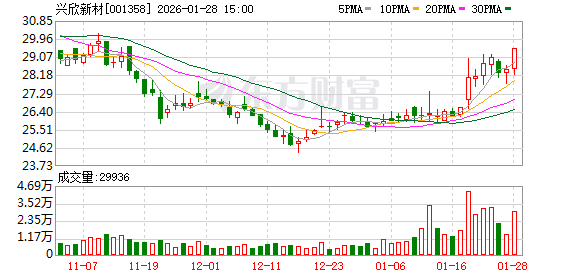
兴欣新材:公司锅炉烟气碳(CO)捕集工业级系统装置正式投入运行
Zheng Quan Ri Bao· 2026-01-28 11:46
Core Viewpoint - The company has successfully launched an industrial-grade carbon monoxide (CO) capture system for boiler flue gas, which is now operational and aims to support the development and verification of the entire CCUS (Carbon Capture, Utilization, and Storage) technology process [2] Group 1: Company Developments - The newly operational CO capture system is designed for industrial boiler flue gas and is applicable across various sectors including power generation, steel, cement, and petrochemicals [2] - The system has achieved advanced levels comparable to both domestic and international standards, characterized by its large scale, comprehensive system, flexible adjustment capabilities, and complete testing capabilities [2]

吃碳吐油 变“废”为宝探访我国首个实现年注碳百万吨的油田
Zhong Yang Ji Wei Guo Jia Jian Wei Wang Zhan· 2026-01-26 02:28
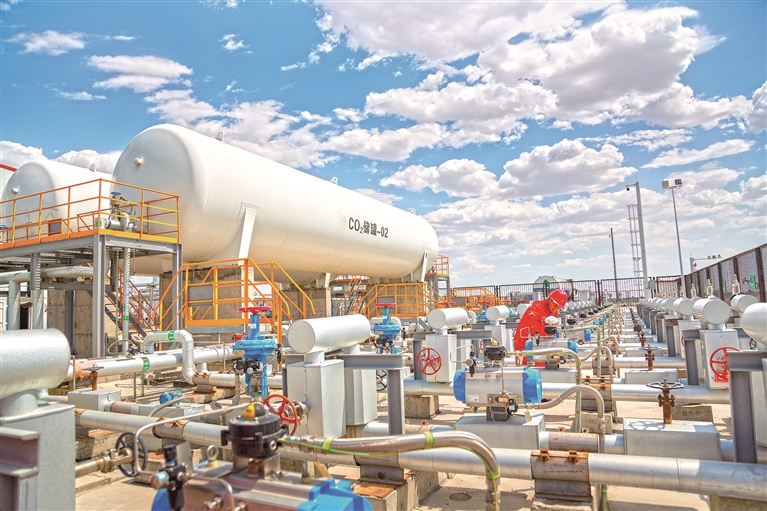
Core Viewpoint - The Xinjiang Oilfield has achieved a significant milestone by injecting over 1 million tons of carbon dioxide (CO2) annually by 2025, marking it as China's first oilfield to reach this target, which plays a crucial role in the country's carbon neutrality goals [8][16]. Group 1: CO2 Injection Technology - The CO2 injection method enhances oil recovery by increasing pressure and reducing viscosity, allowing for the extraction of oil that traditional methods cannot reach [9][10]. - Compared to water injection, CO2 injection can improve oil recovery rates by 10% to 20%, achieving total recovery rates of 40% to 60% [10]. - The Xinjiang Oilfield has been utilizing CO2 for enhanced oil recovery since 2019, with successful pilot projects demonstrating significant increases in oil production [12][14]. Group 2: Carbon Capture, Utilization, and Storage (CCUS) - CCUS technology is essential for achieving carbon neutrality, with Xinjiang Oilfield being a pioneer in its application for oil recovery [11][12]. - The CO2 used for injection is sourced from industrial emissions in the surrounding areas, ensuring a sustainable supply for the oilfield [15]. - Approximately 80% of the injected CO2 is permanently stored underground, while the remaining 20% is recycled for further use [15][16]. Group 3: Environmental Impact and Future Prospects - The ongoing CCUS projects in Xinjiang Oilfield are expected to significantly contribute to carbon reduction efforts, with current injection rates reaching over 4,800 tons per day [16]. - The technology not only aids in oil recovery but also provides a pathway for the utilization of industrial CO2 emissions, aligning with national carbon reduction strategies [18][19]. - The successful implementation of CCUS in Xinjiang Oilfield serves as a model for other regions and industries, showcasing the potential for green transformation in the energy sector [19][20].
破“三低”困局 走“三分”之路
Xin Lang Cai Jing· 2026-01-21 20:32
Core Viewpoint - Jilin Oilfield is undergoing a transformation towards a diversified energy model, focusing on oil, natural gas, and renewable energy, while aiming for high-quality development and sustainability by 2030 [2][4][11]. Group 1: Historical Development - Jilin Oilfield was established in 1961, marking the beginning of oil exploration in Jilin Province, which had previously been oil-free [4]. - The oilfield has a rich history of overcoming challenges, including resource scarcity and high development costs, while contributing significantly to national energy security [5][11]. - The oilfield's production milestones include reaching an annual output of 186 million tons by 1979 and over 400 million tons by 1997, establishing itself as one of China's major oilfields [5]. Group 2: Current Operations and Goals - Jilin Oilfield is implementing a "325" development strategy, focusing on maintaining stable production, enhancing operational efficiency, and fostering a collaborative work environment [2]. - The company aims to achieve a production equivalent of 600 million tons by 2025, 800 million tons by 2028, and over 1 billion tons by 2030, marking a significant growth trajectory [2]. Group 3: Green Energy Initiatives - The oilfield has made strides in renewable energy, producing 1.47 billion kilowatt-hours of green electricity by 2025, which has led to significant cost savings and reduced carbon emissions [7][8]. - Jilin Oilfield is developing a CCUS (Carbon Capture, Utilization, and Storage) project, expected to transport 4.3 million tons of CO2 annually, contributing to both carbon reduction and enhanced oil recovery [8]. Group 4: Technological Innovation - The company is leveraging technology to enhance operational efficiency, including the use of smart sensors and data management systems to monitor production in real-time [10][11]. - Investment in technology has increased from 430 million yuan to 510 million yuan between 2021 and 2025, underscoring the company's commitment to innovation as a core driver of transformation [11].
“十四五”能源成就·油气篇 | 我国油气行业进入量效齐增与绿色开发新阶段
Zhong Guo Dian Li Bao· 2025-12-18 06:36
Core Insights - The article highlights the significant advancements in China's oil and gas industry, marking a new phase of simultaneous growth in quantity and quality, alongside a transition towards green development [2][4][30]. Group 1: Quantity Growth - Domestic crude oil production has surpassed 200 million tons, reaching a historical high, while natural gas production has achieved a continuous increase of over 10 billion cubic meters for nine consecutive years [2][13]. - The industry has added 10 new oil fields with over 1 billion tons and 19 gas fields with over 100 billion cubic meters in the past five years, with geological reserves increasing by approximately 43% for oil and 40% for gas compared to the previous five-year plan [2][11]. Group 2: Quality Improvement - Key technologies have seen systematic breakthroughs, transitioning from traditional extraction methods to a focus on technology-driven, clean, and low-carbon development [2][15]. - The exploration approach has evolved from random attempts to systematic evaluations of underground resources, enhancing the understanding of oil and gas systems [21]. Group 3: Technological Advancements - The industry has made significant strides in autonomous technology, with the successful development of deep-water oil and gas fields, exemplified by the "Deep Sea No. 1" project, which showcases China's capabilities in design, construction, and operation [9][10]. - Advanced drilling technologies, such as automated drilling rigs capable of reaching depths of 12,000 meters, have been developed to tackle complex geological challenges [22]. Group 4: Green Development - The integration of renewable energy sources into oil and gas production has been emphasized, with initiatives like the construction of green low-carbon production systems in oil fields [31]. - Carbon capture, utilization, and storage (CCUS) technologies have been implemented to reduce emissions, with significant projects underway that demonstrate the potential for carbon reduction while enhancing production [34]. Group 5: Future Outlook - The oil and gas industry is positioned for sustainable growth, with a focus on self-reliance and technological independence, ensuring energy security amid global challenges [4][18]. - The ongoing efforts to enhance production efficiency and explore unconventional resources, such as shale oil, are expected to play a crucial role in meeting future energy demands [27][28].
CCUS装备国产化实现系统性突破
Zhong Guo Hua Gong Bao· 2025-12-08 02:28
Core Viewpoint - China National Petroleum Corporation (CNPC) has achieved a significant milestone in the field of Carbon Capture, Utilization, and Storage (CCUS) technology by successfully operating its first domestically produced high-pressure injection compressor with a capacity of 100,000 cubic meters for over 10,000 hours, marking a breakthrough in the localization of CCUS equipment [1][2] Group 1: CCUS Project Development - The successful application of the high-pressure injection compressor is a key achievement for CNPC, overcoming the reliance on imported equipment and addressing the "bottleneck" issue in critical CCUS technology [1] - The core of CCUS involves injecting captured carbon dioxide underground for oil recovery and storage, with CNPC establishing China's first supercritical CO2 injection station in Jilin Oilfield in 2014 [1] - Historically, the injection station's core equipment, the high-pressure injection compressor, relied on imports, leading to high operational costs and delays due to long procurement cycles [1] Group 2: Technological Innovations - In response to challenges, CNPC initiated independent research and development, starting with the modification of a small valve component, which led to significant improvements in compressor performance and reduced energy consumption [1][2] - The CCUS technology team discovered and optimized the lubrication process of the compressor, extending the usage period of lubricating oil from 7 days to 9 days through adjustments in the oil drip rate [2] - In 2023, CNPC successfully completed industrial testing of the first domestically developed supercritical CO2 injection compressor unit, marking a significant step towards full localization of CCUS technology [2] Group 3: Future Prospects - Jilin Oilfield is currently conducting simultaneous field tests of various core equipment, including the domestic compressor and intelligent flow meters, with plans for large-scale production and deployment [2] - The successful development of the first full-chain CCUS engineering dedicated compressor in Asia and the first domestic CO2 water-gas co-injection device indicates a comprehensive shift towards domestic alternatives for previously imported products [2]
大唐环境(01272.HK):强运营 重研发 打造环境综合治理新标杆
Ge Long Hui· 2025-12-04 20:49
Core Viewpoint - The company has established itself as a benchmark in environmental governance, focusing on various core businesses including environmental facility operation, denitration catalyst manufacturing, resource recycling, and new energy services [1][2]. Group 1: Company Overview - The company is backed by China Datang Group and has been deeply involved in environmental governance for over 20 years [1]. - As of mid-2025, the company’s cumulative installed capacity for desulfurization and denitration will reach 47.61 GW and 40.60 GW respectively [1]. - The company operates four water projects and has ten projects under construction, indicating steady progress in its water business [1]. Group 2: Industry Dynamics - The thermal power industry is balancing the dual goals of ensuring power supply safety and promoting low-carbon transition, with thermal power plants evolving to serve as peak-shaving power sources [2]. - The market for denitration catalysts is expanding, driven by new performance requirements for flexibility in thermal power units [2]. Group 3: CCUS Technology Development - CCUS technology is essential for achieving carbon neutrality in China, although it is still in the early stages of development with challenges such as low technological maturity and cost competitiveness [3]. - By the end of November 2024, over 120 CCUS demonstration projects are planned or operational, with a CO2 capture capacity of 600 million tons per year [3]. - A significant project led by Datang Environment Company, in collaboration with Tsinghua University, has been recognized as a major technological achievement in the energy sector [3]. Group 4: Financial Projections and Investment Recommendations - Revenue projections for the company from 2025 to 2027 are estimated at 5.705 billion, 5.767 billion, and 5.866 billion respectively, with net profits of 569 million, 634 million, and 667 million [4]. - The company is assigned a target price of 1.48 HKD per share, with a valuation of 7 times earnings for 2025, resulting in a market capitalization of 4.4 billion HKD [4].
聚焦落实绿色低碳行动 2025天府碳中和论坛在蓉举办
Zhong Guo Xin Wen Wang· 2025-11-30 15:54
Core Viewpoint - The 2025 Tianfu Carbon Neutral Forum opened in Chengdu, focusing on accelerating green and low-carbon actions to address climate change and achieve carbon neutrality goals [1][2] Group 1: Forum Structure and Participation - The forum features a combination of a main forum and eight parallel sub-forums, concentrating on cutting-edge carbon neutrality technologies, policy mechanisms, and industrial practices [1] - Notable participants include 15 domestic and international academicians, such as Wang Jinnan and He Kebin from the Chinese Academy of Engineering, and Lei Xianzhang from the German National Academy of Engineering [1] Group 2: Key Insights and Innovations - Wang Jinnan emphasized that green and sustainable development is essential for addressing environmental crises, resource depletion, and social imbalances caused by industrialization [1] - Cheng Yufeng highlighted that hydrogen energy will be a crucial part of future energy systems, integrating "gray hydrogen" production from fossil fuels with CCUS technology to achieve carbon reduction and generate "blue hydrogen" [1] Group 3: Establishment of Innovation Center - The Tianfu Yongxing Laboratory Industry Collaborative Innovation Center was officially inaugurated, with the first batch of enterprises signing contracts on-site [2] - The center aims to facilitate the full-chain development model of "basic research - technology development - achievement transformation," linking industry leaders with investment institutions to enhance technology market integration [2] Group 4: Carbon Neutral Initiatives - The Tianfu Yongxing Laboratory launched the "Tianfu Carbon Neutral Innovation Action" brand to support high-quality development of Sichuan's green and low-carbon industry [2] - The forum also released 26 typical cases of technological innovation in carbon neutrality, showcasing Sichuan's achievements in green and low-carbon technology, engineering applications, and capacity building [2]