
S基金

Search documents
众多新名词亮相政府工作报告
Su Zhou Ri Bao· 2026-01-23 00:26
Group 1: Core Insights - Suzhou's 2026 government work report introduces nearly 40 new terms, indicating a proactive approach to technology and innovation, with each term potentially representing a new industry track or capital leverage point [1] - The RISC-V open instruction set architecture is highlighted as a key area for innovation in the chip industry, with Suzhou establishing an RISC-V open-source chip innovation center in collaboration with Damo Academy [1] - The "Three Firsts and Two New" initiative focuses on pioneering equipment, new materials, software, technologies, and products, aiming to stimulate innovation potential in various industrial tracks [1] Group 2: Capital Empowerment - The introduction of the "Science and Technology Innovation Index" financing system and other measures reflects Suzhou's ongoing efforts to optimize its capital ecosystem [2] - The "Science and Technology Innovation Index Loan" integrates cross-departmental data to create a comprehensive credit evaluation system for innovation enterprises, facilitating precise allocation of financial resources [2] - The S Fund and QFLP initiatives aim to enhance investment channels and support the growth of science and technology enterprises, while infrastructure REITs are expected to improve liquidity for quality assets [2] Group 3: Resource Assurance and Green Development - Suzhou aims for a computing power scale of 34,000 PFLOPS by 2026, emphasizing the importance of computing, electricity, and data support for digital economic development [3] - The deepening of ESG principles encourages enterprises to enhance their sustainable development capabilities across environmental, social, and governance dimensions [3] - Suzhou's shift from "bringing in" to "dual-way opening" in foreign trade reflects its commitment to expanding cooperation and attracting global resources [3]
2024—2025年度政府投资基金竞争力评价研究报告发布
2 1 Shi Ji Jing Ji Bao Dao· 2026-01-09 23:08
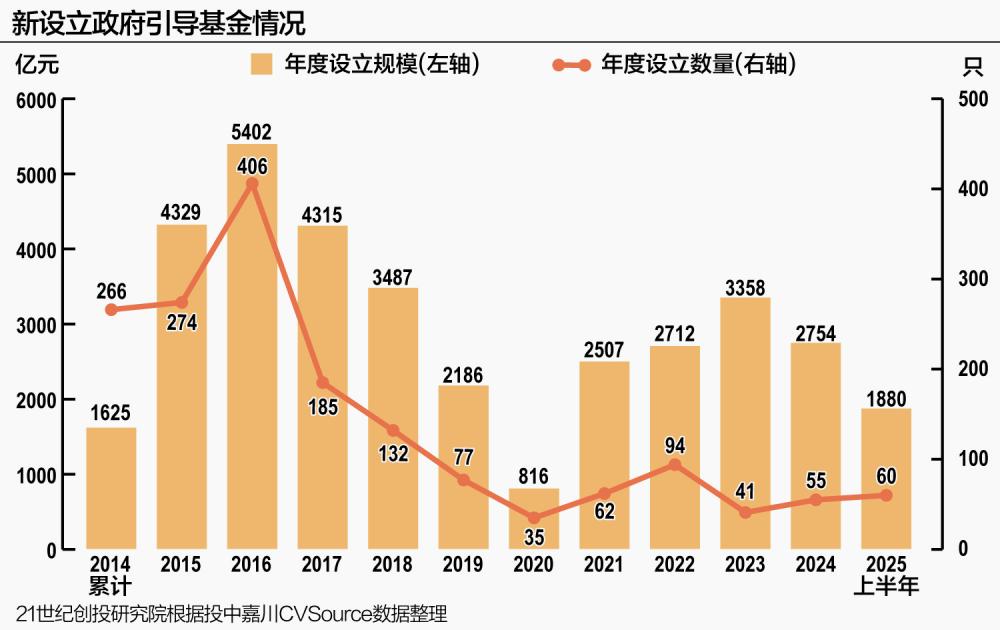
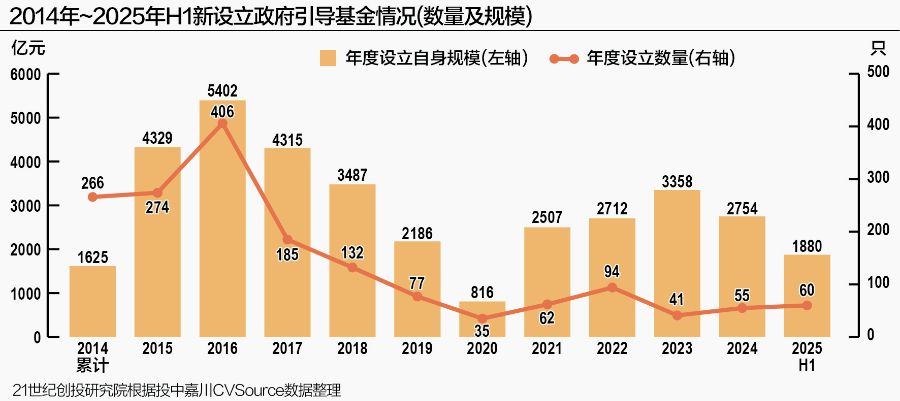
Core Viewpoint - Government investment funds have become a major source of capital in China's private equity investment industry, with increasing policy support and a focus on high-quality development in 2025 [1][9][23]. Group 1: Government Investment Fund Development - The State Council issued the "Guiding Opinions on Promoting the High-Quality Development of Government Investment Funds," outlining 25 measures across seven areas to enhance the fund's operational efficiency and effectiveness [1][9]. - In 2025, the establishment of new government investment funds showed a significant decline, with only 60 new funds set up in the first half of the year, compared to 55 in the entire previous year [4][19]. - The total scale of newly established government investment funds in the first half of 2025 reached 188 billion yuan, indicating a continued but slowing growth trend [4][19]. Group 2: Regional Disparities - The willingness to establish new government investment funds has significantly decreased in the central and western regions due to policy constraints and fiscal capacity, while regions like the Yangtze River Delta and the Guangdong-Hong Kong-Macao Greater Bay Area continue to show strong momentum [2][6][22]. - Local governments are increasingly focusing on optimizing existing funds rather than merely increasing the number of new funds, adopting a "fund cluster" model for more targeted investments [1][21]. Group 3: Investment Focus and Strategies - Government investment funds are primarily targeting strategic emerging industries such as new-generation information technology, biotechnology, and new energy vehicles, which are crucial for developing new productive forces [6][10]. - The investment strategy has shifted towards "early and small" investments, with a growing consensus on supporting early-stage projects while also considering investments in mature companies [6][10]. Group 4: Management and Operational Efficiency - The management model of government investment funds is evolving towards market-oriented and professional approaches, with a diverse range of fund managers being selected [25][27]. - Many local governments are offering more attractive conditions to fund managers, including lowering return ratios and extending fund durations to enhance operational efficiency [2][25]. Group 5: Exit Strategies and Market Conditions - The recovery of the A-share and Hong Kong IPO markets in 2025 has provided a favorable environment for government investment funds to realize exits, with many funds benefiting from the active M&A market [34][35]. - The introduction of S funds and the increasing flexibility in exit mechanisms are creating diverse exit pathways for government investment funds [34][39].

经开科创母基金完成首单S基金投资
FOFWEEKLY· 2026-01-09 10:00
Group 1 - The core viewpoint of the article highlights the strategic partnership between the domestic leading S fund management institution, Shengshi Investment, and the National Investment Fund's sub-fund, which has led to the establishment of China's first S fund continuation restructuring fund [1] - The newly established continuation restructuring fund has a scale of 615.5 million yuan, indicating a significant investment in the S fund sector [1] - The fund is characterized by a systematic selection and restructuring of existing S fund assets, with a focus on high-quality underlying assets and stable market performance, projecting a favorable DPI (Distributions to Paid-In) [1] Group 2 - The participation of 14 insurance capital and various provincial and municipal state-owned asset institutions in the fund demonstrates strong institutional interest, with insurance capital accounting for over 40% of the contributions [1]

①数据探秘:年度政府投资基金竞争力评价研究核心发现
2 1 Shi Ji Jing Ji Bao Dao· 2026-01-07 12:05
Core Insights - Government investment funds have become a major source of capital in China's private equity investment industry, playing a crucial role in promoting healthy industry development and optimizing traditional industries [1][3] Group 1: Policy and Regulatory Framework - The Chinese government has increased its focus on venture capital and private equity, with the release of the "Guiding Opinions on Promoting the High-Quality Development of Government Investment Funds" on January 7, 2025, which includes 25 measures covering the entire process of fundraising, investment, management, and exit [1][3] - The implementation of the "1号文" has guided local governments in developing investment funds, leading to the establishment of a "1+N" system across various regions [1][3] Group 2: Regional Trends - There is a noticeable decline in the willingness to establish new government investment funds in the central and western regions due to policy constraints and fiscal capacity, while economically active regions like the Yangtze River Delta and the Guangdong-Hong Kong-Macao Greater Bay Area continue to show strong momentum in fund establishment [2][6] Group 3: Fund Management and Investment Strategies - The management model of government investment funds is evolving towards market-oriented and professional approaches, with local governments increasingly seeking suitable general partners (GPs) for long-term cooperation rather than merely increasing the number of partnerships [2][6] - Many regions are lowering the reinvestment ratios and adopting more flexible recognition methods for reinvestment, while also extending fund durations to address the challenges of exit strategies [2][6] Group 4: Fund Performance and Growth - In the first half of 2025, 60 new government investment funds were established, surpassing the total of 55 for the entire year of 2024, with a total scale of 188 billion yuan, indicating a robust growth trend [4][6] - From 2014 to 2024, the number of government-guided funds increased by 1,361, with a compound annual growth rate (CAGR) of 19.85%, and the total scale increased by 31,866 billion yuan, with a CAGR of 35.33% [4][6] Group 5: Investment Focus and Trends - Government investment funds are increasingly focusing on strategic emerging industries such as new-generation information technology, biotechnology, new energy vehicles, and high-end equipment, which are crucial for accelerating the development of new productive forces [6][7] - There is a consensus in the industry to invest early and in smaller amounts, with both national and local government funds providing more guidance and support for early-stage projects [6][7] Group 6: Management Efficiency and Policy Impact - Most government investment funds have established sound systems and operational processes, with effective risk control mechanisms and information technology supporting fund selection and post-investment services [7][8] - Many funds are willing to disclose annual investment numbers and project scales, although they are cautious about revealing actual exit amounts and returns [8]
中国首支S基金接续重组基金来了
母基金研究中心· 2026-01-02 08:46
Core Viewpoint - The successful establishment of the first domestic S fund continuation restructuring fund by Shengshi Investment marks a significant innovation in the S fund sector, with a total scale exceeding 600 million yuan and participation from 14 long-term capital sources, including state-owned and insurance capital [1][2]. Group 1 - The S fund continuation restructuring fund utilizes a "restructuring configuration" model, allowing for a smooth exit of original shares while providing LPs with a clear and controllable asset portfolio [1]. - Shengshi Investment's S fund team actively matches asset and capital sides, balancing short-term returns with long-term growth, achieving a balance between DPI and book floating profit [1][2]. - The fund has attracted significant interest from insurance capital, which accounts for over 40% of the contributions, marking the first instance of insurance capital participating in an S fund continuation transaction model [2]. Group 2 - Shengshi Investment has been involved in the S fund sector since its inception, with a management scale nearing 5 billion yuan and a track record of over 50 S transactions [2]. - The chairman of Shengshi Investment, Jiang Mingming, emphasized that the successful launch of this fund provides an innovative solution for S fund exits and offers a replicable path for long-term and patient capital to engage in S investments [3]. - The company aims to deepen its layout in the S field and enhance liquidity in the primary market through continuous innovation and professional capabilities [3].

盛世投资超募设立国内首支S基金接续重组基金
投中网· 2025-12-31 03:45
Core Viewpoint - The article discusses the successful establishment of China's first S Fund continuation restructuring fund by Shengshi Investment, with a scale exceeding 600 million yuan, highlighting the innovative approach to asset reconfiguration and management in the S Fund sector [3][4]. Group 1: Fund Establishment and Scale - The S Fund continuation restructuring fund has a scale exceeding 600 million yuan and has attracted 14 long-term capital investors, including state-owned and insurance capital, achieving an oversubscription of the fund [3]. - This fund represents a pioneering effort in systematically selecting and reconfiguring quality assets from previously invested S Funds, marking a significant achievement for Shengshi Investment in the S Fund domain [3]. Group 2: Asset Configuration and Management - The fund employs a "reconfiguration" model that allows for a smooth exit of original shares while providing LPs with a clear and controllable asset portfolio [3][4]. - Shengshi Investment's S Fund team actively matches asset and capital sides, balancing short-term returns with long-term growth, and customizing complementary asset allocations for LPs [4]. - The fund has garnered significant interest from insurance capital, which accounts for over 40% of the contributions, making it the first S Fund continuation transaction model to involve insurance capital [4][5]. Group 3: Professional Capabilities and Future Outlook - The success of the fund is attributed to Shengshi Investment's strong capabilities in asset evaluation, pricing, and data analysis, which enhance decision-making efficiency and confidence among LPs [4][5]. - Shengshi Investment has been involved in the S Fund sector since its inception, with a management scale nearing 5 billion yuan and over 50 completed S transactions, establishing S strategy as a core focus [5]. - The chairman of Shengshi Investment emphasized that the successful launch of this fund provides an innovative solution for S Fund exits and offers a replicable path for long-term capital participation in S investments [5].

产业投资除了耐心还需用心
Jing Ji Ri Bao· 2025-12-23 22:16
Core Viewpoint - Government investment funds are crucial tools for supporting industrial development and innovation, with a focus on long-term value creation rather than short-term profits [1][2]. Group 1: Investment Strategies and Outcomes - Chengdu High-tech Zone has established a large-scale industrial fund cluster to effectively connect capital with advantageous projects, injecting continuous momentum into regional high-quality development [1]. - Chengdu State-owned Assets has invested in Haiguang Information for nearly 10 years, holding approximately 395.2 million shares, with estimated floating profits exceeding 100 billion yuan [2]. - The electronic information industry in Chengdu is projected to achieve revenues of 1.34 trillion yuan in 2024, demonstrating the impact of strategic investments [2]. Group 2: Capital Ecosystem and Collaboration - Chengdu High-tech Zone has created a comprehensive industrial support service system covering various stages from funding to mergers and acquisitions, aiming for efficient capital and project alignment [4]. - The establishment of 74 funds by Ciyuan Capital, with a total scale of 214.3 billion yuan, has fostered a broad mother fund ecosystem, enhancing local project coverage [3]. - The local government aims to build a collaborative capital ecosystem that effectively connects capital with advantageous projects [4]. Group 3: Long-term Commitment and Value Creation - Chengdu High-tech Zone emphasizes long-term investment strategies, focusing on advanced manufacturing and modern industrial systems to achieve sustainable growth [9]. - The first angel investment fund established in 2012 has evolved into a significant asset management entity, demonstrating the importance of patience in capital investment [4][5]. - The introduction of policies allowing for buybacks and loss tolerance aims to encourage early-stage investments by alleviating concerns over high valuations [11]. Group 4: Market Dynamics and Future Prospects - The establishment of the Chengdu Science and Technology Relay Equity Investment Fund marks a significant step in enhancing the private equity investment ecosystem [12]. - Regular investment roadshows have successfully attracted over 200 investment institutions, facilitating financing for early-stage projects [13]. - The ongoing development of a vibrant capital ecosystem in Chengdu High-tech Zone is expected to create a virtuous cycle of capital attracting projects, which in turn strengthen industries [14].
中国并购抄底时机到了
投资界· 2025-12-11 02:23
Core Viewpoint - The article discusses the emerging landscape of mergers and acquisitions (M&A) in China, highlighting the increasing opportunities and the evolving market dynamics that are driving this trend. Group 1: Market Environment - The current year is seen as a pivotal moment for new types of M&A, with expectations for rapid growth in the scale of M&A funds over the next five years [3][6] - The Chinese economy has matured, leading to a shift in focus from growth to efficiency and market positioning, which is conducive to M&A activities [9][16] - The concentration of industries in China is low compared to developed markets, creating a fertile ground for consolidation through M&A [9][16] Group 2: Institutional Perspectives - Various investment firms, such as CITIC Jinshi and Fangyuan Capital, have been actively establishing M&A funds and have extensive experience in the field [3][4][5] - The panelists emphasize the importance of understanding market demands and building capabilities to meet the growing need for M&A [8][17] - The role of private equity (PE) firms is crucial in connecting capital with quality assets, facilitating the M&A process [17] Group 3: Strategic Considerations - M&A is increasingly viewed as a necessary strategy for companies to diversify and develop second core businesses, especially for those that have reached a plateau in their primary sectors [6][8] - The need for professional management and strategic integration post-acquisition is highlighted as a key factor for successful M&A [20][29] - The importance of identifying unique and differentiated businesses for acquisition is emphasized to avoid market saturation and price wars [14][26] Group 4: Future Outlook - The article suggests that the current market conditions present a unique opportunity for M&A, with many quality companies available at attractive valuations due to recent market adjustments [17][28] - The potential for significant growth in the M&A sector is anticipated, driven by both domestic and international factors [17][27] - The development of a robust ecosystem of mid-sized and large M&A funds is seen as essential for sustaining industry growth [17][30]
靳海涛:中国创投往何处去
Xin Lang Cai Jing· 2025-12-04 07:49
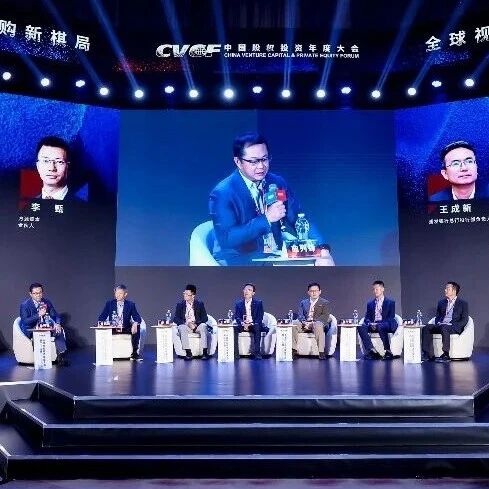
Core Insights - The annual China Private Equity Annual Conference will be held from December 2-5, 2025, in Shenzhen, focusing on observing China's technological innovation [2][18] - The chairman of Qianhai Ark Asset Management shared insights on the strategic role of venture capital and the development trends in China's venture capital landscape [2][19] Group 1: National Strategic Demand - Innovation is a core development strategy for every country, with two main paths: innovation investment-driven strategy and traditional investment-driven strategy [3][20] - Countries like the US, Israel, and China exemplify the innovation investment-driven strategy, which supports small enterprises and disruptive technologies, leading to significant capital inflow into the tech innovation sector [3][20] - In contrast, countries like Japan and Russia follow a traditional investment-driven strategy, relying on conventional financing channels and often missing out on technological advancements [4][20] Group 2: Impact of Venture Capital on China's Economy - Since the emergence of venture capital in 1999, China's GDP has grown over 13 times, with venture capital contributing more than 43% to this growth [5][21] - Venture capital has played a crucial role in nurturing high-quality enterprises, with over 90% of companies listed on the Sci-Tech Innovation Board and over 50% on the ChiNext Board being supported by venture capital [5][22] - The sector has significantly contributed to the development of key industries, including semiconductors, renewable energy, communication, transportation technology, artificial intelligence, and biomedicine [6][22] Group 3: Five Key Investment Directions - The first direction is the "short board" process, focusing on technological breakthroughs to ensure supply chain security and autonomy, with over 2 billion yuan invested in semiconductor companies [7][24] - The second direction is the digitalization process, which aims to transform traditional industries using digital technology, with significant investments in projects like 聚玻网 and autonomous driving [7][24] - The third direction is the carbon neutrality process, which has evolved from being finance-driven to policy-driven and now demand-driven, with investments in emerging technologies [7][25] - The fourth direction is the health sector, shifting from symptomatic treatment to root cause resolution, with predictions that China will lead in biopharmaceuticals in the next 7-8 years [7][26] - The fifth direction is consumer upgrade, emphasizing the importance of consumer sectors in economic growth and the need for investment support [7][26] Group 4: Recommendations for Future Development - The industry should focus on "early, small, and future" investments, promoting "patient capital" as a fundamental requirement for a healthy venture capital ecosystem [11][28] - There is a need to optimize the capital source structure in the venture capital industry, aiming for a balanced approach involving government capital, financial capital, and family wealth [12][29] - Emphasis should be placed on post-investment management and support, moving away from solely chasing "blockbuster" investments [12][30] - The development of S funds and follow-up funds is crucial for creating a sustainable innovation investment ecosystem [12][30] - A balanced support for various industries is essential to avoid over-concentration and to foster innovation across sectors [12][31]
前海方舟董事长靳海涛:看好“五大进程”投资机会
Xin Lang Cai Jing· 2025-12-03 15:03
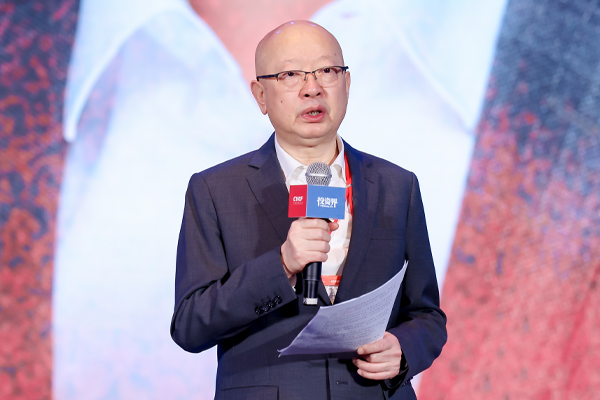
Core Insights - The 25th China Private Equity Annual Conference highlighted five key processes for venture capital funds to focus on, which are expected to yield good investment returns [1][3] Group 1: Five Key Processes - The first process is the "short board" process, aimed at addressing critical supply chain issues to ensure safety and self-control [1][3] - The second process is the digital transformation process, which involves using digital technology to reform traditional industries and alter work and life scenarios [1][3] - The third process is the carbon neutrality process, emphasizing the importance of transitioning energy structures [1][3] - The fourth process is the "big health" process, where significant changes in China's biomedicine sector, particularly in gene and cell innovation, are attracting investment [1][3] - The fifth process is the consumption upgrade process, which supports economic growth and enhances the quality of life, with consumption enterprises continuously evolving and deserving capital market support [1][3] Group 2: Market Outlook and Recommendations - The first recommendation is to "invest early, invest small, invest in the future," promoting the development of "patient capital" [2][4] - The second recommendation suggests optimizing the sources of capital for private equity investments [2][4] - The third recommendation indicates that private equity finance and capital attraction are becoming important means for local governments to transition from land finance, necessitating changes in commercial strategies and product designs of venture capital institutions [2][4] - The fourth recommendation emphasizes the need for venture capital institutions to focus more on post-investment management and services, adhering to a "30% investment, 70% management" principle [2][4] - The fifth recommendation calls for the development of S funds and follow-up funds from central to local levels to create a sustainable innovation investment ecosystem [2][4] - The sixth recommendation advocates for a diverse approach, where venture capital funds and capital markets support balanced development across various industries [2][4] - The seventh recommendation stresses the importance of maintaining a healthy secondary market, supporting IPOs of innovative enterprises and participating in mergers and acquisitions [2][4]