
供应链协同

Search documents
2024年从货架到消费者:无缝物流的实践艺术研究报告
Sou Hu Cai Jing· 2025-08-03 08:27
Core Insights - The report emphasizes the critical role of seamless logistics in reshaping the retail ecosystem, highlighting that logistics is no longer just about delivery but a key variable determining brand success [1][8]. Group 1: Retail and Logistics Interconnection - The retail market is undergoing unprecedented changes, with e-commerce growth in Southeast Asia and a resurgence of offline stores, as consumers seek both convenience and immersive shopping experiences [2][13]. - A study by Harvard Business School indicates that nearly half of intended purchases are lost when customers encounter out-of-stock situations, underscoring the importance of inventory availability [2][21]. - Excess inventory poses a hidden risk, as brands must manage stock levels carefully to avoid markdowns and optimize space in physical stores [2][3]. Group 2: Logistics as a Solution to Retail Challenges - Retail operational pain points, such as customer loss due to stockouts and cost pressures from excess inventory, are fundamentally linked to insufficient logistics efficiency [3][6]. - Companies face two primary logistics strategies: building in-house teams or partnering with third-party logistics (3PL) providers, with 3PLs often offering better flexibility and cost efficiency [3][4]. - 3PLs can significantly reduce logistics costs, which typically account for 15% of operational expenses, through optimized inventory management and streamlined processes [3][4]. Group 3: Technological Empowerment in Logistics - Real-time tracking systems and digital platforms enhance communication and decision-making across the supply chain, improving overall efficiency and customer experience [4][6]. - The integration of technology allows brands to provide accurate order status updates, thereby enhancing customer satisfaction [4][6]. Group 4: Case Studies Highlighting Logistics Impact - Faber-Castell improved its delivery times from 2-3 days to 1-2 days through logistics partnerships, resolving stockout and inventory issues [5][6]. - Kopi Kenangan's Cerita Roti benefited from a "same-day delivery" service, ensuring product freshness and maintaining a 95% on-time delivery rate [5][6]. - By Invite Only enhanced operational efficiency by switching to a professional logistics partner, achieving a stable twice-a-week replenishment schedule [5][6]. Group 5: Choosing the Right Logistics Partner - Retailers must consider various factors when selecting logistics partners, including national coverage, real-time tracking capabilities, and flexibility in delivery schedules [7][8]. - For brands with cross-border operations, the logistics partner's customs clearance capabilities and overseas warehouse presence are crucial for efficiency [7][8]. Group 6: Future of Retail Driven by Logistics - As consumer expectations for shopping experiences rise, logistics will play an increasingly vital role in retail success, shifting from a cost center to a growth engine [8][9]. - The ability to adapt logistics strategies dynamically based on demand will be essential for retailers to avoid stockouts and manage inventory costs effectively [8][9].


雪川应邀加入百胜中国“和羹计划” 构建供应链共生新格局
Jin Tou Wang· 2025-07-21 02:31
7月16日,第三届中国国际供应链促进博览会(链博会)在北京隆重开幕,全球100余个国家、地区及国际 组织齐聚一堂,共话产业链协同发展。期间,百胜中国正式发布 "百胜和羹发展计划",并联合供应链 核心合作伙伴举办 "和羹之友分享会",深度探讨供应链协同共生路径。雪川农业集团董事长王登社受 邀出席发布会及分享会,代表国产马铃薯产业力量参与这一行业盛事。 和羹之美 :共筑互信生态 "百胜和羹发展计划" 将 "共筑互信生态" 列为核心维度,旨在突破传统采供关系的壁垒,打造以信任为 基石的产业协同网络。这一战略方向与雪川 18 年来坚守的发展理念高度契合。在百胜中国严苛的高品 质标准牵引下,雪川持续精进国产马铃薯的品质管控体系,依托百胜中国覆盖广泛的市场渠道与自身深 耕多年的种植加工优势,双方共同搭建起高效稳定的产销闭环,实现了需求端与供给端的精准对接。 在活动现场,王登社详细介绍了雪川的发展实践:通过构建覆盖种植、加工、仓储、物流全链条的质量 管控体系,雪川已连续多年稳居 "亚洲品牌 500 强"和"中国品牌 500 强" 榜单,品牌价值实现跨越式增 长。 在产业协同层面,双方以西北马铃薯主产区为核心阵地,创新采用 ...
《企业采购物资分类编码指南》将于9月1日起正式实施
Zhong Guo Chan Ye Jing Ji Xin Xi Wang· 2025-07-20 22:29
Core Viewpoint - The newly approved national standard "Guidelines for Classification and Coding of Procurement Materials" (GB/T45309-2025) aims to establish a unified coding system for procurement materials in Chinese enterprises, enhancing standardization and digitalization in procurement management [1][2]. Group 1: Standard Implementation - The standard will be implemented starting September 1 and will initially be piloted in central enterprises and large private enterprises [1]. - It is designed to address the chaotic classification and inconsistent coding rules in the procurement sector, which have led to inefficiencies and increased management costs [2]. Group 2: Framework and Guidelines - The standard provides a clear, hierarchical, and widely applicable classification framework and coding rules for procurement materials [3]. - It encourages enterprises to use parts or all of the UNSPSC (United Nations Standard Products and Services Code) or GPCC (Government Procurement Category Directory) for their procurement material classification [3]. Group 3: Impact on Procurement Management - The implementation of the standard will enhance price transparency and control by enabling cross-platform price tracking and establishing a foundation for procurement cost analysis [4]. - It will facilitate horizontal and vertical comparisons of procurement data across enterprises and regions, aiding in precise cost accounting and supplier management [4]. - The standard promotes digital and intelligent upgrades in procurement management systems, significantly improving operational efficiency [4]. Group 4: Industry Collaboration - The standard is overseen by SAC/TC287 (National Technical Committee for Standardization of Goods Coding), with participation from 29 organizations, including China Logistics Coding Center and major energy companies [5].
第三届链博会:新能源新车密集亮相 前沿技术集中展示
Yang Guang Wang· 2025-07-20 01:04
Core Insights - The third China International Supply Chain Promotion Expo (Chain Expo) is currently being held in Beijing, showcasing a significant number of new energy vehicles and advanced technologies in the "Smart Automotive Chain" exhibition area, indicating a collaborative acceleration in the global automotive supply chain [1] - Over 230 new domestic and international companies are participating for the first time, highlighting the growing interest and opportunities in the automotive sector [1] - The International Automobile Federation (FIA) sees vast cooperation potential with Chinese automotive companies, aiming to establish new partnerships [1] - Major battery material supplier BetterRay is participating for the second time, emphasizing the importance of industry collaboration and innovation for robust supply chain development [1][2] Industry Trends - In the first half of the year, China's automotive production and sales both exceeded 15 million units for the first time, with new energy vehicles showing remarkable performance [3] - Companies like XPeng Motors focus on collaboration rather than competition, aiming to co-create and enhance supply chains for better future mobility solutions [3] - The global automotive industry is undergoing profound changes, with supply chain efficiency and technological innovation becoming key competitive advantages [3] - Companies are planning to deepen collaborations with leading global supply chain firms to overcome industry technological bottlenecks [4]
商务部签字了!澳大利亚终于下定决心,不跟美国混了?阿尔巴尼斯离京前,对华做重大承诺
Sou Hu Cai Jing· 2025-07-19 02:54
Group 1 - The signing of the memorandum for the review of the China-Australia Free Trade Agreement (FTA) marks a significant step towards higher levels of trade liberalization and facilitation, occurring on the 10th anniversary of the agreement's effectiveness [1] - Since the FTA came into effect in 2015, trade between China and Australia has been growing annually, with Australia’s exports to China reaching AUD 212 billion in the 2023-2024 fiscal year, accounting for one-quarter of its total exports [1] - The Australian government is shifting its approach from ideological confrontation to pragmatic cooperation, recognizing the importance of the Chinese market for its economy, particularly in sectors like iron ore where major companies rely heavily on Chinese demand [3][4] Group 2 - The Australian government has committed to not seeking economic decoupling from China and aims to treat Chinese enterprises fairly, addressing previous concerns over investment restrictions [4] - The FTA has significantly benefited Australian industries such as health products and agriculture, with a reported 21.3% year-on-year increase in imports of health products from China in 2023 [4][7] - Australia is supporting China's hosting of the 2026 APEC meeting, indicating a desire to balance relations between the US and China while enhancing economic ties with Asia-Pacific countries [5][8] Group 3 - Key areas for future cooperation include clean energy, agricultural technology, and supply chain collaboration, with both countries having complementary strengths [8] - The ongoing issues such as the Darwin Port lease and 5G technology barriers remain critical challenges that could affect mutual trust and cooperation [8][10] - The success of the relationship will depend on Australia translating its commitments into concrete actions, including lowering market access barriers and maintaining consistent policies on sensitive issues [10]

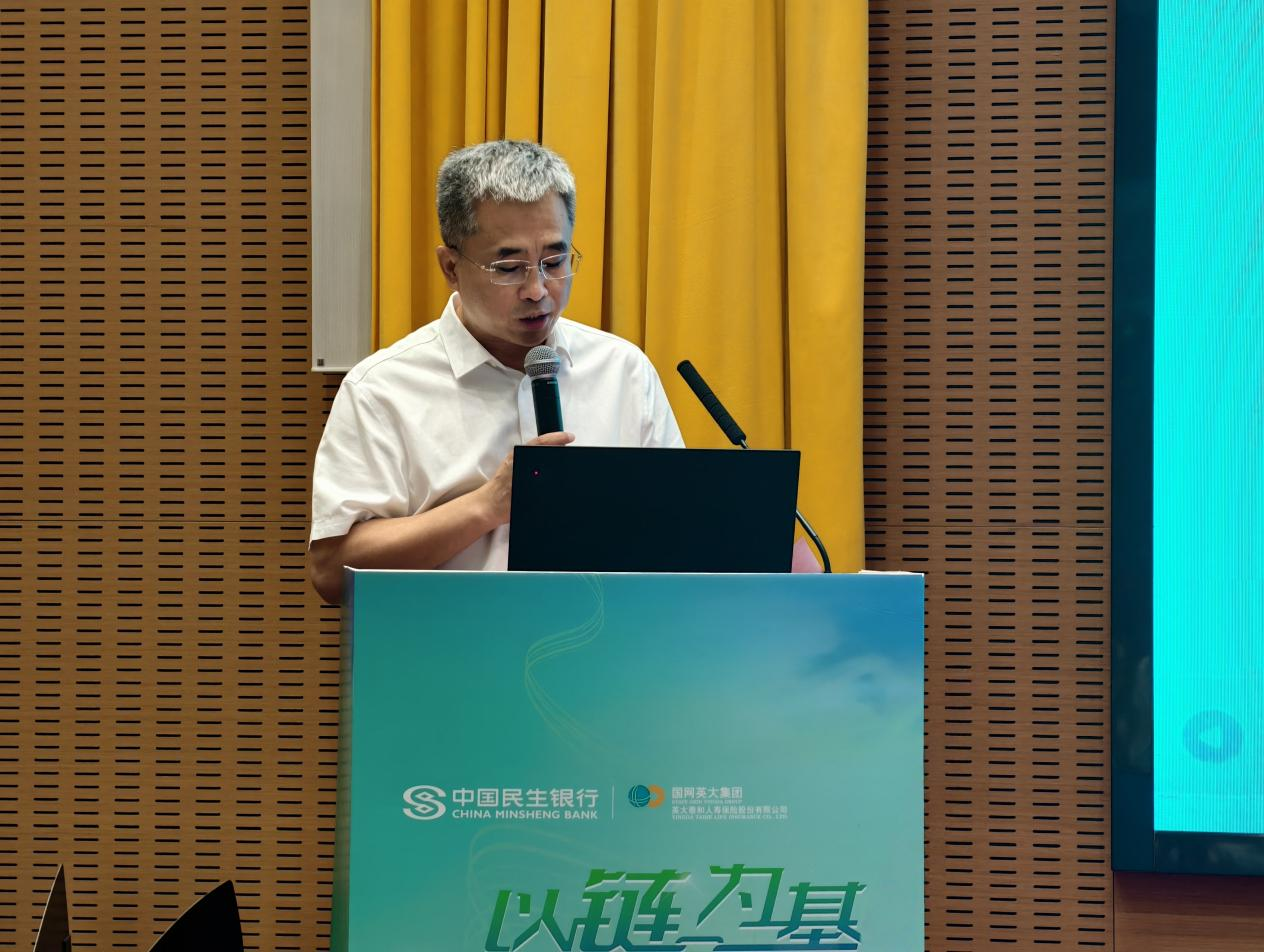
中国民生银行济宁分行成功举办“以链为基 绽放光芒”国网供应链客商大会暨“电 e 金服”平台电费金融专场推介会
Qi Lu Wan Bao· 2025-07-17 08:31
Core Insights - The conference titled "Based on Chain, Blooming with Glory" focused on the construction of the State Grid supply chain ecosystem and innovation in electricity financial services, aiming to provide high-quality financial services and address financing and settlement challenges for enterprises in the supply chain [1][7]. Group 1: Event Overview - The event was organized by China Minsheng Bank Jining Branch and supported by State Grid Jining Power Supply Company, gathering leaders from various financial and corporate sectors [2][3]. - Key representatives from major enterprises shared their experiences using Minsheng Bank's "Electricity e-Certificate," providing valuable insights for attendees [6]. Group 2: Financial Services and Innovations - China Minsheng Bank introduced the "State Grid Supply Chain Financial Service Plan," leveraging the "Electricity e-Finance" platform to offer comprehensive digital financial solutions covering orders, inventory, and electricity payments [6]. - The "Electricity e-Finance" platform aims to facilitate efficient collaboration between State Grid chain customers and financial institutions, providing diverse products for settlement, financing, and cash management [6][7]. Group 3: Future Outlook and Collaboration - The successful hosting of the conference is seen as a significant step towards modernizing the supply chain and promoting the innovative development of the State Grid supply chain ecosystem [7]. - China Minsheng Bank Jining Branch and State Grid Yingda Life Jining Center intend to deepen cooperation to provide quality financial services to enterprises in the supply chain, contributing to sustainable economic development [7].

太古集团携多元业务亮相第三届链博会
Ren Min Wang· 2025-07-17 02:20
Group 1 - The third China International Supply Chain Promotion Expo (Chain Expo) opened on July 16, showcasing Swire Group's diverse businesses in the quality life section [1] - Swire Group's China Chairman, Cheung Yat Tak, emphasized the company's commitment to sustainable practices and collaboration with partners in China's industrial chain to promote high-quality development [1] - Swire Properties presented the future development blueprint of Beijing Taikoo Li through a model, highlighting standards for high-quality commercial communities [1] Group 2 - Swire Coca-Cola is embedding sustainability into its entire research, production, and operation chain to achieve its net-zero emissions target by 2050 [2] - Swire Sugar is leading a new trend in healthy consumption with innovative products like natural sweeteners and tremella soup [2] - Cathay Pacific aims to enhance global aviation through improved route planning, service quality, and passenger experience, reaching 100 global passenger destinations in the first half of this year [2] Group 3 - Swire Group's various businesses are focused on deepening supply chain collaboration through innovation and sustainable practices, aligning with the new development pattern of "dual circulation" [2] - The company is committed to contributing value to China's economic and social development while responding to diverse consumer demands for a better life [2]

航运巨头反垄断调查风暴:一场正在重塑国际货代市场的底层革命
Sou Hu Cai Jing· 2025-07-07 07:06
Core Insights - The article discusses the significant impact of the Kenyan Competition Authority's (CAK) antitrust investigation on the logistics and freight forwarding industry in East Africa, leading to a transformation in pricing and operational dynamics [1][2]. Pricing System Collapse - The CAK's investigation revealed a price-fixing agreement between shipping giants Maersk and CMA CGM, which had established a uniform terminal handling fee of $99 per 20-foot container, undermining the pricing foundation of the international freight market [2]. - Multinational shipping companies control over 70% of logistics contracts, creating a closed network that disadvantages local logistics firms, which own 90% of truck assets but only handle 30% of transport business [2]. - The investigation has led to a dramatic increase in complaints related to detention fees, with a reported 270% rise in customer complaints due to disputes over these fees in 2024 [2]. Supply Chain Financial Impact - Trade financing data from Dubai's NBD Bank indicates an 18 percentage point increase in the credit refusal rate for East African routes in Q1 2025, with 62% of refusals linked to shipping document delays [3]. - The average cash turnover rate for freight forwarding companies has decreased by 35% due to the "hidden pricing" controlled by shipping giants, leading to increased reliance on costly short-term financing [3]. Logistics Path Reconstruction - Following the CAK investigation, local logistics firms gained a 15% operational share at the new container terminal in Mombasa, resulting in a 210% year-on-year increase in cargo transported via the Nairobi-Malaba railway [4]. - In the cross-border e-commerce sector, there was an 85% increase in packages transported from Djibouti to Ethiopia in Q2 2025, while the traditional Mombasa route's share dropped to 48% [4]. Service Capability Transformation - A survey indicated that only 12% of local freight forwarding companies had rail intermodal operation qualifications in 2024, but this figure rose to 39% by July 2025 [5]. - The complexity of managing multiple documents in intermodal transport has led to a 30%-50% increase in service premiums for companies capable of integrating these operations, while traditional sea freight services have seen profit margins shrink to below 8% [5]. Market Structure Evolution - The CAK's investigation exposed the systemic control exerted by shipping giants over the freight forwarding market, with companies under exclusive contracts with Maersk facing 18%-22% lower booking costs compared to independent freight forwarders [6]. - Following the investigation, the CAK mandated shipping companies to allocate 20% of their capacity to independent freight forwarders, resulting in a market share increase for these companies from 17% to 31% in June 2025 [6]. Supply Chain Collaboration Changes - The breaking of shipping giants' monopolies has prompted freight forwarding companies to seek cross-segment collaborations, leading to the creation of a "door-to-door full chain service package" that is 15%-20% cheaper than bundled services from shipping giants [7]. - This decentralized collaboration model resulted in a 75% year-on-year revenue increase for alliance members in the first half of 2025, while companies relying solely on traditional shipping channels experienced a 12% revenue decline [7].
北大汇丰智库发布二季度经济研判:中国经济全年增速预计达5%
Sou Hu Cai Jing· 2025-07-04 11:20
Group 1 - The macroeconomic analysis conference hosted by Peking University HSBC Business School focused on China's economic cooperation opportunities with Southeast Asia and the Middle East in 2025 [1] - The conference gathered over 160 experts from various sectors to discuss the economic situation of China and the Guangdong-Hong Kong-Macao Greater Bay Area in the second quarter of 2025 [1] Group 2 - Southeast Asia is projected to be the fifth-largest economy globally, with a GDP growth rate of 4.8% and export growth of 6.8% in 2024, alongside a 10% increase in foreign direct investment [4] - The Middle East accounts for 5.2% of global GDP and is a significant source of energy imports for China, with strong growth in imports of machinery and vehicles [4] - There is substantial cooperation potential between China and Southeast Asia/Middle Eastern countries in supply chain collaboration, digital economy, artificial intelligence, and energy transition [4] Group 3 - China's economic growth is expected to show a pattern of high growth in the first half and lower growth in the second half of 2025, with an overall target of around 5% for the year [5] - The use of targeted consumption vouchers is aimed at temporarily boosting consumption by increasing disposable income, but long-term strategies should focus on increasing income and reducing leverage [5] - There remains a demand for housing, with current policies favoring the second-hand housing market due to its advantages in availability and cost-effectiveness [5] Group 4 - The Guangdong-Hong Kong-Macao Greater Bay Area is experiencing growth supported by consumption, although there is a need to boost corporate investment confidence [6] - From January to May, consumer policies in Guangdong have shown significant effects, with a 6.79% increase in exports of machinery and electrical equipment [6] - The GDP growth for the Greater Bay Area in the second quarter is projected to be 4.3% [6] Group 5 - Key investment opportunities in the Middle East include agriculture, digital products in service trade, the second-hand car market, and manufacturing enterprises with advanced technology [8] - The population of the UAE is 12.5 million, with over 80% being expatriates, indicating significant opportunities due to the influx of people and capital [8] Group 6 - The global industrial transfer process has accelerated, with a decrease in China's share of U.S. imports and an increase in emerging economies like Bangladesh and India [9] - Strategies for China include focusing on trade negotiations, encouraging companies to explore overseas markets, and developing service trade to reduce trade deficits [9] Group 7 - The relationship between macro and microeconomic factors is crucial, with a focus on how weak private investment can lead to reduced employment opportunities and slower income growth [13] - The balance between domestic market development and international expansion is essential for sustainable growth, as seen in developed economies [13]

企业B2B系统选型指南:数商云如何凭借创新技术引领行业变革
Sou Hu Cai Jing· 2025-06-30 09:35
Core Insights - The article discusses the challenges and opportunities in selecting B2B systems in the context of digital transformation, emphasizing the need for advanced systems to enhance supply chain collaboration and efficiency [1][10] - It highlights the significant improvements in supply chain efficiency and order processing times achieved by companies adopting advanced B2B systems, with an average efficiency increase of 30% and a 25% reduction in order processing cycles [1] Group 1: B2B System Selection Criteria - Functionality matching is crucial, with industry-specific customization determining the value of implementation, as demonstrated by a 40% reduction in procurement cycles and a 25% increase in inventory turnover for a large machinery manufacturer [1][2] - System performance and stability are essential, with the ability to handle high transaction volumes, as evidenced by a B2B platform supporting over 100,000 SKUs and achieving a 30% improvement in logistics efficiency [2][3] - Security and compliance are paramount, with blockchain technology ensuring data integrity and regulatory adherence, resulting in a 15% reduction in financing costs for a chemical company [2][4] - User experience and ease of use are important, with specific needs varying by industry, such as production planning in manufacturing and traceability in pharmaceuticals [2][5] Group 2: Technological Innovations by the Company - The company employs a microservices architecture to enhance system availability, achieving 99.99% uptime during peak traffic periods [5][6] - Blockchain technology is utilized to create a trust economy, reducing procurement costs by 12% and transaction times from 7 days to 3 days for an electronics trading company [5][8] - An AI platform is integrated for intelligent recommendations and demand forecasting, leading to a 25% increase in sales for a new bag brand [5][8] - A low-code development platform is available, reducing customization time by 60% and costs by 40% for manufacturing enterprises [5][8] Group 3: Industry Practices and Future Trends - The company’s technical team comprises members from leading tech firms, ensuring expertise in B2B system development and support [6][10] - The service process includes comprehensive management from requirement analysis to system deployment, with 24/7 technical support ensuring rapid issue resolution [6][10] - Future trends indicate a shift towards intelligent, globalized, and ecosystem-oriented B2B systems, with the company positioned as a leader in driving technological innovation [10][12]