
创新驱动

Search documents
确保“十五五”开好局起好步 一步一个脚印把成都现代化建设推向前进
Xin Lang Cai Jing· 2026-01-27 18:56
Core Viewpoint - The article discusses the opening of the Chengdu Municipal Political Consultative Conference, emphasizing the importance of the "14th Five-Year Plan" achievements and the strategic goals for the "15th Five-Year Plan" period, focusing on modernization and economic development in Chengdu [1][2]. Group 1: Development Strategy - Chengdu aims to establish itself as a national economic center and international consumption hub, focusing on boosting consumption, expanding domestic demand, and improving the investment and financing environment [2]. - The development strategy includes "innovation-driven, open leadership, integration of science and industry, and revitalizing counties and districts" [2][4]. Group 2: Economic Environment - The efficiency of Chengdu's investment attraction has significantly improved, with rapid cooperation agreements being finalized, which has reduced operational hurdles for businesses [3]. - Government initiatives have been described as timely support for startups, alleviating operational pressures and fostering a conducive environment for business growth [3]. Group 3: Technological Innovation - The integration of digital culture and technology is a focal point, with suggestions to leverage AI and virtual reality to enhance cultural experiences for visitors [4]. - A collaborative innovation model involving government, industry, academia, and research institutions is recommended to convert technological advantages into industrial development [4]. Group 4: Social Welfare and Public Services - The conference highlighted the need for high-quality development in public services to enhance citizens' happiness, with specific initiatives like credit-based medical services being discussed [6]. - Suggestions were made to improve public service facilities in urban renewal projects, ensuring they meet community needs effectively [6]. Group 5: Aging Population and Technology - The application of AI technology in the silver economy is seen as a key driver for new productivity, with a focus on developing innovative products tailored for the elderly [7]. - Companies are encouraged to enhance their core competitiveness through continuous product innovation and by expanding into international markets while addressing domestic needs [7].

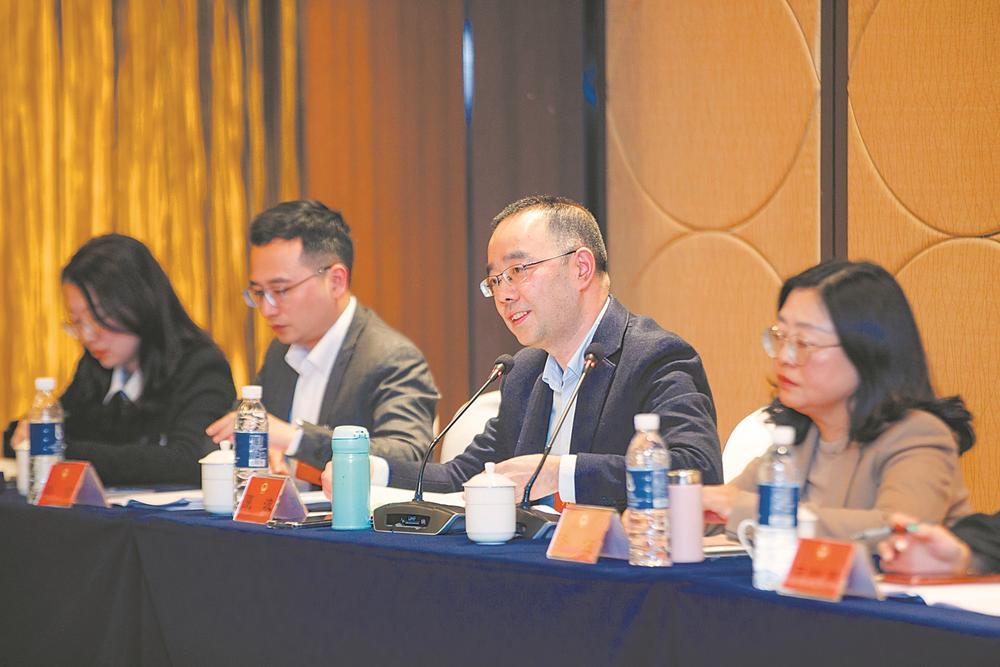
市政协十六届四次会议开幕
Xin Lang Cai Jing· 2026-01-27 18:56
Group 1 - The core viewpoint emphasizes the importance of "innovation-driven, open leadership, integration of science and industry, and strong counties to invigorate districts" as a development strategy to enhance growth momentum and expand development space [1] - The strategy includes a focus on the "Five Centers and Five Places" development positioning to elevate the city's strategic status and comprehensive capabilities while showcasing urban characteristics and core competitiveness [1] - Key tasks outlined include "Eight Advancements and Eight Enhancements" aimed at consolidating advantages, breaking bottlenecks, and promoting high-quality development, high-quality living, and efficient governance [1] Group 2 - The emphasis on the role of the People's Political Consultative Conference (PPCC) in political consultation, democratic supervision, and participation in governance is highlighted, urging members to actively engage in decision-making and social governance [2] - The need for city-level party committees to strengthen leadership over PPCC work and integrate it into overall planning is stressed, ensuring that PPCC organizations and members have opportunities to contribute meaningfully [2] - The attendance of various leaders and representatives from different sectors at the opening meeting indicates a collaborative approach to governance and community engagement [2][3]
展现担当作为 凝聚团结力量
Xin Lang Cai Jing· 2026-01-27 18:56
Group 1 - The meeting of the Chengdu Municipal Political Consultative Conference focused on discussing the achievements and future goals outlined by the Secretary of the Chengdu Municipal Committee, emphasizing the importance of unity and responsibility among committee members [1][2] - The strategic vision for Chengdu's modernization includes "innovation-driven, open leadership, integration of science and industry, and revitalization of counties and districts," along with specific development tasks and goals for the year [1] - Committee members expressed strong support for the work reports, highlighting their practical and focused nature, and committed to contributing to the modernization efforts of Chengdu under the leadership of the Municipal Committee [2] Group 2 - Discussions also included the report on the work related to reflecting social sentiments and public opinion, indicating an ongoing commitment to understanding and addressing community needs [3]
全国首个区县级万亿行政区在广东诞生
Xin Lang Cai Jing· 2026-01-27 03:23
全国首个区县级万亿行政区在广东诞生。1月27日,记者从深圳市南山区了解到,2025年该区地区生产 总值突破一万亿元、增速超6%,地均GDP达54亿元/平方公里,人均GDP超54万元,成为中国第一个经 济总量破万亿元的区县级行政区、继上海市浦东新区和北京市海淀区后第三个破万亿元的市辖区。 习近平总书记指出,要牢牢把握高质量发展这个首要任务,因地制宜加快发展新质生产力。2022年12月 以来,广东创新实施"百县千镇万村高质量发展工程",全省122个县(市、区)成为高质量发展的重要 引擎。 "南山要成为生产上的'金山银山',生态上的'绿水青山',生活上的'寿比南山'。"南山区委书记黄湘岳表 示,南山区致力于构建"有为政府"与"有效市场"良性互动的生态,政府专注搭建平台、优化服务,让市 场活力充分涌流。 "一座区县级行政区经济体量突破万亿,具有风向标意义。"综合开发研究院(中国·深圳)常务副院长 郭万达认为,这标志着广东区域发展正在全面转向创新驱动和生态驱动,以南山区为代表的区县正在探 索一条打破传统要素约束的可持续发展路径。 就在深圳科创学院不远处,一座机器人谷正在快速崛起。以西丽湖国际科教城为核心、沿留仙大道布局 ...
中信证券:业绩预期稳健、创新加速兑现 医药政策优化趋势延续
智通财经网· 2026-01-27 01:53
智通财经APP获悉,中信证券发布研报称,展望2026年医药投资趋势,无论是中国医药企业在创新领域 的集中兑现,还是政策端出台支持创新药械、优化集采、推动商保等一系列产业支持政策,医疗健康产 业的内外因催化因素都有望延续,医疗健康产业开始逐步重新回归到临床价值和需求导向的市场价格定 价体系,带来稳定且持续的国内医药市场环境和长坡厚雪的发展主基调,上市公司也有望迎来持续且稳 定的业绩增长趋势,带来行业成长高确定性的贝塔。 因此该行认为医药行业将是有望继续维持超配的行业,从横向维度上,建议2026年围绕以下几条主线进 行布局:1)创新驱动和国际化——在反内卷的国内政策环境下,关注创新驱动和国际化出海的相关标 的;2)自主可控——该行预计在未来可能还会陆续面临地缘政治扰动带来的风险,应更多关注自主可控 下核心零部件、试剂、科研上游的进口替代进程加速的相关标的;3)新政新气象——受益于集采优化、 医保三个支付、消费刺激政策和国企改革的相关标的。 中信证券主要观点如下: 25Q4/H2医疗健康产业整体来看业绩表现预期较为稳健,同时该行看到医药和医疗企业的创新正在加速 兑现为业绩端的增长 该行对重点覆盖的76家医药公司25 ...

奋进“关键五年”,争做西部示范
Shan Xi Ri Bao· 2026-01-27 00:04
"十四五"圆满收官,"十五五"着墨起笔。 从黄土高原转型升级的能源基地,到关中平原创新涌动的科创高地,再到陕南山区绿意盎然的生态 腹地……伴随着深化开展"三个年"活动、聚力打好"八场硬仗","十四五"期间的陕西,高质量发展现代 化建设迈出新的坚实步伐。 "十五五"时期是陕西在中国式现代化建设中追赶超越、争做示范的"关键五年"。在"十五五"开局之 年召开的省两会上,代表委员再度会聚、满怀期待,纷纷表示,在新的重要征程上,要坚持以推动高质 量发展为主题,大力发展县域经济民营经济开放型经济数字经济,紧紧围绕加快建设教育强省、科技强 省、人才强省、文化强省,进一步激发为民履职担当、建言献策的使命感责任感,把宏伟愿景变成美好 现实,为奋力谱写中国式现代化建设的陕西新篇章作出更大贡献。 省委十四届九次全会明确提出,"在创新驱动引领高质量发展上取得更大突破、争做西部示范"。 省政协委员、中建丝路西安建设运营有限公司副总经理刘峰建议,应深化秦创原创新驱动平台改 革,推动应用基础研究与关键核心技术攻关,鼓励龙头企业牵头组建产学研用开放平台。同时,探 索"未来场景+试点示范"机制,加快培育科技企业梯队,并借助"硬科技大会"等品牌 ...
GDP首破5万亿背后:委员热议北京经济发展,蹚出转型新路子
Bei Ke Cai Jing· 2026-01-26 03:44
Core Insights - Beijing's GDP has historically surpassed the 5 trillion yuan mark, reflecting strong economic growth and comprehensive strength [3][4] - The government report emphasizes a unique path of "reduction development" for mega-cities, addressing urban challenges while achieving significant progress in areas like pollution control and infrastructure [5][6] Economic Performance - Over the past five years, Beijing's GDP has averaged a growth rate of 5.2%, successfully transitioning from 4 trillion to 5 trillion yuan [1][7] - The government aims for a GDP growth target of around 5% for the current year, supported by solid foundations laid during the 14th Five-Year Plan [6][7] Development Strategies - Key strategies for sustaining growth include enhancing effective investment, promoting consumption, stabilizing the real estate market, and ensuring social welfare [7] - The report outlines three core paths for future growth: 1. "New quality productivity" through AI and high-tech industries [8] 2. "Collaborative efforts" to improve investment and regional cooperation [8] 3. "Demand activation" by enhancing service consumption and addressing consumer needs [8] Innovation and Transformation - Beijing's approach to "reduction development" emphasizes innovation-driven growth rather than traditional factor input, showcasing a shift towards high-quality development [5][6] - The city is focusing on technological advancements and productivity improvements as key drivers for future economic expansion [5][8]
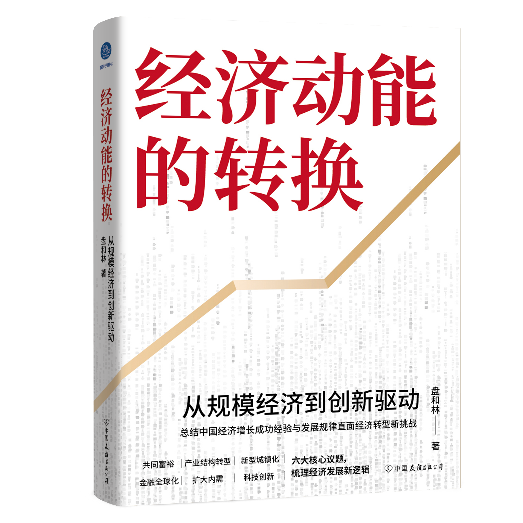
评《经济动能的转换:从规模经济到创新驱动》
Jing Ji Wang· 2026-01-26 03:18
Core Viewpoint - The narrative surrounding China's economy oscillates between two seemingly opposing yet interconnected perspectives: the "development miracle" and the "special exception," both of which suggest that the Chinese economy is fundamentally difficult to understand [1] Group 1: Economic Development Framework - The initial phase of China's economic rise was not based on a "standard market economy," but rather on addressing basic supply issues due to capital scarcity and technological lag, making scale economy a feasible choice at that time [1][2] - The development of the manufacturing sector exemplifies this logic, where China established a relatively complete industrial system through scale production and industrial clustering, leading to cost reduction and supply expansion [2] - The transition from scale advantages to systemic advantages is highlighted, indicating that scale not only implies production expansion but also the formation of stability and synergy within the industrial chain [2] Group 2: Growth Logic and Challenges - Any growth logic has its limits; once basic supply issues are resolved, continuing along the path of scale expansion leads to diminishing marginal returns, resulting in overcapacity and homogenized competition [2] - The issues of overcapacity and competition are not failures of the growth model but rather natural outcomes of the scale growth logic reaching maturity [2] Group 3: Real Estate Sector Analysis - The real estate sector is analyzed within the context of urbanization, land systems, and financial systems, where it played a crucial role in local economic development during rapid urban expansion [3] - As demographic structures change and urbanization slows, the previous model of real estate development enters an adjustment phase, which is a natural result of the old logic reaching its limits [3] Group 4: Innovation as a Growth Driver - The book emphasizes that innovation is not merely a technical aspect but a necessary transformation of the growth model, shifting from reliance on factor input to efficiency enhancement and structural optimization [4] - Innovation emerges as a natural choice when the old growth model becomes unsustainable, providing a coherent explanation for the transition from high-speed growth to high-quality development in China [4] Group 5: Historical Context and Future Outlook - Understanding China's economic development as a continuous adjustment of growth logic across different stages is crucial, rather than viewing it as an unreplicable miracle [4][6] - The book aims to place China's economic narrative back into historical and realistic coordinates, making it comprehensible and logical [6]
3.9万亿元研发经费投入厚蓄硬核实力
Jing Ji Ri Bao· 2026-01-26 02:43
Group 1 - The core point of the article highlights China's significant investment in R&D, reaching 39,262 billion yuan, with an R&D intensity of 2.8%, marking a new milestone in the country's technological development and surpassing the OECD average for the first time [1] - Continuous increase in R&D investment is attributed to the synergy of policy guidance, market drive, and active participation from enterprises [1] - The top-level design has established a solid institutional foundation for technological innovation, with systematic measures empowering high-level technological self-reliance and strength as a strategic support for modernization [1] Group 2 - China's innovation indicators are improving, with the country ranking in the top ten globally for innovation index and surpassing 5 million effective invention patents, while leading the world in PCT international patent applications for six consecutive years [2] - The speed of industrial upgrading is accelerating, with the added value of equipment manufacturing and high-tech manufacturing industries expected to reach 36.8% and 17.1% of the total industrial added value by 2025 [2] - Key breakthroughs have been achieved in fields such as artificial intelligence, quantum computing, and new energy, with the number of AI companies exceeding 6,000 and the core industry scale projected to surpass 1.2 trillion yuan by 2025 [2] Group 3 - Despite notable achievements, there is still room for improvement in the structure and efficiency of R&D funding, particularly in increasing the proportion of basic research [3] - There is a need to promote balanced regional development, as R&D resources are currently concentrated in the eastern regions, requiring policy guidance and collaboration to bridge the gap with central and western regions [3] - Enhancing the mechanism for converting research results into market applications is essential to prevent technological achievements from remaining unused [3]
一场送给新能源产业的“成人礼”
Qi Huo Ri Bao Wang· 2026-01-26 01:34
Core Viewpoint - The recent adjustment of export tax rebates for photovoltaic and battery industries marks a significant turning point in the sector, transitioning from "universal subsidies" to "high-quality guidance" in China's new energy industry support logic [1] Group 1: Policy Impact - The policy adjustment reflects a dual embodiment of national industrial development strategy and optimization of fiscal resource allocation, as the export tax rebate system has supported the rapid establishment of a leading global photovoltaic and lithium battery industry chain since 2013 [1] - China's global production share of photovoltaic polysilicon, battery cells, and modules exceeds 85%, with leading lithium battery companies holding nearly 70% of the global market share, indicating a shift in the environment for high export tax rebates [1] Group 2: Industry Challenges - The adjustment directly addresses the core issue of "internal competition externalization," where the increase in volume and decrease in price of photovoltaic products have led to a situation where domestic fiscal subsidies are used to compete in overseas markets, resulting in profit loss for companies and increased international trade friction [2] - The policy aims to cut reliance on low-price competition, forcing the industry to return to value-based competition, which is a necessary choice for building a healthy industrial ecosystem [2] Group 3: Short-term Effects - In the short term, the 2-3 month rebate window has triggered a noticeable "export rush," with some previously halted photovoltaic companies resuming production and battery companies accelerating order deliveries, leading to a potential increase in demand for upstream raw materials like lithium carbonate [2] - However, there is a risk of a phase of demand decline following the "export rush," particularly in the mid and downstream segments of the photovoltaic industry, where competition pressure may intensify due to temporary overcapacity [2] Group 4: Long-term Structural Changes - The policy is expected to drive three structural changes in the industry: 1. The competition logic will shift from "price competition" to "capability competition," leading to the exit of smaller companies with weak cost control and technology, concentrating resources in leading firms [3] 2. The industrial layout will evolve from "product output" to "global layout," with leading companies accelerating overseas capacity establishment to mitigate trade barriers and cost pressures [3] 3. The development motivation will transition from "policy-driven" to "innovation-driven," as companies increase R&D investments in high-efficiency battery technology, energy storage applications, and green manufacturing [3] Group 5: Industry Transition - The export tax rebate policy adjustment represents a necessary "coming of age" for the new energy industry, which must now rely on core technological strength rather than short-term policy benefits to compete globally [4] - Companies should seize the transitional window to accelerate technological upgrades and global layouts, while the market should focus on the long-term value of industrial structure optimization amidst short-term fluctuations [4]