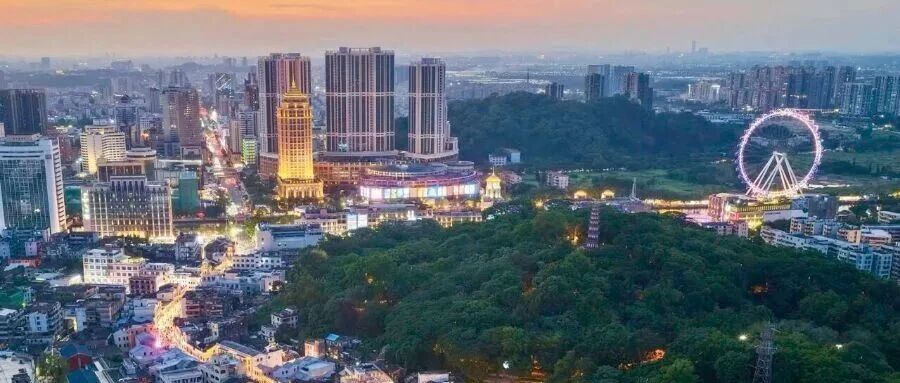
协同创新

Search documents
人类观测太阳又多了一双“慧眼” 从一台望远镜“看”源头创新
Ren Min Ri Bao· 2025-11-17 08:49
Core Insights - The AIMS telescope, the world's first dedicated mid-infrared solar magnetic field observation device, has been officially launched, enhancing human observation capabilities of the sun [1][2] - The development of AIMS fills a significant gap in international solar magnetic field observation in the mid-infrared spectrum, supporting China's leading position in solar physics research [1][3] Group 1: Technological Advancements - AIMS aims to improve magnetic field measurement precision to better than 10 Gauss and has developed the world's first mid-infrared Fourier spectrometer with ultra-high spectral resolution, achieving a 156-fold increase in spectral resolution compared to previous domestic levels [3] - The project has made several key technological breakthroughs since its initiation in 2015, including advancements in polarization measurement technology, which required starting from scratch due to the lack of existing mid-infrared measurement devices [3][4] Group 2: Collaborative Efforts - The AIMS telescope's development involved a multi-disciplinary collaborative effort, with various research institutes contributing to different components, ensuring organized and efficient project execution [3][4] - The project emphasized top-level design from the outset, allowing for smooth integration of various components without design rework issues [4] Group 3: Site Selection and Local Support - The site for AIMS was carefully chosen based on specific requirements such as long sunlight duration, dry climate, and high altitude, with Qinghai's Seishiteng Mountain ultimately selected after evaluating five potential locations [5] - Local government support was crucial for the project's success, facilitating the transportation of equipment and ensuring the necessary infrastructure was developed in a timely manner [5] Group 4: Team Dynamics and Challenges - The project team, primarily composed of young researchers, faced significant challenges due to high-altitude conditions, yet demonstrated resilience and commitment to advancing the project despite difficult living conditions [6] - The team successfully identified and resolved issues related to low-temperature effects on optical performance, showcasing their problem-solving capabilities and dedication to the project's success [6]
【人民日报】从一台望远镜“看”源头创新
Ren Min Ri Bao· 2025-11-17 01:57
Core Insights - The AIMS telescope, the world's first dedicated mid-infrared solar magnetic field observation device, has been officially launched, enhancing human observation capabilities of the sun [2][3][4] - The development of AIMS fills a significant gap in international solar magnetic field observation in the mid-infrared band, providing a reference for future large astronomical equipment in high-altitude areas [3][4] Group 1: Technological Advancements - AIMS aims to improve magnetic field measurement precision to better than 10 Gauss and has developed the world's first mid-infrared Fourier spectrometer with both ultra-high spectral resolution and imaging capabilities, achieving a 156-fold increase in spectral resolution compared to previous domestic levels [5] - The project has made several key technological breakthroughs since its initiation in 2015, including advancements in polarization measurement technology, which required starting from scratch due to the lack of existing mid-infrared measurement devices [5][6] Group 2: Collaborative Efforts - The development of AIMS is a successful example of multidisciplinary collaboration, involving various research institutes such as the National Astronomical Observatories, Shanghai Institute of Technical Physics, and Xi'an Institute of Optics and Precision Mechanics, among others [6][7] - The project emphasized top-level design and clear technical interfaces, which facilitated smooth integration of various components and minimized design rework [6] Group 3: Site Selection and Local Support - The site for AIMS was chosen based on strict requirements for sunlight exposure, dry climate, and thin air, with the final location being the Qinhai Lenghu Saishiteng Mountain after evaluating five potential sites [6][7] - Local government support was crucial for the project's construction, providing assistance such as helicopter transport for equipment to the high-altitude site [7] Group 4: Team Dynamics and Challenges - The project team, primarily composed of young researchers, faced significant challenges due to high-altitude conditions, including cold temperatures and scarce resources, yet they remained committed to advancing the project [8] - During the testing phase, the team identified and resolved issues related to low-temperature effects on imaging quality, demonstrating their problem-solving capabilities and dedication [8]


人类观测太阳又多了一双“慧眼” 从一台望远镜“看”源头创新(科技视点·加快高水平科技自立自强)
Ren Min Ri Bao· 2025-11-16 22:04
Core Insights - The AIMS telescope, the world's first dedicated instrument for observing solar magnetic fields in the mid-infrared spectrum, has been officially launched, enhancing human observation capabilities of the sun [1][2][3] Group 1: Technological Advancements - AIMS telescope aims to improve magnetic field measurement precision to better than 10 Gauss, with a Fourier spectrometer achieving a spectral resolution 156 times higher than previous domestic levels [3][4] - The project has made significant technological breakthroughs since its inception in 2015, including the development of the largest mid-infrared wave plate made from cadmium selenide [3][4] Group 2: Collaborative Efforts - The development of the AIMS telescope involved a multi-disciplinary approach with collaboration among various research institutes, ensuring smooth integration of different components [4][5] - The project emphasized top-level design and clear communication of technical requirements among participating organizations, which minimized design rework [4] Group 3: Site Selection and Local Support - The telescope's location in Qinghai's Se Shiteng Mountain was chosen for its optimal conditions for solar observation, including long sunlight hours and dry climate [5] - Local government support was crucial for the project's infrastructure development, including the use of helicopters for transporting equipment to the high-altitude site [5] Group 4: Team Dynamics and Challenges - The project team, primarily composed of young researchers, faced significant challenges due to high-altitude conditions, yet demonstrated resilience and commitment to advancing the project [6] - The team successfully identified and resolved issues related to low-temperature effects on optical performance, showcasing their problem-solving capabilities [6] Group 5: Future Directions - AIMS telescope has already collected valuable mid-infrared data on solar flares, contributing to the understanding of energy transfer mechanisms during solar eruptions [6] - The project aims to maintain and operate the telescope effectively while focusing on cutting-edge scientific research in solar physics [6]
汇聚全球创新力量,共探海洋经济前沿
Nan Fang Du Shi Bao· 2025-11-15 03:16
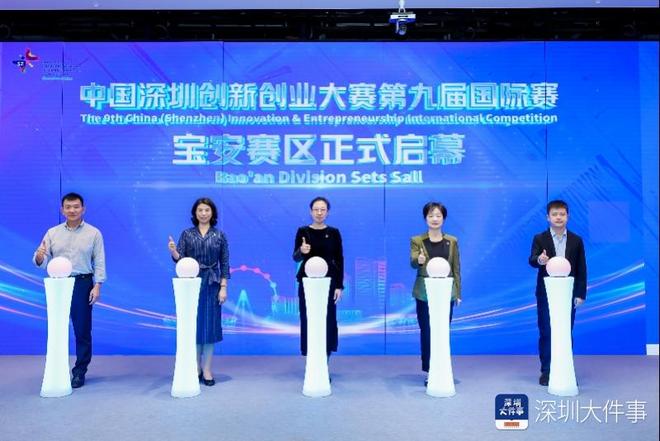
Core Insights - The 9th International Innovation and Entrepreneurship Competition of Shenzhen, focusing on marine economy, commenced in Bao'an, showcasing 22 high-quality project teams from 11 overseas branches [1][7]. Group 1: Competition Format and Evaluation - The competition utilized an online "roadshow + Q&A" format, with each project undergoing an 8-minute presentation followed by 7 minutes of questioning from judges [3]. - The judging panel consisted of university professors, executives from well-known investment institutions, and industry experts, evaluating projects based on innovation, commercial viability, team strength, and local industry alignment [3]. Group 2: Award Winners and Progression - The project "Efficient Synthesis and Industrialization of Gene-Edited Mussel Adhesive Protein" from London won the first prize, while projects from Singapore and Zurich received second prizes [6]. - The winning projects will advance to the finals to compete for the overall championship of the Shenzhen Innovation and Entrepreneurship Competition [6]. Group 3: Shenzhen's Marine Economy Development - Shenzhen is developing into a global marine center with a coastline of 260.5 kilometers, and the marine economy is projected to reach a total output value of 540.9 billion yuan in 2024, accounting for 14.7% of GDP [7]. - Bao'an district is a significant growth area for Shenzhen's marine economy, with 455 "Four Up" enterprises and a value-added output of 53.74 billion yuan, surpassing 10% of the district's GDP [7]. Group 4: International Collaboration and Future Prospects - The competition serves as a vital platform for overseas teams to connect with the Chinese market and industry ecosystem, showcasing projects in smart ports, marine energy, aquaculture, and ecological governance [7]. - The event aims to deepen international exchanges and share innovation development opportunities, fostering collaborative innovation for high-quality marine economic growth [8].
与城市同频 与产业共振
Xin Hua Ri Bao· 2025-11-13 21:52
Core Viewpoint - The integration of technological innovation and industrial innovation is emphasized, with a focus on deepening the collaboration between education, technology, and talent development in the context of the 20th National Congress of the Communist Party of China [1] Group 1: Industry-Academia Collaboration - Changzhou Institute of Technology has developed a magnetic levitation motor product in collaboration with Jiangsu Mingci Power Technology Co., Ltd., achieving international leading technology and filling a domestic gap in centralized heating [2] - The institute has transitioned from "spontaneous and scattered" cooperation to "organized research and organized transformation," establishing 16 industry colleges to enhance collaboration with enterprises [2] - The Carbon Fiber New Materials Industry College, co-built with enterprises, has addressed over 50 key technical challenges in carbon fiber preparation and facilitated the transformation of more than 60 research outcomes [2] Group 2: Talent Mobility and Dual Employment - Three PhD graduates from Changzhou Institute of Technology are serving as technology vice presidents at Jiangsu Lemo Precision Technology Co., Ltd., enhancing China's supply capacity in the high-end display industry [3] - The institute promotes a "dual employment" model, allowing high-level talents to work in both academia and industry, with 72 high-level talents currently engaged in this model [3] - The collaboration has led to 71 national natural science fund projects in the past five years, with many results directly addressing critical technological challenges faced by enterprises [3] Group 3: Alignment with Local Industry - Changzhou Institute of Technology focuses on aligning its academic programs with local industrial needs, establishing new majors such as intelligent manufacturing and artificial intelligence that match the local industrial structure [5] - The institute has eliminated programs not directly related to local leading industries, achieving a 100% match between its 49 enrollment programs and Changzhou's advantageous industries [5] - The school aims to transform its intellectual resources into innovative momentum for industries, providing a replicable model for applied universities [5]
攥指成拳 协同创新 河南省郑州市流量计量仪表产业技术联盟成立
Zhong Guo Zhi Liang Xin Wen Wang· 2025-11-13 03:31
Core Insights - The establishment of the Flow Measurement Instrument Industry Technology Alliance in Zhengzhou marks a significant step in building an innovative ecosystem for the measurement instrument industry [1][2] - Flow measurement instruments are critical for industrial production and public service sectors, playing a vital role in energy management, smart manufacturing, and urban digital transformation [1] - Zhengzhou has developed a complete industrial chain in the flow measurement instrument sector, with over 50 related enterprises in the high-tech zone, including more than 10 large-scale companies and 3 listed firms [1] Industry Collaboration - The alliance is led by the Zhengzhou Product Quality Inspection and Testing Center and includes 18 units such as the Henan Instrument and Meter Industry Association, Zhengzhou University, and New Tian Technology Co., Ltd., forming a collaborative innovation community [2] - The alliance aims to focus on technological innovation, cooperation, and standard formulation to enhance the overall competitiveness of the industry [2] Future Initiatives - Several cooperation agreements were signed during the establishment ceremony, including projects for standard formulation and the establishment of research centers, laying a solid foundation for future technological breakthroughs and industrial transformation [3] - The alliance intends to shift the flow measurement instrument industry from isolated efforts to collaborative strategies, promoting innovation and contributing to the transformation from "Made in China" to "Created in China" [3]
产业观察:“黑科技”见证纺织产业创新之变
Zhong Guo Xin Wen Wang· 2025-11-11 13:12
Core Insights - The textile industry is undergoing a significant transformation driven by technology, with innovations such as temperature-regulating polyester garments highlighting this shift [1][3] - The 8th World Fabric Conference emphasized the need for global textile enterprises to focus on technological innovation to seize opportunities in the restructured value chain [3] Industry Trends - The integration of technology and industry is crucial for high-quality development in textiles, with material innovation, technological iteration, and model upgrades identified as key engines [3] - Research institutions, such as Donghua University, are pivotal in advancing textile technology, showcasing products like artificial blood vessels that enhance medical applications [3][4] Digital Transformation - The introduction of the AI Fabric 2.0 model, which consolidates a database of 300,000 fabric entries and connects over 5,000 enterprises, has improved new product development and supply chain efficiency by over 30% [6] - The textile industry in Shaoxing Keqiao has achieved comprehensive digital transformation, with 12 companies recognized as national smart factories, resulting in an average production efficiency increase of 32.2% and a cost reduction of 18% [6] Market Dynamics - Shaoxing Keqiao, recognized as the "International Textile Capital," has established a complete industrial chain, with the China Light Textile City projected to exceed a total transaction volume of 400 billion yuan in 2024 [7] - The region aims to enhance key technologies in high-performance fibers, bio-based materials, and green dyeing, positioning itself as a leading modern textile pilot base in China [7]
克服“基础级”现状,中国显示产业布局“共链行动”
Di Yi Cai Jing· 2025-11-09 11:17
Core Viewpoint - The establishment of the Glass New Materials Industry Chain Supply Chain Alliance aims to enhance the safety and stability of the industry chain, prioritizing security over efficiency in the face of increasing risks [1][2]. Group 1: Industry Developments - The Glass New Materials Industry Chain Supply Chain Alliance was launched during the second Glass Industry Development Conference in Bengbu, Anhui, marking a shift towards a more systematic and ecological collaborative approach in China's glass new materials industry [1]. - By 2025, China's share of the global display materials output is expected to reach 48%, yet domestic companies hold less than 10% market share in the substrate/glass sector, dominated by the top three global manufacturers with over 90% market share [1]. Group 2: Challenges and Strategies - The risks in the industry are increasing, with a call for greater emphasis on the security of the industry chain rather than just efficiency, as the current level of self-control in the industry is still at a "basic level" [1]. - Domestic companies are encouraged to adopt a dual approach, focusing on technological breakthroughs while also building market alliances to expand demand [2]. - The recent increase in "337 investigations" by the U.S. against China's display industry is seen as a strategy to create market uncertainty and protect existing patents while hindering competitors' development [2].
大湾区超级城市群加速崛起
2 1 Shi Ji Jing Ji Bao Dao· 2025-11-09 02:30
Core Insights - The article highlights the rapid development and integration of the Guangdong-Hong Kong-Macao Greater Bay Area (GBA) as a world-class city cluster, driven by significant infrastructure improvements and enhanced connectivity [1][5][10] Infrastructure Development - The opening of major infrastructure projects like the Shenzhen-Zhongshan Link and the Hong Kong-Zhuhai-Macao Bridge has drastically reduced travel times, enabling a "half-hour traffic circle" and a "one-hour living circle" within the GBA [1][5][7] - Daily cross-city commuting in the GBA exceeds 6 million trips, with highway traffic surpassing 8 million vehicle trips [1][5] Economic Growth - The GBA's economic output has surpassed 14 trillion yuan, with the "Shenzhen-Hong Kong-Guangzhou" innovation cluster ranking first globally [1][7] - The GBA is home to over 87 million people and boasts an economic scale of 14.79 trillion yuan, positioning it as a significant global urban agglomeration [7][10] Collaborative Innovation - The GBA is evolving towards a collaborative innovation model, integrating research, technology transfer, and industrial application, exemplified by companies like Nasda [10][14] - The region is fostering a network of innovation that leverages the unique strengths of Hong Kong, Shenzhen, and Guangzhou, particularly in emerging fields like AI and robotics [14][15] Soft Connectivity - Initiatives such as the "smart customs" measures at the Hengqin Port reflect the ongoing efforts to enhance "soft connectivity" among the GBA cities, facilitating smoother cross-border interactions [10][12] - The successful hosting of the 15th National Games across multiple cities demonstrates the GBA's ability to coordinate large-scale events and promote regional integration [10][12]


大湾区超级城市群加速崛起
21世纪经济报道· 2025-11-09 02:22
Core Viewpoint - The article highlights the rapid development and integration of the Guangdong-Hong Kong-Macau Greater Bay Area (GBA), emphasizing the transformation of transportation infrastructure and its impact on urban connectivity and economic collaboration [1][5][7]. Group 1: Infrastructure Development - The opening of the Shenzhen-Zhongshan Link has significantly reduced commuting time from two hours to thirty minutes, facilitating daily cross-city work and life for many residents [1]. - The GBA has seen a surge in traffic, with over 8 million vehicle trips on highways and more than 6 million daily cross-city commutes, reflecting the area's deepening integration [1][5]. - Major infrastructure projects, including the Hong Kong-Zhuhai-Macao Bridge and the Guangzhou-Shenzhen-Hong Kong Express Rail Link, have established a "half-hour traffic circle" and an "hour-long living circle," enhancing connectivity among the 11 cities in the GBA [5][7]. Group 2: Economic Collaboration - The GBA's economic output has surpassed 14 trillion yuan, with the "Shenzhen-Hong Kong-Guangzhou" innovation cluster ranking first globally, positioning the GBA as a key player in international urban competitiveness [1][7]. - The integration of transportation infrastructure has transformed Zhongshan into a "super interface" for the west bank of the Pearl River, enhancing its role in regional economic collaboration [7]. - The GBA is evolving into a world-class super city cluster, with over 87 million residents and an economic scale of 14.79 trillion yuan, fostering collaborative development among major metropolitan areas [7]. Group 3: Innovation and Talent Exchange - The GBA is witnessing a shift towards an innovation-driven economy, with a focus on creating a full chain from basic research to industrial application, exemplified by companies like Nasda [9][12]. - The region's collaborative innovation network allows for efficient problem-solving in research and development, with over 70% of Nasda's supply chain sourced from the GBA [12]. - The GBA's unique characteristics and complementary advantages among its cities are expected to enhance its overall competitive edge, particularly in emerging fields like AI and robotics [12].