
即时零售

Search documents
小方制药:积极拥抱新零售 以迭代创新铸就核心竞争力
Zhong Guo Zheng Quan Bao· 2026-02-12 20:27
Core Insights - The article highlights the success of Xiaofang Pharmaceutical in the family-oriented external medicine sector, emphasizing its innovative product iterations and marketing strategies to enhance user retention and drive sales growth [1][2][3] Group 1: Product Development and Innovation - Xiaofang Pharmaceutical has focused on continuous product iteration and marketing innovation, launching the W-type Kaisi Lu with a unique packaging design to improve medication effectiveness [2] - The company has developed multiple new sub-brands and products, including Xinlong Hongtun and Long Yidian, targeting specific health needs such as oral ulcers and throat inflammation [2][3] - The company is also working on a new traditional Chinese medicine for hair loss, in collaboration with Shanghai Skin Disease Hospital, aiming to enter a promising market [3] Group 2: E-commerce and New Retail Strategy - Xiaofang Pharmaceutical has embraced the new retail trend, establishing partnerships with major e-commerce platforms like Alibaba Health and JD Health to enhance product visibility and sales [3][4] - The company utilizes Kaisi Lu as a "traffic entry point" for online sales, achieving over 300 million annual exposures on a single platform, and employs cross-selling strategies to promote related products [4][5] - The company is implementing a digital inventory monitoring system to prevent stockouts and ensure timely product availability, enhancing customer satisfaction [5] Group 3: Supply Chain and Operational Efficiency - Xiaofang Pharmaceutical is advancing towards a fully digital supply chain, aiming for real-time responses and efficient inventory management to meet consumer demands [5][6] - The company is constructing a smart factory for external medicine production, focusing on automation and efficiency to support growing production needs [6][7] - The company plans to implement a "dual-wheel drive" strategy, focusing on both technological innovation in drug development and enhancing market access through digital tools [7]
20万元“留人” 顺丰同城抢占春节市场
Bei Jing Shang Bao· 2026-02-12 16:06
Core Insights - Major e-commerce platforms and instant delivery companies are implementing "retention" strategies to attract delivery personnel ahead of the Spring Festival, with incentives exceeding 5,000 yuan in first-tier cities [1][2] - SF Express is launching a special Spring Festival welfare program valued at over 200,000 yuan to motivate riders, while also offering substantial consumer discounts [1][3] - The competition in the instant retail sector has intensified, with significant investments from e-commerce giants, benefiting third-party delivery companies like SF Express [4] Group 1: Incentives for Delivery Personnel - Instant delivery platforms are releasing various incentive policies to retain riders during the Spring Festival, with rewards reaching up to 8,000 yuan for meeting specific performance criteria [2][3] - SF Express is offering a range of promotional activities, including a lucky draw and cash rewards, to engage riders and encourage performance [3] - Meituan and Taobao Flash Purchase are also enhancing their incentive measures, with Meituan providing additional allowances for riders based on regional demand [3] Group 2: Market Dynamics and Growth - The instant delivery business has seen significant growth, with SF Express projecting a revenue of at least 22 billion yuan by the end of 2025, representing a 40% year-on-year increase [4] - The competition among major players like Alibaba and Meituan is driving up demand for delivery services, benefiting third-party companies [4][5] - SF Express has diversified its delivery models to include various service types, catering to different customer needs and enhancing operational efficiency [4] Group 3: Competitive Challenges - Despite adopting differentiated strategies, SF Express faces pressure from larger competitors, making it challenging to expand its order volume and rider base [7] - The active rider count for SF Express has reached approximately 1.14 million, but it struggles to match the scale of competitors like Meituan and Taobao Flash Purchase [7] - To counter external competition, SF Express is focusing on refined operations and enhancing product competitiveness to grow its user and customer base [7] Group 4: Technological Advancements - SF Express is investing in autonomous vehicle dispatch capabilities to improve operational efficiency and reduce costs [8] - The company has launched a new end-to-end delivery service using building robots, which is currently operational in Nanchang [8]
西安将开展130场主题促消费活动 打造全民乐享春节消费盛宴
Xin Lang Cai Jing· 2026-02-12 15:27
Core Viewpoint - Xi'an is set to enhance its consumer market and international trade through a series of initiatives aimed at boosting consumption and foreign trade, with significant historical growth in retail sales and exports projected for 2025 [2][3][6]. Group 1: Consumption and Retail Growth - During the Spring Festival, Xi'an will host the "Shopping in China: Enjoying Chang'an" event, featuring 130 themed consumption activities to promote city-wide engagement [2][6]. - In 2025, Xi'an's total retail sales of consumer goods are expected to reach 572.12 billion yuan, a year-on-year increase of 5.3%, outperforming the national average by 1.6 percentage points [3]. - The city has introduced various consumption promotion activities, including over 900 events and the establishment of 376 new stores, contributing to a total consumption boost of 83.9 billion yuan [2][3]. Group 2: Foreign Trade and Export Performance - Xi'an's total import and export value is projected to reach 498.79 billion yuan in 2025, marking a historical high with a year-on-year growth of 21.1% [3][4]. - Exports are expected to amount to 349.26 billion yuan, reflecting a 25.8% increase, the highest growth rate among sub-provincial cities [3][4]. - The city has seen a 75.1% growth in new business formats like cross-border e-commerce, with significant increases in high-tech and green product exports [3][4]. Group 3: Policy Initiatives and Future Plans - Xi'an's government plans to implement a series of policies to enhance consumer spending, including the promotion of green and smart consumption through vehicle and appliance upgrades [6][7]. - The city aims to establish a comprehensive international consumption environment by expanding tax refund stores and integrating cultural and tourism sectors with commerce [3][6]. - Future initiatives include the "Silk Road Quality Products: Going Global" campaign, focusing on trade and investment integration, and the development of a smart port to facilitate cross-border trade [7].

南京人注意!春节换新手机可领国补加年货补贴,30分钟到手
Yang Zi Wan Bao Wang· 2026-02-12 14:54
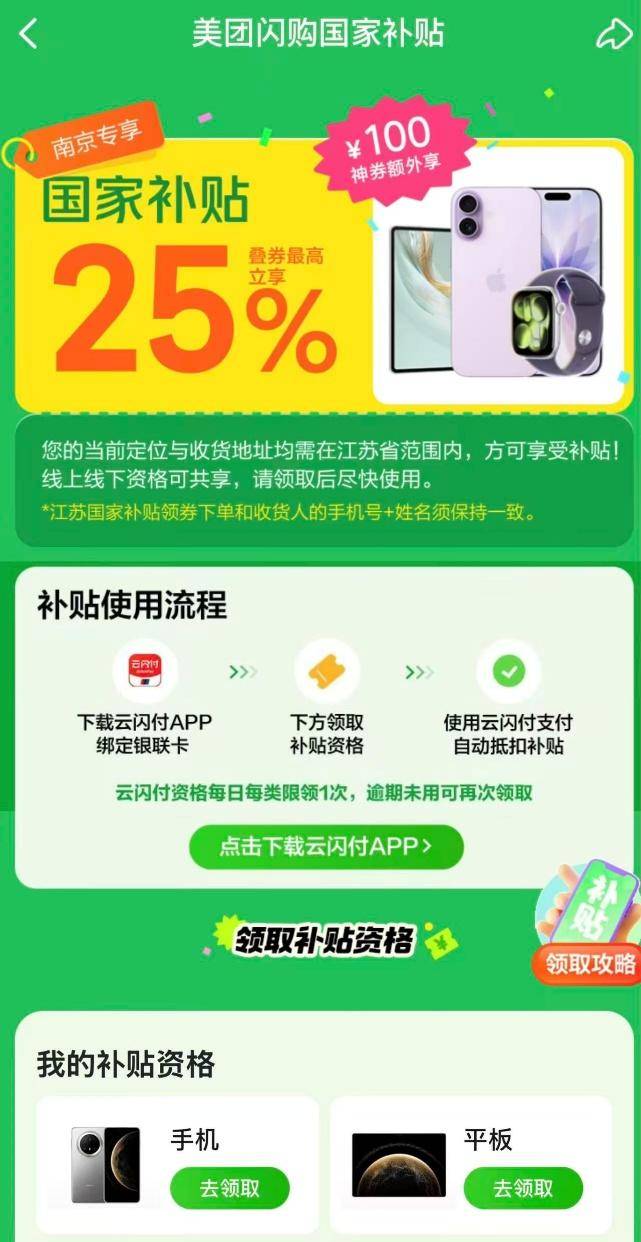
据美团闪购相关工作人员介绍,即时零售消费连接大量本地实体门店,2025年以来,南京消费者在平台 积极领用国补购物,产生的消费显著带动南京本地数码家电门店销量增长。今年平台将与更多品牌实体 门店合作落地国补,助力促消费政策红利更好惠及实体门店。针对消费者激增的国补购物需求,平台上 线了专属履约服务,国补订单均由受过专项培训的骑手配送,当面拆封、激活、拍照,确保市民安 心"国补购机,即买即用"。 多多 校对陶善工 日前,南京召开"焕新消费、乐购南京"专题发布会。春节假期前后,南京将开展促消费活动400余场, 全面激发新春消费市场活力,推动消费提质扩容。南京将大力落实国家提振消费专项行动,积极推进家 电以旧换新及数码产品购新补贴惠及市民。 各大购物平台积极响应南京新春促消费活动。记者了解到,为了让南京市民春节期间获得更加实惠、便 利的"国补购机"体验,助燃新春消费市场,2月12日起,购物平台美团闪购联合本地各大数码品牌门店 上线南京国补。南京市民在美团App搜索"国家补贴",即可进入相关页面,按规则领用15%的国补优 惠,选购手机、平板和智能穿戴设备,下单后最快30分钟送达。此外,平台还推出了100元起的南京市 民 ...
20万元激励骑手、释放优惠券 顺丰同城抢占春节市场
Bei Jing Shang Bao· 2026-02-12 13:29
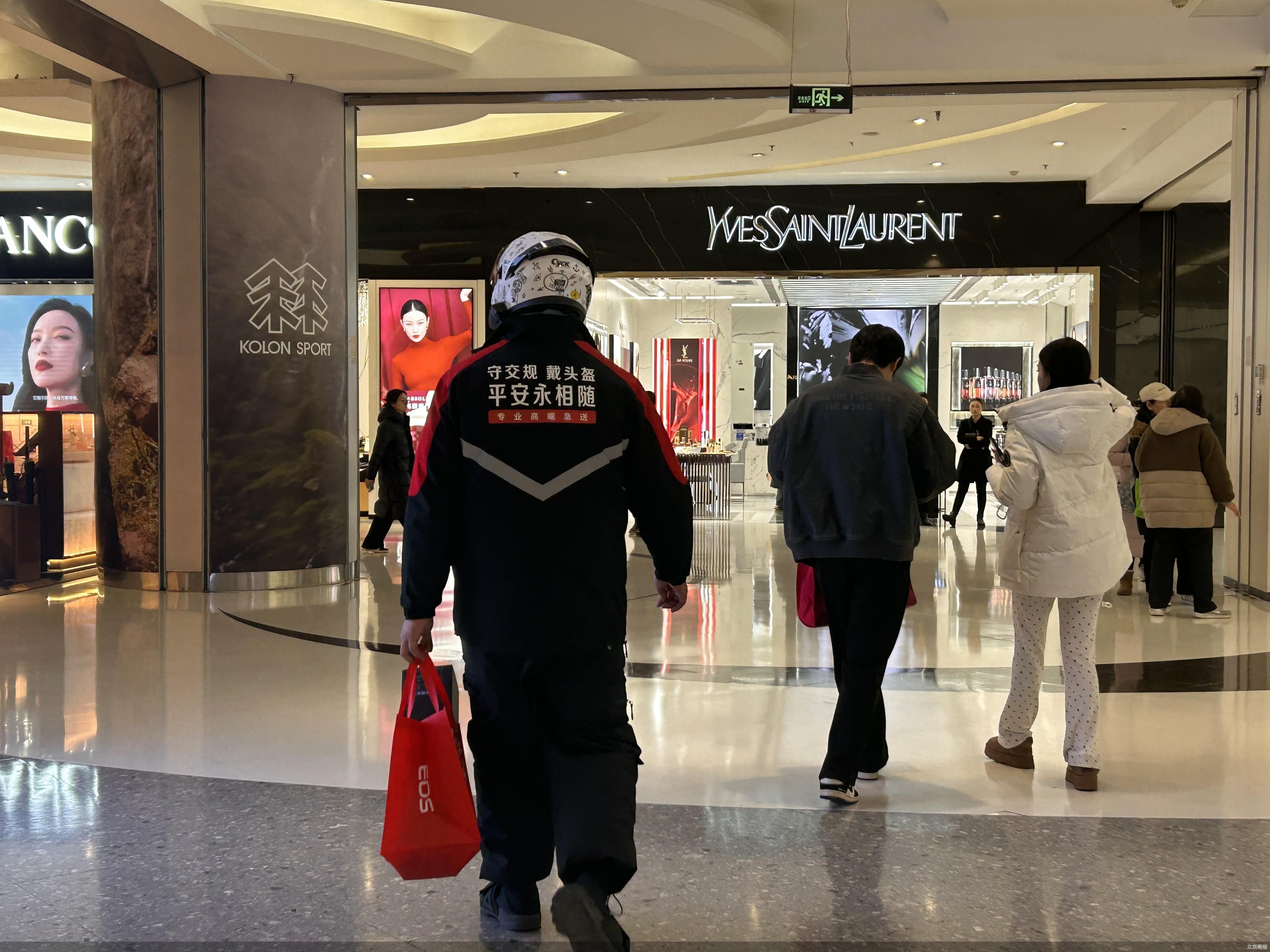
Core Viewpoint - As the Spring Festival approaches, major e-commerce platforms and instant delivery companies are implementing "retention" strategies to secure delivery personnel, with significant incentives being offered to riders to ensure operational capacity during the holiday season [1][4][5]. Group 1: Incentives and Strategies - Delivery rewards in major cities like Beijing are exceeding 5,000 yuan, with companies like SF Express offering over 200,000 yuan in total New Year benefits to riders [1][5]. - SF Express is employing a differentiated survival strategy to compete with e-commerce giants, focusing on high-value delivery scenarios such as luxury goods and urgent documents [9]. - Various instant delivery platforms, including Meituan and Taobao Flash Purchase, are also rolling out incentive measures, with Meituan providing additional subsidies of 5,000 to 10,000 yuan for riders during peak periods [5][6]. Group 2: Market Dynamics and Growth - The instant delivery business has seen a significant increase, with SF Express projecting a revenue of at least 22 billion yuan by the end of 2025, representing a 40% year-on-year growth [6]. - The competition among e-commerce giants is intensifying, with Alibaba and Meituan making substantial investments to secure market leadership, which indirectly benefits third-party delivery companies like SF Express [6][7]. - SF Express's order volume in the first half of 2025 is expected to grow by over 50% year-on-year, driven by the rapid expansion of the food delivery and instant retail sectors [6]. Group 3: Operational Challenges - Despite the growth, SF Express faces significant pressure in expanding its rider base and order volume compared to competitors like Meituan and Taobao Flash Purchase, which have a much larger active rider count [9][10]. - The company is focusing on refined operations and plans to enhance its product competitiveness to attract more users and clients, particularly in underserved markets [10]. - SF Express is also investing in technology, such as autonomous delivery vehicles, to improve operational efficiency and reduce costs [10].
外送到家”成年夜饭预订新亮点 顺丰同城携手多家大牌餐饮鲜送“年味
Zheng Quan Ri Bao Wang· 2026-02-12 12:50
Core Insights - The article highlights the surge in demand for instant retail services during the upcoming Spring Festival, driven by a blend of online and offline consumption methods [1][2] - The "New Year Flavor Delivery" service launched by SF Express aims to meet consumer needs by partnering with renowned restaurants and supermarkets to provide high-quality, customized delivery options [1][2] Group 1: Service Offerings - SF Express has introduced the "New Year Flavor Delivery" service in collaboration with well-known brands like Xicheng Restaurant, Guangzhou Restaurant, and Haidilao, ensuring the delivery of authentic festive meals to households [1][2] - The service includes partnerships with various supermarkets and beverage brands, such as Sam's Club and Luckin Coffee, to efficiently deliver holiday goods and drinks, catering to both quality and convenience [1][2] Group 2: Operational Capabilities - SF Express has invested in sufficient logistics capacity across regions, utilizing an elastic logistics framework and intelligent scheduling systems to ensure comprehensive service coverage and timely order fulfillment during the festival [2][3] - The company has developed detailed packaging and delivery standards tailored to the diverse requirements of partner restaurants, ensuring the preservation of food quality and experience from kitchen to table [2][3] Group 3: Market Trends - Online channels and instant retail have become crucial for businesses to capture holiday growth, with restaurants and supermarkets leveraging platforms like live streaming and mini-programs for intensive marketing [2][3] - SF Express serves as a foundational infrastructure for emerging e-commerce platforms, enabling seamless local service integration and innovative consumption scenarios during the Spring Festival [3]
“外送到家”成年夜饭预订新亮点 顺丰同城携手多家大牌餐饮鲜送“年味”
Zheng Quan Ri Bao· 2026-02-12 12:39
Core Insights - The upcoming Spring Festival is driving a surge in instant retail market demand, with a focus on balancing home-cooked meals and dining out experiences [2] - SF Express's local delivery service, "New Year Flavor Delivery," partners with renowned restaurants and supermarkets to provide high-quality, customized delivery options for festive meals and goods [2][3] - The integration of online channels and instant retail is crucial for businesses to capture holiday growth, with a focus on multi-channel marketing strategies [3] Group 1 - SF Express has launched the "New Year Flavor Delivery" service, collaborating with well-known brands to deliver traditional festive meals and products efficiently [2] - The service includes a diverse range of delivery vehicles and a robust management system to ensure timely and accurate deliveries during the busy holiday season [2][3] - SF Express's flexible delivery model allows for effective response to order fluctuations, enhancing customer loyalty and brand reputation [3] Group 2 - Emerging e-commerce platforms like Douyin and WeChat utilize SF Express to enhance local service capabilities and innovate festive shopping experiences [4] - New consumption models such as live-streaming and short video promotions are creating immediate purchasing demands, which SF Express supports through efficient delivery services [4] - SF Express's reliable delivery network enables businesses to leverage full-channel growth opportunities, providing consumers with convenient access to quality products during the New Year [4]
抖音有大动作,美团危险了
3 6 Ke· 2026-02-12 12:24
Core Insights - Douyin has re-entered the local service market with a new independent group-buying app called "Dou Sheng Sheng," aiming to compete directly with Meituan in the group-buying sector [2][5][8] - The app offers significant subsidies for new users and focuses on simplifying the group-buying process, enhancing user experience and conversion rates [6][7] - Douyin's local business has seen substantial growth, with a reported GMV increase of 59% year-on-year, indicating a strong market presence [19][21] Group 1: Douyin's Strategy and Developments - Douyin initially struggled in the food delivery market but pivoted to group-buying, leveraging its traffic advantages to recover and grow [1][11] - The launch of "Dou Sheng Sheng" is a strategic move to streamline group-buying services, separating it from the main Douyin app to enhance user engagement [5][6] - The app's development is part of Douyin's broader strategy to deepen its local service offerings and compete more effectively against established players like Meituan [8][19] Group 2: Market Dynamics and Competition - The local service market in China is projected to reach 35.3 trillion yuan by 2025, with significant growth opportunities in the group-buying segment [21][22] - Meituan is facing increased competition not only from Douyin but also from other players like Alibaba and Xiaohongshu, indicating a highly competitive landscape [23][24] - Meituan's recent acquisition of Dingdong Maicai for $717 million aims to strengthen its position in the fresh produce sector, which is critical for user retention and growth [25]

春节动销“冰与火”:控库存过冬,拓场景迎春
Sou Hu Cai Jing· 2026-02-12 09:42
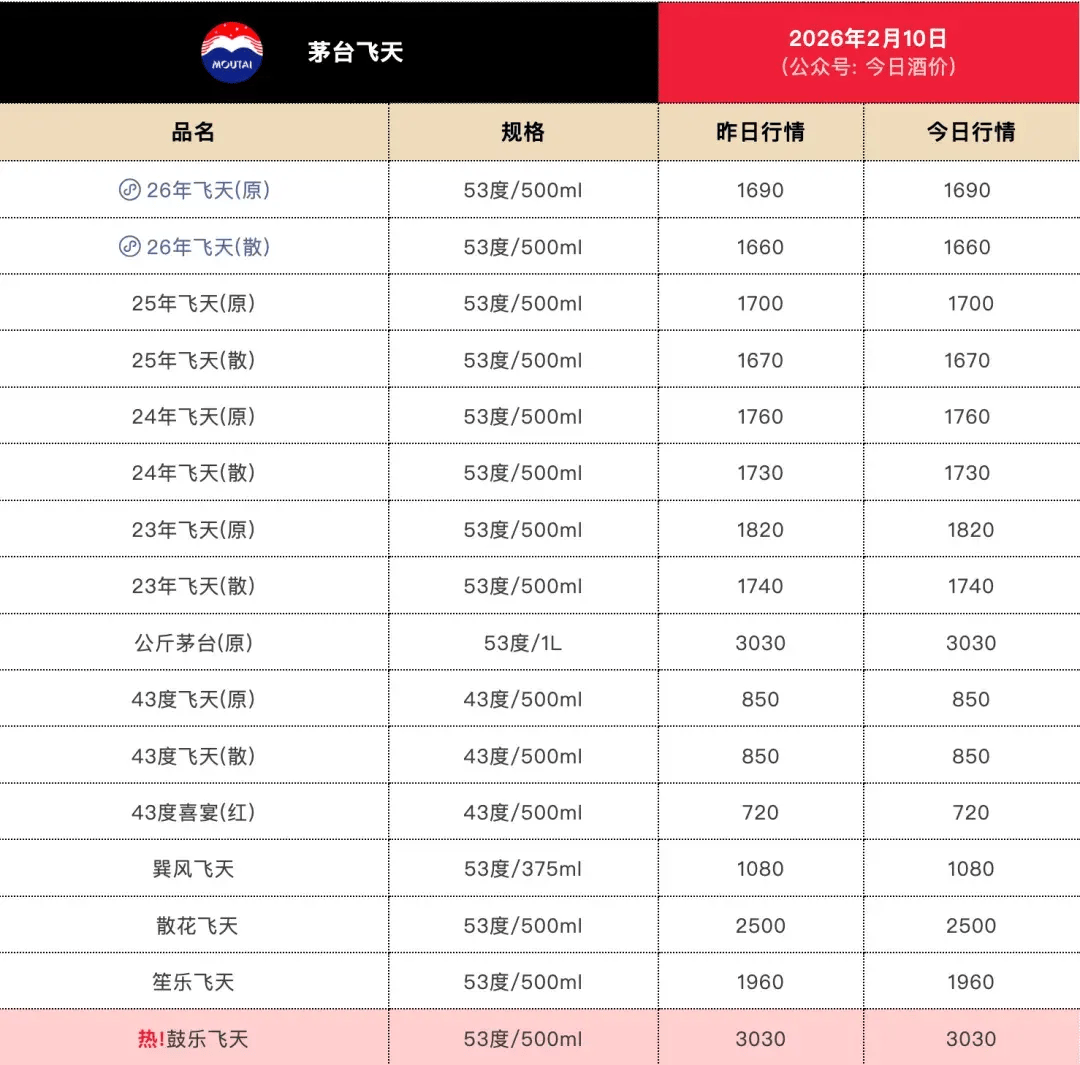
Core Viewpoint - The Chinese liquor market, particularly for baijiu, is experiencing a unique and competitive landscape this Spring Festival, characterized by a delayed peak in sales and a significant divide between leading brands and smaller ones [1][3]. Group 1: Market Dynamics - The sales peak for baijiu is expected to occur closer to the Spring Festival, with major brands like Moutai seeing a resurgence in sales and price increases, while smaller brands struggle [1][3]. - Moutai's price has shown a strong upward trend, with recent sales prices reaching between 1,800 and 1,900 yuan per bottle, reflecting a significant increase from previous months [1][3]. - The overall market is witnessing a two-tiered recovery, with leading brands like Moutai and Wuliangye performing better than smaller brands, which are facing challenges in inventory management and consumer demand [3][11]. Group 2: Consumer Behavior and Sales Strategies - Consumer purchasing behavior is shifting towards on-demand buying rather than stockpiling, leading to a cautious approach from distributors regarding inventory [3][4]. - Companies are focusing on promotional activities to stimulate sales, with various marketing campaigns aimed at enhancing consumer engagement and encouraging product consumption [5][6]. - The emphasis on creating consumption scenarios, particularly during family gatherings and social events, is becoming a key strategy for brands to drive sales [5][6]. Group 3: Evolving Sales Channels - The rise of instant retail is reshaping the sales landscape, allowing companies to reach younger consumers and cater to immediate consumption needs [8][10]. - Partnerships with platforms like Meituan are being leveraged by companies such as Moutai and Xijiu to enhance distribution and promotional efforts during the festive season [8][10]. - The integration of technology and innovative marketing strategies is essential for companies to adapt to changing consumer preferences and improve sales performance [10][11]. Group 4: Industry Outlook - Analysts predict a gradual recovery in the baijiu market, with expectations for stable sales performance during the Spring Festival and throughout the year [11]. - The capital market has shown signs of improvement, with a notable rebound in the baijiu sector, driven by favorable macroeconomic policies and strong sales from leading brands [11]. - The industry is expected to continue facing challenges, particularly for mid-tier brands, while high-end products maintain stable demand and pricing [11].

156万银发族用千问体验“一句话点外卖”
Xin Jing Bao· 2026-02-12 09:17
Core Insights - The "Qianwen App" launched a promotional campaign called "Spring Festival 3 Billion Free Orders," which resulted in users making 4.1 billion requests for assistance and over 120 million orders completed by AI within six days [1] - The campaign significantly boosted consumption, particularly in county-level cities, with nearly half of the orders coming from these areas, and 1.56 million elderly users trying food delivery services for the first time [1][2] Group 1 - The AI technology has enhanced consumer experience and stimulated new consumption vitality across various demographics and city tiers [1] - The "Milk Tea Free Order" promotion gained traction on social media, leading to a surge in instant retail orders for snacks, beverages, and other holiday goods [1] - Retail orders for items such as hair dye products, gift flowers, and emergency baby supplies saw over a tenfold increase since the campaign's launch [1] Group 2 - The convenience of AI-enabled "one-sentence food delivery" has allowed the elderly demographic to benefit from digital consumption [2] - Among users in county areas utilizing AI for shopping, nearly 10% are aged 50 and above, indicating a growing trend of older consumers engaging with digital retail [2]
