房住不炒

Search documents
2026年房价,已出现3大信号,行内人:买卖房子,心里有数了
Sou Hu Cai Jing· 2025-10-08 13:32
Core Viewpoint - The real estate market is experiencing a downward trend, but there are signals indicating future price movements, prompting both first-time buyers and current homeowners to reassess their strategies [2] Group 1: Policy Signals - The government has established a clear long-term policy that emphasizes housing for living rather than speculation, indicating that the era of easy profits from real estate is over [4] - Recent adjustments to foreign investment policies aim to stabilize the housing market, suggesting that while there are more buying incentives, significant price increases are unlikely [5] Group 2: Market Differentiation - There is a growing disparity in housing prices between different cities and locations, with first-tier cities showing price increases while third and fourth-tier cities face declines [7] - As population and capital continue to concentrate in major urban areas, properties in these locations are expected to maintain their value better than those in declining regions [7] Group 3: Housing Supply Changes - The government is increasing the supply of various housing types, such as affordable rental housing and shared ownership, providing more options for first-time buyers [9] - The introduction of policies in cities like Shenzhen allows more families to access affordable housing, indicating a shift towards a more rational market [9] Group 4: Recommendations for Buyers and Sellers - For first-time buyers, it is advisable to act when suitable properties are found, as prices are not expected to drop significantly [11] - Homeowners looking to upgrade should consider trading less desirable properties for better-quality homes, as high-quality properties will remain valuable [13] - Investors with multiple properties should evaluate their holdings, particularly those that are difficult to rent, and consider reallocating funds to more promising investments [13] Conclusion - The real estate market is expected to experience differentiation rather than dramatic fluctuations, urging a more rational approach to property investment [15]


房价从2.5万降至1.5万,不仅赔了首付款?老业主直言:从没想过房价会跌
Sou Hu Cai Jing· 2025-10-08 03:56
Core Insights - The real estate market is experiencing significant price declines, particularly in third and fourth-tier cities, with some areas seeing drops of over 40% [1][5][12] - The decline in housing prices is attributed to several factors, including demographic changes, excessive household leverage, supply-demand imbalances, and a retreat of speculative investment [4][6][11] Demographic Changes - China's population has entered a phase of negative growth, with a 5.7% year-on-year decrease in newborns as of Q1 2025, and the proportion of individuals aged 65 and older has risen to 19.8% [4][5] - The demand for new housing is weakening, especially in cities experiencing population outflows, where housing prices are declining more sharply [5] Household Leverage - As of Q2 2025, the household leverage ratio in China reached 75.3%, significantly exceeding the internationally recognized warning level of 60%, indicating that most families have exhausted their purchasing power [6] Supply-Demand Imbalance - As of May 2025, the inventory of commercial housing in China reached 580 million square meters, with a depletion cycle exceeding 24 months, far above the healthy standard of 12 to 18 months [6] - Developers are resorting to price cuts to recover cash flow, with many properties being sold at significant discounts [6] Retreat of Speculative Investment - The proportion of investment-driven purchases has dropped from approximately 30% in 2018 to 12.3% in the first half of 2025, indicating a significant withdrawal of speculative capital from the real estate market [6][11] Strategies for Homeowners - Homeowners facing "down payment loss" should consider holding onto their properties if they can manage monthly payments, as the residential nature of real estate remains unchanged despite market fluctuations [7] - If repayment pressure increases, homeowners are advised to negotiate with banks for loan adjustments, such as extending loan terms or switching to lower interest rate products [8] Opportunities for Buyers - Current market conditions may present favorable opportunities for potential buyers to negotiate better terms, with average transaction prices for second-hand homes showing a 15% gap from listing prices [9] - Buyers are encouraged to focus on long-term growth potential in economically robust cities rather than short-term price fluctuations [10] Industry Adaptation - Real estate developers must shift from high-turnover, high-leverage models to more refined and differentiated product strategies, focusing on quality and user experience [11] - Diversifying business operations beyond residential sales, such as property management and community services, is becoming essential for sustaining growth [11] Market Trends - The housing market is transitioning from being viewed solely as an investment to being recognized for its consumption value, emphasizing the importance of meeting residential needs over speculative gains [12]
未来3年,“咬牙买房”还是“尽快卖房”?曹德旺给的忠告靠谱!
Sou Hu Cai Jing· 2025-10-07 04:19
Core Viewpoint - The warning from Cao Dewang regarding the real estate market emphasizes the return of housing to its fundamental purpose of providing shelter, suggesting that properties may no longer maintain their value over the long term and could become a game for the wealthy [1][3] Supply and Demand Fundamentals - The market is experiencing a severe imbalance, with 42% of households owning two or more properties and over 120 million vacant homes, sufficient for 360 million people. Despite this, millions of new homes are still entering the market annually, leading to a projected 760 million square meters of unsold residential space by 2025 [1][3] - The declining birth rate and a 65% urbanization rate are contributing to a significant slowdown in housing demand, resulting in insufficient motivation for new purchases [1] Market Trends - The period of market correction is far from over, with new residential sales area and sales revenue projected to decline by 3.5% and 5.5% year-on-year in the first half of 2025, respectively. Prices in many cities have been falling for over 30 months, with some cities experiencing price drops exceeding 30% from peak levels [3][4] - Cao Dewang predicts that the real estate adjustment will take 5 to 6 years to complete, indicating that the current market bubble has not yet fully deflated [3] Asset Characteristics - Real estate is shifting from being viewed as an "appreciation tool" to a "liability burden," with multi-property owners facing high maintenance costs, difficulty in liquidating assets, and significant debt pressure [4][5] - In cities like Shanghai, monthly mortgage payments for a two-bedroom apartment exceed 15,000 yuan, while rental prices have dropped by 20%, leading to negative cash flow for many property owners [4][5] Recommendations for Multi-Property Owners - Cao Dewang advises multi-property owners to "sell as soon as possible," as three major risks are expected to intensify over the next three years, including liquidity exhaustion, rising holding costs, and concentrated debt default risks [4][7] - The market is showing signs of "price without market," with significant declines in property values across various regions, making it increasingly difficult to sell excess properties [4][7] Recommendations for First-Time Buyers - For first-time buyers, the advice is not to avoid purchasing altogether but to be cautious and avoid speculative buying. The current policy environment offers opportunities for reasonable demand to be met [8][9] - The market is expected to exhibit structural opportunities, with first-tier and strong second-tier cities maintaining inventory turnover within 12 months, while third and fourth-tier cities face significant downward price pressure [8][9] Conclusion - The real estate market is entering a deep adjustment phase, characterized by a divergence between declining prices in lower-tier cities and resilience in core urban areas. The advice from Cao Dewang highlights the importance of rational decision-making based on individual circumstances, emphasizing the need to prioritize personal financial situations over speculative trends [12][13]
北京部分豪宅,已经跌破楼面价!
Sou Hu Cai Jing· 2025-10-02 14:19
Core Viewpoint - The luxury housing market in Beijing has experienced significant price declines, with some properties dropping as much as 35% from their peak in 2021, and some even selling below their floor prices [1][3]. Market Trends - The peak of Beijing's luxury housing market occurred in 2021, followed by a downward trend due to strict housing market regulations, economic slowdown, and reduced high-end demand [3][5]. - The market is showing structural characteristics, where prime location properties maintain relatively stable prices, while those with poor amenities face significant price pressure [3][5]. Developer Strategies - Developers who acquired land at high prices during the 2016-2018 boom are now facing severe sales pressure, leading to some properties being sold at a loss to recover funds [5][11]. - Different developers are adopting varied strategies in response to market changes, including delaying launches, repositioning projects, or reducing prices to accelerate cash flow [11]. Economic and Policy Factors - The current economic transition is causing high-net-worth individuals to adopt more cautious asset allocation strategies, leading to a decrease in real estate investment preferences [7][9]. - Policy changes, such as high down payment requirements for second homes and the introduction of policy housing, have further suppressed demand for luxury residences [9][11]. Future Outlook - The luxury housing market in Beijing may enter a relatively stable development phase, with potential for continued price declines in the short term due to inventory pressures and funding costs [13]. - Long-term prospects suggest that as economic transformation progresses and income levels rise, some demand for improved housing may gradually be released, leading to a stabilization of the luxury market [13][15].
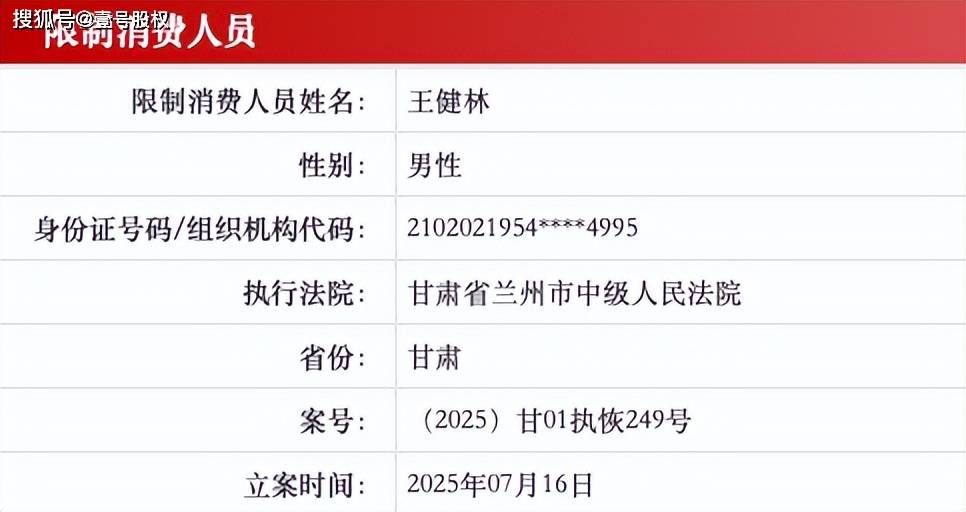
王健林最大的危机 ,不是被限制高消费,而是股权被冻结
Sou Hu Cai Jing· 2025-10-02 00:16
Group 1: Company Overview - Wang Jianlin, once the richest man in China, has faced significant financial decline, leading to restrictions on high consumption due to a debt of 1.86 billion [1] - In 2016, Wanda Group's revenue reached 255 billion, with total assets of 796.1 billion, marking the peak of Wang's wealth [1][4] - The real estate market experienced a significant boom from 2015 to 2019, with sales area and sales revenue growing rapidly, particularly in 2016 [2][4][6] Group 2: Financial Challenges - The real estate sector saw a drastic decline post-2021, with sales area dropping by 56% from its peak in 2021 to 2024 [12][14] - Wang's aggressive expansion strategy, including over $22 billion in overseas investments from 2012 to 2017, has led to liquidity issues as the market tightened [10][12] - The company's debt levels have increased significantly, with Evergrande's liabilities growing by 617% from 2014 to 2021, reflecting a broader trend in the industry [6][8] Group 3: Asset Liquidation and Strategy Shift - To address liquidity issues, Wang has sold nearly 100 Wanda Plaza locations and has been divesting shares in Wanda Commercial Management [18][20] - The shift towards a light-asset model has been accelerated, with Wang focusing on operational profits rather than ownership [20] - The freezing of shares in key companies poses a significant risk, as it limits Wang's ability to leverage assets for financing [20][21] Group 4: Industry Outlook - The commercial real estate sector faces challenges from the rise of e-commerce, leading to decreased foot traffic in shopping malls [22] - If the current downturn in the real estate market continues until 2027, asset values could decline by up to 50%, creating severe financial strain for companies like Wanda [22]
房地产普涨时代结束,“炒房暴利” 没出路,三四线房子要砸手里?
Sou Hu Cai Jing· 2025-09-28 20:22
Core Viewpoint - The era of universal price increases in the real estate market has ended, primarily due to the peak of the population dividend and an oversupply of housing [3][5][14]. Group 1: Market Trends - The real estate market has experienced a significant decline, with prices in resource-based cities in Northeast China returning to levels seen a decade ago, and rural properties being unsold even at prices as low as 50,000 yuan [1][3]. - By the end of 2023, the nationwide unsold housing area reached 560 million square meters, equivalent to nearly 3 million unsold homes, indicating a shift from "housing shortage" to "lack of people to occupy" in many areas [3][18]. Group 2: Urban Differentiation - Major cities like Guangzhou, Hangzhou, and Shenzhen have seen net population inflows of 250,000, 180,000, and 120,000 respectively in 2023, driven by industrial growth [5][7]. - The quality of industry is a key differentiator among cities; cities with traditional manufacturing face slow job growth and limited population inflow, while those with emerging industries like digital economy attract talent and wealth [9][12]. Group 3: Policy Impact - China's "housing is for living, not for speculation" policy and household registration system have helped prevent excessive speculation and mitigate risks of a real estate bubble, unlike the U.S. [14]. - The focus on public consumption, including education, healthcare, and community services, is becoming a new growth engine for the real estate sector, shifting from reliance on residential sales [19][21]. Group 4: Future Outlook - Investment in public service facilities is expected to drive the construction sector, with 20 billion yuan allocated in 2023 for such projects in Chengdu, involving major real estate companies [23]. - The development of public facilities is anticipated to stabilize the market and address social issues, allowing the real estate sector to serve human needs more effectively [23].
“热搜”上的非凡“十四五”|政策持续加码 房地产市场加快向新向好
Sou Hu Cai Jing· 2025-09-26 13:06
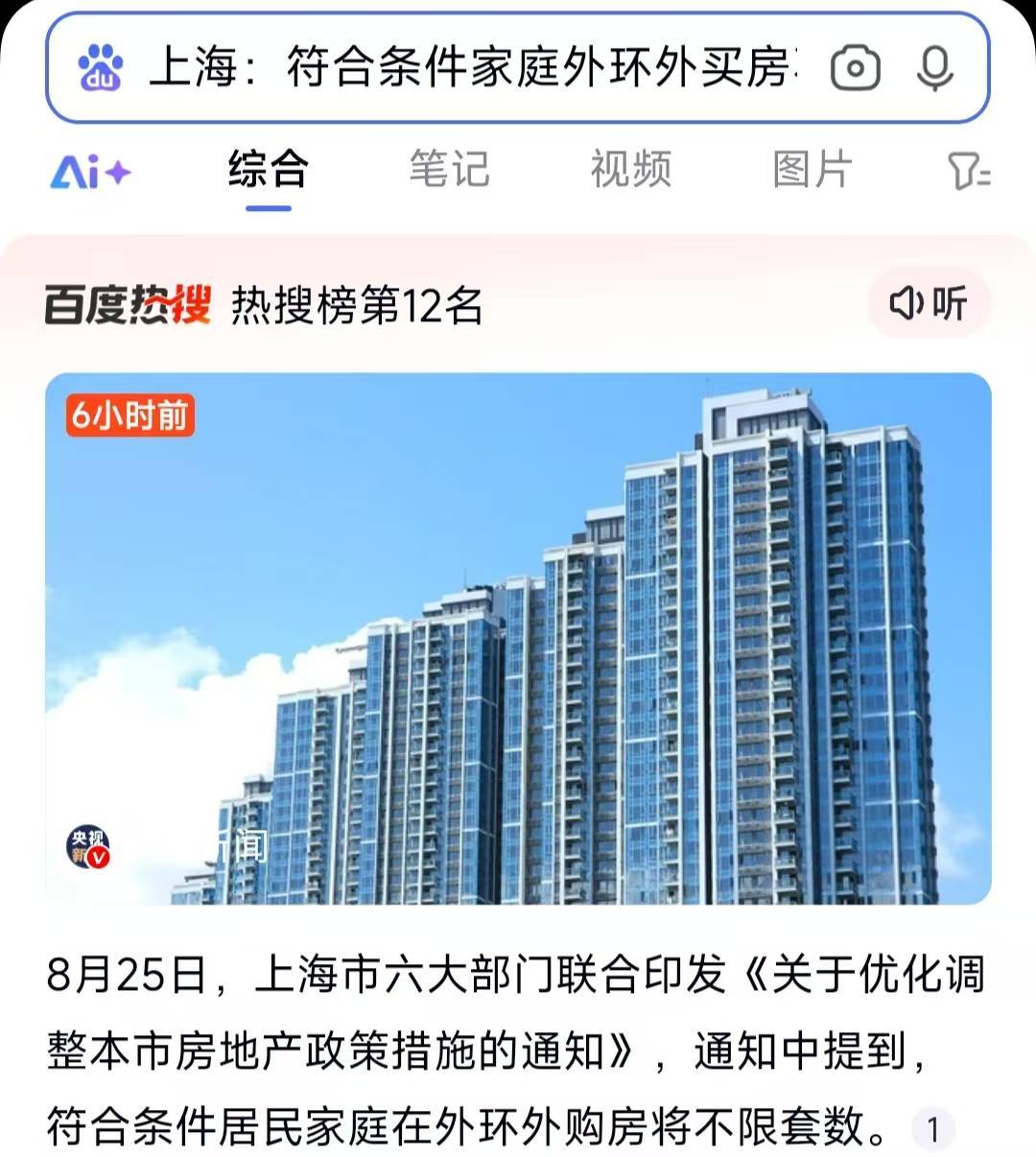
Group 1: Policy Direction and Market Trends - The core viewpoint emphasizes that the real estate market in China is undergoing a transformation, with policies aimed at promoting high-quality development during the "14th Five-Year Plan" period [1][3] - The focus of real estate policies has shifted towards a demand-driven approach, optimizing supply and enhancing financial collaboration, with an emphasis on affordable housing and urban renewal [3][4] - The government has provided over 1.6 trillion yuan in funding for affordable housing, with rental housing loans growing at an average rate of 52% annually [4] Group 2: Urban Renewal and Housing Quality - Urban renewal is highlighted as a key initiative to improve living conditions and city functionality, with plans to renovate 280,000 old residential communities by the end of 2024, benefiting 48 million households [5][6] - The "good housing" initiative aims to enhance housing quality, with policies promoting safety, comfort, and sustainability in residential construction [10][11] - Research indicates that the introduction of high-quality housing products could effectively meet market demand and stabilize the real estate market [12]
厦门建发,还在抢地!
Sou Hu Cai Jing· 2025-09-25 10:10
2025年9月25日,福建省厦门市的土地市场,迎来4宗住宅土地的集中出让,本次土拍全部以底价成交,总成交金 额达81.25亿元。购地者都是厦门市的国有房地产开发企业,包括厦门象屿、厦门建发、厦门国贸等知名企业,这 反映出当前市场环境下,民营房地产开发企业,已经对厦门的房地产市场,失去了信心。 这次土地拍卖情况是,厦门建发购得了湖里区湖里片区地块,地块面积4.1万平方米,建筑面积约12.3万平方米, 容积率3.0,由建发集团以20.38亿元竞得。该地块位于湖里老城区,周边生活配套成熟但城市界面亟待更新。集美 区杏林湾片区地块,由象屿集团与集美发展联合体以22.69亿元竞得。该地块位于集美新城核心区,占地面积约5.8 万平方米,规划建筑面积约14.5万平方米,容积率2.5。 厦门的本次土拍呈现三大显著特征:首先,全部底价成交,没有一分钱的溢价;其次,购地企业清一色为厦门市 属国企;第三,所有的地块,都附带配建的要求。这些现象的背后,反映出当前土地市场的阶段性特点:第一, 在楼市持续低迷状态下,开发商的投资更趋理性。在"房住不炒"政策基调下,房地产开发商,对利润的测算更为 谨慎,特别是对于配建要求较高的地块,普遍采 ...
银行9月再降息!房产市场迎来拐点,现在是卖房最后时机?
Sou Hu Cai Jing· 2025-09-24 23:52
Core Viewpoint - The recent interest rate cuts by the central bank aim to stabilize the real estate market amid ongoing economic transitions, with a focus on supporting reasonable housing demand rather than speculative investments [1][2][14]. Group 1: Interest Rate Cuts and Market Response - The central bank announced a reduction in the Loan Prime Rate (LPR), with the 1-year LPR down by 10 basis points to 2.95% and the 5-year LPR down by 15 basis points to 3.55%, marking the lowest levels in history [1]. - Following the announcement, there was a significant increase in customer inquiries at real estate agencies, indicating a rise in interest from first-time homebuyers [1][6]. - The reduction in mortgage payments is expected to benefit homebuyers, with an example showing a potential saving of approximately 180,000 yuan in interest over 30 years for a 6 million yuan property [4]. Group 2: Government Policies and Market Stability - Multiple government departments have introduced supportive policies for the real estate sector, including increased housing provident fund loan limits and reduced deed tax rates for certain property sizes [2]. - The overall message from these policies is that stabilizing the real estate market remains a crucial part of current economic efforts [2]. Group 3: Market Trends and Future Outlook - The real estate market is experiencing a prolonged adjustment phase, with a notable increase in the national housing inventory reaching 530 million square meters, leading to a depletion cycle exceeding 24 months [6]. - Experts suggest that while short-term demand may see a slight uptick due to lower mortgage rates, the long-term outlook remains cautious due to demographic changes and high household leverage ratios [4][10]. - The average housing price-to-income ratio in China remains high at 8.7, indicating continued pressure on residents despite recent improvements [8]. Group 4: Regional Variations and Investment Considerations - The real estate market is showing signs of regional differentiation, with first and second-tier cities experiencing relative stability while third and fourth-tier cities face greater adjustment pressures [10]. - The current market dynamics suggest that property owners should assess their decisions based on local market conditions and personal financial situations rather than following trends blindly [6][10].

克而瑞地产:2025年上半年房企毛利率修复至10.87% 净利润维持亏损
Zhi Tong Cai Jing· 2025-09-24 09:33
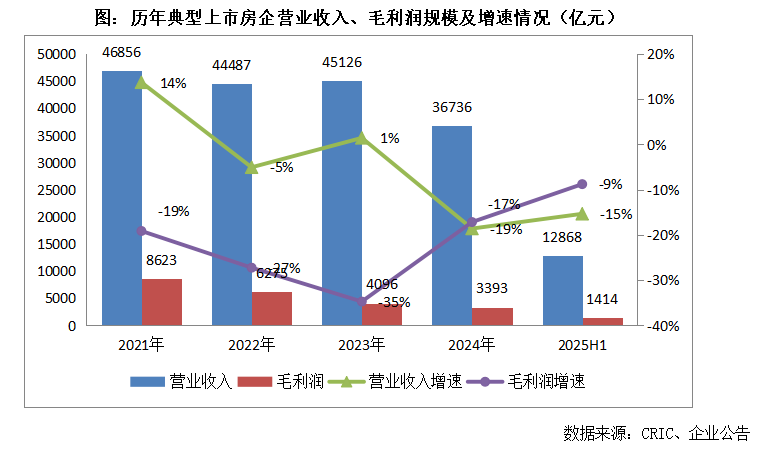
Core Viewpoint - The real estate industry is experiencing a significant decline in both revenue and profitability, with major listed companies reporting substantial losses and a challenging outlook for the near future [1][2][4][7]. Revenue and Profitability - In the first half of 2025, typical listed real estate companies achieved total revenue of 12,868 billion yuan, a year-on-year decrease of 15%, while operating costs were 11,454 billion yuan, down 16% [1]. - The gross profit for these companies was 1,414 billion yuan, reflecting a 9% decline compared to the previous year [1]. - The net profit loss for the industry expanded to 2,762 billion yuan in 2023, further increasing to 3,397 billion yuan in 2024, and reaching 902 billion yuan in the first half of 2025 [2]. Profitability Ratios - The overall gross margin for the industry in the first half of 2025 was 10.87%, an increase of 1.8 percentage points from the entire year of 2024, while the net margin was -7.45% [4]. - Excluding companies that have faced financial distress, the gross margin for 27 stable firms was 15.09%, up 2 percentage points from 2024, with a net margin of 1.71%, indicating a recovery from previous losses [4]. Factors Affecting Profitability - The decline in profitability is attributed to high land acquisition costs, increased sales pressure, and asset impairment provisions, which have negatively impacted current profit performance [4][7]. - Companies are resorting to discount promotions to boost sales, leading to a situation where revenue increases do not translate into profit growth [4]. Industry Outlook - The industry is at a turning point, with a shift in policy focus from deleveraging to risk prevention, and a change in demand dynamics from broad increases to differentiation [7]. - Major companies like Longfor and Vanke express cautious optimism, highlighting the ongoing demand for quality housing in core urban areas despite recent price declines [7][8]. Strategic Planning of Key Companies - China Resources Land plans to maintain an annual opening pace of around six shopping centers, with a focus on public REITs to enhance asset value [9]. - China Merchants Shekou aims to optimize asset structure and enhance operational capabilities through a new asset management model [9]. - Longfor Group anticipates a 10% growth in its commercial sector and plans to open approximately ten new projects annually in the coming years [9]. - New City Holdings is focused on enhancing its commercial operations and leveraging financial policies to improve its capital structure [9].