绿色化

Search documents
全国人大代表武汉琦:融合发展,保持制造业合理比重
Ren Min Ri Bao· 2026-01-29 09:00
Group 1 - The core viewpoint emphasizes the importance of maintaining a reasonable proportion of the manufacturing industry as it is crucial for economic stability and national security [1] - The transition from a manufacturing power to a manufacturing strong nation requires a focus on intelligent, green, and integrated development to build a modern industrial system [1] - Manufacturing serves as a "ballast" for economic development, supporting both traditional and emerging industries through innovation and application scenarios [1] Group 2 - There is a call to accelerate the development of advanced manufacturing by leveraging digital and green technologies to enhance the vitality and competitiveness of traditional industries [2] - The promotion of strategic emerging industries is essential, with a focus on deep integration of technological and industrial innovation to cultivate new productive forces [2] - The development of the manufacturing service industry should be expedited, supported by a comprehensive policy framework and fostering collaboration between industry, academia, and research [2]
全国人大代表逄子剑:形成特色鲜明、错位协同的产业图谱
Ren Min Ri Bao· 2026-01-29 09:00
Core Viewpoint - The article emphasizes the need for regions in China to leverage their unique advantages and resources to create a distinctive and collaborative industrial landscape, avoiding redundant and homogeneous development [1] Group 1: Regional Development Strategy - Regions should assess their unique geographical, resource, and market advantages to find their optimal position within the national framework [1] - The goal is to form a distinctive and collaborative industrial map to prevent low-level repetitive construction and homogenization [1] Group 2: Industrial Upgrading - The article highlights the importance of "three transformations": intelligent, green, and integrated development as a mutually reinforcing system [1] - Intelligent development involves integrating artificial intelligence and big data across the entire industrial chain to achieve quality and efficiency transformations [1] - Green development requires embedding environmental standards and technological innovation into the industrial DNA, which also creates significant new market opportunities [1] - Integrated development focuses on breaking down barriers to promote deep integration between advanced manufacturing, modern services, digital economy, and traditional industries [1] Group 3: Collaborative Growth - A modern industrial system is described as a highly organic ecosystem that supports both advanced regions and underdeveloped areas [1] - Strategies such as co-building industrial parks, developing "flying economy," and supply chain collaboration are essential for driving foundational growth in less developed regions [1] - The ultimate aim is to achieve overall advancement and shared prosperity, allowing innovations from developed areas to benefit suitable regions [1]
中联重科成功发行港股可转债 中长期战略布局再添强劲动能
Zheng Quan Ri Bao Wang· 2026-01-29 03:47
Core Viewpoint - Zhonglian Heavy Industry successfully issued HK convertible bonds, marking a significant milestone in its international capital operations, with funds aimed at enhancing R&D and overseas business development [1][2]. Group 1: Issuance Details - The issuance scale of the convertible bonds reached 6 billion RMB, with a 5-year term, a coupon rate of 0.70%, and a conversion price of 10.02 HKD [2]. - The issuance received strong interest from global institutional investors, reflecting confidence in the company's long-term growth prospects and credit quality [2]. Group 2: Investor Participation - The bond issuance attracted participation from renowned international investment institutions across various countries, including China, the US, UK, Germany, France, Switzerland, Ireland, and Singapore, indicating broad recognition of the company's development strategy and financial health [3]. - In a context of global economic uncertainty, the company has maintained investor trust through a clear development strategy and strong financial performance [3]. Group 3: Strategic Context - The company is navigating a transformative industry landscape characterized by globalization, green transition, and technological innovation, aligning its strategies with these trends [4]. - Funds raised will be allocated 50% to support global development initiatives and 50% to drive innovation in new technologies such as robotics and renewable energy [4]. Group 4: Future Outlook - The full conversion of the bonds will enhance the liquidity of the company's H-shares and improve its international capital image, supporting its global development strategy [5]. - The successful issuance serves as a model for Chinese manufacturing firms aiming to ascend the global value chain, with the company committed to sustainable development and high standards of corporate governance [5].
秭归:持续监督,全力守护“一江碧水”
Xin Lang Cai Jing· 2026-01-29 00:07
转自:全国人大 长江是中华民族的母亲河,守护长江生态是千年大计、国之大事。作为长江三峡大坝库首的湖北省秭归县,肩负着确保"一江清水永续东流、一库净水永 续北上"的特殊使命。 近年来,秭归县人大常委会深入学习贯彻习近平生态文明思想,围绕长江生态保护与航运船舶污染治理,综合运用执法检查、专题调研、听取审议报告等 方式,常态化开展监督,用实际行动书写"以法治守护长江、以监督护航生态"的履职篇章。 长江秭归段碧波荡漾,美景如画。摄影/魏启扬 01 久久为功 持续开展执法检查 长江奔流不息,监督工作不停步。秭归县人大常委会将生态环境保护作为监督重点,先后开展4次专项视察、6次跟踪检查,连续十余年听取生态环境状况 与目标完成情况报告,以刚性监督推动法律法规贯彻实施。 例如,锚定上下游、干支流、左右岸一体化治理,县人大常委会听取长江流域秭归段禁捕工作情况汇报,视察长江大保护十大标志性工程进展,健全完 善"视察调研—议案建议—跟踪督办—满意度测评"全链条监督流程,不断提升监督工作针对性实效性。 在人大监督推动下,县政府对长江生态保护实行"全域覆盖、全链管控",成效显著:完成长江及三峡库区入河排污口整治284个,长江干流秭归段 ...


春节前的中国外贸工厂:“提早放假”“忙飞了”两极分化
Di Yi Cai Jing· 2026-01-27 12:50
Core Insights - The article highlights the challenges faced by foreign trade companies in China due to a shrinking order book and increased geopolitical risks, leading to a split in operational strategies where some factories are closing early for the holidays while others are working overtime to fulfill orders [1][2][3]. Group 1: Market Conditions - Many factories are experiencing a decline in orders, prompting some to close for the holidays earlier than usual, with reports indicating that some factories in Zhejiang and the Pearl River Delta are shutting down as early as the end of January [2][3]. - The Shanghai Export Container Freight Index fell by 7.4% as of January 23, indicating a continued decline in shipping rates due to geopolitical tensions and weak demand, with specific routes to Europe and the Americas also seeing significant drops in freight costs [4]. - The overall market demand is reported to be weaker compared to previous years, with some companies experiencing a polarized situation where some are closing early while others are working hard to meet demand [4]. Group 2: Company Strategies - Companies are increasingly focusing on expanding into emerging markets and enhancing their brand presence, with some reporting a 20% increase in orders compared to the previous year, driven by strategic shifts towards self-owned brands and international markets [5][6][7]. - A packaging materials company noted a 20% year-on-year increase in orders, primarily from overseas clients, leading to a delay in holiday closures to better serve these customers [7]. - The upcoming 2026 World Cup is expected to create a surge in orders, with companies preparing for increased demand in the lead-up to the event, despite overall market conditions being less favorable than previous major events [7][8]. Group 3: Trade Performance - In 2025, China's foreign trade is projected to grow by 3.8%, with exports increasing by 6.1% and imports by 0.5%, maintaining China's position as the world's largest goods trader [8][9]. - Trade with countries involved in the Belt and Road Initiative saw a 6.3% increase, accounting for 51.9% of total trade, while trade with the EU, ASEAN, and Latin America also showed positive growth [9]. - The export of high-tech and high-value-added products is strong, helping to offset declines in traditional labor-intensive sectors, indicating a shift in China's manufacturing capabilities towards higher value segments [9].
山东省政协委员马常海:以科技创新赋能内燃机产业 为山东制造业升级提供强劲引擎│聚焦2026山东两会
Jing Ji Guan Cha Wang· 2026-01-27 03:30
Core Viewpoint - The Shandong Provincial Political Consultative Conference emphasizes the need for policies to support the transformation of the internal combustion engine industry towards high-end, intelligent, and green development, which is crucial for upgrading Shandong's manufacturing sector [1][2]. Group 1: High-End Development - The internal combustion engine industry in Shandong is a key sector, with a significant contribution to the national economy and defense, but faces challenges in high-end market penetration and core technology development [2][3]. - There are hidden barriers in the high-end market, particularly in the data center power generation systems, which are dominated by international brands, posing supply chain security risks [3]. - The industry lacks mature domestic alternatives for critical components, such as high-precision gas valves and fuel systems, which hinders its ability to move up the value chain [3]. Group 2: Intelligent Transformation - The internal combustion engine industry is experiencing a trend towards digital integration, but faces challenges in collaborative efficiency and digital transformation [5][6]. - There is a lack of unified standards for data sharing among enterprises, which hampers overall industry efficiency [6]. - Small and medium-sized enterprises are hesitant to adopt digital transformation due to high costs and unclear pathways, leading to isolated data systems [6][7]. Group 3: Green Development - The internal combustion engine industry is working towards a multi-fuel technology system, including methanol, hydrogen, and ammonia, which is essential for achieving carbon neutrality goals [8][9]. - There is an imbalance in policy support for low-carbon technologies compared to electric products, creating a disadvantage for hydrogen internal combustion engine vehicles [8][9]. - The infrastructure for alternative fuel refueling stations is lacking, which limits the application of mature technologies [8][9]. Group 4: Recommendations - The industry should focus on promoting domestic high-end equipment and establish a collaborative innovation center for key technologies [4][7]. - A comprehensive support system for digital transformation should be developed, including training and resources for small and medium-sized enterprises [7]. - Policies should be created to support the construction of alternative fuel infrastructure and ensure fair competition among different technology routes [9].

行业聚焦:全球纺织业螯合剂行业头部生产商市场份额及排名调查(附龙头企业介绍)
QYResearch· 2026-01-27 02:43
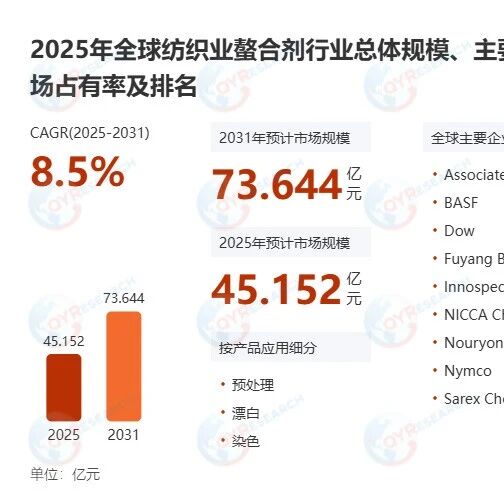
Core Viewpoint - The textile industry chelating agents are essential for improving product quality and sustainability by preventing metal ion reactions that can damage fibers and equipment, thus enhancing the efficiency and environmental compliance of textile production processes [2][3]. Product Range - The product range of textile chelating agents has evolved from traditional inorganic salts to a diverse family of fine chemicals, including: - Traditional inorganic chelating agents (e.g., polyphosphates) are widely used for general water treatment due to their low cost and high stability. - Organic carboxylic acid chelating agents (e.g., EDTA, NTA) dominate high-end dyeing processes but face environmental concerns. - Bio-based and green chelating agents (e.g., gluconates, chitosan derivatives) are rapidly emerging in response to sustainable textile policies. - Multifunctional composite chelating agents integrate dispersion, buffering, and anti-redeposition capabilities to meet integrated dyeing and finishing process needs [2]. Application Scope - Textile chelating agents serve as an "invisible engine" throughout the textile production process: - In the pre-treatment stage, they integrate calcium and magnesium ions to prevent hard water precipitation, enhancing desizing and refining efficiency. - During bleaching and dyeing, they stabilize oxidants and dye activity, ensuring color uniformity and reproducibility. - In post-treatment and water treatment, they inhibit metal ion catalysis that leads to fiber damage and reduce heavy metal loads in wastewater [3]. Market Overview - According to QYResearch, the global textile chelating agents market is projected to reach USD 1.16 billion by 2032, with a compound annual growth rate (CAGR) of 8.4% over the coming years [4]. Market Structure - Major manufacturers in the global textile chelating agents market include BASF, Dow, Nouryon, Innospec, and NICCA Chemical, with the top five companies holding approximately 59.0% market share by 2025 [6]. - The top three chemical giants (BASF, Dow, Nouryon) collectively account for over 40% of the market share, leveraging their global supply chains, R&D capabilities, and brand influence to dominate the high-end market [8]. Competitive Landscape - The competitive landscape shows that specialized manufacturers like Innospec and NICCA Chemical maintain stable shares in niche markets through application technology services and regional channels. - Asian companies (e.g., Fuyang Biotech, Taihe Chem, Yuanlian Chemical) leverage cost advantages and localized services to compete effectively in the mid-to-low-end market [8]. Industry Trends - The textile chelating agents market is transitioning from traditional functional additives to green, high-performance, and systematic solutions. The focus is shifting towards developing new molecular structures that are biodegradable, low-toxicity, and multifunctional to meet stringent environmental regulations [18]. - The application scenarios are deepening, with products extending beyond core processes to include textile recycling, wastewater treatment, and functional finishing, thus elevating their value from mere process aids to strategic materials that ensure supply chain compliance and resource efficiency [18]. Development Opportunities - The market faces structural constraints, primarily the challenge of balancing the technology and economics of green alternatives. The development and production costs of biodegradable or low-toxicity chelating agents are significantly higher than traditional products, which poses a challenge for cost-sensitive textile manufacturers [19]. - Additionally, the lack of unified industry standards and certification systems complicates product development and market entry, as different regions have varying definitions and compliance requirements for "environmentally friendly" and "biodegradable" [19]. Development Barriers - The market's growth is hindered by the cost-performance balance challenge in the green transition. The raw material costs and synthesis complexity of eco-friendly chelating agents are significantly higher than traditional products, leading to slow penetration of green products in cost-sensitive markets [20]. - Furthermore, traditional chelating agents (e.g., EDTA, phosphates) have established market inertia due to their stable performance and mature technology, making it difficult for new products to gain traction [20].

圆满收官“十四五”,中国石油以新质生产力重塑发展格局
Xin Lang Cai Jing· 2026-01-27 01:43
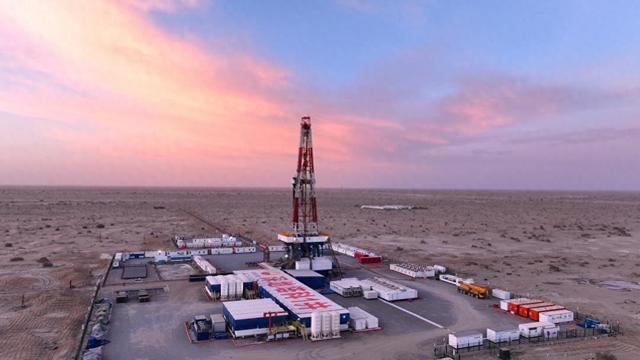
Core Viewpoint - The article highlights the significant achievements and strategic advancements of China National Petroleum Corporation (CNPC) during the 14th Five-Year Plan, emphasizing its commitment to energy security, green transformation, and technological innovation. Group 1: Energy Security and Production Capacity - CNPC has established a robust energy security foundation, maintaining a "three 100 million tons" supply structure, with domestic crude oil production increasing for six consecutive years and natural gas production exceeding 1 trillion cubic meters for nine years [5][6] - The company aims for its domestic natural gas production to account for 64.4% of the national total by 2024, reinforcing its leadership in the industry [5] - CNPC's shale oil production has surpassed 7 million tons annually, and it leads the nation in ultra-deep oil and gas production [5][6] Group 2: Green and Low-Carbon Transition - CNPC has made significant strides in green and low-carbon transformation, with its clean energy generation exceeding 20 billion kilowatt-hours annually and a threefold increase in carbon capture, utilization, and storage (CCUS) project carbon injection over five years [3][20] - The company has developed a comprehensive low-carbon energy ecosystem, integrating fossil and renewable energy sources, and aims to enhance its role in the new energy system [19][21] Group 3: Technological Innovation and New Industries - CNPC has focused on technological breakthroughs, achieving significant advancements in deep exploration technologies, including the first 10,000-meter deep well in Asia [8][25] - The company has launched initiatives in new materials and emerging industries, with new materials production growing at around 50% annually, supporting strategic sectors like electronic information and new energy vehicles [16][30] - CNPC's digital transformation includes the introduction of a 300 billion parameter Kunlun model, enhancing efficiency in exploration and production processes [26][28] Group 4: Refining and Chemical Industry Transformation - The refining sector is undergoing a transition from scale expansion to quality improvement, with CNPC actively responding to national policies and focusing on high-end, intelligent, and green development [12][15] - The company has initiated several major projects, including the construction of a 2 million-ton refining project in Guangdong, which integrates advanced technologies [14][15] Group 5: Biodiversity and Environmental Protection - CNPC has implemented a unique biodiversity protection model, successfully cultivating endangered species and establishing protected areas, showcasing its commitment to ecological conservation [21][22] - The company's efforts in biodiversity have been recognized globally, contributing to the reconciliation of energy development and nature conservation [22]

研判2026!中国合同环境服务行业发展历程、产业链、市场规模、重点企业及发展前景:市场对环保服务需求不断增长,带动合同环境服务规模达千亿元[图]
Chan Ye Xin Xi Wang· 2026-01-27 01:15
Core Insights - The contract environmental service industry in China is experiencing significant growth, driven by favorable government policies and increasing market demand for environmental services. The market size is projected to grow from 188.75 billion yuan in 2017 to 400 billion yuan by 2024, with a compound annual growth rate (CAGR) of 11.33% [1][11]. Industry Overview - Contract environmental services involve agreements between environmental companies and users, where payment is made based on measurable environmental outcomes. This model is market-driven and aims to optimize resource allocation and utilization [4][10]. - The industry has evolved since the 1980s, initially focusing on industrial pollution control and expanding to various sectors, including energy and transportation, due to increasing environmental awareness and regulatory support [8][10]. Market Size and Growth - The market size of the contract environmental service industry in China is expected to reach approximately 412.5 billion yuan by 2025, indicating a robust growth trajectory [1][11]. - The demand for environmental services is anticipated to continue rising due to heightened environmental awareness and ongoing policy support [11]. Industry Characteristics - The contract environmental service model reduces risks and costs for polluting enterprises, enhances financing capabilities, and fosters collaboration among stakeholders [6]. - The industry is characterized by a diverse range of service types, including pollution control contracts and environmental engineering contracts, aimed at achieving sustainable development [4][6]. Industry Chain - The contract environmental service industry chain includes various stakeholders such as technology research institutions, equipment suppliers, service providers, and end-users, all working collaboratively to drive industry growth [8][9]. Key Companies - Notable companies in the contract environmental service sector include Beijing Enterprises Ecological and Environmental Group, Zhongyuan Environmental Protection, and Yongqing Environmental Protection, among others [2][12][14]. Future Trends - The industry is expected to evolve towards greater intelligence, green practices, and precision in service delivery, leveraging big data and AI for predictive maintenance and optimization [15][16]. - The focus will shift from mere compliance with pollution standards to resource recovery and energy generation, transforming environmental services into economically beneficial green assets [15][16].


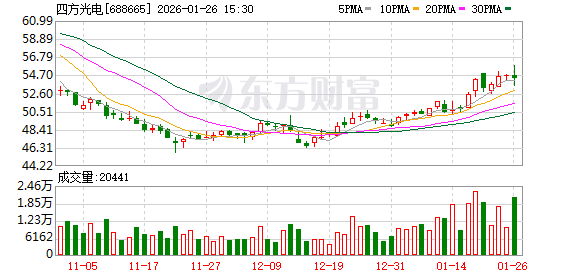
四方光电:汽车电子业务是公司重要的业绩支柱
Zheng Quan Ri Bao· 2026-01-26 14:20
Core Viewpoint - The automotive electronics business is a significant performance pillar for the company, contributing nearly 30% to revenue in 2024 [2] Group 1: Business Overview - The company's automotive electronic products are widely used in cabin air quality monitoring and improvement, engine emission monitoring, and new energy battery safety management, aligning with the automotive industry's trends towards intelligence and sustainability [2] - Despite having a certain scale and a high growth base, the company has secured multiple vehicle project contracts in recent years, providing sustained momentum for future development [2] Group 2: Future Strategies - The company plans to continue expanding collaborations with major domestic and international OEMs, focusing on new models and platform projects to further increase market share [2] - Systematic cost reduction and efficiency enhancement will be driven through low-cost R&D innovation and supply chain optimization to strengthen product competitiveness [2] - The company is actively developing sensors related to automotive thermal management systems, particularly for monitoring new environmentally friendly refrigerants, to create new business growth points [2] - In the field of new energy vehicle safety, the company aims to develop low-cost, high-reliability thermal runaway monitoring solutions to enhance battery safety protection capabilities, better meeting market demands for cost-effective safety solutions [2]