
Agent

Search documents
AI圈四杰齐聚中关村,都聊了啥?
首席商业评论· 2026-01-11 04:57
Core Viewpoint - The AGI-Next summit organized by Tsinghua University gathered leading figures in the AI field, discussing the future of AI and the transition from conversational models to task-oriented models [2][4]. Group 1: Development of AI Models - The evolution of AI models has progressed from simple tasks to complex reasoning and real-world applications, with expectations for significant advancements by 2025 [9][10]. - The introduction of Human-Level Evaluation (HLE) tests the models' generalization capabilities, indicating a shift towards more complex problem-solving abilities [10][11]. - The current focus is on enhancing models' reasoning and coding capabilities, moving from dialogue-based interactions to practical applications [12][14]. Group 2: Challenges and Innovations - The challenges in reinforcement learning (RL) include the need for human feedback and the risk of models getting stuck in local optima due to insufficient data [11][18]. - Innovations such as RL with verifiable environments (RLVR) aim to allow models to learn autonomously and improve their performance in real-world tasks [11][12]. - The development of a new asynchronous reinforcement learning framework has enabled parallel task execution, enhancing the training efficiency of models [15]. Group 3: Future Directions - Future AI models are expected to incorporate multi-modal capabilities, memory structures, and self-reflective abilities, drawing parallels to human cognitive processes [21][22][23]. - The exploration of new paradigms for AI development is crucial, focusing on scaling known paths and discovering unknown paths to enhance AI capabilities [27][28]. - The integration of advanced optimization techniques and linear attention mechanisms is anticipated to improve model performance in long-context tasks [44][46]. Group 4: Industry Impact - The advancements in AI models are positioning Chinese companies as significant players in the global AI landscape, with open-source models gaining traction and setting new standards [19][43]. - The collaboration between academia and industry is fostering innovation, with companies leveraging AI to enhance productivity and address complex challenges [56][57].

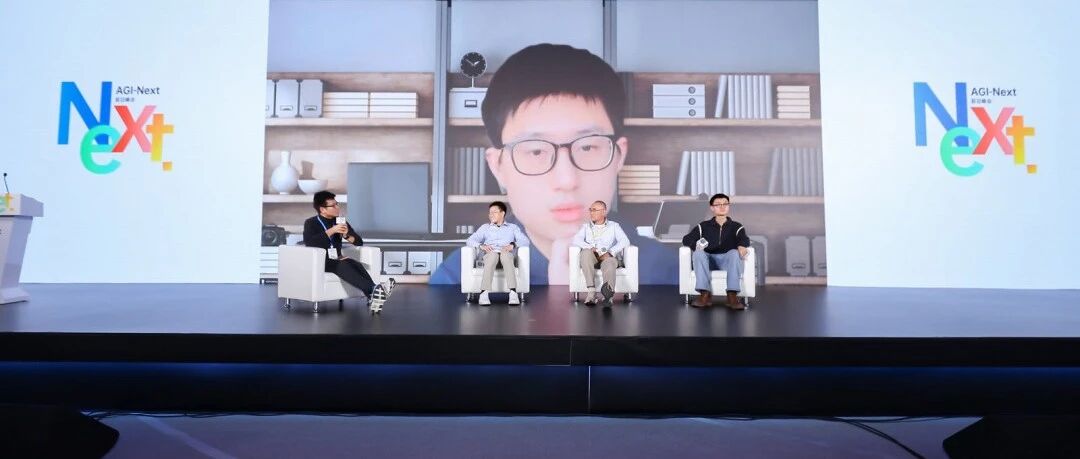
唐杰、杨植麟、姚顺雨、林俊旸罕见同台分享,这3个小时的信息密度实在太高了。
创业邦· 2026-01-11 03:22
Core Insights - The event AGI-NEXT featured prominent speakers from the AI industry, highlighting the rapid evolution of AI models and the shift from chat-based interactions to action-oriented applications [7][8][12][16]. - The discussion emphasized the importance of model differentiation, with a focus on the unique value each model brings based on its design and underlying philosophy [20][21][30]. - The panelists noted that the future of AI will involve a significant shift towards productivity-enhancing applications, particularly in the To B (business) sector, where higher intelligence models are increasingly valued [32][33][62]. Group 1 - The event AGI-NEXT showcased key figures in AI, including representatives from major companies, indicating a strong interest and investment in AI development [6][9][12]. - The discussions revealed that the competition in AI is shifting from merely creating chat models to developing models that can perform specific tasks effectively [16][18]. - The concept of "Taste" in AI models was introduced, suggesting that the uniqueness of each model's design will lead to diverse outcomes in intelligence and application [20][21]. Group 2 - The panelists discussed the clear differentiation between To C (consumer) and To B (business) applications, with a notable increase in the demand for high-performance models in the business sector [31][32][62]. - The conversation highlighted the importance of context in AI applications, suggesting that user-specific inputs can significantly enhance the value provided by AI systems [36]. - The potential for AI to revolutionize productivity in various sectors was emphasized, with predictions that AI could significantly impact GDP growth in the future [62][63]. Group 3 - The discussion on model differentiation pointed out that while consumer applications may not require the highest intelligence, business applications are increasingly reliant on superior models for productivity [32][33]. - The panelists expressed optimism about the future of AI, predicting that advancements in model efficiency and the emergence of new paradigms will lead to significant breakthroughs by 2026 [56][59]. - The importance of education and user training in maximizing the benefits of AI tools was also highlighted, suggesting that those who can effectively utilize AI will have a competitive advantage [63].
未来走向何方?Agent 创企 2025 生存现状一览
机器之心· 2026-01-11 01:30
Core Insights - The article discusses the rising prominence of Agent companies in the AI sector, highlighting their challenges and opportunities as they navigate the market landscape leading up to 2025 [6]. Group 1: Agent Companies and Market Trends - The acquisition of Manus by Meta for over $2 billion is seen as a milestone event in the Agent space, sparking diverse interpretations within the industry [7]. - The concept of "Situated Agency" is introduced, emphasizing that an Agent's capabilities are deeply intertwined with its environment, tools, and memory [7]. - The market acceptance of Agents has surged, with 52% of companies using generative AI deploying Agents in production environments [8]. Group 2: Investment and Capital Flow - Over 20 U.S. Agent startups raised over $100 million in funding in the past year, covering various sectors such as programming, B2B customer service, healthcare, and legal [11]. - Harvey, a legal-focused Agent company, completed a $160 million Series E funding round, achieving a valuation of $48 billion [11]. - ElevenLabs raised $100 million to transition towards a conversational Agent platform, indicating a shift in focus towards dialogue-driven applications [12]. Group 3: Sector-Specific Developments - In the legal sector, EvenUp raised $150 million to automate routine legal tasks, showcasing the growing interest in legal technology [11]. - In the search domain, Parallel and You.com both secured over $100 million in funding, reflecting the demand for Agent capabilities in search infrastructure [12]. - The healthcare sector is also seeing significant investment, with companies like Abridge raising $300 million to develop clinical dialogue Agents [15].

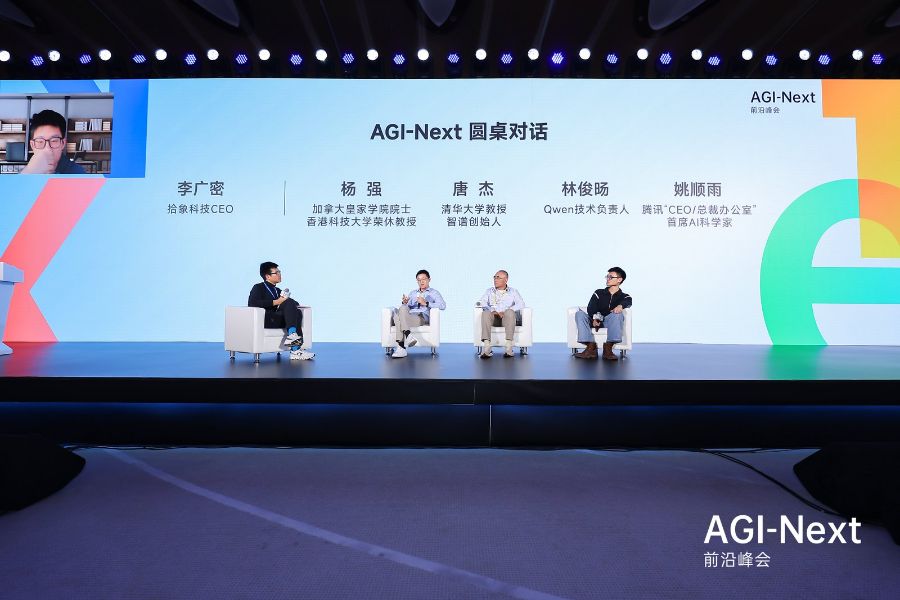
罕见集齐姚顺雨、杨植麟、唐杰、林俊旸,清华这场AI峰会说了啥
Xin Lang Cai Jing· 2026-01-10 16:24
Core Insights - The AGI-Next summit gathered prominent figures in the AI industry to discuss new paradigms, challenges, and opportunities for Chinese large model companies [1] - Yao Shunyu, Tencent's Chief AI Scientist, highlighted the distinct characteristics of the To C and To B markets in the large model sector, emphasizing the need for vertical integration in consumer applications and the premium placed on high-performance models in enterprise settings [4][5] Group 1: Market Dynamics - The To C market does not require high intelligence most of the time, with applications like ChatGPT serving as enhanced search engines [4] - In contrast, the To B market shows a strong willingness to pay for top-tier models, with companies willing to pay $200/month for premium models while showing little interest in lower-tier options [4] - Yao noted that the gap between strong and weak models in the To B market is widening, as errors from weaker models incur significant hidden costs [4] Group 2: Future AI Paradigms - Yao emphasized that future competitiveness will hinge on capturing context rather than merely increasing model parameters, suggesting that understanding user context is crucial for providing relevant responses [5] - He also pointed out that the development of autonomous learning signals is already underway, although current models lack the pre-training capabilities of leading companies like OpenAI [6] - The potential for new paradigms in AI is linked to the convergence of academic and industrial innovations, with universities increasingly equipped with computational resources [9] Group 3: AI Agent Development - The evolution of AI Agents is seen as a key change in the AI industry, with a framework proposed that outlines the transition from human-defined goals to AI autonomously defining its objectives [11] - The challenge of addressing long-tail demands is highlighted as a significant value proposition for AGI [11] - Commercialization of AI Agents faces challenges related to value, cost, and speed, with a need for Agents to solve meaningful human tasks without incurring excessive costs [12]
瞄准英伟达,国产算力产业走向“闭环”
3 6 Ke· 2026-01-09 12:39
Core Insights - The Chinese computing power industry is experiencing rapid growth in capital operations, highlighted by significant IPOs and market enthusiasm for domestic semiconductor companies [1][2] - The focus of competition in the domestic computing power sector is shifting from hardware specifications to system stability, software ecosystem usability, and cost-effectiveness [3][4] Capital Market Activity - TianShuZhiXin Semiconductor Co., Ltd. went public on January 8, 2026, with over 400 times subscription, indicating strong market interest [1] - Other domestic GPU companies, such as MoEr Thread and MuXi Co., saw their stock prices surge on their debut, with MoEr Thread's market cap exceeding 305.5 billion yuan and MuXi's reaching 330 billion yuan [1] - ChangXin Technology submitted its IPO application on December 30, 2025, reporting revenue of 32.084 billion yuan for the first three quarters of 2025, showcasing the scale of domestic DRAM production [1] Technological Developments - The "Ten Thousand Card Cluster" concept is becoming a benchmark for evaluating domestic computing power, but it also presents challenges in reliability as system scale increases [3][4] - The introduction of the scaleX Ten Thousand Card Super Cluster by ZhongKe Shuguang, featuring 10,240 AI accelerator cards, represents a significant advancement in system architecture [3][4] - The need for high-quality, low-latency data transmission networks is critical for supercomputing, with domestic products now matching international standards [5][6] Storage Solutions - ChangXin Technology and ChangChun Group are positioned in the core areas of DRAM and NAND Flash, respectively, with ChangXin reporting a compound annual growth rate of over 70% in revenue from 2022 to 2024 [6][7] - The introduction of advanced technologies like Xtacking in NAND Flash production by ChangChun Group marks a significant technological breakthrough [7] Software Ecosystem - The transition to a robust software ecosystem is complex, with developers facing high costs in switching from established platforms like NVIDIA's CUDA [10][11] - MoEr Thread is addressing this by launching the MTT AIBOOK, which includes development tools to facilitate easier adoption of its platform [10] - Cloud service providers are playing a crucial role in integrating various hardware brands to create a unified software environment, addressing compatibility issues [11][12] Market Dynamics - The industry is witnessing a shift towards collaborative ecosystems, with companies recognizing the need for specialization rather than attempting to cover the entire supply chain independently [9][12] - The emergence of customized products from companies like Haiguang is aimed at meeting the specific needs of large enterprises, reflecting a trend towards more open architectures [15] Future Outlook - The domestic computing power industry is expected to face challenges related to global supply chain fluctuations, particularly in DRAM and NAND supply [13] - The successful integration of domestic computing solutions in high-stakes environments, such as the National High Energy Physics Data Center, indicates growing confidence in local technologies [14] - The potential easing of export restrictions on NVIDIA's H200 chip could impact the domestic ecosystem, but the established supply chain and customer preferences for security are likely to mitigate risks [17]


瞄准英伟达!国产算力产业走向“闭环”
经济观察报· 2026-01-09 10:28
Core Viewpoint - The rapid advancement of China's computing power industry is highlighted by significant capital market activities, including the successful IPOs of domestic semiconductor companies, while challenges remain in practical applications and system integration [2][4]. Group 1: Capital Market Activities - Shanghai Tensu Zhixin Semiconductor Co., Ltd. went public on January 8, 2026, with over 400 times subscription, indicating strong market enthusiasm [2]. - Other domestic GPU companies, such as Moer Thread and Muxi Co., saw their stock prices surge by 468.78% and 692.95% respectively on their debut, with market capitalizations exceeding 305.5 billion and 330 billion yuan [2]. - Changxin Technology submitted its IPO application on December 30, 2025, reporting revenue of 32.084 billion yuan for the first three quarters of 2025, showcasing the scale of domestic DRAM production [2][10]. Group 2: Technological Advancements - The focus of competition in the computing power sector is shifting from hardware specifications to system stability, software ecosystem usability, and cost-effectiveness in commercial applications [6]. - The introduction of the scaleX super cluster by Zhongke Shuguang, featuring 10,240 AI accelerator cards, emphasizes the need for high reliability in large-scale systems [6][7]. - The development of a native 400G RDMA network by Zhongke Shuguang aims to enhance data transmission quality and reduce latency, crucial for supercomputing applications [7][8]. Group 3: Software Ecosystem Development - Moer Thread is addressing the challenge of transitioning developers to domestic computing platforms by launching the MTT AIBOOK, which includes essential development tools [13]. - The company also introduced a code migration model, MUSACode, to facilitate the transition from CUDA to its own platform, aiming for a 93% compilation rate [13]. - Cloud service providers are playing a critical role in integrating various hardware brands, thereby mitigating compatibility issues and enhancing resource management [15][16]. Group 4: Supply Chain and Market Dynamics - The supply chain for DRAM and NAND flash is under pressure, prompting cloud vendors to adjust procurement strategies to ensure resource availability [17]. - The adoption of domestic computing facilities by institutions like the Chinese Academy of Sciences indicates growing confidence in local technology, despite some performance gaps compared to international counterparts [19]. - The emergence of customized products from companies like Haiguang reflects a shift towards meeting specific client needs, enhancing market competitiveness [20]. Group 5: Industry Ecosystem and Future Outlook - The domestic computing power industry is forming a closed-loop ecosystem, integrating various components from storage to computing and application layers [21][22]. - The rise of domestic large models, such as DeepSeek, is redefining hardware competition standards, necessitating support for mixed-precision computing [21]. - Concerns about potential disruptions from international competitors, such as NVIDIA's H200 chip, are countered by the established supply chain and ecosystem resilience of domestic firms [21][22].

中金 | Chatbot专题研究:未来已来
中金点睛· 2026-01-08 23:59
Core Insights - The article emphasizes that Chatbot has emerged as the "Killer App" of the AI era, transforming user interactions and productivity through natural language processing and engagement [5][8][12] - ChatGPT leads the global market with over 870 million monthly active users (MAU) and a market share of 63%, while domestic competitor Doubao has surpassed 100 million daily active users (DAU) [22][36] - The evolution from Chatbot to Agent is highlighted as a significant trend, with potential for enhanced user engagement and commercial applications [6][54] Group 1: Market Dynamics - ChatGPT's user engagement metrics are comparable to established social platforms, with an average of 13 active days per month, indicating strong user retention [14][22] - Gemini, backed by Google, is rapidly catching up with ChatGPT, boasting 337 million MAU and leveraging Google's ecosystem for market penetration [22][36] - The competitive landscape is characterized by a mix of general and specialized AI applications, with companies like Anthropic and Perplexity carving out niches in the B2B space [26][36] Group 2: User Engagement and Retention - ChatGPT's user retention rates exceed those of competitors, with 7-day and 30-day retention rates significantly higher than other platforms [26][27] - The usage patterns of ChatGPT have evolved from a work-focused tool to a more integrated part of users' daily lives, reflecting a shift in user behavior [14][21] - The article notes that over 15% of ChatGPT users engage with both the mobile app and web version, indicating deep integration into user workflows [26] Group 3: Technological Evolution - The transition from Chatbot to Agent is seen as a natural progression, with the potential for AI to become a proactive entity that understands and executes tasks autonomously [54][56] - The article discusses the importance of multi-modal capabilities in enhancing user experience and the potential for AI to handle complex workflows [51][57] - Future developments in AI are expected to focus on personalized interactions and the integration of various services, moving towards a more comprehensive AI platform [54][60] Group 4: Commercialization Strategies - Current monetization strategies for Chatbots vary, with subscription models prevalent in overseas markets and free models dominating in China [6][12] - The article suggests that a hybrid model of "free + transaction-oriented advertising" could emerge as a more effective commercial strategy in the long term [6] - The competition for user engagement will likely intensify as companies explore new revenue models and service integrations [65][66]

锦秋被投企业OiiOii创始人闹闹:亲历微信与字节后,如何抓住下一波机会?|Jinqiu Spotlight
锦秋集· 2026-01-07 11:03
Core Viewpoint - The article discusses the transformative impact of AI on various industries, particularly focusing on the emergence of AI-driven video creation tools like OiiOii, which aims to democratize animation for everyday users [6][10]. Group 1: Company Overview - OiiOii is a startup focused on using AI to enable ordinary people to create animations, founded by a product manager with extensive experience in major tech companies [7][8]. - The company is currently in its Pre-A funding round and has a team of approximately 18-19 full-time employees [23][27]. Group 2: Product Development - OiiOii has undergone significant iterations in its product architecture, having restructured its framework four times within two months to enhance user experience and flexibility [9][85]. - The product utilizes an "Agent" model, which allows for a more interactive and fluid creation process compared to traditional GUI tools, enabling users to combine various AI models seamlessly [45][54]. Group 3: Market Positioning - The company targets self-media creators, particularly those who produce content suitable for animation, such as educational videos and music videos, aiming to improve their production efficiency significantly [71][72]. - OiiOii differentiates itself from traditional video editing tools like Jianying (剪映) by focusing on specific content types and building a knowledge base for generating tailored outputs [87]. Group 4: Competitive Landscape - The article highlights that OiiOii does not fear competition from large models like Sora, as it believes that the diversity of video models will create a thriving ecosystem rather than a monopolistic market [53][64]. - The company positions itself as a "restaurant" in the AI model landscape, where it curates and combines various AI capabilities to deliver unique content, contrasting with the "supermarket" model of large AI providers [54][58]. Group 5: User Engagement - OiiOii has attracted unexpected user segments, including teams creating animated series and individuals looking to express personal sentiments through animation, indicating a broader appeal than initially anticipated [76][77]. - The platform aims to evolve by prioritizing user feedback and gradually enhancing its service offerings to better meet the needs of its diverse user base [79][80].

国泰海通:维持计算机板块“增持”评级 AI应用层获资本押注
智通财经网· 2026-01-05 22:48
Group 1 - The core viewpoint of the report from Guotai Junan Securities maintains an "overweight" rating for the computer sector, highlighting the implementation of the "Automobile Industry Digital Transformation Implementation Plan" by the Ministry of Industry and Information Technology and other departments, focusing on key equipment such as intelligent robots and intelligent detection devices [1][2] - The plan emphasizes strengthening independent research on key technologies to enhance the resilience and security of the industrial supply chain, covering areas such as simulation design, research and testing, and core technologies like Cyber-Physical Systems (CPS) [2] - The policy encourages collaboration between key enterprises and academic institutions to form innovation alliances for coordinated technological breakthroughs, aiming to shorten the industrialization cycle through improved data sharing and platform co-construction [2] Group 2 - The AI industry is shifting its value focus towards Agent applications that solve practical problems, with domestic company Kimi recently completing a $500 million Series C financing, achieving a post-investment valuation of $4.3 billion [3] - Meta's acquisition of the Chinese AI application company Butterfly Effect for several billion dollars marks its third-largest acquisition, with the core product Manus generating an annual recurring revenue (ARR) exceeding $100 million [3] - The digital renminbi is entering a new phase with key institutional arrangements, as the People's Bank of China and other departments propose to explore innovative applications of digital renminbi in cross-border payments and financing [4] - The digital renminbi's transaction scale has significantly expanded, becoming the dominant currency in cross-border transactions through the multilateral central bank digital currency bridge, indicating its internationalization potential [4] - The comprehensive promotion of digital renminbi is expected to drive demand growth in payment collection, cross-border business, banking IT system upgrades, and related industries [4]

垂类AI应用专题:Minimax是全球化大模型公司,拥有大语言、视频、音频大模型
Guoxin Securities· 2026-01-05 14:54
Investment Rating - The investment rating for the industry report is "Outperform the Market" (maintained) [1] Core Insights - MiniMax is a global large model company that has served over 200 countries and regions, with more than 200 million individual users and over 100,000 enterprise clients. The company's overseas revenue accounts for 73%, with significant contributions from Singapore and the United States [2][4] - The company has a strong focus on AI applications, particularly in video and audio, positioning itself in the first tier globally. MiniMax has launched the first MoE (Mixture of Experts) large model in China and is prioritizing multimodal integration in its strategy [2][3] - MiniMax's revenue has seen significant growth, with a 175% year-on-year increase in revenue for the first nine months of 2025, driven primarily by its AI video and open platform products [2][20] Summary by Sections Company Overview - MiniMax was established at the end of 2021 and has rapidly expanded its services globally, leveraging technology innovation, efficient operations, and a global strategy [6][14] - The company has a diverse product portfolio, including AI video generation (Hailuo AI), AI companionship (Talkie), and an open platform for API services, which contribute significantly to its revenue [15][20] Financial Performance - In 2024, MiniMax's revenue was $30.52 million, and in the first nine months of 2025, it reached $53.44 million, marking a 175% increase year-on-year. The revenue contributions from the open platform, Hailuo AI, and Talkie are 29%, 33%, and 35%, respectively [20] - The gross margin turned positive in 2024, and by the first nine months of 2025, it reached 23%, with a significant reduction in net losses from $244.24 million in 2024 to $186.28 million in 2025 [20][17] Market Position - MiniMax ranks as the fourth largest pure-play large model technology company globally, with a market share of 0.3% based on 2024 revenue. The company is the only Chinese startup in the top ten [42][46] - The global large model market is projected to grow significantly, with expectations of reaching $220 billion by 2025, indicating a strong potential for MiniMax's growth in this sector [41] Product and Technology - MiniMax's AI products, particularly in video and audio, are recognized for their high performance and cost-effectiveness. The Hailuo AI video generation platform is noted for its dual-mode capabilities, enhancing its application across various scenarios [56][57] - The Speech-02 model is highlighted for its low latency and high-quality audio generation, ranking second globally in the voice model category [59][60]