
云计算

Search documents
人民网:为何要将水利工程“搬进”数字世界?
Shui Li Bu Wang Zhan· 2025-12-22 01:08
Core Insights - The digital twin water conservancy system integrates big data, cloud computing, and artificial intelligence with water conservancy operations to create intelligent simulations and management for water resource allocation and disaster prevention [1][2] Group 1: Digital Twin Water System Components - The digital twin water conservancy system consists of three components: digital twin river basins, digital twin water networks, and digital twin water conservancy projects, each with distinct focuses but interconnected for information sharing [1][2] Group 2: Digital Twin River Basin - The digital twin river basin aims for unified planning, governance, scheduling, and management to enhance flood and drought disaster prevention, optimize water resource allocation, and protect water ecology, achieving a "Pareto optimal" management of multiple factors and objectives [1] - For instance, the Pearl River Commission utilized the digital twin of the Pearl River to strengthen unified governance, successfully managing 25 heavy rain events and 7 typhoon defenses during the flood season [1] Group 3: Digital Twin Water Network - The digital twin water network supports the construction of a comprehensive, safe, efficient, and green water network, enabling real-time information exchange between physical and digital water networks [2] - An example includes the South-to-North Water Diversion Project, which improved traditional scheduling methods, allowing for the generation of over a hundred gate scheduling command sequences with a single click [2] Group 4: Digital Twin Water Conservancy Projects - The digital twin water conservancy projects focus on ensuring the safety and efficiency of water conservancy infrastructure throughout its lifecycle, providing real-time analysis and risk identification [2] - For example, the Xiaolangdi project uses digital twin technology to monitor dam conditions and predict water level changes, significantly enhancing scheduling efficiency and decision-making accuracy [2]

又一家国产GPU企业 冲刺港股IPO!
Zheng Quan Shi Bao· 2025-12-22 00:37
Core Insights - The domestic general GPU industry is entering a critical phase of capital empowerment, with leading companies like TianShuZhiXin and BiRan Technology successfully navigating the capital market [1][6] - The surge in domestic GPU companies going public reflects a booming demand for computing power driven by advancements in AI, big data, and cloud computing [6] Group 1: Company Developments - TianShuZhiXin has passed the Hong Kong Stock Exchange listing hearing, marking a significant milestone as a leading provider of general GPU chips and AI computing solutions in China [1] - BiRan Technology, another key player, focuses on general-purpose graphics processing unit (GPGPU) chips and has also passed the listing hearing, positioning itself among the top domestic GPU companies [3] - TianShuZhiXin's product matrix includes the TianGai series for training scenarios and the ZhiKai series for inference needs, with significant growth in product shipments from 7,800 units in 2022 to 15,700 units in the first half of 2025 [4][5] Group 2: Market Trends - The domestic GPU sector is experiencing a "high光时刻" (highlight moment) as companies like MoEr Thread and MuXi Co. have successfully listed on the STAR Market, while others are following suit [2][6] - The market for general GPUs is expanding rapidly, with a notable increase in the number of industry clients for TianShuZhiXin, growing from 22 clients in 2022 to 181 in 2024 [5] - The competitive landscape includes a dual-market strategy with both A-share and Hong Kong listings, indicating a robust growth trajectory for the domestic GPU industry [6] Group 3: Financial Performance - BiRan Technology reported a staggering revenue growth from 499,000 yuan in 2022 to 337 million yuan in 2024, reflecting a cumulative increase of over 675 times [3] - Despite significant revenue growth, BiRan Technology has not yet achieved profitability, with projected net losses of 1.538 billion yuan in 2024 and an expanded loss of 1.6 billion yuan in the first half of 2025 [3] - TianShuZhiXin has successfully raised over 14 billion yuan and 20.5 billion yuan in its D and D+ funding rounds, respectively, with a pre-IPO valuation of 12 billion yuan [5]
又一家国产GPU企业,冲刺港股IPO
Zheng Quan Shi Bao· 2025-12-21 13:04
Group 1 - The core viewpoint of the news is that the domestic general GPU industry is entering a critical phase of capital empowerment, with several leading companies successfully navigating the capital markets [1][3][9] - Shanghai Tensu Zhixin Semiconductor Co., Ltd. has passed the Hong Kong Stock Exchange listing hearing, marking a significant step for the company as a leading provider of general GPU chips and AI computing solutions in China [1][3] - The domestic GPU industry is experiencing a surge in capital market activity, with companies like Moer Thread and Muxi Co., Ltd. successfully listing on the STAR Market, while Wallran Technology and Tensu Zhixin have also passed the listing hearings [3][9] Group 2 - Moer Thread achieved a remarkable 468.8% increase on its first trading day, reaching a market capitalization of 305.5 billion yuan, making it one of the top five companies on the STAR Market [3] - Muxi Co., Ltd. became the second domestic GPU manufacturer to list on the A-share market, with its stock price soaring by 692.95% on its debut [3] - Wallran Technology and Tensu Zhixin are competing to become the first domestic GPU company listed on the Hong Kong Stock Exchange, with Wallran focusing on general-purpose graphics processing units (GPGPU) and maintaining a high R&D investment ratio [5][9] Group 3 - Tensu Zhixin is the first domestic company to achieve mass production of general GPUs for both training and inference, with its product matrix covering all AI computing scenarios [6][9] - The company has seen significant growth in customer base and product shipments, with over 29 industry clients served and cumulative shipments exceeding 52,000 units by mid-2025 [7] - Tensu Zhixin has completed multiple rounds of financing, raising over 1.4 billion yuan and 2.05 billion yuan in its D and D+ rounds, respectively, with a pre-valuation of 12 billion yuan before the D+ round [7] Group 4 - The surge in domestic GPU companies entering the capital market reflects the explosive growth in domestic computing power demand and the urgent need for self-sufficiency [9] - The market for general GPUs is expanding due to the rapid development of core digital economy sectors such as AI, big data, and cloud computing, providing a broad market space for domestic GPU companies [9] - Industry experts believe that the collective listing of domestic GPU companies will accelerate resource integration and technological iteration, pushing the industry from "usable" to "user-friendly" [9] Group 5 - The domestic chip ecosystem is divided into two main routes: one led by companies like Tensu Zhixin and Muxi Co., Ltd. focusing on GPGPU compatibility with NVIDIA's CUDA, and another represented by Huawei's Mindspore aiming to establish a separate ecosystem [10] - Tensu Zhixin aims to strategically position itself in the market by adopting a core philosophy of hardware-software collaborative design to meet the growing demand for general GPUs driven by AI technology [10] - The company is expected to complete its Hong Kong listing by early 2026, potentially alongside Wallran Technology, marking a new chapter for domestic GPU companies in the Hong Kong market [10]
又一家国产GPU企业,冲刺港股IPO!
Zheng Quan Shi Bao· 2025-12-21 12:45
Core Viewpoint - The domestic general GPU industry is entering a critical phase of capital empowerment, with several leading companies successfully navigating the capital markets, indicating a significant growth opportunity in the sector [1][6]. Group 1: Company Developments - Shanghai TianShu ZhiXin Semiconductor Co., Ltd. (TianShu ZhiXin) has passed the Hong Kong Stock Exchange listing hearing, marking its entry into the capital market as a leading provider of general GPU chips and AI computing solutions [1][6]. - TianShu ZhiXin's product matrix includes the TianGai series focused on training scenarios and the ZhiKai series for inference needs, with the TianGai Gen1 being the first domestically produced general GPU [4][5]. - The company has seen significant growth in customer base and product shipments, with GPU shipments increasing from 7,800 units in 2022 to 16,800 units in 2024, and serving over 290 industry clients by mid-2025 [5][6]. Group 2: Market Trends - The domestic GPU industry is experiencing a "high light moment" in the capital market, with companies like MoEr Thread and MuXi Co. successfully listing on the STAR Market, and others like BiRan Technology and TianShu ZhiXin passing hearings for the Hong Kong Stock Exchange [2][6]. - The rapid growth in demand for computing power driven by AI, big data, and cloud computing is expanding the market size for general GPUs, creating a favorable environment for domestic companies [6][7]. - The collective move of domestic GPU companies to the capital market is expected to accelerate resource integration and technological iteration, pushing the industry from "usable" to "better usable" products [6][7]. Group 3: Competitive Landscape - BiRan Technology, another key player in the domestic GPU market, has achieved significant revenue growth, with revenues increasing from 499,000 yuan in 2022 to 337 million yuan in 2024, although it remains unprofitable due to high R&D expenditures [3][6]. - The competitive landscape is characterized by two main routes: one focusing on GPGPU compatibility with NVIDIA's CUDA, and the other aiming to establish an independent ecosystem represented by Huawei's Mindspore [7]. - TianShu ZhiXin aims to strategically position itself in the market by leveraging a core philosophy of hardware-software collaborative design to meet the growing demand for general GPUs driven by AI technology [7].
亚马逊与OpenAI联系加深,美光预计HBM市场加速增长
Guotou Securities· 2025-12-21 08:02
Investment Rating - The report maintains an investment rating of "Outperform" with a target to exceed the market by 10% or more over the next six months [6]. Core Insights - Amazon is negotiating to invest at least $10 billion in OpenAI, which would increase OpenAI's valuation to over $500 billion. This deal includes the use of Amazon's proprietary Trainium AI chips, reducing OpenAI's reliance on Nvidia [2]. - Micron's CEO predicts that the global HBM market will reach $100 billion by 2028, with a compound annual growth rate (CAGR) of approximately 40%. The market is expected to grow from about $35 billion in 2025 to around $100 billion by 2028, driven by demand from AI, cloud computing, and high-performance computing [3]. - DTE has received regulatory approval to provide power for Oracle and OpenAI's planned large data center project, which will cost billions and have a capacity of 1.4 GW. The project is part of a broader investment strategy that includes over $450 billion in planned investments over the next three years [4]. Summary by Sections Industry News Overview - Amazon is restructuring its AI-related project teams to enhance its competitive position against Microsoft and Google in the AI development space [17]. - The semiconductor industry is seeing significant developments, including the IPO application of Guangdong-based Yuexin Semiconductor, which aims to raise $7.5 billion [19]. Industry Data Tracking - The semiconductor market is experiencing growth, with the production of electric vehicles in China increasing by 32.4% year-on-year [20]. - The consumer electronics sector is also expanding, with smart wearables and robots growing by 22.1% and 19.4%, respectively [23]. Market Performance Review - The electronic sector saw a decline of 3.28% in the past week, ranking last among all sectors [35]. - The price-to-earnings (PE) ratio for the electronic sector is currently at 63.01, with a 10-year percentile of 82.53% [37].
我国数字孪生水利体系框架基本形成
Xin Lang Cai Jing· 2025-12-20 20:03
Core Insights - The article discusses the implementation and progress of the Digital Twin Water Conservancy System in China, which integrates big data, cloud computing, and artificial intelligence to enhance water resource management and disaster prevention [1][2]. Group 1: Digital Twin Water Conservancy System Development - The framework for the Digital Twin Water Conservancy System has been largely established during the 14th Five-Year Plan period, with 94 pilot projects completed and 14 provincial digital water network areas initiated [1]. - Key projects such as the Three Gorges, South-to-North Water Diversion, and others have been put into practical application, with 49 digital twin irrigation areas and 230 rural water supply projects achieving significant results [1]. Group 2: Flood Management and Prevention - The "smart brain" has effectively supported flood management, successfully aiding in the defense against significant floods in the Haihe and Pearl River basins, with a record high water storage of 1,081 billion cubic meters in 58 reservoirs during the low water period [2]. - The Ministry of Water Resources has enhanced flood forecasting capabilities, extending the forecast period from 3 days to 10 days, achieving a 90% accuracy rate for key river flood forecasts [2]. Group 3: Water Resource Management - The Digital Twin Water Conservancy System has improved water resource management, achieving full coverage of water measurement in major irrigation areas and a 93% monitoring coverage for ecological flow in key rivers and lakes [3]. - The system has facilitated the identification of 185,000 issues related to water usage, significantly enhancing regulatory efficiency, with a 98.6% compliance rate for ecological flow standards in 2024 [3]. Group 4: Future Directions - The Ministry of Water Resources aims to continue enhancing the Digital Twin Water Conservancy System during the 15th Five-Year Plan, focusing on demand-driven applications and improving intelligent governance capabilities [4].
数智技术赋能思政教育转型升级
Xin Lang Cai Jing· 2025-12-19 20:27
Core Viewpoint - The article emphasizes the necessity of integrating digital intelligence technologies into ideological and political education in higher education to enhance its effectiveness and adapt to the changing societal landscape [1]. Group 1: Content Supply and Resource System - The integration of digital intelligence technologies aims to address the mismatch between traditional resource supply and contemporary student needs, focusing on building a dynamic, optimized, and collaborative resource system for ideological education [2]. - Establishing a comprehensive resource library that includes authoritative literature, classic cases, and multimedia materials is essential for creating an integrated resource platform [2]. - A mechanism for dynamic resource updates is necessary to keep pace with the latest theoretical innovations and current policies, ensuring timely inclusion of new teaching materials [2]. Group 2: Innovative Teaching Models - The teaching methods should shift from teacher-led to collaborative student engagement, utilizing digital technologies to enhance interaction and support [3]. - Blended teaching approaches can expand the boundaries of teaching time and space, encouraging students to engage in self-directed learning and facilitating deeper discussions in class [3]. - The development of immersive teaching resources, such as virtual simulations of historical events, can enhance emotional engagement and value recognition among students [3]. Group 3: Enhancing Digital Literacy of Educators - Strengthening the digital literacy of ideological education teachers is crucial for effectively implementing digital technologies in teaching practices [4]. - Continuous professional development through training in digital teaching tools and educational data analysis is necessary to adapt to the demands of the digital age [4]. - Establishing collaborative research platforms and partnerships with technology companies can foster innovation in teaching methodologies and tools [5].
又一家未盈利企业,冲刺创业板!
Xin Lang Cai Jing· 2025-12-19 15:04
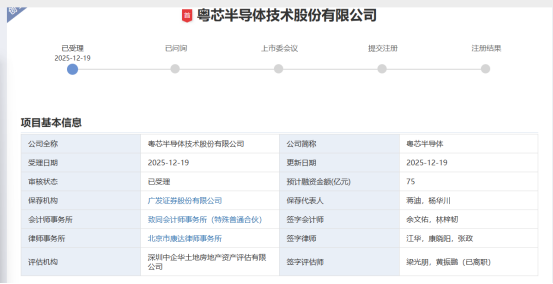
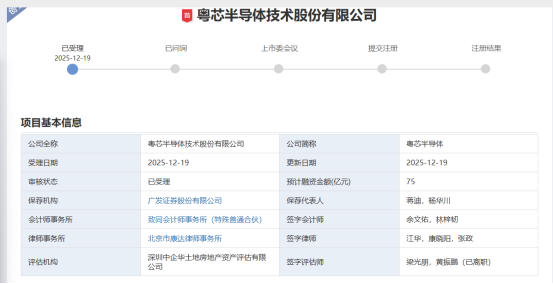
Core Viewpoint - Yu Xin Semiconductor Technology Co., Ltd. has officially submitted its IPO application to the Shenzhen Stock Exchange, aiming to raise 7.5 billion yuan, with GF Securities as the sponsor [1][8]. Company Overview - Yu Xin Semiconductor, established in 2017, focuses on providing 12-inch wafer foundry services and specialized process solutions for domestic and international chip design companies [12]. - The company has achieved a comprehensive technology matrix covering "perception, transmission, computation, storage, control, and display," establishing core competitive advantages in various fields [12]. - As of June 30, 2025, Yu Xin Semiconductor holds 681 authorized patents, including 312 invention patents [12]. Financial Performance - The company reported revenues of 1.545 billion yuan in 2022, 1.044 billion yuan in 2023, 1.681 billion yuan in 2024, and 1.053 billion yuan in the first half of 2025, with a significant revenue increase of 61.09% from 2023 to 2024 [11][12]. - Yu Xin Semiconductor is the second unprofitable company accepted by the Shenzhen Stock Exchange for IPO [11]. Market Position and Strategy - The company has become a leading foundry for capacitive fingerprint recognition chips globally and ranks third among mainland wafer manufacturers for high-voltage display driver chips in 2024 [12]. - The IPO proceeds will primarily fund the development of specialized process technology platforms, including projects related to silicon photonics and memory chips [13]. - Yu Xin Semiconductor aims to transition from pure analog foundry services to a composite technology platform that integrates analog, mixed-signal, and optoelectronic processes [12][13]. Industry Outlook - The global silicon photonics market is projected to reach $10.26 billion by 2029, with a compound annual growth rate of nearly 40% from 2023 to 2029, indicating significant market opportunities for Yu Xin Semiconductor [14]. - The company is recognized as the first 12-inch wafer manufacturing enterprise in Guangdong Province, marking a breakthrough in local chip manufacturing capabilities [14].


又一家未盈利企业 冲刺创业板!
Shang Hai Zheng Quan Bao· 2025-12-19 14:22
12月19日,粤芯半导体技术股份有限公司(简称"粤芯半导体")的创业板IPO申请正式获深交所受理, 本次粤芯半导体拟募集资金75亿元,保荐机构为广发证券。 | LOP . | | ■ 粤芯半导体技术股份有限公司 | | | | --- | --- | --- | --- | --- | | 已發現 | 已同响 | 上市委会议 | 提交注册 | 注册结果 | | 2025-12-19 | 0 | 0 | œ | | | 项目基本信息 | | | | | | 公司全称 | 电芯半导体技术股份有限公司 | 公司道称 | | 电芯半导体 | | 受理日期 | 2025-12-19 | 更新日期 | | 2025-12-19 | | 章被状态 | 已受理 | 预计融资金额(乙元) | | 75 | | 倡積机构 | 广发证券股份有限公司 | 假荷代表人 | | 聘曲,杨俐川 | | 会计师事务所 | 致园会计师事务所(特殊善通合伙) | 签字会计师 | | 余文佑,林梓树 | | 律师事务所 | 北京市康达律师事务所 | 签字律师 | | 江华,康晓阳,张政 | | 评估机构 | 深圳中企华土地房地产资产评估有限 公司 ...
国务院国资委主任张玉卓:深入开展新一轮中央企业数字化转型行动
Xin Lang Cai Jing· 2025-12-19 13:19
Core Viewpoint - The State-owned Assets Supervision and Administration Commission (SASAC) emphasizes the need for central enterprises to focus on their main responsibilities and develop the real economy during the 14th Five-Year Plan period, aiming for a transition towards high value-added and high-tech industries [1] Group 1: Industry Focus - Central enterprises will be guided to enhance their roles in modern industrial systems, particularly in upgrading traditional industries [1] - A new round of digital transformation initiatives will be launched, focusing on integrating technologies such as AI, big data, cloud computing, 5G, and the Internet of Things with traditional industries [1] Group 2: Technological Integration - The emphasis will be on deep integration of information technology throughout the entire process and elements of traditional industries [1] - Continuous promotion of technological upgrades and large-scale equipment renewal will be prioritized [1] Group 3: Sustainability and Innovation - Central enterprises are expected to implement carbon peak plans in key sectors, promoting efficient resource recycling [1] - There will be a focus on accelerating product iteration and upgrading, enhancing the supply of high-end products, and fostering intelligent, green, and integrated development [1]