价值投资

Search documents
红利国企ETF(510720)涨1.4%,关注上市以来连续分红18个月,可月月评估分红的红利国企ETF
Mei Ri Jing Ji Xin Wen· 2025-11-03 02:52
Core Insights - The article emphasizes that during the balance sheet reduction cycle, the cost-effectiveness of stocks versus bonds is limited, with a higher probability favoring value-oriented styles [1] - Dividend stocks should exhibit three main characteristics: no balance sheet expansion, strong profitability, and sustainability [1] - The focus for dividend combinations is on industries such as banking, telecommunications, oil and petrochemicals, and transportation, which have stable dividend characteristics and currently low valuations relative to historical levels [1] Industry Analysis - The large-scale debt issuance has reduced local government financing costs and default risks, enhancing overall societal expectations [1] - The central bank's policy to prevent fund idling has strengthened the allocation value of dividend assets [1] ETF Insights - The Dividend State-Owned Enterprise ETF (510720) tracks the State-Owned Dividend Index (000151), which selects stocks with high dividend characteristics, stable dividends, and good liquidity, primarily covering traditional sectors like finance, energy, and industry [1] - Notably, the Dividend State-Owned Enterprise ETF (510720) has achieved monthly dividends since its listing, maintaining this for 18 consecutive months, making it one of the few ETFs to consistently distribute dividends since inception [1]
Up 30% This Year and With Plenty of Room to Run, This Blue Chip Stock Is a Value Investor's Dream
The Motley Fool· 2025-11-03 00:14
Core Viewpoint - 3M has shown significant operational improvements under CEO Bill Brown, leading to a 70% increase in stock price since his appointment, despite challenging end markets [5][6]. Group 1: Investment Case - The investment case for 3M is based on the potential for value creation through restructuring, independent of economic conditions [3]. - 3M's stock has increased nearly 30% year-to-date, outperforming the S&P 500 [2]. Group 2: Operational Improvements - Bill Brown's strategy includes enhancing machinery utilization, improving on-time delivery (OTIF) to 91.6%, and reducing inventory holding days [7][11]. - The overall equipment effectiveness (OEE) has improved to 63%, up from 60% last year [11]. Group 3: New Product Introductions (NPIs) - In Q3, 3M released 70 NPIs, totaling 196 for 2025, a 70% increase compared to the same period in 2024, with a target of 250 NPIs for the full year [9][10]. - The focus on NPIs includes both incremental line extensions and novel products that could open new markets [8][10]. Group 4: Future Outlook - CFO Anurag Maheshwari anticipates high-single-digit earnings-per-share (EPS) growth in 2026, driven by operational performance [12]. - There is potential for revenue growth to improve from the current 2% to 3% rate to a mid-single-digit range as end markets recover [13].


陈光明封盘!投资大佬相继行动,究竟何考量?
Feng Huang Wang· 2025-11-02 13:57
Group 1 - The core point of the news is the announcement of "closure" by prominent investment figures, including Chen Guangming's Ruiyuan Insight Value series, which has suspended subscriptions for both new and existing clients, indicating a cautious approach to market conditions [1][2][3] - Chen Guangming, a leading figure in China's asset management industry, has a history of successful fund management, with his Ruiyuan Insight Value series attracting over 10 billion yuan in subscriptions despite high entry barriers [2][3] - The recent "closure" actions by investment leaders are interpreted by the market as signals of potential market trends, with investors speculating on whether these moves indicate a bearish outlook [3][4] Group 2 - The decision to "close" funds does not necessarily imply a negative market outlook; rather, it reflects a cautious stance in light of current market conditions and potential cyclical fluctuations [3][4] - "Closure" can benefit fund operations by allowing better management of larger fund sizes, as performance fees during market uptrends can significantly exceed management fees, making it a strategic choice for fund managers [4] - The perception of whether the market is at a high point, such as the Shanghai Composite Index nearing 4000 points, varies among industry professionals, indicating differing views on market valuation [4][5] Group 3 - The recent market performance highlights AI-related hardware companies as key players, with significant cash reserves supporting their capital expenditures, making it difficult to assess any bubble in the AI sector [5][6] - Traditional industries with strong cash positions are seen as having low downside risk, with attractive dividend yields, suggesting potential for recovery as market expectations are low [5][6] - Chen Guangming emphasizes the evolution of value investing, advocating for a long-term perspective and the importance of accurately assessing a company's intrinsic value in a changing economic landscape [6][7]
每经热评|白酒业交出近十年“最差季报” 至暗时刻或许正是光明到来的前奏
Mei Ri Jing Ji Xin Wen· 2025-11-02 13:33
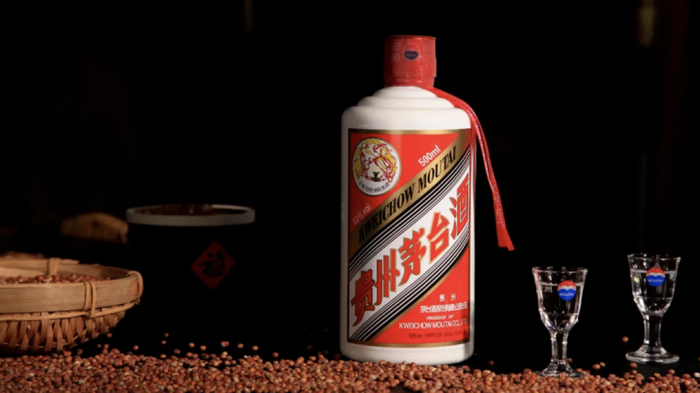
Core Insights - The Chinese liquor industry is currently experiencing a significant downturn, referred to as its "darkest hour," with many companies reporting steep declines in profits, including a 92.55% drop in net profit for Kuozi Jiao [1][2] - This downturn is characterized as the worst quarterly report in the past decade for the industry, prompting varied reactions from market participants, ranging from skepticism to cautious optimism [2][5] - The industry is transitioning from a phase of rapid growth to a more stable and mature development cycle, indicating a shift in investment logic towards value-based considerations [2][3] Industry Performance - The third-quarter performance of A-share liquor companies for 2025 revealed a general trend of declining profits, with leading company Kweichow Moutai reporting over 130 billion yuan in revenue but at a growth rate of only 6.25%, the lowest in nearly a decade [1][2] - The report highlights a significant drop in net profits for many regional liquor companies, with some experiencing declines close to 100% year-on-year [1] Market Reactions - Despite the poor performance, the market has shown resilience, with stocks like Gujing Gongjiu rising over 7% following the release of the disappointing earnings, indicating a potential recovery phase [4][5] - The initial shock from the earnings report has shifted to a more rational assessment of the industry's long-term value, suggesting that the current downturn may present opportunities for investment [4][5] Consumer Behavior - Although overall demand growth has slowed, high-end liquor and collectible old liquor maintain strong demand, providing a solid foundation for the industry [4] - The business models of leading liquor companies continue to benefit from addictive consumption patterns, scarcity, and cultural premiums, which help sustain high profit margins [4] Long-term Outlook - The current downturn is seen as a necessary phase for the industry to refine its business models and eliminate excess, ultimately leading to a more resilient market [3] - The ability of the industry to navigate through this cycle is expected to enhance its risk resistance and stable dividend attributes, which are crucial for long-term investment considerations [3][4]
段永平2025年初对话:回到事情的本源上,很多答案就清楚了
雪球· 2025-11-02 13:00
Group 1 - The article discusses the insights shared by Duan Yongping during a recent talk at Zhejiang University, focusing on investment strategies and personal development in the context of current market trends [3][4]. - Duan emphasizes the importance of long-term thinking in decision-making, whether in learning, entrepreneurship, or investment [6][10]. - He warns against the misuse of AI tools, particularly in academic settings, advocating for a balanced approach to technology [6][9]. Group 2 - Duan highlights the necessity of taking risks that one can afford, suggesting that aspiring investors should not chase quick profits but rather focus on sustainable growth [12][14]. - He asserts that good business models do not lead to low-margin markets, indicating that entrepreneurs should carefully consider their market entry strategies [24][25]. - The discussion includes the importance of understanding the essence of business and making informed decisions based on long-term perspectives [29][30]. Group 3 - Duan addresses the challenges of entrepreneurship, stating that those who are meant to start businesses will do so without needing encouragement, and emphasizes the need for genuine passion in entrepreneurial endeavors [18][36]. - He discusses the impact of economic downturns on young people, suggesting that good companies continue to thrive even in tough times, and advises seeking opportunities in reputable firms [93][95]. - The conversation touches on the global expansion of Chinese companies, with Duan noting that successful globalization often depends on the right timing and product-market fit [97]. Group 4 - Duan critiques the notion of blindly following trends, emphasizing that innovation should be purposeful and address real user needs [51][55]. - He discusses the balance between risk and reward in investment, particularly in high-risk scenarios, advocating for a thorough understanding of the business model before investing [84][90]. - The article concludes with reflections on the nature of value investing, stressing that it is fundamentally about investing in value rather than speculative gains [79][81].





白酒业交出近十年“最差季报” 至暗时刻或许正是光明到来的前奏
Mei Ri Jing Ji Xin Wen· 2025-11-02 12:58
Core Viewpoint - The Chinese liquor industry is currently experiencing a significant downturn, referred to as its "darkest hour," with many companies reporting substantial declines in profits, including a 92.55% drop in net profit for Kuozi Jiao [1][2] Group 1: Industry Performance - The recent quarterly reports from the liquor industry are described as the "worst in a decade," with most companies showing accelerated profit declines [2] - Even leading companies like Kweichow Moutai reported a revenue of over 130 billion yuan with a 6.25% year-on-year growth in net profit, marking the lowest growth rate in nearly ten years [1][2] - The industry is transitioning from a phase of rapid growth to a more stable and mature development cycle, indicating a shift in investment logic [2][3] Group 2: Market Reactions - The market response to the poor performance reports has been mixed, with some investors remaining optimistic about a potential recovery, while others express concern [2][5] - Despite the negative reports, certain stocks like Gujing Gongjiu saw price increases, suggesting a potential market rebound and a shift towards rational investment considerations [5] Group 3: Long-term Outlook - The current downturn is seen as a necessary phase for the industry, allowing stronger companies to emerge and adapt, ultimately leading to a more resilient market [3] - High-end liquor and collectible old liquor maintain stable demand, providing a solid foundation for the industry despite overall demand slowing [4] - The high gross margins of leading companies, such as Kweichow Moutai at 91.29%, indicate that the long-term value of the liquor industry remains intact despite short-term adjustments [4]


帮主郑重:巴菲特揣3800亿现金不撒手?20年财经老炮给你扒透门道
Sou Hu Cai Jing· 2025-11-02 07:56
Core Insights - The article discusses Warren Buffett's strategy of holding a record cash reserve of over $380 billion, indicating a cautious approach rather than a lack of confidence in the market [1][3][4] - Buffett's cash is viewed as "bullets" for future investments, waiting for the right opportunities to emerge in the market [3] Group 1: Investment Strategy - Buffett's cash reserve is not seen as idle but as a strategic reserve for potential investments when market conditions are favorable [3][4] - The company has reported strong financial performance, with Q3 net profit and operating profit exceeding expectations, indicating robust earning capabilities [3] - The current market environment features high valuations in many sectors, leading Buffett to adhere to his principle of "margin of safety" before making new investments [3] Group 2: Lessons for Investors - Investors are encouraged to maintain a portion of their capital in reserve for emergencies and opportunities, rather than fully investing in the market [3][4] - The article emphasizes the importance of patience and careful selection of investments, focusing on companies with stable performance and reasonable valuations [4]
从大师的 “错题本”中,投资者能得到很多经验和教训
雪球· 2025-11-02 05:32
Core Insights - The article emphasizes the importance of learning from investment failures of renowned investors, highlighting that even experts can fall into common traps that lead to losses [18]. Group 1: Investment Failures - High-tech stocks have historically led to significant losses for investors, with examples including a $25 million loss in data processing companies and other notable tech stocks like Tandem and Motorola [3][4]. - Warren Buffett and Charlie Munger have also experienced failures, such as the investment in a Baltimore department store, which they later recognized as a poor decision due to their lack of understanding of the retail business [5][6][7]. - The article discusses the case of Loyal Insurance Company, which missed out on a bull market in the early 1960s due to conservative investments and later made poor decisions during a bear market, leading to further losses [9][10]. Group 2: Common Investment Traps - The first major trap is investing in areas outside one's understanding, as illustrated by Peter Lynch's losses in high-tech stocks despite acknowledging his lack of knowledge in that sector [18][21]. - Misjudging the nature of a business can lead to investing in "bad businesses" with fierce competition, as seen in Buffett's experiences with the textile industry and jewelry stores, which ultimately failed to generate profits [20][21]. - Emotional reactions to market fluctuations can disrupt long-term strategies, exemplified by Loyal Insurance's erratic decisions during market volatility [21]. - Trusting financial data from companies with low transparency can result in significant losses, as demonstrated by Munger's investment in an Irish bank, which he later regretted due to the ease of financial manipulation in the banking sector [14][21]. - Ignoring industry realities and competitive dynamics can lead to poor investment choices, as seen in Buffett's delayed exit from unprofitable textile operations [20][21].

段永平再出手!捐赠茅台股票,市值1500万元!
券商中国· 2025-11-02 01:55
Core Viewpoint - Renowned investor Duan Yongping has made a significant donation to Jiangxi Water Conservancy and Electric Power University, reaffirming his commitment to education and community support through the establishment of an educational fund using shares of Kweichow Moutai stock valued at 15 million RMB [2][4]. Group 1: Donation Details - On October 31, Duan Yongping donated 10,000 shares of Kweichow Moutai, worth approximately 15 million RMB, to the university's education development foundation [2]. - This marks Duan Yongping's second donation to the university, following a previous contribution of 500,000 USD in 2007 for the construction of a library [2]. - Duan emphasized that the shares could generate stable cash flow through dividends, indicating a long-term view on the investment [2]. Group 2: Views on Kweichow Moutai - Despite concerns about Kweichow Moutai's recent financial performance, with zero growth reported in the third quarter, Duan Yongping remains confident in the company's long-term value, stating he would not adjust his valuation even if the company experiences negative growth in the coming years [4][5]. - The third quarter financial report for Kweichow Moutai showed total revenue of 39.81 billion RMB, a year-on-year increase of 0.3%, and a net profit of 19.22 billion RMB, up 0.5% [4]. - Duan Yongping's investment strategy includes a strong belief in Kweichow Moutai, as he mentioned it as a preferred stock in the A-share market [5]. Group 3: Industry Context - The overall performance of the liquor industry has been challenging, with many regional liquor companies reporting significant declines in their third-quarter results, marking one of the worst quarterly performances in nearly a decade [5]. - Analysts suggest that the current macroeconomic environment and policy factors are impacting liquor consumption, and recovery in demand may take time [5].

段永平回应“捐了1万股茅台”
Di Yi Cai Jing· 2025-11-02 01:18
Core Points - Duan Yongping donated 10,000 shares of Kweichow Moutai Co., Ltd. stock, valued at 15 million RMB, to Jiangxi Water Conservancy and Electric Power University to establish an educational fund in honor of his parents [1][5] - This donation follows a previous contribution of 5 million USD in 2007 for the construction of the Duan Ximing Library at the same university [5] - Duan Yongping's family has a long-standing connection with Jiangxi Water Conservancy and Electric Power University, where his parents both worked [7] Summary by Category Donations and Contributions - Duan Yongping's recent donation is part of a series of philanthropic efforts, including significant contributions to his alma mater, Zhejiang University, totaling over 1 billion RMB for infrastructure and educational initiatives [8] - Previous donations to Zhejiang University include 170 million RMB for the construction of a public teaching building and 100 million RMB for a new building for the School of Information and Electronic Engineering [8] Personal Background - Duan Yongping is a well-known entrepreneur, having founded brands such as "Subor" and "BBK," and is recognized for his investment acumen, often referred to as the "Chinese Buffett" [9] - He gained fame for his investment in NetEase, which yielded significant returns, and has maintained substantial holdings in companies like Apple and Kweichow Moutai [9][10] Investment Portfolio - As of June 30, 2025, Duan Yongping's investment firm, H&H International Investment, had a portfolio valued at 11.5 billion USD, with Apple being the largest holding [10] - The firm has recently increased its positions in AI stocks like Google and NVIDIA while reducing holdings in Alibaba and Microsoft [10]