
5G

Search documents
Crucial Unleashes Its Most Powerful Gaming Memory Yet: DDR5 Pro OC 6400 CL32
Globenewswire· 2025-10-21 13:00
Featuring a refined heatspreader, our newest high-performance low-latency memory is built for serious gamers who demand speed, style and reliabilityBOISE, Idaho, Oct. 21, 2025 (GLOBE NEWSWIRE) -- Crucial®, a brand of Micron Technology, Inc., is deepening its commitment to gamers with the debut of Crucial DDR5 Pro Overclocking (OC) 6400 CL32 Gaming DRAM. Engineered for tech enthusiasts and offered in 32GB kits or 16GB single modules1, this new memory delivers faster speeds, lower latency and a bold new desig ...



特朗普:是我让英特尔赚得盆满钵满!
是说芯语· 2025-10-21 10:08
Core Viewpoint - The investment by the U.S. government in Intel has been a significant victory for the company, leading to a substantial increase in its market value from $107 billion to $181 billion since the investment was made in August last year [1][3]. Group 1: Investment Impact - The U.S. government's acquisition of a 10% stake in Intel has generated tens of billions of dollars in profits for both Intel and the government [1]. - Trump claims that the investment has resulted in a paper profit of $40 billion for the U.S. government, highlighting the financial benefits of the deal [3]. Group 2: Company Performance - Despite the investment, Intel continues to face challenges, including ongoing losses and a declining market share, particularly in the foundry market [4]. - Intel has not capitalized on the AI boom, although it remains the largest CPU supplier in the client and data center sectors [4]. Group 3: Strategic Partnerships - Intel has signed a strategic agreement with NVIDIA to supply data center-level CPUs for NVIDIA's AI platform, which serves as a significant endorsement of Intel's CPU capabilities [4]. - The partnership also includes Intel integrating NVIDIA-designed GPUs into its client system products and acquiring a 5% stake in NVIDIA [4]. Group 4: National Security and Industry Sovereignty - Supporting Intel is crucial for U.S. national security and industrial sovereignty, as it is the only company capable of producing advanced logic chips essential for AI and defense [5]. - This support aims to reduce reliance on Asian manufacturers like TSMC and Samsung, while also working towards rebuilding the domestic semiconductor supply chain [6].


中国移动三季度净利增长1.4%,单季营收2509亿元
Nan Fang Du Shi Bao· 2025-10-21 09:05
Core Viewpoint - China Mobile's Q3 2025 financial report shows modest growth in revenue and net profit, with a focus on expanding its customer base in mobile and broadband services while facing challenges in traditional mobile business profitability [1][3][4]. Financial Performance - For the first three quarters of 2025, China Mobile reported total revenue of 794.67 billion RMB, a year-on-year increase of 0.41%, and a net profit attributable to shareholders of 115.35 billion RMB, up 4.03% [1][4]. - In Q3 2025, the company achieved revenue of 250.9 billion RMB, reflecting a 2.5% year-on-year increase, while net profit was 31.12 billion RMB, up 1.4% [3][4]. - The EBITDA for the first three quarters was 265.4 billion RMB, a 0.9% increase, with an EBITDA margin of 33.4% [6]. Profitability Metrics - The gross margin for the first three quarters was 31.09%, an increase of 0.27 percentage points year-on-year, while the net margin was 14.52%, up 0.50 percentage points [5]. - In Q3, the gross margin decreased to 29.94%, down 0.88 percentage points year-on-year, and the net margin was 12.42%, a decline of 0.14 percentage points [5]. Customer Growth and Business Segments - China Mobile's total mobile customer base reached 1.009 billion, with 622 million 5G customers, adding 23 million in the quarter [6][7]. - The broadband segment showed strong performance, with a total of 329 million wired broadband customers, adding 14.2 million in the first three quarters [7]. - The average revenue per user (ARPU) for mobile services fell to 48.0 RMB per month, a decrease of 3% from the previous quarter [8]. Strategic Initiatives - The company is focusing on new growth areas, including DICT (Data, Information, Communication Technology) and AI, with significant growth in international business revenue [8]. - China Mobile is leveraging its "CHBN" strategy to integrate mobile, broadband, and applications, aiming to enhance user value and explore new revenue streams [7].


豪声电子(920701):首次覆盖:集研发及制造为一体的专业电声企业,下游客户较优质
Jianghai Securities· 2025-10-21 07:58
Investment Rating - The report assigns an "Accumulate" rating for the company for the first time, with a current price of 19.38 yuan [1][6]. Core Insights - The company, Zhejiang Haosheng Electronics Technology Co., Ltd., specializes in the research, development, production, and sales of micro-acoustic components and audio products, having established itself as a significant player in the industry with strong R&D capabilities [6][15]. - The company's revenue has shown a growth trend, increasing from 463 million yuan in 2019 to an expected 800 million yuan in 2024, with a five-year CAGR of 11.56% [6][23]. - The global consumer electronics market is projected to grow from 788.23 billion USD in 2024 to 1,073.77 billion USD by 2032, driven by rising demand for smart and interconnected devices [52][53]. Financial Data Summary - Total shares outstanding: 137.20 million [2] - A-share circulation ratio: 73.04% [2] - Revenue forecast for 2023A to 2027E shows a growth from 640.82 million yuan to 1,235.06 million yuan, with growth rates of -4.24%, 24.76%, 12.88%, 15.72%, and 18.26% respectively [5][67]. - Net profit attributable to shareholders is expected to decline significantly in 2025E to 71.83 million yuan, down from 171.50 million yuan in 2024A, reflecting a -58.11% growth rate [5][67]. - The company’s gross margin has been relatively stable, with a slight decline in 2023 due to market conditions, but is expected to recover in 2025 [27][28]. Business Overview - The company focuses on micro-acoustic components, which accounted for 83.69% of its revenue in 2024, and audio products, which are used in various consumer electronics [30][36]. - The company has established long-term relationships with notable clients, including OPPO, VIVO, and TCL, enhancing its market position [63][64]. - The company is positioned in the midstream of the supply chain, benefiting from a complete domestic industrial chain for consumer electronics [64][66]. Earnings Forecast and Valuation - Revenue projections for 2025-2027 are 902 million yuan, 1,044 million yuan, and 1,235 million yuan, with corresponding growth rates of 12.88%, 15.72%, and 18.26% [67]. - The average PE ratios for comparable companies are projected at 40.05, 30.87, and 24.01 for 2025-2027, while the company’s expected PE ratios are 36.88, 29.58, and 24.28 [70].
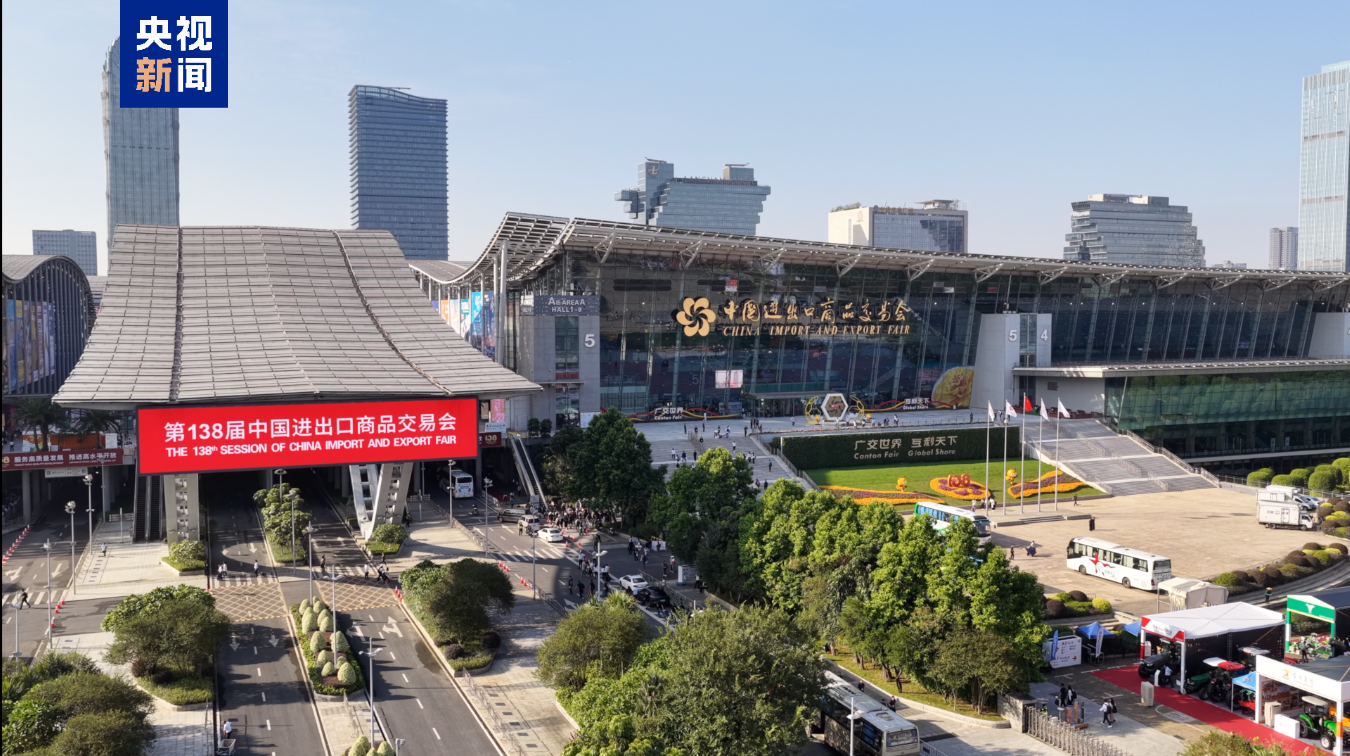
第138届广交会首期“含智量”“含外量”双升 新产品吸引全球目光
Yang Shi Xin Wen· 2025-10-21 07:55
Core Insights - The 138th Canton Fair successfully held its first phase from October 15 to 19, focusing on "advanced manufacturing" and highlighting three key aspects: "new, intelligent, and green" [1][3] - The fair showcased a record number of high-quality enterprises and innovative indicators, reflecting the vitality of China's manufacturing sector [1][5] Group 1: Exhibition Highlights - A total of 850,000 exhibits were presented, with new products, intelligent products, green low-carbon products, and products with independent intellectual property rights accounting for 16%, 15%, 25%, and 31% respectively [3] - The number of entries for the Canton Fair Design Innovation Award (CF Award) reached a new high, with intelligent products like bionic hands increasing by 30% [3] - Key products included precision machining tools, AI wearable devices, green energy-saving appliances, and service robots, which became central to the fair [3] Group 2: Exhibitor Quality - Among the 12,000 participating enterprises, over 5,600 were recognized as high-tech, specialized, or champions in their fields, with more than 4,000 emerging companies in sectors like new energy vehicles and intelligent manufacturing [5] - 66% of the exhibitors adopted new technologies and models such as industrial internet, artificial intelligence, 5G, and green production [5] - The fair emphasized intellectual property protection and provided exhibition proof services to safeguard innovative achievements [5] Group 3: International Participation - Over 157,000 overseas buyers from 222 countries and regions attended, marking a 6.3% increase compared to the previous session, setting a historical high for the same period [5] - Notable growth in participation was observed from buyers in the EU, the US, and Belt and Road Initiative countries [5] - 118 overseas business organizations and 185 leading procurement companies participated, with increases of 8% and 10.7% respectively [5] Group 4: Service Innovations - The fair introduced various practical activities, including foreign trade product promotion and themed forums, to assist enterprises in market expansion [7] - Smart navigation was utilized by 214,000 attendees, and the introduction of QR code identification significantly improved processing speed [7] - The second phase of the Canton Fair will take place from October 23 to 27, focusing on "quality home goods" with an exhibition area of 515,000 square meters and approximately 25,000 booths [7]
5G Fixed Wireless Access to Reach 150 Million Subscriptions Globally by 2030, Omdia Forecasts
Businesswire· 2025-10-21 07:48
Core Insights - Global 5G Fixed Wireless Access (FWA) subscriptions are projected to exceed 150 million by 2030, more than doubling from 71 million in 2024, with a compound annual growth rate (CAGR) of 23% [2][4][7] - The 5G FWA segment is expected to drive total service revenues to $46 billion by 2030, capturing a significant share of the broadband market [2][4] - India is anticipated to become the largest 5G FWA market by 2030, with 37 million subscriptions, representing 40% of the global share [7] Subscription Growth - Omdia forecasts that global FWA subscriptions will grow from 71 million in 2024 to 150 million by 2030, accounting for 88% of total connections [2][4] - The 5G FWA segment is set to surpass 4G FWA by 2027 and is on track to become the third-largest broadband technology globally [4] Market Dynamics - Tier 1 operators are encouraged to move beyond traditional deployment models, focusing on segmentation, bundling, and AI-driven personalization to effectively monetize 5G FWA [2][3] - Quality of Experience (QoE) is becoming a critical differentiator in 5G FWA offerings, with operators upselling based on service reliability and user-specific performance [3] Regional Insights - The United States is projected to reach 20 million 5G FWA subscriptions by 2030, while Nigeria, Italy, and Japan are expected to join India and the US as the top five markets [7] - Emerging regions such as Central & Southern Asia, Africa, and Latin America are identified as high-growth areas, supported by decreasing customer premises equipment (CPE) prices and innovative bundling strategies [7]

国际复材涨3.42%,成交额3.31亿元,近5日主力净流入-8635.03万
Xin Lang Cai Jing· 2025-10-21 07:30
Core Viewpoint - The company, Chongqing International Composite Materials Co., Ltd., has shown significant growth in revenue and profit, driven by advancements in technology and production capabilities in the glass fiber sector, particularly for applications in 5G and high-end electronics [8]. Company Overview - Chongqing International Composite Materials Co., Ltd. was established on August 27, 1991, and is located in the Jiankiao Industrial Park B area of Dadu River District, Chongqing. The company was listed on December 26, 2023, and primarily engages in the research, production, and sales of glass fiber and its products, with 97.51% of its revenue coming from this segment [7]. Financial Performance - For the first half of 2025, the company achieved a revenue of 4.153 billion yuan, representing a year-on-year growth of 19.40%. The net profit attributable to shareholders reached 231 million yuan, marking a substantial increase of 341.55% compared to the previous year [8]. Product Development and Technology - The company has successfully developed key technologies in the electronic field, including low-bubble fine yarn and ultra-fine yarn with a fiber diameter of 3.7μm, addressing the long-standing reliance on imported materials for high-end PCB [2][3]. - The company has independently developed low-dielectric glass fiber for 5G applications, which has entered mass production and is being utilized in Huawei's flagship smartphones and critical communication products [2][3][5]. Market Position and Strategy - The company emphasizes the accumulation and innovation of core glass fiber technologies, mastering the entire production process from pool kiln design to surface treatment. It adopts a differentiated and high-end product strategy, focusing on market demand in various specialized fields such as wind power and automotive lightweight components [3][5]. Shareholder and Market Activity - As of September 30, the number of shareholders stood at 76,300, a decrease of 9.54% from the previous period, while the average circulating shares per person increased by 10.54% to 18,417 shares [8]. - The company has distributed a total of 113 million yuan in dividends since its A-share listing [9].
瑞斯康达涨2.02%,成交额2.47亿元,主力资金净流出1072.45万元
Xin Lang Cai Jing· 2025-10-21 06:36
Core Viewpoint - The stock of Ruiskanda has shown fluctuations with a recent increase of 2.02%, while the company faces a decline in revenue and net profit for the first half of 2025 compared to the previous year [1][2]. Company Overview - Ruiskanda Technology Development Co., Ltd. is a leading enterprise in the optical fiber communication access field in China, established on June 8, 1999, and listed on April 20, 2017 [2]. - The company's main business includes providing products, technical services, and comprehensive solutions for access layer networks [2]. - Revenue composition: Transmission equipment 35.29%, broadband network equipment 21.25%, other 19.32%, software products 16.42%, data communication equipment 7.72% [2]. Financial Performance - For the first half of 2025, Ruiskanda reported revenue of 539 million yuan, a year-on-year decrease of 25.99%, and a net profit attributable to shareholders of -42.19 million yuan, a decrease of 13.02% [2]. - The company has distributed a total of 311 million yuan in dividends since its A-share listing, with 24.31 million yuan distributed over the past three years [3]. Stock Market Activity - As of October 21, Ruiskanda's stock price was 9.10 yuan per share, with a market capitalization of 3.866 billion yuan [1]. - The stock has experienced a year-to-date decline of 4.61%, but has increased by 10.17% over the last five trading days [1]. - The company has appeared on the "Dragon and Tiger List" seven times this year, with the most recent appearance on July 8, where it recorded a net buy of -5.26 million yuan [1].

立昂技术涨2.08%,成交额8531.92万元,主力资金净流入245.28万元
Xin Lang Cai Jing· 2025-10-21 06:35
Core Viewpoint - The stock of Lian Technology has shown a slight increase recently, but the overall performance this year has been negative, with significant declines over various time frames [1][2]. Financial Performance - As of October 10, Lian Technology reported a revenue of 3.76 billion yuan for the first half of 2025, marking a year-on-year growth of 23.41%. However, the net profit attributable to shareholders was -596.98 million yuan, a decrease of 258.48% compared to the previous year [2]. - The company has cumulatively distributed 72.70 million yuan in dividends since its A-share listing, with no dividends paid in the last three years [3]. Stock Market Activity - On October 21, Lian Technology's stock price rose by 2.08% to 10.80 yuan per share, with a trading volume of 85.32 million yuan and a turnover rate of 2.17%, resulting in a total market capitalization of 5.02 billion yuan [1]. - The stock has experienced a decline of 3.05% year-to-date, with a 2.96% drop over the last five trading days, a 2.53% drop over the last 20 days, and a 10.37% drop over the last 60 days [1]. - The company has appeared on the "Dragon and Tiger List" once this year, with the most recent occurrence on February 10, where it recorded a net purchase of 116 million yuan [1]. Shareholder Information - As of October 10, the number of shareholders for Lian Technology was 45,200, an increase of 1.81% from the previous period, with an average of 8,184 circulating shares per person, a decrease of 1.78% [2]. - Among the top ten circulating shareholders, Hong Kong Central Clearing Limited is the seventh largest, holding 2.07 million shares as a new shareholder [3]. Business Overview - Lian Technology, established on January 8, 1996, and listed on January 26, 2017, operates in digital city system services, IDC data centers, cloud computing services, telecom value-added services, and communication network technology services [2]. - The company's revenue composition includes 46.47% from communication network services, 29.83% from digital city services, 23.39% from data center and cloud services, and 0.31% from other services [2]. - Lian Technology is categorized under the communication services sector, with involvement in electronic license plates, SenseTime technology, 5G, IDC concepts, and network security [2].

赛微电子涨2.14%,成交额2.83亿元,主力资金净流入900.40万元
Xin Lang Cai Jing· 2025-10-21 05:35
Core Viewpoint - Saiwei Electronics has shown a significant stock price increase of 33.18% year-to-date, despite a recent decline in the last five and twenty trading days [2] Company Overview - Saiwei Electronics, established on May 15, 2008, and listed on May 14, 2015, is located in Beijing and specializes in MEMS process development, wafer manufacturing, GaN epitaxial material growth, and chip design [2] - The company's revenue composition includes 54.30% from MEMS wafer manufacturing, 39.14% from MEMS process development, 4.90% from other sources, and 1.67% from semiconductor equipment [2] - As of June 30, 2025, the number of shareholders is 65,900, a decrease of 2.35% from the previous period, with an average of 9,071 circulating shares per person, an increase of 2.41% [2] Financial Performance - For the first half of 2025, Saiwei Electronics achieved a revenue of 570 million yuan, representing a year-on-year growth of 3.40%, while the net profit attributable to shareholders was a loss of 650,300 yuan, but this reflects a significant improvement with a year-on-year increase of 98.48% [2] Dividend Information - Since its A-share listing, Saiwei Electronics has distributed a total of 155 million yuan in dividends, with 25.63 million yuan distributed over the past three years [3] Shareholding Structure - As of June 30, 2025, the top ten circulating shareholders include Hong Kong Central Clearing Limited as the third-largest shareholder with 10.27 million shares, an increase of 6.31 million shares from the previous period [3] - The fourth-largest shareholder is Guolian An Zhongzheng Semiconductor Products and Equipment ETF with 5.43 million shares, an increase of 495,500 shares [3] - The fifth-largest shareholder is Southern Zhongzheng 1000 ETF with 4.74 million shares, an increase of 853,500 shares, while Huaxia Zhongzheng 1000 ETF is a new entrant as the tenth-largest shareholder with 2.79 million shares [3]
