
数字化

Search documents
海油发展(600968):2025H1业绩符合预期,低碳环保与数字化多点开花
Tianfeng Securities· 2025-08-20 04:11
Investment Rating - The investment rating for the company is "Buy" with a target price indicating a potential return of over 20% within the next six months [6][17]. Core Insights - The company reported a revenue of 22.597 billion yuan for H1 2025, representing a year-on-year growth of 4.46%, and a net profit attributable to shareholders of 1.829 billion yuan, up 13.15% year-on-year [1]. - The energy technology service sector achieved a revenue of 7.993 billion yuan in H1 2025, growing by 2.79% year-on-year, with significant increases in various service areas [2]. - The low-carbon and digitalization sectors generated a revenue of 3.870 billion yuan, reflecting an 11.17% year-on-year growth, with notable advancements in offshore wind power operations and digital services [3]. - The company plans to optimize resource allocation by selling stakes in several subsidiaries and related assets for a total of 370 million yuan [4]. - Profit forecasts for the company are maintained at 4.126 billion yuan, 4.659 billion yuan, and 5.232 billion yuan for the years 2025, 2026, and 2027 respectively, with corresponding EPS of 0.41, 0.46, and 0.51 yuan [5]. Financial Data Summary - For 2025, the projected revenue is 55.047 billion yuan, with a growth rate of 4.82% [5]. - The net profit attributable to shareholders is forecasted to be 4.126 billion yuan for 2025, with a growth rate of 12.86% [5]. - The company’s earnings per share (EPS) is expected to be 0.41 yuan in 2025, with a price-to-earnings (P/E) ratio of 9.71 [5]. - The total assets are projected to reach 50.102 billion yuan by 2025, with a debt-to-equity ratio of 39.19% [12].

网宿科技2025上半年净利润同比增长25.33% 海外市场开拓进展显著
Quan Jing Wang· 2025-08-20 03:17
Core Insights - The company reported a revenue of 2.351 billion yuan for the first half of 2025, representing a year-on-year growth of 2.19% [1] - The net profit attributable to shareholders reached 373 million yuan, showing a significant increase of 25.33% year-on-year [1] - Operating cash flow net amount was 376 million yuan, reflecting a robust growth of 52.41% compared to the previous year [1] Business Development - The company achieved notable progress in overseas market expansion, security business development, and technological innovation [1] - It actively expanded into Southeast Asia and the Middle East, establishing a subsidiary in Dubai to enhance overseas service capabilities [1] - The company focused on its core businesses of CDN and edge computing, optimizing its business structure by divesting from MSP operations and selling shares in Cloudsway Pte. Ltd. [1] Security Business - The security business segment generated revenue of 646.71 million yuan in the first half of 2025, marking a year-on-year increase of 13.96% [1] - The company launched a deep assessment service for large model security, providing a comprehensive security solution for large language models and AI applications [2] - The company was positioned as a leader in the IDC MarketScape for Chinese intelligent security access service edge vendors in 2025 [2] Technological Innovation - The company upgraded its next-generation edge AI platform, focusing on a four-layer capability matrix of "resources-model-services-applications" [2] - It developed core products such as edge AI gateways, edge model inference, and edge AI applications, enhancing its technical strength and market competitiveness in edge computing [2] - The company introduced a restricted stock incentive plan in 2025, with share-based payment costs amounting to 65.58 million yuan, an increase of 19.10 million yuan year-on-year [2] Company Overview - Founded in January 2000, the company aims to become a global leader in IT infrastructure services [2] - It leverages core technologies and service capabilities in computing, storage, networking, and security to provide efficient, stable, and secure IT infrastructure and services for internet, government, and enterprise clients [2]

三德科技20250819
2025-08-19 14:44
Summary of the Conference Call for SanDe Technology Company Overview - **Company**: SanDe Technology - **Industry**: Automation and Environmental Instrumentation Key Points and Arguments Financial Performance - **Revenue Growth**: Company reported a revenue growth of approximately 100% year-on-year for the first half of 2025, driven by the recovery of the environmental subsidiary and a 15.38% increase in operation and maintenance services [2][3] - **Gross Margin**: The gross margin for the unmanned intelligent equipment business increased to 46%, with expectations to maintain between 40% and 50% in the future [2][3] - **Order Backlog**: As of June 30, 2025, the company had an order backlog of approximately 800 million RMB (about 90 million USD), with new orders nearing 300 million RMB [5][7] Business Segments - **Unmanned Intelligent Equipment**: - Significant demand from new power plants, with over 83% of new projects incorporating unmanned intelligent equipment [4][8] - Expected revenue growth for the unmanned intelligent equipment segment, with approximately 360 million RMB anticipated in the second half of the year [7] - **Analysis Instruments**: - Growth driven by the recovery of the environmental subsidiary and increased demand from steel and metallurgy sectors, with expectations for double-digit growth for the year [4][17] Market Trends - **Power Generation**: - Thermal power generation is projected to account for 67% of total power generation in 2024, despite the rapid growth of wind and solar energy [9] - New policies require thermal power plants to enhance peak load regulation capabilities and equipment intelligence, benefiting unmanned intelligent equipment systems [10][15] Future Outlook - **Market Demand**: The company is optimistic about future performance due to the digitalization trend and the increasing need for upgrades in existing facilities [13] - **R&D Focus**: Future R&D investments will focus on optimizing product costs and delivery speed, with an emphasis on customer customization, particularly in software management systems [25] Operational Insights - **Cash Flow**: A decline in net cash flow was noted due to increased procurement expenses, but improvements are expected in the second half of the year as large-scale inventory purchases are not anticipated [20] - **Maintenance Services**: The operation and maintenance business grew nearly 15%, with equipment maintenance services showing a significant increase in acceptance among clients [26][27] Strategic Initiatives - **Acquisition Strategy**: The company is cautious about external acquisitions, focusing on projects that align with existing business for certainty [23] - **Non-Coal Detection**: Progress in non-coal detection fields, particularly in cement and steel industries, is ongoing, with a focus on automation [21][24] Additional Important Information - **Client Preferences**: Clients prefer conventional maintenance contracts over bundled service models due to concerns about cost efficiency [28] - **Government Support**: The recovery of the environmental subsidiary was aided by government funding, particularly in the customs equipment update demand [19] This summary encapsulates the key insights from the conference call, highlighting the company's performance, market trends, and strategic direction.

中企数智院在京揭牌,打造生态赋能新旗舰
Zhong Guo Chan Ye Jing Ji Xin Xi Wang· 2025-08-19 06:19
Core Insights - The establishment of the China Enterprise Digital Intelligence Institute (中企数智院) marks a significant upgrade in the service platform of the China Enterprise News Group, focusing on resource integration and ecological empowerment [2][4]. Group 1: Formation and Purpose - The China Enterprise Digital Intelligence Institute was initiated by the China Enterprise News Group in collaboration with strategic partners, aiming to leverage new digital technologies such as AI, big data, and cloud computing to drive industrial transformation [2][3]. - The institute's mission is to empower enterprises through digital and intelligent technology applications, fostering innovation and sustainable development [6][10]. Group 2: Leadership and Structure - The leadership team includes prominent figures from various institutions, such as Beijing University and Shuguang Group, indicating a strong collaborative effort [3][10]. - The institute's organizational structure is designed to facilitate a comprehensive ecosystem that integrates research, technology development, and practical application [6][9]. Group 3: Strategic Focus Areas - The institute will focus on several key areas, including integrated solutions for enterprise transformation, smart park solutions, and the establishment of big data bases for local governments [8]. - It aims to create a robust expert network across various fields, including big data, AI, and cloud computing, to support research and project implementation [9]. Group 4: Future Development Plans - The institute is actively seeking to recruit additional member organizations that excel in digital and intelligent fields to enhance collaborative development [9]. - A specialized team has been formed to focus on core business areas, with the goal of establishing service capabilities across key regions and industries within the first year of operation [9].

以小业态换赛道!中百集团董事长汪梅方:力争2027年实现盈利
Zhong Guo Zheng Quan Bao· 2025-08-19 04:45
Core Viewpoint - The company plans to close unprofitable stores as a key strategy to reduce losses and aims to achieve profitability by 2027 through various operational adjustments and digital transformation initiatives [1][3]. Group 1: Store Closure and Adjustment Strategy - The company will focus on closing underperforming stores to mitigate losses, with a target to optimize large-format stores from 147 to around 100 [4][8]. - The company has already closed 13 large-format and 42 small-format stores, with over 60 small-format stores undergoing adjustments while remaining operational [2][4]. - Adjusted stores have shown a sales increase of over 10%, while unadjusted stores experienced an 18% decline in sales [2][3]. Group 2: Business Model Transformation - The company is shifting towards a "thousand stores, thousand faces" model, moving away from a uniform approach to better meet local market demands [7]. - The focus will be on expanding small-format stores, particularly through partnerships and franchising, with a goal of reaching 1,600 small-format stores in three years [5][6]. - The integration of various service offerings, such as community services and convenience features, is part of the strategy to enhance customer experience [7][8]. Group 3: Digital Transformation and Supply Chain Optimization - The company has established a digital platform to integrate over 40 systems, aiming to improve operational efficiency and reduce costs [6][8]. - A decentralized ordering system will allow stores to make decisions based on local demand, supported by automated replenishment processes [8]. - The logistics strategy includes the opening of a new central warehouse to streamline distribution across different store formats, enhancing delivery efficiency [8]. Group 4: Future Outlook and Goals - The company aims to navigate through a critical period over the next 2-3 years, focusing on resolving loss issues and achieving profitability by 2027 [8]. - The commitment to maintaining a strong retail presence while enhancing community services positions the company as a comprehensive neighborhood service provider [8].

思派健康科技中期业绩:经营性亏损同比减少29.6%,盈利能力改善
Guo Ji Jin Rong Bao· 2025-08-19 02:00
Core Insights - The company reported a total revenue of 1.22 billion yuan for the first half of 2025, with a 10.2% growth in its core enterprise health insurance business [1] - The overall gross margin improved to 14.4%, an increase of 4.7 percentage points year-on-year, driven by strategic business line restructuring [1] - The operating loss decreased by 29.6% to 60.4 million yuan, while normalized net loss reduced by 59.6% to 12 million yuan, attributed to a three-dimensional strategic transformation focusing on business optimization, operational efficiency, and resource concentration [1] Business Performance - The gross margin for the commercial medical insurance business rose to 77%, up by 6.2 percentage points year-on-year [1] - The gross margin for the specialty pharmacy business increased to 5.4%, a year-on-year rise of 0.9 percentage points [1] - As of June 30, 2025, the company served 526 enterprises, covering over 1.49 million members, with managed premiums of approximately 860 million yuan, reflecting a 35% year-on-year growth and a renewal rate of 105.3% [1] Future Strategy - The company plans to accelerate its digital and intelligent transformation to enhance customization efficiency and customer experience [2] - There is an intention to increase the proportion of high-margin commercial insurance business, which will support the scaling of core business, optimization of profit structure, and improvement of cash flow in the long term [2]
塑造服务贸易发展新动能
Sou Hu Cai Jing· 2025-08-18 21:10
Core Insights - Service trade is increasingly vital in international trade and economic cooperation, with China achieving over a trillion dollars in service trade but still facing competitiveness challenges [1][3] - The 20th National Congress emphasizes the need for innovation to enhance service trade, addressing both risks from unilateralism and opportunities from technological revolutions [1][3] Group 1: Innovation and Development - Innovation in service trade mechanisms is essential, requiring alignment with international high-standard trade rules and promoting a negative list approach for cross-border service trade [1][4] - The development of digital and green service trade is crucial, focusing on enhancing international service capabilities and exploring "bonded + service trade" models [1][2] Group 2: Sectoral Expansion - Expanding service trade requires orderly opening in sectors like telecommunications, healthcare, education, and finance, alongside standardization initiatives [2][4] - Emphasis on knowledge-intensive service trade growth is necessary, aiming to increase its share in overall service trade [2][3] Group 3: Economic Integration - Strengthening the integration of service trade with other industries is vital, promoting policy coordination and supporting manufacturing sectors in providing competitive services [6][7] - The interdependence of international investment, goods trade, and service trade highlights the need for a cohesive approach to trade development [3][5] Group 4: Digital and Green Transformation - Accelerating digital, intelligent, and green transformations in service trade is essential, leveraging technologies like AI and blockchain to enhance competitiveness [7][8] - Developing a green service trade framework and expanding competitive green technology exports are key objectives [7][8] Group 5: Collaborative Networks - Building a mutually beneficial service trade cooperation network is critical, focusing on deepening partnerships and expanding into emerging markets [9][10] - Strengthening cooperation with countries along the Belt and Road Initiative and enhancing trade facilitation standards are strategic priorities [9][10]

恒逸石化上半年营收559.6亿元
Zheng Quan Shi Bao· 2025-08-18 18:30
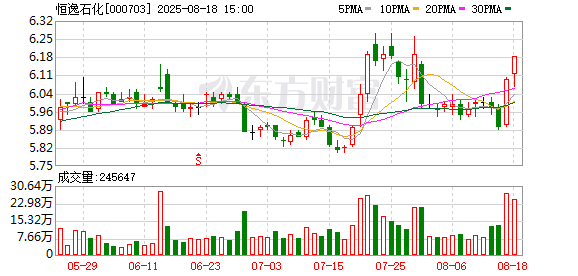
Core Viewpoint - Hengyi Petrochemical reported a total revenue of 55.96 billion yuan and a net profit of 227 million yuan for the first half of 2025, with ongoing projects expected to strengthen its position as a leading integrated enterprise in the "refining-chemical-fiber" industry chain [2] Group 1: Financial Performance - In the first half of 2025, Hengyi Petrochemical achieved total revenue of 55.96 billion yuan and a net profit attributable to shareholders of 227 million yuan [2] - The company has established a refining capacity of 8 million tons per year, PTA capacity of 21.5 million tons per year, and polymer capacity of 13.25 million tons per year [2] Group 2: R&D and Innovation - Hengyi Petrochemical increased its R&D expenditure to 460 million yuan in the first half of 2025, representing a year-on-year growth of 23.97%, and submitted 300 invention patent applications during the reporting period [3] - The company holds 566 effective patents, including 500 R&D patents and 66 smart manufacturing patents, and has participated in the formulation and revision of 58 standards [3] Group 3: Market Position and Projects - The Brunei refining project, with a capacity of 8 million tons per year, is the largest single investment project by a private Chinese enterprise overseas [4] - The ASEAN region is expected to maintain a GDP growth rate of 4.5%, which is higher than the global average, potentially driving demand for refining products [4] - Hengyi Petrochemical's integrated project for producing 120,000 tons of caprolactam and polyamide is expected to commence production in the second half of 2025 [4]

恒逸石化 上半年营收559.6亿元
Zheng Quan Shi Bao· 2025-08-18 18:23
Core Viewpoint - Hengyi Petrochemical reported a total operating revenue of 55.96 billion yuan and a net profit attributable to shareholders of 0.227 billion yuan for the first half of 2025, highlighting the steady progress of its Brunei refining project and the 1.2 million tons caprolactam-polyamide project in Guangxi, which are expected to strengthen its position as a global leader in the integrated "refining-chemical-fiber" industry chain [1] Group 1: Financial Performance - In the first half of 2025, Hengyi Petrochemical achieved total operating revenue of 55.96 billion yuan and a net profit of 0.227 billion yuan [1] - The company has established a refining design capacity of 8 million tons per year, 21.5 million tons per year of PTA capacity, and 13.25 million tons per year of polymerization capacity [1] Group 2: Research and Development - Hengyi Petrochemical increased its R&D expenditure to 460 million yuan in the first half of 2025, a year-on-year increase of 23.97%, and submitted 300 invention patent applications during the reporting period [2] - As of June 30, 2025, the company holds 566 effective patents, including 500 R&D patents and 66 intelligent manufacturing patents [2] Group 3: Product Development and Market Position - The company is optimizing its polyester product structure, with differentiated fiber products accounting for 27% of its total production in the first half of 2025, leading the industry in differentiation [2] - Hengyi Petrochemical is focusing on the large-scale application of biodegradable fibers and high-value differentiated products, establishing multiple core patent technologies in areas such as ultra-cotton-like polyester fibers and transparent nylon materials [2] Group 4: Strategic Projects and Market Outlook - The Brunei refining project, with a capacity of 8 million tons per year, is the largest single investment project by a private Chinese enterprise overseas [3] - The ASEAN region is expected to maintain a GDP growth rate of 4.5% in 2025, which is higher than the global average, potentially driving demand for refining products [3] - The caprolactam-polyamide integrated project is expected to commence production in the second half of 2025 [3]
顺威股份:2025年上半年净利润增长38.59%
Zheng Quan Shi Bao Wang· 2025-08-18 13:22
Financial Performance - In the first half of 2025, the company achieved operating revenue of 1.584 billion yuan, a year-on-year increase of 14.27% [1] - The total profit reached 73.43 million yuan, reflecting a year-on-year growth of 42.41% [1] - The net profit attributable to shareholders was 56.56 million yuan, up 38.59% year-on-year [1] Market Demand and Business Growth - The company benefited from the continuation and optimization of the "old-for-new" policy and high temperatures across the country, leading to strong demand in the air conditioning market [1] - The core business of plastic air conditioning fan blades, a key component of air conditioners, saw a year-on-year increase due to the linkage with the air conditioning market [1] - Following the acquisition of Junwei Technology on July 9, 2024, the company leveraged its operational management capabilities to drive rapid growth in the automotive parts business, supported by policies like "old-for-new" and tax rebates [1] Competitive Advantages - The company is a leading player in the global plastic air conditioning fan blade industry and the automotive electronic door lock segment, possessing significant design and R&D advantages [2] - As of June 30, 2025, the company has received two CNAS laboratory accreditations and holds 676 valid intellectual property rights [2] - The company has established partnerships with leading research institutions and universities, enhancing its high-end manufacturing capabilities [2] Technological Advancements - The company has developed a replicable and scalable 5G smart manufacturing model, achieving global collaboration and AI-assisted manufacturing [2] - It has received multiple honors, including recognition as a model enterprise for brand building and being listed among the top 50 intellectual property-intensive enterprises in Foshan [2] Talent Management and Operational Efficiency - The company focuses on enhancing team performance through optimized responsibility systems and incentive mechanisms [3] - In the first half of 2025, the company recruited several graduates, ensuring a solid talent reserve for future development [3] - Continuous management improvement activities have been implemented to enhance budget execution, governance, and procurement systems, contributing to cost reduction and efficiency improvement [3] Future Outlook - The company plans to leverage its strengths to actively expand into high-end manufacturing and the new energy vehicle parts industry, aiming for diversified business growth and optimized industrial layout [3]
