AGI

Search documents
X @Anthropic
Anthropic· 2025-08-06 15:00
Business Growth & Financials - Anthropic achieved \$5 billion in ARR (Annual Recurring Revenue),增长迅速 [1] - AI 模型可以作为独立的损益 (P&L) 进行管理,具有资本增值的潜力 [1] - Anthropic 专注于 B2B 业务 [1] AI Model Development & Technology - Anthropic 关注平台优先的公司发展模式 [1] - 讨论了数据壁垒和不同的学习方式 [1] - 探讨了解决 AI 幻觉问题的方法 [1] Market Dynamics & Competition - AI 市场结构和参与者众多,竞争激烈 [1] - 云服务提供商与 AI 实验室之间的关系复杂 [1] - AI 人才争夺战激烈 [1] Applications & Customization - AI 在医疗、客户服务和税务等领域具有应用潜力 [1] - 针对企业客户的 AI 定制化服务是重点 [1] - Anthropic 致力于开发 AGI (通用人工智能) 驱动的产品 [1] Ethical & Safety Considerations - 讨论了 AI 进步与安全监管之间的平衡 [1] - 考虑了 AI 犯错的双重标准问题 [1]
全球独家首测Genie 3,实验室细节曝光超震撼,AGI最后一块拼图已实现
3 6 Ke· 2025-08-06 10:13
Core Insights - The launch of Genie 3 by Google DeepMind marks a significant advancement in AI and world modeling, potentially revolutionizing the gaming industry and paving the way towards Artificial General Intelligence (AGI) [1][13][42] Group 1: Technological Advancements - Genie 3 is capable of generating consistent videos at 720p resolution in real-time, simulating interactive environments for several minutes, a leap from its predecessor Genie 2 [3][29] - The model can create interactive worlds without pre-built 3D models, using only text descriptions to add objects and characters, showcasing a new level of AI capability [7][31] - Genie 3 features a memory function that maintains the consistency of objects in the generated world, even after a brief period of distraction [20][27] Group 2: Industry Impact - The technology is expected to disrupt the gaming industry significantly, with potential applications in training AI agents in simulated environments rather than real-world scenarios, which can be slow and dangerous [13][38] - Genie 3 is seen as a potential catalyst for a new trillion-dollar industry, possibly leading to the emergence of "YouTube 2.0" or new forms of virtual reality [23][42] - The model's ability to simulate rare events could enhance training for autonomous vehicles and robotics, reducing costs associated with real-world training [29][38] Group 3: Limitations and Future Directions - Despite its advancements, Genie 3 currently lacks creativity, which is a fundamental difference between the real and virtual worlds [40] - The model faces challenges in social interactions and multi-agent scenarios, indicating areas for future improvement [17][40] - Researchers believe that an open-loop system could be developed in the future to enhance the model's capabilities [41]


计算机行业重大事项点评:Genie3实现世界交互,AGI迈出关键一步
Huachuang Securities· 2025-08-06 09:34
Investment Rating - The industry investment rating is "Recommended," indicating an expected increase in the industry index by more than 5% over the next 3-6 months compared to the benchmark index [19]. Core Insights - The report highlights the release of Genie 3 by Google DeepMind, which marks a significant advancement in AGI with real-time interactive simulation capabilities and the ability to generate diverse virtual environments [2][4]. - Genie 3 introduces a new feature called Promptable World Events, allowing users to create varied fictional worlds based on text inputs, enhancing the interactivity and control of virtual environments [9]. - The report emphasizes the potential of Genie 3 to integrate with other models, paving the way for a more comprehensive intelligent model that combines various modalities [9]. - The competitive landscape is noted, with both international and domestic players advancing in 3D interactive scenarios, indicating a shift towards high-fidelity, interactive, and open-source models [9]. - The report identifies key domestic and international companies across various sectors, including finance, education, and healthcare, that are leveraging AI applications [9]. Industry Data - The industry consists of 337 listed companies with a total market capitalization of 50,833.86 billion and a circulating market capitalization of 44,617.66 billion [6]. - The absolute performance of the industry over the past 12 months is reported at 77.7%, with a relative performance of 54.9% compared to the benchmark index [7].

DeepMind科学家揭秘Genie 3:自回归架构如何让AI建构整个世界 | Jinqiu Select
锦秋集· 2025-08-06 09:07
Core Viewpoint - Google DeepMind has introduced Genie 3, a revolutionary general world model capable of generating highly interactive 3D environments from text prompts or images, supporting real-time interaction and dynamic modifications [1][2]. Group 1: Breakthrough Technology - Genie 3 is described as a "paradigm-shifting" AI technology that could unlock a trillion-dollar commercial landscape and potentially become a "killer application" in the virtual reality (VR) sector [9]. - The technology integrates features of traditional game engines, physics simulators, and video generation models, creating a real-time interactive world model [9]. Group 2: Evolution of World Models - The construction of virtual worlds has evolved from manual coding methods, exemplified by the 1996 Quake engine, to AI-generated models that learn from vast amounts of real-world video data [10]. - The ultimate goal is to generate any desired interactive world from a simple text prompt, providing diverse environments for AI training [10]. Group 3: Genie Iteration Journey - The initial version of Genie was trained on 30,000 hours of 2D platform game footage, demonstrating an early understanding of the physical world [11]. - Genie 2 achieved a leap to 3D with near real-time performance and improved visual fidelity, simulating real-world lighting effects [12]. - Genie 3 further enhances this technology with a resolution of 720p, enabling immersive experiences and real-time interaction [13]. Group 4: Key Features - Genie 3 shifts input from images to text prompts, allowing for greater creative flexibility [15]. - It supports diverse environments, long-term interactions, and prompt-controlled world events, crucial for simulating rare occurrences in scenarios like autonomous driving [15]. Group 5: Technical Insights - Genie 3 maintains world consistency through an emergent property of its architecture, generating frames while referencing previous events [16]. - This causal generation method aligns with real-world time flow, enhancing the model's ability to simulate complex environments [16]. Group 6: Applications and Future Implications - Genie 3 is positioned as a platform for training embodied agents, potentially leading to groundbreaking strategies in AI development [17]. - It allows for low-cost, safe simulations of various scenarios, addressing the scarcity of real-world data for training [17]. Group 7: Creativity and Human Collaboration - DeepMind scientists argue that Genie 3's reliance on high-quality prompts enhances human creativity, providing a powerful tool for creators [19]. - This technology may herald a new form of interactive entertainment, enabling users to collaboratively create and explore interconnected virtual worlds [19]. Group 8: Limitations and Challenges - Genie 3 is still a research prototype with limitations, such as supporting only single-agent experiences and facing reliability issues [20]. - There exists a cognitive gap in fully simulating human experiences beyond visual and auditory senses [20]. Group 9: Technical Specifications and Industry Impact - Genie 3 operates on Google's TPU network, indicating significant computational demands, with training data likely sourced from extensive video content [21]. - The technology is expected to greatly impact the creative industry by simplifying the production of interactive graphics, while not simply replacing traditional game engines [22]. Group 10: Closing Remarks - Genie 3 represents a significant advancement in realistic world simulation, potentially bridging the long-standing "sim-to-real" gap in AI applications [23].
DeepSeek:薛定谔式“凉”了?
新财富· 2025-08-06 08:03
Core Viewpoint - The article discusses the recent decline in the usage and market share of DeepSeek, questioning the validity of the reported statistics and emphasizing the importance of considering third-party API usage in evaluating its performance [2][4][10]. Summary by Sections Market Share and Usage Statistics - Reports from Semianalysis indicate that DeepSeek's market share has dropped to below 5%, with a significant decline noted since January [4][10]. - The statistics cited by Semianalysis primarily focus on the official API usage, potentially overlooking significant third-party integrations and deployments [10][12]. Third-Party API Usage - DeepSeek's third-party API calls have reportedly increased nearly 20 times since the release of versions V3 and R1, indicating sustained interest from developers [11][12]. - The article argues that the decline in official API usage does not reflect the overall demand for DeepSeek, as many applications integrate it without being captured in the official statistics [10][12]. Comparative Performance - Data from OpenRouter shows that DeepSeek V3 has a tokens consumption of 378 billion, ranking it third behind Claude Sonnet 4 and ahead of Google’s Gemini [17][22]. - Despite a decline in market share, DeepSeek maintains over 50% of the domestic B-end demand, indicating its strong position in the market [33]. User Preference and Community Engagement - A survey by Artificial Analysis found that 53% of respondents still prefer DeepSeek, placing it fourth among AI product providers [39]. - DeepSeek-R1 continues to lead in popularity on platforms like Hugging Face, indicating strong community support despite market fluctuations [44]. Industry Context and Future Outlook - The rapid evolution of AI technology suggests that a decline in DeepSeek's market share may not indicate a loss of relevance but rather reflects the dynamic nature of the industry [49]. - The article highlights the importance of open-source contributions from DeepSeek in promoting AI equity, contrasting it with other companies that are moving away from open-source models [49][50].

甲小姐对话黄伟:一边“找死”,一边活下去 | 甲子光年
Sou Hu Cai Jing· 2025-08-06 05:30
13年创业上市路,AI"老兵"的长期主义与现实生存法则。 作者|甲小姐 创业13年,筹备上市5年,审核博弈649天——云知声创始人黄伟的故事像一面镜子,照见了中国AI企业的生存真相:在资本浪潮与技术理想之间,"留在 牌桌"需要勇气,更需要耐力。 在AI从"听音识人"到"通用智能"的十余年跋涉里,云知声是一家不够喧哗的公司。它没有站在算法竞赛最热闹的讲台上,也没有卷入千亿补贴的算力战 场。 更多人关注的是云知声上市之路的波折: 1."'老兵'能够活得老,还是有原因的" 甲小姐:敲钟那一刻,心情如何? 黄伟:有一点喜悦。 甲小姐:不是超级喜悦? 黄伟:我创业13年,筹备上市5年,中间经历过很多事,几年前想象的喜悦,在时间推移下都被抹平了。上市只是一个里程碑,是5年前的目标实现了,没 有更特殊的意味。 甲小姐:你有预料到上市后市值大涨吗? 黄伟:没有。其实我头一两天会关注市值,后来就不关注了。市值只是资本市场阶段性对不同板块企业的认知差异,得用平常心看待。 2025年6月30日,云知声终于以"港股AGI第一股"的身份完成上市。敲钟台上,创始人黄伟的表情平静得近乎克制——没有振臂欢呼,没有热泪盈眶,只 有一句轻描淡写 ...

谷歌“世界模拟器”深夜上线!一句话生成3D世界,支持分钟级超长记忆
量子位· 2025-08-06 01:43
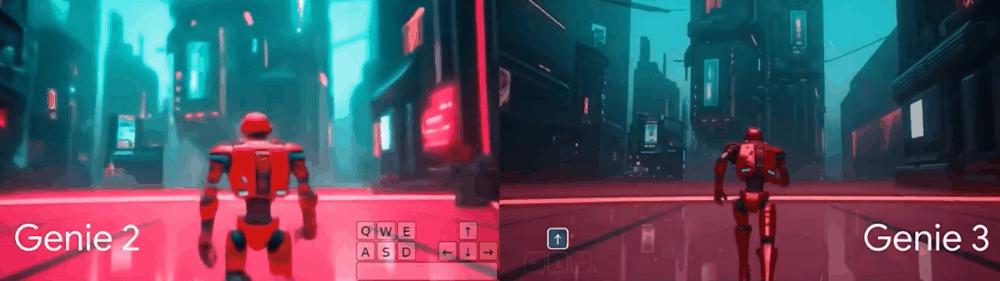
克雷西 发自 凹非寺 量子位 | 公众号 QbitAI 只需一句话,就能生成可实时交互的3D世界。 刚刚,谷歌DeepMind发布了 新一代通用世界模型Genie 3 。 性能上,Genie 3相比上一代大幅升级,支持 720P画质,每秒24帧实时导航,以及分钟级的一致性保持 。 | Genie 2 | Genie 3 | | --- | --- | | 360p | 720p | | 3D Environments | General | | Limited keyboard / mouse actions | Navigation; Promptable world events | | 10-20 seconds | Multiple minutes | | Not real time | Real time | 前DeepMind科学家、AI 3D生成创业者Tejas Kulkarni受邀体验了Genie 3。 他使用Genie 3,生成了长达57秒的城市高空漫游场景 (下图为节选) : Tejas评价,Genie通用性强,还能学习物理,而且拥有强大的记忆力。 看了Tejas的测试,Reddit网友直 ...
OpenAI首席科学家访谈被紧急制止,有些名字现在不让说了……
3 6 Ke· 2025-08-06 00:31
Core Insights - OpenAI is increasingly cautious about protecting its talent from competitors like Meta, especially in light of the upcoming GPT-5 release [5][9][10] - The recent interview with OpenAI's chief scientist and technical expert highlighted the company's shift in approach towards employee confidentiality, contrasting with its previous openness [7][9] - Other tech companies, including Google and Apple, are actively enhancing their talent retention strategies in response to Meta's aggressive recruitment efforts [13][15] Group 1: OpenAI's Talent Protection - OpenAI has implemented strict measures to prevent the disclosure of employee names during interviews, indicating a heightened concern over talent poaching by Meta [5][7] - The shift in OpenAI's culture reflects a significant change from its earlier practices, where employees were freely discussed and celebrated [9][10] - The urgency to protect talent is particularly pronounced with the imminent launch of GPT-5, as OpenAI fears further recruitment attempts from Meta [9][10] Group 2: Competitive Landscape - Meta's recruitment strategy has led to a significant number of former OpenAI employees joining its ranks, forming a strong talent pool [9][13] - Google has responded by promoting internal talent to higher positions to prevent them from being poached by Meta [13][15] - Apple has increased salaries for its foundational model team to retain key members, while other companies like Anthropic are taking a different approach by refusing to raise salaries indiscriminately [13][15] Group 3: Employee Perspectives - OpenAI employees, such as Jakub and Szymon, have expressed their commitment to the company due to its supportive environment and funding, which they believe fosters innovation [9][10] - The discussion around AGI has evolved within OpenAI, with employees now viewing it as a critical milestone rather than just a system for economic value [12] - Employee retention remains a challenge across the industry, with Meta's retention rate at 64%, significantly lower than Anthropic's 80% and OpenAI's 67% [15][16]


X @Sam Altman
Sam Altman· 2025-08-05 17:07
Model Overview - GPT-OSS is a state-of-the-art open-weights reasoning model with strong real-world performance comparable to O4-Mini [1] - The model can be run locally on personal computers or phones [1] - The company believes this is the best and most usable open model currently available [1] Impact and Availability - The model, resulting from billions of dollars of research, is being made available to the world to democratize AI access [2] - The company anticipates more good than bad will result from its release, citing performance on challenging health issues comparable to O3 [2] - The company has worked to mitigate serious safety issues, especially around biosecurity, with GPT-OSS models performing comparably to frontier models on internal safety benchmarks [2] - The company hopes this release will enable new kinds of research and the creation of new kinds of products, expecting a meaningful uptick in the rate of innovation [4] Strategic Vision - The company believes in individual empowerment, providing users with direct control and modification capabilities over their own AI, highlighting privacy benefits [3] - The company's mission is to ensure AGI benefits all of humanity [5] - The company is excited for the world to build on an open AI stack created in the United States, based on democratic values, available for free to all and for wide benefit [5]
腾讯研究院AI速递 20250806
腾讯研究院· 2025-08-05 16:01
Group 1: AI Model Developments - Claude Opus 4.1 is currently in internal testing and is expected to be released within two weeks, focusing on enhancing reasoning and planning capabilities [1] - Anthropic's annual revenue has increased fivefold to $5 billion, with programming clients like Cursor and GitHub Copilot contributing $1.4 billion in API revenue [1] - Alibaba has open-sourced the Qwen-Image model, which has 20 billion parameters and excels in rendering complex text in images, achieving state-of-the-art performance in multiple benchmarks [3] Group 2: New Features and Innovations - Tencent's ima has introduced new features including AI podcast capabilities that convert articles into dialogue format and a one-click folder import function that retains file hierarchy [2] - Huawei has open-sourced three Pangu models with sizes of 1 billion, 7 billion, and 718 billion parameters, including the Ultra MoE model, which utilizes a mixed expert architecture [4] - Nanom AI has launched a multi-agent swarm capable of generating high-quality AI videos lasting up to 10 minutes, significantly reducing production costs by 95% [5] Group 3: Competitive Landscape - Google has initiated the first large model competition, featuring eight top AI models competing in chess, including those from OpenAI, DeepSeek, and Anthropic [6][7] - A warning from former Google executive Mo Gawdat predicts that by 2027, AI will lead to a "hell period" where the middle class will be eradicated, leaving only the top 0.1% and the lower class [10] Group 4: Company Strategies and Future Outlook - Jieyue CEO announced the first open-source base model, Step 3, which has a total of 321 billion parameters and focuses on multi-modal reasoning [11] - The company is committed to the integration of multi-modal generation and understanding as a pathway to AGI, despite facing resource challenges [11] - Yushu Technology has introduced the Unitree A2 quadruped robot, designed for industry applications, and is preparing for an IPO with projected revenue exceeding 1 billion in 2024 [9]