
城市更新

Search documents
北京号最精彩 | 冬日焕新!海淀再添2处全龄友好公园
Bei Jing Ri Bao Ke Hu Duan· 2025-12-10 09:22
Group 1 - The Yuandadu City Wall Ruins Park has undergone a comprehensive upgrade with a focus on "ecological priority and all-age friendliness," and the Haidian District Garden Greening Bureau will continue to enhance this concept through ongoing maintenance and service improvements [2] - The Xihuan Road North Extension project in Shunyi District has received approval from the Beijing Development and Reform Commission, marking a significant step forward in improving connectivity between Shunyi and the central urban area [4] - The Wangfujing Ice Wonderland, a collaboration between Wangfujing and Burberry, has returned for its sixth consecutive year, offering an immersive ice and snow experience that integrates commerce with cultural and artistic elements, enhancing the brand image of Wangfujing as a high-end lifestyle destination [8] Group 2 - The 40th Longqing Gorge Ice Lantern Art Festival is in preparation, set to begin in mid-January 2026, featuring a combination of flower lanterns, ice lanterns, and ice entertainment projects for a dual visual and experiential delight [10] - The second batch of new performance spaces in Haidian District has been announced, with ten new venues recognized to break traditional theater boundaries and integrate performances into diverse settings [12] - The completion of the Garden Street (Dongzhimen) construction project in Dongcheng District has added 1,340 square meters of green space and approximately 700 square meters of recreational area, enhancing the living environment for nearly 30,000 residents [26]


21世纪经济报道:剑指3万亿、明确任务主线,这场会议给武汉“十五五”定调
2 1 Shi Ji Jing Ji Bao Dao· 2025-12-10 07:15
Core Insights - The Wuhan Municipal Committee has approved the "15th Five-Year Plan" and the "Five-Year Action Plan" to build a modern Wuhan, aiming for a GDP exceeding 3 trillion yuan by 2030 [1][3] - The plan emphasizes the construction of "Five Centers" as a dual-target strategy, with significant progress expected by 2030 and full realization by 2035 [1][3] Group 1: Five Centers Development - The "Five Centers" initiative has become the main task for Wuhan's 15th Five-Year period, reflecting its importance for high-quality economic and social development [3] - The initiative traces back to 2016, when the National Development and Reform Commission outlined the need for Wuhan to become a national central city supported by four key functions [3][4] - The action plan aims to accelerate the construction of a national central city and position Wuhan as a leading strategic hub in central China [3][4] Group 2: Economic and Technological Integration - The development of the national economic center will align with Wuhan's goals to expand domestic demand and integrate into the national market [4] - The city aims to build a modern industrial system and promote deep integration of technological and industrial innovation to support the national technology innovation center [4][10] - The plan includes seven major actions to transform the "Five Centers" from a blueprint into reality, focusing on economic elevation, technological leadership, and regional development [4][5] Group 3: Urban Renewal and Infrastructure - Wuhan plans to implement urban renewal through the "Five Reforms and Four Improvements" strategy, which includes upgrading existing buildings and enhancing community services [7][8] - The city will explore new urban renewal models to address core challenges such as financing and land use, promoting a multi-faceted development approach [9] - The "Five Grains" initiative focuses on leveraging Wuhan's industrial advantages and future sectors, enhancing the city's competitiveness and economic growth [9][10] Group 4: Regional Economic Impact - The Wuhan metropolitan area achieved a GDP of 3.2 trillion yuan in 2022, accounting for over 59% of the province's total, with a target of exceeding 3% of the national GDP by 2030 [6] - The metropolitan area is expected to play a crucial role in the national market and regional economic development, enhancing its influence and connectivity [6][11] - The "One City, Three Corridors, One Belt" strategy aims to optimize spatial layout and enhance the overall efficiency of Wuhan's innovation system [11]
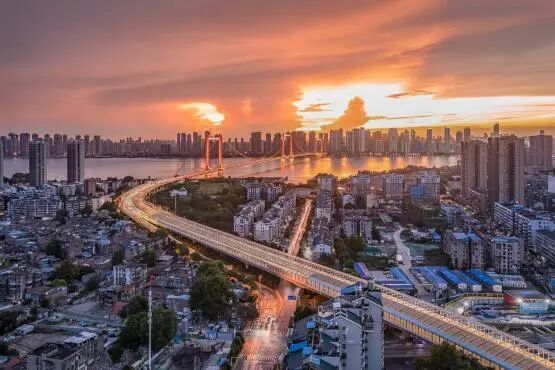
基建板块逆势走强,基建指数PE仅10倍,
Mei Ri Jing Ji Xin Wen· 2025-12-10 06:19
Core Viewpoint - The A-share market shows mixed performance with the Shanghai Composite Index down by 0.35%, while the Shenzhen Component Index increased by 0.14% and the ChiNext Index decreased by 0.23% [1] Group 1: Market Performance - The Infrastructure 50 ETF (159635) rose by 0.73%, with a latest price of 1.107 yuan [1] - Leading stocks in the ETF include Sichuan Road and Bridge up by 3.95%, Shantui Construction Machinery up by 3.83%, Hangzhou Forklift up by 2.83%, XCMG Machinery up by 2.75%, and COFCO Engineering up by 2.71% [1] Group 2: Valuation Insights - The latest price-to-earnings ratio (PE-TTM) for the Infrastructure 50 ETF is 9.55, which is at the 31.98% percentile over the past 10 years, indicating a relatively low valuation compared to other sectors in the A-share market [1] Group 3: Industry Outlook - According to Kaiyuan Securities, infrastructure investment and new construction contracts have been weakening since 2025, leading to a divergence in the performance of sub-sectors [1] - With ongoing government debt management and corporate deleveraging, the construction sector is expected to experience a resonance of fundamentals, policies, and valuations [1] - The industry is advised to focus on marginal changes in areas such as overseas construction, urban renewal, digital construction, power engineering, and debt management, while maintaining a positive outlook on state-owned construction enterprises and regional leaders with low valuations and stable performance [1]
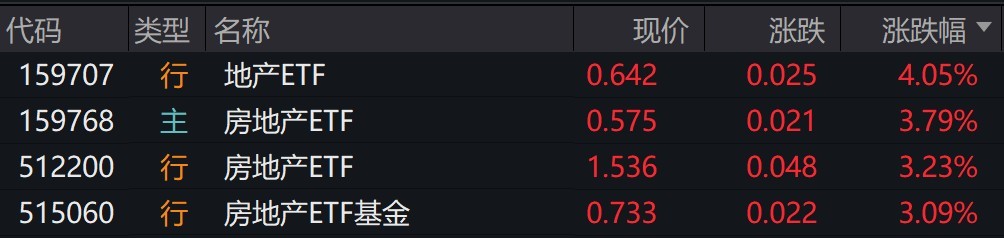
地产板块直线拉升,万科封板,房地产ETF基金大涨3.23%
Mei Ri Jing Ji Xin Wen· 2025-12-10 06:02
Group 1 - The A-share market is experiencing a decline, with the Shanghai Composite Index down by 0.46%, the Shenzhen Component Index down by 0.36%, and the ChiNext Index down by 1.05% [1] - The Real Estate ETF (515060) has increased by 3.23%, with a latest price of 0.734 yuan and a turnover rate of 6.25% [1] - Among the constituent stocks, Shilianhang leads with a rise of 10.07%, followed closely by Vanke A at 10.06% and Hainan Expressway at 9.97% [1] - The Real Estate ETF's price hit a low of 0.705 yuan during the session, marking a new low in the past 10 days [1] Group 2 - Zhongyou Securities emphasizes the importance of "deeply implementing urban renewal actions" to stabilize the real estate market and eliminate safety hazards, with a deadline set for the completion of city-level urban renewal surveys by the end of 2026 [1] - The standards for "good housing" construction have been clarified, requiring new land supply to meet a minimum of 70% green building material application and 100% smart community facilities [1] - Various regions are issuing home purchase subsidies to optimize supply and demand, implementing policies tailored to specific cities to stabilize market expectations [1] Group 3 - Caixin Securities suggests that the expectation of policy easing due to further deterioration in the fundamentals may drive valuation recovery in the sector in the short term [2] - Long-term focus should be on leading companies with core city resources and real estate operational capabilities [2]

地产股午后拉升,房地产相关ETF涨超3%
Mei Ri Jing Ji Xin Wen· 2025-12-10 05:58
Group 1 - Real estate stocks experienced a significant afternoon rally, with Vanke A hitting the daily limit, Hainan Airport rising over 7%, Poly Development increasing by over 5%, and New Town Holdings and Huafa Group both up over 3% [1] - Real estate-related ETFs rose by more than 3% due to market influences [1] Group 2 - The current fundamentals of real estate companies are in a "bottoming" phase, with expectations for policy support and stabilization of the industry fundamentals to drive market trends in the near future [2] - The industry is expected to shift from "high leverage, high turnover" to a focus on "quality, service, and sustainability," with urban renewal expected to unlock potential in existing stock [2]


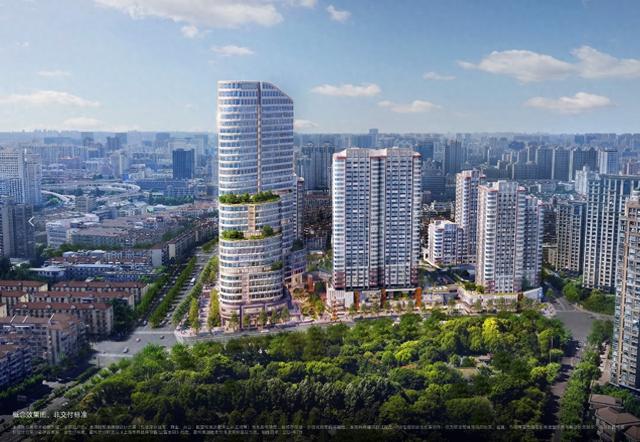
践行城市更新,万科构建“未来城市理想单元”新范本
Xin Lang Cai Jing· 2025-12-10 04:47
在土地资源紧约束的背景下,城市更新不止是空间的再造,更是空间功能重塑、延续历史记忆、留住城 市文脉、提升生活品质,让更多人能从城市发展中获益。 近年来,静安区探索城市更新综合路径,持续撬动区域转型发展蜕变升级。万科在此深耕十余年,通过 城市更新,从商务印书馆第五印刷所的文脉起底到国际先锋商业街区的持续营造,再到优质社区配套的 导入,构建15分钟理想生活圈,为国际静安注入新的活力。 从2024年到2025年,中興傲舍经历了从蓝图到实景、从理念到生活的完整演进。每一次开放,都是体系 的一环:会所、空中公区,样板房、花园、楼王与春熙集,逐步点亮了一座"可感知的理想社区"。 焕新片区面貌 大型旧城改造项目拆迁规模巨大,开发难度高,而万科在整个中兴城焕新计划中,地块开发与城市焕新 紧密联合在一起:通过城市公共空间的联合改造与修复,留驻历史文脉,将片区活力充分激发。 2014年,万科对中兴城约100万平方米区域进行规划,不仅推动商务印书馆第五印刷所的更新复建、中 兴公园的改造,还相继推出翡翠雅宾利、中兴路一号等高品质项目,且获得不错的市场反响。万科在这 一片区不断加大投入,以实际行动改善和提升片区面貌。 十余年"中兴城" ...
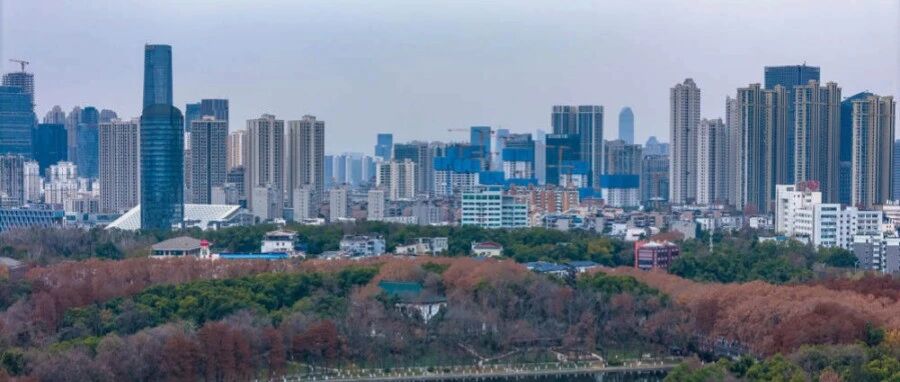
武汉重磅,剑指3万亿
21世纪经济报道· 2025-12-10 03:11
Core Viewpoint - The article discusses the recent meeting of the Wuhan Municipal Committee, which approved the "15th Five-Year Plan" and the "Action Plan" to build a modern Wuhan by 2030, aiming for a GDP exceeding 3 trillion yuan and the establishment of five centers [1][2]. Group 1: Economic Goals and Development Strategy - Wuhan aims to achieve a GDP of over 3 trillion yuan by 2030, with a two-step goal for the "five centers" construction [1]. - The "five centers" initiative is a key task for Wuhan's economic and social development during the 15th Five-Year Plan period, reflecting its importance in guiding high-quality development [2]. - The plan emphasizes the integration of economic growth with the construction of the "five centers," showcasing a dual focus on economic capacity and development quality [1][2]. Group 2: Implementation and Action Plans - The construction of the national economic center will align with expanding domestic demand and integrating into the national market [3]. - Wuhan will implement seven major actions to transform the "five centers" from a blueprint into reality, focusing on economic elevation, technological innovation, and regional development [3]. - The city plans to enhance coordination among the "five centers" to promote mutual advancement and integrate innovation with industry [4]. Group 3: Urban Development and Infrastructure - The "Five Improvements and Four Goods" strategy will drive urban renewal, enhancing the quality of life and urban infrastructure [9][10]. - The urban renewal efforts will focus on five areas of improvement and four aspects of quality, aiming to optimize urban structure and functionality [9][10]. - The city will explore new models for urban renewal, addressing core challenges such as financing and land use [10][11]. Group 4: Industrial Layout and Future Prospects - The "Five Valleys" initiative aims to establish a modern industrial system, leveraging Wuhan's comparative advantages in various sectors [12][13]. - The spatial layout of "One City, Three Corridors, and One Belt" will enhance the overall efficiency of Wuhan's innovation system [13]. - The development strategy emphasizes the need for a balanced economic growth across different regions within Wuhan, promoting a more integrated urban economy [13].
剑指3万亿、明确任务主线,这场会议给武汉“十五五”定调
2 1 Shi Ji Jing Ji Bao Dao· 2025-12-10 00:48
Core Insights - Wuhan aims to achieve a GDP exceeding 3 trillion yuan by 2030, with a focus on building "five centers" to drive economic growth and modernization [1][2] - The "five centers" initiative is a strategic framework established in 2016 to enhance Wuhan's status as a national central city, emphasizing economic, technological, commercial, and international capabilities [2][3] - The city plans to implement seven major actions to transform the "five centers" from a conceptual framework into tangible outcomes, fostering regional economic development [3][4] Economic Goals - By 2030, Wuhan's GDP is projected to surpass 3 trillion yuan, with the urban agglomeration's GDP expected to reach 3.6 trillion yuan by 2024, representing over 60% of the province's total [4][5] - The urban agglomeration's GDP accounted for 59% of Hubei province and 2.66% of the national total in 2022, indicating a steady increase in its economic significance [4][5] Strategic Framework - The "five centers" construction is positioned as the main task for Wuhan during the 14th Five-Year Plan, highlighting its importance for high-quality economic and social development [1][2] - The city aims to integrate its development with national strategies, enhancing its role as a leading hub in the central region of China [2][3] Urban Development Initiatives - Wuhan's urban renewal strategy focuses on "five improvements and four enhancements," targeting urban infrastructure and quality of life [6][7] - The city plans to adopt innovative development models to address challenges in financing, land use, and administrative processes, promoting a comprehensive approach to urban renewal [7][8] Industrial Development - The "five valleys" initiative aims to establish a modern industrial system, integrating advanced manufacturing and modern services to enhance competitiveness [8][9] - The spatial layout of "one city, three corridors, and one belt" is designed to optimize innovation capabilities and foster collaboration across various sectors [10]
杨正武:统筹现代化人民城市的建设与治理
Jing Ji Ri Bao· 2025-12-10 00:07
Core Viewpoint - The construction of modern people-oriented cities is essential for promoting high-quality development and improving the quality of life in China, emphasizing a people-centered approach in urban modernization [1][2]. Group 1: Urban Modernization Goals - The "14th Five-Year Plan" suggests strategic deployment around building innovative, livable, beautiful, resilient, civilized, and smart modern people-oriented cities [1]. - Urban modernization should focus on optimizing urban structure, transforming development momentum, enhancing quality, promoting green transitions, and ensuring effective governance to achieve the goal of "making cities better for living" [1][2]. Group 2: Challenges in Urban Development - Current challenges include gaps between public service supply and the growing needs of citizens, the need for improved systematic and refined urban planning, and the modernization of urban governance systems [2][3]. - Balancing historical preservation with urban renewal and strengthening the resilience of urban infrastructure are also critical issues that need to be addressed [2]. Group 3: Transition to Quality Improvement - By the end of 2024, China's urbanization rate is expected to reach 67%, with 940 million people living and working in urban areas, indicating a shift from large-scale expansion to quality enhancement in urban development [3]. - This transition requires a focus on improving urban quality through optimizing industrial layout and urban functions, promoting urban-rural integration, and enhancing overall operational efficiency and sustainability [3]. Group 4: Systematic Approach to Urban Modernization - The historical achievements in urban modernization stem from treating cities as organic entities and systematically planning urban development dimensions and goals [4]. - The expansion of urban development goals from "livable, resilient, smart" to "innovative, livable, beautiful, resilient, civilized, smart" reflects the guiding role of new development concepts and emphasizes the coordination of material and spiritual civilization [4]. Group 5: Strategic Focus Areas - Urban renewal should be a key focus, emphasizing high quality through comprehensive and systematic measures to enhance urban economic, social, and cultural development [5]. - Urban governance should prioritize high standards, addressing the complexities of urban ecosystems through improved legal frameworks, scientific planning, and digital technology integration [6]. - Ensuring urban safety as a baseline is crucial, with a focus on risk identification, infrastructure resilience, and innovative social governance models to create a collaborative urban governance community [6].
统筹现代化人民城市的建设与治理
Jing Ji Ri Bao· 2025-12-09 23:02
Core Viewpoint - The construction of modern people-oriented cities is essential for promoting high-quality development and improving the quality of life in China, emphasizing a people-centered approach in urban modernization [1][2]. Group 1: Urban Modernization Goals - The "14th Five-Year Plan" suggests strategic deployment around building innovative, livable, beautiful, resilient, civilized, and smart modern people-oriented cities [1]. - Urban modernization should focus on optimizing urban structure, transforming development dynamics, enhancing quality, promoting green transitions, and ensuring cultural continuity [1][2]. Group 2: Challenges in Urban Development - Current urban construction faces challenges such as gaps in public service supply, the need for improved systematic and refined urban planning, and the necessity for modernized urban governance capabilities [2][3]. - Balancing historical context preservation with urban renewal and enhancing urban resilience are critical issues that need addressing [2]. Group 3: Transition to Quality Improvement - By the end of 2024, China's urbanization rate is projected to reach 67%, with 940 million people living and working in urban areas, indicating a shift from large-scale expansion to quality enhancement in urban development [3]. - Urban development should focus on quality improvement through optimizing industrial layout and urban functions, promoting urban-rural integration, and enhancing overall urban living standards [3]. Group 4: Systematic Approach to Urban Modernization - The historical achievements in urban modernization stem from treating cities as organic entities and systematically planning urban development dimensions and goals [4]. - The expansion of urban development goals reflects the guiding role of new development concepts, emphasizing the coordination of material and spiritual civilization [4]. Group 5: Strategic Focus Areas - Urban renewal should be a key focus, emphasizing high quality through the transformation of urban spaces and functions to meet current and future needs [5]. - Urban governance must prioritize high standards, addressing the complexities of urban ecosystems through improved legal frameworks, scientific planning, and refined service models [6]. - Ensuring urban safety is crucial, with a focus on building resilient cities that prioritize safety and reliability, enhancing risk assessment mechanisms, and fostering community participation in governance [6].