
新型工业化

Search documents
宏英智能股价微涨0.24%,2025年中报预增超300%
Jin Rong Jie· 2025-08-05 17:02
Group 1 - The core stock price of Hongying Intelligent as of August 5, 2025, is 29.80 yuan, with an increase of 0.07 yuan, representing a growth of 0.24% compared to the previous trading day [1] - The trading volume on August 5, 2025, was 0.64 billion yuan, with a turnover rate of 6.09% [1] - Hongying Intelligent specializes in the research, production, and sales of smart instruments and meters, which are widely used in industrial automation and robotics [1] Group 2 - On August 5, 2025, Hongying Intelligent added the concept of "2025 Mid-Year Report Pre-Increase," with an expected net profit attributable to shareholders ranging from 12 million to 16.5 million yuan for the first half of 2025, indicating a year-on-year growth of 329.57% to 490.66% [1] - In terms of capital flow, on August 5, 2025, there was a net outflow of 7.7037 million yuan from main funds, with a cumulative net outflow of 35.9287 million yuan over the past five days [1]

金融支持新型工业化 信贷保险资本市场齐上阵
Bei Jing Shang Bao· 2025-08-05 16:29
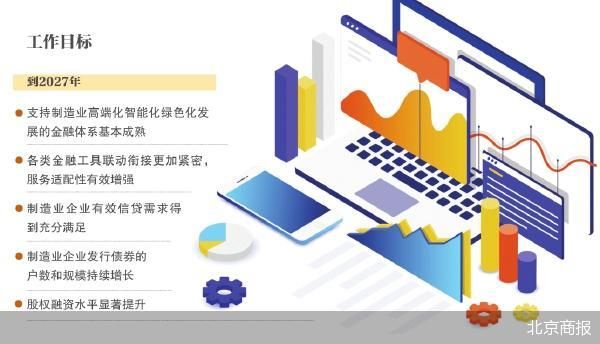
Core Viewpoint - The People's Bank of China and six other departments issued guidelines to enhance financial support for new industrialization, aiming to accelerate the development of high-quality financial services and prevent excessive competition in industries [1][3]. Group 1: Financial Support Measures - The guidelines propose 18 financial support measures across five key areas to enhance technological innovation and supply chain resilience in industries [1][3]. - By 2027, the financial system supporting the high-end, intelligent, and green development of manufacturing is expected to be well-established, with a focus on diverse financial products and effective risk prevention [3][4]. Group 2: Integration of Technology and Finance - The initiative emphasizes "integrated technology and industry finance," promoting long-term capital investment and the transformation of technological achievements [4][5]. - The guidelines include plans for monthly investment roadshows and nurturing small and medium-sized enterprises (SMEs) with specialized technologies to facilitate their listing [4][5]. Group 3: Cross-Border Financial Services - The guidelines aim to enhance cross-border financial services, including expanding the use of RMB for international trade and supporting pilot projects for cross-border cash pooling [4][5]. - The focus is on improving the convenience of cross-border settlements and upgrading foreign exchange hedging services to strengthen the competitiveness of "Made in China" in global supply chains [5]. Group 4: Implementation and Future Steps - The People's Bank of China and the Ministry of Industry and Information Technology will work with relevant departments to ensure the implementation of these guidelines, enhancing the financial support system for new industrialization [5][6].

金融支持新型工业化“路线图”明确
Qi Huo Ri Bao Wang· 2025-08-05 16:07
Core Viewpoint - The People's Bank of China and other departments issued guidelines to support new industrialization, focusing on enhancing the financial system for manufacturing by 2027, with specific measures to boost innovation and resilience in supply chains [1][2]. Group 1: Financial Support Measures - The guidelines propose 18 targeted support measures to enhance the financial system for high-end, intelligent, and green development in manufacturing [1]. - By 2027, the financial system is expected to mature, with increased credit demand satisfaction, growth in bond issuance, and improved equity financing levels for manufacturing enterprises [1]. - Financial institutions are encouraged to provide comprehensive services using diverse tools like loans, bonds, and insurance to key enterprises in the supply chain [1][2]. Group 2: Innovation and Risk Management - The guidelines emphasize the importance of enhancing the technological innovation capabilities of industries and the resilience of supply chains [1]. - There is a focus on supporting mergers and acquisitions to strengthen the supply chain and promote collaborative development across the industry [1]. - The guidelines advocate for the development of a futures product system to stabilize prices and ensure the supply of bulk commodities [2]. Group 3: International Trade and Foreign Investment - The guidelines aim to optimize financial products and services for foreign trade, particularly for small and medium-sized enterprises [2]. - There is a push to enhance foreign exchange risk management capabilities for companies expanding internationally [2]. - The guidelines also propose expanding the pilot scope for foreign investment reinvestment to facilitate domestic equity investments by foreign enterprises [2]. Group 4: Futures Market Development - The futures market is positioned as a stabilizing infrastructure for the industrial chain, with potential for product innovation based on industry needs [3]. - Future developments may include green low-carbon futures and key mineral futures, enhancing the market's ability to address price volatility and supply chain disruptions [3][5]. - The establishment of a "futures price stabilization order" mechanism is suggested to help industries lock in costs and improve risk resilience [5].
城市24小时 | 发力下半年 湖北再提这条“黄金水道”
Mei Ri Jing Ji Xin Wen· 2025-08-05 15:54
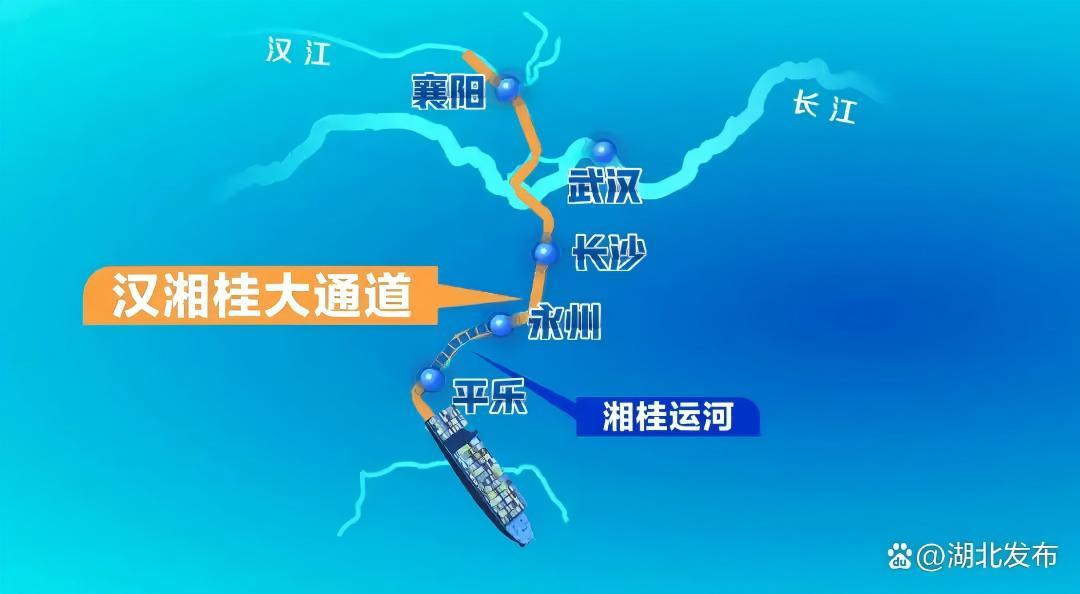
Core Insights - Hubei Province has completed a transportation investment of 104.16 billion yuan in the first half of the year, achieving 51.9% of its annual target, with a year-on-year growth of 1.8% [1] - The province aims for a total transportation investment of 200 billion yuan, striving for 220 billion yuan by the end of the year, focusing on major transportation projects [1][2] - The Han-Xiang-Gui inland waterway corridor, approximately 3,200 kilometers long, is a key project that will enhance connectivity between major river systems in China [2][3] Investment and Development Goals - Hubei's transportation investment in the first half of the year ranks third nationally and first in Central China [1] - The province plans to enhance its logistics efficiency through multi-modal transport and digital transformation, aiming to reduce costs and improve quality [1][2] - The Han-Xiang-Gui corridor will facilitate low-cost water transport to coastal ports, benefiting the central and western regions [2] Project Progress and Future Plans - The feasibility study for the Hanjiang Qianpan Mountain to Xinglong section of the waterway has been approved, marking progress in the Han-Xiang-Gui corridor project [3] - Hubei plans to start construction on key projects this year, targeting a fixed asset investment of 10 billion yuan and increasing port throughput capacity by 20 million tons [3]
城市24小时 | 发力下半年,湖北再提这条“黄金水道”
Mei Ri Jing Ji Xin Wen· 2025-08-05 15:47
Group 1 - Hubei Province completed a total transportation investment of 104.16 billion yuan in the first half of the year, achieving 51.9% of the annual target, with a year-on-year growth of 1.8% [1] - The province aims for a total transportation investment of 200 billion yuan, striving for 220 billion yuan by the end of the year, focusing on major transportation projects [1] - The Han-Xiang-Gui waterway corridor, approximately 3,200 kilometers long, is a key project that connects multiple provinces and enhances water transport efficiency [2][3] Group 2 - The construction of the Han-Xiang-Gui waterway corridor has received positive responses from various provinces and national departments, emphasizing its importance for regional logistics [2] - Hubei has the lowest logistics costs as a percentage of GDP among the six central provinces, indicating a competitive advantage in transportation [2] - The province is enhancing its strategic position as a key hub in central China, leveraging its geographical advantages for economic development [2] Group 3 - The feasibility study for the Hanjiang Qianpan Mountain to Xinglong section of the waterway has been approved, marking progress in the project [3] - Hubei plans to invest 10 billion yuan in the Hanjiang "three ship locks and one waterway" project this year, aiming to increase port capacity significantly [3] - The province's port container throughput capacity is expected to grow by over 15% annually, reflecting a strong focus on enhancing logistics capabilities [3]
中国人民银行等七部门联合印发《关于金融支持新型工业化的指导意见》 强化重点企业金融服务 支持产业链自主可控
Zheng Quan Ri Bao· 2025-08-05 15:44
Core Viewpoint - The People's Bank of China and several government departments have issued guidelines to enhance financial support for new-type industrialization, focusing on the integration of finance and manufacturing to foster technological innovation and sustainable development [1][2]. Financial Support for Industrialization - The guidelines emphasize the importance of financial services for the real economy and risk prevention, aiming to deepen financial supply-side structural reforms and enhance the synergy between industrial and financial policies [1][4]. - By 2027, a mature financial system supporting the high-end, intelligent, and green development of manufacturing is expected, with increased access to various financial instruments for manufacturing enterprises [1][2]. Enhancing Technological Innovation and Supply Chain Resilience - Financial policies will be optimized to support key technologies and products, particularly in critical sectors such as integrated circuits and medical equipment, through long-term financing [2][3]. - The guidelines encourage collaboration between financial institutions and technology service providers to facilitate diverse financing models and accelerate the transformation of technological achievements [2]. Modern Industrial System Construction - The guidelines outline five key areas for building a modern industrial system, including optimizing financial services for traditional manufacturing, enhancing the quality of technology finance, promoting green finance, and deepening financial services for industrial chains [2][3]. Industry Integration and Upgrading - Support for listed companies to engage in industry consolidation and upgrading through various financial mechanisms is highlighted, along with the need for diversified technology finance service models [3][4]. - Financial institutions are encouraged to utilize advanced technologies like big data and AI to improve service efficiency for manufacturing, especially for small and medium-sized enterprises [3][4]. Regional and Cross-Border Financial Services - The guidelines stress the importance of flexible financial services to support industrial transfer and regional optimization, particularly in less developed areas [3][4]. - Enhancements in cross-border financial services are also emphasized to expand high-level open development spaces for manufacturing [3]. Capacity Building for Financial Support - Financial institutions are urged to integrate support for new-type industrialization into their long-term strategies and improve the coordination of various financial tools [4]. - The guidelines call for the cultivation of a talent pool with expertise in advanced manufacturing and related technologies to strengthen financial management and services [4]. Implementation and Collaboration - The People's Bank of China and relevant departments will work together to ensure the implementation of these guidelines, aiming to provide robust financial support for advancing new-type industrialization [5].
【公告全知道】PEEK+人形机器人+低空经济+无人机+毫米波雷达!公司研发PEEK材料并为客户提供批量精密制件
财联社· 2025-08-05 15:12
Group 1 - The article highlights the importance of weekly announcements from Sunday to Thursday, which include significant stock market events such as suspensions, investments, acquisitions, and performance reports [1] - It emphasizes the need for investors to identify potential investment hotspots and mitigate risks associated with unexpected events, providing ample time for analysis and selection of suitable companies [1] Group 2 - A company specializing in PEEK materials is noted for its development of humanoid robots, low-altitude economy, drones, and millimeter-wave radar, having secured contracts for drone component production [1] - Another company is recognized for its PCB and optical module products, including 100G optical modules, and its involvement in robotics and new industrialization [1] - A leading global manufacturer of electroplating equipment is mentioned for its work with PCB, PET copper foil, solid-state batteries, chips, and photovoltaics [1]

重返3600点!沪指还能持续上攻?
Guo Ji Jin Rong Bao· 2025-08-05 15:11
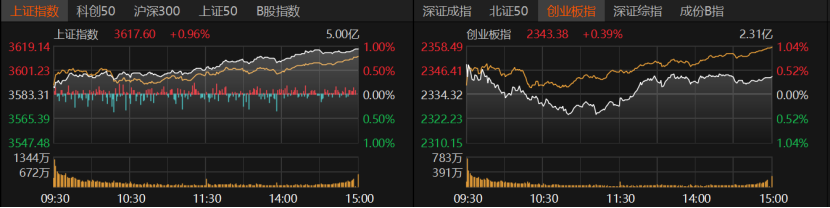
Market Overview - The A-share market continues to strengthen, with the Shanghai Composite Index returning to 3600 points, driven by gains in cyclical stocks such as banks and steel [1][2][4] - The market is currently in a phase of oscillation and recovery, with future upward momentum dependent on substantial improvements in economic data and the implementation of policies [1][12] Sector Performance - All 31 first-level industry sectors in the Shenwan classification closed higher, with the comprehensive sector rising nearly 2%. Key sectors like banking, steel, non-bank financials, and real estate saw increases of over 1% [4][5] - Notable individual stocks included those in the communication and automotive sectors, with several reaching their daily limit up [4][5] Trading Volume and Market Sentiment - Trading volume increased from 1.52 trillion yuan to 1.62 trillion yuan, indicating enhanced market activity. A total of 3903 stocks rose, with 68 hitting the daily limit up [2][4] - The market sentiment is supported by favorable policy expectations, improved external liquidity conditions, and a strong technical setup, with the Shanghai Composite Index successfully breaking through short-term moving averages [9][11] Investment Strategy - Investors are advised to adopt a balanced allocation strategy focusing on "steady growth + new economy" themes, while closely monitoring policy developments and economic data changes [1][12] - The market is expected to experience a phase of oscillation, with potential for upward movement before the September 3 military parade [1][10]
七部门发文推动金融支持新型工业化
Zhong Guo Jing Ji Wang· 2025-08-05 14:44
8月5日,工业和信息化部、中国人民银行、国家发展改革委等七部门联合印发《关于金融支持新型工业 化的指导意见》(以下简称《意见》),提出到2027年,支持制造业高端化智能化绿色化发展的金融体系 基本成熟,产品更加丰富,贷款、债券、股权、保险等各类金融工具在有效防范交叉性金融风险前提下 联动衔接更加紧密,服务适配性有效增强。制造业企业有效信贷需求得到充分满足,制造业企业发行债 券的户数和规模持续增长,股权融资水平显著提升。 《意见》提出,聚焦新型工业化重大战略任务,深化金融供给侧结构性改革,深化产融合作,强化产业 政策和金融政策协同,提升金融支持强度精度效度,为建设以科技创新为引领、先进制造业为骨干的现 代化产业体系,扎实推进新型工业化,加快发展新质生产力提供高质量金融服务。(经济日报记者赖奇 春) 工业是立国之本,是经济社会高质量发展的基石,实现新型工业化是以中国式现代化全面推进强国建 设、民族复兴伟业的关键任务。《意见》聚焦新型工业化重大战略任务需要,推出18条针对性支持举 措,支持提升产业科技创新能力和产业链供应链韧性、支持加快建设现代化产业体系、支持产业合理布 局和拓展发展空间、加强金融支持新型工业化能力 ...
金融支持新型工业化路径明确!优化资金供给结构 提供贷款、债券、股权等融资支持
Mei Ri Jing Ji Xin Wen· 2025-08-05 14:20
Core Viewpoint - The People's Bank of China and seven other departments have jointly issued guidelines to enhance financial support for new industrialization, aiming to provide high-quality financial services to accelerate the development of new productive forces while preventing excessive competition [1][2]. Financial Support Structure - The guidelines emphasize optimizing the funding supply structure at the macro level, providing loans, bonds, and equity financing to support new industrialization [1][2]. - By 2027, the financial system supporting the high-end, intelligent, and green development of the manufacturing industry is expected to be fundamentally mature, with a richer array of products and improved service adaptability [2][3]. Technology and Innovation Financing - The guidelines advocate for the introduction of long-term funds and patient capital to accelerate the transformation of technological achievements, encouraging collaboration between financial institutions and technology intermediaries [3][4]. - A "technology-industry finance integration" initiative is proposed to enhance investment in hard technology and support small and medium-sized enterprises in going public [3][4]. Supply Chain and Regional Financial Services - The guidelines call for improved financial services for supply chains, encouraging financial institutions to provide financing services based on "data credit" and "physical credit" for small and medium-sized enterprises [3][4]. - Financial institutions are urged to optimize resource allocation to support the transfer of industries to central and western regions, enhancing information sharing and service coordination [4][5]. Cross-Border Financial Services - The guidelines aim to enhance the convenience of cross-border financial services and expand the scope of high-level bilateral open development [5][6]. - Support for small and medium-sized enterprises in overseas operations is emphasized, along with the facilitation of cross-border fund pooling and trade settlement [5][6]. Long-term Mechanism for Financial Support - The guidelines propose strengthening the capacity and long-term mechanisms for financial services, ensuring a reasonable investment ratio in the manufacturing sector [6][7]. - Financial institutions are encouraged to develop differentiated credit policies tailored to specific industries and stages of enterprise growth [6][7].