人工智能(AI)

Search documents
Micron Technology(MU) - 2026 Q1 - Earnings Call Transcript
2025-12-17 22:30
Financial Data and Key Metrics Changes - Micron reported total fiscal Q1 revenue of $13.6 billion, up 21% sequentially and 57% year over year, marking a quarterly record for the third consecutive quarter [20] - Fiscal Q1 DRAM revenue reached a record $10.8 billion, up 69% year over year and 20% sequentially, representing 79% of total revenue [20][21] - Fiscal Q1 NAND revenue was a record $2.7 billion, up 22% year over year and sequentially, accounting for 20% of total revenue [21][22] - Consolidated gross margin for fiscal Q1 was 56.8%, up 11 percentage points sequentially, driven by higher pricing and strong cost execution [22] - Non-GAAP diluted earnings per share in fiscal Q1 was $4.78, reflecting 58% sequential growth and 167% year-over-year growth [24] Business Line Data and Key Metrics Changes - Cloud memory business unit revenue was a record $5.3 billion, representing 39% of total revenue, up 16% sequentially [22] - Core data center business unit revenue reached a record $2.4 billion, up 51% sequentially, representing 17% of total revenue [23] - Mobile and client business unit revenue was a record $4.3 billion, up 13% sequentially, representing 31% of total revenue [23] - Automotive and embedded business unit revenue was a record $1.7 billion, up 20% sequentially, representing 13% of total revenue [23] Market Data and Key Metrics Changes - Server unit demand is expected to grow in the high teens percentage range for calendar 2025, higher than previous expectations [10] - PC unit sales are forecasted to grow in the high single-digit percentage range for calendar 2025, above prior expectations [12] - Smartphone unit volumes are on track to grow in the low single-digit percentage range for calendar 2025 [12] - The aggregate industry supply is expected to remain substantially short of demand for the foreseeable future, with DRAM and NAND bit demand growth expectations revised higher [16][17] Company Strategy and Development Direction - Micron is focused on maximizing production output and ramping industry-leading technology nodes while investing in new cleanroom space to enhance supply capability [6][18] - The company anticipates substantial new records in revenue, gross margin, EPS, and free cash flow for both the second quarter and the full fiscal year 2026 [6] - Micron plans to increase fiscal 2026 capital expenditures to approximately $20 billion, primarily to support HBM supply capability and 1-gamma supply [17][18] Management's Comments on Operating Environment and Future Outlook - Management highlighted that AI-driven demand is accelerating, with significant growth in data center capacity driving demand for high-performance memory [9][10] - The company expects tight market conditions to persist beyond calendar 2026 due to sustained strong industry demand and supply constraints [6][16] - Management expressed confidence in Micron's competitive position, emphasizing technology leadership and a differentiated product portfolio [6][7] Other Important Information - Micron generated record free cash flow of $3.9 billion in fiscal Q1, exceeding the previous record from fiscal Q4 2018 by over 20% [25] - The company reduced debt by $2.7 billion during the quarter, closing with $11.8 billion of debt and a net cash balance of over $250 million [25][26] - Over 80% of Micron's professional workforce actively uses GenAI, significantly enhancing productivity across various functions [26] Q&A Session Summary Question: Long-term agreements with customers - Management discussed ongoing discussions for multi-year contracts with key customers, emphasizing stronger contract structures compared to previous agreements [31] Question: Capital expenditures and intensity - Management confirmed an increase in capital expenditures to $20 billion for fiscal 2026, with a focus on supporting DRAM and HBM supply [32][34] Question: Supply constraints and cleanroom space - Management acknowledged supply constraints and the need for cleanroom space, emphasizing efforts to maximize production efficiency within existing facilities [35][36] Question: HBM market share and competitive positioning - Management expressed confidence in Micron's competitive position, highlighting strong performance and low power consumption of HBM products [46][47] Question: Pricing dynamics for HBM - Management confirmed that HBM for 2026 is sold out in terms of volume, with completed negotiations for pricing, ensuring strong profitability [56]

业绩与规模齐升 AI成私募量化发展“必选项”
Zhong Guo Zheng Quan Bao· 2025-12-17 20:17
Core Insights - The quantitative private equity industry is experiencing a comprehensive recovery in 2025, driven by active trading volumes, structural market trends, and the influence of technology growth, particularly artificial intelligence (AI) [1] - The industry anticipates that 2026 will present both opportunities and challenges, with a focus on the need for diversification and enhanced internal capabilities [3] Performance and Scale - As of November 2025, the average excess return of stock quantitative long products in the market reached 17.25%, with over 90% of products achieving positive excess returns [1] - The increase in trading volume and liquidity in the A-share market has provided a solid foundation for quantitative strategies to generate excess returns [1] - Leading managers with comprehensive research teams and broad signal coverage are expected to deliver more stable excess returns, while smaller managers may excel in specific market conditions [1] Fundraising Trends - The fundraising environment is showing signs of recovery, characterized by a rational and concentrated approach, with investors favoring institutions that demonstrate long-term performance, transparent risk control, and strong drawdown management [2] - There is a growing preference for multi-strategy quantitative products as a one-stop solution for fund allocation [2] AI Empowerment - AI technology has transitioned from an optional tool to a necessary component for competitive advantage in quantitative investing [2] - AI applications are now deeply integrated into critical processes such as data cleaning, factor extraction, and trade execution optimization, significantly enhancing research efficiency [2][3] Strategic Diversification - The industry faces challenges such as strategy homogenization and intensified competition for excess returns, prompting firms to prioritize diversification and internal capability enhancement [3] - Firms are shifting focus towards multi-strategy and multi-frequency collaboration to adapt to market cycles, with an emphasis on low-correlation revenue sources [3] Infrastructure and Talent Development - The competition for computational infrastructure and top talent remains crucial, with firms emphasizing the importance of research efficiency and system architecture [4] - Investor relations and service systems are gaining increased importance, with firms expected to engage more proactively with investors to build stable long-term relationships [4]
美国失业率录得四年来新高
Bei Jing Shang Bao· 2025-12-17 15:42
美国劳工部16日合并发布10月和11月的非农就业数据初值。 数据显示,美国在上述两月合计减少4.1万个就业岗位,11月失业率升至4.6%,创下自2021年10月以来 的最高水平。 由于政府"停摆"期间无法完整收集数据,这份就业报告未包含10月的失业率。这是自1948年该调查启动 以来,劳工部首次出现月度失业率数据缺失。 在薪资增长方面,美国11月非农部门员工的平均时薪为36.86美元,同比上涨3.5%。 美联社认为,整体来看,这份就业报告显示美国企业的招聘动能明显减弱。关税政策带来的不确定性, 以及美联储在2022年至2023年为遏制通胀而实施的高利率政策,其滞后效应仍在持续,拖累就业。 北京商报综合报道 美国纽约,员工在曼哈顿一家餐厅工作。 从具体数据来看,美国在10月减少10.5万个就业岗位,11月增加6.4万个。同时,美国劳工部还下修了8 月和9月的非农就业数据,两月合计新增就业岗位比此前公布的初值减少3.3万个。 自今年6月以来,美国劳动力市场持续走弱,失业率由4.1%跳升至4.6%。总体来看,经济学家将当前的 劳动力市场形容为一种"低裁员、低招聘"的状态。大多数企业并未大规模裁员,但同样也不愿意大量 ...


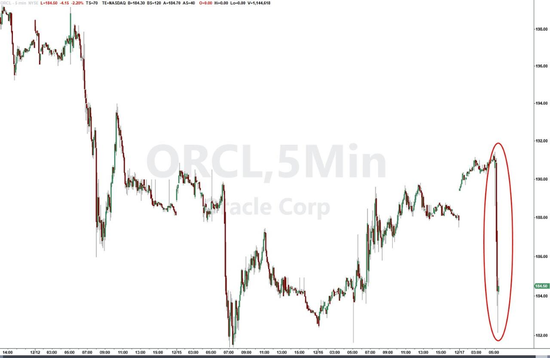
媒体称甲骨文100亿美元数据中心融资受阻,甲骨文:仍按计划进行,推进情况合预期
Xin Lang Cai Jing· 2025-12-17 15:16
来源:华尔街见闻 媒体报道,甲骨文公司在该公司雄心勃勃的人工智能(AI)基础设施扩张计划上遭遇重大挫折,其最 大的数据中心合作伙伴Blue Owl Capital已决定不再支持一项价值100亿美元的数据中心项目。不过,甲 骨文随后回应称,该项目的谈判仍然按计划进行,整体推进情况符合预期。 12月17日,据英国金融时报消息,三位知情人士透露,Blue Owl此前一直在与贷款方及甲骨文洽谈,计 划投资位于密歇根州Saline Township的一个规划容量达1GW的数据中心。然而,随着谈判陷入停滞, Blue Owl原计划安排高达100亿美元融资并进行大额股权投资的协议将无法推进。这座数据中心原计划 为OpenAI提供服务。 报道指出,这一融资合作的破裂使得该项目的资金来源陷入不确定状态。知情人士称,尽管黑石 (Blackstone)已就作为财务合作伙伴介入进行了谈判,但目前尚未签署任何投资协议,这令该密歇根 设施的融资前景充满不确定性。目前,甲骨文尚未与新的支持者正式签署协议。 甲骨文股价在消息传出后立即下挫,并拖累科技板块整体走低。分析称,这一事件凸显出,当私募信贷 市场开始收紧资金供给时,支撑AI基础设施建 ...

特朗普将发表全国讲话 或面试美联储主席候选人沃勒
Zhi Tong Cai Jing· 2025-12-17 14:45
Market Movements - US stock index futures are all up, with Dow futures rising by 0.23%, S&P 500 futures up by 0.34%, and Nasdaq futures increasing by 0.44% [1] - As of the latest update, the WTI crude oil price increased by 1.74% to $56.09 per barrel, while Brent crude rose by 1.63% to $59.88 per barrel [3][4] Economic and Political News - President Trump is scheduled to deliver a speech on Wednesday evening, focusing on his achievements and future priorities as he approaches the end of his first year back in the White House [5] - Trump is also interviewing Federal Reserve Board member Christopher Waller for the position of Fed Chair, indicating a swift process in selecting candidates [5] - Goldman Sachs suggests that the Federal Reserve may be more willing to cut interest rates next year than previously expected, influenced by recent labor market data [7] Company-Specific Developments - Amazon is in talks to invest $10 billion in OpenAI, which could enhance its competitive position against Nvidia in the AI chip market [8] - Warner Bros. plans to reject a hostile takeover bid from Paramount due to concerns over financing arrangements, favoring its existing agreement with Netflix [9] - Nvidia is collaborating with SK Hynix to develop AI-focused solid-state drives (SSDs) aimed at significantly improving performance metrics [10] - Waymo, a subsidiary of Alphabet, is seeking to raise over $15 billion at a valuation nearing $100 billion, indicating strong investor interest in autonomous vehicle technology [11] - GlaxoSmithKline's new asthma drug has received FDA approval, which could position it as a significant product in the market [12]





美股三大指数开盘涨跌互现,热门中概股多数上涨
Feng Huang Wang Cai Jing· 2025-12-17 14:43
Market Overview - The three major U.S. stock indices opened mixed, with the Dow Jones up 0.11%, Nasdaq up 0.06%, and S&P 500 down 0.01% [1] - Most popular Chinese concept stocks rose, with the Nasdaq Golden Dragon China Index up 0.79%, Baidu up over 2%, Bilibili up over 1%, and Alibaba up nearly 1% [1] - Netflix rose 1.6% as some investors bet on its potential victory in the acquisition battle against Warner Bros [1] - Oracle fell over 3% due to setbacks in its $100 billion data center project [1] - Oil stocks strengthened, with BP rising over 2% [1] Company Developments - Apple is reportedly in preliminary talks with Indian chip manufacturers to assemble and package components for its iPhones [2] - Demis Hassabis, CEO of Google's DeepMind, warned of a potential "bubble" in AI funding, particularly among early-stage startups with high valuations [3] - Tesla faces new challenges in the U.S. market as a California judge ruled that its marketing of Autopilot and Full Self-Driving systems is misleading, leading to a 30-day suspension of its sales and manufacturing license in California [4] - Waymo, Alphabet's autonomous driving subsidiary, is reportedly negotiating a $15 billion funding round, aiming for a valuation of up to $110 billion, significantly up from $45 billion last October [5] - Warner Bros. board urged shareholders to reject Paramount's hostile takeover bid of $108 billion, labeling it as "illusory" due to the lack of personal guarantees from Larry Ellison [6]


【太平洋科技-每日观点&资讯】(2025-12-18)
远峰电子· 2025-12-17 13:57
Market Overview - The main board saw significant gains with stocks like Tongding Interconnection (+10.09%), Guangxun Technology (+10.01%), and Zhongci Electronics (+10.00%) leading the charge [1] - The ChiNext board also performed well, with Yidong Electronics (+20.01%), Gu'ao Technology (+20.00%), and Liant Technology (+20.00%) showing strong increases [1] - The Sci-Tech Innovation board was led by Kaipu Cloud (+20.00%), Juguang Technology (+17.34%), and Shengyi Electronics (+13.56%) [1] - Active sub-industries included SW Communication Network Equipment and Devices (+7.11%) and SW Communication Cables and Accessories (+6.90%) [1] Domestic News - Aibang ARAI announced the launch of the industry's first ultra-low power silicon-based LCD micro-display panel, model OP03021, featuring a resolution of 1632×1536 and a refresh rate of 90Hz [1] - The semiconductor sector observed a strategic acquisition by the Greater Bay Area Fund and Huada Jiutian of Sierxin, enhancing Huada Jiutian's capabilities in digital chip design and verification [1] - Texas Instruments and UBTECH Robotics entered a strategic partnership, with Texas Instruments procuring UBTECH's Walker S2 humanoid robots for deployment in production lines [1] - Xiaomi raised prices on several tablet models, with the entry-level Redmi Pad 2 seeing a price increase of approximately 20%, from 999 yuan to 1199 yuan [1] Company Announcements - Nanchip Technology plans to issue 1.933 billion yuan in convertible bonds to fund projects in smart power management chips, automotive chips, and industrial sensor and control chips [3] - Geke Micro announced a government subsidy of 60 million yuan received by its subsidiary Geke Microelectronics (Zhejiang) [3] - Mingyang Circuit projected a maximum of 5.09 million yuan in related transactions with Bai Rou New Materials for 2026, primarily for raw material procurement [3] - Pingzhi Information's subsidiary signed a 5-year contract with Inner Mongolia Unicom for computing power services, valued at 38.25 million yuan [3] Overseas News - TOPPAN plans to install an advanced semiconductor packaging R&D line at its Ishikawa factory, set to be operational by July 2026 [2] - SK Hynix's advanced semiconductor packaging factory in Indiana is set to break ground in Q1 2026, with an investment of approximately 3.87 billion USD [2] - SEM forecasts a 13.7% year-on-year increase in global semiconductor equipment sales in 2025, reaching a historical high of 133 billion USD [2] - Samsung Electronics aims to finalize the product development specifications for LPDDR6-PIM memory solutions by the end of this year, enhancing AI capabilities in edge computing devices [2]




瑞银:预期明年全球AI资本支出将增至5710亿美元,未看到投资泡沫迹象
Ge Long Hui A P P· 2025-12-17 13:08
格隆汇12月17日|瑞银全球财富管理首席投资长Mark Haefele预期,全球AI资本支出在未来数年将持续 增加,但并未看到投资泡沫的迹象。根据瑞银预估,全球AI资本支出将从今年的4230亿美元增加至 2026年的5710亿美元。到2030年,AI的总可达市场营收潜力将达3.1万亿美元,显示未来五年的年复合 成长率约为30%。瑞银进一步指出,随着AI的应用从消费者聊天机器人扩展至企业与产业领域,估计所 需的运算能力将远超过现有基础设施的规模。 ...

量化私募业绩亮眼,AI重塑行业格局
Zhong Guo Zheng Quan Bao· 2025-12-17 12:11
Core Insights - The quantitative private equity industry in the A-share market is experiencing a comprehensive recovery, with quantitative long strategies showing impressive performance and management scale continuing to rise, driven by the deep integration of AI technology [1][2] Performance Highlights - As of November 2025, the average excess return of quantitative long products in the market is 17.25% year-to-date [2] - The trading volume and liquidity in the A-share market have significantly increased compared to the previous year, providing a solid foundation for quantitative strategies to achieve excess returns [2] - There is a notable differentiation within the industry, with mid-sized private equity firms (20 billion to 50 billion) leading in average excess returns, while top-tier firms (over 100 billion) exhibit a strong performance stability with 98.13% of their products generating positive excess returns [2] AI Integration - AI technology has transitioned from an optional tool to a necessary component in quantitative investment, enhancing efficiency and precision in key areas such as data cleaning, factor discovery, and trade execution optimization [3] - Firms like Mengxi Investment and Century Frontier are leveraging AI to process vast amounts of information and improve alternative data mining capabilities, viewing AI as a "super assistant" rather than a disruptor [3] - The evolution of AI from a single tool to a comprehensive support system throughout the investment research process is being emphasized by various firms [3] Strategic Diversification - The industry consensus highlights challenges such as strategy homogenization and intensified competition, making the construction of a "diversified" moat crucial for overcoming these obstacles [4] - Firms are shifting focus towards multi-strategy and multi-frequency dynamic allocation capabilities to adapt to market cycles, with an emphasis on low-correlation revenue sources [4] - The importance of infrastructure and talent acquisition remains critical, with firms recognizing the ongoing competition for computing power and top talent [4] Case Study - Tianyan Capital's practices illustrate the success of established quantitative firms, with some of their "old products" surpassing a net value of 10 yuan and over 80% of their products participating in dividends this year, leading to a significant proportion of investors choosing to reinvest [5]
AI是一场不可避免的交互革命 | 经观社论
Jing Ji Guan Cha Bao· 2025-12-17 12:07
Core Insights - The launch of the Doubao phone by ByteDance and ZTE on December 1, 2025, emphasizes AI's capability to automate cross-application operations, with initial sales of 30,000 units selling out quickly and second-hand prices reaching up to 12,900 yuan [2] - The Doubao phone faced immediate challenges from major apps like WeChat and Alipay, which triggered security measures, indicating a potential threat to traditional internet giants as AI technology evolves [2][3] - The emergence of AI phones could disrupt the existing app ecosystem, leading to a future where apps may lose their fundamental purpose, transforming into databases or product libraries instead [3][5] Industry Impact - The introduction of AI phones signifies a potential shift in the competitive landscape among hardware manufacturers, with a new wave of competition expected as AI becomes deeply integrated into mobile technology [5] - The evolution of AI technology may lead to a redefinition of user interactions, where traditional app usage diminishes, and AI handles tasks directly, challenging the current business models of many service platforms [3][4] - The anticipated rise of AI phones could accelerate the transformation of hardware forms, potentially replacing traditional smartphones with new devices, necessitating adaptation from manufacturers to maintain relevance in the market [5]