低空经济

Search documents
滨化股份4亿规模创投基金取得备案,合作方为地方国投
Xin Lang Cai Jing· 2026-01-24 00:01
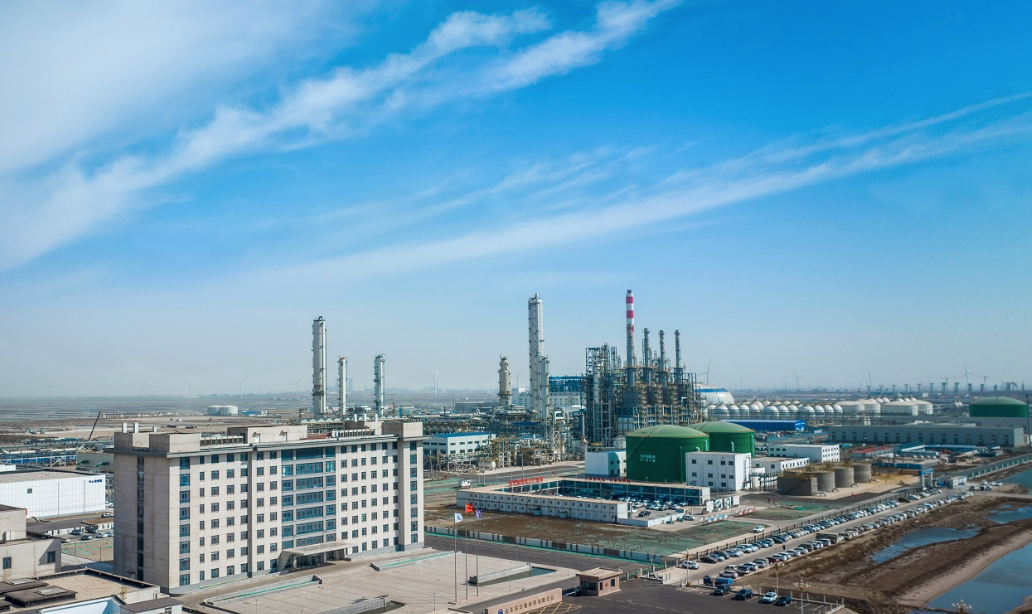
Core Viewpoint - Binhu Chemical Group Co., Ltd. (referred to as "Binhu Shares") has announced the establishment of a venture capital fund, Beikun Linghang, with a total scale of 400 million RMB, aimed at investing in strategic emerging industries [1][2]. Group 1: Fund Establishment and Structure - The Beikun Linghang fund has been registered with the Asset Management Association of China and has a total scale of 400 million RMB [1]. - The fund is co-initiated by Binhu Shares, its subsidiary Guangdong Hengqin Changyue Management Consulting Co., Ltd., Binzhou Guotou Guofu Private Fund Management Co., Ltd., and Binzhou Guotou Investment Management Group Co., Ltd. [1]. - Binhu Shares contributes 199 million RMB as a limited partner, while the other partners contribute varying amounts, with the management company contributing 1 million RMB [1]. Group 2: Investment Focus and Strategy - The fund will primarily focus on investments in synthetic biology, new energy, new materials, special chemicals, energy conservation and environmental protection, and high-end equipment manufacturing [2]. - The investment strategy includes a "mother fund + direct investment" model, targeting sectors such as healthcare, high-end manufacturing, new energy, and next-generation information technology [2]. - The fund's investment in any single sub-fund will not exceed 30% of the total scale of that sub-fund [2]. Group 3: Strategic Implications for Binhu Shares - Binhu Shares aims to collaborate with professional investment institutions to implement a "technology-driven" strategy, exploring cutting-edge technologies and strategically positioning itself in emerging industries [2]. - The partnership with state-owned entities is expected to leverage resources and risk management advantages, reducing investment risks and fostering new growth opportunities for the company [2]. - Binhu Group, established in 1968, has a strong market presence in solid caustic soda, trichloroethylene, and other chemical products, and is advancing its "Beikun Plan" to build a national-level new energy chemical industry base [3].


参加省政协十三届四次会议的委员抵郑
He Nan Ri Bao· 2026-01-23 23:44
Group 1 - The provincial political consultative conference is focusing on high-quality development and fulfilling responsibilities for the public good [1] - There is a significant emphasis on agricultural water conservancy as a vital aspect of agricultural development, with calls for improved irrigation facilities and technology [1] - The mental health of youth is being prioritized, with suggestions to enhance psychological health initiatives in the context of educational reforms [1] Group 2 - The rapid development of the low-altitude economy and the widespread use of drones in various sectors is prompting discussions on regulatory improvements and skill training for drone operators [1] - There is a call for optimizing approval processes and establishing a unified regulatory platform for low-altitude flights to enhance data sharing and legal compliance [1]
中科星图股份有限公司 2025年年度业绩预告
Zheng Quan Ri Bao· 2026-01-23 23:33
Core Viewpoint - The company, Zhongke Xingtou Co., Ltd., anticipates a significant decline in both revenue and net profit for the fiscal year 2025 compared to the previous year, primarily due to strategic transformation and increased R&D investments [3][5]. Performance Forecast - The company expects its annual revenue for 2025 to be between 250,000.00 million and 275,000.00 million, representing a decrease of 50,742.78 million to 75,742.78 million, or a year-on-year decline of 15.58% to 23.25% [3]. - The projected net profit attributable to the parent company's owners is estimated to be between 3,000.00 million and 4,500.00 million, reflecting a decrease of 30,669.85 million to 32,169.85 million, or a year-on-year decline of 87.20% to 91.47% [3]. - The expected net profit after deducting non-recurring gains and losses is forecasted to be between -15,000.00 million and -12,500.00 million, indicating a decrease of 36,454.20 million to 38,954.20 million, or a year-on-year decline of 152.18% to 162.62% [3]. Cash Flow and Financial Status - The company anticipates a net cash flow from operating activities of 14,000.00 million to 17,000.00 million for 2025, which would be an increase of 22,115.60 million to 25,115.60 million compared to the previous year [7]. - In the previous year, the company reported an operating revenue of 325,742.78 million and a net profit attributable to the parent company's owners of 35,169.85 million [7]. Factors Influencing Performance - The company's performance is significantly impacted by its strategic transformation, as it shifts its main business structure, leading to slower revenue growth due to market demand and technological evolution [5]. - Increased R&D investments aimed at capturing long-term opportunities in emerging industries have also affected the company's current net profit [5]. - The overall expenses have risen compared to the previous year due to support for strategic transformation and business expansion, alongside increased financial costs and asset impairment losses [8]. - Enhanced management of receivables has improved the quality of business, resulting in a substantial increase in operating cash flow [8].

东北及蒙东地区低空产业平台在沈阳启动
Xin Lang Cai Jing· 2026-01-23 22:58
(来源:东北新闻网) "聚焦共性技术攻关、典型场景创新和项目落地,推动成员单位在飞行保障、空域协调、试验试飞、人 才培养等方面开展深度合作。"1月22日,东北及蒙东地区低空产业平台在沈阳通用航空产业基地启动, 平台发起单位代表、沈阳天道通用航空机场管理有限公司总经理刘一卓这样表示。 沈阳法库财湖机场拥有辽宁省唯一报告空域(2300平方公里)、X波段航空气象雷达、低空综合飞行服 务保障中心等全国领先的基础设施,将利用低空产业平台资源,开发"低空旅游环线""应急救援联动网 络"等特色场景,助力辽宁打造低空经济核心服务枢纽。 当日,四省区相关单位共同签署三项合作协议:东北及蒙东地区通航机场网络共建合作,将推动法库财 湖机场等五家机场实现资源共享、航线互通;通用航空产业协同发展合作,涵盖制造、维修、培训等全 产业链协作;无人机产业与应用生态共建合作,聚焦技术研发与场景落地,标志着区域低空经济合作 从"共识"走向"实践",从"各自探索"迈入"协同作战"。 (辽宁日报记者 陶阳) 责任编辑:钱炳达 东北及蒙东地区低空产业平台是开放式、非营利性行业协作网络,将通过系统性整合共享跨省区资源, 打破地域壁垒与信息孤岛,形成跨区 ...
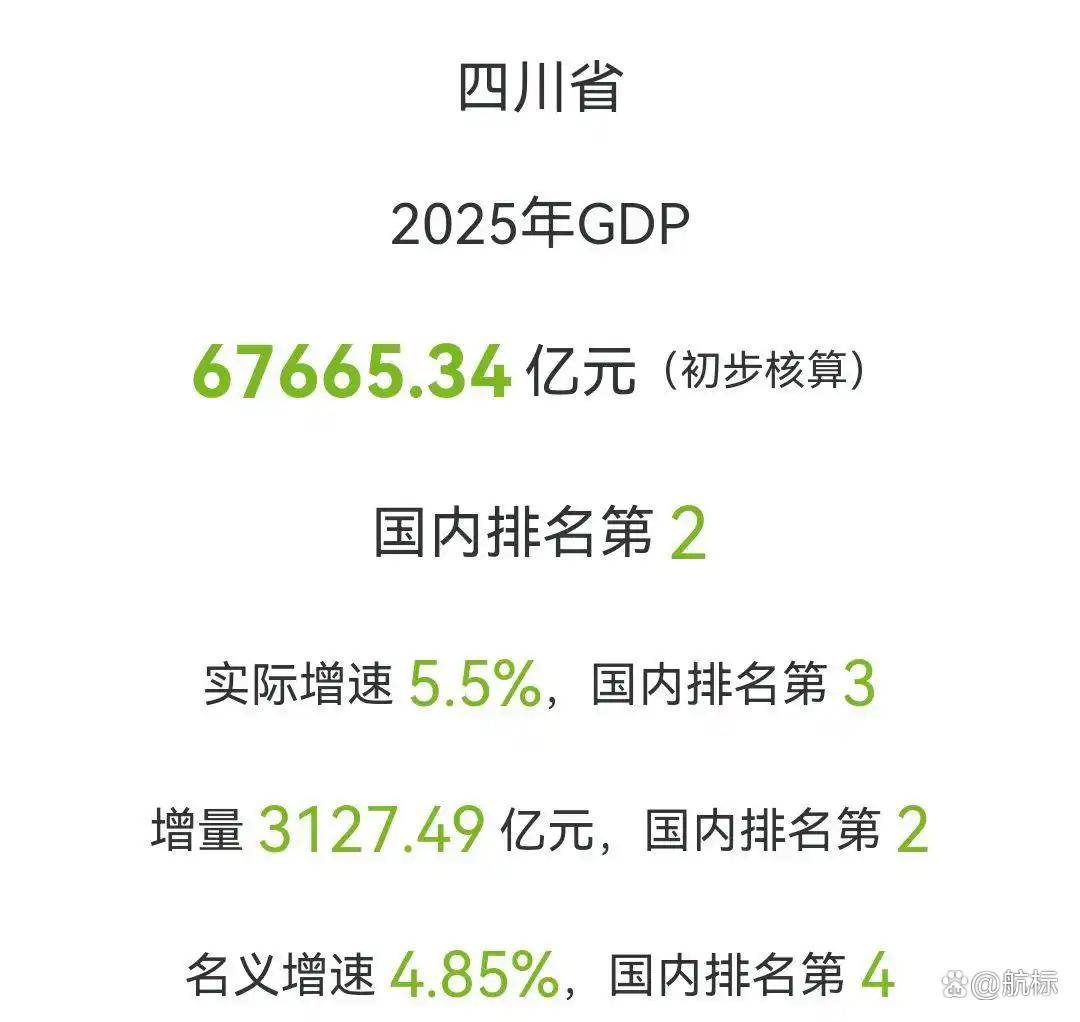
四川2025年GDP67665.34亿元!国内排名第2,增量国内第2,实际增速5.5%!
Sou Hu Cai Jing· 2026-01-23 22:44
Core Insights - Sichuan's GDP for 2025 is projected to reach 67,665.34 billion yuan, ranking second nationally, with an increment of 3,127.49 billion yuan, also second, and a real growth rate of 5.5%, ranking third [1] Group 1: Economic Positioning - Sichuan is positioned as the core of the Chengdu-Chongqing economic circle and a logistics hub for the Western Land-Sea New Corridor, leveraging its significant lithium reserves (60% of national total) and over 100 million kilowatts of hydropower capacity [3] - The completion of major projects like the Baihetan Hydropower Station is expected to increase clean electricity exports to over 120 billion kilowatt-hours, supporting both local green industries and eastern industrial upgrades [3] Group 2: Development Engines - The dual national strategies of "Western Development" and "Chengdu-Chongqing Economic Circle" are providing ongoing policy benefits, while the province's "5+1" modern industrial system is fostering significant project and innovation synergies [5] - By 2025, CATL's Yibin base is projected to achieve a battery production capacity of over 300 GWh, accounting for 38% of the national total, while Tongwei's photovoltaic base in Meishan is expected to reach a production efficiency of 26.8% [5] Group 3: Industrial Growth and Infrastructure - The digital economy in Sichuan is expected to exceed 1.6 trillion yuan by 2025, constituting 23.6% of GDP, with significant contributions from sectors like aerospace and nuclear power equipment [5] - The annual passenger throughput at Tianfu Airport is projected to surpass 60 million, and the volume of the Chengdu-Europe Express is expected to grow by 27%, enhancing logistics efficiency and boosting import-export trade by 15.7% [5] Group 4: Regional Competitiveness - Sichuan's GDP growth places it second nationally, with its nominal growth rate of 4.85% ranking fourth, indicating resilience beyond traditional coastal provinces [7] - The economic growth is characterized by a "full-region blooming" approach, with significant growth in cross-border e-commerce and natural gas chemical clusters, which helps mitigate the "provincial siphoning" effect [7] - The economic growth logic in Sichuan is shifting from "policy infusion" to "self-sustaining growth," with potential future focus areas including green hydrogen and low-altitude economy [7]
东北及蒙东地区低空产业平台在沈启动
Xin Lang Cai Jing· 2026-01-23 21:55
(来源:辽宁日报) 根据规划,低空产业平台将建立跨区域空域协同调度机制,优化低空飞行审批流程,提升空域利用效 率;构建产业链协同创新体系,联合科研机构与企业共建技术研发中心、成果转化基地,攻克核心技术 瓶颈;打造多元化应用场景生态,推动低空经济与现代农业、应急管理、文旅消费等领域深度融合。 沈阳法库财湖机场拥有辽宁省唯一报告空域(2300平方公里)、X波段航空气象雷达、低空综合飞行服 务保障中心等全国领先的基础设施,将利用低空产业平台资源,开发"低空旅游环线""应急救援联动网 络"等特色场景,助力辽宁打造低空经济核心服务枢纽。 当日,四省区相关单位共同签署三项合作协议:东北及蒙东地区通航机场网络共建合作,将推动法库财 湖机场等五家机场实现资源共享、航线互通;通用航空产业协同发展合作,涵盖制造、维修、培训等全 产业链协作;无人机产业与应用生态共建合作,聚焦技术研发与场景落地,标志着区域低空经济合作 从"共识"走向"实践",从"各自探索"迈入"协同作战"。 转自:辽宁日报 本报讯 记者陶阳报道 "聚焦共性技术攻关、典型场景创新和项目落地,推动成员单位在飞行保障、空域 协调、试验试飞、人才培养等方面开展深度合作。" ...
机翼可折叠,实现地空无缝切换
Xin Lang Cai Jing· 2026-01-23 21:55
(来源:新华日报) 它的地面通过性同样不俗:团队创新研发的"复合转向全驱底盘系统"融合大扭矩轮边电机和麦克纳姆 轮,不仅让这辆飞行汽车能实现原地调头,更将其在狭窄巷道中的调头效率提升70%以上,可实现从仓 库到野外起降点的全链路通行。 发布会现场,演示视频展示了一场"人机比拼":一名真人跑腿员小张与陆空一体的"外卖员"同场竞技。 最终,鲲鹏2号以更快的响应与通行能力,率先完成订单。 "这一切得益于其深度智能化的系统设计。"殷国栋告诉记者,鲲鹏2号的订单系统集成了大语言模型, 用户信息传输到设备后即可快速生成导航路径,整体定位精度可达2—5厘米。 "'东大·鲲鹏2号'的价值,不仅是一项科研成果的突破,更是为低空经济提供了'实用化范本'。"殷国栋表 示。这款平台可灵活搭载高清光电吊舱、多光谱测绘传感器、小型物资投放装置等设备,既能为物流行 业打通"空中中继",也能为基础设施巡检提供"无人替代方案",更能在应急救援中搭建"生命通道"。 发布会上,在鲲鹏2号送来的"空中贺信"中,一份可载人的"东大·鲲鹏3号"飞行汽车设计手稿也藏身其 中。殷国栋透露,预计在今年东南大学校庆前后,鲲鹏3号将正式亮相。 1月23日,"鲲鹏 ...
干字当头,“能达”再出发
Xin Lang Cai Jing· 2026-01-23 21:55
Group 1 - The core viewpoint of the articles highlights the rapid development and strategic initiatives of Nantong Development Zone, aiming to become a leading economic hub in the Yangtze River Delta region, with a projected GDP exceeding 100 billion yuan by 2025 [1][2][8] - The successful launch of 19 low-orbit satellites by Galaxy Aerospace marks a significant milestone for the region's satellite internet capabilities, contributing to the establishment of Nantong as a key player in the aerospace industry [1] - Nantong Development Zone is focusing on creating specialized industrial parks in cutting-edge fields such as the metaverse, digital creativity, and artificial intelligence, which are expected to enhance its competitive edge in the regional economy [2][3] Group 2 - The development zone is undergoing a "second entrepreneurship" phase, with plans to establish a new era industrial park focusing on future industries like artificial intelligence and low-altitude economy, which will drive significant growth [3][5] - The region has seen a surge in innovation, with 36 national-level specialized "little giant" enterprises and 9 listed companies, indicating a strong emphasis on research and development [4] - Nantong Development Zone aims to form two trillion-yuan industrial clusters in high-end equipment and new energy by 2030, while also accelerating the layout of future industries [5][6] Group 3 - The successful listing of Rebo Biotech on the Hong Kong Stock Exchange represents a significant achievement for the local biotechnology sector, showcasing the region's potential for attracting investment [4] - The development zone is actively pursuing a strategy to enhance its infrastructure, including the construction of the Su-Tong Second Channel, which will improve connectivity and reduce travel time to southern Jiangsu [6] - Nantong Development Zone is committed to fostering a high-quality business environment and innovation ecosystem to support its transition from a follower to a leader in various industries [4][7][8]
“eVTOL五小龙”齐聚 上海争夺低空经济先发优势
Xin Lang Cai Jing· 2026-01-23 19:56
Core Insights - Shanghai is focusing on developing electric vertical takeoff and landing aircraft (eVTOL) to capture the low-altitude economy, with the establishment of a significant transportation node in the Yangtze River Delta [2][4] - The city aims to achieve a core industry scale of approximately 80 billion yuan in the low-altitude economy by 2028, creating a complete industrial chain for new aviation vehicles [4][5] - Shanghai's strategic initiatives are part of a broader transition towards a future-oriented manufacturing model, integrating advanced manufacturing, digital technology, and artificial intelligence [3][5] Policy Initiatives - Shanghai has introduced several supportive policies for the low-altitude economy and commercial aerospace, including the "Measures" and "Action Plan" aimed at fostering investment and innovation in these sectors [2][4] - The government is providing financial support for eVTOL projects, with funding up to 10 million yuan for key manufacturing capabilities and technology breakthroughs [5][6] Industry Development - As of December 2025, Shanghai is home to at least 251 low-altitude economy startups, with 66 eVTOL and drone manufacturers, representing over 50% of the country's leading eVTOL companies [6][7] - The city has a robust aviation industry ecosystem, including expertise in aircraft design, manufacturing, and airworthiness certification, which supports the growth of eVTOL enterprises [6][7] Infrastructure and Challenges - Infrastructure development is identified as a major bottleneck for the low-altitude economy, with calls for improved vertical takeoff and landing sites and enhanced low-altitude communication and navigation systems [8][9] - The industry is in its early stages, with public concerns about the safety of eVTOL products, necessitating a focus on compliance and safety verification throughout the development process [9]

贵州科学城“2+1+N”产业布局赋能高质量发展
Xin Lang Cai Jing· 2026-01-23 18:53
Core Viewpoint - Guizhou Science City is leveraging technological innovation as a core engine to accelerate the integration of technology and industry, aiming to establish a modern industrial system characterized by "2+1+N" to drive regional innovation and development [2][4]. Group 1: Industrial System Structure - The "2+1+N" modern industrial system consists of two main industries: electronic information manufacturing and advanced equipment manufacturing, with digital economy as a featured industry [2][4]. - Emerging industries such as artificial intelligence, advanced materials, and low-altitude economy are being strategically positioned to create a layered and interconnected industrial ecosystem [2][3]. Group 2: Electronic Information Manufacturing - In the electronic information manufacturing sector, Guizhou Science City focuses on core areas such as chips, components, and machines, enhancing the integrated circuit chip industry chain [2][3]. - The city aims to develop high-reliability analog integrated circuits for aerospace, shipping, and high-end civilian applications, while also expanding automotive-grade integrated circuit applications [2][3]. Group 3: Advanced Equipment Manufacturing - The advanced equipment manufacturing sector emphasizes high-end equipment like aircraft engines, promoting collaborative development across upstream and downstream materials, core components, and maintenance support [3]. - The goal is to enhance the integrity and competitiveness of the industrial chain, establishing a significant industrial backup base with national influence [3]. Group 4: Digital Economy - Guizhou Science City is fostering a vibrant digital technology innovation ecosystem, focusing on industrial internet, key industrial software, open-source technology, and domestic software substitution [3]. - This initiative aims to facilitate the transformation and upgrading of traditional industries and seize development opportunities in digital applications across government and finance sectors [3]. Group 5: Emerging and Future Industries - The city is strategically addressing industrial transformation trends by focusing on six key directions and ten innovative flagship products, following a path of "technological innovation - forward-looking identification - achievement transformation" [3]. - In artificial intelligence, efforts are directed towards infrastructure and key algorithm advancements, while in advanced materials, the focus is on high-end film materials and high-performance composite materials [3]. - The low-altitude economy is being developed through a comprehensive approach that includes manufacturing, technology research, and airspace management [3]. Group 6: Innovation and Development Strategy - The core logic of the "2+1+N" industrial system is to drive industrial transformation through technological innovation, optimizing innovation layout, strengthening platform support, and promoting achievement transformation [4]. - This systematic approach aims to convert the "key variable" of technological innovation into the "largest increment" for high-quality development, establishing a foundation for new productive forces [4][5].