价值投资

Search documents
热门股突然回调!投机为啥让人欲罢不能?到底藏着什么秘密?
券商中国· 2025-10-25 23:34
Core Viewpoint - The article discusses the psychological aspects of speculation in the stock market, highlighting the risks and temptations that lead investors to engage in high-risk trading despite potential losses [1][2][3]. Group 1: Speculation and Investor Psychology - Many investors are drawn to the excitement of speculative trading, often leading to significant financial losses when market conditions change [2][3]. - Historical examples illustrate how even successful investors can fall victim to the allure of speculation, as seen in the story of a trader who lost a substantial fortune despite initially being successful [3][4]. - The article emphasizes that understanding one's own psychological tendencies is crucial in avoiding the pitfalls of speculation [3][5]. Group 2: Investment vs. Speculation - The distinction between investment and speculation is highlighted, with investment being a more stable approach focused on long-term gains, while speculation is characterized by high risk and potential for quick profits [6][7]. - Value investors are portrayed as those who remain disciplined and avoid the temptations of speculative trading, understanding that true wealth accumulation comes from consistent, long-term strategies [7][8]. - The article notes that while short-term gains from speculation may be enticing, they often lead to greater losses, reinforcing the idea that sustainable wealth is built through value investing [7][8].


黄金罕见大牛市,但比不过巴菲特 | 猫猫看市
Sou Hu Cai Jing· 2025-10-25 08:49
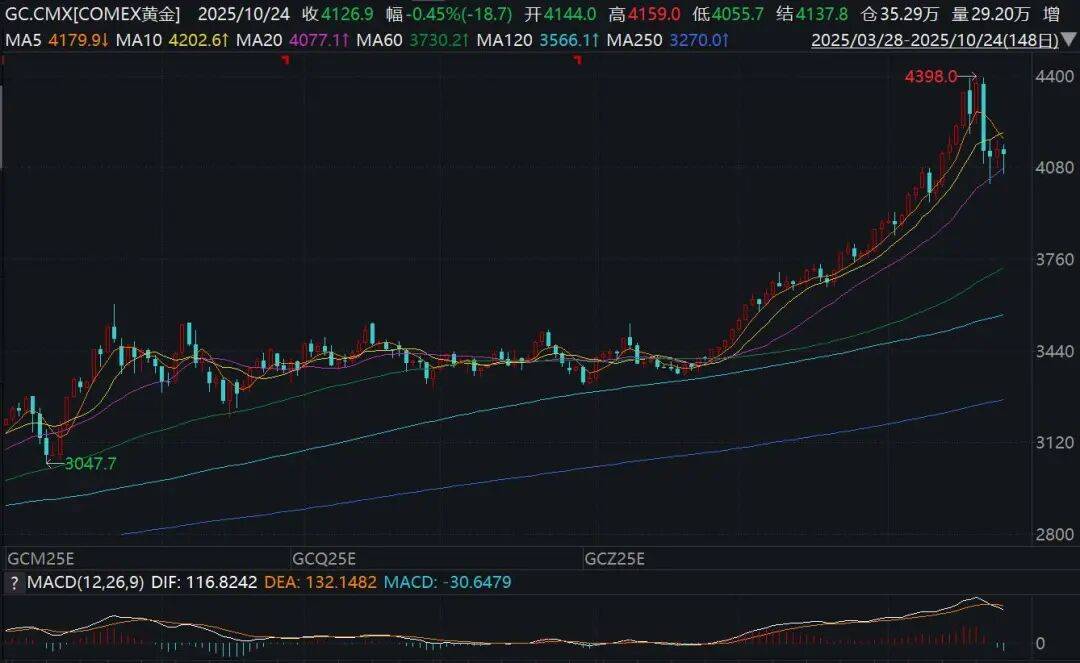
Core Viewpoint - The article discusses the comparative performance of gold as an investment asset versus value investing, highlighting that while gold has appreciated significantly over the years, it does not match the returns generated by value investments like Berkshire Hathaway [5][10][12]. Group 1: Gold's Unique Characteristics - Gold is a non-reproducible asset, unlike diamonds, which can be artificially produced [2][3]. - The inability to artificially produce gold contributes to its status as a high-value commodity [2][3]. Group 2: Historical Price Performance - The price of gold was fixed at $35 per ounce during the Bretton Woods system until its dissolution in 1971, with market prices beginning to fluctuate from 1968 [5]. - As of October 24, 2025, the market price of gold reached $4,126 per ounce, representing a 117-fold increase over 57 years, with a compound annual growth rate (CAGR) of 8.7% [5][7]. Group 3: Comparison with Value Investing - In 1965, Warren Buffett acquired Berkshire Hathaway at a book value of $19.24 per share, with his average purchase price around $14 to $15 per share [8][10]. - The returns from Berkshire Hathaway's investments significantly outperformed gold's price appreciation over the same period [10][12]. Group 4: Market Conditions and Investment Limitations - The article notes that the period from 1980 to 2008 saw stagnant gold prices, while a notable bull market for gold occurred from 2019 to 2025 [11]. - Berkshire Hathaway's large scale limits its ability to find high-return investment opportunities, contrasting with smaller investors who can capitalize on more diverse opportunities [11][12].
中国AI模型超美国模型,靠AI炒股的时代来了吗?
首席商业评论· 2025-10-25 03:52
Core Insights - The article discusses a recent AI trading competition where top AI models from China and the US were tested in real-time cryptocurrency trading, with each model starting with $10,000 in capital [3][5] - The competition aims to evaluate AI's ability to navigate the unpredictable financial markets, contrasting with traditional static benchmarks used to assess AI capabilities [3][5] Group 1: AI Trading Competition Overview - The competition involved six AI models trading major cryptocurrencies like BTC, ETH, and DOGE without human intervention, focusing on maximizing account value [3] - DeepSeek Chat v3.1 initially showed a return of nearly 40%, but later stabilized around 10% after market fluctuations [5] - GPT-5, despite its popularity, reported a significant loss of 68.9%, indicating potential limitations in its trading strategy [5][11] Group 2: Performance Analysis of AI Models - Grok-4 adopted an aggressive trading strategy, achieving over 40% profit initially but later faced sharp declines due to market changes [6] - Qwen3 Max outperformed DeepSeek Chat v3.1 by employing a highly leveraged strategy, achieving a total return of 13.41% [8] - The article questions the superior performance of DeepSeek, suggesting that its training background may not fully explain its leading position in the competition [8][10] Group 3: Limitations of General AI Models - GPT-5 and Gemini 2.5 Pro struggled due to their design as general-purpose models, which may have led to noise in trading decisions [11][18] - The article emphasizes the importance of understanding the specific capabilities and limitations of different AI models when using them for trading [11][24] Group 4: Future of AI in Trading - The article highlights the growing reliance on AI for stock selection among retail investors, with a significant portion already using AI tools for investment decisions [15] - Despite the potential of AI, the article warns that successful trading still requires a solid understanding of financial principles and market dynamics [15][24] - The emergence of AI-driven investment services from brokerages indicates a trend towards integrating AI into traditional investment practices [18][21]

Lynas Rare Earths: Q1 Earnings Preview And Trump Trade Deal
Seeking Alpha· 2025-10-25 03:45
Core Insights - The article emphasizes a value investing approach, focusing on an owner's mindset and a long-term investment horizon [1] Group 1 - The analyst does not engage in writing sell articles, as they are viewed as short theses, and does not recommend shorting stocks [1] - The analyst has no current stock, option, or derivative positions in any mentioned companies and does not plan to initiate any within the next 72 hours [2] - The article reflects the analyst's personal opinions and is not influenced by any business relationships with the companies mentioned [2]

与直觉对谈 21世纪季度书单(2025年·秋)
2 1 Shi Ji Jing Ji Bao Dao· 2025-10-24 22:53
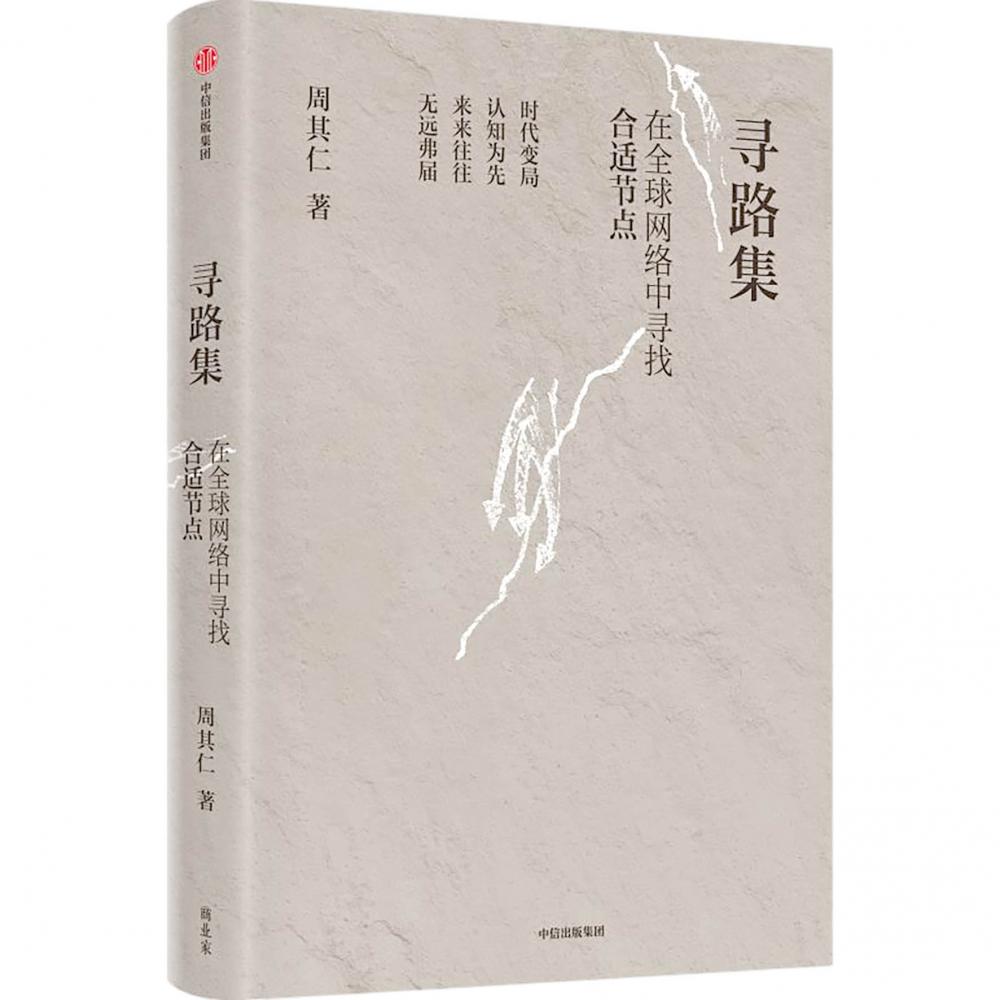
Group 1 - The article discusses the significance of reading and the process of refining intuition through knowledge, emphasizing the importance of critical thinking in understanding complex ideas [1] - It highlights a curated book list for the autumn of 2025, focusing on titles that encourage readers to challenge their intuitions and deepen their understanding in various fields such as economics, finance, and humanities [1] Group 2 - The article presents a framework by Liu Dian that analyzes the ongoing technological competition between China and the U.S., focusing on AI as a central theme [2] - It mentions the shift from traditional trading floors to algorithm-driven electronic trading systems, indicating a significant transformation in financial markets [2] - The article references notable books that explore the psychological aspects of money and the impact of high-frequency trading on market dynamics [2][9] Group 3 - The book by Zhou Qiren discusses the challenges faced by businesses and individuals in a rapidly changing global landscape, providing insights into potential growth opportunities [3] - Edward Glaeser’s work on urban economics presents a comprehensive view of urban development, addressing key concepts such as spatial equilibrium and agglomeration economies [5] Group 4 - Liu Dian's book on AI explores the competitive dynamics between the U.S. and China, focusing on the implications of data, computing power, and algorithms [7] - The book "The Art of Money" by Morgan Housel delves into the relationship between money, human behavior, and decision-making, offering insights into financial literacy [15] Group 5 - The book "Breaking the Urban-Rural Dual Structure" by Cai Fang addresses the challenges of rural development in China and proposes policy recommendations for urban-rural integration [17] - The work "The Joy of Possession in 11th Century China" examines historical perspectives on happiness and ownership, reflecting on cultural and literary themes [19]
RTO vs. TRI: Which Stock Should Value Investors Buy Now?
ZACKS· 2025-10-24 16:41
Core Insights - The article compares Rentokil Initial PLC (RTO) and Thomson Reuters (TRI) to determine which stock is more attractive to value investors [1] - Both companies currently hold a Zacks Rank of 2 (Buy), indicating positive earnings estimate revisions and improving earnings outlooks [3] Valuation Metrics - RTO has a forward P/E ratio of 23.19, while TRI has a significantly higher forward P/E of 42.46 [5] - RTO's PEG ratio is 5.16, which is comparable to TRI's PEG ratio of 5.31, indicating similar expected earnings growth rates [5] - RTO's P/B ratio stands at 2.77, whereas TRI's P/B ratio is much higher at 5.84, suggesting RTO is more undervalued relative to its book value [6] Value Grades - Based on the valuation metrics, RTO holds a Value grade of B, while TRI has a Value grade of D, indicating RTO is the superior value option at this time [6]


价值投资的黄金时代已经结束?
3 6 Ke· 2025-10-24 08:16
Group 1: Core Views on Value Investing - The golden age of value investing is considered over by prominent practitioners like Guy Spier, who argues that the era dominated by legendary hedge fund managers has passed [1][13][22] - The rise of technology, particularly AI tools like ChatGPT, has made information more accessible and transparent, diminishing the information advantage that value investors once had [1][16][18] - The market is becoming more efficient, making it harder for investors to achieve excess returns based on insights that were once unique [1][18] Group 2: Definition and Principles of Value Investing - Value investing is a strategy focused on buying undervalued stocks or assets compared to their intrinsic value, originating from the teachings of Benjamin Graham and David Dodd [2] - The core logic of value investing is to identify hidden discounts in stocks, similar to waiting for a sale, and to hold these investments long-term for potential returns [2][10] - Key financial metrics used to assess intrinsic value include Price-to-Book (P/B) and Price-to-Earnings (P/E) ratios, as well as free cash flow and other fundamental factors [4][5] Group 3: Challenges and Market Dynamics - The market is not always efficient, and short-term irrational behavior can lead to mispricing, creating opportunities for value investors [6][9] - Psychological biases and external factors can amplify market volatility, making it essential for investors to focus on fundamentally sound companies [7][9] - The increasing macroeconomic uncertainty, including geopolitical conflicts and changes in globalization, complicates the ability to predict long-term cash flows for companies [18][19] Group 4: Evolving Nature of Value Investing - The strategy of value investing has become a standard approach among institutional investors, leading to increased competition in identifying undervalued stocks [21] - Distinguishing between genuinely undervalued companies and "value traps" has become more challenging, requiring deeper insights into industry dynamics and company competitiveness [21][22] - Despite the challenges, the fundamental principles of value investing—independent thinking, contrarian positioning, and long-term focus—remain relevant and vital for navigating market cycles [22]
中长期资金加速入市,资本市场生态与投资理念正经历深刻重构
Huan Qiu Wang· 2025-10-24 08:08
Group 1 - The core viewpoint of the articles highlights the unprecedented influx of medium- and long-term funds into the A-share market, driven by significant investment returns from listed insurance companies and the continuous growth of ETF scales [1][2] - The positive trend in the market is supported by policy measures that have enhanced the willingness of medium- and long-term funds to enter the market, including the establishment of long-cycle assessment mechanisms and innovative monetary tools [2][3] - The improvement in market liquidity and pricing capabilities for quality assets is crucial for the development of the technology industry and new productive forces, as emphasized by experts [2] Group 2 - The capital market is focusing on creating a healthier investment environment by improving the quality of listed companies, encouraging dividends and buybacks, and enhancing the attractiveness of equity investments [3] - The market is diversifying investment products suitable for medium- and long-term investors, with an emphasis on developing various ETF products and optimizing the trading environment [3] - Strict enforcement against financial fraud and market manipulation is essential to maintain market integrity and build a trustworthy investment foundation [3] Group 3 - Looking ahead, the promotion of medium- and long-term funds entering the market and enhancing their equity allocation capabilities will remain a key focus for the capital market [4] - There is a call for continued deepening of investment and financing reforms, optimizing fiscal, investment, and regulatory systems to create favorable conditions for long-term capital [4] - Suggestions include developing more refined hedging tools and providing liquidity support during market volatility to facilitate the entry of long-term funds [4]
赚钱和发展是两回事!林园霸气回应:没压力,未来坚持自己!
私募排排网· 2025-10-24 03:51
Core Viewpoint - The essence of investment lies in identifying good companies and sectors, maintaining a long-term belief in their value despite market fluctuations [12]. Group 1: Investment Philosophy - The core of risk control is ensuring that investments are made in fundamentally sound companies, which inherently mitigates risk [6]. - Long-term investment strategies are emphasized, with a belief that many investors may struggle to outperform the market in the short term [7]. - The focus should be on companies with strong fundamentals and low debt levels, which are capable of creating value and profits [8]. Group 2: Market Trends and Opportunities - The Chinese innovative pharmaceutical sector is expected to lead globally, driven by the country's large population and increasing wealth [9]. - The aging population presents a significant opportunity in the "silver economy," with a projected tenfold increase in the population aged 78 and above over the next 20 years, leading to expanded consumption needs [11]. - Despite the rise of new technologies like AI, the historical profit margins from technological revolutions are often limited, suggesting a cautious approach to investment in these areas [10]. Group 3: Investment Strategy - The investment strategy prioritizes companies with monopolistic characteristics over competitive ones, as competition introduces more risk [8]. - The evaluation of a company's intrinsic value is crucial, utilizing metrics like price-to-earnings (PE) ratios and payback periods for initial screening [10]. - The focus on "pleasure economy" and products that enhance quality of life is seen as a reliable investment direction [11].

中长期资金入市积极 资本市场生态加速重构
证券时报· 2025-10-23 23:37
大力推动各类中长期资金入市,仍将是资本市场的主旋律。 权益投资收益大增带动上市险企三季报"预喜"、国内ETF总规模持续创新高、外资大行持续超配A股企业……随着A股三季报的密集交卷,以保险资金、公募基 金等为代表的中长期资金的入市轨迹日渐清晰,为更好地迎接中长期"活水",资本市场深耕产品多样化,不断完善市场生态,以长期投资、价值投资为主导的 资本市场投资氛围正逐步形成。 清华大学国家金融研究院院长、五道口金融学院副院长田轩表示,引导中长期资金入市是资本市场投资端改革的重大突破,中长期资金更注重企业长期价 值,其入市推动市场估值体系向"价值导向"回归,为科技产业与新质生产力的快速发展提供了坚实的资本支持。 中长期资金入市积极 田轩指出,中长期资金入市步伐加快,不仅为市场带来了稳定的增量资金,改善了市场流动性结构,更重要的是提升了市场对优质资产的定价能力,中长期 资金更注重企业长期价值,其入市推动市场估值体系向"价值导向"回归,为科技产业与新质生产力的快速发展提供了坚实的资本支持。 让中长期资金愿意来留得住 中长期资金入市离不开生态圈建设,要不断健全投资和融资相协调的资本市场功能,营造中长期资金"愿意来、留得住"的 ...