
创新药

Search documents
2025医保药品目录公布 新增药品114种 50种为1类创新药
Xin Lang Cai Jing· 2025-12-07 01:05
Core Insights - The 2025 Innovative Drug High-Quality Development Conference was held in Guangzhou, where the 2025 National Basic Medical Insurance, Maternity Insurance, and Work Injury Insurance Drug Catalog and the first Commercial Health Insurance Innovative Drug Catalog were announced [1][2] Summary by Categories - **National Drug Catalog Update** - The 2025 National Basic Medical Insurance, Maternity Insurance, and Work Injury Insurance Drug Catalog is the 8th adjustment since the establishment of the National Medical Insurance Administration [1][2] - A total of 114 new drugs were added to the catalog, including 50 Class 1 innovative drugs [1][2] - **Commercial Health Insurance Drug Catalog** - The first edition of the Commercial Health Insurance Innovative Drug Catalog includes 19 drugs [1][2] - The catalog features notable treatments such as CAR-T for cancer and drugs for Alzheimer's disease, which have garnered significant public attention [1][2]
如果春季躁动提前,哪些方向值得关注?
Guohai Securities· 2025-12-06 15:17
Core Insights - The report discusses the potential for an early spring rally in the market, traditionally expected in February, and analyzes historical patterns to assess the likelihood of this occurring in the current market environment [5][35]. - Historical data indicates that in most bull market years, the spring rally often starts earlier than the conventional timeframe, with notable examples from 2005-2006, 2013-2014, and 2019-2020 [5][14]. - Current market conditions suggest that the upcoming spring rally may be catalyzed by factors such as the anticipated interest rate cuts by the Federal Reserve and the strong performance of certain sectors [5][39]. Historical Context - The highest probability for a spring rally is typically in February, but in previous bull markets, this rally has often started earlier due to favorable liquidity conditions and market sentiment [11][14]. - In 2013, the spring rally did not occur early due to liquidity concerns, contrasting with other years where early rallies were supported by strong market fundamentals and liquidity [33][35]. - The report highlights that in 2005, 2006, 2014, and 2019, the spring rallies were driven by various factors including policy changes and improved economic indicators [15][26][28]. Current Market Analysis - The report identifies that the current market may see an early spring rally due to the "calendar effect," with sectors like white goods and banking already showing signs of strength [35][39]. - The anticipated interest rate cuts by the Federal Reserve are expected to enhance liquidity and support market sentiment, potentially leading to an earlier rally [39][51]. - The report suggests that sectors such as AI applications, robotics, innovative pharmaceuticals, and energy storage are promising areas for investment as the spring rally approaches [52]. Sector Performance Expectations - Historically, growth sectors tend to perform well during spring rallies, but financial sectors may lead the initial rally, especially in strong economic expectation phases [42][43]. - The report emphasizes that the technology, media, and telecommunications (TMT) sectors have historically shown high performance during spring rallies, with a success rate exceeding 70% in February [45][46]. - Specific industries such as environmental protection, electronics, and IT services are highlighted as having strong probabilities of outperforming during the upcoming spring rally [47].

十五五规划十大投资机会梳理:精益求精-20251206
Shenwan Hongyuan Securities· 2025-12-06 14:26
Group 1: Strategic Overview - China is transitioning from a global rule adapter to a co-builder and responsible stakeholder in international governance[3] - The 14th Five-Year Plan (14th FYP) focused on economic security, while the 15th Five-Year Plan (15th FYP) emphasizes "development and security" across all sectors[3] - The 15th FYP identifies emerging industries as "pillar industries," focusing on new energy and new materials, with a core strategy of cluster development and large-scale application[3] Group 2: Investment Opportunities - The 15th FYP highlights ten key investment areas: 1) Artificial Intelligence, 2) Robotics, 3) Aerospace, 4) Drones/Low-altitude Economy, 5) Strategic Resource Metals, 6) Shipping, 7) Controlled Nuclear Fusion, 8) Energy Storage, 9) Brain-Machine Interfaces, 10) Innovative Pharmaceuticals[3] - The Chinese robotics industry is transitioning from product definition to commercialization, with AI expected to empower various sectors by 2026[3] - The aerospace industry is a key focus, with the establishment of a new space administration and a three-year action plan for commercial aerospace development[3] Group 3: Economic and Security Considerations - The 15th FYP emphasizes the strategic importance of national defense and security, with a focus on political security as a priority[3] - The plan includes new initiatives for the development and reserve of strategic mineral resources, enhancing the national security framework[3] - Risks include potential delays in policy implementation and slower-than-expected industry capacity adjustments, influenced by international geopolitical changes[3]
投资大家谈 | 姜诚:称重是对长期分红的折现值“求积分”,而非“求导”
Sou Hu Cai Jing· 2025-12-06 12:11
点拾导读:我们一直说,股票长期是"称重器",但到底如何给股票"称重"呢?在今天的这篇分享中,中泰资管姜诚提出了一个原创定义:称重 是对长期分红折现值"求积分",而非"求导"。那么背后的逻辑又是什么呢?下面分享这篇来自姜诚的原创思考,希望给大家带来帮助 时间飞快,年关将至,又到了总结和反思的时候。 先当事后诸葛亮,复一下盘。今年市场整体表现不错,多数股票上涨。但表现也有分化,基本面是主线。顺周期行业整体需求难言强劲,但一 些行业受益于供给端的良性变化,利润有见底回升迹象;个别产能过剩且没有出清迹象的行业则收入和利润两端承压。房地产的量价都继续下 行,报表端还在消化库存压力,超过一半的公司前三季度录得亏损;白酒受累于结构性的需求下行,多数企业单季度释放出少见的利润负增 长,跟房地产成了难兄难弟;银行的弱周期属性越来越明显,在息差阶段性见底的利好加持下,今年获得了正收益。也有亮眼的明星,储能、 AI等领域的需求都有强劲增长,虽然在技术路线上有分歧,但阶段性的高增长确定性明摆,分歧较小的方向涨幅最大。 股市的分化,必然导致基金经理业绩的冰火两重天。今年我们的组合涨得慢了点,是懈怠还是投资框架所致?也需要复一下盘。 今 ...


投资大家谈 | 姜诚:称重是对长期分红的折现值“求积分”,而非“求导”
点拾投资· 2025-12-06 11:04
Core Viewpoint - The article presents an original definition of "weighing" stocks as the integration of the present value of long-term dividends rather than differentiation, emphasizing the importance of understanding the long-term value of stocks [3][5]. Market Overview - The overall market performance this year has been positive, with most stocks rising, but there is significant differentiation based on fundamentals [3]. - Demand in cyclical industries remains weak, while some sectors benefit from positive changes on the supply side, showing signs of profit recovery [3]. - The real estate sector continues to decline in both volume and price, with over half of the companies reporting losses in the first three quarters [3]. - The liquor industry is experiencing structural demand decline, with many companies reporting rare negative profit growth [3]. - Banks have shown positive returns this year, supported by a bottoming interest margin [4]. Investment Strategy - The company has focused on learning about artificial intelligence, semiconductors, the internet, and innovative pharmaceuticals, which occupy a significant portion of research time [4]. - The investment framework has not changed much, leading to a low turnover rate in the portfolio, indicating a need for deeper understanding of popular sectors before making investment decisions [4][5]. - The article emphasizes the importance of understanding the valuation of stocks and the necessity of having a "weight sense" when investing [5]. Long-term Investment Philosophy - The concept of "weighing" stocks is based on the cumulative present value of long-term dividends, which is difficult to quantify but essential for investment decisions [5][6]. - The article contrasts two investment philosophies: "differentiation," which relies on elasticity, and "integration," which requires the power of time [5]. - The unpredictability of future dividend curves poses challenges for long-term investment, highlighting the need for a cautious approach [6]. Performance Reflection - The company has outperformed the CSI 300 Total Return Index for four years, underperformed for two years, and remained flat for one year over the past seven years [8]. - The goal is not to outperform the index annually but to achieve better returns over a full market cycle with lower volatility [8].

华创医药投资观点&研究专题周周谈·第153期:2025Q3海外心血管器械龙头收入拆分和管线进展-20251206
Huachuang Securities· 2025-12-06 07:24
Investment Rating - The report recommends a "Buy" rating for the innovative drug sector, highlighting the potential for significant growth in domestic and international markets [52]. Core Insights - The innovative drug industry is transitioning from quantity to quality, with a focus on differentiated products and international expansion. Companies like BeiGene, Innovent, and others are highlighted as key players [10]. - The medical device sector is experiencing a recovery in bidding volumes, particularly in imaging equipment, and is expected to benefit from government subsidies for home medical devices [10]. - The report emphasizes the growth potential in the orthopedic market due to aging demographics and the increasing penetration of domestic products [53]. - The blood products sector is expected to grow significantly due to relaxed regulations and increasing demand [12]. Market Overview - The report notes that the medical device index fell by 0.73%, underperforming the CSI 300 index by 2.00 percentage points, ranking 22nd among 30 sectors [6]. - The top-performing stocks in the medical sector included Haiwang Biological and Ruikang Pharmaceutical, while the worst performers included ST Jingfeng and Kangzhi Pharmaceutical [6]. Company-Specific Developments - Abbott's cardiovascular business reported revenues of $3.137 billion in Q3 2025, with significant growth in arrhythmia management and electrophysiology segments [17]. - Medtronic's cardiovascular revenue reached $3.436 billion in Q3 2025, driven by strong performance in cardiac rhythm and heart failure segments [24]. - Boston Scientific's cardiovascular revenue was $3.343 billion in Q3 2025, with notable growth in the Watchman and electrophysiology segments [31]. - Johnson & Johnson's cardiovascular revenue totaled $2.213 billion in Q3 2025, benefiting from acquisitions and strong growth in electrophysiology products [42]. - Edwards Lifesciences reported cardiovascular revenue of $1.55 billion in Q3 2025, with robust growth in transcatheter aortic valve replacement (TAVR) and mitral/tricuspid valve therapies [48]. Product Pipeline Progress - Abbott's AVEIR™ leadless pacemaker system has shown promising clinical results, while its Volt™ PFA system for atrial fibrillation has received CE certification [20]. - Medtronic's Evolut™ TAVR system has been approved for redo procedures, enhancing its market position [27]. - Boston Scientific's FARAPULSE™ PFA system has received expanded indications for treating persistent atrial fibrillation [36]. - Johnson & Johnson's VARIPULSE platform has been approved for atrial fibrillation treatment, further strengthening its product offerings [45].
流感创新药有望近日获批,健康元:从仿制到创新的关键一跃!
市值风云· 2025-12-05 10:04
作者 | 木盒 编辑 | 小白 据央视新闻,中国疾病预防控制中心日前发布监测情况显示,全国门急诊流感样病例中流感阳性率已 经接近45%,全国流感活动整体进入中流行水平,部分省份已达高流行水平。 对于大众最关心的流感高峰期,根据一些专家的判断: 当前南北方流感活动均处于快速上升阶段,按照这一上升速度,预计部分省份将在12月中上旬迎来流 感高峰期,绝大部分省份的流感高峰期则会出现在12月下旬;到次年1月初,全国流感活动可能将进 入下降阶段。 流感最直接的关联就是华兰疫苗(301207.SZ)、金迪克(688206.SH)这些疫苗厂商,此外还有健康 元(600380.SH),核心产品是即将获批的1类创新药玛帕西沙韦胶囊。 创新药陆续步入收获期。 作为全球领先的"源头阻断型"流感抗病毒药物,玛帕西沙韦胶囊的优点是"单次口服、24小时抑制病 毒复制",显著优于需每日服用的奥司他韦。 相对于玛巴洛沙韦流感用药,帕西沙韦在乙型流感和青少年患者中症状缓解速度显著优于前者,且Ⅲ 期临床中未检测到乙型流感耐药突变,耐药风险更低,有望成为高风险人群(如青少年、乙流高发 期)的首选。 跟据 公司披露的进度,争取在年底流感高发季前实现 ...


【IPO前哨】凌科药业冲刺港股,财务成本包袱将卸下?
Sou Hu Cai Jing· 2025-12-05 08:54
Core Viewpoint - Lingke Pharmaceutical is preparing for an IPO on the Hong Kong Stock Exchange, aiming to capitalize on the current trend of innovative drug companies performing well in the market [2][3]. Company Overview - Founded in 2017 in Hangzhou, Lingke Pharmaceutical specializes in innovative small molecule inhibitors for autoimmune and inflammatory diseases, focusing on the JAK-STAT signaling pathway [3]. - The company has two core products: LNK01001, a second-generation JAK1 inhibitor, and LNK01004, a third-generation pan-JAK inhibitor, both targeting autoimmune and inflammatory diseases [3][4]. Product Pipeline - LNK01001 is currently in Phase III clinical trials for atopic dermatitis, rheumatoid arthritis, and ankylosing spondylitis, with new drug applications expected to be submitted starting in 2026 [3]. - LNK01004 has completed Phase II trials for atopic dermatitis and plans to initiate Phase III trials in mid-2027 [3]. - LNK01006 is a TYK2 inhibitor targeting central nervous system diseases, with FDA approval for new drug clinical trials [4][6]. Financial Performance - Lingke Pharmaceutical has not yet generated product sales revenue, recording other income of RMB 20.57 million, RMB 16.98 million, and RMB 54.78 million for the first three quarters of 2023, 2024, and 2025, respectively [8][10]. - The company reported significant losses of RMB 260 million, RMB 312 million, and RMB 145 million for the same periods [10]. - R&D expenses were RMB 186 million, RMB 223 million, and RMB 121 million for the first three quarters of 2023, 2024, and 2025, respectively [8][10]. Funding and Cash Flow - Lingke Pharmaceutical has undergone multiple rounds of financing, attracting investments from various capital firms [7]. - The company has a high dependency on external financing, with net cash outflows from operating activities of RMB 228 million, RMB 241 million, and RMB 86 million for the first three quarters of 2023, 2024, and 2025 [12][13]. - As of September 30, 2025, the company held cash and cash equivalents of RMB 147 million, indicating a need for substantial funding to support R&D and commercialization efforts [14]. Use of IPO Proceeds - If the IPO is successful, Lingke Pharmaceutical plans to allocate funds towards the development of core products LNK01001, LNK01004, and LNK01006, enhancing R&D capabilities, upgrading office facilities, and general corporate purposes [14].

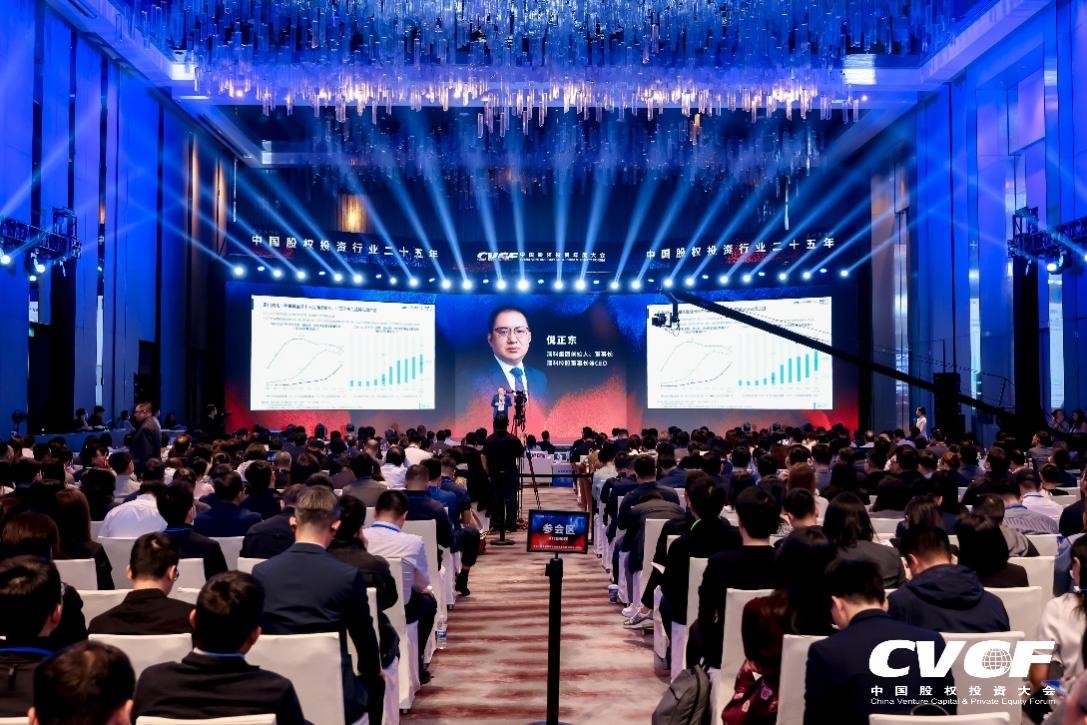
第二十五届中国股权投资大会圆满落幕, 领航行业向新而行
3 6 Ke· 2025-12-05 07:57
Core Insights - The 25th China Private Equity Annual Conference was successfully held in Shenzhen from December 2 to 5, 2025, focusing on the theme "Towards the Future, Empowering New Life" and integrating AI technology elements throughout the event [1] - The private equity market is showing positive trends, with a more diversified fundraising structure and an accelerated focus on hard technology and strategic emerging industries [1][3] - The conference provided a platform for industry leaders and innovators to discuss the future of the private equity sector and its role in driving national innovation strategies [1][3] Group 1: Industry Trends - Over 70% of funds are now directed towards hard technology enterprises, with state-owned funds managing 65% of the market, indicating a shift in investment dynamics [3] - The Chinese technology industry is transitioning from following to leading in various sectors, achieving significant milestones [3] Group 2: Investment Strategies - The conference featured a dialogue among top investment institutions, highlighting differentiated strategies in response to the evolving landscape of private equity [4] - Discussions included the balance between risk and certainty, and the importance of patience in investment decisions [4] Group 3: Key Discussions - The "Investment Trend Forum" addressed critical industry issues, including market cycles, investment timing, and the challenges of exits [5][6] - Insights were shared on the importance of maintaining a healthy capital market to facilitate successful exits [8] Group 4: Focus on Emerging Sectors - Specialized summits on AI, innovative pharmaceuticals, and life sciences provided in-depth discussions on technological advancements and market opportunities [9] - AI investments are shifting from theoretical models to practical applications, with a focus on embodied intelligence and its industrial implications [9] Group 5: Networking and Collaboration - The conference facilitated various networking opportunities, including targeted events and interactive showcases of innovative products, enhancing industry connections [11] - The event concluded with a celebration of achievements in the private equity sector, emphasizing the collaborative efforts in driving economic growth and innovation [12]
君实生物涨0.70%,成交额1.55亿元,今日主力净流入-739.09万
Xin Lang Cai Jing· 2025-12-05 07:29
Core Viewpoint - Junshi Biosciences aims to establish itself as a global innovative pharmaceutical company with a complete industry chain capability from drug discovery to commercialization, focusing on quality and innovation [2] Company Overview - Junshi Biosciences, founded on December 27, 2012, and listed on July 15, 2020, specializes in the research and commercialization of monoclonal antibodies and therapeutic proteins [7] - The company's main revenue sources include 90.67% from drug sales, 8.74% from technology licensing, and 0.59% from technical services [7] Product Development - The company has developed a promising drug portfolio, including its core product, Toripalimab, which is the first domestically approved PD-1 monoclonal antibody in China, with 11 approved indications and one supplemental NDA under review [2] - Toripalimab is also the first innovative biologic drug developed and produced in China to receive FDA approval, with approvals in multiple regions including the EU, the US, and Australia [2] - Junshi's Tifcemalimab is the first anti-tumor anti-BTLA monoclonal antibody to enter clinical development, with ongoing Phase III trials and several combination studies with Toripalimab [2] Collaborations and Vaccine Development - On October 27, 2023, Junshi announced collaborations with several institutions, including Peking University and the Chinese Academy of Sciences, to develop a monkeypox recombinant protein vaccine [3] - The company's subsidiary, JunTuo Biotech, is also involved in the development of vaccines for monkeypox and Zika, currently in the preclinical stage [3] Financial Performance - For the period from January to September 2025, Junshi reported revenues of 1.806 billion yuan, a year-on-year increase of 42.06%, while the net profit attributable to shareholders was -596 million yuan, a 35.72% increase year-on-year [8] - As of September 30, 2025, the number of shareholders increased by 15.17% to 35,900, with an average of 21,361 shares per shareholder, a decrease of 12.96% [8] Market Position - Junshi Biosciences operates within the pharmaceutical and biotechnology sector, focusing on innovative drugs, monkeypox concepts, and precision medicine [8] - The stock has seen a recent trading volume of 155 million yuan with a market capitalization of 36.961 billion yuan [1]
