
绿色低碳

Search documents
宝钢包装:打造细分领域世界一流企业
Zheng Quan Ri Bao Wang· 2025-10-27 07:39
Core Insights - The metal packaging industry is undergoing significant transformation driven by manufacturing upgrades and green low-carbon development, with Shanghai Baosteel Packaging Co., Ltd. emerging as a key player in this transition [1] Financial Performance - In 2024, the company achieved operating revenue of 8.318 billion yuan, reflecting a year-on-year growth of 7.19% [2] - For the first half of 2025, the non-recurring net profit attributable to shareholders increased by 13.68% year-on-year, indicating strong operational resilience and growth potential [2] Product and Operational Innovation - The company has introduced innovative products such as the 710ML large can and temperature-sensitive cans, expanding market options and creating new application scenarios [2] - The implementation of a "one headquarters, multiple bases" model and the "three smart systems" has led to comprehensive digital coverage of domestic bases, with plans for overseas promotion [2] Global Strategy and Green Transition - The company reported a 25.78% year-on-year increase in overseas business revenue in 2024, highlighting its successful global business optimization [2] - Baosteel Packaging has achieved full coverage of domestic green factories and is actively developing a "dual carbon dual control" cloud platform, along with the industry's first product carbon footprint report [3] Investor Relations and Returns - The company has implemented a shareholder return plan and has made significant strides in capital operations, including its first share buyback and mid-term dividend [4] - Over the past decade, Baosteel Packaging has distributed dividends 11 times, with a cumulative dividend amount of 672 million yuan, maintaining a cash dividend payout ratio of over 50% for the past eight years [4] Future Outlook - The company aims to focus on becoming a world-class enterprise in the metal packaging sector, emphasizing innovation, global resource optimization, and green low-carbon transformation [4]

2025年国际能源变革论坛举行
中国能源报· 2025-10-27 07:13
Core Viewpoint - The 2025 International Energy Transformation Forum emphasizes the integration of green low-carbon initiatives and artificial intelligence, showcasing China's commitment to energy transformation and sustainable economic growth [1][3]. Group 1: Energy Transformation and Global Trends - Developing countries are becoming the main force in global energy transformation, showing significant progress and potential in the energy sector [6]. - The global energy system is undergoing profound changes, with countries exploring green low-carbon development paths that align with their national conditions [3][5]. - China has established the largest and fastest-growing renewable energy system globally, contributing to energy technology innovation and leading the energy transformation [5][6]. Group 2: Achievements and Innovations - As of July 2025, China's renewable energy installed capacity reached 2.17 billion kilowatts, with wind power at 570 million kilowatts and solar power exceeding 1.1 billion kilowatts [10]. - Non-fossil energy installed capacity has historically surpassed 60%, marking a significant shift in the energy supply landscape [11]. - China is the only country with a complete nuclear power industrial system, operating 59 nuclear power units with a total capacity of 62.48 million kilowatts [12]. Group 3: Digitalization and AI in Energy - The integration of AI in the energy sector is reshaping supply-demand dynamics, technology pathways, and security frameworks [14]. - The development of AI-driven models, such as the "Big Watt·Electric Control" model, enhances grid safety and optimizes operations in the context of renewable energy variability [16]. - Digital transformation in nuclear power construction is being driven by AI, big data, and IoT technologies, improving operational efficiency and data management [17][18]. Group 4: International Cooperation and Future Vision - The forum released the "Global Energy Low Carbon Transition Development 2030 Suzhou Vision," calling for enhanced international cooperation in energy security, innovation, and capital mobilization [6]. - The commitment to clean energy technology and international collaboration is crucial for advancing energy transformation in developing countries [6].

严控产能!建材行业稳增长进行时
Zheng Quan Shi Bao· 2025-10-27 04:54
Core Viewpoint - The construction materials industry is facing significant challenges due to declining prices and increased losses, prompting the government to implement a "Stabilization Growth Work Plan" for 2025-2026 aimed at improving profitability and promoting green and digital development [1][3]. Industry Overview - The construction materials sector is crucial for national economic growth, but it has been impacted by falling prices in cement and glass, leading to an expanded loss margin and structural market issues [1]. - The Ministry of Industry and Information Technology and five other departments have issued a plan to enhance profitability and promote green materials, targeting over 300 billion yuan in revenue from green construction materials by 2026 [1]. Market Conditions - In 2024, the domestic cement industry's profit is projected to be 26.6 billion yuan, a nearly 90% decline from the historical peak of 186.7 billion yuan in 2019 [3]. - Cement production from January to September 2025 was 1.259 billion tons, a year-on-year decrease of 5.2% [3]. - The price of P.O 42.5 bulk cement hit a yearly low of 267.11 yuan per ton in mid-August 2025, reflecting a downward trend in cement prices [3]. Capacity Control Measures - The industry is actively responding to the "anti-involution" policy by increasing the number of shutdown days for production lines and eliminating inefficient capacity [4]. - As of September 2025, the total capacity of suspended cement clinker was approximately 118,000 tons per day, an increase from 99,600 tons per day in the same period of 2024 [4]. - The cement industry has seen a significant increase in concentration, with the top ten companies' clinker capacity concentration rising from 56.5% to over 65% [5]. Diversification and Innovation - Companies are diversifying by expanding into related industries such as aggregates and concrete, and through investments in new sectors to mitigate risks and foster growth [8]. - Conch Cement is actively investing in the photovoltaic industry and has established a distributed photovoltaic power station with a capacity of approximately 38 megawatts [11]. Green and Low-Carbon Development - The industry is increasingly adopting energy-saving and carbon-reducing technologies, with 65% of the glass production capacity now using natural gas as an energy source [11]. - The cement sector is implementing carbon capture and utilization technologies, optimizing energy consumption, and enhancing digital management to reduce carbon emissions [11]. - The government is supporting green production through subsidies, tax reductions, and green finance, encouraging companies to innovate and reduce resource consumption [12].
严控产能!建材行业稳增长进行时
证券时报· 2025-10-27 04:14
Core Viewpoint - The construction materials industry in China is facing significant challenges due to declining prices and demand, leading to increased losses and structural issues. The government has introduced a growth stabilization plan for 2025-2026 to enhance profitability and promote green and digital development in the sector [5][6]. Group 1: Industry Challenges - The construction materials industry is a crucial foundation for the national economy, but recent years have seen a decline in prices for key products like cement and glass, resulting in an expanded loss margin and highlighted structural problems [3]. - In 2024, the domestic cement industry's profit is projected to be 26.6 billion yuan, a nearly 90% drop from the historical high of 186.7 billion yuan in 2019. The demand has reverted to levels seen before 2010, necessitating a restructuring of competitive order [7]. - From January to September 2025, domestic cement production was 1.259 billion tons, a year-on-year decrease of 5.2%, with prices continuing to decline [7]. Group 2: Government Initiatives - The Ministry of Industry and Information Technology and five other departments issued the "Construction Materials Industry Stabilization Growth Work Plan (2025-2026)," aiming for a significant improvement in profitability and a target of over 300 billion yuan in revenue from green building materials by 2026 [5]. - The plan emphasizes strict capacity control, nurturing emerging markets, and accelerating green production to transition towards high-quality, low-carbon development [5][8]. Group 3: Capacity Control Measures - To address the sluggish market, the industry is implementing strict capacity control measures. For instance, Conch Cement has increased the number of days its production lines are idled and has eliminated 16 production lines, accounting for over 22% of the total capacity eliminated in the industry [8][9]. - By the end of 2025, it is expected that 10% of the total cement capacity will be eliminated, with the concentration of capacity among the top ten companies rising from 56.5% to over 65% [9]. Group 4: Innovation and Market Development - Companies are diversifying their operations to mitigate risks and foster new growth points. For example, Conch New Materials is acquiring a 51% stake in a plastic products company to enhance synergy and expand into new markets [11]. - The cement industry is increasingly exploring horizontal expansions into aggregates and vertical extensions into concrete, leveraging synergies for competitive advantage [12]. Group 5: Green and Low-Carbon Initiatives - The industry is advancing towards green and low-carbon production through technological innovations, such as the transition to natural gas in glass production, which has reached 65% of total capacity [15]. - The cement sector is adopting carbon capture technologies and optimizing energy consumption, with the proportion of green and smart factories increasing to over 68% [15][16].

“十五五”,油气行业向更深处钻进,向更难处攻坚
中国能源报· 2025-10-27 04:00
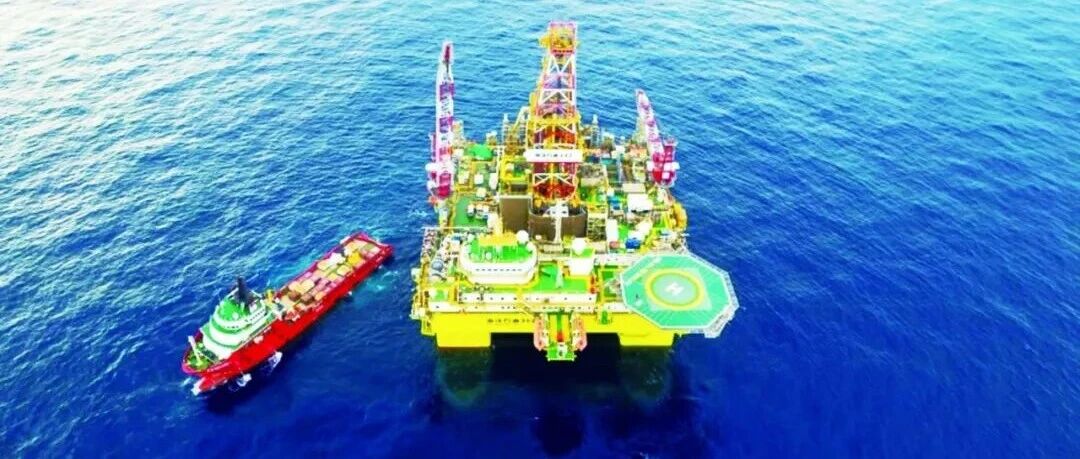
Core Viewpoint - The oil and gas industry is entering a new phase of high-quality development that emphasizes safety, efficiency, greenness, and innovation, while continuing to explore deeper, navigate further, and tackle more challenging tasks [1][3]. Group 1: Achievements in the 14th Five-Year Plan - The oil and gas sector has achieved significant milestones, including the discovery of 10 large oil fields and 19 large gas fields, with crude oil production exceeding 200 million tons and natural gas production reaching 260 billion cubic meters, completing the 14th Five-Year Plan targets two years ahead of schedule [5][6]. - The industry has successfully responded to complex international energy challenges, enhancing domestic supply through "increasing reserves and production," diversifying imports, and improving resource allocation efficiency [3][6]. Group 2: Technological Innovations - Technological innovation and intelligent transformation have become core drivers of high-quality development in the oil and gas sector, with breakthroughs in deep-water and deep-earth exploration [8][10]. - The industry has made significant advancements in deep-water drilling technologies, with the "Deep Sea No. 1" project marking a historic leap in exploration capabilities [9]. Group 3: Future Directions in the 15th Five-Year Plan - The oil and gas industry is set to focus on energy security while adapting to low-carbon transitions, with an emphasis on technological innovation to drive industrial upgrades [12][13]. - Future exploration will increasingly target ultra-deep layers, deep-water areas, and unconventional resources, with a strong emphasis on enhancing gas storage and peak-shaving capabilities [12][13]. Group 4: Green and Low-Carbon Transition - The industry is transitioning from a focus solely on fossil fuel production to a comprehensive energy base that includes renewable energy sources such as solar and wind [12][13]. - Carbon capture, utilization, and storage (CCUS) technologies are expected to see larger-scale commercial applications, supporting the reduction of emissions in high-pollution sectors [10][13].
“十五五”,绘就煤炭清洁高效利用“新图景”
中国能源报· 2025-10-27 04:00
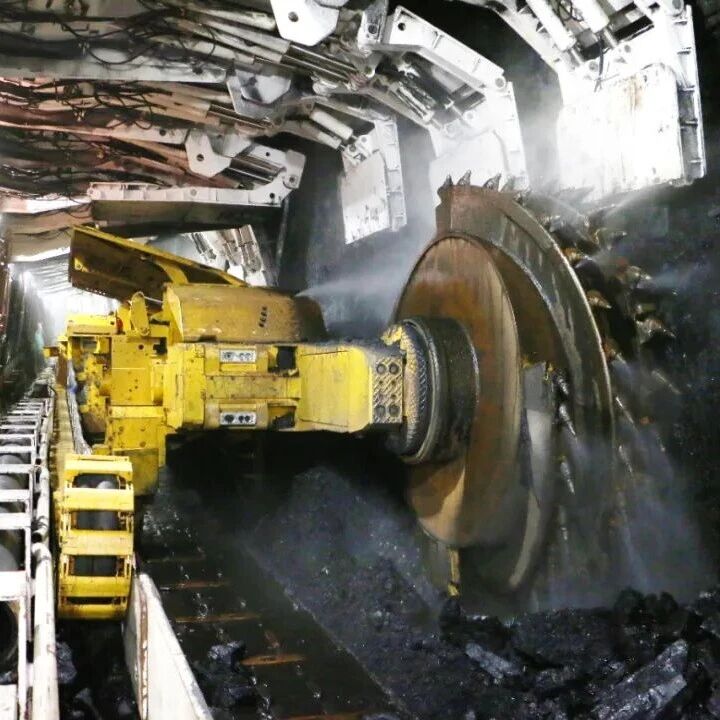
Core Viewpoint - The coal industry in China is at a critical juncture as it approaches peak consumption, necessitating a shift towards technological innovation and green development to ensure clean and efficient utilization of coal resources [1][3][10]. Group 1: Industry Performance and Trends - During the "14th Five-Year Plan" period, China's coal production has consistently increased, with a total output reaching 4.78 billion tons in 2024, an increase of 880 million tons compared to 2020 [5]. - The coal mining sector has seen significant investment, with approximately 2.1 trillion yuan allocated, leading to the establishment of modern and intelligent coal mines [5][7]. - The coal transportation network has expanded, with coal railway shipments rising from 2.36 billion tons to 2.82 billion tons, enhancing the national coal distribution capacity [6]. Group 2: Structural Optimization and Technological Advancements - The number of coal mines has decreased from over 4,600 to around 4,300, while the average production capacity per mine has increased to over 1.4 million tons [7]. - The focus of coal production is shifting towards the central and western regions, with the four provinces of Shanxi, Shaanxi, Inner Mongolia, and Xinjiang projected to produce 3.9 billion tons in 2024, accounting for 81.6% of national output [7][8]. - The coal chemical industry is transitioning towards high-quality and efficient development, with a significant increase in the production of polyolefins, reaching 3.61 million tons over five years [8]. Group 3: Future Outlook and Strategic Goals - The coal industry is expected to reach a consumption peak around 2028, with a subsequent plateau period characterized by slight fluctuations in demand [10]. - Companies are encouraged to focus on green development and technological advancements to explore new growth avenues while maintaining energy supply responsibilities [10][11]. - The industry aims to enhance competitiveness by integrating upstream and downstream enterprises, with plans to establish two major industrial clusters by 2030 [11].
“十四五”山西晋中能源发展全景图
Zhong Guo Xin Wen Wang· 2025-10-27 01:54
Core Viewpoint - The news highlights the significant advancements in energy development in Jinzhong City during the 14th Five-Year Plan, focusing on the transformation of coal, electricity, gas sources, and energy consumption efficiency. Group 1: Coal Industry - The coal industry in Jinzhong has maintained a stable production level of over 100 million tons annually, with an average annual growth rate exceeding 10% [2] - The city has established 22 intelligent coal mines, with advanced production capacity accounting for 97%, leading the province [2] - The completion of 68.04 million tons of long-term contracts for electric coal from 2022 to 2025 will benefit over 3 million residents [2] Group 2: Electricity Sector - The share of renewable and clean energy installations has increased more than threefold from 2.67 million kW in 2021 to 9.43 million kW, now accounting for 60.8% of total capacity [3] - The city has made significant investments in the power grid, with transformer capacity and transmission lines increasing by 53% and 15% respectively compared to the end of the 13th Five-Year Plan [3] - A total of 8,973 charging stations have been built, achieving full coverage in key areas of the city [3] Group 3: Gas Sources - The city has significantly increased the production of coalbed methane, with a national-level demonstration project expected to double production by 2024 and again by 2025 [4] - The utilization rate of coal mine gas is projected to reach 52.9% by the end of 2024, surpassing the provincial target [4] Group 4: Energy Consumption - Jinzhong has achieved a continuous negative growth in coal consumption from 2021 to 2024, replacing approximately 1.6 million tons of coal consumption through various projects [5] - The city has implemented clean heating transformations for about 200,000 households, reducing coal burning by approximately 500,000 tons annually [5]
广东加快构建碳足迹管理体系助力经济高质量发展
Zhong Guo Huan Jing Bao· 2025-10-27 00:48
Core Viewpoint - Guangdong Province is actively developing a carbon footprint management system to promote green and low-carbon transformation among enterprises, aiming for high-quality development and compliance with international green trade rules [1][3][5]. Group 1: Carbon Footprint Management System Development - Guangdong has established the "Guangdong Carbon Label" and issued 146 certificates to 128 enterprises across 24 product categories by September 2023 [1]. - The "Work Plan" aims to complete carbon footprint assessments for around 200 products by 2027 and 500 products by 2030, with a focus on building a product carbon footprint factor database [2]. - The plan includes 17 key tasks across four areas: management system construction, application promotion, cross-border cooperation, and capacity building [2]. Group 2: Financial and Government Support - The province will enhance financial support for enterprises, using carbon footprint as a key metric in financing processes [2]. - Government and state-owned enterprises are encouraged to increase procurement of low-carbon products, promoting their application [2][4]. Group 3: International Cooperation and Standards - Guangdong is exploring cross-border mutual recognition of carbon footprints with Hong Kong and aims to establish a carbon footprint alliance in the Greater Bay Area [6]. - The province is working on aligning its carbon footprint accounting standards with international norms to improve the competitiveness of export products [5]. Group 4: Green Transformation and Public Engagement - The "Work Plan" emphasizes a lifecycle approach to carbon footprint management, aiming to enhance the green competitiveness of export products and support the "dual carbon" goals [4]. - Initiatives will encourage public engagement in low-carbon consumption, creating a positive cycle of green production and consumption [4].
三个维度看外贸结构之变
Jing Ji Ri Bao· 2025-10-26 22:06
Core Insights - The 138th China Import and Export Fair (Canton Fair) showcases a record number of exhibitors and booths, with over 32,000 participating companies and 74,600 booths, indicating strong vitality despite external challenges [1] - The fair emphasizes innovation and technology, with companies focusing on showcasing their R&D capabilities rather than just competing on price [2][4] - Industrial design is becoming a crucial driver for product value addition, helping to reshape the perception of "Made in China" products [3][4] - The fair serves as a platform for service innovation, with a successful integration of online and offline exhibition models enhancing transaction efficiency [3][4] - The event highlights the trend towards smart manufacturing and automation, with a significant presence of intelligent products and industrial machinery [5][7] - The concept of "green" is prevalent across various product categories, reflecting a shift towards sustainability and low-carbon solutions in international markets [8][9] Group 1: Innovation and Technology - Companies are increasingly showcasing products with proprietary technology and unique designs, such as a mosquito repellent device using bionic breathing technology [2] - The fair features products that meet high consumer demands for aesthetics and functionality, such as a high-transparency ice-making machine [2] - The integration of AI and advanced technologies in service robots is transforming them into intelligent entities capable of complex interactions [6] Group 2: Industrial Design and Value Addition - Industrial design is enhancing the appeal of products, with examples including aesthetically pleasing home appliances and innovative heating solutions [3] - The fair has seen a rise in the number of companies adopting green production technologies, with 38.4% of exhibitors implementing such practices [9] Group 3: Smart Manufacturing and Automation - The exhibition of industrial automation and smart manufacturing technologies is prominent, showcasing not just machines but also digital solutions for real-time monitoring and predictive maintenance [7] - The shift from selling equipment to providing comprehensive service solutions is evident, with companies focusing on creating value through ecosystem collaboration [7] Group 4: Sustainability and Green Initiatives - The fair features a significant number of exhibitors focused on renewable energy and green technologies, with 305 companies participating in this category [9] - The emphasis on a full lifecycle approach to sustainability is growing, with companies showcasing their green achievements across the supply chain [9][10]
严控产能,绿色发展 建材行业提质增效进行时
Zheng Quan Shi Bao· 2025-10-26 17:41
Core Viewpoint - The construction materials industry in China is facing significant challenges due to declining prices and increased losses, prompting the government to implement a growth stabilization plan aimed at enhancing profitability and promoting green and digital development by 2026 [1][2]. Industry Overview - The construction materials sector is crucial for national economic growth, but recent years have seen a downturn in prices for key products like cement and glass, leading to an expanded loss margin and structural market issues [1]. - The Ministry of Industry and Information Technology, along with five other departments, has issued a plan targeting a significant increase in the profitability of the construction materials industry over the next two years, with a goal of exceeding 300 billion yuan in revenue from green building materials by 2026 [1]. Market Conditions - In 2024, the total profit for the domestic cement industry is projected to be 26.6 billion yuan, a decline of approximately 90% compared to the historical peak of 186.7 billion yuan in 2019 [1]. - Cement production from January to September 2025 was only 1.259 billion tons, reflecting a year-on-year decrease of 5.2% due to reduced demand from real estate and infrastructure investments [1]. Price Trends - The price of cement has been on a downward trend since 2025, with the price of P.O 42.5 bulk cement hitting a yearly low of 267.11 yuan per ton in mid-August [2]. - The glass industry has also experienced a decline in prices, with the price of float glass reaching a historical low in September 2024, followed by a slight rebound before falling again in 2025 [2]. Capacity Control Measures - The cement industry is actively responding to market challenges by implementing strict capacity controls, with a significant increase in kiln shutdown days and the elimination of inefficient production lines [2][3]. - As of September 2025, the company has shut down 16 production lines, accounting for over 22% of the total capacity eliminated in the industry [2]. Diversification and Innovation - Companies are diversifying their operations by expanding into new markets and industries, such as aluminum and eco-friendly home products, to mitigate reliance on traditional construction materials [5][6]. - The cement industry is also exploring horizontal and vertical expansions into related sectors, leveraging synergies to enhance competitive advantages [6]. Green and Low-Carbon Development - The industry is increasingly focusing on green and low-carbon production methods, with many companies adopting natural gas as a fuel source, which is expected to improve product quality [8]. - The implementation of carbon capture technologies and digital management systems is helping to significantly reduce energy consumption and carbon emissions in cement production [8]. Policy Support - The government is providing support through subsidies, tax reductions, and green finance initiatives to encourage construction material companies to expand their green production capabilities and phase out outdated capacities [9].