
自动驾驶

Search documents
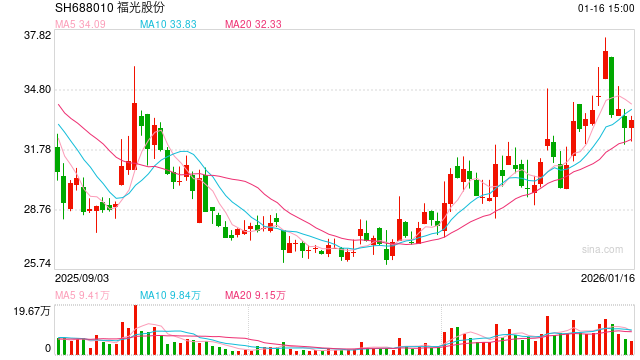
福光股份上市后业绩变脸接连出售资产 管理成本高企利润高度依赖投资和补助|光学成像并购潮
Xin Lang Zheng Quan· 2026-01-16 08:49
Core Viewpoint - The optical imaging industry is experiencing a wave of capital operations characterized by mergers, acquisitions, and financing, driven by the promising market prospects in emerging technology fields such as automotive lenses, AR/VR optics, and machine vision. However, the acquisition logic and integration effectiveness of some companies are under scrutiny due to weak profitability, uncertainty of target assets, and regulatory risks associated with aggressive expansion [2][3]. Company Overview - Fuguang Co., Ltd. specializes in the production of special and civilian optical lenses, optoelectronic systems, and optical components, applied in intelligent security, intelligent assisted driving, and machine vision [3]. - Unlike many peers, Fuguang has not engaged in significant mergers and acquisitions in recent years but has instead focused on asset sales to support its performance [3][6]. Financial Performance - Fuguang's net profit attributable to shareholders has fluctuated significantly since its IPO in 2019, with figures of 0.29 billion, -0.68 billion, and 0.09 billion from 2022 to 2024, while government subsidies and investment income contributed 0.32 billion, 0.33 billion, and 0.62 billion during the same period, indicating a heavy reliance on non-core income [6]. - The company reported a net profit of 0.92 billion in 2019, its peak year, but has since seen a continuous decline, with a net loss of -0.47 billion in the first three quarters of 2025, representing a nearly 40% year-on-year increase in losses [7]. Cost Structure - Fuguang's management expense ratio has reached 15% in the first three quarters of 2025, significantly higher than comparable companies, which is a major factor dragging down its performance [7][9]. - The high management costs are linked to the company's focus on customized products, which require extensive project management and quality control, leading to increased operational expenses [9]. Market Position and Strategy - Fuguang has not pursued external acquisitions but aims to develop emerging optical-related businesses through internal growth. However, the effectiveness of this strategy is questionable given the company's declining profitability and operational efficiency [9].


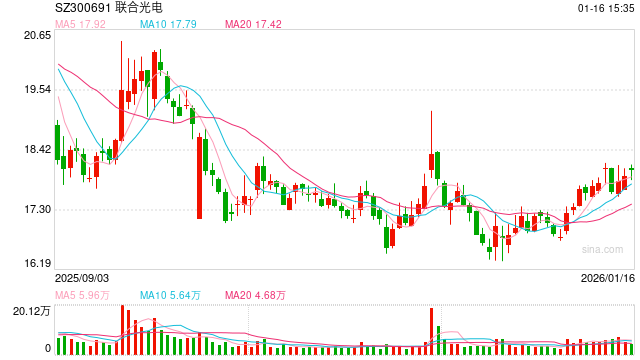
联合光电收购标的过半营收来自舜宇光学 资金长期入不敷出回款恶化|光学成像并购潮
Xin Lang Zheng Quan· 2026-01-16 08:36
Core Viewpoint - The optical imaging industry is experiencing a wave of capital operations characterized by mergers, acquisitions, and financing, driven by the promising market prospects in emerging technology fields such as automotive lenses, AR/VR optics, and machine vision. However, the aggressive expansion strategies of some companies are facing scrutiny due to weak profitability, uncertainty of acquired assets, and regulatory risks [2][10]. Group 1: Company Operations - The main business of the company is the design, development, precision manufacturing, sales, and technical services of optical lenses, with applications in security video surveillance cameras, smartphones, automotive imaging systems, and more [3]. - In recent years, the company has accelerated its asset acquisition pace, with multiple acquisitions planned, including a 100% stake in Changyi Optoelectronics and stakes in various other companies to enhance its presence in smart automotive and optical lens sectors [3][5]. Group 2: Financial Performance - In 2024, the company reported revenue of 1.88 billion, a year-on-year increase of 14.15%, but net profit attributable to shareholders decreased by 40.02% to 39 million. In the first three quarters of 2025, revenue was 1.44 billion, an 8.11% increase, but the company recorded a net loss of 24 million [7]. - The company has faced ongoing cash flow issues, with operating cash flow consistently lower than capital expenditures in most years. The collection period for accounts receivable has increased from 74 days in 2021 to 115 days in the first three quarters of 2025, indicating worsening cash collection [7][10]. Group 3: Capital Operations and Risks - The company is planning to raise 260 million through a private placement to fund the acquisition of Changyi Optoelectronics, which has over 50% of its revenue from Sunny Optical, indicating a high customer concentration risk [6]. - Despite attempts to alleviate financial strain through asset sales, including the sale of 99% of Lianhui Fund and 66.66% of Ruijin Technology, these measures have not fundamentally resolved the company's cash flow issues [10]. - The market is increasingly cautious about the disconnect between high capital enthusiasm and the underlying operational fundamentals of some companies, highlighting risks associated with high valuations, integration challenges, and regulatory scrutiny [10].


落地1023辆Robotaxi!文远知行迈入全球Robotaxi规模化部署时代
Jin Tou Wang· 2026-01-16 06:53
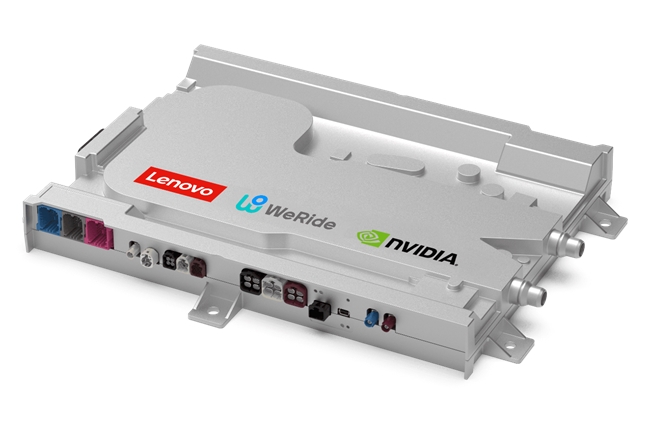
Group 1 - The core point of the article is that Wenyan Zhixing has officially entered the "thousand-vehicle era" with its global Robotaxi fleet, marking a significant milestone in the scale deployment of autonomous driving and advancing the commercialization of the global autonomous driving industry [1][3] - The new generation Robotaxi GXR, which is the world's first Robotaxi equipped with the NVIDIA DRIVE Thor X chip, provides 2000 TOPS AI computing power and meets L4 autonomous driving requirements, leading to a 50% reduction in autonomous driving kit costs and an 84% decrease in total lifecycle costs [1][3] - Wenyan Zhixing's Robotaxi has established a global operational network covering over 10 major cities across Asia, the Middle East, and Europe, with successful commercial operations in Guangzhou and Beijing [3] Group 2 - The company has achieved a fourfold increase in fleet size in Abu Dhabi since launching pure unmanned commercial operations in December 2024, nearing breakeven on a per-vehicle basis, and plans to expand to Singapore by 2026 [3] - To enhance user experience, Wenyan Zhixing launched the "Wenyan Travel" WeChat mini-program, allowing users to easily call for Robotaxi services without downloading an app, thereby increasing service accessibility [4] - The company aims to deploy hundreds of thousands of Robotaxis globally by 2030, contributing to the intelligent and low-carbon transformation of transportation systems, and its thousand-vehicle deployment serves as a benchmark for the industry [4]
智能化迎来全球共振与产业加速,智能车ETF泰康(159720)红盘上涨1.25%,三花智控涨超6%
Xin Lang Cai Jing· 2026-01-16 06:01
Group 1 - The core viewpoint is that the smart electric vehicle (EV) sector is undergoing significant transformation, with a strong emphasis on the globalization of components and the rise of autonomous driving technologies, which are expected to enhance market penetration by 2026 [1][2] - The smart electric vehicle ETF, TaiKang (159720), has shown a 1.25% increase, tracking the CSI Smart Electric Vehicle Index, which rose by 1.17%, indicating strong performance among key component stocks [1] - The report highlights that the automotive chip sector is becoming a critical technological barrier, with ongoing domestic replacement strategies and rapid growth in the new energy vehicle market supporting the automotive parts industry [2] Group 2 - The ETF covers key aspects of smart driving, with the top ten weighted stocks accounting for over 58%, allowing investors to mitigate individual stock volatility while benefiting from overall industry growth [3] - The industry is expected to experience a positive cycle driven by technological breakthroughs, policy support, and scale expansion, positioning the smart car ETF as a long-term beneficiary [3] - The report anticipates that by 2025, the trend of intelligent driving will solidify, with significant advancements in high-level autonomous driving technologies and increased market penetration expected by 2026 [1][2]


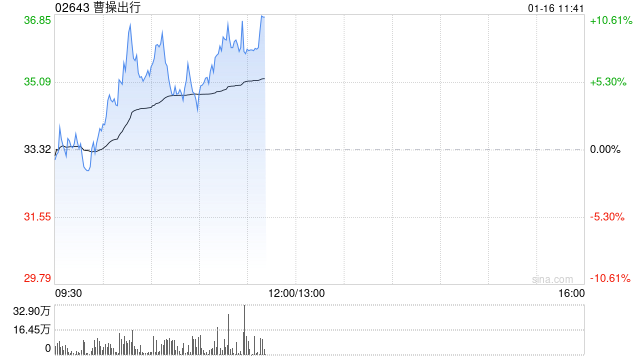
曹操出行再涨近10% 公司收购耀出行和吉利商旅 拓展B端商旅出行赛道
Zhi Tong Cai Jing· 2026-01-16 05:48
Core Viewpoint - Cao Cao Mobility (02643) has seen a nearly 10% increase in stock price, currently trading at 36.2 HKD, following the announcement of two strategic acquisitions aimed at enhancing its service offerings in the business travel sector [1] Group 1: Strategic Acquisitions - The company plans to fully acquire Weixing Technology (Yao Travel) and Geely Business Travel, which will become wholly-owned subsidiaries upon completion of the transactions [1] - CEO Gong Xin stated that the acquisitions will enable the company to create a comprehensive service chain for daily commuting, business reception, and travel management, thereby generating business growth in the B2B travel sector [1] Group 2: Market Position and Financial Performance - According to Guotai Junan Securities, Cao Cao Mobility has established a leading capacity network and customized vehicle ecosystem in the Chinese mobility market, currently holding the second-largest market share [1] - The company has been optimizing operational efficiency and the lifecycle costs of its vehicles, leading to a significant reduction in Non-GAAP net losses, indicating that a profitability turning point is approaching [1] - The company is also leveraging its relationship with Geely to actively invest in autonomous driving, positioning itself as a core entry point for the commercialization of technology [1] Group 3: Future Outlook - Overall, the company is entering a phase of reduced losses and increased efficiency alongside technological innovation, suggesting potential for upward valuation elasticity [1]
禾赛-W午后涨逾6% 机构称激光雷达渗透率有望持续提升
Xin Lang Cai Jing· 2026-01-16 05:17
来源:新浪港股 据央视财经报道,随着车辆自动驾驶能力不断演进,相关产业链近年来也持续保持较高增速。其中,用 于测距的激光雷达作为关键硬件之一,出货量不断走高。 据华创证券,展望未来,受益于L2+/L3/L4法规逐步落地,激光雷达渗透率有望持续提升;而价格端, 当前单颗激光雷达价格下行空间有限,叠加高性能、多颗的方案有望成为趋势,车载激光雷达市场规模 有望快速扩容。该行预计2030/2035年全球车载激光雷达市场规模有望达90/148亿美元。 禾赛-W(02525)早盘一度涨超7%,午后股价上涨5.64%,现报224.80港元,成交额1.88亿港元。 ...
曹操出行午前涨超10% 国泰海通证券给予“增持”评级
Xin Lang Cai Jing· 2026-01-16 03:42
Core Viewpoint - Caocao Travel (02643) has announced two strategic acquisitions, which are expected to enhance its service offerings and create business growth in the B2B travel sector [5]. Group 1: Company Developments - Caocao Travel's stock price increased by 10.38% to HKD 36.78, with a trading volume of HKD 267 million [5]. - The company plans to fully acquire Weixing Technology (Yaotong Travel) and Geely Business Travel, which will become wholly-owned subsidiaries upon completion of the transactions [5]. - CEO Gong Xin stated that the acquisitions will enable the company to integrate services from daily commuting to business reception and travel management, thereby enhancing its service chain [5]. Group 2: Analyst Insights - Guotai Junan Securities initiated coverage on Caocao Travel with a "Buy" rating, highlighting the company's focus on customized vehicle ecosystems and optimization of total cost of ownership (TCO) for profitability [5]. - The firm believes that the company's valuation has upside potential, particularly due to its reliance on Geely's background for autonomous driving initiatives [5]. - Based on the price-to-sales (PS) valuation method, the estimated market value of the company is RMB 22.455 billion, with a target price of HKD 44.16 per share [5].

大华继显:降小鹏汽车-W目标价至125港元 研发支出激增抵销交付增长动能
Zhi Tong Cai Jing· 2026-01-16 03:33
大华继显发布研报称,基于更高的研发支出,下调小鹏汽车-W(09868)2026及2027年净利润预测39%及 6%。维持"买入"评级,目标价从145港元下调至125港元。 据报道小鹏汽车为2026年设定了55万至60万辆的交付目标(同比增长28-40%),此目标基于强劲的产品阵 容及出口量翻倍,高于该行的预估。该行将2026年交付量预估上调7%至53万辆。由于先进驾驶辅助系 统、自动驾驶出租车及人形机器人等新项目投入,2026年研发支出可能增加至超过100亿元人民币。该 行维持小鹏2025年净亏损预测为14.81亿元人民币,这意味着2025年第四季净利润预测为4,200万元人民 币,而市场共识预测为1亿元人民币。 ...
港股异动 | 曹操出行(02643)再涨近10% 公司收购耀出行和吉利商旅 拓展B端商旅出行赛道
Zhi Tong Cai Jing· 2026-01-16 03:25
Core Viewpoint - Caocao Travel (02643) has seen a nearly 10% increase in stock price following the announcement of two strategic acquisitions, which are expected to enhance its service offerings in the business travel sector [1] Group 1: Strategic Acquisitions - Caocao Travel plans to fully acquire Weixing Technology (Yaotong Travel) and Geely Business Travel, which will become wholly-owned subsidiaries upon completion of the transactions [1] - The CEO of Caocao Travel, Gong Xin, stated that the acquisitions will enable the company to create a comprehensive service chain for daily commuting, business reception, and travel management, thereby generating business growth in the B2B travel sector [1] Group 2: Market Position and Financial Performance - According to Guotai Junan Securities, Caocao Travel has established a leading capacity network and customized vehicle ecosystem in the Chinese travel market, currently holding the second-largest market share [1] - The company has been optimizing operational efficiency and the lifecycle costs of its vehicles, leading to a significant reduction in Non-GAAP net losses, indicating that a profitability turning point is approaching [1] - Caocao Travel is leveraging its relationship with Geely to actively invest in autonomous driving technology, positioning itself as a key player in the commercialization of this technology [1] - Overall, the company is entering a phase of reduced losses and increased efficiency alongside technological innovation, suggesting potential for upward valuation elasticity [1]
禾赛-W涨超7% 激光雷达渗透率有望持续提升 公司今年规划年产能翻番
Zhi Tong Cai Jing· 2026-01-16 03:20
禾赛-W(02525)涨超7%,截至发稿,涨7.42%,报228.6港元,成交额1.64亿港元。 消息面上,据央视财经报道,随着车辆自动驾驶能力不断演进,相关产业链近年来也持续保持较高增 速。其中,用于测距的激光雷达作为关键硬件之一,出货量不断走高。据华创证券,展望未来,受益于 L2+/L3/L4法规逐步落地,激光雷达渗透率有望持续提升;而价格端,当前单颗激光雷达价格下行空间 有限,叠加高性能、多颗的方案有望成为趋势,车载激光雷达市场规模有望快速扩容。该行预计 2030/2035年全球车载激光雷达市场规模有望达90/148亿美元。 值得关注的是,近期在美国拉斯维加斯国际消费类电子产品展CES2026上,禾赛宣布,为满足ADAS及 机器人领域日益增长的激光雷达需求,公司规划年产能将由2025年的200万台提升至2026年的400万台, 实现翻倍增长。另外,禾赛此前宣布,已被英伟达选定为"NVIDIA DRIVE AGX Hyperion10平台"的激 光雷达合作伙伴。 ...