
保障和改善民生

Search documents
加大保障和改善民生力度(学习贯彻党的二十届四中全会精神)
Ren Min Ri Bao· 2025-11-17 22:20
Core Points - The core message emphasizes the importance of improving and safeguarding people's livelihoods as a fundamental aspect of China's modernization efforts [1][4]. Group 1: Leadership and Development Philosophy - The leadership of the Communist Party of China is highlighted as a key characteristic of socialism with Chinese characteristics, emphasizing the need to respect public opinion and improve people's livelihoods [3]. - The development philosophy is centered around the people, with the goal of achieving a better life for the populace being the ultimate aim of modernization [3][4]. Group 2: Achievements in Livelihood Improvement - Significant progress has been made in enhancing the quality of life, with the establishment of the world's largest education, social security, healthcare, and urban housing systems [5]. - Employment has remained stable, with over 12 million new urban jobs created annually since the 14th Five-Year Plan, and the urban unemployment rate kept below expected targets [5]. - The per capita disposable income of residents increased from 35,100 yuan in 2021 to 41,300 yuan in 2024, with the urban-rural income ratio narrowing to 2.34:1 [5]. - The education system has seen improvements, with gross enrollment rates for preschool and high school education reaching 92% by 2024 [5]. - The social security system has expanded, with over 1 billion people covered by basic pension insurance and 1.327 billion by basic medical insurance by the end of 2024 [5]. - Housing security has improved, with over 11 million units of various types of affordable housing constructed during the 14th Five-Year Plan [5]. - Health services have improved, with the number of practicing (assistant) physicians and registered nurses per 1,000 people reaching 3.61 and 4.16, respectively, by 2024 [5][6]. Group 3: Key Tasks for Livelihood Improvement - The focus is on promoting high-quality and full employment as a fundamental aspect of people's livelihoods, with strategies to enhance employment support and public service systems [8]. - The income distribution system is to be improved to promote common prosperity, with mechanisms to ensure fair compensation based on contributions [9]. - Education is prioritized, with plans to enhance resource allocation and expand free education [10]. - The social security system is to be refined, ensuring comprehensive coverage and sustainability [11]. - Real estate development is to be guided towards high quality, addressing housing needs through various measures [12]. - Health initiatives are to be accelerated, focusing on equitable access to healthcare services [13]. - Population development strategies are to be implemented, addressing aging and promoting a supportive environment for families [14]. - Public service equalization is to be advanced, ensuring services reach rural and underserved areas [15].
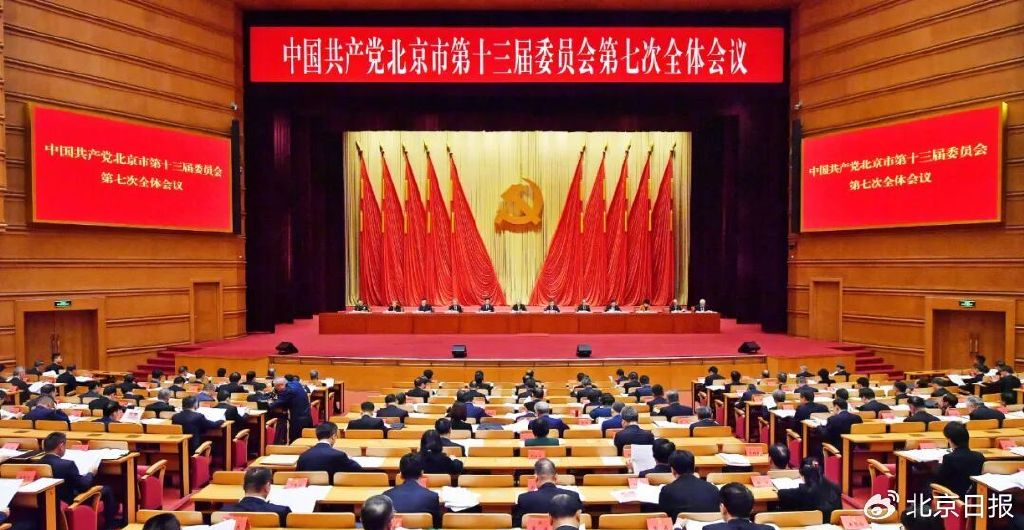
市委十三届七次全会召开,描绘“十五五”首都高质量发展新图景
Bei Jing Ri Bao Ke Hu Duan· 2025-11-17 13:37
Core Points - The meeting emphasized the importance of implementing the spirit of the 20th Central Committee's Fourth Plenary Session as a major political task for the current and future periods [3][4] - The "14th Five-Year Plan" period is described as extraordinary, with significant achievements in various sectors under the leadership of the central government [4][6] - The meeting outlined the main goals for the "15th Five-Year Plan" period, focusing on enhancing the capital's functions, promoting high-quality development, and improving the quality of life for residents [8][10] Group 1: Economic and Social Development - The meeting highlighted the need for Beijing to adhere to Marxist principles and implement Xi Jinping's thoughts to guide economic and social development [7][8] - Emphasis was placed on enhancing innovation capabilities and promoting high-quality economic growth through the development of new productive forces [11][12] - The meeting called for a comprehensive approach to deepen reform and opening up, enhancing the vitality of various business entities [12][13] Group 2: Urban Governance and Infrastructure - The meeting stressed the importance of improving urban governance and ensuring the harmonious development of the capital [13][14] - It was noted that the construction of a modernized capital city should focus on green, low-carbon, and livable environments [14][15] - The need for a modern transportation system and the integration of urban and rural development was emphasized [13][14] Group 3: Cultural and International Engagement - The meeting underscored the importance of enhancing Beijing's cultural influence and protecting historical sites [10][12] - It called for strengthening international communication and cooperation to build a city that aligns with global standards [10][11] - The meeting highlighted the role of Beijing in serving the national diplomatic agenda and enhancing its international engagement capabilities [10][11]

【权威访谈】在发展中保障和改善民生
Yang Shi Wang· 2025-11-17 11:54
Core Viewpoint - The "14th Five-Year Plan" emphasizes the principle of putting people first, focusing on improving people's livelihoods and promoting common prosperity during the period [1] Group 1: Employment and Social Security - The plan outlines policies aimed at promoting high-quality and sufficient employment, as well as establishing a robust social security system [1] - It highlights the importance of balanced and accessible policies to ensure the well-being of all citizens [1] Group 2: Education and Innovation - Education is identified as the foundation, technology as the key, and talent as the core for building a modern socialist country [1] - The plan stresses the need to seize opportunities from the new round of technological revolution and industrial transformation, integrating the development of education, technology, and talent [1] Group 3: Healthcare - Healthcare is recognized as a primary concern for the public, with a focus on strengthening the operational support for county and grassroots medical institutions [1] - The plan calls for optimizing the functions and layout of medical institutions and advancing the construction of a digital health system for all [1]
财政部发布重磅报告!
Jin Rong Shi Bao· 2025-11-10 03:25
Core Viewpoint - The Ministry of Finance has released the "2025 Mid-Year Report on China's Fiscal Policy Execution," indicating a recovery in fiscal revenue and an increase in expenditure to support key areas of the economy [1] Group 1: Fiscal Revenue and Expenditure - Fiscal revenue is recovering, with tax revenue gradually increasing [1] - National general public budget expenditure reached 14.13 trillion yuan, a growth of 3.4% [1] - Central government transfers to local governments amounted to 9.29 trillion yuan, accounting for 89.8% of the annual budget [1] Group 2: Domestic Demand and Consumption - Fiscal policy focuses on boosting consumption, with 300 billion yuan in special bonds allocated for consumer upgrades [2] - The "old for new" program has driven sales of 1.6 trillion yuan in related categories [2] - Emphasis on improving social security to enhance consumer capacity and willingness [2] Group 3: Strategic Development and Innovation - Central government technology expenditure for 2025 is set at 398.12 billion yuan, a 10% increase from the previous year [3] - Support for high-quality development in key manufacturing industries and rural revitalization efforts [3] - Initiatives to promote regional coordinated development and ecological protection [3] Group 4: Social Welfare and Employment - Policies to stabilize and expand employment through tax reductions and subsidies [4] - Increased funding for public health services and social security measures [4] - Implementation of a childcare subsidy system and improvements in elderly care services [4] Group 5: Risk Management - Measures to mitigate risks in key areas, including a focus on local government debt management [5] - High-pressure regulatory stance to curb new hidden debts [5] - Support for the real estate market to stabilize [5] Group 6: Fiscal Management and Reform - Comprehensive reforms in the fiscal and tax system to enhance budget management [6] - Emphasis on scientific fiscal management and strict oversight of financial resources [6] - Plans for higher quality fiscal policy implementation and macroeconomic regulation [6] Group 7: Future Directions - Continued implementation of proactive fiscal policies to ensure effective fund utilization [7] - Support for employment stability and foreign trade [7] - Focus on nurturing new growth drivers and improving living standards [7] - Ongoing efforts to prevent and resolve financial risks [7] - Enhancement of fiscal governance effectiveness [7]
财政部:更高效能加强财政宏观调控
Zhong Guo Jing Ji Wang· 2025-11-10 03:17
Core Viewpoint - The report emphasizes a proactive fiscal policy aimed at stabilizing employment, businesses, and market expectations, while enhancing coordination with other policies to support economic recovery [1] Group 1: Fiscal Policy Implementation - The fiscal policy since 2025 has been more proactive, focusing on stabilizing employment, businesses, and market expectations [1] - Fiscal revenue has been recovering, with tax revenue gradually increasing, and necessary expenditures being maintained [1] - The strategy of expanding domestic demand is emphasized, promoting a positive interaction between consumption and investment [1] Group 2: Key Areas of Focus for Future Fiscal Policy - The report outlines six key areas for future fiscal policy, including effectively utilizing proactive fiscal measures and ensuring the safety and efficiency of fund usage [2] - Support for employment and foreign trade is prioritized, with measures to stabilize job positions and assist businesses in maintaining operations [2] - There is a focus on fostering new growth drivers through innovation and supporting the digital transformation of small and medium enterprises [3] Group 3: Social Welfare and Risk Management - The report highlights the importance of improving social welfare, particularly for the elderly and children, through various subsidies and educational initiatives [3] - Continuous efforts are being made to prevent and mitigate risks in key areas, including strict management of local government debt and monitoring of fiscal operations [3] - Enhancements in fiscal governance effectiveness are emphasized, with a focus on fiscal resource management and compliance with fiscal regulations [4]
财政部最新发声!用好用足更加积极的财政政策
Zhong Guo Zheng Quan Bao· 2025-11-07 14:57
Group 1 - The Ministry of Finance will focus on six key areas to implement a more proactive fiscal policy, including supporting employment and foreign trade, fostering new growth drivers, improving people's livelihoods, preventing risks in key sectors, and enhancing fiscal governance effectiveness [1][2][3] - The report emphasizes the importance of budget execution responsibility and aims to improve the efficiency of fund usage while ensuring fund security [1] - Specific measures include implementing consumption stimulus actions, providing fiscal subsidies for personal consumption loans, and encouraging private investment through local government bonds and special treasury bonds [1][2] Group 2 - The report highlights the need to strengthen employment support policies, including public employment services, vocational training, and stabilizing job positions for key groups [1][2] - It aims to enhance international economic cooperation by signing more free trade agreements and supporting enterprises in stabilizing orders and expanding markets [1][2] - The focus on nurturing new growth drivers includes promoting technological innovation, supporting the digital transformation of small and medium-sized enterprises, and creating a favorable environment for business development [2] Group 3 - The report outlines measures to improve social welfare, such as providing subsidies for elderly care services and implementing free preschool education [2] - It emphasizes the importance of coordinating major livelihood policies across departments to expand social security coverage and support low-income groups [2] - The Ministry of Finance will continue to implement a comprehensive debt management policy to address hidden debts and ensure stable fiscal operations [3] Group 4 - The report stresses the need for enhanced fiscal governance, including the implementation of various fiscal and tax reforms to improve resource allocation and budget management [3] - It calls for increased financial supervision and accountability at local and departmental levels to ensure effective use of fiscal funds [3] - The Ministry of Finance aims to align its fiscal policies with the goal of building a modern socialist country, focusing on high-quality fiscal planning and macroeconomic regulation [3]
财政部发布《2025年上半年中国财政政策执行情况报告》 用好用足更加积极的财政政策 进一步保障和改善民生
Zheng Quan Ri Bao Wang· 2025-11-07 13:28
Core Insights - The report indicates that China's economy is showing steady progress, with overall fiscal operations remaining stable in the first half of 2025 [1] Fiscal Performance - National general public budget revenue reached 11.56 trillion yuan, a year-on-year decrease of 0.3%, with the decline narrowing by 0.8 percentage points compared to the first quarter [1] - National general public budget expenditure was 14.13 trillion yuan, reflecting a growth of 3.4% [1] Policy Outlook - The report outlines six key areas for future fiscal policy focus, including the implementation of more proactive fiscal policies, support for employment and foreign trade stability, and fostering new growth drivers [2][3] Employment and Trade Support - Emphasis on enhancing employment policies, providing public employment services, vocational training, and supporting enterprises in stabilizing orders and expanding markets [2] Development of New Growth Drivers - Focus on strengthening industrial innovation and technology supply, promoting the transformation and upgrading of the manufacturing sector, and supporting the digital transformation of small and medium-sized enterprises [3] Social Welfare Improvements - Initiatives to enhance services for the elderly and children, including subsidies for elderly care services and the implementation of free preschool education [3] Risk Management - Continued efforts to prevent and mitigate risks in key areas, including the management of hidden debts and ensuring stable fiscal operations at the grassroots level [4] Governance Enhancement - Strengthening fiscal management and oversight, advancing fiscal reforms, and ensuring that fiscal resources are effectively utilized for development and public welfare [4]
财政部最新报告:用好用足更加积极的财政政策!
证券时报· 2025-11-07 11:08
Core Viewpoint - The report emphasizes that since 2025, China's fiscal policy has become more proactive, focusing on stabilizing employment, businesses, markets, and expectations, while enhancing coordination with other policies to promote sustained economic recovery [2][3]. Fiscal Policy Execution - The fiscal operation in the first half of 2025 was generally stable, with good budget execution and a continuous recovery in fiscal revenue, particularly in tax income [3]. - The central government allocated 300 billion yuan for long-term special bonds to support consumption, alongside 7.279 billion yuan for service industry development, aimed at stimulating consumption in rural areas [4]. Investment and Consumption - The fiscal policy has been working to boost consumption and expand investment, with the issuance of long-term special bonds starting in April, completing 42.7% of the annual issuance target in the first half, which is 17.7 percentage points faster than the previous year [4]. - A new special debt limit of 4.4 trillion yuan was fully allocated to local governments by April, achieving 49.1% of the annual limit in the first half, which is 11 percentage points faster than the previous year [4]. Foreign Trade and Investment - The Ministry of Finance has effectively utilized tariff adjustments to stabilize foreign trade and investment, implementing temporary import tariff rates lower than the most-favored-nation rates on 935 items since January 1, 2025 [5]. - The expansion of high-standard free trade zones and cooperation with trade partners on tax reductions has been highlighted as a strategy to enhance market confidence [5]. Fiscal Management Pilot - The Ministry of Finance has initiated a pilot program for fiscal management in 12 provinces, focusing on improving resource allocation and budget management, with 11 key tasks set to achieve breakthroughs in two years [7][8]. - A national platform for the sharing of state-owned assets has been established, facilitating over 200 asset adjustments and saving more than 40 million yuan in budget funds [8]. Future Fiscal Policy Directions - The report outlines six key areas for future fiscal policy, including the effective use of proactive fiscal measures, support for employment and foreign trade, fostering new growth drivers, improving living standards, risk prevention, and enhancing fiscal governance [11][12][13].

财政部:积极培育新兴产业和未来产业 持续推动制造业转型升级
智通财经网· 2025-11-07 10:56
Core Viewpoint - The report emphasizes the acceleration of new growth momentum in China's economy through enhanced fiscal policies, support for innovation, and investment in key industries, while ensuring the stability of employment and market expectations [1][3]. Group 1: Fiscal Policy and Economic Growth - The fiscal policy is increasingly proactive, focusing on stabilizing employment, businesses, and market expectations, while promoting economic recovery [3][4]. - A total of 300 billion yuan in special bonds is allocated to support the replacement of consumer goods, which is expected to stimulate significant retail sales [4][15]. - The central government plans to increase its technology funding to 398.12 billion yuan in 2025, a 10% increase from the previous year, focusing on core technology and strategic industries [5][21]. Group 2: Investment and Consumption - The government aims to enhance domestic demand by boosting consumption and effective investment, with a focus on key sectors and weak links [13][16]. - The issuance of special bonds has accelerated, with 5.55 billion yuan issued in the first half of the year, completing 42.7% of the annual target [16]. - The manufacturing sector is expected to see a 10.3% increase in industrial investment, driven by government support for technological upgrades [17]. Group 3: Employment and Social Welfare - The central government allocated 667.4 billion yuan for employment support, with 6.95 million new urban jobs created in the first half of the year [27][28]. - Education spending increased by 5.9% to 2.15 trillion yuan, with a focus on improving quality and access to education [29][30]. - Basic public health service funding reached 804.35 billion yuan, enhancing health management and disease prevention efforts [32][33]. Group 4: Risk Management and Financial Stability - The government is implementing measures to mitigate financial risks, including the management of local government debt and the promotion of real estate market stability [7][9]. - A comprehensive approach to fiscal management is being adopted, including reforms in tax systems and budget execution to ensure effective use of resources [7][12]. Group 5: Innovation and Technology - The report highlights the importance of integrating technological innovation with industrial development, with a focus on enhancing research capabilities and supporting key technology projects [20][21]. - Funding for basic research is set to increase by 12.1%, emphasizing the need for original innovation and support for research institutions [21][22]. Group 6: Environmental and Social Development - The government is committed to ecological protection and sustainable development, with significant funding allocated for pollution control and ecosystem restoration [38][39]. - Social welfare programs are being expanded, with increased support for vulnerable populations and efforts to improve living standards [34][35].
市委理论学习中心组举行集体学习研讨 深学细悟党的创新理论 实干担当推动四中全会部署落细落实
Zheng Zhou Ri Bao· 2025-11-07 07:09
Core Points - The meeting focused on studying and implementing the spirit of the 20th Central Committee's Fourth Plenary Session, emphasizing the importance of integrating this with the study of "Xi Jinping: The Governance of China, Volume V" [2][3] - The meeting highlighted the need for high-quality development and the establishment of a modern industrial system, along with deepening reform and opening up to enhance development vitality [3] - Emphasis was placed on regional coordinated development, green low-carbon development, cultural confidence, and improving people's livelihoods as key areas for progress [3] Summary by Categories - **Political Responsibility and Leadership**: The need for political responsibility and strong organizational leadership was emphasized to ensure the implementation of the 20th Central Committee's spirit in Zhengzhou [3] - **High-Quality Development**: Focus on achieving breakthroughs in high-quality development and modern industrial systems [3] - **Reform and Opening Up**: The importance of deepening reform and enhancing development dynamics was highlighted [3] - **Regional Development**: The meeting stressed the need for coordinated regional development to enhance urban capabilities and competitiveness [3] - **Green Development**: A commitment to green low-carbon development was reiterated, aiming for progress in building a beautiful Zhengzhou [3] - **Cultural Confidence**: The importance of cultural self-confidence in creating a modern humanistic city was discussed [3] - **Social Welfare**: The meeting addressed the need for progress in improving and safeguarding people's livelihoods to promote common prosperity [3] - **Governance Modernization**: Focus on achieving new results in social governance modernization was emphasized [3] - **Safety and Security**: The need to balance development and safety to enhance urban safety was highlighted [3] - **Party Discipline**: The importance of strict party governance to foster a clean political environment was stressed [3]