
数字孪生

Search documents
“十五五”深海阀门行业深度研究及趋势前景预判专项报告
Xin Lang Cai Jing· 2026-02-03 12:52
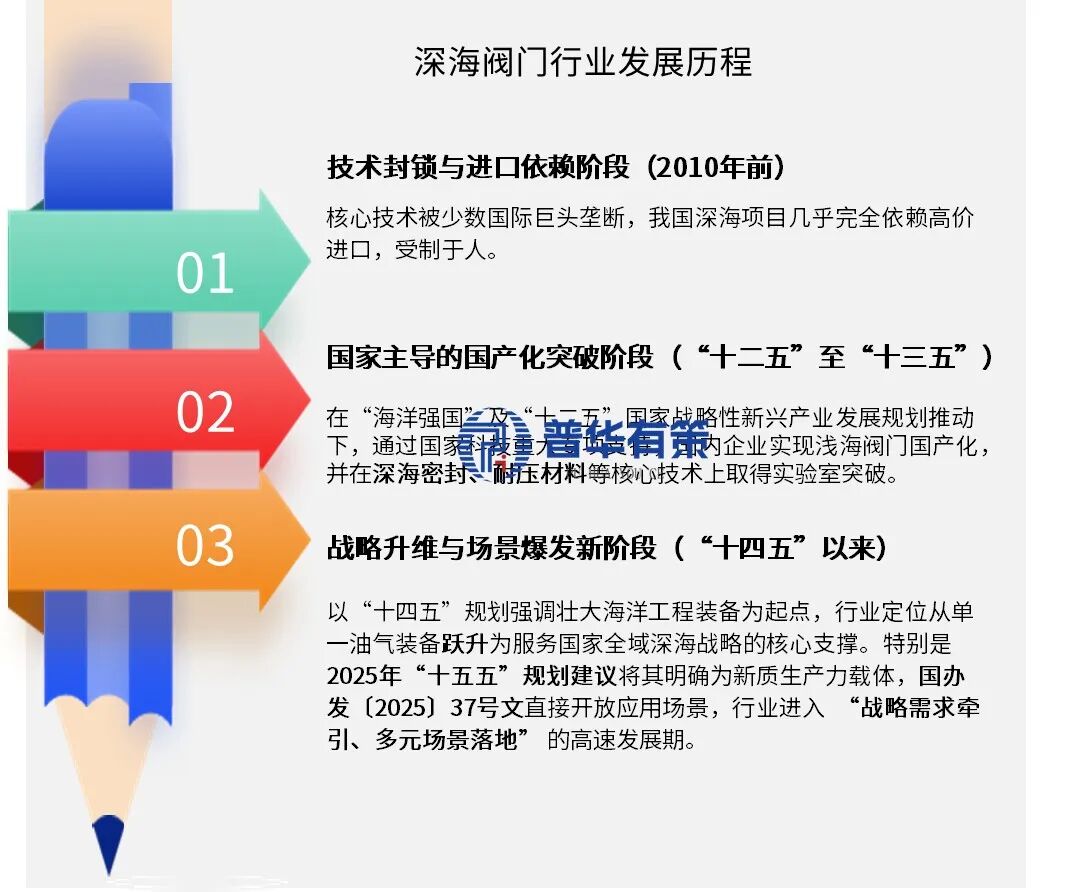
Industry Overview - The deep-sea valve industry is critical for controlling fluid flow in deep-sea and seabed pipeline systems, requiring extreme reliability and longevity under high pressure, low temperature, and corrosive seawater conditions [1][3][4] - Deep-sea valves must operate without failure for 20-30 years under pressures exceeding 110 MPa (equivalent to 11,000 meters of water depth) [3][22] Technological Characteristics - The technology integrates multiple disciplines, including materials science, fluid mechanics, sealing technology, mechanical engineering, and underwater electrical communication [4][22] - Leading companies possess advanced design capabilities and comprehensive testing systems, which are essential for ensuring product reliability [5][23] - The integration of AIoT technology allows for predictive maintenance and operational optimization, marking a shift from hardware to hardware plus data services [5][23] Driving Factors - National strategies and industrial policies are the primary drivers of the deep-sea valve industry, with the "14th Five-Year Plan" emphasizing the importance of deep-sea equipment [6][24] - The demand for energy and resource security has created a pressing need for domestically produced deep-sea development equipment [6][26] - Advances in materials science and intelligent manufacturing technologies are providing the necessary impetus for industry breakthroughs [6][27] - New industrial scenarios, such as deep-sea mining and carbon capture, utilization, and storage (CCUS), are creating significant market opportunities [6][28] Development Trends - Future valves will incorporate various sensors, enabling early leak detection and lifecycle management through digital twin technology [9][29] - The trend is shifting towards fully electric actuation systems, which are simpler and more efficient than traditional hydraulic systems [10][30] - Modular and standardized designs will become prevalent to reduce costs and delivery times [10][31] - Advanced materials and manufacturing processes will be increasingly utilized to meet the extreme conditions of deep-sea environments [10][32] - A collaborative ecosystem among material suppliers, manufacturers, and research institutions will emerge, enhancing innovation across the industry [10][32]

“十五五”智能变压器行业深度研究及趋势前景预判报告
Xin Lang Cai Jing· 2026-02-03 12:52
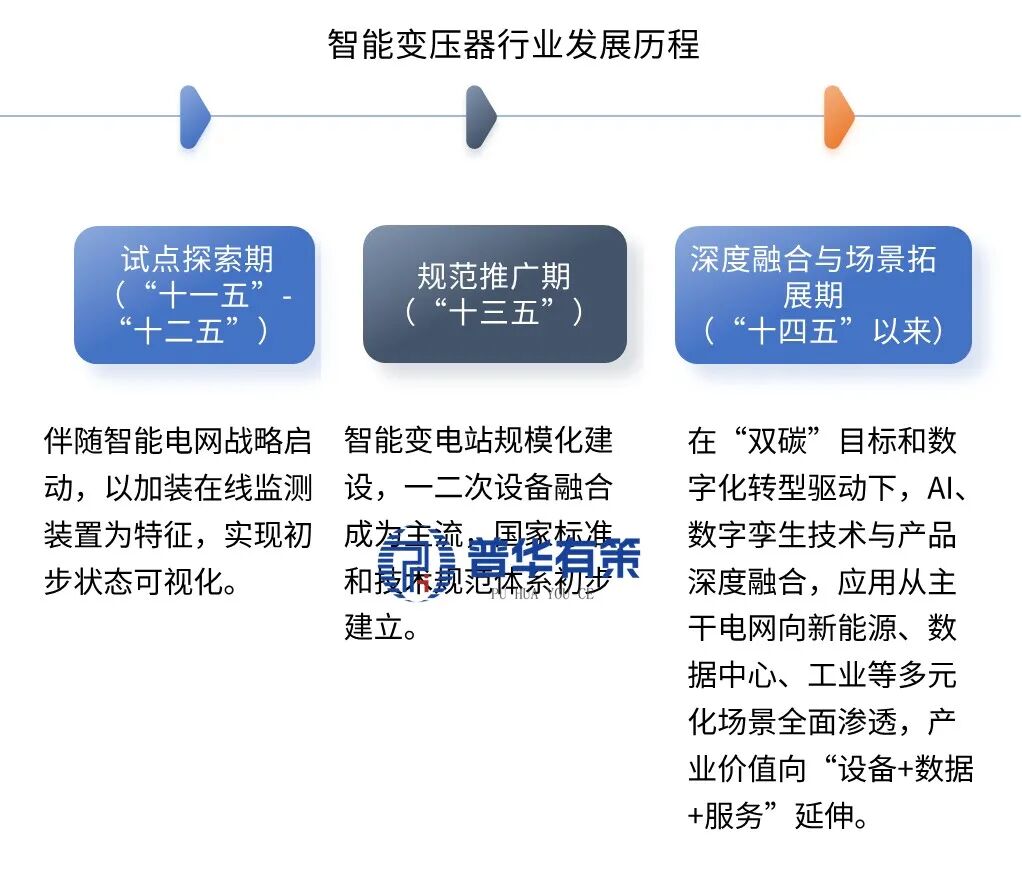
Industry Overview - The smart transformer is defined as an advanced power transformer that integrates sensors, intelligent electronic devices, and communication units, enabling comprehensive state perception, information interconnectivity, and autonomous control [1][24] - It serves as a crucial infrastructure for constructing a new power system, merging energy flow and information flow [1][24] Industry Development and Policy Support - Since the "14th Five-Year Plan," the smart transformer industry has experienced unprecedented policy support, with a focus on achieving "dual carbon" goals and constructing a new power system [4][24] - The 2025 Central Economic Work Conference emphasized the development of "new quality productivity," injecting confidence into the industry [4][24] Technology Level and Characteristics - The current technology level of smart transformers exhibits a "multi-layer iteration and cross-generation coexistence" characteristic, with traditional electromagnetic principle-based products dominating the market [5][24] - Key technological features include the integration of multi-physical quantity sensors, high-speed industrial Ethernet or fiber optic communication, and embedded intelligent terminals for local data analysis and remote interaction [5][24] Industry Chain Summary and Impact - The smart transformer industry chain is clear, with upstream including raw materials and core intelligent components, midstream focusing on design, manufacturing, integration, and testing, and downstream applications rapidly expanding into new energy generation and data centers [9][28] - Upstream technological advancements and supply stability are foundational for industry development, with the cost and performance of raw materials directly impacting product efficiency and market competitiveness [9][28] Core Driving Factors - National strategic policies are the most fundamental and enduring driving force, with the "dual carbon" goal establishing the ultimate direction for energy transformation [11][30] - The application of AI technology is transitioning from the periphery to the core, enhancing predictive maintenance and operational efficiency [12][31] - The recognition of the long-term value of smart transformers in reducing energy consumption and optimizing operational costs is increasingly acknowledged in the market [13][32]


“十五五”智能矿山产业深度研究及趋势前景预判报告
Xin Lang Cai Jing· 2026-02-03 12:52
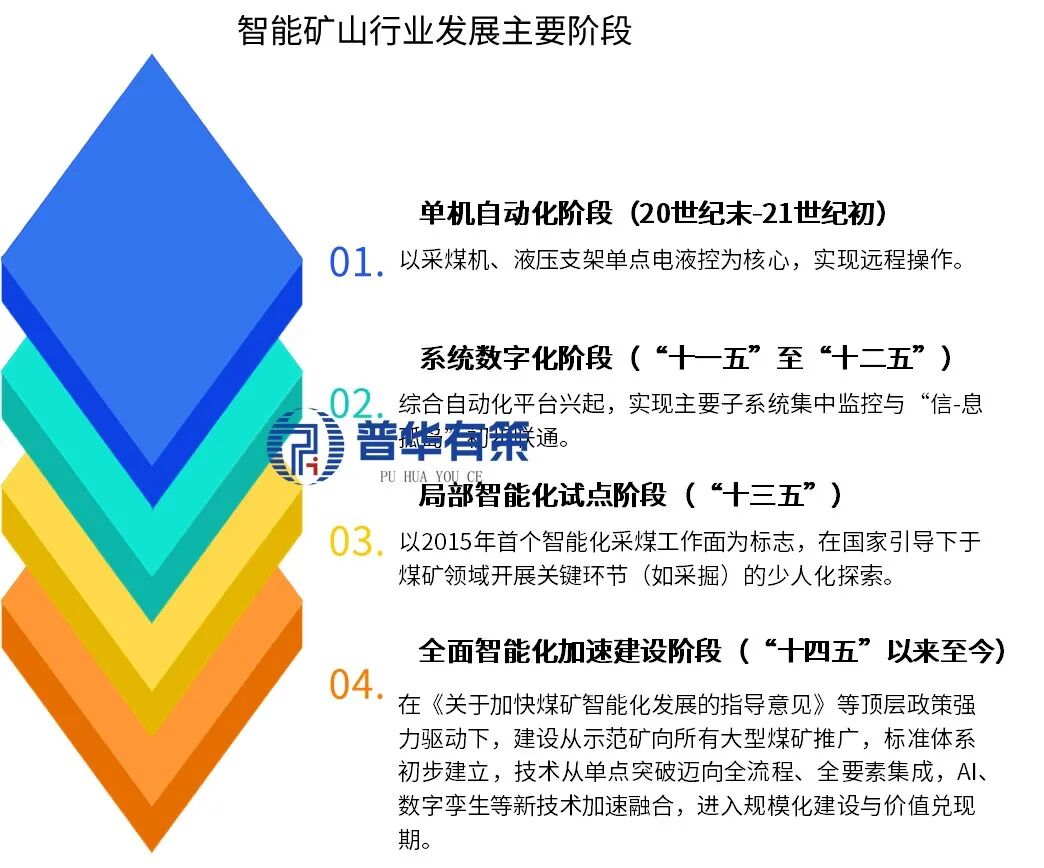
Group 1 - The core concept of the article emphasizes the dual drive of AI and policy in the development of the intelligent mining industry, which is projected to be a trillion-dollar market opportunity [1][2] - Intelligent mining is defined as a comprehensive system that integrates IoT, cloud computing, big data, AI, and smart equipment to achieve safe, efficient, green, and economical resource extraction [1][2] - The industry has been elevated to a national strategy since the 14th Five-Year Plan, with policies focusing on mandatory timelines and standards for intelligent construction, particularly in coal mining [2][5] Group 2 - The technological framework of intelligent mining features a "cloud-edge-end" collaboration, where sensors and smart equipment are deployed at the mining site for real-time data processing and decision-making [3][25] - Current technology is at a stage of "intermediate breakthroughs and dual-end development," with communication and data collection being relatively mature, while AI applications are still in exploratory phases [4][26] - The industry is driven by strong regulatory pressures, economic efficiency demands, technological advancements, and long-term structural changes in society [27][28][30][31] Group 3 - Future trends indicate that the integration of AI large models and digital twins will become central to mining operations, enhancing decision-making and operational efficiency [9][31] - The shift towards fully automated operations is expected to expand from localized applications to systemic implementations, with significant advancements in autonomous transportation and remote-controlled operations [10][32] - The industry is moving towards service-oriented and green transformations, with business models evolving from one-time product sales to ongoing service offerings [11][33][34] Group 4 - The barriers to entry in the intelligent mining sector include technological, financial, and regulatory challenges, which must be navigated for successful market participation [35][36] - The report provides a comprehensive analysis of the intelligent mining industry, including market size, supply-demand dynamics, and competitive landscape, highlighting key players and their strategies [38][39]
中能拾贝出席广东省工业软件学会2025年学术年会,解锁工业资产价值管理新范式!
Sou Hu Wang· 2026-02-03 07:48
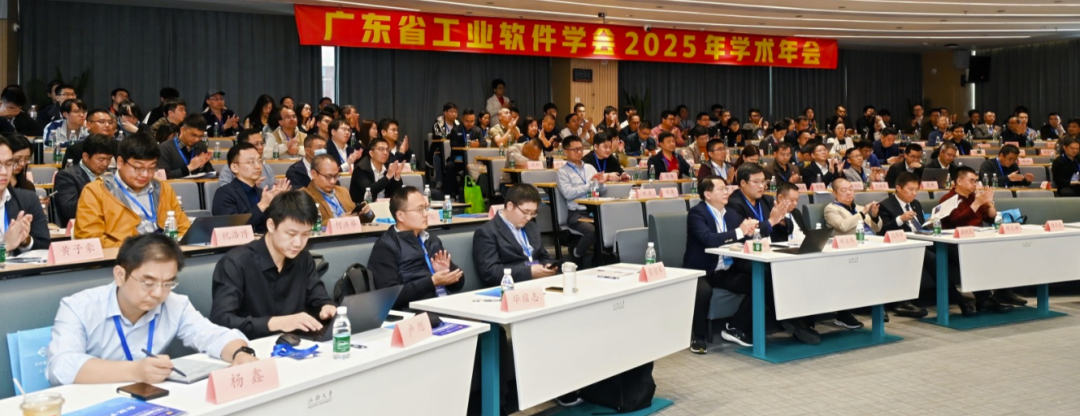
近日,广东省工业软件学会2025年学术年会在广东汕头隆重召开,工业领军企业、资深专家学者与技术 精英齐聚一堂,围绕新型国产工业软件自主研发、生态构建、人才培养及产业落地等核心议题深度研 讨,共绘工业软件创新发展蓝图。 会上,刘勇还指出,针对传统电厂的厂站端值班监盘、人工现场日常巡检、人工现场定期操作、现场作 业违章监管等多类场景,中能拾贝将通过具身智能、多模态传感器融合、数字孪生等技术,实现全场景 智能化升级,稳步推进 "无人值班、无人值守" 的 "黑灯电厂" 目标。 刘勇以智慧水电系统建设为例,进一步介绍电力行业数智化发展趋势。他表示,智慧水电系统建设将聚 焦两大核心方向:一是水电运营管理智慧化,以"AI数智大脑"为核心重构人机交互模式,人工不再操作 大量信息界面,而是直接向AI数智大脑提需求,由AI数智大脑驱动产出"成果",大幅提升运营管理效 率;二是水力发电系统智能化,融合边缘智能手段,将机电设备本体与智能电子装置有机结合,实现设 备状态数字化、诊断自主化、通信网络化、功能一体化与信息互动化。 展望未来,中能拾贝将持续深耕 AI + 工业智能赛道,深化融合物理仿真、数字孪生、大模型等技术与 工业核心场景 ...
加快汉长沙国考古遗址公园建设|解码议案提案
Chang Sha Wan Bao· 2026-02-02 23:50
Core Viewpoint - The proposal emphasizes the urgent need to accelerate the construction of the Han Changsha National Archaeological Park to revive and showcase the rich Han culture of Changsha, which has been dormant for 17 years [1][2]. Group 1: Archaeological Significance - The Han Changsha royal tombs are the largest and best-preserved Han dynasty royal tombs discovered in China, representing a critical part of Hunan's historical narrative [2][3]. - Established in 202 BC, the Han Changsha Kingdom lasted approximately 220 years, playing a significant role in the cultural and economic development of the region, transforming it from a "barbaric land" to a vital cultural hub [2][3]. Group 2: Current Challenges - The archaeological site has faced stagnation since planning began in 2009, remaining at the drawing board stage, with pressing issues related to cultural heritage protection and local living conditions [2][3]. - The rapid urbanization has led to conflicts between the preservation of the site and the improvement of local residents' quality of life, highlighting the inadequacy of current academic research in translating historical significance into engaging cultural narratives [3]. Group 3: Future Development Plans - The proposal suggests leveraging the upcoming anniversaries in 2025 and 2026 to push for the completion of the archaeological park, integrating research and educational initiatives to enhance the site's cultural value [5][6]. - It advocates for a comprehensive approach to develop a national-level archaeological park that combines protection, research, education, and experiential learning, while also promoting tourism through innovative technologies [6][7]. Group 4: Cultural Identity and Promotion - The proposal calls for a clear branding strategy under the theme "Han Culture Looks at Changsha," aiming to unify various cultural resources and create thematic tourism routes [6][7]. - It emphasizes the importance of transforming the site into a cultural landmark that tells the story of China and showcases the unique cultural heritage of Hunan, thereby driving urban cultural and tourism integration [7].
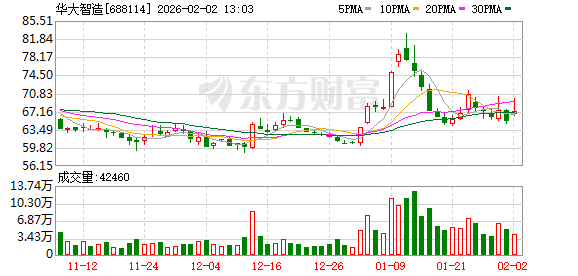
华大智造杨梦:AI落地关键是“人如何与智能体协作”
2 1 Shi Ji Jing Ji Bao Dao· 2026-02-02 05:05
Core Insights - The article emphasizes that artificial intelligence (AI) has reached a critical turning point, particularly in the life sciences sector, where it is driving significant innovations in gene sequencing, laboratory automation, and biomanufacturing [2][3] - The integration of AI into life sciences is transforming traditional laboratory processes, enabling faster and more efficient workflows, and enhancing the potential of "AI + life sciences" [2][3] Group 1: AI Advancements in Life Sciences - AI has enabled a reduction in sequencing cycle time from 2-2.5 minutes to 75 seconds, achieving a time reduction of approximately 40%-50% [3] - The development cycle for targeted primer design has been shortened from 2-3 weeks to 4-5 days, with costs decreasing by 60%-70% and efficiency increasing by 2-3 times [3] - AI's application in life sciences is seen as a means to overcome the bottleneck between data and algorithms, facilitating the faster implementation of laboratory hardware and software [2][3] Group 2: Technological Innovations - The company has developed a self-luminous semiconductor rapid sequencing instrument that replaces traditional laser systems with smartphone camera sensors, enhancing portability and cost-effectiveness [7][8] - This new sequencing instrument is designed to be an entry-level tool, making it suitable for small laboratories, community hospitals, and educational institutions [7][8] - AI technology is deeply integrated into the product's core modules, enhancing performance and user experience through intelligent software upgrades [11][12] Group 3: Future Trends and Challenges - The future of sequencing technology is expected to evolve towards a model where samples lead directly to insights, with clinical applications achieving "sample in, diagnosis out" and research achieving "sample in, results out" [9][10] - The integration of AI in clinical settings will focus on full-process quality control and intelligent reporting, which are critical for ensuring reliability and compliance [9][10] - Challenges include the need for a paradigm shift in human-machine collaboration and addressing ethical concerns related to AI applications in clinical settings [13][14]


21专访|华大智造杨梦:AI落地关键是“人如何与智能体协作”
2 1 Shi Ji Jing Ji Bao Dao· 2026-02-02 05:03
Core Insights - The CEO of Nvidia, Jensen Huang, stated that AI technology has reached a critical "threshold," indicating a consensus in the industry that AI is entering a new phase, particularly in generative AI and large language models by 2025 [2] - Significant breakthroughs in AI technology have been observed across various industries, especially in life sciences, where AI is driving paradigm shifts through innovations in gene sequencing, laboratory automation, and biomanufacturing [2] Group 1: AI Advancements in Life Sciences - The integration of AI with gene sequencing and laboratory automation is transforming traditional laboratory practices, as highlighted by Yang Meng, Senior Vice President of BGI Genomics [2] - AI has improved sequencing efficiency, reducing single-cycle time from 2-2.5 minutes to 75 seconds, a decrease of approximately 40%-50%, and cutting the development cycle for targeted primers from 2-3 weeks to 4-5 days, lowering costs by 60%-70% [3] - The application of AI in protein design and automated characterization has significantly compressed the iteration cycle from months to weeks, enhancing overall efficiency [3] Group 2: AI and Sequence Analysis - The similarity between genomic sequences and natural language data structures has led to the exploration of using Transformer models, initially successful in natural language processing, for DNA sequence encoding [4] - However, the complexity of life systems and the constraints of physical and chemical laws mean that direct applications of natural language processing techniques to biological sequences are limited [5] - Yang Meng emphasizes the need for models that incorporate first principles of physical chemistry to better understand biological evolution and mechanisms [5] Group 3: Future Directions and Challenges - The future of sequencing technology is expected to evolve towards a model where samples lead directly to insights, with clinical applications achieving "sample in, diagnosis out" and research achieving "sample in, results out" [10] - Achieving this goal requires automation and task orchestration technologies, with AI enhancing quality control and traceability throughout the experimental process [10] - Key challenges include transforming human-machine collaboration paradigms and addressing ethical concerns regarding AI's role in clinical applications, particularly in ensuring traceability and safety [14][15] Group 4: Product Innovations - The development of a leading self-luminous semiconductor rapid sequencing instrument exemplifies AI's full-chain empowerment, enhancing portability and cost-effectiveness for small laboratories and educational institutions [8][9] - This instrument replaces traditional laser systems with smartphone camera sensors, significantly reducing size and cost, making it accessible for various applications [8] - The design logic of the sequencing instrument focuses on ease of use and flexibility, essential for widespread adoption in clinical settings [9] Group 5: Cross-Disciplinary Integration - The integration of AI with life sciences is seen as a critical area for future development, requiring collaboration between researchers from different disciplines to overcome existing barriers [18][19] - The current technological landscape allows for breaking down these barriers, enabling life science researchers to utilize computational tools effectively while helping computer scientists understand the complexities of biological systems [19]
传闻华为将分拆数字能源?千亿资产待价而沽,谁将接盘?
3 6 Ke· 2026-02-02 00:22
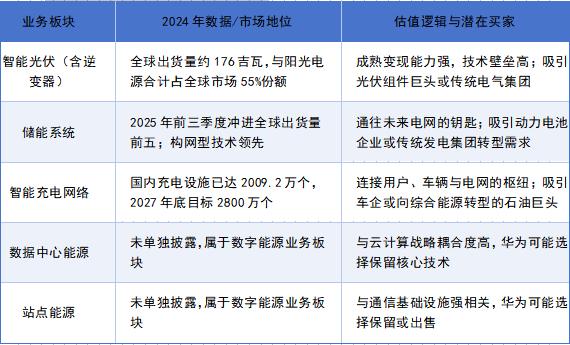
Core Insights - Huawei is reportedly seeking a buyer for its digital energy business, which generated revenue of 68.678 billion yuan in 2024, marking a 24.4% year-on-year growth and becoming the company's third-largest revenue source [1][2] - The global photovoltaic inverter market is experiencing a cyclical adjustment, with expected shipment declines from 589 GW in 2024 to 523 GW in 2026, while the energy storage sector is transitioning from scale expansion to value enhancement [2][3] - The potential valuation of Huawei's digital energy business could reach up to 400 billion yuan, making it a complex asset that may deter single buyers and attract regulatory scrutiny [4][5] Market Signals - The decision to consider splitting the digital energy business aligns with significant structural changes in the global energy market, driven by uncertainties in major markets like China, Europe, and the U.S. [2][3] - The energy storage market is projected to exceed 100 GW of installed capacity in 2025, with market drivers shifting from policy incentives to more complex mechanisms and revenue models [2] Business Breakdown - The digital energy business comprises several segments, including smart photovoltaics (55% global market share), energy storage systems, smart charging networks, data center energy, and site energy [5] - Potential buyers for these segments may include traditional electric groups, battery manufacturers, and automotive companies transitioning to integrated energy solutions [5] Strategic Implications - If the split occurs, it represents a long-term strategic decision for Huawei, allowing the company to reallocate resources and focus on core areas such as AI chips, digital twins, and 5G [6][8] - The complexity of the split is heightened by the interconnections between digital energy and Huawei's other services, such as cloud solutions and smart automotive offerings [6][7] Challenges for Buyers - Buyers will face challenges in maintaining the competitive advantages associated with the Huawei brand, as the brand's value is tied to its overall technology ecosystem [7][8] - The potential acquisition could lead to one of the largest transactions in China's renewable energy sector, with Huawei poised to reinvest the proceeds into critical technology battles [8]
机器人1小时可检测200米排水管道
Nan Fang Du Shi Bao· 2026-02-01 23:12
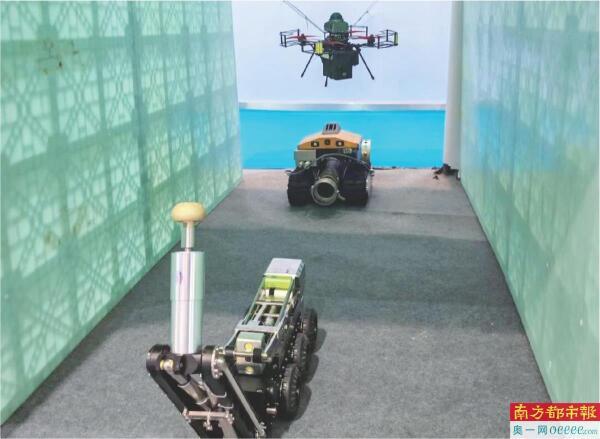
Core Insights - Longhua District has released its first batch of 90 scenario demand lists and 60 capability lists, aiming to connect government and park applications with emerging technologies for precise investment attraction [2][4] Group 1: Scenario Demand and Capability Lists - The released scenario demands cover key areas such as low-altitude economy, smart governance, smart security, smart healthcare, intelligent construction, and public infrastructure, addressing industrial upgrade bottlenecks and urban governance challenges [2][3] - The capability list includes 60 breakthrough technologies and products from local and external enterprises, with a 60% match to the scenario demands, featuring innovations like high-rise building firefighting drones and integrated intelligent information platforms [3][4] Group 2: Government Initiatives and Support - Longhua District government acts as the "chief experience officer" for enterprise products, promoting an open innovation ecosystem by reserving budget for innovative scenario construction in new government investment projects [5][6] - The district has established a comprehensive investment promotion service system to support the entire lifecycle of enterprises, ensuring efficient one-stop services for global investors [4][5] Group 3: Technological Advancements and Applications - The integration of digital twin and AI technologies has significantly reduced the average processing time for urban governance issues to about one hour, enhancing safety and efficiency in operations [6][7] - Longhua has become a national model for low-altitude economy, with over 139 takeoff and landing facilities and a comprehensive management platform for drone services, achieving substantial reductions in delivery times [6][7] Group 4: Future Development Plans - The district has outlined a two-year plan to enhance innovation application scenarios, focusing on resource exploration, integrated scene construction, and establishing efficient supply-demand matching mechanisms [8]


两会好声音|马晶梅委员:加速数智化 提升高技术制造业竞争优势
Xin Lang Cai Jing· 2026-01-31 16:27
Group 1 - The core report emphasizes the promotion of high-end, intelligent, and green development in the manufacturing industry, with Heilongjiang Province identifying digitalization as a key engine for building a modern industrial system [2] - By 2024, Heilongjiang plans to implement policies to accelerate the digital transformation of manufacturing, having already cultivated 335 provincial-level digital workshops and smart factories across key sectors such as equipment manufacturing, petrochemicals, and pharmaceuticals [2] - Suggestions from provincial political advisor Ma Jingmei include implementing core technology breakthroughs and digital empowerment actions, focusing on high-end industrial software and sensors, and establishing special funds to support collaborative digital innovation centers between schools and enterprises [2] Group 2 - A targeted support plan for small and medium-sized enterprises (SMEs) will be promoted, including the establishment of provincial special funds and tools like service vouchers and solution subsidies to reduce transformation costs [3] - The creation of a talent cultivation mechanism integrating industry and education is proposed, which includes systematic training for engineers and management personnel to enhance digital skills, as well as special allowances for high-level talent [3] - A digital engineer sharing platform and school-enterprise co-education alliance will be established to align talent training with industry needs [3]
