
生态文明

Search documents
凝聚合力守护生态安全
Jing Ji Ri Bao· 2025-10-30 22:14
Group 1: Policy and Economic Framework - The 20th Central Committee's Fourth Plenary Session emphasizes the coordinated advancement of carbon reduction, pollution reduction, greening, and growth to strengthen ecological security and enhance green development momentum [1] - A green low-carbon circular economy system is to be constructed, focusing on ecological industrialization and industrial ecology, with strict implementation of spatial planning controls [2] - Establishment of a green industry development fund and innovation of green development incentive mechanisms to increase R&D tax deductions for environmental protection technologies [2] Group 2: Corporate Development and Innovation - Companies are encouraged to shift from "passive compliance" to "active governance," establishing environmental responsibility systems throughout the product lifecycle [2] - A collaborative innovation system involving government, industry, academia, research, finance, and services is to be supported, particularly for leading enterprises to form green technology innovation alliances [2] - Companies should integrate ecological responsibility into their development strategies and enhance internal ecological culture to improve employee environmental awareness [2] Group 3: Public Engagement and Cultural Shift - Ecological civilization education is to be integrated into national education and training systems to enhance public ecological awareness [3] - Development of digital platforms for public participation and improvement of environmental public interest litigation mechanisms to foster social supervision [3] - Promotion of a green lifestyle and encouragement for the public to prioritize green products and services, guiding market demand towards green transformation [3]
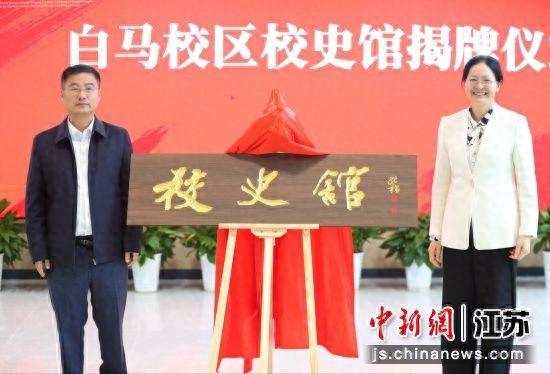
南林白马校区校史馆开馆 林业史料展银杏邮票展启幕
Zhong Guo Xin Wen Wang· 2025-10-30 10:17
Core Points - Nanjing Forestry University held the opening ceremony of its history museum and launched two exhibitions on modern forestry history and ginkgo postage stamps [1][5][6] Group 1: Event Overview - The opening ceremony took place at the Baima campus library, featuring the unveiling of the history museum and the initiation of two thematic exhibitions [1][3] - Vice President Zhang Xiaoqin and Tang Jinhui jointly unveiled the history museum, emphasizing the university's long-standing heritage and the importance of integrating historical spirit into personal and institutional development [3][5] Group 2: Exhibitions and Contributions - The exhibitions include a comprehensive display of China's forestry development history and a collection of ginkgo-themed postage stamps donated by researcher Wang Xiqun [5][6] - The university's library, museum, and archives presented valuable books such as the inaugural issues of "Forest" and "Forestry" to the Baima campus [5][6] - A performance titled "Green Symphony Across Time and Space" was presented by students from the university's drama club during the ceremony [5]

理解“两山”理念的三个维度
中国能源报· 2025-10-27 02:17
Core Viewpoint - The "Two Mountains" concept, proposed 20 years ago, has significantly influenced China's path towards high-level ecological protection and high-quality development, reshaping the country's development trajectory and ecological landscape while providing a global framework for harmonious coexistence between humans and nature [1][11]. Group 1: Historical Context and Development - The "Two Mountains" concept has evolved from local practices in Yucun, Zhejiang, to a national and global model, emphasizing ecological protection as a foundation for sustainable development [3][11]. - The concept has led to a fundamental shift in energy development from reliance on fossil fuels to a focus on clean energy, with the share of clean energy installations in China rising from 23% in 2005 to over 60% by 2025 [6][11]. Group 2: Practical Applications and Innovations - The implementation of the "Two Mountains" concept has resulted in various successful local initiatives, such as transforming Yucun from a "stone economy" to a tourism-based economy reliant on clean energy [3][4]. - Technological advancements in renewable energy have been significant, with solar cell efficiency reaching 34.8% and offshore wind turbine capacity reaching 26 megawatts, showcasing China's leadership in the global renewable energy market [7][11]. Group 3: Economic and Environmental Synergy - The "Two Mountains" concept illustrates that high-level ecological protection is not a constraint on economic development but rather a crucial support for high-quality growth, as evidenced by Zhejiang's economic performance with only 1.1% of the country's land and 3.4% of its energy consumption while generating 6.7% of the national GDP [6][10]. - The concept promotes a virtuous cycle where ecological protection enhances economic value, leading to improved livelihoods and contributing to common prosperity [10][11]. Group 4: Global Impact and Future Outlook - China's commitment to the "Two Mountains" concept has positioned it as a key player in global green development, contributing to one-fourth of the world's new green areas and actively participating in international renewable energy projects [11][12]. - Looking ahead, the "Two Mountains" concept is expected to drive global energy transformation, facilitating a shift from industrial civilization to ecological civilization, benefiting people worldwide [12].

中国馆里看自然之道
Zhong Guo Zi Ran Zi Yuan Bao· 2025-10-23 08:44
Core Points - The 8th World Conservation Congress will be held in Abu Dhabi, UAE from October 9 to 15, 2025, with the theme "Transformative Nature Conservation" [2] - The China Pavilion showcased China's commitment and achievements in ecological civilization, biodiversity protection, and sustainable development, receiving positive feedback from international representatives and experts [2] Group 1: Key Events and Discussions - A high-level side event focused on "Nature-based Solutions (NbS) in Asia" highlighted China's extensive ecological protection and restoration efforts since announcing carbon peak and neutrality goals, providing valuable insights for global sustainable development [4] - A side event led by the China Ocean Development Foundation discussed marine ecological protection and sustainable development, sharing China's achievements in marine ecology and disaster reduction [5] - The Global Coastal Forum emphasized the importance of coastal ecosystem protection, with calls for increased resource investment and expanded protected areas [6] Group 2: Reports and Case Studies - China released the "Typical Cases of the 'Two Mountains' Transformation," covering various natural resource types and showcasing advanced experiences in ecological governance and value enhancement [10] - Notable protection cases from China included the NbS practices in the Huangpu River Basin and the Guangzhou Nansha Wetland area, demonstrating innovative approaches to ecological restoration and community engagement [11] Group 3: International Collaboration and Engagement - The China Pavilion served as a platform for international cooperation, attracting significant attention from global representatives and facilitating discussions on ecological protection and sustainable development [12] - The successful series of events at the China Pavilion highlighted China's role as a responsible major country in promoting ecological civilization and global natural conservation efforts [14]

好评中国|人水相依 美美与共
Zhong Guo Jing Ji Wang· 2025-10-22 03:12
Core Viewpoint - The article emphasizes the importance of ecological protection and its positive impact on both the environment and local economies, showcasing successful initiatives along the Yangtze River that have led to improved biodiversity and community livelihoods [2][3][4]. Group 1: Ecological Protection Initiatives - A series of protective measures have been implemented along the Yangtze River, resulting in the resurgence of endangered species like the Chinese sturgeon and improved water quality [2]. - The Chinese government has shifted its focus from large-scale development to ecological protection, highlighted by the comprehensive implementation of the Yangtze River Protection Law and a ten-year fishing ban [2][3]. Group 2: Economic and Social Benefits - In Danjiangkou City, environmental improvements have led to increased tourism and new economic opportunities for local residents, such as selling agricultural products and operating homestays [3]. - Since the beginning of the 14th Five-Year Plan, over 86,000 administrative villages have completed environmental renovations, with rural sewage treatment rates exceeding 45% [3]. Group 3: Cultural and Historical Significance - The South-to-North Water Diversion Project is highlighted as a significant engineering achievement, with Danjiangkou City serving as a key water source, fostering a spirit of community sacrifice among relocated residents [4]. - The integration of water culture and engineering projects has stimulated new cultural tourism development, with Danjiangkou City receiving approximately 6.66 million visitors in the first half of the year [4].
创意视频丨风雨兼程见彩虹
Xin Hua She· 2025-10-22 02:49
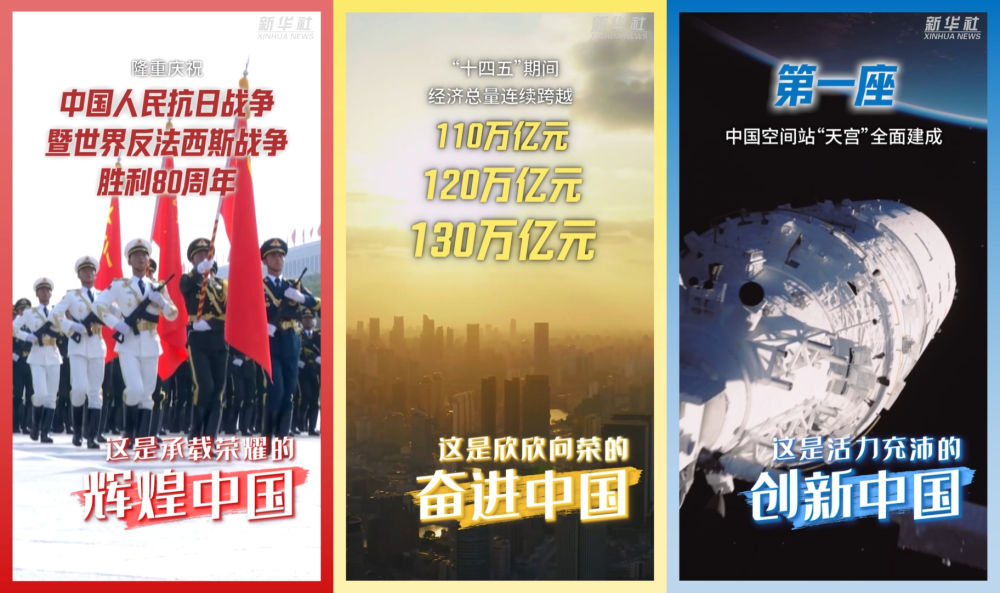
Group 1 - The article highlights the accelerated evolution of a century-old situation, emphasizing the challenges and heavy responsibilities in reform, development, and stability [2] - It discusses the transformation from "China Red" representing glory to "Mountain Water Green" symbolizing ecological civilization, and from "Warm Orange" reflecting people's happiness to "Dream Blue" indicating technological innovation [2] - The "14th Five-Year Plan" period is characterized by resilience against pressures and challenges, leading to significant advancements in economic and social development, described as "rain and wind reveal the rainbow" [6] Group 2 - The article notes that the journey ahead is not easy, but the achievements so far are substantial, indicating a promising future [6]
探寻山岳型风景名胜区协同发展新路径
Zhong Guo Fa Zhan Wang· 2025-10-21 11:00
Core Viewpoint - The "Beautiful China Thousand Miles Tour" event held in Taishan aims to promote the collaborative development of mountainous scenic areas and enhance ecological protection while fostering cultural tourism [1][2][4]. Group 1: Event Overview - The event took place on October 20 in Taishan, Shandong Province, gathering representatives from various mountainous scenic areas and experts in the cultural tourism industry [1]. - The opening ceremony featured speeches from key figures, including Zhang Yongli, the president of the China Scenic Area Association, and local government officials [1][3]. Group 2: Key Themes and Discussions - Zhang Yongli emphasized the importance of ecological protection and the need for high-quality development in scenic areas, aligning with the "Two Mountains" concept [2]. - The event highlighted the integration of ecological civilization and cultural heritage, aiming to enhance the tourism experience while promoting sustainable development [2][3]. - Discussions included the role of technology and digital empowerment in transforming natural resources into economic benefits, as well as fostering cultural confidence through the rich heritage of mountainous regions [5]. Group 3: Collaborative Initiatives - The event featured a series of programs, including the "Beautiful China Lecture Hall" and "Beautiful China Talks," focusing on collaborative development among the Five Great Mountains and sharing best practices [4][5]. - A meeting of the Five Mountains Collaborative Development Professional Committee was held, resulting in the approval of several initiatives aimed at enhancing cooperation and marketing among scenic areas [6].
“十五五”规划前瞻
Guo Tai Jun An Qi Huo· 2025-10-20 08:32
1. Report Industry Investment Rating There is no information provided in the report regarding the industry investment rating. 2. Core Viewpoints of the Report - The "15th Five - Year Plan" is expected to be gradually implemented in three steps: the core content will be announced on October 23, 2025; the full text of the Party's "15th Five - Year Plan Outline Suggestions" will be released in the following days; the full text of the "15th Five - Year Plan Outline" will be officially released after being approved by the Fourth Session of the 14th National People's Congress in March 2026. The plan will inherit and innovate on previous goals, especially in key areas such as economic growth, technological innovation, and institutional reform [1]. - Five - year plans have a profound impact on the macro - underlying logic, economic context, and capital markets. They often lead to significant stock market rallies and clearly define core investment tracks. They also affect the supply and demand of commodities, thereby influencing prices [2]. 3. Summary According to the Table of Contents 3.1 "15th Five - Year Plan" Later Implementation Process and Main Nodes - The implementation process will follow three steps: on October 23, 2025, the "Fourth Plenary Session" will release a communiqué with the core content of the "15th Five - Year Plan"; in the following days, the Party's "15th Five - Year Plan Suggestions" will be released, along with an explanation by the General Secretary; the State Council will compile the final version of the plan based on the Party's suggestions and submit it to the National People's Congress for approval in March 2026 [1][6]. 3.2 Five - Year Plan Document Framework Content Overview - The "Five - Year Plan Outline" includes a general introduction (covering economic situation judgment, guiding ideology, principles, and goals), specific area discussions (detailing key tasks in various fields), and a conclusion (emphasizing Party leadership, implementation, and guarantee mechanisms). Quantitative indicators in previous plans mainly cover five areas: economic development, people's well - being, ecological environment, innovation drive, and security [10]. 3.3 "15th Five - Year Plan" Key Content Outlook 3.3.1 Economic Growth Target Setting - Long - term growth targets require China to reach the level of a high - income country by the end of the "14th Five - Year Plan" and double its economic aggregate or per - capita income by 2035. As of 2024, China's per - capita GDP was $13,300. To reach the minimum threshold of a moderately developed country ($24,000) by 2035, the average nominal growth rate from 2026 - 2035 should be no less than 5.6% (assuming a 4.5% nominal growth rate in 2025). The actual GDP growth rate from 2026 - 2035 should be around 4%. Market expectations suggest setting a target of around 5% in 2026 and gradually reducing it to 4.8% [17][18][23]. 3.3.2 Key Work Task Deployment - The "15th Five - Year Plan" will continue to focus on economic, institutional, industrial, innovation, people's well - being, and ecological fields. Key areas include institutional reform, technological innovation, domestic demand expansion, green development, and industrial chain security. New quality productivity development is expected to accelerate, and the plan will also address issues such as effective demand shortage and international competition [24][29][30]. 3.4 Five - Year Plan's Market Impact 3.4.1 Five - Year Plans as Investment Mainlines - Five - year plans reshape the economic underlying logic, clarify development priorities, and provide clear investment tracks for the capital market. Different periods have seen different industries thrive, such as traditional cyclical industries during the "11th Five - Year Plan" and technology industries during the "12th" and "13th Five - Year Plans" [33]. 3.4.2 Stock Market Impact - Historically, stock markets have often rallied around the release of five - year plans. Currently, the technology - growth sector has outperformed the market, with some sub - themes like optical modules and AI computing power showing significant excess returns. If the "15th Five - Year Plan" has unexpected content, it will create short - term trading opportunities and support medium - term technology and reform - related investments [35][37]. 3.4.3 Commodity Market Impact - Five - year plans affect commodity supply and demand through national economic logic, industrial policies, and resource security strategies. They have led to a shift in demand from traditional commodities like steel and cement to manufacturing and new - energy - related metals. Supply - side reforms and national policies also influence commodity prices [40].
国际自然保护周启幕
Jie Fang Ri Bao· 2025-10-19 02:35
Core Points - The 11th Shanghai International Nature Conservation Week has commenced, serving as a significant platform for public education on nature conservation since its inception in 2015 [1] - The event has attracted global experts and scholars, evolving into a showcase for urban green development achievements and enhancing public scientific literacy [1] - This year's event features over a thousand unique activities centered around "technology," integrating high-quality science popularization resources [1] - During the Nature Conservation Week, 39 environmental education bases and 90 environmental protection facilities in Shanghai will open to the public, allowing citizens to make reservations via a WeChat mini-program [1] - To enhance public engagement, five City Walk natural science routes and eleven ecological research study routes have been launched by the Shanghai Municipal Ecology and Environment Bureau and the Shanghai Science and Technology Association [1]
在绿水青山间追求共同现代化
Xin Hua She· 2025-10-18 15:30
Core Viewpoint - China is pursuing a path of green development that harmonizes economic growth with ecological protection, contributing to global sustainable development and modernity [1][3][8] Group 1: Green Development Initiatives - During the 14th Five-Year Plan, China's ecological environment quality has improved, with PM2.5 concentration in cities decreasing by 16.3% compared to 2020, and the proportion of good air quality days reaching 87.2% [3] - The city of Hangzhou has been recognized as a "Model City for Harmonious Coexistence between Humans and Nature" by UNESCO, showcasing the benefits of green initiatives [2] - The construction of a 3,046-kilometer green protective belt around the Taklamakan Desert is expected to enhance local development through ecological restoration and job creation [2] Group 2: International Cooperation and Technology Transfer - China is actively participating in global ecological governance and has signed 54 climate change cooperation memorandums with 42 developing countries, emphasizing South-South cooperation [7] - Chinese experts are collaborating with local communities in Africa, providing training and technology for sustainable practices, such as water quality monitoring and ecological restoration [6][5] - The integration of economic and ecological strategies has been highlighted as a key factor in China's successful green development, which serves as a model for other nations [3][4] Group 3: Future Goals and Commitments - By 2035, China aims to reduce greenhouse gas emissions by 7%-10% from peak levels and increase the share of non-fossil energy consumption to over 30% [6] - The country is committed to expanding its renewable energy capacity, targeting a sixfold increase in wind and solar power installations compared to 2020 [6] - China's green development approach is seen as a significant contribution to addressing global challenges related to climate change and biodiversity loss [8][7]