跨境支付

Search documents
深度解读“数字人民币”:发展现状和未来机遇
2025-12-26 02:12
Summary of Digital Renminbi Conference Call Industry Overview - The conference call focuses on the development and future opportunities of the digital renminbi (e-CNY) in China, highlighting its current status, challenges, and potential reforms. Key Points and Arguments Current Development Status - As of June 2025, the trial transaction amount of digital renminbi has reached 12.4 trillion yuan, with a monthly transaction amount of 894.13 billion yuan in June 2025 [2][1] - The digital renminbi app has facilitated the opening of 218 million personal wallets, widely used in various scenarios such as tax payments, subsidies, retail payments, corporate settlements, government services, and public transportation [2][1] Challenges in Promotion - The issuance mechanism is not smooth, as the digital renminbi is positioned as M0, which limits direct issuance to the public and requires 100% reserve from operating institutions [3][4] - User stickiness is low, with insufficient unique advantages in core payment scenarios leading to infrequent usage compared to third-party payment tools [4][3] - The ecosystem is still underdeveloped, requiring more merchant access, payment terminal proliferation, and enhanced cooperation among financial institutions [4][5] Core Reforms Proposed - The core of the digital renminbi reform involves adjusting the currency level from M0 to M1, optimizing the management system, and establishing economic incentive mechanisms [5][6] - The reform aims to transform digital currency from cash substitutes to a part of the modern monetary system, allowing for more flexibility and innovation among market participants [5][6] Future Ecosystem Participants - Future participants in the digital renminbi ecosystem will include around 20 commercial banks, wallet operators, professional service providers, clearing systems, and end-users [6][5] Impact on Monetary Supply and Credit Activities - Currently, the digital renminbi has a negligible impact on overall monetary supply, with a monthly average balance of approximately 15 billion yuan compared to an M2 balance of about 300 trillion yuan [7][1] - The mechanism may have a contractionary effect on monetary supply, necessitating careful consideration of its potential tightening effects during large-scale promotion [7][1] Transaction-Level Issues - The design of the digital renminbi considers anonymity for user privacy, but this has led to challenges in financial integrity and increased risks of fraud [8][1] - To meet anti-money laundering requirements, a shift towards a strong real-name account system is necessary [8][1] Enhancing Operational Sustainability - To enhance the sustainability of operating institutions, several measures are proposed, including changing the M0 designation to M1, allowing interest on reserves, and enabling loan issuance through digital renminbi [9][1] - The establishment of a management committee and the separation of management and operation are also part of the strategy to improve efficiency [9][1] User Engagement and Experience - Current user engagement is low, with an average of 30 million active personal wallets per month, representing only 20% of total wallets opened [10][1] - To increase user engagement, enhancing user experience through innovative products and services is essential [11][1] Relationship with Other Digital Currencies - The digital renminbi is a central bank digital currency (CBDC) and differs significantly from stablecoins and virtual currencies, which are privately issued and considered illegal financial activities in China [10][1] Future Internationalization and Collaboration - The internationalization of the digital renminbi is a key strategic goal, aiming to reduce cross-border payment costs and enhance its role as an international reserve currency [16][1] - Collaboration with stablecoins is being explored to optimize global financial infrastructure and improve cross-border transaction efficiency [17][1] Additional Important Content - The digital renminbi's transition from M0 to M1 and eventually to M2 signifies its evolution from a payment tool to a more comprehensive financial instrument [13][1] - The potential impact on non-bank payment institutions like Alipay and WeChat Pay could reshape their roles in the payment ecosystem, creating both challenges and opportunities [14][1][15]
跨境支付重大利好!八部门联手推进数字人民币跨境试点,这五大核心板块或迎高速黄金期!
Sou Hu Cai Jing· 2025-12-25 09:23
Core Insights - The People's Bank of China and eight other departments have issued opinions to support the construction of the Western Land-Sea New Corridor, emphasizing the exploration of digital financial international cooperation [1] - The offshore RMB has surpassed the 7.0 mark against the USD, reaching a high of 6.996, marking the first time since September 2024, while the onshore RMB also crossed 7.01, a new high since September 27, 2024 [1] - The global retail cross-border payment market is projected to grow to $64.5 trillion by 2032, with a compound annual growth rate (CAGR) of 6.2% from 2024 to 2032, which is expected to enhance the infrastructure and application scenarios for RMB cross-border payments [1] Market Sector Analysis - **Cross-Border Payment Technology Services**: Companies providing cross-border payment system construction, technology upgrades, data processing, and solutions will benefit from the rapid growth of CIPS system business and the expansion of digital RMB cross-border payment trials [2] - **Digital RMB Industry Chain**: The evolution of digital RMB into a strategic carrier integrating finance, technology, and data will drive demand for bank IT upgrades, terminal equipment enhancements, and payment institution scenario expansions, presenting new growth opportunities across the entire industry chain [2] - **Banking and Financial Institutions**: The deepening of cross-border RMB settlement facilitation trials and the increasing choice of international enterprises to use RMB for settlement will open up more business space for Chinese banks in cross-border financial services, trade financing, and asset management, enhancing their non-interest income and international competitiveness [2] - **Cross-Border E-Commerce and Foreign Trade**: Policy support for building cross-border e-commerce digital service platforms in relevant provinces and cities will improve service capabilities and efficiency, reduce cross-border payment costs, and create a more favorable operating environment for cross-border e-commerce enterprises to expand overseas [2] Regional Financial Cooperation Beneficiaries - Financial institutions, logistics companies, and foreign trade enterprises in the regions involved in the Western Land-Sea New Corridor will directly benefit from enhanced financial support and deepened cross-border cooperation, with listed companies in these areas likely to gain more policy dividends and market opportunities [3] Relevant Listed Companies - **Sifang Jingchuang (300468)**: Focuses on providing financial IT solutions for financial institutions, with deep expertise in blockchain technology and digital currency, participating in the development and testing of multilateral central bank digital currency bridge projects [4] - **Zhongyi Technology (301208)**: Provides IT infrastructure construction and operation services, expected to benefit from the demand driven by the promotion of digital RMB and the development of financial technology [4] - **Lakara (300773)**: A well-known domestic third-party payment company actively expanding digital RMB acceptance scenarios and participating in multiple pilot projects, likely to benefit from the expansion of the payment ecosystem brought by digital RMB [4] - **Jingbeifang (002987)**: A leading domestic financial technology company providing IT technical services to banks, with bank system upgrades being a key business direction [4] - **Nantian Information (000948)**: A leading provider of financial information solutions, offering professional IT services to banks, with the promotion of digital RMB driving the demand for upgrades in core and peripheral banking systems [4] - **Changliang Technology (300348)**: A core banking system supplier deeply involved in digital RMB projects, providing a range of solutions from core business systems to digital wallets [5] - **Tianyang Technology (300872)**: Provides IT solutions and services to financial institutions, focusing on business areas such as bank credit and transaction banking, with new business opportunities arising from the application of digital RMB in trade settlement and supply chain finance [5] - **Cuiwei Co., Ltd. (603123)**: Its subsidiary has signed cooperation agreements with designated operating banks for digital currency, actively promoting system construction for digital RMB acceptance [5] - **Chutianlong (003040)**: Has a broad layout in the digital currency field, establishing technical and business cooperation with the People's Bank of China and various commercial banks to promote the construction of the digital RMB ecosystem [5]






宇信科技涨2.01%,成交额1.68亿元,主力资金净流出161.21万元
Xin Lang Cai Jing· 2025-12-25 03:08
Group 1 - The core viewpoint of the news is that Yuxin Technology's stock has shown a mixed performance in recent trading sessions, with a year-to-date increase of 18.40% and a recent drop over the last 60 days of 8.54% [2] - As of December 25, Yuxin Technology's stock price was 22.81 yuan per share, with a market capitalization of 16.06 billion yuan and a trading volume of 1.68 billion yuan [1] - The company's main business involves providing IT solutions primarily to financial institutions, with 84.94% of revenue coming from banking IT solutions [2] Group 2 - Yuxin Technology's revenue for the period from January to September 2025 was 2.186 billion yuan, a year-on-year decrease of 6.99%, while net profit attributable to shareholders increased by 6.48% to 279 million yuan [2] - The company has distributed a total of 808 million yuan in dividends since its A-share listing, with 415 million yuan distributed over the last three years [3] - As of September 30, 2025, the top ten circulating shareholders included Huabao Zhongzheng Financial Technology Theme ETF, which increased its holdings by 4.4047 million shares [3]

信雅达涨2.04%,成交额6977.80万元,主力资金净流入109.94万元
Xin Lang Cai Jing· 2025-12-25 03:00
Group 1 - The core viewpoint of the news is that Xinyada's stock has shown a significant increase in price and trading activity, indicating positive market sentiment and potential growth opportunities for the company [1][2]. - As of December 25, Xinyada's stock price rose by 2.04% to 15.51 CNY per share, with a total market capitalization of 7.233 billion CNY [1]. - Year-to-date, Xinyada's stock has increased by 23.95%, although it has experienced fluctuations in the short term, including a 5.14% decline over the past 20 days [1]. Group 2 - For the period from January to September 2025, Xinyada reported a revenue of 1.391 billion CNY, representing a year-on-year growth of 9.02%, while the net profit attributable to shareholders increased by 492.43% to 22.475 million CNY [2]. - The company has a strong focus on the IT industry, with 99.30% of its revenue derived from software technology development and consulting services [1][2]. - Xinyada has distributed a total of 826 million CNY in dividends since its A-share listing, with 143 million CNY distributed over the past three years [3].

南天信息涨3.91%,成交额4835.16万元,主力资金净流入441.11万元
Xin Lang Cai Jing· 2025-12-25 01:57
Core Viewpoint - Nantian Information has shown a mixed performance in stock price and financial results, with a notable increase in revenue but a significant decline in net profit [1][2]. Group 1: Stock Performance - On December 25, Nantian Information's stock rose by 3.91%, reaching 17.52 CNY per share, with a total market capitalization of 6.831 billion CNY [1]. - Year-to-date, the stock price has increased by 5.29%, with a 2.82% rise over the last five trading days and a 0.52% increase over the last 20 days, while it has decreased by 5.14% over the last 60 days [1]. Group 2: Financial Performance - For the period from January to September 2025, Nantian Information reported a revenue of 7.091 billion CNY, reflecting a year-on-year growth of 21.90% [2]. - The company experienced a net loss attributable to shareholders of 10.8998 million CNY, which represents a year-on-year decrease of 119.49% [2]. Group 3: Shareholder Information - As of September 30, 2025, the number of shareholders for Nantian Information was 59,900, a decrease of 20.65% from the previous period [2]. - The average number of circulating shares per shareholder increased by 26.02% to 6,494 shares [2]. - The company has distributed a total of 469 million CNY in dividends since its A-share listing, with 102 million CNY distributed in the last three years [3].
八部门发布金融支持加快西部陆海新通道建设21条举措
Sou Hu Cai Jing· 2025-12-25 01:50
Core Viewpoint - The People's Bank of China and several government agencies have jointly issued guidelines to enhance financial support for the construction of the Western Land-Sea New Corridor, focusing on improving financial collaboration, creating a high-quality financing system, and promoting regulatory innovation. Group 1: Financial Organization Collaboration - The guidelines encourage financial institutions to explore integrated credit mechanisms across regions along the corridor, facilitating the flow of financial resources across provinces [1] - It proposes optimizing the layout of overseas institutions and establishing a joint service network for domestic and foreign branches, enhancing customer due diligence and settlement convenience [1] - Support is provided for banks from ASEAN and Hong Kong to establish financial services in the corridor through new legal entities or branches [1] Group 2: High-Quality Financing System - The guidelines emphasize the need for financial institutions to increase support for infrastructure projects and utilize diverse financing channels and loan products [2] - Banks are encouraged to innovate credit products in line with logistics financing needs, promoting comprehensive credit and flexible loan models [2] - Development of specialized credit products for small and micro trade enterprises is supported, aiming to simplify processes and reduce financing costs [2] Group 3: Regulatory Innovation - The guidelines support banks in conducting compliant trade settlements based on a thorough understanding of clients and businesses [2] - Pilot programs for integrated currency pools for multinational corporations will be initiated in certain regions [2] - Simplification of foreign exchange registration procedures for non-financial enterprises is proposed, along with support for foreign investment reinvestment without registration [2] Group 4: Financial Open Cooperation - The guidelines support banks in issuing cross-border loans to enterprises or projects in ASEAN countries while adhering to regulatory frameworks [3] - Collaboration between provinces along the corridor and the Guangdong-Hong Kong-Macao Greater Bay Area is encouraged, facilitating legal financing in Singapore and Hong Kong [3] - The exploration of cross-border payment trials using digital currencies with Singapore and other countries is supported [3] Group 5: Financial Risk Prevention - A financial regulatory linkage mechanism will be established to adapt to the corridor's construction, promoting data sharing and enhancing regulatory oversight [3] - Strengthened monitoring and prevention of cross-border financial risks will be implemented to mitigate risks associated with increased cross-border capital flows [3]
央行发文推动,数字人民币跨境应用迈向具体场景落地
Xuan Gu Bao· 2025-12-24 23:13
Group 1 - The People's Bank of China and eight other departments issued opinions to support the construction of the new western land-sea corridor, emphasizing the expansion of cross-border use of the Renminbi [1] - Digital Renminbi, as a central bank-issued legal currency, significantly improves cross-border payment efficiency, reducing settlement time to 8 seconds to 45 minutes compared to traditional methods which take 2 to 5 days [1] - The digital Renminbi has established a solid foundation for cross-border trials, with 225 million personal wallets opened and 3.32 billion transactions processed, amounting to 14.2 trillion yuan [1] Group 2 - Blockchain technology's distributed ledger characteristics enable "payment compliance," reducing cross-border payment costs to 0.1%-1%, significantly lower than the traditional 5%-10% fee rates [2] - The integration of digital Renminbi with blockchain is reshaping the underlying framework of global cross-border payments [2] - The entire industry chain will continue to release dividends, with upstream benefiting from bank IT system upgrades and wallet technology development, midstream focusing on system adaptation and cross-chain technology services, and downstream emphasizing terminal device upgrades and payment scenario expansion [2] Group 3 - Lakala is a core player in the payment ecosystem, providing terminal devices and services compatible with digital Renminbi, actively participating in the expansion of digital Renminbi scenarios [3] - Newland is focused on the research and sales of payment terminal devices, providing hardware support for the implementation of digital Renminbi, with its smart POS machines and self-service terminals already adapted for digital Renminbi payments [3]
上证早知道|“杭州六小龙”之一 启动IPO;八部门发文 跨境支付再迎风口
Shang Hai Zheng Quan Bao· 2025-12-24 23:08
Industry Updates - The 16th Internet of Things Industry and Smart City Development Annual Conference is scheduled for December 25 [1] - Xiaomi's 17 Ultra launch event is set for December 25 [1] - The "Market Supervision Management Credit Repair Management Measures" will be implemented on December 25 [1] - Lianchuang Electronics will resume trading on December 25, with a change in actual control to Jiangxi State-owned Assets Supervision and Administration Commission [1] - Fenglong Co., Ltd. will also resume trading on December 25, with a change in controlling shareholder to Ubtech [1] Financial and Economic Policies - Eight departments, including the People's Bank of China, issued opinions to promote the construction of the Western Land-Sea New Corridor, focusing on cross-border payment opportunities [2] - The global retail cross-border payment market is projected to reach $64.5 trillion by 2032, with a compound annual growth rate of 6.2% from 2024 to 2032, which is expected to enhance the infrastructure for RMB cross-border payments [2] Real Estate and Urban Development - Beijing's housing policy will be adjusted starting December 24, 2025, easing purchase conditions for non-Beijing residents and supporting multi-child families [3] - The establishment of the Beijing Robotics Industry Association aims to enhance industry policy research and data analysis, promoting collaboration and market expansion [3] Tourism and Investment - Hainan is expected to receive 106 million domestic and international tourists this year, a 9% increase year-on-year, with total tourist spending reaching approximately 224.98 billion yuan, up 10.3% [4] - The National Development and Reform Commission and the Ministry of Commerce released the "Encouraging Foreign Investment Industry Catalog (2025 Edition)," expanding entries in various sectors to enhance supply chain development [4] Technology and Innovation - Hangzhou's "Six Little Dragons," including Yunshenchu, has initiated an IPO process, with a significant market share in the quadruped robot sector [6] - The Tianlong III reusable rocket by Tianbing Technology is set for its maiden flight, marking a significant step in China's commercial space development [7] Company News - Binhua Co. plans to establish a venture capital fund focusing on synthetic biology and new energy sectors [8] - Superjet Co.'s controlling shareholder reduced holdings by 974,400 shares between December 8 and December 24 [9] - Nanshan Aluminum has established a wholly-owned subsidiary in Hainan to enhance regional industrial layout [9] - Heng Rui Medicine's SHR-A1904 injection has been included in the list of breakthrough therapeutic varieties by the National Medical Products Administration [9] - Longpan Technology is increasing the planned capacity of its lithium iron phosphate production project from 62,500 tons per year to 100,000 tons per year [9] - Guangyang Co. signed a strategic cooperation agreement with Konghui Automotive to advance its business layout in intelligent driving [9] - Xingyuan Zhuomei has received a supplier designation from a domestic new energy vehicle manufacturer, with mass production expected to start in Q1 2027 [10] Investment Trends - The issuance of stock index funds has surpassed 400 billion yuan this year, with a total of 1,604 new funds launched [11] - Institutional investors have net bought Tianyin Electromechanical shares worth 496 million yuan, indicating strong interest in the company's radar and aerospace electronics business [12] - Institutional investors have also net bought China National Materials shares worth 299 million yuan, reflecting confidence in the company's cost reduction and international expansion strategies [13]
晚报 | 12月25日主题前瞻
Xuan Gu Bao· 2025-12-24 14:41
Group 1: Computing Power - The 2025 Computing Power Internet Conference will be held on December 24-25 in Chengdu, Sichuan, where the national computing power internet service platform's cross-domain system will be officially launched, marking the preliminary validation of the "1+M+N" architecture [1] - The establishment of the national computing power internet service platform's cross-domain system aims to implement the national "East Data West Computing" strategy and build a unified national computing power system, enhancing resource utilization and service efficiency [1] Group 2: Naked-eye 3D Technology - A new generation of naked-eye 3D display system "Shusheng-Tongzhen EyeReal" has been developed by the Shanghai Artificial Intelligence Laboratory and Fudan University, achieving ultra-wide range, full-parallax 3D display without the need for glasses [2] - The technology addresses traditional 3D display issues such as dizziness caused by mismatched interpupillary distance, indicating a significant step towards practical applications in various fields including gaming, architecture, and education [2] Group 3: Cross-border Payments - The People's Bank of China and eight other departments have issued opinions to support the construction of the Western Land-Sea New Corridor, including exploring digital financial international cooperation and cross-border payment trials with Singapore [3] - The global retail cross-border payment market is projected to reach $64.5 trillion by 2032, with a compound annual growth rate of 6.2% from 2024 to 2032, driven by stablecoins and diversified application scenarios [3] Group 4: Robotics - Hangzhou Yundongchu Technology Co., Ltd. has submitted an IPO application, ranking second in the global quadruped robot market with an 18.9% market share [4] - The robotics industry is expected to enter a high-speed development phase, supported by policies and innovations across the entire industry chain, with humanoid robots anticipated to become a disruptive product [4] Group 5: Commercial Space Launch - Tianbing Technology's Tianlong-3 reusable rocket is set to conduct its maiden flight soon, with several new commercial rocket models expected to launch by the end of 2025 [5] - The upcoming launches are anticipated to trigger a significant transformation in China's commercial rocket sector, leading to a new phase of low-orbit satellite internet deployment [5]

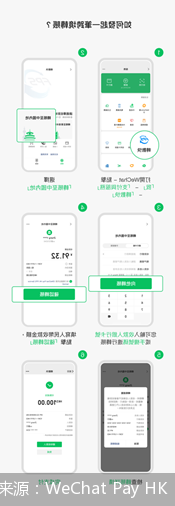
跨境支付通再扩容!微信港币钱包成首家电子钱包成员
Bei Jing Shang Bao· 2025-12-24 11:54
Group 1 - WeChat Pay HK becomes the first electronic wallet to access the "Cross-Border Payment Link," allowing Hong Kong residents to transfer funds to mainland personal bank accounts or mobile numbers without fees [1][3] - The "Cross-Border Payment Link" connects the mainland's interbank online payment system (IBPS) with Hong Kong's Faster Payment System (FPS), facilitating RMB and HKD circulation for various business scenarios [3][4] - As of December 22, 2023, 35 institutions are participating in the "Cross-Border Payment Link," including 22 from Hong Kong and 13 from the mainland, indicating a growing network [3] Group 2 - The launch of the "Cross-Border Payment Link" marks a significant step in the connectivity of payment infrastructures between the mainland and Hong Kong, enhancing the recognition and use of both currencies in retail payment scenarios [3][4] - WeChat Pay HK's involvement signals a positive trend in the industry, suggesting that other large electronic wallets and prepaid card companies may also pursue cross-border real-time settlement in the future [5] - The potential for more types of institutions, such as cross-border e-commerce platforms and third-party payment organizations, to join the "Cross-Border Payment Link" could further innovate and develop the cross-border payment sector [5]