通用人工智能(AGI)

Search documents
本地生活新阶段:京东阿里卷时效,字节卷“智商”?
3 6 Ke· 2025-06-25 03:03
Core Insights - The article discusses the competitive landscape of the local life service market in China, highlighting the entry of major e-commerce platforms like JD and Alibaba into instant retail, while ByteDance is focusing on AI-driven solutions for this market [1][2][3] Group 1: Market Dynamics - The local life service market in China is projected to grow significantly, with online penetration increasing from 12.7% in 2021 to 30.8% by 2025, leading to an estimated market size of 35.3 trillion yuan [2] - Major players like JD and Alibaba are enhancing their operational efficiency and market presence through strategic adjustments, such as JD's announcement of over 25 million daily orders in its delivery business [1][11] Group 2: ByteDance's Strategy - ByteDance is launching an AI product named "TuanFan," which utilizes the Doubao model to provide users with intelligent food-related services, aiming to redefine the dining decision-making process [3][5] - The "TuanFan" product integrates various functionalities, including restaurant recommendations, menu suggestions, and direct ordering, creating a seamless user experience [4][5] Group 3: Competitive Positioning - The integration of AI into local life services is seen as a potential new traffic entry point for ByteDance, differentiating it from competitors who are primarily focused on traditional e-commerce [5][12] - The strategic moves by Alibaba, such as merging Ele.me and Fliggy into its e-commerce division, aim to enhance synergy within its ecosystem and meet diverse consumer needs more effectively [12]
AI自动化背后:凡是可量化的,皆不能幸免
3 6 Ke· 2025-06-24 01:41
Group 1 - The rapid development of AI is impacting nearly every labor sector, particularly those involving quantifiable tasks such as creative work and data analysis [1][3] - Leaders must support ambiguous investments and reward teams that redefine problems and explore the unknown, treating these areas as strategic assets rather than burdens [1][16] - AI's current models and those in development are poised to disrupt various professions, including creative roles and those involving data processing, with the potential for significant economic impact [3][4] Group 2 - Leaders need to understand how automation will affect their businesses and identify which tasks are most likely to be pressured by AI [4][5] - Certain jobs, such as driving and routine creative tasks, are at high risk of automation, with a significant percentage of interactions already involving AI executing tasks directly [5][6] - The framework for AI advancement includes defining task environments, collecting data, and providing computational power, which can lead to widespread automation of quantifiable tasks [9][12] Group 3 - The cost of measuring phenomena is decreasing, making it feasible to automate even low-margin tasks that were previously overlooked [11][12] - AI is expected to provide cheap and potentially free intelligence, expanding its application across various fields [12][15] - The distinction between tasks that can be automated and those that require human judgment is crucial, especially in areas characterized by Knightian uncertainty [15][16] Group 4 - Companies that focus solely on measurable aspects risk losing valuable opportunities in areas that are difficult to quantify, such as trust and creativity [16] - The evolution of work will continue, with breakthroughs in converting the unknown into quantifiable tasks leading to rapid dissemination and imitation [16]


Altman对话YC总裁:OpenAI的开源模型将远超期待
Hu Xiu· 2025-06-23 02:27
Group 1 - OpenAI is set to release a powerful open-source model, GPT-5, which will be a significant step towards achieving full multimodal capabilities [2][3] - GPT-5 is expected to support various input types including voice, images, code, and video, enhancing user interaction and application development [3][4] - The cost of using AI models is rapidly decreasing, with GPT-3's costs dropping to one-fifth within a week, indicating a trend that will continue [5][4] Group 2 - This year is referred to as the "Year of the Agent," where AI agents are expected to perform tasks similar to entry-level employees, potentially replacing many computer-based jobs [6][8] - OpenAI's vision for AGI is categorized into five levels, with GPT-5 being a step towards achieving deeper reasoning and real-time content generation capabilities [9][27] Group 3 - Entrepreneurs are encouraged to seize the technological transformation opportunities, as this is considered the best time in tech history for startups [10][42] - Successful startups should focus on unmet market needs rather than replicating existing products like OpenAI's core chat assistant [11][32] Group 4 - The integration of AI into everyday life is evolving, with users beginning to treat ChatGPT as an operating system that connects various data sources [21][24] - The future of human-computer interaction is expected to minimize traditional interfaces, allowing for more seamless and intuitive user experiences [40][41] Group 5 - OpenAI aims to create a comprehensive model capable of reasoning and generating real-time video content, which would revolutionize computer interfaces [27][26] - The potential for robotics is highlighted, with expectations that humanoid robots will soon be able to perform useful tasks in the real world [28][29] Group 6 - The discussion emphasizes the importance of building defensible companies in the face of competition from larger entities like OpenAI, suggesting that unique and innovative approaches are crucial for success [30][33] - The conversation reflects on the rapid advancements in AI and the need for new infrastructure to support these developments, drawing parallels to the historical impact of the transistor [62][63]
GPT-5或于今夏面世,5月国内游戏市场同比增长近10%
HUAXI Securities· 2025-06-22 09:12
Investment Rating - The industry rating is "Recommended" [4] Core Insights & Investment Recommendations - GPT-5 is expected to be released this summer, marking a significant step towards achieving Artificial General Intelligence (AGI). The integration of natural language capabilities and scientific reasoning will enhance model performance and improve application sentiment [2][24] - The Chinese gaming market experienced a year-on-year growth of 9.86% in May 2025, reaching a market size of 28.051 billion yuan. Mobile games grew by 11.96%, driven by new and mature products [2][24] - The report suggests a cautious outlook on trade negotiations, emphasizing AI as a key investment direction amid global macroeconomic fluctuations. It highlights the importance of technology innovation and self-sufficiency for long-term development [3][25] - Recommended investment opportunities include leading internet companies in Hong Kong, the gaming industry, and the film and cultural tourism sectors, with specific companies identified as beneficiaries [3][25] Summary by Sections Market Overview - During the 24th week of 2025, major indices such as the Shanghai Composite Index and the Hang Seng Index saw declines of 0.51% and 2.25%, respectively. The SW Media Index fell by 1.81% [12][17] Sub-industry Data Gaming Industry - The gaming market in China is showing robust growth, with significant contributions from new releases and established products. The resilience of the overseas market is highlighted, with localization becoming a core competitive barrier [2][24] - The top three iOS games are "Honor of Kings," "Peacekeeper Elite," and "Genshin Impact," while the top three Android games are "Heart Town," "Sword and Legend," and "Genshin Impact" [30][31] Film Industry - The top three films by box office revenue are "Sauce Garden Case" (76.669 million yuan), "New Dragon Trainer" (48.016 million yuan), and "Breakup List" (25.714 million yuan) [27][28] TV Series Industry - The top three TV series based on viewership index are "Ling Jiang Xian" (82.1), "Seven Roots Heart Simple" (76.6), and "Chang'an's Lychee" (81) [33][34] Variety and Animation - The leading variety show is "Infinite Overcoming Class Season 3," followed by "Mahua Special Happiness Season 2" and "Hahaha Season 5" [35] - The top animation series includes "Cang Yuan Tu" and its related series, with a viewership index of 328.9 [36]






现在张嘴不说Vibe,都不适合在AI圈待了?
虎嗅APP· 2025-06-22 08:40
Core Viewpoint - The article discusses the emergence and implications of the term "Vibe" in the AI industry, highlighting its transition from a technical term to a broader cultural phenomenon that emphasizes intuition and creativity over traditional technical skills [3][21]. Group 1: Vibe Coding - The term "Vibe Coding" was popularized by Andrej Karpathy, who described a new programming experience that emphasizes immersion and productivity through interaction with AI, suggesting a shift from traditional coding practices [5][6]. - "Vibe" redefines coding as an intuitive and creative process, making it more accessible to a broader audience beyond just technical developers [7][9]. - The popularity of "Vibe Coding" reflects a collective sentiment in the tech community, capturing a moment of excitement and potential in AI development [7][8]. Group 2: Vibe Marketing and Design - The concept of "Vibe Marketing" emerged as a new approach that relies on AI for rapid content generation and decision-making based on intuition rather than traditional analytical methods [11][12]. - "Vibe Design" aims to simplify the design process by allowing users to express feelings and concepts without needing technical knowledge, thus democratizing design [14]. - The shift towards "Vibe" in various fields indicates a broader trend of prioritizing emotional resonance and rapid iteration over meticulous planning and analysis [13][14]. Group 3: Criticism and Reflection - Critics within the tech community have raised concerns about the potential downsides of "Vibe Coding," suggesting it may lead to lower quality code and increased technical debt due to over-reliance on AI [16][17]. - Prominent figures, including Karpathy, have begun to clarify that effective AI-assisted programming still requires deep understanding and oversight, countering the notion that "Vibe Coding" eliminates the need for technical expertise [18][19]. - The term "Vibe" risks becoming a vague buzzword, losing its original meaning and becoming a form of industry jargon that lacks substance [22][23].

速递|Meta百亿美元收购Ilya遭拒,扎克伯格转身挖走SSI CEO、Siri负责人和GitHub前掌门人
Sou Hu Cai Jing· 2025-06-20 13:31
图片来源:Unsplash 在宣布以143亿美元投资人工智能初创公司 Scale AI,并挖走其创始人 Alexandr Wang 后,Meta CEO 马克·扎克伯格显然才刚刚开始他的 AI 人才收割战。 据知情人士透露, 扎克伯格的 AI 豪掷计划已进一步瞄准了 Safe Superintelligence 的 CEO、前苹果高管 Daniel Gross,以及 GitHub 前 CEO Nat Friedman。 这本不是扎克伯格最初设想的合作方式。 消息人士称,今年早些时候,Meta 曾试图直接收购 Safe Superintelligence——这家由 OpenAI 联合创始人 Ilya Sutskever 创立的公司,在今年4月的一轮融 资中估值达到了320亿美元。然而,Sutskever 不仅拒绝了收购提议,也婉拒了 Meta 对其本人的挖角邀请。 在与 Sutskever 谈判破裂后不久,扎克伯格便转向与 Gross 展开接洽。据悉,Gross 除了领导 Safe Superintelligence 外,还与 Friedman 共同创办了风投机构 NFDG(取自两人姓名首字母)。 消息称, G ...


2025 MWC上海|荣耀倡议共建AI终端生态联盟,中国方案重塑AGI时代棋局
Huan Qiu Wang· 2025-06-20 12:18
Core Insights - OpenAI's acquisition of Jony Ive's hardware company for $6.5 billion highlights a shift towards physical AI terminals, coinciding with Chinese companies pushing for standardized AI terminal classifications [1][3] - The evolution of AI is moving from theoretical capabilities to practical applications, emphasizing the need for AI to integrate into everyday user experiences [1][4] - Chinese companies are fostering a collaborative ecosystem to enhance AI deployment, contrasting with the competitive approaches of Western tech giants [4][10] Group 1: AI Development and Standards - OpenAI's five-level roadmap for achieving AGI (Artificial General Intelligence) has become a global reference, with predictions of reaching L3 this year and L4 next year [3] - The focus on "implementation capability" in AI is becoming crucial, with challenges in user adoption needing to be addressed [3][4] - Honor's initiative to establish a standardized classification for AI terminals aims to enhance the competitiveness of Chinese AI smartphones [4] Group 2: Collaborative Ecosystem - Honor's call for an open AI terminal ecosystem alliance during MWC Shanghai emphasizes collaboration among AI model companies, operators, and internet firms [4][10] - The proposed "AI Terminal Ecosystem Alliance" is structured as a pyramid, promoting unity, openness, co-creation, and sharing as foundational principles [4][5] - The alliance aims to address the three major barriers to AI implementation: trust, performance, and scenario integration [6][7] Group 3: Technological Innovations - Honor's upcoming AI foldable flagship, the Magic V5, is positioned as a lightweight device with advanced AI capabilities, showcasing the company's commitment to AI integration [6] - Key technologies for closing the AI application loop include a comprehensive personal knowledge base, collaborative AI agents, and interconnectivity across devices [6][7] - The Magic V5 aims to resolve user pain points in data retrieval, presentation creation, and file sharing, enhancing the overall user experience [7] Group 4: Global AI Landscape - The collaboration between Honor and China Mobile aims to create an open and innovative AI terminal ecosystem, enhancing user experience through intelligent and efficient AI services [10] - The contrasting approach of Honor's ecosystem compared to Western firms reflects a more inclusive strategy, potentially reshaping the global AI development paradigm [10] - The collaborative efforts of Chinese tech companies are seen as a key factor in overcoming fragmentation and fostering a more integrated AI landscape [10]
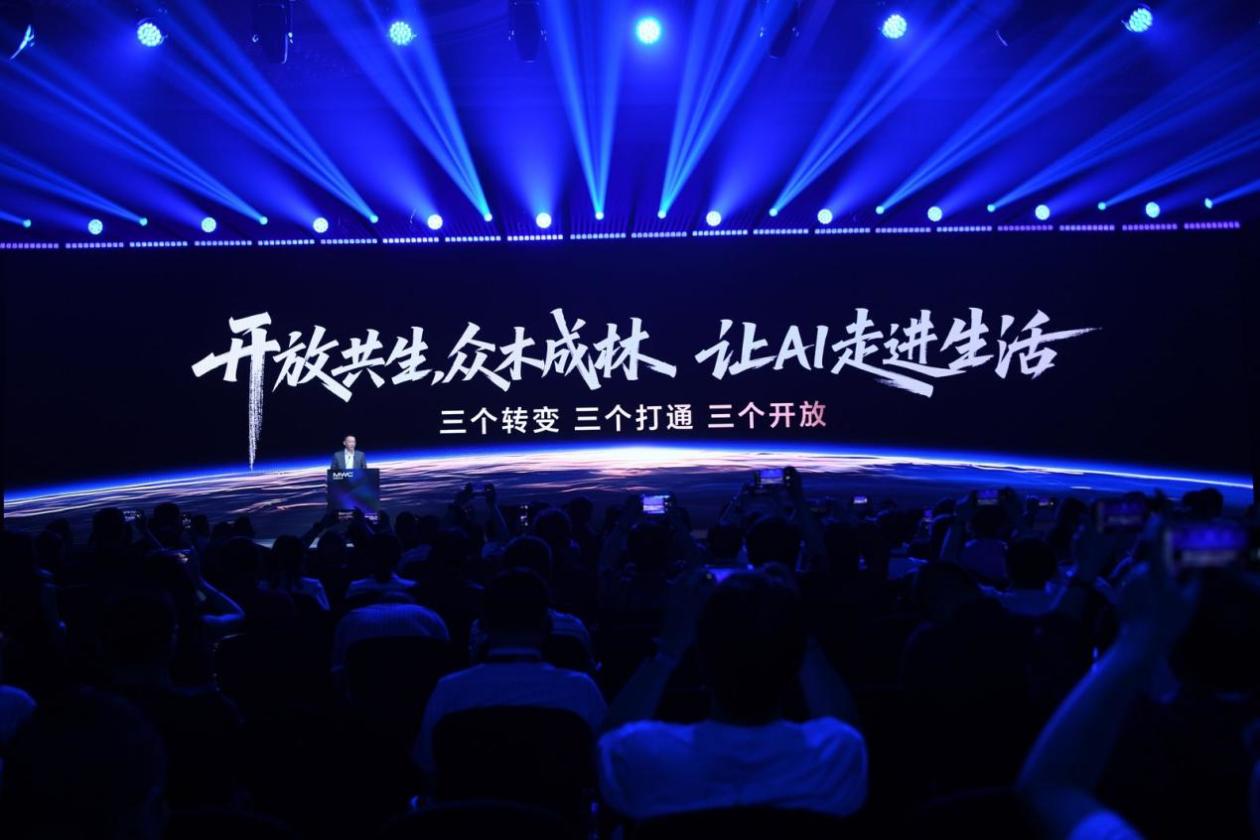
荣耀CEO李健:AI落地尚存在场景、性能、信任挑战
Zhong Guo Jing Ying Bao· 2025-06-20 06:12
2025年是AI(人工智能)技术跨越式发展的一年,从春节期间爆火的DeepSeek到Manus、Genspark等智 能体的集中爆发,AI已从单纯的信息识别处理生成阶段,进化为能自主感知、推理、规划、反思并执 行任务的智能体,因此今年也被广泛视为"智能体元年"。 荣耀终端股份有限公司CEO李健在相关论坛上表示,当前AI落地尚存在场景、性能、信任未形成有效 闭环等挑战,比如端侧的算力不足和内存偏低,导致难以支撑7B以上的模型和复杂的推理需求,并存 在幻觉、隐私和伦理等信任问题,用户数据权限、数据价值等方案仍未形成统一的标准。未来AI的竞 争不是比拼谁的模型参数更大、模型能力更强,而是让用户能够日常使用起来,才能真正释放AI的潜 力。 IDC预计,到2025年,全球人工智能市场规模将突破2000亿美元大关,而亚太地区将贡献超过35%的份 额。 中经记者陈佳岚上海报道 当前,全球AI产业正朝通用人工智能(AGI)的目标演进。 一年一度的上海世界移动通信大会(MWC2025)正在火热进行中。《中国经营报》记者留意到,AI也 是本届大会关注焦点之一,华为、移动、中兴、中国信科、联发科等厂商展出相关产品。 不过,关于"A ...
宇树科技融资了,中移动、腾讯、阿里、蚂蚁等多家领投
财联社· 2025-06-19 13:02
Core Viewpoint - Yushu Technology has successfully completed its C round financing, attracting significant investment from major players in the tech industry, indicating strong market confidence and potential for future growth [2]. Financing and Corporate Changes - Yushu Technology has completed nine rounds of financing, with the latest C round led by funds from major companies including Tencent and Alibaba, alongside participation from existing shareholders [2]. - The company has undergone a name change to Hangzhou Yushu Technology Co., Ltd., signaling its transition to a joint-stock company and raising speculation about a potential IPO in the future [2]. Product Development and Market Position - Yushu Technology's humanoid robot H1 gained significant attention during the 2025 Spring Festival Gala, showcasing the company's advancements in robotics and its aim to generate commercial value [3]. - The humanoid robots are primarily utilized in exhibition guidance and educational research, with the company acknowledging that widespread consumer market adoption is still a work in progress [3]. - The company is set to release a new humanoid robot with 26 degrees of freedom, with pricing hints suggesting it may be competitively priced below its previous model G1, which was priced at 99,000 RMB [4].

荣耀CEO李健:AI落地正在发生三个结构性改变|直击MWC上海2025
Guo Ji Jin Rong Bao· 2025-06-19 10:49
Core Insights - The development of AGI (Artificial General Intelligence) is a long-term process, currently transitioning from the "challenger" stage (L2) to the "reasoner" stage (L3), focusing on making AI actionable rather than just thinking [1] Group 1: Structural Changes in AI - The focus of AI competition is shifting from model capability to implementation capability, emphasizing the importance of models that can effectively deliver results [2] - The value positioning of AI is changing from tool efficiency to result closure, where AI applications should proactively complete tasks rather than just respond to commands [2] - The product form of AI is evolving from cloud computing to personal integration, requiring AI products to be embedded in user devices and daily life rather than remaining on servers [4] Group 2: Challenges in AI Implementation - There are three main challenges in AI implementation: 1. Scene integration, where AI struggles to operate efficiently across different devices, leading to fragmented user experiences [4] 2. Performance limitations, with current edge computing capabilities being insufficient to support models with over 7 billion parameters [4] 3. Trust issues, including privacy and ethical concerns, with a lack of standardized solutions for data rights and encryption [4] Group 3: Collaborative Initiatives - To accelerate AI implementation and achieve demand closure, a call for the establishment of an open AI terminal ecosystem alliance based on the GSMA platform has been made, aiming to unite AI model companies, operators, terminal enterprises, and internet companies [9] - The collaboration will focus on joint technological innovation, standard definition, business innovation, and talent cultivation to tackle AI implementation challenges [9] Group 4: Upcoming Product Launch - The company plans to launch the AI folding flagship Honor Magic V5 on July 2, which is expected to be the lightest folding screen phone globally and the "strongest" AI smart device in the industry [9]