5G

Search documents
赛微电子跌2.03%,成交额3.55亿元,主力资金净流出997.56万元
Xin Lang Zheng Quan· 2025-10-16 05:52
Core Viewpoint - The stock price of Saiwei Electronics has experienced fluctuations, with a year-to-date increase of 34.87% but a recent decline of 8.71% over the past five trading days [2] Company Overview - Saiwei Electronics, established on May 15, 2008, and listed on May 14, 2015, is located in Beijing and specializes in MEMS process development, wafer manufacturing, GaN epitaxial material growth, and chip design [2] - The company's revenue composition includes 54.30% from MEMS wafer manufacturing, 39.14% from MEMS process development, 4.90% from other sources, and 1.67% from semiconductor equipment [2] - As of June 30, 2025, the number of shareholders is 65,900, a decrease of 2.35% from the previous period, with an average of 9,071 circulating shares per person, an increase of 2.41% [2] Financial Performance - For the first half of 2025, Saiwei Electronics achieved a revenue of 570 million yuan, representing a year-on-year growth of 3.40%, while the net profit attributable to shareholders was a loss of 650,300 yuan, but this reflects a significant improvement with a year-on-year increase of 98.48% [2] Dividend Information - Since its A-share listing, Saiwei Electronics has distributed a total of 155 million yuan in dividends, with 25.63 million yuan distributed over the past three years [3] Shareholding Structure - As of June 30, 2025, the top ten circulating shareholders include Hong Kong Central Clearing Limited as the third-largest shareholder with 10.27 million shares, an increase of 6.31 million shares from the previous period [3] - The fourth-largest shareholder is Guolian An Zhongzheng Semiconductor Products and Equipment ETF with 5.43 million shares, an increase of 495,500 shares [3] - The fifth-largest shareholder is Southern Zhongzheng 1000 ETF with 4.74 million shares, an increase of 853,500 shares, while Huaxia Zhongzheng 1000 ETF is a new entrant as the tenth-largest shareholder with 2.79 million shares [3]

英唐智控跌2.08%,成交额2.02亿元,主力资金净流出1809.48万元
Xin Lang Cai Jing· 2025-10-16 05:38
Core Points - The stock price of Ying Tang Intelligent Control has decreased by 2.08% on October 16, trading at 9.91 CNY per share with a market capitalization of 11.248 billion CNY [1] - The company has seen a year-to-date stock price increase of 22.19%, but has experienced a decline of 12.30% over the last five trading days [1] Company Overview - Ying Tang Intelligent Control, established on July 6, 2001, and listed on October 19, 2010, is located in Shenzhen, Guangdong Province [1] - The company's main business includes the distribution of electronic components, semiconductor devices, integrated circuits, and software development and maintenance [1] - The revenue composition is as follows: electronic components 91.59%, chip design and manufacturing 8.06%, IoT products 0.18%, software sales and maintenance 0.15%, and others 0.02% [1] Financial Performance - For the first half of 2025, Ying Tang Intelligent Control reported revenue of 2.639 billion CNY, a year-on-year increase of 3.52%, while net profit attributable to shareholders decreased by 14.12% to 30.736 million CNY [2] - The company has distributed a total of 279 million CNY in dividends since its A-share listing, with no dividends paid in the last three years [3] Shareholder Information - As of June 30, 2025, the number of shareholders is 79,300, a decrease of 1.00% from the previous period, with an average of 13,144 circulating shares per shareholder, an increase of 1.01% [2] - Hong Kong Central Clearing Limited is the ninth largest circulating shareholder, holding 3.7623 million shares as a new shareholder, while Huaxia Growth ETF has exited the top ten circulating shareholders [3]

万通发展跌2.03%,成交额5.62亿元,主力资金净流出2888.09万元
Xin Lang Cai Jing· 2025-10-16 05:28
Core Viewpoint - Wan Tong Development's stock has experienced significant fluctuations, with a year-to-date increase of 62.28% but a recent decline of 6.64% over the past five trading days [1] Company Overview - Wan Tong Development, established on December 30, 1998, and listed on September 22, 2000, is based in Beijing and operates in real estate development and sales, urban renewal and operation, and communication and digital technology [1] - The company's revenue composition is as follows: 50.30% from property leasing, 49.60% from property sales, and 0.10% from other sources [1] Financial Performance - For the first half of 2025, Wan Tong Development reported revenue of 1.87 billion yuan, a year-on-year decrease of 20.50%, and a net profit attributable to shareholders of -28.04 million yuan, an increase of 64.57% year-on-year [2] - The company has distributed a total of 1.42 billion yuan in dividends since its A-share listing, with no dividends paid in the last three years [3] Shareholder Information - As of June 30, 2025, the number of shareholders decreased by 14.40% to 58,700, while the average circulating shares per person increased by 15.22% to 32,638 shares [2] - Notable shareholders include Shenwan Hongyuan Securities Co., Ltd., which is the fifth-largest shareholder with 25.50 million shares, and Southern CSI Real Estate ETF, which is the eighth-largest shareholder with 14.68 million shares [3]

生益电子跌2.00%,成交额5.00亿元,主力资金净流出5765.03万元
Xin Lang Cai Jing· 2025-10-16 05:26
Core Viewpoint - Shengyi Electronics' stock price has experienced significant fluctuations, with a year-to-date increase of 87.25% but a recent decline of 8.29% over the past five trading days [2] Group 1: Stock Performance - As of October 16, Shengyi Electronics' stock price was 72.50 CNY per share, with a market capitalization of 60.307 billion CNY [1] - The stock has seen a trading volume of 5.00 billion CNY and a turnover rate of 0.82% [1] - Year-to-date, the stock has risen by 87.25%, but it has dropped by 8.29% in the last five trading days and 7.02% in the last 20 days [2] Group 2: Financial Performance - For the first half of 2025, Shengyi Electronics reported revenue of 3.769 billion CNY, representing a year-on-year growth of 91.00% [2] - The net profit attributable to shareholders for the same period was 531 million CNY, showing a remarkable increase of 452.11% [2] Group 3: Shareholder Information - As of June 30, 2025, the number of shareholders for Shengyi Electronics was 17,500, a decrease of 3.84% from the previous period [2] - The average number of circulating shares per shareholder increased by 3.99% to 47,464 shares [2] - The company has distributed a total of 999.2 million CNY in dividends since its A-share listing, with 584 million CNY distributed over the past three years [3] Group 4: Institutional Holdings - As of June 30, 2025, Hong Kong Central Clearing Limited was the third-largest circulating shareholder, holding 11.7295 million shares, an increase of 3.9454 million shares from the previous period [3] - The fund "Morgan Stanley Digital Economy Mixed A" has exited the list of the top ten circulating shareholders [3] Group 5: Company Overview - Shengyi Electronics, established on August 2, 1985, is located in Dongguan, Guangdong Province, and specializes in the research, production, and sales of various printed circuit boards [2] - The company's main business revenue composition is 96.35% from printed circuit boards and 3.65% from other supplementary sources [2] - Shengyi Electronics is classified under the electronic components industry, specifically in printed circuit boards, and is associated with concepts such as PCB, annual strength, optical communication, 5G, and autonomous driving [2]

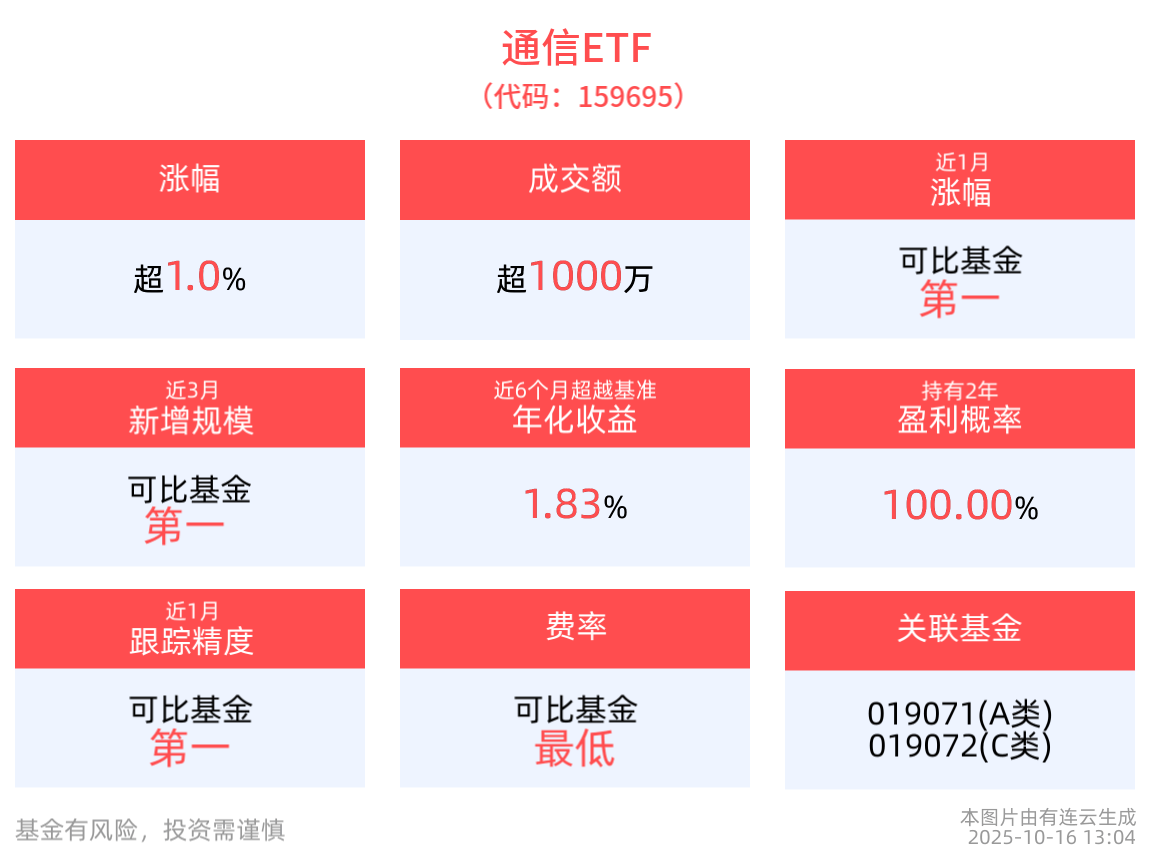
5G基站建成总量显著增加,通信ETF(159695)盘中涨超1%,成分股中兴通讯领涨
Sou Hu Cai Jing· 2025-10-16 05:25
Group 1: Market Performance - The communication ETF had a turnover rate of 4.55% during trading, with a transaction volume of 12.1969 million yuan. The average daily transaction volume over the past month reached 35.6798 million yuan as of October 15 [3] - Over the past three months, the communication ETF's scale increased by 155 million yuan, ranking first among comparable funds [3] - As of October 15, the communication ETF's net value rose by 79.80% over the past two years, placing it in the top 3.91% among 2,351 index equity funds [3] Group 2: Industry Developments - The Ministry of Industry and Information Technology reported significant progress in new infrastructure construction, with 4.598 million 5G base stations built, an increase of 395,000 from the end of the previous year. The number of gigabit broadband access ports exceeded 30.532 million, and the intelligent computing power scale reached 788 EFLOPS [3] - There are over 20,000 projects integrating 5G and industrial internet applications, positioning China's computing infrastructure as the second largest globally [3] Group 3: Future Outlook - Industry analysts predict that the communication sector will experience a dual opportunity period due to technological upgrades and policy support by 2025. Emerging fields such as artificial intelligence, quantum communication, and low-altitude economy will create new growth spaces [4] - The demand for AI is expected to dominate the Ethernet optical module market, with anticipated demand growth exceeding expectations from 2026 to 2030 [4] - Despite increasing international tariff disputes, suppliers in the computing power industry have mitigated impacts through capacity reserves and raw material switches, indicating limited fundamental disruption from policy shocks [4] Group 4: Key Stocks - The top ten weighted stocks in the communication index as of September 30, 2025, include Zhongji Xuchuang, Xinyi Sheng, ZTE Corporation, China Telecom, China Mobile, China Unicom, Tianfu Communication, Zhongtian Technology, Transsion Holdings, and Hengtong Optic-Electric, collectively accounting for 66.02% of the index [4]






利扬芯片涨2.05%,成交额1.37亿元,主力资金净流入143.32万元
Xin Lang Cai Jing· 2025-10-16 03:38
Group 1: Company Overview - Liyang Chip Testing Co., Ltd. is located in Dongguan, Guangdong Province, established on February 10, 2010, and listed on November 11, 2020 [2] - The company's main business includes integrated circuit testing solution development, wafer testing services, chip finished product testing services, and related supporting services [2] - The revenue composition of the main business is as follows: finished chip testing 58.15%, wafer testing 35.08%, other (supplementary) 4.39%, and wafer dicing 2.37% [2] Group 2: Financial Performance - For the period from January to June 2025, Liyang Chip achieved operating revenue of 284 million yuan, a year-on-year increase of 23.09%, and a net profit attributable to the parent company of -7.06 million yuan, a year-on-year increase of 16.38% [2] - The company has cumulatively distributed cash dividends of 120 million yuan since its A-share listing, with a total of 2.003 million yuan distributed over the past three years [3] Group 3: Stock Performance - As of October 16, Liyang Chip's stock price increased by 2.05% to 32.38 yuan per share, with a total market capitalization of 6.583 billion yuan [1] - The stock has risen 61.34% year-to-date, with a recent decline of 6.09% over the past five trading days, and a 25.75% increase over the past 20 days [1] - The company has appeared on the "Dragon and Tiger List" four times this year, with the most recent appearance on September 17, where it recorded a net purchase of 10.6543 million yuan [1]

神州泰岳跌2.04%,成交额1.91亿元,主力资金净流出1355.67万元
Xin Lang Cai Jing· 2025-10-16 03:06
Core Viewpoint - Shenzhou Taiyue's stock has experienced a decline recently, with a notable drop of 10.00% over the last five trading days, despite an overall increase of 8.88% year-to-date [1][2]. Financial Performance - For the first half of 2025, Shenzhou Taiyue reported a revenue of 2.685 billion yuan, a year-on-year decrease of 12.05%, and a net profit attributable to shareholders of 509 million yuan, down 19.26% year-on-year [2]. - Cumulatively, the company has distributed 1.297 billion yuan in dividends since its A-share listing, with 372 million yuan distributed over the last three years [3]. Shareholder Information - As of October 10, 2025, the number of shareholders for Shenzhou Taiyue reached 89,300, an increase of 6.12% from the previous period, while the average circulating shares per person decreased by 5.77% to 20,690 shares [2]. - The largest circulating shareholder is Hong Kong Central Clearing Limited, holding 56.3593 million shares, a decrease of 5.95812 million shares from the previous period [3]. Stock Market Activity - On October 16, Shenzhou Taiyue's stock price was 12.51 yuan per share, with a trading volume of 191 million yuan and a turnover rate of 0.82%, resulting in a total market capitalization of 24.609 billion yuan [1]. - The net outflow of main funds was 13.5567 million yuan, with significant buying and selling activity from large orders [1]. Business Segments - Shenzhou Taiyue's main business segments include gaming (75.53% of revenue), AI/ICT operation management (19.89%), IoT/communication (2.04%), and innovative services (1.99%) [1]. - The company operates within the media and gaming industry, with concepts including mobile games, online games, overseas expansion, 5G, and data computing [1].

易德龙跌2.02%,成交额4493.33万元,主力资金净流出104.40万元
Xin Lang Cai Jing· 2025-10-16 02:53
Core Points - The stock price of Yidelong has decreased by 2.02% to 42.67 CNY per share as of October 16, with a market capitalization of 6.846 billion CNY [1] - Yidelong's stock has increased by 77.87% year-to-date, but has seen a decline of 8.51% over the last five trading days [1] - The company has a primary business focus on providing electronic manufacturing services across various sectors including telecommunications, industrial control, automotive electronics, medical electronics, and consumer electronics [1] Financial Performance - As of September 30, Yidelong reported a revenue of 1.171 billion CNY for the first half of 2025, representing a year-on-year growth of 15.64% [2] - The net profit attributable to the parent company for the same period was 115 million CNY, showing a year-on-year increase of 31.06% [2] Shareholder Information - The number of shareholders for Yidelong has increased by 9.35% to 11,700 as of September 30 [2] - The top ten circulating shareholders include Yifangda Kexun Mixed Fund, which increased its holdings by 14.63% to 2.1132 million shares [3] - Yidelong has distributed a total of 413 million CNY in dividends since its A-share listing, with 224 million CNY distributed in the last three years [3]

行业聚焦:全球半导体底部填充胶市场头部企业份额调研(附Top 10 厂商名单)
QYResearch· 2025-10-16 02:18
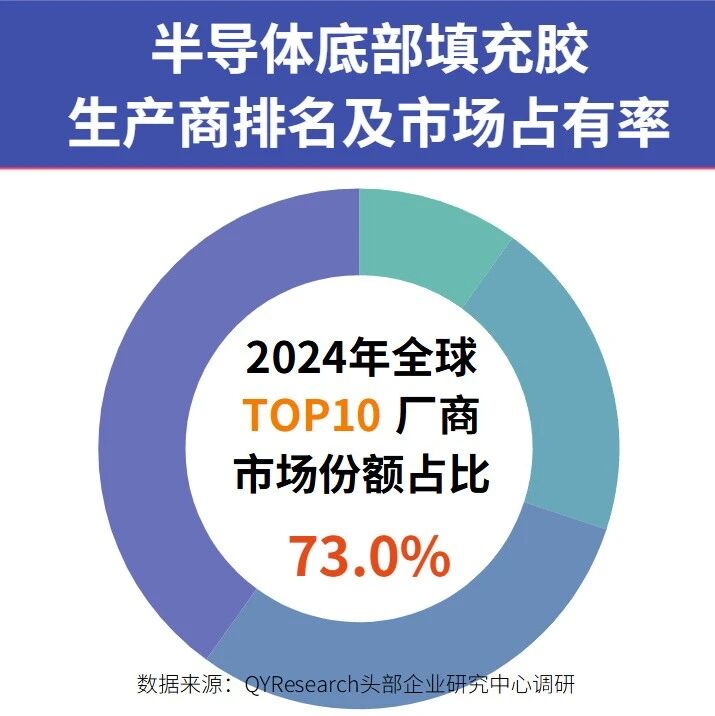
Core Viewpoint - The semiconductor underfill market is expected to grow significantly, driven by the increasing demand for high-performance and reliable chips in modern electronic products, with a projected market size of $1.44 billion by 2031 and a CAGR of 11.2% from 2025 to 2031 [2][13]. Market Overview - Semiconductor underfill is a material used in semiconductor packaging to fill the gaps between chips and substrates, enhancing mechanical strength, thermal conductivity, and thermal cycling stability [1]. - The demand for underfill materials is increasing due to the miniaturization of electronic devices and the need for advanced packaging technologies such as 3D packaging and system-in-package (SiP) [1]. Market Size and Growth - The global semiconductor underfill market is projected to reach $1.44 billion by 2031, with a compound annual growth rate (CAGR) of 11.2% [2]. - The wafer/panel-level underfill is the dominant product type, accounting for approximately 65.2% of the market share [10]. Key Players - Major manufacturers in the global semiconductor underfill market include NAMICS Corporation, Henkel, Panasonic, Resonac, Shin-Etsu Chemical, and others, with the top ten companies holding about 73.0% of the market share in 2024 [7]. Application Segmentation - Consumer electronics represent the largest demand source for underfill materials, holding approximately 46.6% of the market share [12]. Market Drivers - The growth of the semiconductor underfill market is primarily driven by the increasing demand for high-performance and reliable chips due to advancements in technologies such as 5G, artificial intelligence, and the Internet of Things (IoT) [13]. - The development of advanced packaging technologies, including 3D packaging and flip-chip packaging, further increases the demand for underfill materials [13]. Challenges and Risks - The production process of underfill materials is complex, requiring continuous innovation in material selection, formulation, and manufacturing processes to ensure high quality and stability [14]. - Fluctuations in raw material prices and global supply chain disruptions may impact market dynamics, especially in uncertain economic conditions [14]. Downstream Demand Trends - The demand for semiconductor underfill materials is growing in various sectors, including consumer electronics, communication devices, and automotive electronics, driven by the increasing need for miniaturized and high-performance chips [15]. - The automotive electronics sector is particularly influenced by the rapid development of autonomous driving technologies, which significantly boosts the demand for high-performance semiconductors [15].
瑞玛精密涨4.38%,成交额2271.88万元,主力资金净流入68.44万元
Xin Lang Cai Jing· 2025-10-16 02:16
Core Viewpoint - 瑞玛精密's stock price has shown a positive trend this year, with a notable increase in both revenue and net profit, indicating strong business performance and investor interest [2][3]. Financial Performance - As of June 30, 2025, 瑞玛精密 achieved a revenue of 935 million yuan, representing a year-on-year growth of 23.22% [3]. - The net profit attributable to shareholders reached 18.40 million yuan, marking a significant increase of 164.57% year-on-year [3]. Stock Market Activity - 瑞玛精密's stock price increased by 16.60% year-to-date, with a 4.38% rise on October 16, 2025, reaching 25.50 yuan per share [1][2]. - The stock has seen a net inflow of 684,400 yuan from main funds, with large orders accounting for 11.16% of total buying and 8.14% of total selling [1]. Shareholder Information - The number of shareholders increased to 22,800, up by 57.59% compared to the previous period, while the average circulating shares per person decreased by 36.54% to 2,865 shares [3]. - The company has distributed a total of 78.10 million yuan in dividends since its A-share listing, with 18.10 million yuan distributed over the past three years [4]. Business Overview - 瑞玛精密 specializes in the manufacturing of precision structural components and related precision mold manufacturing, with applications in automotive, new energy vehicles, mobile communications, power batteries, and energy storage batteries [2]. - The revenue composition includes 58.04% from precision metal structural components, 31.75% from automotive electronics, 6.65% from communication equipment, 2.18% from other sources, and 1.38% from molds [2].