大模型

Search documents
Minimax在港上市首日大涨 创始人闫俊杰财富达24亿美元
Feng Huang Wang· 2026-01-09 04:03
Core Viewpoint - Minimax, a large model startup, officially listed on the Hong Kong Stock Exchange, with its stock price surging on the first day, making its founder and CEO, Yan Junjie, a billionaire [1] Company Overview - Minimax listed at the high end of its IPO price range, at HKD 165 per share, valuing the company at USD 6.5 billion [1] - By 9:40 AM Hong Kong time on the first trading day, Minimax's stock price had increased by 45% [1] Founder and Wealth - The surge in Minimax's stock price increased Yan Junjie's wealth to approximately USD 2.4 billion, according to the Bloomberg Billionaires Index [1] Investment and Support - Minimax's rise has been supported by elite tech figures from mainland China and billionaires from Hong Kong [1] - Key investors include Li Ka-shing's son, Li Zekai, through his company, and other pre-IPO investors such as billionaire Cai Haoyu, co-founder of the gaming studio miHoYo [1] - Major cornerstone investors also include Alibaba, Tencent, and the Abu Dhabi sovereign wealth fund [1]


900亿,中国AI最快IPO诞生
3 6 Ke· 2026-01-09 03:48
Core Insights - MiniMax officially listed on the Hong Kong Stock Exchange on January 9, with an IPO price of HKD 165 per share, experiencing a surge of over 70% post-opening, and reaching a market capitalization of over HKD 90 billion [1] - The public offering was oversubscribed by 1,837 times, attracting top-tier long-term institutional investors from Europe, the US, Canada, South Africa, the Middle East, and Southeast Asia [1] - Founded in 2022 by former SenseTime executive Yan Junjie, MiniMax has become one of the fastest AI unicorns to reach IPO status globally [1] Investment Journey - The investment journey of MiniMax has been marked by significant backing from prominent investors, with a focus on supporting Chinese large model enterprises on the global stage [2] - The initial investment by Mingshi Venture Capital was made after four meetings with Yan Junjie and co-founder Yan Yeyi, highlighting the early recognition of the potential in AI models [3][4] - Mingshi Venture Capital's decision to invest was influenced by the belief in the transformative potential of AI, despite the market being at a low point for AI investments at that time [4][5] Strategic Decisions - Yan Junjie emphasized the importance of General Artificial Intelligence (AGI) and the transition from AI 1.0 to AI 2.0, which resonated with Mingshi's team [4] - Mingshi Venture Capital's commitment to MiniMax included six rounds of investment, showcasing their confidence in the company's leadership and strategic direction [7] - The decision to invest heavily in the MoE architecture for pre-training, despite skepticism in the industry, demonstrated MiniMax's innovative approach and willingness to take risks [9] Market Positioning - MiniMax has positioned itself as a leader in the AI space by achieving high gross margins while maintaining low operational costs, effectively breaking the "impossible triangle" of high performance, low cost, and profitability [9] - The company has established itself as a major player in the AI model market, with a focus on leveraging the latest chip technology for model training [10] - Mingshi Venture Capital's investment strategy has been to identify and support non-consensus opportunities within the AI sector, leading to significant returns on investment [15] Future Outlook - Mingshi Venture Capital anticipates that many undervalued Chinese tech companies will emerge on the global stage, driven by the rapid evolution of AI technology [10][19] - The firm is committed to investing in a diverse range of AI applications, including autonomous driving, AI in entertainment, and AI-powered productivity tools, reflecting a comprehensive approach to the AI industry [12][14] - Mingshi's long-term vision includes supporting the next generation of Chinese tech leaders, with a goal of investing in at least one-third of the top 50 global tech companies by 2035 [18]
MiniMax上市首日高开42.7%,最新市值超830亿港元
2 1 Shi Ji Jing Ji Bao Dao· 2026-01-09 03:36
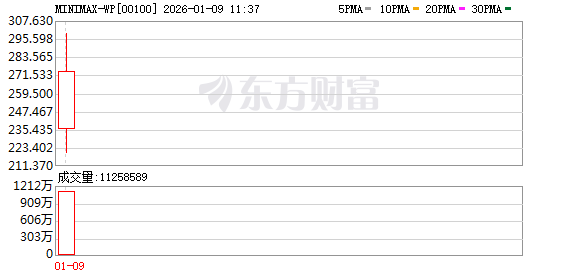
Core Viewpoint - MiniMax successfully listed on the Hong Kong Stock Exchange, with a significant first-day price increase, reflecting strong investor interest and market confidence in the company's future prospects [2][3]. Group 1: IPO Performance - MiniMax's shares opened at 235.4 HKD, a 42.7% increase from the IPO price of 165 HKD, and reached a market capitalization of 719 billion HKD on the first day [2]. - The stock continued to rise, closing at 273.2 HKD, marking a total increase of 65.58% and a market cap of 834 billion HKD [2]. - The IPO attracted approximately 420,000 subscriptions, with an oversubscription rate of about 1838 times [2]. Group 2: Financial Overview - MiniMax's IPO raised approximately 45.96 billion HKD, with around 90% of the funds allocated for R&D over the next five years, including 70% for large model development and 20% for AI-native product development [2][3]. - The company reported revenues of 2.46 million USD, 30.52 million USD, and 53.44 million USD for the first three quarters of 2023, 2024, and 2025, respectively, with net losses of 269 million USD, 465 million USD, and 512 million USD for the same periods [3]. Group 3: Business Model and Market Contribution - MiniMax focuses on consumer-end (C-end) business, with AI-native product revenue accounting for over 70% of total revenue in the first three quarters of 2025 [4]. - The company generated 39 million USD in overseas market revenue, representing 73.1% of total revenue, with significant contributions from Singapore (24.3%) and the United States (20.4%) [4]. - Key AI-native products include Hailuo AI and Talkie/Xingye, contributing 32.6% and 35.1% to total revenue, respectively [4].
八部门联合印发《“人工智能 + 制造” 专项行动实施意见》,软件板块活跃度攀升,软件 ETF(159852)表现强势
Jin Rong Jie· 2026-01-09 03:28
Group 1 - The core viewpoint of the news highlights a significant positive market response to the joint policy initiative by eight departments, including the Ministry of Industry and Information Technology, which aims to promote the application of AI in manufacturing by 2027 [1] - The policy outlines goals to develop 3-5 general large models for deep application in manufacturing, create 100 high-quality industrial data sets, and support the emergence of 2-3 globally influential enterprises [1] - The software sector is experiencing a surge in interest, with stocks like Zhongke Xingtou and Weining Health rising over 11%, and the software ETF (159852) increasing by 2.63% with a trading volume of 257 million yuan [1] Group 2 - The software sector benefits from technological iterations and the implementation of scenarios, with companies like iFlytek making breakthroughs in large models, further boosting market sentiment [2] - The CSI Software Service Index selects listed companies involved in software development, accurately covering core targets in the sector, while investors are advised to distinguish between indices tracking similar software products [2] - The software ETF (159852) has a management fee rate of 0.50% and a custody fee rate of 0.10% annually, with options for investors without stock accounts to access the sector through linked funds [2]
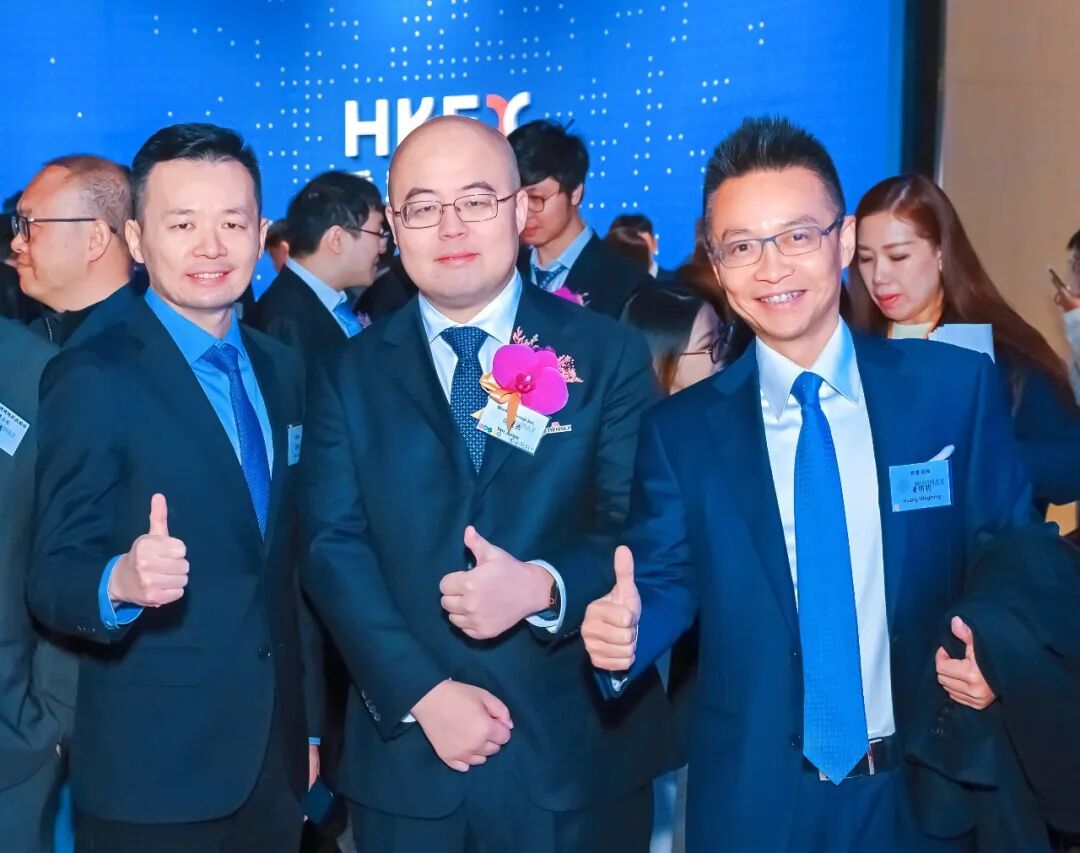
MiniMax正式登陆港交所,开盘涨42%、市值达719亿港元
Xin Lang Cai Jing· 2026-01-09 03:01
Core Viewpoint - MiniMax, a technology company specializing in AI models, successfully listed on the Hong Kong Stock Exchange, marking a significant milestone in the global AI industry, particularly in the large model sector [1][13]. Company Overview - MiniMax's IPO involved issuing 29.2 million shares at a price of 165 HKD per share, raising a total of 4.82 billion HKD [3][15]. - The company emphasizes that its core competency lies in its model capabilities rather than specific products, adhering to the philosophy that "Model is Product" [3][15]. - Founded in 2021 by former SenseTime vice president Yan Junjie, MiniMax has established itself as one of the few companies with self-developed multimodal large model capabilities [4][16]. Financial Performance - MiniMax's revenue is projected to reach 53.44 million USD by September 2025, a significant increase from 19.45 million USD in the same period of 2024, driven by the adoption of AI native products and diverse monetization channels [6][19]. - The company has incurred substantial R&D expenses, with losses reported at 10.6 million USD, 70 million USD, 189 million USD, and 139 million USD for the years 2022, 2023, 2024, and the first three quarters of 2025, respectively [7][19]. - Cumulatively, MiniMax has spent 500 million USD since its inception, which is less than 1% of the expenditures of OpenAI, estimated between 40 billion to 55 billion USD [7][19]. Market Positioning - MiniMax has over 200 million individual users and more than 100,000 enterprises and developers across over 200 countries and regions as of September 2025 [6][18]. - The company is positioned in a competitive landscape where it is compared to other AI firms, with a focus on different market segments: one targeting the domestic B2B market and the other focusing on global subscription models [6][18]. Industry Insights - The global large model market is in its early commercialization stage, with projections indicating a growth from 10.7 billion USD in 2024 to 20.65 billion USD by 2029, reflecting a compound annual growth rate (CAGR) of 80.7% [11][23]. - The large model application market is expected to grow from 7.1 billion USD in 2024 to 151.5 billion USD by 2029, with a CAGR of 84.3% [11][23]. - MiniMax's successful IPO reflects investor confidence in the resilience of the Chinese AI industry, with 14 cornerstone investors participating in the IPO, collectively subscribing approximately 2.723 billion HKD [11][23]. Competitive Landscape - The listing of companies like MiniMax is expected to create a tiered structure within the industry, leading to a "Matthew effect" where listed companies gain advantages in business expansion, financing costs, and talent acquisition [12][24]. - The competitive environment is intensifying, with remaining players facing challenges in business acquisition and cost control as the market matures [12][24].
谁说老实人赚不到钱?Claude用一张3500亿的支票打脸OpenAI
3 6 Ke· 2026-01-09 02:49
Core Insights - Anthropic has achieved a remarkable valuation increase from $183 billion to $350 billion within just six months, planning to raise $10 billion in funding, marking a significant comeback against OpenAI [1][2] - The Amodei siblings, previously labeled as "defectors," have focused on AI safety and stability, contrasting with OpenAI's aggressive expansion strategy [5][6] Company Performance - Anthropic's revenue surged from $100 million in 2023 to $900 million in 2025, with a target of $2 to $2.6 billion for 2026 [7][9] - OpenAI, despite its large user base, faces significant cash burn, estimated at nearly $1 billion in 2025, with potential losses doubling in 2026 [9][11] Market Positioning - Anthropic has positioned itself as a more stable and reliable choice for developers, focusing on deep AI capabilities rather than flashy multimodal features [14][15] - The Claude model has outperformed competitors in critical coding tasks, achieving an 80.9% score in SWE-bench tests, indicating superior performance in complex code understanding [14][15] Strategic Direction - Anthropic's approach emphasizes AI safety and governance, which has become increasingly valuable as AI applications expand into high-stakes industries like banking and healthcare [18][21] - The company's commitment to a slower, more deliberate development process has transformed from perceived idealism to a competitive advantage in the market [16][18] Industry Dynamics - The competition between Anthropic and OpenAI highlights a shift in the AI landscape, where safety and reliability are becoming paramount as AI technology matures [21] - The ongoing rivalry is expected to benefit end-users, as it drives improvements in AI usability and trustworthiness [21]
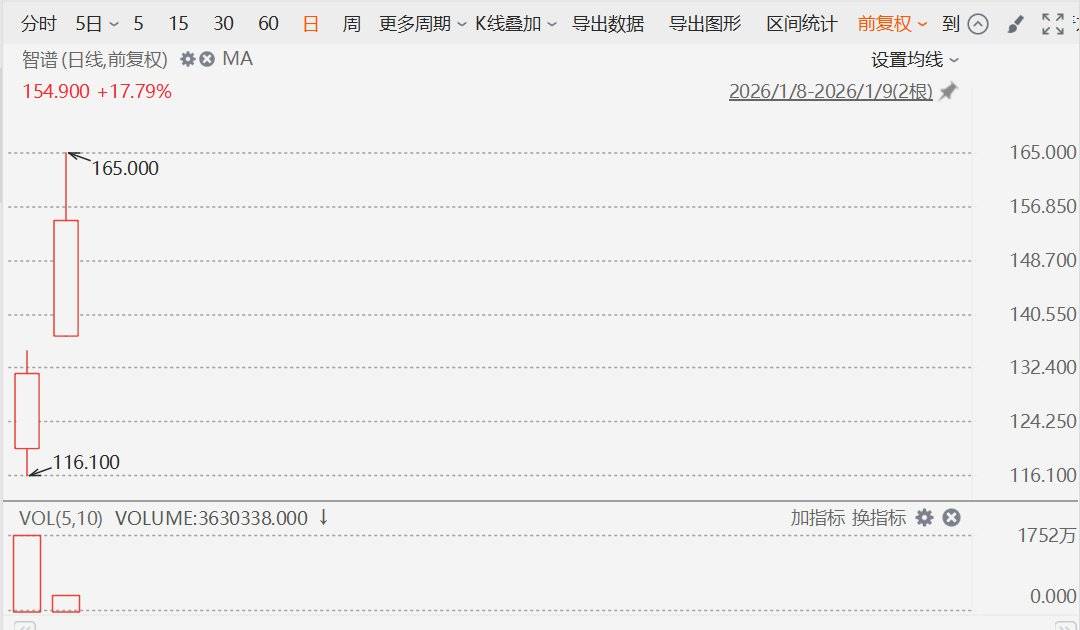
港股异动丨智谱拉升涨超25%创上市新高,市值站上720亿港元
Sou Hu Cai Jing· 2026-01-09 02:47
来源:格隆汇APP 格隆汇1月9日|"全球大模型第一股"智谱(2513.HK)上市第二日继续上涨,盘中拉升涨超25%至165港元,创上市新高,市值升至726亿港元。 公开资料显示,智谱是中国最早投身大模型研发的厂商,原创提出了基于自回归填空的通用预训练范式GLM,率先发布了中国首个百亿模型、首个开源 千亿模型、首个对话模型、首个多模态模型,以及全球首个设备操控智能体(Agent),形成了全面的模型体系,是国内罕有在原创技术路线上与全球顶尖 水平保持同步的厂商,因此也被誉为"中国OpenAI"。 目前,GLM架构已实现全国产化突破,适配40余款国产芯片,成为业内通用性最高的模型体系之一。当前全球AI竞赛持续升温,智谱拿下"全球大模型第 一股",不仅为国产大模型发展注入资本活力,更标志中国AGI企业正式迈入资本市场的舞台中央,开启与国际巨头同台竞技的新阶段。 ...
MiniMax中签者一手赚近1800港元
第一财经· 2026-01-09 02:44
Group 1 - MiniMax, a large model company, was listed on the Hong Kong Stock Exchange on January 9, with an opening increase of over 50% [1] - As of 9:56 AM, MiniMax's stock price reached 254.8 HKD per share, reflecting a rise of over 54.42% and a market capitalization exceeding 77 billion HKD [1] - The pricing result announced on January 8 set the upper limit at 165 HKD, with the stock closing at 205.60 HKD in the dark market, an increase of 24.61% [1]

ETF盘中资讯|阿里巴巴涨超4%,誓要淘宝闪购达到市场绝对第一!港股互联网ETF(513770)上涨1.5%,近4日吸金5.66亿元
Jin Rong Jie· 2026-01-09 02:30
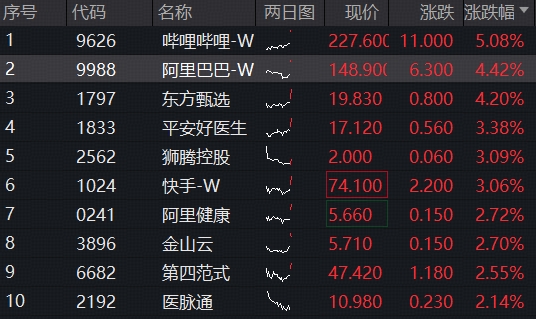
Group 1 - The Hong Kong stock market opened higher on January 9, with major tech stocks showing strength, including Bilibili-W up over 5%, Alibaba-W up over 4%, and Kuaishou-W up over 3% [1][2] - The Hong Kong Internet ETF (513770) saw a significant increase, rising by 1.5%, and has attracted a net inflow of 566 million yuan over the past four days [2][3] - Alibaba's Taobao Flash Sale has made key progress in the latest quarter, with expectations for market share growth continuing strong, and the Chinese instant retail market projected to exceed 1 trillion yuan by 2026 [3][4] Group 2 - Alibaba's Gaode Map has upgraded its features, introducing new functionalities and leveraging self-developed world model technology, positioning itself as a potential hub in the AI era [4] - The Hang Seng Technology Index is expected to see an EPS growth rate of 34% by 2026, driven by AI technology enhancing core business efficiency [4] - The top ten weighted stocks in the Hong Kong Internet ETF include Alibaba-W, Tencent Holdings, and Xiaomi Group, collectively accounting for over 78% of the ETF [4][7] Group 3 - The Hong Kong market offers a diversified investment option through the Hong Kong Large Cap 30 ETF (520560), which combines high-growth tech stocks with stable dividend-paying companies [7]

智谱与MiniMax:中国AI双雄的港股竞速
Tai Mei Ti A P P· 2026-01-09 02:28
Core Insights - The article discusses the contrasting paths of two AI companies, Zhipu AI and MiniMax, as they both prepare for their IPOs on the Hong Kong Stock Exchange, highlighting their different backgrounds and strategies in the AI industry [2][19]. Company Backgrounds - Zhipu AI was founded in 2019, emerging from the AMiner system developed at Tsinghua University, with significant backing from state-owned enterprises and a focus on B2B and government contracts [3][10]. - MiniMax was established in 2022 by Yan Junjie, who previously worked at SenseTime, and has a strong emphasis on consumer-facing products and international capital [4][8]. Funding and Investment - Zhipu AI has completed 8 rounds of financing, raising a total of 8.3 billion RMB, with a pre-IPO valuation of 24.4 billion RMB, supported by a diverse range of investors including state-owned enterprises and top venture capital firms [10][11]. - MiniMax has raised approximately 1.556 billion USD (about 11.061 billion RMB) over 7 rounds, with a post-money valuation of 4.2404 billion USD (about 30.2 billion RMB) as of its last funding round [11][12]. Business Models and Revenue Streams - Zhipu AI's revenue model is primarily based on localized deployment and cloud services, with 84.8% of its revenue coming from local deployments, focusing on safety, compliance, and control [15][19]. - MiniMax's revenue is driven by consumer applications and subscriptions, with 71% of its income coming from AI-native products, although it faces challenges with low profit margins [16][18]. Technical Approaches - Zhipu AI focuses on the domestic full-stack transformation of dense models, utilizing local supercomputing resources and Huawei's Ascend chips, with a strong emphasis on engineering adaptability [14][15]. - MiniMax employs a mixed expert (MoE) architecture, optimizing for efficiency and cost-effectiveness in consumer applications, which aligns with its internet-centric strategy [16][17]. Market Positioning and Future Challenges - Zhipu AI's approach is characterized by heavy asset investment and compliance, aiming for stable B2B/G contracts, while MiniMax leverages lightweight architecture for rapid consumer growth and global expansion [19]. - Both companies face the challenge of establishing a sustainable business model post-IPO, with Zhipu AI focusing on government contracts and MiniMax navigating geopolitical uncertainties and high customer acquisition costs [19].