
卫星互联网

Search documents
打通商业航天堵点,规模化生产与高可靠发射是第一步
Huan Qiu Wang· 2025-11-20 02:26
Core Insights - The commercial space industry is rapidly evolving, with a clear short to medium-term outlook driven by the deployment of large satellite constellations for internet connectivity and other applications [1][2] - China's commercial rocket companies are facing challenges in launching satellites due to insufficient rocket capacity and the need for large, cost-effective, and reliable rockets [1][3] - The upcoming launch of China's new generation of large liquid reusable rockets is highly anticipated, as reusability is key to reducing launch costs [1][4] Group 1: Market Dynamics - The satellite internet infrastructure is seen as a strategic asset for nations, with various countries planning large-scale low Earth orbit (LEO) satellite constellations [2][3] - The International Telecommunication Union (ITU) has established rules that require operators to launch satellites within specific timeframes to secure frequency and orbital positions, creating pressure on satellite deployment [2][3] - China's "Qianfan Constellation" and "National Grid Constellation" are set to begin network deployment in 2024, but their launch cadence is currently lagging behind SpaceX's Starlink [2][3] Group 2: Technical Challenges - The core issue in the industry is the urgent need for satellite launches while facing a significant shortage of rocket capacity [3][4] - Current rockets used for satellite launches are also tasked with other national missions, leading to tight schedules and delays in satellite deployment [3][4] - The industry consensus is that the true mass deployment of satellite internet will depend on the involvement of commercial rockets to meet the launch demand [3][4] Group 3: Reusability and Cost Reduction - SpaceX's Falcon 9 rocket exemplifies the benefits of high-frequency, low-cost launches enabled by reusability, with plans for 132 launches in 2024 [4][5] - Domestic companies are following SpaceX's lead in developing large liquid reusable rockets, but progress varies among different firms [5][6] - Achieving cost reduction through reusability requires a systematic approach involving rapid turnaround and operational efficiency, rather than relying on single technological breakthroughs [5][6] Group 4: Future Development Strategies - Experts suggest a dual-track approach to bridge short-term needs with mid-term goals, focusing on scaling production and operationalizing reusability [9] - The first track emphasizes maximizing production capacity to meet urgent satellite deployment needs, while the second track aims to establish a sustainable process for rocket reuse [9][10] - A successful launch of new rockets is seen as a critical step towards achieving stability and reliability in the commercial space sector [7][8]
万通发展涨2.03%,成交额1.52亿元,主力资金净流出293.22万元
Xin Lang Zheng Quan· 2025-11-20 02:01
Core Viewpoint - Wantong Development's stock has shown significant growth this year, with a 61.74% increase, despite recent fluctuations in trading volume and net capital outflow [1][2]. Company Overview - Wantong Development, established on December 30, 1998, and listed on September 22, 2000, is based in Chaoyang District, Beijing. The company operates in three main sectors: real estate development and sales, urban renewal and operation, and communication and digital technology [1]. - The revenue composition of Wantong Development is as follows: 50.30% from property leasing, 49.60% from property sales, and 0.10% from other sources [1]. Financial Performance - For the period from January to September 2025, Wantong Development reported a revenue of 317 million yuan, a year-on-year decrease of 4.37%. The net profit attributable to the parent company was -19.80 million yuan, showing a year-on-year increase of 82.94% [2]. - The company has cumulatively distributed 1.421 billion yuan in dividends since its A-share listing, with no dividends paid in the last three years [3]. Shareholder Information - As of September 30, 2025, Wantong Development had 132,100 shareholders, an increase of 124.95% from the previous period. The average number of circulating shares per shareholder was 14,309, a decrease of 56.16% [2]. - Among the top ten circulating shareholders, Hong Kong Central Clearing Limited holds 24.6642 million shares, an increase of 13.0461 million shares from the previous period. In contrast, Shenwan Hongyuan Securities Limited's holdings decreased by 5.7777 million shares [3].

三维通信跌2.01%,成交额1.56亿元,主力资金净流出973.94万元
Xin Lang Zheng Quan· 2025-11-20 01:51
Core Viewpoint - The stock of Sanwei Communication has experienced a decline of 2.01% on November 20, with a current price of 10.75 CNY per share, despite a year-to-date increase of 61.65% [1] Group 1: Stock Performance - As of November 20, Sanwei Communication's stock price is 10.75 CNY, with a trading volume of 1.56 billion CNY and a turnover rate of 1.90%, resulting in a total market capitalization of 8.718 billion CNY [1] - The stock has seen a decline of 10.71% over the last five trading days and 11.60% over the last twenty days, while it has increased by 23.42% over the last sixty days [1] - The company has appeared on the "Dragon and Tiger List" 21 times this year, with the most recent appearance on October 22, where it recorded a net purchase of 50.76 million CNY [1] Group 2: Financial Performance - For the period from January to September 2025, Sanwei Communication reported a revenue of 7.252 billion CNY, a year-on-year decrease of 14.89%, while the net profit attributable to shareholders was 2.8727 million CNY, reflecting a year-on-year increase of 111.67% [2] - The company has distributed a total of 372 million CNY in dividends since its A-share listing, with no dividends paid in the last three years [3] Group 3: Shareholder Information - As of September 30, 2025, the number of shareholders for Sanwei Communication is 179,200, an increase of 27.78% from the previous period, with an average of 4,198 circulating shares per person, a decrease of 21.74% [2] - Hong Kong Central Clearing Limited is the third-largest circulating shareholder, holding 8.1915 million shares as a new shareholder [3]

信维通信(300136.SZ):正在做手机卫星通信相关产品的研发
Ge Long Hui· 2025-11-19 07:10
Core Viewpoint - The company is currently developing satellite communication products for mobile phones and aims to accelerate the rollout of these products based on the overall satellite internet layout and customer demand for direct satellite connectivity [1] Group 1 - The company is engaged in research and development of mobile satellite communication products [1] - The development will be aligned with the overall satellite internet strategy [1] - The company plans to expedite the launch of related products to meet customer needs [1]

万通发展跌2.11%,成交额1.14亿元,主力资金净流出1680.51万元
Xin Lang Cai Jing· 2025-11-19 01:51
Core Viewpoint - Wantong Development's stock has experienced significant fluctuations, with a year-to-date increase of 61.88% and a recent decline of 2.11% on November 19, indicating volatility in investor sentiment and market conditions [1]. Company Overview - Wantong Development, established on December 30, 1998, and listed on September 22, 2000, is primarily engaged in real estate development and sales, urban renewal and operation, and communication and digital technology [1]. - The company's revenue composition includes 50.30% from property leasing, 49.60% from property sales, and 0.10% from other sources [1]. Financial Performance - For the period from January to September 2025, Wantong Development reported a revenue of 317 million yuan, a year-on-year decrease of 4.37%, and a net profit attributable to shareholders of -19.80 million yuan, reflecting a significant increase of 82.94% compared to the previous year [2]. - The company has not distributed any dividends in the past three years, with a total payout of 1.421 billion yuan since its A-share listing [3]. Shareholder Structure - As of September 30, 2025, Wantong Development had 132,100 shareholders, an increase of 124.95% from the previous period, with an average of 14,309 shares per shareholder, down 56.16% [2]. - The top ten circulating shareholders include Hong Kong Central Clearing Limited and Shenwan Hongyuan Securities Co., Ltd., with notable changes in their holdings [3].
中信建投:卫星互联网密集组网 关注军转民投资机会
Zheng Quan Shi Bao Wang· 2025-11-19 00:00
Core Viewpoint - The report from CITIC Securities indicates that China's military industry is evolving from a reliance on domestic demand to a new development model driven by three engines: domestic demand, foreign trade expansion, and civilian applications supporting military needs [1] Group 1: Domestic Military Demand - The first curve of domestic military demand focuses on "preparation for combat" and equipment modernization, driven by stable growth in defense budgets and the upgrading of equipment during the 14th Five-Year Plan [1] - Key growth directions include strong deterrence through high-precision and systematic unmanned low-cost technologies [1] Group 2: Military Trade Expansion - The second curve represents military trade expansion, where China's military trade share continues to rise due to cost-effectiveness, systematic combat capabilities, and geopolitical cooperation under the Belt and Road Initiative [1] - This expansion allows China to become a significant global supplier, achieving both strategic influence and economic benefits [1] Group 3: Civilian Applications of Military Technology - The third curve involves the civilian application of military technology, leading to the emergence of trillion-level new industries such as commercial aerospace, low-altitude economy, future energy, deep-sea technology, and large aircraft [1] - This trend promotes the development of new processes, materials, and devices, creating a virtuous cycle of "military technology benefiting civilian applications, which in turn supports military development" [1]

【早报】与日方外交官磋商后对结果满意吗?中方:当然不满意;特朗普:美联储主席人选已定
财联社· 2025-11-18 23:10
Industry News - The Ministry of Industry and Information Technology issued the "Guidelines for the Construction of High-Standard Digital Parks," aiming to establish around 200 high-standard digital parks by 2027, with a target of achieving 100% coverage of dual-gigabit networks and effective deployment of computing power infrastructure [4] Company News - Chinese Media announced plans to use idle funds of 9.5 billion yuan to purchase financial products [7] - Xiaomi Group reported third-quarter revenue of 113.12 billion yuan, a year-on-year increase of 22.3%, with adjusted net profit reaching a record high of 11.3 billion yuan, up 80.9% year-on-year. The company aims to meet its annual delivery target of 350,000 units for Xiaomi cars this week [7] - Pinduoduo reported third-quarter revenue of 108.28 billion yuan, with adjusted earnings per ADS of 21.08 yuan [9] - Baidu's third-quarter financial report showed total revenue of 31.2 billion yuan, with core revenue of 24.7 billion yuan. The company disclosed AI business revenue for the first time, showing a year-on-year growth of over 50% [9] - Jingmei Technology announced a cooperation framework agreement with CATL for the joint design and development of "lithium battery composite busbars" [9] - Ever Creative, the second-largest shareholder of Yaxiang Integration, reduced its holdings by 130,000 shares as of November 18 [10]







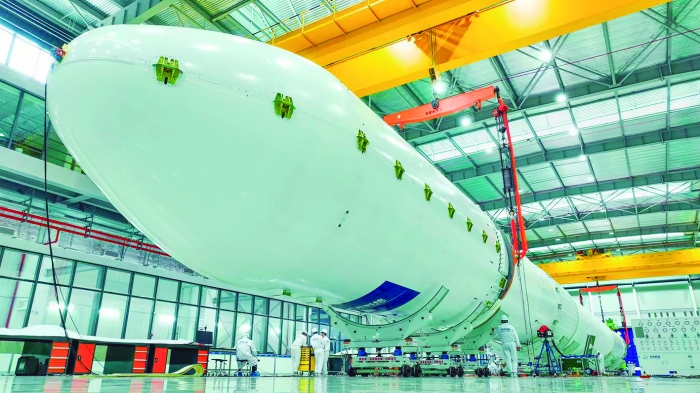
打通商业航天堵点 规模化生产与高可靠发射是第一步
Shang Hai Zheng Quan Bao· 2025-11-18 18:42
Core Insights - The commercial space industry is rapidly emerging, with a clear short to medium-term outlook driven by the deployment of large satellite constellations for internet connectivity and other applications [2][3] - China's commercial rocket companies currently lack a large-capacity, low-cost, and highly reliable rocket, which is critical for meeting the urgent demand for satellite launches [2][4] Industry Overview - The satellite internet infrastructure is composed of numerous satellites in low Earth orbit (LEO), which are essential for various applications including national defense and emergency communications [3][4] - Major satellite constellations are being planned globally, including China's "Qianfan Constellation" and "National Grid Constellation," which face strict deadlines for satellite launches to secure frequency and orbital positions [3][4] Current Challenges - There is a significant mismatch between the urgent need for satellite launches and the insufficient rocket launch capacity available in China [4][5] - The current rockets available for satellite launches are primarily from the "national team," which also has to accommodate other space missions, leading to tight scheduling and delays [4][5] Technological Development - The key to reducing launch costs lies in reusable rocket technology, which requires not just a single breakthrough but a series of successful launches to validate and optimize the process [6][7] - Domestic companies are following SpaceX's lead in developing large liquid reusable rockets, but progress varies among different firms [6][7] Market Dynamics - The successful launch of new-generation rockets is crucial for establishing a reliable launch service that can meet the growing demand for satellite deployment [9][10] - The industry consensus is that private commercial rockets must play a significant role in satellite launches to achieve the necessary scale and frequency [5][10] Future Outlook - Experts suggest a dual-track approach for the next five years, focusing on scaling production to meet immediate satellite constellation needs while also developing operational reuse capabilities for rockets [11] - The establishment of a sustainable cycle of high-reliability launches, large orders, and cost reduction through industrial collaboration is seen as essential for the growth of the commercial space sector [10][11]
中国6G技术试验进入新阶段,将与AI及卫星互联网跨域融合
Di Yi Cai Jing· 2025-11-18 13:12
Core Insights - 6G technology is expected to be over 10 times faster than 5G, supporting integrated networks across air, land, sea, and space [1][2] - China has been conducting 6G technology trials for four consecutive years, completing the first phase and establishing over 300 key technology reserves [1] - The deployment of 6G networks is anticipated around 2030, with projections of over 5 billion connections by 2040, accounting for half of global mobile connections [1] Group 1: 6G Development and Features - 6G will evolve from mobile communication technology to a comprehensive digital information infrastructure, integrating communication, AI, sensing, computing, and security [1][2] - Key features of 6G include peak rates of 1 Tbps, latency below 0.1 ms, and a connection density exceeding 10 million devices per square kilometer [1][2] - The development of 6G is structured in three phases: key technology trials, technical solution trials, and system networking trials [4] Group 2: Industrial and Societal Impact - 6G is expected to drive deep intelligence in Industry 4.0, enabling fully automated factories and immersive communication in education and healthcare [2][3] - The integration of 6G with AI will enhance mobile information services, creating new operational systems and user experiences [6][7] - Different regions will focus on varying digital needs, such as smart manufacturing in China and industrial internet in Europe [3] Group 3: Policy and Ecosystem Development - The Chinese government has emphasized the cultivation of future industries, including 6G, in its 2025 work report [2][8] - Various cities, including Beijing and Shanghai, are implementing policies to accelerate 6G technology and industry development, establishing experimental platforms and fostering industry ecosystems [7][8] - The IMT-2030 (6G) promotion group is enhancing research capabilities and fostering collaboration across the industry to support 6G development [7]
前沿科技竞速,天地一体布局
Yin He Zheng Quan· 2025-11-18 07:54
Investment Rating - The report maintains a "Buy" rating for the telecommunications sector, highlighting opportunities in communication operators, artificial intelligence, satellite internet, and quantum technology [2][3]. Core Insights - The telecommunications sector is experiencing a downturn, with a weekly index drop of 4.77%. However, sub-sectors such as communication network technology services and industry applications have shown better performance [7][6]. - Significant advancements have been made in cutting-edge technologies, including quantum computing and 6G communication, which are expected to drive future growth [5][16]. - The report emphasizes the importance of the upcoming 6G technology, which is projected to be a key growth driver for the telecommunications industry [22][29]. Summary by Sections Market Performance - The telecommunications sector index fell by 4.77% over the past week, with specific sub-sectors performing relatively well [7][6]. - Notable performance metrics include a 31.30% increase in certain stocks, while others saw declines of up to 14.29% [11][15]. Industry Development and Key Events - The "Tianyan-287" superconducting quantum computer has been successfully built, marking a significant milestone in quantum computing [16]. - Major tech companies are competing in the space computing arena, with initiatives from Nvidia, SpaceX, and Google indicating a shift towards space-based AI infrastructure [22][24]. Investment Recommendations - The report suggests focusing on specific stocks within the telecommunications sector, including 300308, 300502, 300383, 601869, and 688027, among others [2][5]. - The emphasis is placed on sectors such as AI, satellite internet, and quantum technology as promising areas for investment [2][5].

