通用人工智能(AGI)

Search documents
AI大手笔“星际之门”的力量博弈
Di Yi Cai Jing· 2025-06-17 11:33
Core Insights - The "Stargate" project, initiated by the Trump administration, aims to reshape the global digital resource landscape and enhance the U.S. competitiveness in the AI sector, potentially intensifying the AI rivalry between the U.S. and China [1][9] Group 1: Project Overview - "Stargate" is a collaboration among major tech players including OpenAI, Oracle, and SoftBank, with an initial investment of $100 billion, expected to grow to $500 billion over four years [3][4] - The project plans to establish approximately 20 super-sized data centers across the U.S., each with a capacity of about 1 gigawatt, equivalent to the output of a nuclear reactor [3][4] Group 2: Strategic Partnerships - OpenAI will leverage Oracle's data centers for training AI models, while Oracle will benefit from increased revenue in AI content growth [2][3] - SoftBank aims to attract more AI companies to its data centers, enhancing its position in the global data center market [3] Group 3: Global Expansion - OpenAI's "OpenAI for Countries" initiative includes a partnership with UAE's G42 to build a massive AI center in the desert, which will significantly exceed the scale of any existing data center project globally [4][8] - The project is expected to create around 100,000 jobs in the U.S. and stimulate demand for various industries, including steel, aluminum, and energy [8][9] Group 4: Competitive Landscape - The "Stargate" initiative is seen as a strategic response to China's advancements in AI, with the U.S. aiming to maintain its leadership in the global AI arena [10] - The project is compared to the 1980s "Star Wars" initiative, highlighting its geopolitical implications and the U.S. intent to consolidate its technological dominance [9][10] Group 5: Financial Considerations - Initial funding includes contributions of $19 billion from OpenAI, $19 billion from SoftBank, and $7 billion from Oracle and the MGX sovereign fund, with additional investments from unidentified new investors [3][6] - Concerns exist regarding the financial stability of SoftBank and OpenAI, particularly in light of their recent losses and the potential impact on their ability to meet funding commitments [6][7]


华为突破制裁的密码,藏在“384超节点”中
虎嗅APP· 2025-06-17 10:55
Core Viewpoint - The article discusses the challenges and strategies in achieving breakthroughs in artificial intelligence (AI) technology, particularly through the development of Huawei's "CloudMatrix 384 Super Node" computing cluster solution, which aims to overcome limitations in single-point technology by leveraging system engineering innovations [1][3]. Group 1: Huawei's Technological Advancements - Huawei's "CloudMatrix 384 Super Node" is built on 384 Ascend chips and can provide up to 300 PFLOPs of dense BF16 computing power, surpassing NVIDIA's B200 NVL 72 platform [3][4]. - The development of the "Super Node" reflects Huawei's foresight in addressing the diminishing returns of Moore's Law and the increasing costs associated with semiconductor advancements [4][9]. - The architecture of the "Super Node" features a fully interconnected high-speed bus system, enhancing communication bandwidth by 15 times and reducing latency significantly [8][9]. Group 2: System Engineering Innovations - Huawei's approach involves a comprehensive system-level redesign to address challenges in large-scale model training, focusing on resource allocation and communication efficiency [5][10]. - The implementation of global memory unified addressing allows for direct memory access across nodes, improving the efficiency of parameter synchronization during model training [8][9]. - The resource scheduling has been upgraded to enable dynamic task distribution based on model structure, optimizing computation and communication time [8][10]. Group 3: Collaborative Ecosystem Development - Huawei has mobilized a large team across various departments to enhance collaboration and innovation in AI infrastructure, showcasing a unique multi-industry cluster advantage [10][12]. - The company emphasizes the importance of ecosystem compatibility, ensuring that its Ascend architecture supports popular deep learning frameworks like PyTorch and TensorFlow [12][13]. - Huawei's commitment to improving the usability of its AI frameworks, such as MindSpore, aims to facilitate a smoother transition for developers accustomed to existing platforms [12][13]. Group 4: Future Prospects and Industry Impact - The advancements in Huawei's computing capabilities are positioned as a significant step for China's AI industry, potentially overcoming technological limitations and fostering innovation [12][13]. - The ongoing development of the Ascend ecosystem is expected to take time, but efforts are being made to enhance compatibility and support for developers [12][13]. - Huawei's recent achievements in large model training, including the Pangu Ultra MoE model, demonstrate the potential of its domestic computing platform to produce world-class AI models [10][12].


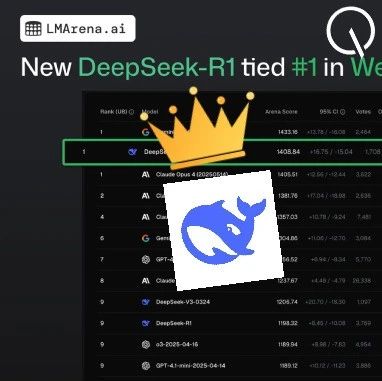
网页编程众测排名:DeepSeek-R1超越Claude 4加冕全球第一
量子位· 2025-06-17 07:41
Core Viewpoint - The article discusses the competitive landscape of coding models, highlighting that DeepSeek's new version R1 has surpassed Claude Opus 4 in web programming capabilities, indicating a shift in the dominance of coding models in the AI space [1][2]. Group 1: Model Performance - DeepSeek-R1-0528 achieved a score of 73.4 in coding tasks, ranking fourth overall, while Claude Opus 4 scored 1418, ranking sixth [4][27]. - In specific categories, DeepSeek-R1 ranked fourth in difficult prompts and fifth in mathematics among open-source models, showcasing its competitive edge [27][28]. Group 2: User Experience - DeepSeek-R1 is noted for being more user-friendly for domestic users compared to Claude, as it is free and easily accessible [23][24]. - The model demonstrated significant improvements in coding capabilities, although it still has room for enhancement [23]. Group 3: Additional Achievements - DeepSeek-R1 was recognized as the best open-source text model under the MIT license, ranking sixth overall in the coding model arena [25][26]. - The article mentions a new model, Kimi-Dev, which has achieved a state-of-the-art score of 60.4% in open-source coding benchmarks, outperforming DeepSeek-R1 [29][30].
Circle掌门预测稳定币快要迎来“iPhone时刻” ;OpenAI或考虑对微软提起反垄断指控丨全球科技早参
Mei Ri Jing Ji Xin Wen· 2025-06-16 23:49
Group 1 - Amazon Web Services (AWS) will collaborate with SK Group to build the largest AI data center in South Korea, with a capacity of 103 megawatts and equipped with 60,000 GPUs, marking the highest GPU deployment in any data center in the country [2] - Circle's co-founder and CEO Jeremy Allaire predicts that the stablecoin market is approaching its "iPhone moment," suggesting that global developers will soon recognize the potential of "programmable digital dollars," which could lead to significant changes in the market [3] - OpenAI is considering antitrust claims against Microsoft due to stalled cooperation talks, which could threaten their six-year partnership and reflects the complexities in tech collaborations within the rapidly evolving AI sector [4] Group 2 - Meta Platforms is increasing its investment in AI, with a recent $14.3 billion investment in Scale AI, and analysts expect generative AI tools to drive a 1% to 2% annual increase in Meta's advertising revenue over the next few years, potentially reaching 4% by the end of 2030 [5] - NVIDIA CEO Jensen Huang criticized Anthropic CEO Dario Amodei's claim that 50% of entry-level jobs could be replaced by AI, calling it alarmist and reflecting differing views on the impact of AI on the job market [6]
麻省理工都不读了,28岁的他如今身家20亿美元
Sou Hu Cai Jing· 2025-06-16 15:09
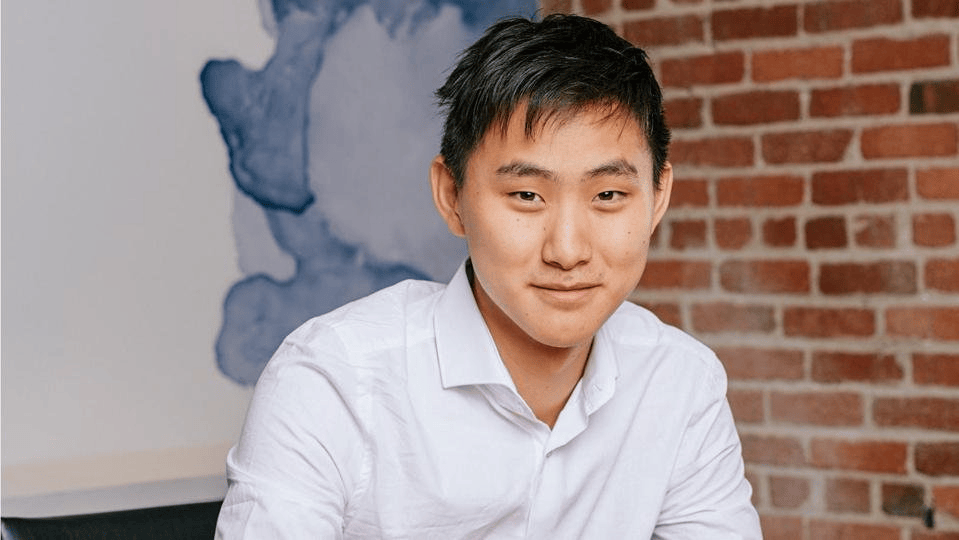
Group 1 - Alexander Wang, the founder of Scale AI, recently sold 49% of his company to Meta for $14.8 billion, highlighting the growing importance of AI and data annotation in the tech industry [3][11] - Scale AI specializes in data annotation, which is essential for training AI models used in various applications, including chatbots and autonomous driving [9][11] - The company has seen significant growth, with projected revenues of approximately $870 million in 2024 and a valuation increase from $14 billion to $29 billion following Meta's investment [11][13] Group 2 - Scale AI's client base includes major tech companies like Google, Microsoft, OpenAI, and Musk's xAI, indicating strong demand for its services [7][11] - The company started as an AI data annotation outsourcing service and has expanded into enterprise-level data integration, assisting clients with AI development and deployment [11][13] - The success of Scale AI is attributed to its ability to serve large private companies without the complexities of traditional business relationships, allowing for rapid growth in a supportive Silicon Valley environment [15][17] Group 3 - Alexander Wang became the youngest self-made billionaire at age 24, with a net worth of $2 billion, showcasing the potential for success in the tech startup ecosystem [17] - The article contrasts Wang's journey with that of Wang Ning, founder of Pop Mart, emphasizing that both entrepreneurs have found success by addressing market needs—Wang in AI and Wang Ning in consumer emotions [24][40] - The narrative suggests that success in business is less about formal education and more about the ability to innovate and adapt to market demands [29][36]

VC/PE周报 | 千亿半导体龙头做LP;阿里投了家清华系AI公司
Mei Ri Jing Ji Xin Wen· 2025-06-16 12:19
Group 1: Government Investment Fund Regulations - Gansu Province has issued guidelines to strictly control the establishment of government investment funds, emphasizing that these funds should not be set up for the purpose of attracting investment [2][3] - The guidelines promote the optimization and integration of existing funds, with a focus on unified management and avoiding duplication in the same industry or sector [2][3] - The policy reflects a shift from broad capital attraction to a focus on operational efficiency and quality in industry cultivation, aiming to leverage government investment funds for better industry guidance [3] Group 2: Private Equity Market Developments - Goldman Sachs Asset Management is seeking to raise over $14.2 billion for its new S Fund, indicating strong interest in the secondary private equity market [4] - The secondary market is expected to see a total trading volume of $185 billion by 2025, driven by liquidity challenges faced by many limited partners (LPs) [4] - Major firms like Blackstone and Carlyle are also actively engaging in the secondary market, highlighting its importance as an exit channel for private equity investments [4] Group 3: Venture Capital Innovations - Junlian Capital has launched Beijing's first technology innovation bond with a registered scale of 500 million yuan, aimed at supporting long-term investments in technology [5][6] - The introduction of the "technology board" in the bond market is expected to enhance funding channels for venture capital institutions, facilitating investments in early-stage and hard technology [5][6] - The successful issuance of technology innovation bonds by firms like Dongfang Fuhai indicates a growing trend in financing for venture capital institutions [6] Group 4: Corporate Investments - Zhongwei Company announced its participation in establishing a private equity fund with a target size of 1.5 billion yuan, focusing on the semiconductor and related strategic emerging sectors [7] - The fund plans to allocate over 80% of its investments to upstream and downstream enterprises in the integrated circuit industry, aligning with Zhongwei's core business [7] - This focused investment strategy aims to strengthen the supply chain and capture emerging technology trends while minimizing cross-industry risks [7] Group 5: AI and Biotechnology Investments - Insilico Medicine has completed a Series E financing round, raising approximately $123 million, reflecting strong investor interest in the AI-driven biopharmaceutical sector [8][9] - The investment highlights China's competitive edge in AI drug development, with local government and investment platforms strategically positioning themselves in this hard technology field [8][9] - The funding will support Insilico's efforts in drug discovery across various therapeutic areas, showcasing the integration of AI and automation in pharmaceutical innovation [8][9] Group 6: Smart Manufacturing Investments - Xiaomi has invested in Danikel Automation Technology, setting a record for single financing in the automatic feeding and intelligent tightening sector [9] - This investment is part of Xiaomi's broader strategy to deepen its involvement in smart manufacturing, providing technological synergies for its automotive business [9] - The record-breaking financing reflects strong market expectations for domestic high-end equipment replacement opportunities [9] Group 7: AI Infrastructure Investments - Alibaba Cloud has led a multi-million yuan Series A financing round for SiliconFlow, a company focused on general artificial intelligence infrastructure [10][11] - SiliconFlow aims to address high AI computing costs with innovative technologies, positioning itself as a key player in the AI industry [10][11] - The investment underscores the growing competition in AI infrastructure and the strategic importance of companies that can reduce AI deployment costs for enterprises [10][11]
30岁,全球最年轻女富豪诞生
创业家· 2025-06-16 09:58
Core Viewpoint - The article discusses the rapid wealth creation driven by AI, highlighting a significant investment by Meta in Scale AI, which has led to the emergence of Lucy Guo as the youngest self-made female billionaire in the world [3][4][6]. Group 1: Meta's Investment in Scale AI - Meta invested approximately $15 billion in Scale AI, acquiring a 49% stake, with the company's valuation reaching $29 billion, doubling from the previous year [4][9]. - The investment is characterized as a strategic move to acquire talent rather than a conventional merger, with Scale's CEO Alexandr Wang set to lead a new AI lab at Meta [9][10]. - This transaction marks Meta's second-largest deal in history, following the $19 billion acquisition of WhatsApp [10]. Group 2: Lucy Guo's Rise to Wealth - Lucy Guo, co-founder of Scale AI, became the youngest self-made female billionaire at age 30, with a net worth of $1.25 billion due to her 5% stake in the company [12][13]. - Guo's entrepreneurial journey began early, leading to her co-founding Scale AI in 2016, which focuses on data annotation services for AI [5][23]. - After leaving Scale in 2018, Guo ventured into venture capital and founded Backend Capital, successfully investing in early-stage startups [24]. Group 3: AI Wealth Creation Trend - The article notes that the current wave of wealth creation in AI is unprecedented, with two of the top three youngest self-made female billionaires in the Forbes list deriving their wealth from AI [30]. - Companies like Anthropic and xAI have rapidly increased their valuations, with Anthropic reaching $61.5 billion and xAI valued at $113 billion [30][32]. - The AI sector has produced four unicorns valued over $60 billion in a short span, indicating a significant shift in the investment landscape [35].


扎克伯格急了?挖来华裔“天才少年”!净资产36亿美元,最年轻亿万富豪之一
Bei Jing Shang Bao· 2025-06-15 11:22
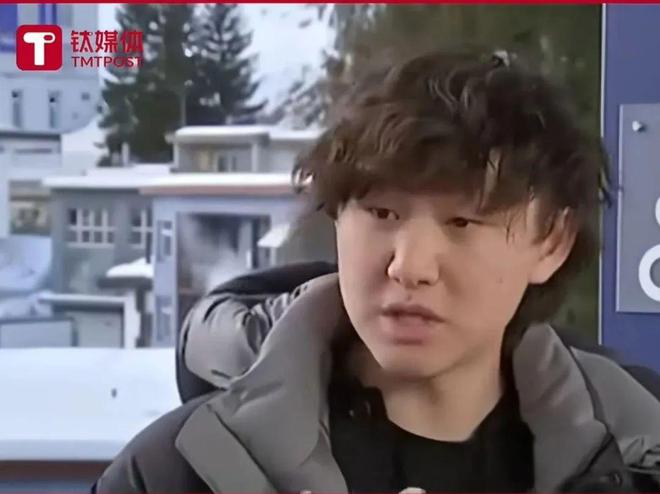
全文共1456字,阅读大约需要3分钟 亚历山大·王出生于美国新墨西哥州,为华人移民的后裔,他19岁那年从美国麻省理工学院辍学,创立 Scale AI。 本周,扎克伯格旗下Meta公司完成了一项金额高达近150亿美元的大型收购,创下了该公司历史上的规 模第二大交易。这次Meta的收购标的是由华裔"天才少年"亚历山大·王(Alexandr Wang)创立的人工智 能初创公司Scale AI。 Meta将以高达148亿美元的资金获得Scale AI公司49%的无投票权股份,而作为交易的核心部分,亚历山 大·王将加盟Meta公司,有望领导Meta的"超级智能"部门。这位28岁的华裔"天才"也是这家硅谷科技巨 头收购Scale AI的主要目标所在。 公司创始人扎克伯格面临投资人压力。为此,Meta正在奋力反击。 通过收购Scale AI并将亚历山大·王纳入麾下,Meta试图在尖端模型的开发方面赶超竞争对手。投资Scale AI也是缓解扎克伯格"AI焦虑"的计划之一。事实上,在Meta的主要AI竞争对手中,微软、谷歌等公司 均持续投资AI创业公司,例如OpenAI的快速发展离不开微软超百亿美元的持续支持,谷歌也在去年收 ...
Meta砸下千亿,全球最年轻女富豪诞生
虎嗅APP· 2025-06-15 10:36
以下文章来源于投资界 ,作者王露 投资界 . 清科创业旗下创业与投资资讯平台 本文来自微信公众号: 投资界 (ID:pedaily2012) ,作 者:王露,原文标题:《30岁,全球最年 轻女富豪诞生》,头图来自:视觉中国 AI的造富速度,比任何时代都来得惊人。 本周,全球最轰动一笔交易是:Meta斥资约150亿美元 (约合人民币1078亿元) 投向Scale AI,对 应公司估值达到290亿美元 (约合人民币2085亿元) 。 Scale AI始于2016年,当时两位90后华人少年Alexandr Wang和Lucy Guo双双退学创业。公司业务 是"向挖金子的人卖铲子"——为人工智能提供数据标注服务。 随着交易落地,刚刚30岁的Lucy Guo再次爆火。这位早已离职的创始人,凭借持有公司5%的股份, 身家暴涨,成为《福布斯》世界上最年轻的白手起家女亿万富豪。 一、Meta砸下千亿,全球最年轻 女富豪诞生 更多交易细节浮出水面。 据《金融时报》报道,Meta斥资约150亿美元入股Scale,取得49%股权。Scale对应估值达到了290亿 美元,是去年估值的两倍。 与其说是投资,更像是一次"人才收购"。作为 ...

Meta砸下千亿,全球最年轻女富豪诞生
虎嗅APP· 2025-06-15 10:35
以下文章来源于投资界 ,作者王露 投资界 . 清科创业旗下创业与投资资讯平台 本文来自微信公众号: 投资界 (ID:pedaily2012) ,作 者:王露,原文标题:《30岁,全球最年 轻女富豪诞生》,头图来自:视觉中国 AI的造富速度,比任何时代都来得惊人。 本周,全球最轰动一笔交易是:Meta斥资约150亿美元 (约合人民币1078亿元) 投向Scale AI,对 应公司估值达到290亿美元 (约合人民币2085亿元) 。 Scale AI始于2016年,当时两位90后华人少年Alexandr Wang和Lucy Guo双双退学创业。公司业务 是"向挖金子的人卖铲子"——为人工智能提供数据标注服务。 随着交易落地,刚刚30岁的Lucy Guo再次爆火。这位早已离职的创始人,凭借持有公司5%的股份, 身家暴涨,成为《福布斯》世界上最年轻的白手起家女亿万富豪。 一、Meta砸下千亿,全球最年轻 女富豪诞生 更多交易细节浮出水面。 据《金融时报》报道,Meta斥资约150亿美元入股Scale,取得49%股权。Scale对应估值达到了290亿 美元,是去年估值的两倍。 与其说是投资,更像是一次"人才收购"。作为 ...