
生成式AI

Search documents
筑牢智能出行技术底座——访高通公司中国区董事长孟樸
Zhong Guo Qi Che Bao Wang· 2025-11-18 00:29
Core Insights - The China International Import Expo (CIIE) serves as a national platform for global cooperation, showcasing Qualcomm's commitment to the Chinese market and its long-term strategy of horizontal empowerment [2][3] - Qualcomm emphasizes its role as a technology enabler in the transition from 5G to 6G and the Internet of Things, particularly in the smart connected vehicle sector [2][4] - The collaboration between Qualcomm and Chinese automotive companies, such as Leap Motor, highlights the depth of strategic partnerships in advancing automotive technology [3][4] Qualcomm's Commitment to China - Qualcomm has participated in the CIIE for eight consecutive years, reflecting its long-term commitment to the Chinese market and its strategy of empowering industries through technology [2][3] - The company has established strong cooperative relationships with the Chinese supply chain, which has been crucial for its growth in the region [2][4] Technological Advancements in Automotive Sector - Qualcomm's Snapdragon digital chassis supports over 210 vehicle models in China, covering a wide market from high-end to affordable vehicles [4] - The integration of AI and advanced semiconductor technology in smart vehicles is transforming the automotive industry, with a focus on enhancing user experience and safety [5][6] Globalization of Chinese Automotive Industry - Chinese automotive exports are projected to grow significantly, with Qualcomm aiming to support this growth by leveraging its experience from the smartphone era [7][8] - The shift in consumer perception of vehicles as mobile living spaces rather than mere transportation tools is driving innovation in the Chinese automotive market [6][7] Future Trends and Opportunities - The convergence of new energy and smart connectivity technologies is propelling the rapid development of the Chinese automotive industry [8][9] - As driving assistance technologies evolve towards levels L3 and L4, the potential for shared mobility services is expected to increase, presenting new opportunities for Chinese automotive brands on the global stage [8][9][10]


特斯拉(TSLA.US)与梅赛德斯-奔驰在华获批提供生成式AI助手服务
Zhi Tong Cai Jing· 2025-11-17 13:01
Core Insights - Tesla and Mercedes-Benz are among the first foreign companies registered as generative AI service providers in China, allowing them to deploy AI assistants for customer service inquiries [1] - China will implement a generative AI service registration system starting April 2024, requiring suppliers to obtain government approval before offering such technology to consumers [1] Group 1: Tesla - Tesla's voice assistant system in China utilizes DeepSeek and ByteDance's AI model, providing in-car voice recognition, navigation, and music control features [1] - The Shanghai xBot AI service is expected to align closely with Chinese users' expectations for smart vehicle functionalities [1] Group 2: Mercedes-Benz - Mercedes-Benz plans to use a virtual assistant powered by Douyin's Skylark AI for its newly launched pure electric CLA model in China [1] - The virtual assistant will support voice interaction, smart navigation, and advanced cabin control, with expectations to serve over 70,000 vehicles annually by 2026 [1] Group 3: Volvo - Volvo, controlled by Zhejiang Geely Holding Group, has also received legal permission to utilize generative AI services [2]

大家又想起了次贷危机
Sou Hu Cai Jing· 2025-11-17 12:08
Group 1 - The current market is facing two main issues: the Federal Reserve's measures to address structural pressures in the money market and the risk hedging demands arising from the massive financing wave among AI giants [1] - A key indicator, the tri-party repo rate, has repeatedly breached the Federal Reserve's target range, indicating localized liquidity shortages within the financial system, primarily due to the Fed's quantitative tightening policy [2][3] - Companies are increasingly turning to the bond market for financing, particularly in the tech sector, as they seek to raise capital for AI investments despite having strong cash flows [4][5] Group 2 - The demand for new corporate bonds is high, but the widening credit spreads indicate that investors are seeking higher risk premiums, reflecting growing concerns about credit risk [5] - The trading volume of credit default swaps (CDS) related to Oracle surged from $200 million to approximately $4.2 billion year-on-year, highlighting a significant increase in risk hedging activity [6] - The focus has shifted to tech companies, with banks being the largest buyers of CDS as they seek to hedge against rising credit risks in the sector [7] Group 3 - The balance between technological revolution and financial market dynamics is crucial, with the Federal Reserve needing to find equilibrium between monetary pressures and available tools [8] - The long-term implications of government debt and corporate bond expansion driven by AI investments pose significant risks to the global financial system [8]

高盛:维持瑞声科技“买入”评级 上调目标价至68.6港元
Zhi Tong Cai Jing· 2025-11-17 10:58
Core Viewpoint - Goldman Sachs raised the 12-month target price for AAC Technologies (02018) from HKD 63.6 to HKD 68.6 based on a 25.6x expected P/E ratio for 2026, maintaining a "Buy" rating, anticipating profit margin improvements from 2025 to 2027 due to favorable product structure and enhanced production efficiency [1] Group 1: VC Products - AAC Technologies' VC products are benefiting from increasing penetration across various smartphone models, value enhancement from material upgrades, and expanded VC area in foldable smartphones [2] - The company is developing new products for high-end smartphones, including large aluminum liquid cooling VC plates, with expectations of VC contribution rising from 1% in 2024 to 5%/10% in 2025/26 [2] Group 2: Acoustic/Tactile Solutions for AI Devices - The rise of generative AI is expected to drive growth in edge AI devices, which may be upgrades of existing devices or entirely new products designed for user interaction with AI agents [3] - In the AI/AR glasses segment, specifications are improving, providing users with enhanced performance, AI functionalities, and a more comfortable experience, which will help penetrate more consumers and extend usage time [3] - As a leading supplier of acoustic and tactile solutions, AAC Technologies is positioned to benefit from the trend of edge AI devices and expand its market exposure [3] Group 3: Changes in Smartphone Design - The company is optimistic about the Apple supply chain, as changes in smartphone design (such as thinner and foldable screens) will drive market demand and value enhancement, helping technology leaders regain order shares [4] - Changes in design are leading to increased component value for AAC Technologies, including ultra-thin tactile motors and larger heat dissipation plates [4]
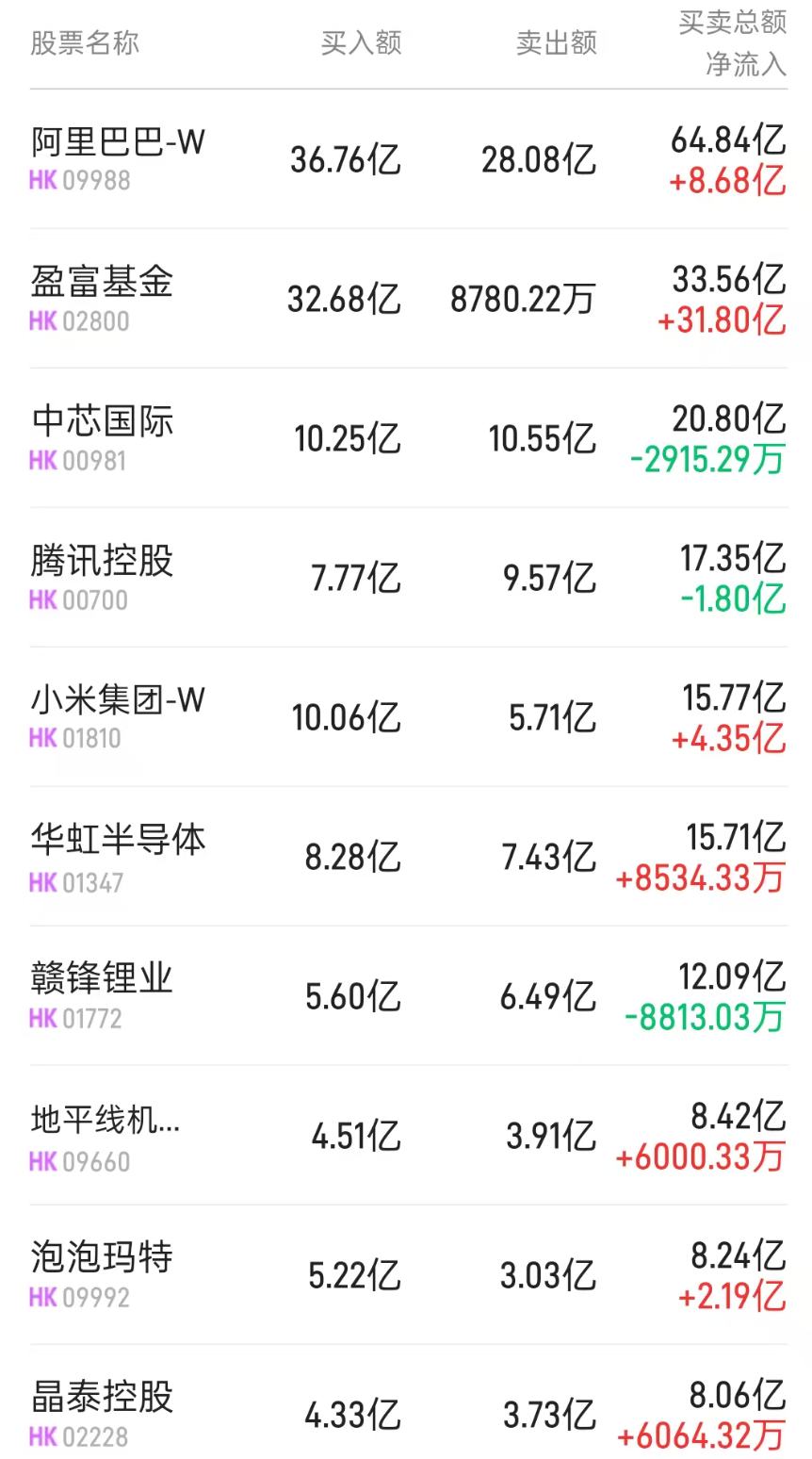
北水动向|北水成交净买入84.48亿 内资抢筹盈富基金(02800)超37亿港元 继续加仓阿里巴巴(09988)
智通财经网· 2025-11-17 09:57
Core Insights - The Hong Kong stock market saw a net inflow of 84.48 billion HKD from northbound trading on November 17, with 43.35 billion HKD from the Shanghai Stock Connect and 41.13 billion HKD from the Shenzhen Stock Connect [1] Group 1: Stock Performance - The most bought stocks included the Tracker Fund of Hong Kong (02800), Alibaba-W (09988), and Xiaomi Group-W (01810) [1] - The most sold stocks were Ganfeng Lithium (01772), SMIC (00981), and XPeng Motors-W (09868) [1] - Alibaba-W recorded a net inflow of 20.7 billion HKD, driven by the announcement of its AI application "Qianwen" [5] - The Tracker Fund of Hong Kong (02800) had a net inflow of 37.26 billion HKD, with analysts suggesting limited further downside due to reasonable valuations [4][5] Group 2: Sector Insights - Semiconductor stocks showed divergence, with Hua Hong Semiconductor (01347) receiving a net inflow of 10.65 million HKD, while SMIC (00981) faced a net outflow of 73.29 million HKD [7] - Analysts expressed caution regarding SMIC's outlook due to potential demand pressures from the current memory cycle [7] - Ganfeng Lithium (01772) experienced a net outflow of 83.53 million HKD, with forecasts indicating limited upward price movement for lithium in the near term [7]

高盛:维持瑞声科技(02018)“买入”评级 上调目标价至68.6港元
智通财经网· 2025-11-17 09:52
Group 1 - Core viewpoint: Goldman Sachs raised the 12-month target price for AAC Technologies (02018) from HKD 63.6 to HKD 68.6 based on a 25.6x expected P/E ratio for 2026, maintaining a "Buy" rating, anticipating profit margin improvements from 2025 to 2027 due to favorable product mix and enhanced production efficiency [1] Group 2 - AI smartphone VC products: AAC Technologies' VC products are benefiting from increasing penetration in various smartphone models, material upgrades, and the expansion of VC area in foldable smartphones. The company is developing new products for high-end smartphones, including large aluminum liquid cooling VC plates. The VC penetration rate is expected to rise from 1% in 2024 to 5%/10% in 2025/26 [1] Group 3 - Acoustic/tactile solutions for AI glasses and edge AI devices: The rise of generative AI is expected to drive growth in edge AI devices, which may be upgrades of existing devices or entirely new products for user interaction with AI agents. AI/AR glasses are seeing performance enhancements and AI functionalities that improve user experience, benefiting AAC Technologies as a leading supplier of acoustic and tactile solutions [2] Group 4 - Changes in smartphone design: The company is optimistic about the Apple supply chain, as changes in smartphone design (such as thinner and foldable models) will drive market demand and enhance value. These design changes are expected to increase the value of components supplied by AAC Technologies, such as ultra-thin haptic motors and larger heat dissipation plates [3]
印度迎来 AI调工具“0元购”时代,OpenAI、谷歌等巨头内心 os:别急,先让他们上瘾,我们再来收费
3 6 Ke· 2025-11-17 05:24
Core Insights - Major tech companies are competing to provide free AI tools to Indian developers, indicating a strategic investment in India's digital future [8][9][12] - The initiatives aim to attract a large user base, particularly among the youth, to create dependency on AI services before transitioning to paid models [8][16] Company Initiatives - Perplexity AI partnered with Airtel to offer its Pro version for free for one year, valued at approximately 17,000 INR (around 1,365 CNY) [6] - Google collaborated with Jio to provide Gemini Pro for free for 18 months, valued at about 35,000 INR (around 2,810 CNY) [6] - OpenAI announced a free one-year access to ChatGPT "Go" for millions of eligible Indian users, starting November 4, 2025, which includes features typically requiring payment [3][5] Market Dynamics - The competition is driven by India's vast and young internet user base, with over 9 billion internet users expected by 2024 [9][10] - The low cost of data in India allows tech companies to bundle AI tools with data plans, creating significant opportunities for user engagement and data collection [9][10] User Engagement and Data Collection - The free offerings are designed to increase user engagement, with the expectation that a small percentage will convert to paid subscriptions, potentially yielding substantial revenue [16] - Analysts suggest that the data collected from these users will enhance the performance of AI models, particularly generative AI systems [12][15] Regulatory Environment - India's flexible regulatory framework allows tech companies to implement these free services more easily compared to regions with stricter regulations, such as the EU [15] - There is a growing concern regarding data privacy and the need for clearer regulations as the market evolves [12][15] Future Projections - The demand for AI professionals in India is projected to grow significantly, with estimates suggesting an increase from 650,000 to over 1.27 million by 2027 [9][10] - The ongoing initiatives by tech giants are seen as a long-term strategy to establish a foothold in the rapidly evolving AI landscape in India [8][9]


界面新闻2025年度科技行业CEO评选启动!
Xin Lang Cai Jing· 2025-11-17 05:08
Group 1 - The "Annual Technology Industry CEO" list is a sub-list of the "Zhitong Finance 2025 Super CEO" series, focusing on CEOs in the technology sector who excel in identifying market potential and making bold decisions to seize development opportunities [1][4] - The "Zhitong Finance Super CEO" series includes various sub-lists across different industries, reflecting the diverse dynamics of China's economic development [1][4] - The 2025 year marks a critical point for China's "14th Five-Year" technology innovation plan, emphasizing the need for high-level technological self-reliance and breakthroughs in key technology areas [2] Group 2 - Significant investments in key technology areas such as semiconductors, AI, and industrial internet are expected to drive new growth points for China's economy, with R&D expenditure projected to exceed 3.63 trillion yuan [2] - The introduction of 15 new companies on the Science and Technology Innovation Board highlights the ongoing support for "hard technology" enterprises [2] - The domestic semiconductor industry is making strides in all aspects of the supply chain, with companies like SMIC achieving mass production of 5nm technology [3] Group 3 - The eVTOL sector is advancing with successful demonstrations, such as the "Shengshi Long" aircraft completing a cross-sea flight, indicating progress in urban air transport technology [4] - The penetration rate of L2 and above autonomous driving in passenger cars in China has surpassed 50%, showing a trend towards smart connected vehicles becoming mainstream [4] - The annual technology industry CEO list aims to identify CEOs who have effectively navigated challenges and expanded their companies' competitive advantages in a rapidly evolving market [4][5] Group 4 - The evaluation process for the Super CEO series involves company applications, desktop research, site visits, and data modeling, focusing on both listed and non-listed companies in China [5] - The assessment criteria include company size (25%), financial performance (40%), shareholder returns (20%), and personal reputation (15%) [5] - The technology industry is defined primarily as the information and communication technology (ICT) sector and its derivative application industries [6]
AI芯片霸主英伟达(NVDA.US)再临大考,华尔街押注“超预期+上调指引“
Zhi Tong Cai Jing· 2025-11-17 04:07
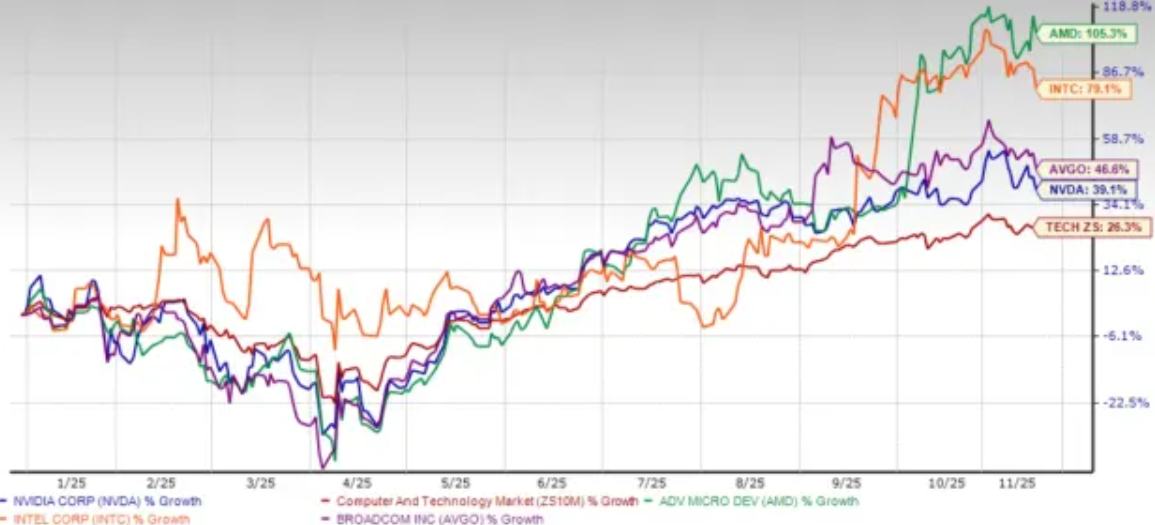
英伟达(NVDA.US)将在11月19日盘后公布2026财年第三季度财报,预计其盈利将再次超出预期,调整后每股收益预计为1.26美元;市场还预计该公司本季度 营收为营收为552.8亿美元,较去年同期增长超过55%。 数据中心业务成核心引擎 英伟达第三季度的营收可能得益于其数据中心业务的持续强劲。在混合工作模式日益流行的趋势下,云端解决方案的采用率不断提高,预计提振了其数据中 心终端市场对其芯片的需求。超大规模需求增长以及推理市场采用率的提高,可能成为本报告季度的顺风。 数据中心终端市场业务应受益于对使用基于英伟达Blackwell架构的GPU的生成式AI和大语言模型日益增长的需求。大型云服务和消费互联网公司对其芯片 的强劲需求,预计将推动该部门在本报告季度的营收增长。对数据中心第三季度营收的估计为480.4亿美元,这表明了56.1%的强劲同比增长。 此外,英伟达第三季度的业绩可能受益于其游戏和专业可视化终端市场的复苏。在过去九个季度中,有七个季度游戏终端市场的业绩同比改善,因为渠道合 作伙伴的库存水平已恢复正常。该公司的游戏产品在大多数地区也录得强劲需求。对游戏终端市场第三季度营收的模型估计为47.1亿美元, ...

财报前瞻 | AI芯片霸主英伟达(NVDA.US)再临大考,华尔街押注“超预期+上调指引“
智通财经网· 2025-11-17 04:03
Core Viewpoint - Nvidia is expected to report strong earnings for Q3 FY2026, with adjusted earnings per share projected at $1.26 and revenue estimated at $55.28 billion, reflecting over 55% year-over-year growth [1] Group 1: Data Center Business - The data center business is anticipated to be a key growth driver, benefiting from the increasing adoption of cloud solutions and strong demand for Nvidia's chips in the generative AI and large language model markets [2] - Estimated revenue for the data center segment in Q3 is $48.04 billion, indicating a robust year-over-year growth of 56.1% [2] Group 2: Gaming and Professional Visualization - The gaming segment is showing signs of recovery, with estimated revenue for Q3 at $4.71 billion, representing a 43.7% increase compared to the previous year [2] - The professional visualization segment is also expected to continue its growth trend, with estimated revenue of $678.9 million, reflecting a 39.7% year-over-year increase [3] Group 3: Automotive Sector - The automotive segment is projected to see continued improvement, with estimated revenue for Q3 at $624.8 million, which would mark a 39.1% year-over-year growth [3] Group 4: Generative AI Market - Nvidia is positioned as a leader in the generative AI chip market, with increasing demand across various industries, including marketing, healthcare, and gaming [4] - The global generative AI market is expected to reach $967.65 billion by 2032, with a compound annual growth rate of 39.6% from 2024 to 2032 [4] Group 5: Analyst Sentiment - Analysts from Jefferies and Wedbush expect Nvidia to exceed earnings expectations and raise future guidance, citing strong capital expenditure trends from large-scale enterprises [6] - Bank of America maintains a target price of $275, anticipating assurances from Nvidia executives regarding their capacity to meet demand [7] - Oppenheimer analysts have raised Nvidia's target price, identifying it as the most likely winner in the AI sector [9]