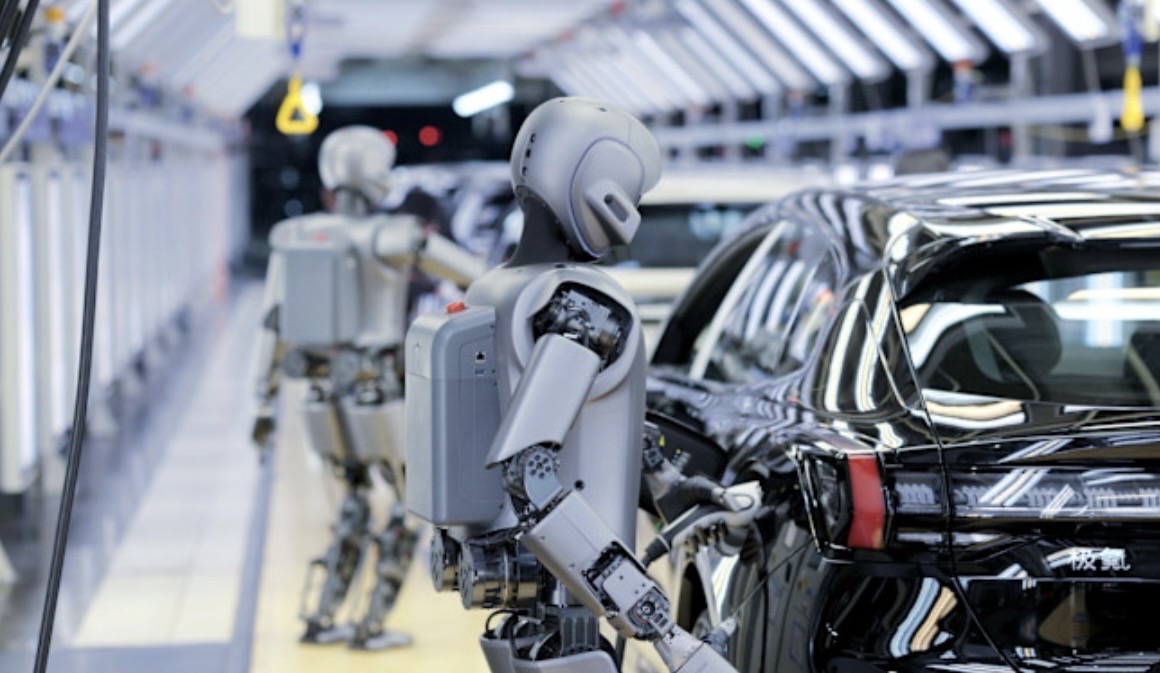
人形机器人

Search documents
A股收评:创业板跌近1%,贵金属、生物疫苗板块逆势爆发
Ge Long Hui· 2026-01-26 07:37
Market Overview - On January 26, A-shares saw a collective decline with the Shanghai Composite Index down 0.09% at 4132 points, the Shenzhen Component down 0.85%, and the ChiNext Index down 0.91% [1][2] - The total market turnover reached 3.28 trillion yuan, an increase of 162.5 billion yuan compared to the previous trading day, with over 3700 stocks declining [1] Sector Performance - The commercial aerospace and satellite internet sectors experienced significant pullbacks, with stocks like China Satellite and Aerospace Development hitting the daily limit down [2][4] - The military industry sector also fell, with stocks such as Chaojie Co. dropping over 10% [2] - Conversely, international gold and silver prices surged to new highs, leading to a rally in precious metals and non-ferrous metals sectors, with stocks like Xiaocheng Technology and Western Gold hitting the daily limit up [2][10] - The outbreak of the Nipah virus in India caused a collective rise in the biopharmaceutical and vaccine sectors [2][14] Notable Stock Movements - In the military equipment sector, Aerospace Hanyu fell over 11%, while China Satellite and Aerospace Technology hit the daily limit down [4] - In the semiconductor equipment sector, stocks like Su Dawei and Wo Ge Optoelectronics saw significant declines, with some stocks dropping over 11% [5][8] - The humanoid robot sector also faced declines, with stocks like Haoshi Machinery and Lixing Co. dropping over 13% [6][9] - The biopharmaceutical sector saw notable gains, with stocks like Hualan Vaccine and Jindike hitting the daily limit up due to the Nipah virus outbreak [14] Investment Insights - The coal sector showed strength, with China Shenhua rising over 4% and other coal stocks following suit [18] - The insurance sector also performed well, with stocks like New China Life and China Pacific Insurance seeing gains [15][16] - The market outlook suggests a focus on sectors with performance verification, particularly in price increase chains, high-end manufacturing, and AI-related industries [19]







任泽平:癌症、渐冻症等绝症有望在5-10年内被攻克
Xin Lang Cai Jing· 2026-01-26 07:36
Group 1: Key Trends in Technology and Industry - The first major trend is the explosion of autonomous driving, which is expected to solve urban traffic congestion, air pollution, and safety issues within the next 1-2 years. A unified driving standard through large models will enable millions of vehicles to reach or exceed the skill level of experienced drivers, representing a trillion-dollar market opportunity [2][14]. - The second trend involves the significant rise of humanoid robots, which will first take over dangerous and repetitive tasks in factories, then transition into homes as companions, and eventually evolve into silicon-based life forms that deeply understand human society [3][15]. - The third trend highlights breakthroughs in life sciences, where AI will dramatically enhance drug development, potentially curing diseases like cancer and ALS within 5-10 years, and extending human lifespan to 120 years [4][16]. - The fourth trend is the anticipated explosion of AI super applications, with AI assistants expected to become personal secretaries for everyone, covering all aspects of daily life, leading to the replacement of over 90% of existing apps [5][17]. - The fifth trend indicates the rise of China's strength in various sectors such as photovoltaics, new energy vehicles, and power batteries, leveraging a strong supply chain and a market of 1.4 billion people for rapid commercialization [6][19]. - The sixth trend is the emergence of a new energy system characterized by "green electricity + energy storage," with China's installed capacity of green electricity surpassing coal, driving a surge in energy storage demand [7][20]. Group 2: Societal and Economic Trends - The seventh trend points to intensified geopolitical competition and a global arms race, with modern warfare evolving towards aerospace, information, and intelligence, focusing on military technology in aerospace and high-end equipment [8][21]. - The eighth trend discusses the revolution in the food industry driven by biotechnology, where mass production of proteins, starches, fruits, and vitamins will replace traditional agriculture, significantly reducing land use and air pollution [9][22]. - The ninth trend indicates the arrival of a post-real estate era, where the housing market will see a bifurcation: property prices in core areas with 20% population inflow may bottom out or even reach new highs, while areas with 80% population outflow will experience prolonged price declines [11][23]. - The tenth trend highlights the acceleration of aging and declining birth rates, with the baby boomer generation entering old age, creating opportunities in the silver economy and health industries, while declining birth rates will boost markets related to pets, single living, emotional well-being, and cost-effectiveness [12][24].
任泽平:自动驾驶将在未来1-2年爆发,大模型可统一驾驶标准
Xin Lang Cai Jing· 2026-01-26 07:30
Group 1: Key Trends in Technology and Industry - The first major trend is the explosion of autonomous driving, which is expected to solve urban traffic congestion, air pollution, and safety issues within the next 1-2 years. A unified driving standard through large models will enable millions of vehicles to reach or exceed the skill level of experienced drivers, representing a trillion-dollar market opportunity [2][14]. - The second trend involves the significant rise of humanoid robots, which will first take over dangerous and repetitive tasks in factories, then transition into homes as companions, and eventually evolve into silicon-based life forms that deeply understand human society [3][15]. - The third trend highlights breakthroughs in life sciences, where AI will dramatically enhance drug development, potentially curing diseases like cancer and ALS within 5-10 years, and extending human lifespan to 120 years [4][16]. - The fourth trend is the anticipated explosion of AI super applications, with AI assistants expected to become personal secretaries for everyone, covering all aspects of daily life, leading to the replacement of over 90% of existing apps [5][17]. - The fifth trend indicates the rise of China's strength in various sectors such as photovoltaics, electric vehicles, and power batteries, leveraging a strong supply chain and a market of 1.4 billion people for rapid commercialization [6][19]. - The sixth trend is the emergence of a new energy system characterized by "green electricity + energy storage," with China's installed capacity of green electricity surpassing coal, driving a surge in energy storage demand [7][20]. Group 2: Societal and Economic Trends - The seventh trend points to intensified geopolitical competition and a global arms race, with modern warfare evolving towards aerospace, information, and intelligence, focusing on aerospace, communication satellites, and high-end equipment [8][21]. - The eighth trend discusses the revolution in the food industry driven by biotechnology, where essential nutrients will be produced on a large scale in factories, significantly reducing land use and air pollution, aiding carbon neutrality and ecological restoration [9][22]. - The ninth trend indicates the arrival of a post-real estate era, where the housing market will see a bifurcation: property prices in core areas with 20% population inflow may bottom out or even reach new highs, while areas with 80% population outflow will experience prolonged price declines [11][23]. - The tenth trend highlights the acceleration of aging and declining birth rates, with the baby boomer generation entering old age, creating opportunities in the silver economy and health industries, while declining birth rates will boost markets related to pets, single living, emotional well-being, and cost-effectiveness [12][24].
任泽平:未来十大新趋势
Xin Lang Cai Jing· 2026-01-26 07:30
Group 1: Key Trends in Technology and Innovation - The first major trend is the explosion of autonomous driving, which is expected to solve urban traffic congestion, air pollution, and safety issues within the next 1-2 years. A unified driving standard through large models will enable millions of vehicles to reach or exceed the skill level of experienced drivers, representing a trillion-dollar market opportunity [2][14]. - The second trend involves the significant rise of humanoid robots, which will first take over dangerous and repetitive tasks in factories, then transition into homes as companions, and eventually evolve into silicon-based life forms that deeply understand human society [3][15]. - The third trend highlights breakthroughs in life sciences, where AI will dramatically enhance drug development, potentially curing diseases like cancer and ALS within 5-10 years, and extending human lifespan to 120 years [4][16]. - The fourth trend is the anticipated explosion of AI super applications, with AI assistants expected to become personal secretaries for everyone, covering all aspects of daily life, leading to the replacement of over 90% of existing apps [5][17]. Group 2: Energy and Environmental Trends - The sixth trend is the emergence of a new energy system characterized by "green electricity + energy storage." China's installed capacity of green electricity (solar and wind) has surpassed that of coal, driving a surge in energy storage demand. Solid-state batteries are becoming mainstream due to their high energy density, long range, and safety, leading to a boom in demand for new energy minerals like copper and lithium [7][20]. - The eighth trend indicates that biotechnology will revolutionize the food industry, with large-scale production of proteins, starches, fruits, and vitamins in factories, replacing traditional agriculture and significantly reducing land use and air pollution, thus aiding carbon neutrality and ecological restoration [9][22]. Group 3: Demographic and Economic Trends - The ninth trend points to the arrival of a post-real estate era, where the housing market will experience a bifurcation. In the long term, real estate prices in core areas, which will see a 20% population inflow, are expected to bottom out and potentially reach new highs in the medium term, while areas with an 80% population outflow will face prolonged price declines [11][23]. - The tenth trend addresses the accelerating aging and declining birth rates, with the baby boomer generation (born between 1962-1976) rapidly aging. This demographic shift will create significant opportunities in the silver economy and health industries, while declining birth rates will drive the rise of pet economies, single-person economies, emotional economies, and cost-effective economies [12][24].
恒辉安防回应机器人领域布局进展:正加紧推进相关中试产线的规划与建设
Zheng Quan Shi Bao Wang· 2026-01-26 07:00
Core Viewpoint - The company is strategically focusing on the robotics sector, with a clear positioning of its core components business integrated into its "14th Five-Year" strategic plan [1] Group 1: Strategic Planning - The company emphasizes the importance of the robotics field, led by the chairman, focusing on core component technology breakthroughs [1] - The strategic development path is defined as "from core components to scenario-based solutions," leveraging advanced materials and patent reserves [1] Group 2: Product Development and Progress - Several protective products, including flexible joint protectors and protective gloves, have completed commercialization and small-scale deliveries [2] - The ultra-high molecular weight polyethylene fiber transmission tendons are being tested by multiple domestic and international robotics companies [2] - Development of electronic skin garments and gloves is progressing steadily, focusing on the integration of flexible elastomers and sensors [2] Group 3: Business Operations and Collaborations - The company is advancing multiple lines of business in humanoid robotics, engaging in deep collaborations with leading firms in the sector [2] - The company is planning and constructing pilot production lines to enhance scalable and customized production capabilities [2] Group 4: Market and Financial Outlook - The robotics-related business is currently in the market expansion and capacity building phase, with no significant profit contribution yet [3] - Future performance and profitability will depend on the development pace of the downstream robotics industry, with uncertainties affecting precise forecasts [3]


人形机器人产业周报:宇树人形机器人出货超5500台,马斯克计划明年面向公众销售Optimus
Guoyuan Securities· 2026-01-26 06:24
Investment Rating - The report maintains a "Recommendation" rating for the industry, indicating that the industry index is expected to outperform the benchmark index by more than 10% [7]. Core Insights - The humanoid robot concept index increased by 3.00% from January 18 to January 23, 2026, outperforming the CSI 300 index by 3.62 percentage points. Year-to-date, the humanoid robot index has risen by 9.68%, also surpassing the CSI 300 index by 8.11 percentage points [2][13]. - UTree Technology announced that its actual shipment of humanoid robots exceeded 5,500 units in 2025, with a production line output of over 6,500 units. This figure excludes other types of robots [5][23]. - The report highlights significant advancements in the humanoid robot industry, including the establishment of a humanoid robot lab by OpenAI and the launch of an automated production line for robot joints by Yiyou Technology [22][24]. Weekly Market Review - The humanoid robot index saw a weekly increase of 3.00%, with notable stock performances: Jingji Zhino increased by 29.47%, while Dongshan Precision saw a decline of 9.00% [19][20]. Weekly Hotspot Review Policy Developments - The Shenzhen Municipal Financial Management Bureau released a draft action plan to support technological innovation and industrial development in the insurance sector, encouraging research in humanoid robots and other advanced technologies [3][22]. - The Ministry of Industry and Information Technology plans to publish guidelines for the standardization of humanoid robots and embodied intelligence [3][22]. Product and Technology Iteration - OpenAI has established a humanoid robot lab, significantly expanding its scale since its inception [23]. - UTree clarified its shipment data, confirming over 5,500 units sold in 2025, which reflects actual sales to end customers [23]. - Yiyou Technology launched its first automated production line for robot joints, aiming to meet the growing demand for humanoid robots [24]. Investment and Financing - Zhejiang Humanoid Robot Innovation Center completed a Pre-A round financing of 450 million yuan, raising a total of 2.2 billion yuan over the past year and a half [26]. - Beijing Zhizai Wujie Technology Co., Ltd. underwent a capital increase, with new investors joining the company [26]. Key Company Announcements - Shuangyi Technology has provided humanoid robot joint product samples for customer prototype development [27]. - Taili Technology is expanding its security materials into the humanoid robot sector [27]. - Zhiwei Intelligent announced the mass production of a domain controller based on NVIDIA's Thor chip, enhancing its capabilities in the humanoid robot industry [27].
国金证券:机器人需求驱动下新技术落地加速 长期竞争力取决于规模化量产与成本控制
智通财经网· 2026-01-26 06:00
Core Insights - The demand for humanoid robot motors is urgent, with key performance indicators including high torque density, low torque ripple, strong overload capacity, and heat dissipation properties [1] - The development of harmonic magnetic field technology is accelerating, leading to practical applications in industrial and robotic scenarios, with a gradual process from concept validation to high-end breakthroughs [3] Group 1: Motor Types and Characteristics - Humanoid robot motors are primarily divided into frameless torque motors and hollow cup motors, with frameless torque motors offering low speed, high torque, and stable performance, while hollow cup motors are smaller and lighter, providing higher power density and energy conversion efficiency [2] - Frameless torque motors are designed to mimic joint movements and muscle stretching, supporting the overall movement and load capacity of humanoid robots [2] Group 2: Technological Innovations - Harmonic magnetic field motors break traditional motor magnetic circuit design constraints, reducing size and increasing torque under high power density, leveraging the "magnetic field modulation effect" [3] - The future development of these technologies will focus on performance breakthroughs through technical innovation, with long-term competitiveness relying on cost control and mass production capabilities [4] Group 3: Market Dynamics - The core competitive factors in humanoid robot motors will revolve around better performance and lower costs, with companies focusing on new electric drive technologies such as magnetic field modulation and motor integration [4] - The industry is expected to see multiple solutions running in parallel, with a focus on technological advancements to achieve performance improvements [4]

人形机器人产业周报:宇树人形机器人出货超5500台,马斯克计划明年面向公众销售Optimus-20260126
Guoyuan Securities· 2026-01-26 05:44
Investment Rating - The report maintains a "Recommendation" rating for the industry, indicating that the industry index is expected to outperform the benchmark index by more than 10% [7]. Core Insights - The humanoid robot concept index increased by 3.00% from January 18 to January 23, 2026, outperforming the CSI 300 index by 3.62 percentage points. Year-to-date, the humanoid robot index has risen by 9.68%, also surpassing the CSI 300 index by 8.11 percentage points [2][13]. - UTree Technology announced that its actual shipment of humanoid robots exceeded 5,500 units in 2025, with a production line output of over 6,500 units. This data clarifies previous misinformation regarding the company's sales figures [5][23]. - The report highlights significant advancements in the humanoid robot industry, including the establishment of a humanoid robot lab by OpenAI and the launch of an automated production line for robot joints by Yiyou Technology [22][24]. Weekly Market Review - The humanoid robot index saw a weekly increase of 3.00%, with notable stock performances: Jingji Zhino had the highest weekly gain at +29.47%, while Dongshan Precision experienced the largest decline at -9.00% [2][19]. Weekly Hotspot Review Policy Developments - The Shenzhen Municipal Financial Management Bureau released a draft action plan to support technological innovation and industrial development in the insurance sector, encouraging research in humanoid robots and other advanced technologies [3][22]. - The Ministry of Industry and Information Technology plans to publish guidelines for the standardization of humanoid robots and embodied intelligence [3][22]. Product and Technology Iteration - OpenAI has established a humanoid robot lab, significantly expanding its scale since its inception [22][23]. - UTree Technology clarified its shipment figures, confirming over 5,500 units sold in 2025, emphasizing the distinction between actual sales and order quantities [5][23]. - Yiyou Technology launched its first automated production line for robot joints, aimed at meeting the growing demand for humanoid robots [24]. Investment and Financing - Zhejiang Humanoid Robot Innovation Center completed a Pre-A round financing of 450 million yuan, raising a total of 2.2 billion yuan over the past year and a half [26]. - Beijing Zhizai Wujie Technology Co., Ltd. underwent a capital increase, reflecting new investments from various stakeholders [26]. Key Company Announcements - Shuangyi Technology has provided humanoid robot joint product samples for customer prototype development [4][28]. - Taili Technology is expanding its security materials into the humanoid robot sector [4][28]. - Zhiwei Intelligent announced the mass production of a domain controller based on NVIDIA's Thor chip, enhancing its capabilities in the humanoid robot industry [4][29].
ETF午评 | 金价历史首次突破5000美元,黄金股票ETF基金、黄金股ETF工银飙涨7%
Ge Long Hui· 2026-01-26 05:04
Market Overview - The three major A-share indices showed mixed performance in the morning session, with the Shanghai Composite Index up by 0.12%, while the Shenzhen Component Index, ChiNext Index, and North Star 50 Index fell by 0.74%, 0.86%, and 0.97% respectively [1] - The total trading volume in the Shanghai and Shenzhen markets reached 22,631 billion yuan, an increase of 3,495 billion yuan compared to the previous day [1] - Over 3,700 stocks in the market experienced declines [1] Sector Performance - The sectors that saw the most significant gains included gold, non-ferrous metals, avian influenza, oil and gas, insurance, chemicals, securities, and port shipping [1] - Conversely, the sectors that faced the largest declines were commercial aerospace, military equipment, gaming, photolithography, semiconductors, humanoid robots, and AI mobile phone concepts [1] ETF Performance - International gold prices surpassed $5,000 per ounce for the first time, leading to a surge in gold and non-ferrous resource stocks [1] - The following ETFs saw notable increases: Ping An Fund Gold Stock ETF rose by 7.34%, ICBC Gold Stock ETF by 7.33%, and Guotai Fund Gold Stock ETF by 6.95% [1] - Oil and gas stocks also performed strongly, with Huatai Bairui Oil and Gas ETF increasing by 6% [1] Declines in Specific Sectors - The commercial aerospace sector experienced a widespread decline, with satellite ETFs and related funds dropping significantly: Satellite ETF fell by 6.85%, Satellite Industry ETF by 6.77%, and Guangfa Satellite ETF by 6.6% [1] - The semiconductor equipment sector also saw a downturn, with the E Fund Semiconductor Equipment ETF decreasing by 4% [1]
人形机器人生产效率不到人类一半?杨立昆泼冷水:没一个聪明的!
第一财经网· 2026-01-26 04:49
Group 1 - Tesla's humanoid robot, Optimus, is expected to be available for public sale by the end of next year, which is a year later than previously anticipated by CEO Elon Musk [1] - Musk believes that the widespread application of humanoid robots will lead to significant economic prosperity, predicting that the number of robots will exceed the global population [1] - The efficiency of humanoid robots may not meet expectations, with Chinese company UBTECH stating that its Walker S2 robot currently achieves 30% to 50% of human production efficiency, aiming for 80% by 2027 [1][3] Group 2 - UBTECH has partnerships with automotive manufacturers BYD and Foxconn, projecting to deliver over 500 Walker S2 units by 2025 and targeting a production capacity of 10,000 units by 2026 [3] - The Walker S2 can only perform limited tasks such as stacking boxes and quality control, and currently requires human intervention to switch attachments for different tasks, highlighting challenges in multi-functionality [3] - Musk noted that Tesla's Optimus can currently perform only simple tasks in factories, but he is optimistic that by the end of this year, these robots will be able to handle more complex tasks in industrial settings [3] Group 3 - According to the International Federation of Robotics, China is expected to account for over half of the global industrial robot installations in 2024, primarily consisting of traditional robotic arms [5] - Analyst Marco Wang from Interact Analysis stated that many humanoid robot deployment cases are still in the concept validation or demonstration phase, indicating significant challenges before commercial operations can be realized [5] - AI expert Yann LeCun expressed skepticism about the current understanding of world models in the industry, noting that while many companies are building humanoid robots, none have achieved true intelligence and utility [5]