数字孪生

Search documents
“工业基因”嫁接“数智血脉”黄山以数智技改 锻造工业竞争新优势
Zhong Guo Xin Wen Wang· 2025-06-10 15:12
Group 1 - The core viewpoint of the articles highlights the significant advancements in precision manufacturing and digital transformation within the industrial sector, particularly in Tunxi District, which is leveraging technologies like digital twins and 5G to enhance production efficiency and reduce costs [1][2] - A precision manufacturing company in Tunxi has implemented a digital twin platform that has reduced trial and error costs by 70%, decreased energy consumption per unit output by 12%, and shortened order delivery cycles by 25% [1] - The company aims to exceed 100 million RMB in output value by 2024, with projections of reaching 150 million RMB by 2025, indicating strong growth potential driven by technological upgrades [1] Group 2 - Another company in the optical module and automotive lighting sector has invested 10 million RMB to establish an intelligent production workshop since its establishment in March, with expected annual output value of 40 million RMB [2] - Tunxi District is actively promoting industrial transformation through supportive policies and financial incentives, resulting in a 19.1% year-on-year increase in local technological transformation investments from January to April [2] - The district's initiatives aim to encourage enterprises to invest in new products, processes, equipment, and materials, thereby enhancing the competitive advantages of the industrial sector [2]
每日复盘:2025年6月10日创业板指跌逾1%,航运港口板块逆市大涨-20250610
Guoyuan Securities· 2025-06-10 14:45
Market Performance - On June 10, 2025, the ChiNext Index fell by 1.17%, while the shipping and port sector saw a significant increase[2] - The Shanghai Composite Index decreased by 0.44%, and the Shenzhen Component Index dropped by 0.86%[2] - The total market turnover reached 1,415.18 billion CNY, an increase of 128.96 billion CNY from the previous trading day[2] Sector Analysis - Among the 30 major sectors, the banking sector rose by 0.48%, while the defense industry fell by 1.96%[19] - The pharmaceutical sector increased by 0.33%, and the computer sector decreased by 1.91%[19] - Most concept sectors declined, with notable increases in yesterday's consecutive boards and genetically modified sectors[19] Capital Flow - On June 10, 2025, the net outflow of main funds was 57.03 billion CNY, with large orders seeing a net outflow of 31.34 billion CNY[23] - Small orders continued to see a net inflow of 51.17 billion CNY[23] - The net inflow of southbound funds totaled 7.59 billion HKD, with the Shanghai-Hong Kong Stock Connect contributing 4.80 billion HKD[25] ETF Activity - Major ETFs such as the Huaxia SSE 50 ETF and the Huatai-PB CSI 300 ETF saw significant increases in trading volume, with changes of +5.66 billion CNY and +7.46 billion CNY respectively[28] - The trading volume for the CSI 500 ETF decreased by 0.86 billion CNY[28] Global Market Trends - On June 10, 2025, major Asia-Pacific indices showed mixed results, with the Hang Seng Index down 0.08% and the Nikkei 225 remaining flat[32] - The S&P 500 Index rose by 0.09%, while the Dow Jones Industrial Average remained unchanged[32]





外交部:中国的发展始终是世界机遇
证券时报· 2025-06-10 10:15
有记者问:我们注意到,近期不少外资企业持续投资中国。中国丹麦商会、德国商会等表示,欧洲企业对持续 投资中国很有动力,人工智能、数字孪生、无人驾驶等新技术都是可以开展合作的蓝海。中国美国商会最新调 查显示,绝大多数美企没有撤离中国市场的计划。很多外资企业也开始加大本地化研发创新。发言人对此有何 评论? 林剑表示,越来越多外资企业加码中国,体现出外界看重中国高质量发展的稳定性和高水平对外开放的确定 性,也彰显了中国新质生产力与科技创新生态的澎湃动能。我们加快推进制度型开放,推出《2025年稳外资行 动方案》,修订扩大《鼓励外商投资产业目录》,将高端制造、数字经济等前沿领域纳入政策红利圈。今年前 五个月,有进出口实绩的外企数量超过7.3万家,为5年来同期最高。同时,中国持续取得的创新突破,市场对 新产业新业态的巨大需求,以及完备产供链体系、丰富人才资源、成熟创新生态等独特优势,驱动外企加速投 资新质生产力、深嵌中国创新链。"在中国研发、向世界输出"成为热潮,形成市场、企业和资源要素的良性循 环。 从制造高地到创新引擎,中国的发展始终是世界机遇。我们将持续优化营商环境,为外企提供更多政策红利。 欢迎更多外企立足中国、 ...


全球及中国自主旋转导向系统行业研究及十五五规划分析报告
QYResearch· 2025-06-10 08:13
Core Viewpoint - The article discusses the advancements and market potential of the Rotary Steerable System (RSS) in directional drilling, highlighting its significance in modern oil drilling technology and its expected growth in the global market [1][5][6]. Industry Overview - The global RSS market is projected to reach $388.87 million in 2024 and $544.34 million by 2031, with a compound annual growth rate (CAGR) of 4.48% [5]. - The Chinese market is expected to grow from $32.40 million in 2024 (8.33% of the global market) to $47.69 million by 2031 (8.76% of the global market) [5]. - The top three global manufacturers are expected to hold over 55% market share in 2024, indicating increasing competition, especially in China [5][7]. Technological Development - The RSS technology is characterized by low friction and torque, high drilling speed, short construction cycles, smooth wellbore trajectories, and ease of control, making it a key tool for achieving geological targets and improving drilling efficiency [6][7]. - The industry is experiencing a dual growth phase driven by technological iteration and policy support, with a focus on smart and green transitions [6][8]. Market Drivers - National strategic support, such as the "863 Program," is accelerating the localization of core technologies [13]. - The increasing dependence on foreign oil and gas supplies is prompting policies that encourage exploration and development to ensure energy security [15]. - The demand for unconventional oil and gas resources is rising, with RSS technology being a critical alternative to traditional sliding steerable systems [16]. Future Trends - The integration of artificial intelligence and digital twin technologies is expected to enhance real-time trajectory prediction and decision-making in drilling operations [8]. - The RSS market is anticipated to expand into unconventional resource development, such as deep-sea oil and gas and shale gas, as well as cross-industry applications like marine engineering and tunnel drilling [10][11]. - The industry is moving towards digital transformation, with high-tech integration improving exploration and extraction levels [12]. Competitive Landscape - Domestic companies like CNOOC Services and Zhongman Petroleum are gaining market share, while international giants like Schlumberger and Baker Hughes dominate the high-end service market [7]. - The competition is expected to intensify, particularly in the Chinese market, as companies focus on technological innovation and meeting regional demands [7][19].

IPO周报 | Circle登陆纽交所成「稳定币第一股」;周六福通过港交所聆讯
IPO早知道· 2025-06-08 14:22
Group 1: Circle Internet Group - Circle Internet Group went public on June 5, 2025, under the ticker "CRCL," becoming the first global stablecoin stock, raising $1.1 billion with a share price of $31, up from an initial range of $24 to $26, and saw over 25 times oversubscription [2][3] - On its first trading day, Circle's stock opened 122% higher and closed at $83.23, a 168.48% increase from the IPO price, giving it a market capitalization of $18.356 billion [3] - Circle, founded in 2013, primarily issues two stablecoins: USDC and EUDC, with USDC holding approximately 29% market share as of March 2025 [4] - As of March 31, 2025, Circle reached over 600 million users globally, with total revenue and reserve income of $1.676 billion and a net profit of $156 million for 2024 [5] Group 2: Zhou Li Fu Jewelry - Zhou Li Fu Jewelry passed the Hong Kong Stock Exchange hearing and disclosed its information on June 3, 2025, with CICC and CITIC International as joint sponsors [7] - Established in 2004, Zhou Li Fu operates 4,129 stores across 31 provinces and has four overseas stores, ranking among the top five jewelry brands in China for eight consecutive years [7][8] - The company reported revenues of 3.102 billion yuan, 5.150 billion yuan, and 5.718 billion yuan from 2022 to 2024, with a compound annual growth rate (CAGR) of 35.8%, significantly outpacing the industry average of 2.7% [8] Group 3: 51WORLD - 51WORLD updated its prospectus on May 30, 2025, to continue its listing process on the Hong Kong Stock Exchange, with CICC and Huatai International as joint sponsors [11] - Founded in 2015, 51WORLD focuses on the digital twin industry, offering three core business platforms: 51Aes, 51Sim, and 51Earth, and is the first in the industry to propose a comprehensive digital twin solution [12][13] - The company achieved revenues of 170 million yuan, 256 million yuan, and 287 million yuan from 2022 to 2024, with gross margins of 65.0%, 54.2%, and 51.0% respectively [14] Group 4: Xi Puni - Xi Puni updated its prospectus on June 3, 2025, to advance its listing on the Hong Kong Stock Exchange [17] - Established in 2013, Xi Puni is a designer and manufacturer of precious metal watches, with its flagship brand "HIPINE" being the largest gold watch brand in China, holding a market share of 24.98% [18] - The company reported revenues of 324 million yuan, 445 million yuan, and 457 million yuan from 2022 to 2024 [19] Group 5: Weili Zhibo - Weili Zhibo updated its prospectus on June 4, 2025, aiming to become the first stock in the TCE field in China [21][22] - Founded in 2012, Weili Zhibo focuses on innovative therapies for cancer and autoimmune diseases, with 14 candidate drugs in its pipeline, including a core product in clinical registration [23] - The company secured investments from various institutions and achieved a post-C round valuation of 3.13 billion yuan in 2024 [25]


机器人搬家展现城市更新商机
Jing Ji Ri Bao· 2025-06-07 21:55
Core Insights - The recent relocation of the "Huayanli" historical building complex in Shanghai using 432 small robotic movers highlights a significant commercial opportunity in urban renewal, valued in the trillions [1] - Urban renewal is a crucial initiative for promoting high-quality urban development and meeting the needs of citizens for a better life [1] Policy Support - The Central Government has issued guidelines to promote urban renewal, emphasizing the creation of livable, resilient, and smart cities, with eight key tasks including the renovation of existing buildings and the preservation of historical culture [1] - Central financial support for urban renewal is projected to exceed 20 billion yuan, with 20 cities, including Beijing and Tianjin, set to benefit from this funding [1] Technological Integration - The "Huayanli" project utilized custom-built robots that integrate deep learning algorithms and hybrid drive technology to navigate narrow alleyways, showcasing the potential for advanced technology in urban renewal [2] - The successful application of high-tech solutions in the "Huayanli" project is expected to be replicated in other urban renewal initiatives, creating a commercial loop of "urban renewal—technology iteration—cross-regional and cross-industry replication" [2] Economic Transformation - Urban renewal is positioned as a public welfare project that can transform from a cost center to a profit center, attracting more social capital [3] - The integration of technologies such as Building Information Modeling (BIM) can enhance infrastructure development and promote the growth of smart cities and circular economies [3] - A sustainable funding mechanism for urban renewal will rely on both technological and institutional innovations, fostering a model that encourages government guidance, market operations, and public participation [3] Conclusion - The combination of robotic technology and AI in urban management not only improves efficiency but also reconstructs business models, leading to a win-win scenario for enterprises, residents, and management agencies in the upcoming wave of urban renewal [3]

流量测算、自动开门、智能调光……这个体育场馆咋这么先进?
Xin Hua She· 2025-06-07 03:09
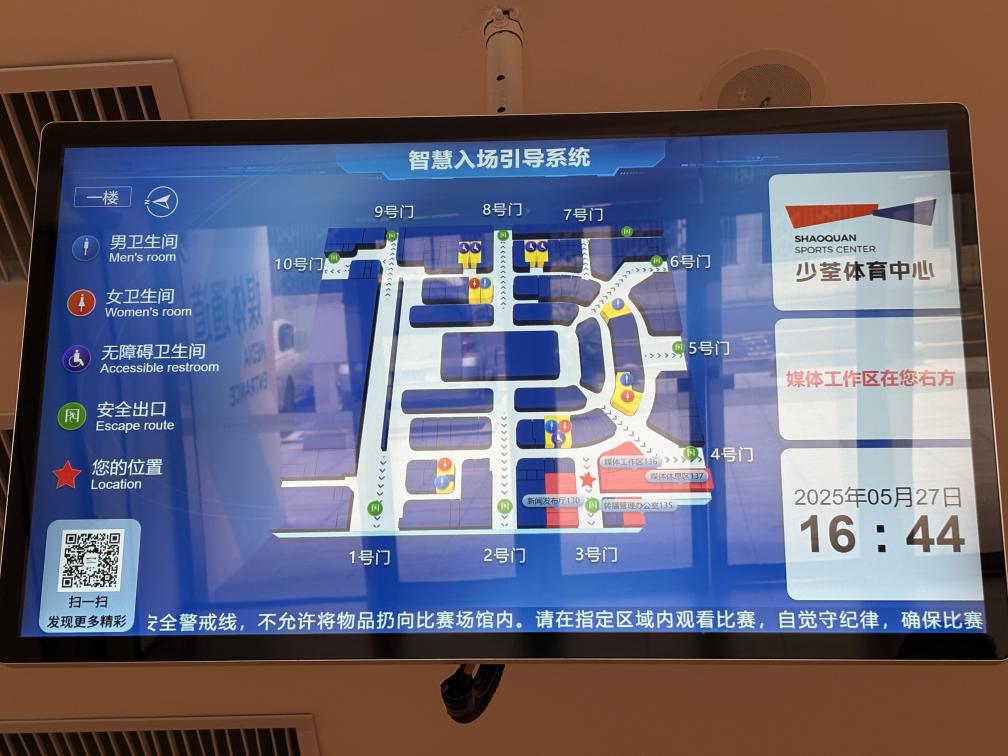
Core Insights - The article highlights the advanced technological integration in the Shaoqing Sports Center, showcasing its smart operations through IoT, big data, and AI technologies [1][10]. Group 1: Smart Operations - The sports venue operates with 1,000 video surveillance cameras, 1,141 sensors monitoring utilities, and 2,931 fire safety devices, enabling real-time management of over 5,000 electronic devices [1]. - A smart entry guidance system is implemented, utilizing crowd sensors to dynamically recommend the nearest restrooms and evacuation routes based on real-time data [3][4]. - The venue has transitioned from traditional manual door operations to a centralized smart control system, enhancing safety during large events [6][7]. Group 2: Safety and Security - The smart control system allows for remote management of nearly 200 access points, enabling real-time adjustments to entry modes, significantly improving safety during emergencies [7][9]. - The integration of AI algorithms in video monitoring helps in immediate alerts for crowd surges or smoke detection, ensuring prompt responses from management [4][6]. Group 3: Energy Efficiency and Cost Reduction - The venue's digital twin platform integrates 16 systems, each with warning functionalities, optimizing energy consumption and operational efficiency [10][12]. - Recent events have demonstrated a 30% reduction in overall energy consumption through smart lighting adjustments, resulting in a carbon reduction of 1.26 tons per event [13]. Group 4: User Engagement and Management - An online application has been developed for users to reserve facilities, navigate the venue, and manage parking payments, enhancing user experience [15]. - The management emphasizes the importance of balancing income and expenses for sustainable venue operations, advocating for continuous improvement in management efficiency [17].
研判2025!中国计算机辅助工程(CAE)系统行业产业链、行业现状及重点企业分析:行业市场规模激增,技术创新与政策扶持共筑高端制造新引擎[图]
Chan Ye Xin Xi Wang· 2025-06-07 02:10
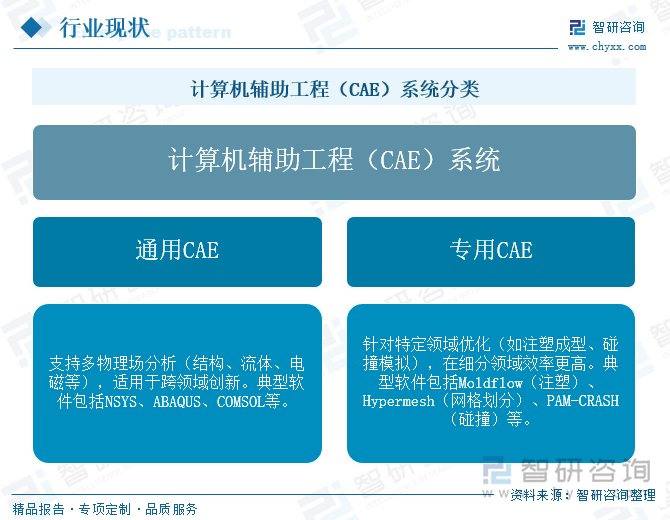
Core Insights - The transformation and upgrading of China's manufacturing industry is the main driver for the growth of the CAE system market, with increasing digital demands for product design and production due to the advancement of smart manufacturing and Industry 4.0 [1][14] - The market size of China's CAE system industry is projected to reach 3.78 billion yuan in 2024, representing a year-on-year growth of 25.17% [1][14] - Domestic CAE software has made significant advancements in fluid simulation and multi-physics coupling, with companies like Suochen Technology breaking international monopolies through acquisitions [1][14] Industry Overview - Computer-Aided Engineering (CAE) systems utilize computer technology to assist in engineering design, analysis, and optimization, helping engineers understand engineering problems better and improve design quality and efficiency [2] - CAE systems can be categorized into general CAE and specialized CAE based on their functional scope [2] Industry Development History - The CAE industry in China has gone through four main stages: the initial stage (1970-1980), the technology accumulation stage (1980-1990), the adjustment period (1990-2005), and the domestic breakthrough period (2006-present) [4][5][6] - The initial stage saw the development of the first domestic finite element analysis software, marking the beginning of local CAE technology [4] - The adjustment period was characterized by the entry of foreign CAE giants, which dominated the market due to their technological advantages [5] Industry Chain - The upstream of the CAE system industry chain includes software solvers, basic software, and hardware devices, with software solvers being the core component [8] - The midstream involves the research and development of CAE systems, while the downstream applications span various industries such as automotive manufacturing, aerospace, electronics, and engineering machinery [8] Current Industry Status - The "14th Five-Year Plan" has identified industrial software as a key development area, providing policy incentives that stimulate market demand [12] - The market size of China's industrial software industry is expected to reach 333.2 billion yuan in 2024, with a year-on-year growth of 17.99% [12] Key Companies' Performance - The competitive landscape of the CAE system industry shows a dominance of international giants, while domestic companies like Suochen Technology and Zhongwang Software are gaining traction through technological innovation [16][19] - Suochen Technology reported a revenue of 39 million yuan in Q1 2025, reflecting a year-on-year growth of 21.73% [17] - Zhongwang Software's CAE software revenue reached 973.84 million yuan in 2024, with a year-on-year growth of 36.23% [19] Industry Development Trends - The CAE system industry is accelerating its integration with AI, cloud computing, and big data, driving the evolution of simulation technology towards intelligence and automation [21] - The demand for CAE systems is expected to deepen in sectors like new energy vehicles and aerospace, with specific needs for multi-physics coupling simulation technology [22][23] - Domestic CAE software is anticipated to break through core technological bottlenecks, reshaping the industry ecosystem and enhancing its penetration in key sectors [24]


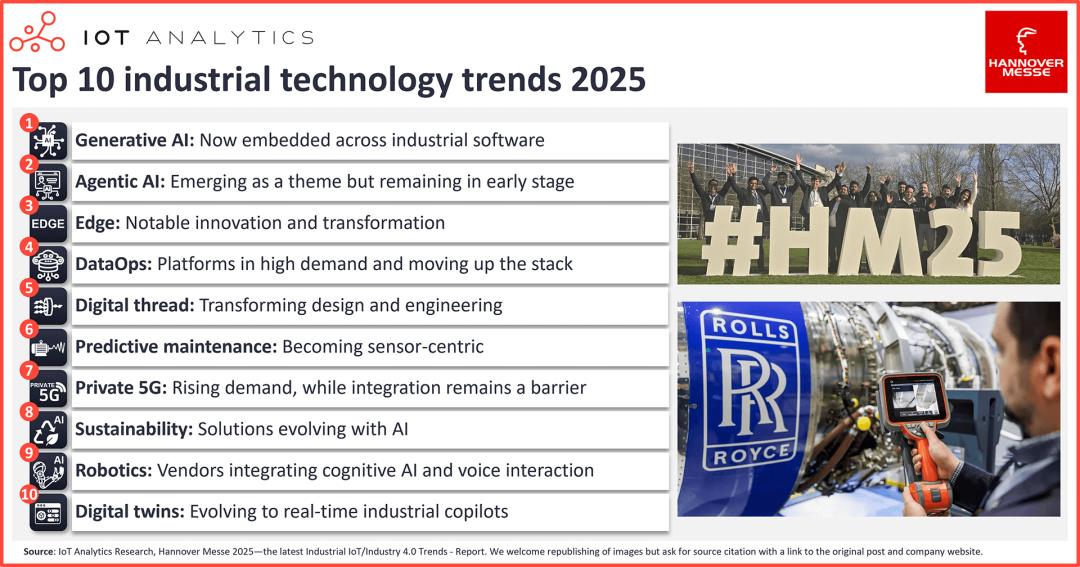
2025汉诺威十大工业物联技术风向:生成式AI全面融入,代理型AI初露头角
3 6 Ke· 2025-06-06 11:49
Core Insights - The 2025 Hannover Messe showcased the ongoing transformation in the industrial sector driven by artificial intelligence, particularly generative AI, although no groundbreaking technologies were introduced [1] - The report by IoT Analytics highlighted that generative AI has become an integral part of industrial software, moving beyond being a buzzword to a common feature in major industrial software products [3][4] - Agentic AI is emerging as the next significant trend in the industry, although it remains in its early stages of development [7][9] Trend Summaries Trend 1: Generative AI Fully Integrated into Industrial Software - Generative AI has transitioned from a focus on coding to being embedded across industrial software, with major software vendors showcasing integrated functionalities [3] - Leading companies like Siemens and ABB have developed various industrial assistants that leverage generative AI for tasks such as design, planning, and operational support [4][6] Trend 2: Emergence of Agentic AI - Agentic AI is viewed as a significant future opportunity, with many vendors promoting its capabilities, although practical applications are still limited [7][9] - Companies are exploring multi-agent frameworks, but these remain in early exploratory phases without substantial real-world validation [8] Trend 3: Significant Innovations in Edge Computing - Edge computing is evolving to integrate AI technology stacks, enhancing local processing capabilities and responsiveness [10] - Companies like Bosch Rexroth are demonstrating platforms that support AI model deployment at the edge, optimizing for specific industrial scenarios [10][11] Trend 4: Growing Demand for DataOps Platforms - DataOps is becoming essential for managing the increasing volume of data in industrial settings, with platforms expanding their capabilities to support AI lifecycle management [13][14] - Companies are focusing on data governance to ensure compliance with regulations like GDPR, enhancing data observability and tracking [14] Trend 5: AI-Driven Digital Threads Transforming Design and Engineering - Digital threads are reshaping engineering processes by ensuring data continuity throughout the product lifecycle, as demonstrated by Siemens' new solutions [17] - Autodesk's Project Bernini showcases how generative AI can enhance early design processes, promoting a multi-modal design approach [17] Trend 6: Sensorization of Predictive Maintenance - Predictive maintenance solutions are increasingly integrating custom hardware with analytics models, focusing on sensor quality and system compatibility [18][19] - New solutions are extending predictive maintenance capabilities to previously overlooked asset categories, enhancing monitoring and fault detection [18] Trend 7: Rising Demand for Private 5G Networks - The demand for private 5G networks is growing, particularly in the US and Asia, but integration with existing infrastructure remains a significant challenge [21][22] - Companies are developing solutions that combine generative AI, edge computing, and private 5G for real-time industrial safety and asset monitoring [22] Trend 8: Sustainable Solutions Enhanced by AI - AI is improving carbon emissions tracking and compliance efficiency, with various applications being upgraded to enhance data visibility and accuracy [23] - Collaborative efforts, such as those between Microsoft and Accenture, are optimizing compliance processes through AI integration [23] Trend 9: Cognitive Capabilities Empowering Robotics - Robotics manufacturers are incorporating cognitive AI and voice interaction features, allowing users to control robots through voice commands [24] - This trend aims to enhance flexibility and reduce the need for specialized skills in manufacturing and logistics [24] Trend 10: Digital Twins Evolving into Real-Time Industrial Co-Pilots - Digital twins are transitioning from static models to dynamic tools that assist in operations, training, and quality control [25] - Companies like EDAG Engineering and Siemens are showcasing how AI-driven digital twins can optimize processes and enhance training efficiency [25]
北京数字孪生巨头51WORLD,能否港交所成功上市?
Sou Hu Cai Jing· 2025-06-05 13:52
Core Insights - 51WORLD has submitted its listing application to the Hong Kong Stock Exchange, marking its renewed approach to the capital market [1] - The company aims to create a "digital twin earth" and has successfully reached the fourth phase of its development, focusing on real-time generation and rendering technology [5] Company Overview - Founded in 2015 and headquartered in Beijing, 51WORLD has a registered capital of 10 million yuan and specializes in 3D graphics, simulation, and artificial intelligence [1] - It is the first company in the digital twin industry to propose and implement an earth cloning plan, ranking first in revenue within the industry in 2023 [1][3] Financial Performance - 51WORLD achieved annual revenues of 170 million yuan, 256 million yuan, and 287 million yuan for the years 2022, 2023, and 2024 respectively, indicating growth despite facing net losses of 190 million yuan, 87 million yuan, and 82 million yuan during the same period [3] - The company's gross margin decreased from 65.0% in 2022 to 51.1% in 2024, primarily due to changes in revenue structure [3] Technological Capabilities - The digital twin architecture of 51WORLD includes a data foundation layer, core technology layer, software platform layer, and industry application layer, enabling comprehensive solutions in the digital twin field [4] - The company collaborates with institutions like the University of Science and Technology of China and Baidu on projects such as the Haidian City Brain, integrating data from approximately 170,000 buildings and urban components [4] Client and Supplier Base - 51WORLD serves a diverse client base across various sectors, including urban development, water resources, energy, automotive, transportation, and robotics [4] - The company has established relationships with key suppliers, including hardware and software providers, with some overlap between clients and suppliers [4] Investment and Market Position - 51WORLD has received support from several prominent independent investors, including LS 51World, Sky9 51World, and SenseTime, which holds a 2.3% stake in the company, reflecting confidence in its future development [4] - The company previously sought listing opportunities on the Shanghai Stock Exchange's Sci-Tech Innovation Board and the Beijing Stock Exchange but ultimately chose to pursue the Hong Kong Stock Exchange [4]