
大数据

Search documents
东华软件成立新公司,含智能农业管理业务
Zheng Quan Shi Bao Wang· 2025-12-05 04:30
Group 1 - Donghua Software (002065) has recently established a new company with a registered capital of 50 million yuan [1] - The new company's business scope includes intelligent control system integration, smart agriculture management, big data services, and data processing services [1] - The company is jointly held by Donghua Software and other stakeholders [1]

广东嘉禾鸿锦科技有限公司成立 注册资本100万人民币
Sou Hu Cai Jing· 2025-12-05 04:20
Core Viewpoint - Guangdong Jiahe Hongjin Technology Co., Ltd. has been established with a registered capital of 1 million RMB, focusing on the production and operation of medical devices and related services [1] Group 1: Company Overview - The company is registered with a capital of 1 million RMB [1] - It operates in the medical device sector, specifically in the production and leasing of Class II and Class III medical devices [1] Group 2: Business Scope - The company’s business scope includes the production and operation of various medical devices, as well as technology services such as software development and technical consulting [1] - It is involved in the import and export of goods and technology, and offers services related to cloud computing, artificial intelligence, and big data [1] - The company also engages in the research and development of smart appliances and provides various information technology services [1]
任正非:欧洲在法律许可的时候,华为还是要加大在欧洲的发展
Xin Lang Cai Jing· 2025-12-05 04:19
Core Points - Huawei's President Ren Zhengfei emphasized the importance of youth, talent, and education during a discussion with ICPC representatives, highlighting the role of young people as the hope of the future [1][2][3] - Ren acknowledged Romania's significant contributions to China's industrial development, particularly in oil exploration technology, and expressed a desire to strengthen cooperation with Romania [1][29] - The discussion also focused on the challenges and opportunities presented by artificial intelligence (AI), with Ren noting the need for collaboration between academia and industry to address these challenges [4][9] Group 1: AI and Industry Applications - Ren discussed the application of large models and big data in various industries, such as optimizing iron production and enhancing safety in coal mining through remote operations [5][6] - He highlighted the advancements in healthcare diagnostics using AI models, which improve the capabilities of doctors in remote areas [6] - The conversation included the potential for AI to automate processes in ports and mining, showcasing examples of fully automated operations in Tianjin and Peru [5][6] Group 2: Education and Talent Development - Ren stressed the importance of education in fostering talent, stating that China must focus on creating its own talent rather than solely relying on imports [9][10] - He pointed out the shift from traditional education models to more decentralized, online learning opportunities, which can benefit students in remote areas [7] - The need for collaboration between educational institutions and industries was emphasized, with a focus on practical training and skill development [12][21] Group 3: Future of Work and AI - Ren addressed concerns about job displacement due to AI, suggesting that re-education programs will be necessary to transition workers into new roles [21][22] - He noted that while AI will automate many tasks, it will also create new opportunities and increase overall wealth, necessitating a focus on how to share this wealth equitably [22] - The discussion included the potential for AI to enhance productivity in various sectors, including transportation and healthcare, while also acknowledging the challenges of integrating AI into existing systems [19][20]
任正非谈AI取代就业:要发展再教育工程,给下岗人员发放学券补贴
Xin Lang Cai Jing· 2025-12-05 04:13
Core Viewpoint - The discussion led by Ren Zhengfei emphasizes the differing approaches to artificial intelligence (AI) between the United States and China, highlighting the need for re-education programs to address job displacement caused by automation and the importance of nurturing talent for future technological advancements [1][2][23]. Group 1: AI and Automation - The pursuit of AI in the U.S. focuses on general artificial intelligence (AGI) and superintelligence (ASI), while China aims to solve practical problems and create value through automation [1][23]. - Automation may lead to job losses, but overall national wealth is expected to increase, with examples showing production efficiency rising from 100 to 120 when transitioning to automation [2][24]. - AI-assisted software programming has already reduced the workload of software engineers by approximately 30%, with potential future reductions reaching 60-70% [2][25]. Group 2: Education and Talent Development - Ren suggests implementing re-education programs, such as a voucher system, to help displaced workers transition into new roles, emphasizing the need for vocational training [1][24]. - The shift from traditional education models to online learning has made high-quality education more accessible, allowing students in remote areas to benefit from global resources [8][37]. - The importance of nurturing homegrown talent is highlighted, as reliance on imported talent is not sustainable for technological advancement [11][12]. Group 3: Industry Applications and Innovations - The application of AI in various industries, such as mining and healthcare, is discussed, showcasing how AI can enhance operational efficiency and safety [6][7][10]. - Examples include the use of AI in optimizing iron smelting processes and remote diagnosis in healthcare, demonstrating the practical benefits of AI technology [6][7]. - The company is focused on applying large models and big data in agriculture and industry to improve productivity and safety [6][10]. Group 4: Future Outlook and Challenges - The future of AI and its societal implications are uncertain, with the company focusing on short to medium-term applications while acknowledging the rapid pace of technological change [5][9]. - The need for a stable societal structure during the transition to automation is emphasized, as the benefits of AI must be shared equitably [25][26]. - The company recognizes the potential of quantum computing and its future applications, although it does not currently lead in this area [35].
毕马威发布第五届“消费50”榜单
Zhong Zheng Wang· 2025-12-05 03:36
Group 1 - The core viewpoint of the article highlights the ongoing transformation in China's consumption structure towards service-oriented and quality-driven models, driven by globalization and technological advancements [1][2] - KPMG's "Consumption 50" list focuses on three key sectors: service consumption, cultural consumption, and gold jewelry, evaluating companies based on eight dimensions including brand value, user experience, and innovation capabilities [1] - KPMG aims to support listed companies in achieving sustainable development by providing comprehensive services such as brand value enhancement and capital market connections [2] Group 2 - The integration of modern technology and production methods is driving rapid growth in emerging consumption, aligning with new supply and demand trends [2] - KPMG plans to assist relevant companies in better adapting to domestic and international supply chain ecosystems to achieve high-quality development [2]
能源保供迎来寒潮“大考”
Yang Shi Wang· 2025-12-05 03:34
Core Viewpoint - The Daqin Railway has become a crucial channel for coal supply in China, achieving significant increases in both transport volume and efficiency during the winter season, with a projected coal transport volume of 516 million tons this year [1] Group 1: Transport Capacity and Efficiency - The Daqin Railway is responsible for over 20% of national coal transport, with a focus on enhancing transport capacity and efficiency [1] - The introduction of a wireless synchronous control system and the optimization of the GSM-R signal system have enabled the connection of 20,000-ton long trains, significantly increasing transport volume [2] - The Daqin Railway has set multiple records, including the highest density of heavy-haul trains and the strongest transport capacity globally [2] Group 2: Technological Innovations - Heavy-duty steel tracks, designed to support long trains, have been developed using advanced seamless welding technology, ensuring smooth and safe train operations [2] - The implementation of big data and artificial intelligence has improved operational efficiency, particularly in managing the challenges of long train braking [3] - A three-step braking operation method has been integrated into a research platform, enhancing the safety and efficiency of train operations on steep gradients [3] Group 3: Operational Coordination - Real-time monitoring of railway transport and vehicle distribution at ports has been established, allowing for better communication and efficiency in operations [4][5] - Collaborative efforts among various units at Qinhuangdao Port aim to optimize daily transport volume and arrival times, thereby reducing communication costs [5] - The Daqin Railway has achieved a normalized transport capacity of 450 million tons annually, playing a vital role in ensuring national energy security and supporting economic development [5]

建成144个指挥部、组建1565支救援队!广东以法治之力全面提升突发事件应对能力
Nan Fang Nong Cun Bao· 2025-12-05 03:34
Core Viewpoint - The Guangdong Provincial People's Congress has revised the Emergency Response Regulations to enhance the province's ability to respond to emergencies, marking the first comprehensive update since 2010, effective from January 1, 2026 [10][12]. Group 1: Legislative Changes - The revised regulations aim to improve the emergency management system, enhance grassroots emergency capabilities, and strengthen technological empowerment [11]. - The regulations emphasize the accountability of local governments, mandating that county-level governments bear primary responsibility for emergency responses within their jurisdictions [18]. - A legal framework for emergency command institutions is established, ensuring they coordinate efforts across various departments and lower-level governments [20]. Group 2: Capacity Building - The regulations require towns and streets to have dedicated emergency personnel responsible for hazard identification, initial response, and public evacuation [21]. - Collaboration between military and local governments is mandated to enhance emergency response capabilities [23]. - The regulations promote the use of advanced technologies such as the internet, cloud computing, big data, and artificial intelligence in risk identification and decision-making [26]. Group 3: Preparedness and Response - The regulations formalize the establishment of emergency plans, emergency shelters, hazard source assessments, and emergency supplies management as legal requirements [28]. - A comprehensive system covering monitoring, response, and recovery phases is established, detailing operational norms for emergency command and post-event recovery [32][34]. - The regulations include provisions for legal accountability to ensure compliance and effectiveness [35]. Group 4: Implementation and Progress - Guangdong has established 144 emergency command centers and formed 1,565 rescue teams, totaling 81,000 personnel equipped with 118,000 units of equipment [41][51]. - The province has developed a network of over 12,000 helicopter landing sites to facilitate rapid emergency response [53]. - The "Emergency One-Click" app has reached 900,000 grassroots users, significantly improving command efficiency [55]. Group 5: Future Directions - The provincial emergency management department plans to promote the new regulations through training and outreach to various sectors [59]. - There will be a focus on developing supporting regulations and enhancing supervision to ensure effective implementation of the new laws [65]. - The comprehensive revision of the regulations signifies a shift from reactive to proactive emergency management, integrating institutional and technological advancements [70].


零点生态 | 闻政绩效参编规范发布
Sou Hu Cai Jing· 2025-12-05 02:50
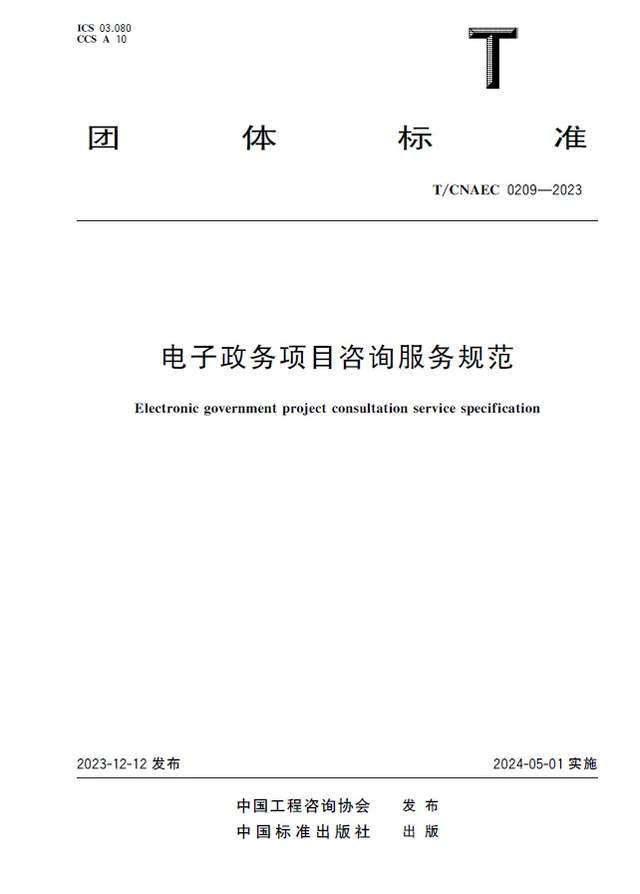
Core Viewpoint - The release of the "Electronic Government Project Consulting Service Specification" marks a significant step in standardizing consulting services for electronic government projects, enhancing the effectiveness of digital governance and addressing challenges in technology application and project execution [1][4][5] Group 1: Specification Overview - The "Electronic Government Project Consulting Service Specification" is divided into seven parts, detailing the scope of consulting services, normative references, terminology, service processes, project report preparation, project review, and performance evaluation [4] - The specification emphasizes the need for standardized consulting services to minimize project failure risks and ensure alignment with policy goals, technological trends, and user needs [5] Group 2: Performance Evaluation - The specification includes a section on performance evaluation, outlining principles, methods, processes, scope, cycles, and content for evaluating information technology projects [4][5] - It aims to standardize pre-performance assessments and post-performance evaluations, ensuring a comprehensive approach to project evaluation [5] Group 3: Industry Implications - The implementation of the specification provides actionable guidelines for engineering consulting firms and scientific decision-making support for government departments, promoting professional development in the engineering consulting industry [5] - The specification encourages the integration of cutting-edge technologies such as artificial intelligence, big data, and blockchain into consulting services, fostering cross-departmental resource integration and collaborative innovation [5]
证监会主席吴清:实施六大重点任务举措,提高资本市场制度包容性适应性
Zhong Guo Jing Ying Bao· 2025-12-05 02:25
Core Viewpoint - The article emphasizes the need to enhance the inclusiveness and adaptability of the capital market system in China, outlining six key initiatives to achieve this goal [1]. Group 1: Direct Financing Development - The focus is on actively developing direct financing through equity and bond markets, with reforms in the Sci-Tech Innovation Board and Growth Enterprise Market as key drivers [1]. - There is a call to improve the identification and pricing mechanisms for technology innovation enterprises to support high-quality companies in going public [1]. - The development of private equity and venture capital funds is encouraged, along with a multi-tiered bond market system, including the promotion of Sci-Tech bonds and green bonds [1]. Group 2: High-Quality Listed Companies - The article stresses the importance of optimizing the structure of listed companies to enhance investment value [2]. - It advocates for deepening mergers and acquisitions market reforms and improving the flexibility of refinancing mechanisms to support company transformation and the development of new productive forces [2]. - There is a push for companies to strengthen their awareness of returning value to investors through cash dividends and share buybacks [2]. Group 3: Long-Term Investment Environment - The creation of a market environment that attracts long-term capital is highlighted, with a focus on establishing a long-term assessment mechanism for various types of funds [3]. - The article calls for reforms in public funds and the development of equity public funds to promote high-quality index investment [3]. - It emphasizes the importance of a smooth cycle for private equity and venture capital funds [3]. Group 4: Regulatory Effectiveness - The need for a comprehensive and multi-dimensional regulatory system for securities and futures is underscored to adapt to rapid market changes [4]. - The article advocates for the use of modern technologies like big data and AI to identify illegal activities and risks effectively [4]. - It stresses the importance of strict enforcement against financial fraud and market manipulation to maintain a fair market order [4]. Group 5: Open Capital Market - The article promotes a gradual approach to expanding the openness of the capital market, enhancing the international competitiveness of China's capital market [5]. - It supports the use of both domestic and international markets and resources by enterprises [5]. - The development of world-class exchanges and investment institutions is encouraged, along with the construction of international financial centers [5]. Group 6: Market Ecology - The article calls for strengthening the legal framework of the capital market and revising relevant laws to create a fair market environment [6]. - It emphasizes the need for investor protection mechanisms and the promotion of rational, value, and long-term investment [6]. - The establishment of high-end think tanks and talent development in the capital market is highlighted to address strategic and foundational issues [7].
外卖“新国标”,立下了哪些“新规矩”?
Yang Shi Xin Wen· 2025-12-05 01:08
Core Viewpoint - The newly implemented "New National Standard" for food delivery platforms aims to address various issues related to the rights of delivery riders and small restaurant businesses, while enhancing the overall governance of the food delivery market [1][2][4][5]. Group 1: Focus Areas of the New Standard - The standard emphasizes the need for platforms to take responsibility for the qualification review of merchants and to protect the fair trading rights of merchants, as well as the rights of delivery riders [1][2]. - It aims to fill gaps in existing regulations by providing detailed guidelines for service management in the food delivery sector, thus promoting better governance [1][3]. Group 2: Platform Responsibilities and Governance - The standard highlights that the responsibility for market governance should not rest solely on the platforms, but requires collaboration from various societal forces [2]. - Platforms are required to implement their responsibilities actively, and regulatory bodies must ensure compliance with the new standards, rewarding compliant platforms and addressing those that fail to meet requirements [2]. Group 3: Technology and Future Directions - The standard sets a baseline for platform responsibilities and encourages the use of technology, such as big data and artificial intelligence, to develop risk identification models for better governance [3]. - It suggests that successful practices from the implementation of the standard could eventually evolve into mandatory legal requirements, contributing to a dynamic regulatory framework [3]. Group 4: Protection of Delivery Riders' Rights - The standard plays a crucial role in enhancing the protection of delivery riders' rights, addressing issues such as income security, rest time, and safety [4]. - Specific provisions include prohibiting excessive fines for delays and ensuring that riders are not pressured into unsafe behaviors, such as running red lights [4]. Group 5: Safeguarding Small Restaurant Businesses - The standard responds to concerns regarding the rights of small restaurant businesses, which often face disadvantages when negotiating with larger platforms [5]. - It prohibits platforms from coercing small merchants into financial contributions for promotional battles and mandates transparency in fee structures, thereby balancing power dynamics [5].