中华优秀传统文化

Search documents
和音:从《天工开物》到“深度求索”的启示
Ren Min Ri Bao· 2025-12-10 03:02
Core Insights - The discussion at the roundtable linked the 17th-century Chinese encyclopedia "Tiangong Kaiwu" to the modern AI model DeepSeek, suggesting a historical continuity in China's innovative spirit [1] - Recent innovative products from China have shifted global perceptions, challenging the long-held belief that China lacks innovation [1][2] - The resurgence of Chinese innovation is seen as a revival of its historical creative traditions, with significant contributions to global civilization over 5,000 years [2] Group 1 - The term "DeepSeek" was used to describe the innovative essence of "Tiangong Kaiwu," highlighting the cultural and historical roots of modern Chinese innovation [1] - China's recent achievements in space exploration and quantum computing reflect a continuous pursuit of knowledge and innovation, embodying the spirit of "seeking truth from facts" [2] - The historical context of Chinese innovations, such as those documented in "Tiangong Kaiwu," emphasizes the importance of cultural heritage in understanding contemporary advancements [2] Group 2 - China's approach to innovation is characterized by openness and inclusivity, as seen in international collaborations like the Chang'e lunar missions and the global accessibility of the "China Sky Eye" [3] - Western media often express concern over China's innovation trajectory, reflecting a misunderstanding rooted in historical perspectives [3] - The commitment to sharing technological advancements globally aligns with China's traditional values of mutual benefit and cooperation, aiming to empower global development [3]
杨玉珍:人文经济学的丰富内涵与时代关切
Jing Ji Ri Bao· 2025-12-09 00:28
Core Viewpoint - The article emphasizes the integration of economics and culture, highlighting the development of a humanistic economics that combines Marxist principles with Chinese traditional culture, providing a solid cultural foundation for China's modernization [1][2][3]. Group 1: Humanistic Economics - Humanistic economics focuses on the interaction between people, culture, and economy, advocating for a development model that prioritizes human needs and social equity [2][3]. - The essence of "cultural economy" is the fusion of culture and economy, emphasizing the importance of human-centered development [2][3]. - The theoretical foundation of humanistic economics is rooted in Marxist political economy, which views human needs as central to economic development [3]. Group 2: Cultural Integration - Humanistic economics is deeply rooted in Chinese traditional culture, which has unique perspectives on wealth, competition, morality, and family, differing from Western economic theories [4]. - The article stresses the need to incorporate traditional cultural elements into economic behavior and decision-making, exploring how these elements have supported China's rapid economic growth over the past 40 years [4]. Group 3: Digital Era Concerns - The article addresses the challenges posed by the digital age, such as the digital divide and the need for humanistic values in technology-driven economic development [5][6]. - It advocates for embedding human values in technological advancements to ensure that they serve the overall well-being of society [6]. - The integration of digital technology with traditional culture is seen as a means to enhance cultural transmission and economic benefits [7]. Group 4: Economic Development Ecosystem - The vision for a new economic ecosystem is one where economic growth and human development create a virtuous cycle, balancing efficiency with equity and innovation with regulation [8]. - The article calls for a modern economic system that is innovative yet infused with humanistic values, ensuring that technological applications prioritize human needs and experiences [8].
人文经济学的丰富内涵与时代关切
Sou Hu Cai Jing· 2025-12-08 22:50
Core Perspective - The article emphasizes the integration of economics and culture, highlighting the importance of human-centered development in the context of humanistic economics, which combines Marxist principles with Chinese traditional culture [1][2][3]. Group 1: Humanistic Economics - Humanistic economics focuses on the interaction between culture and economy, advocating for the coordination of material and spiritual civilization [2][3]. - The essence of "cultural economy" is the fusion of culture and economy, emphasizing the role of people as the main agents in economic activities [2][3]. - The theoretical foundation of humanistic economics is rooted in Marxist political economy, which prioritizes human needs and social relationships over mere economic gain [3][4]. Group 2: Cultural Integration - Humanistic economics is deeply rooted in Chinese traditional culture, which has unique perspectives on wealth, competition, morality, and family compared to Western culture [4]. - The article argues that traditional Chinese culture contains essential elements that have supported China's rapid economic growth over the past 40 years [4][5]. - It stresses the need to incorporate cultural factors into economic behavior and decision-making processes [4][5]. Group 3: Digital Era Concerns - The article addresses the challenges posed by the digital age, such as the digital divide and the need for humanistic values in technology-driven economic development [5][6]. - It advocates for embedding human values in technology development to ensure it serves the overall well-being of society [6][7]. - The integration of digital technology with traditional culture is seen as a means to enhance cultural transmission and economic benefits [7][8]. Group 4: Economic Development Ecosystem - The vision for a new economic ecosystem involves a harmonious relationship between economic growth and human development, where efficiency and fairness coexist [8]. - The article calls for a balanced approach that combines innovation with humanistic values to create a modern economic system that is both dynamic and compassionate [8].
《法律讲堂》主讲人新书喜获国家社科基金项目立项
Yang Shi Wang· 2025-12-08 05:03
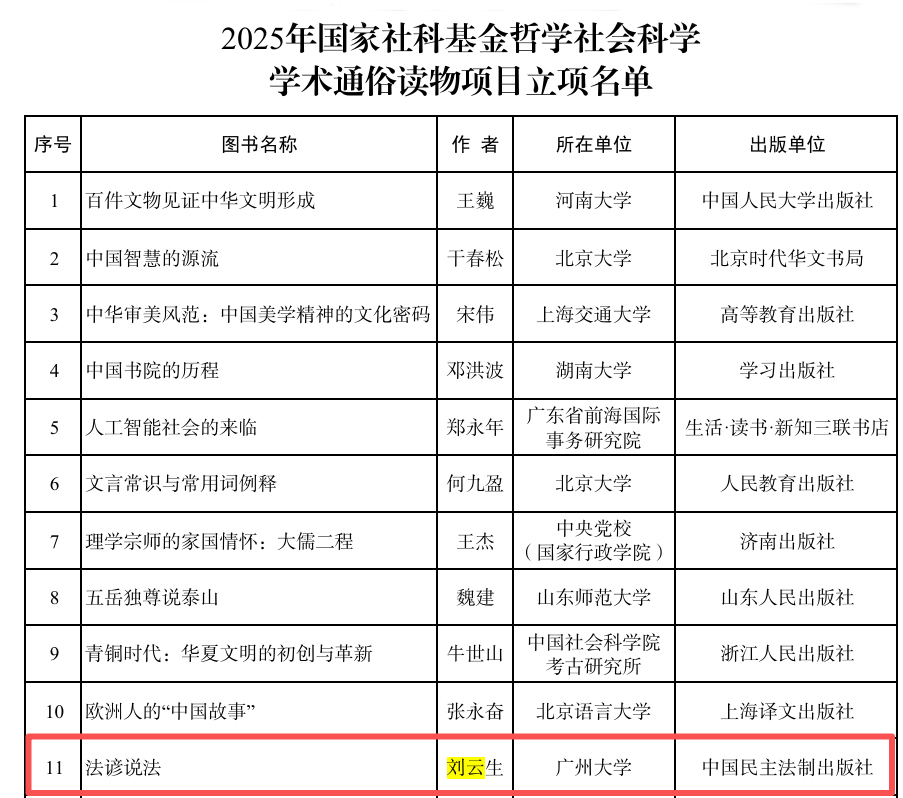
2025年12月2日,全国哲学社会科学工作办公室公开发布2025年国家社科基金哲学社会科学学术通俗读物项目立项名单,《法律讲堂》(文史版)主讲 人、广州大学法学院院长刘云生教授的《法谚说法》喜获立项,为本年度33项中唯一立项的法律类学术通俗读物。 自2014年起,刘云生教授担任央视《法律讲堂》(文史版)主讲人,立足栏目"观复知新"的定位,在节目中大力弘扬中华优秀传统文化,并积极阐释习 近平法治思想的内涵与实践价值。多年来,他已推出《民法典文化解读》《中国家法》等系列节目超200期,深受广大观众与学界认可。其中,《民法典文 化解读》系列成果丰硕,于2024年6月斩获广东省人民政府第十届哲学社会科学优秀成果一等奖,2024年7月荣膺第九届高等学校科学研究优秀成果奖(人文 社会科学)之普及读物奖,实现省级与国家级重要社科奖项的双丰收。 gggt ou the state n w i 公开出 通情形本站法 优秀女化? k L 道德纲等? 197 -11- I Holly 8 IT 15 D | 序号 | 图书名称 | 作者 | 所在单位 | 出版单位 | | --- | --- | --- | --- | --- | ...

传统文化是取之不尽的创新源泉
Ren Min Ri Bao Hai Wai Ban· 2025-12-02 01:41
Core Viewpoint - Dunhuang art has a profound cultural impact, integrating painting, sculpture, architecture, and decoration, serving as a source of inspiration for modern design and innovation [1][2]. Group 1: Influence of Dunhuang Art - Dunhuang art has influenced various design categories throughout different periods, showcasing the richness of traditional Chinese culture as an endless source of innovation [2]. - Elements and styles from Dunhuang's decorative patterns can be applied to modern decorative design, reflecting the wisdom and emotions of ancient laborers [2]. - Specific patterns from Dunhuang murals, such as headdresses and geometric designs, provide inspiration for contemporary jewelry, utensils, and architectural decoration [2]. Group 2: Educational and Cultural Legacy - The importance of combining traditional art with modern design needs has been emphasized, highlighting the concept of "source and flow" in design education [2]. - The commitment to systematically organize and study Dunhuang patterns is seen as a fulfillment of the teachings from predecessors, aiming to inspire younger generations to engage in the protection and promotion of Dunhuang art [3]. - The continuity of cultural heritage through successive generations is essential for the flourishing of Chinese culture [3].
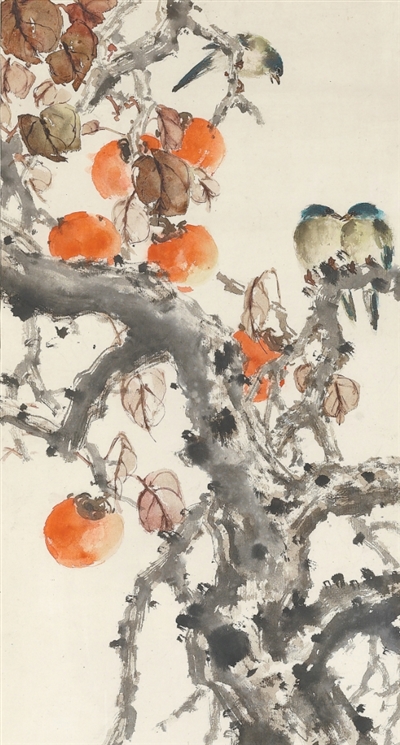
好“柿”挂枝头(读画)
Ren Min Ri Bao· 2025-11-29 22:11
Core Viewpoint - The article highlights the cultural significance and artistic representation of persimmons in Chinese history, particularly through the artwork "Red Persimmons and Birds" by Gao Jianfu, showcasing the blend of traditional and modern techniques in Chinese painting [4][5][6]. Group 1: Cultural Significance - Persimmons have a long history in China and are not only appreciated for their taste but also hold a beloved place in Chinese culture, symbolizing longevity and abundance [4]. - The imagery of persimmons has been a popular subject among poets and artists throughout history, reflecting their cultural resonance [4]. Group 2: Artistic Representation - Gao Jianfu's painting "Red Persimmons and Birds" exemplifies a dynamic representation of nature, combining traditional Chinese techniques with Western influences, showcasing a vigorous old tree and vibrant persimmons [5]. - The use of bright red persimmons in the painting emphasizes vitality and life, while the presence of birds adds a sense of liveliness and interaction within the artwork [5][6]. Group 3: Emotional and Cultural Connection - The artwork conveys warmth and vitality amidst a desolate backdrop, symbolizing the enduring spirit of Chinese civilization and its cultural heritage [6]. - The painting serves as a reminder of the deep-rooted connection between nature and human emotions, reflecting the wisdom and warmth of Chinese culture [6].
笔谈丨因地制宜加强廉洁文化建设
Zhong Yang Ji Wei Guo Jia Jian Wei Wang Zhan· 2025-11-27 00:24
Group 1 - The core viewpoint emphasizes the importance of strengthening the construction of a clean culture in the new era as a foundational project to promote a system that discourages corruption, prevents corruption, and fosters a desire not to be corrupt [1] - The article highlights the need to deeply explore local historical and cultural resources that embody clean governance, including stories of honest officials and local moral examples, to educate and guide party members and officials [1] - It stresses the significance of red resources as valuable spiritual wealth for the party, containing excellent conduct such as hard work and integrity, which should be utilized to inspire party members [1] Group 2 - The article discusses the necessity of uniting various forces to form a collaborative effort in building a clean culture, emphasizing that it is a comprehensive system project requiring joint management [2] - It calls for the establishment of a responsibility list for clean culture construction, ensuring that all levels of party committees take on the main responsibility and integrate it into anti-corruption work [2] - The need for collaboration with relevant functional departments to develop clean units in various sectors, such as government, enterprises, schools, and hospitals, is also highlighted [2] Group 3 - The article advocates for innovative forms and methods to enhance the attractiveness and dissemination of clean culture, including the development of engaging cultural products and activities [3] - It suggests expanding the channels for spreading clean culture by leveraging technology and social media to create a comprehensive communication matrix [3] - The use of immersive and interactive methods, such as digital museums and VR experiences, is recommended to increase participation and engagement among officials and the public [3]
专家学者共话以中华优秀传统文化推进高校统战工作
Zhong Guo Xin Wen Wang· 2025-11-24 09:51
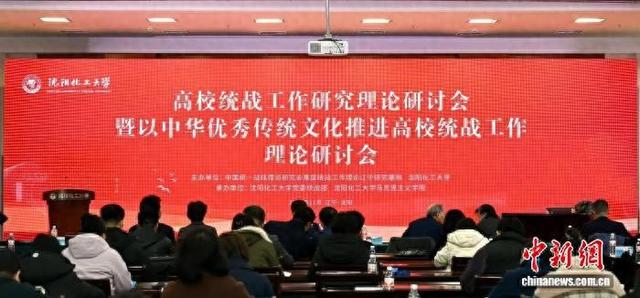
Group 1 - The conference on the research of united front work in higher education and the promotion of traditional Chinese culture in this context was held in Shenyang, Liaoning on November 22 [1] - The event was attended by over 150 experts and scholars from various universities and provincial party schools, indicating a strong interest in the topic [3] - Keynote speeches included discussions on the importance of united front work in higher education for maintaining socialist educational direction and fostering talent [2][3] Group 2 - The conference was organized by the Liaoning Research Base of the Theory of Grassroots United Front Work and hosted by Shenyang Chemical University, highlighting the collaboration between educational institutions and research initiatives [3] - Reports presented at the conference included interpretations of the concept of "political guidance" in united front work and the significance of Xi Jinping's thoughts on the united front in the new era [2]
文博公开课|一个博物馆就是一所大学校
Zhong Guo Xin Wen Wang· 2025-11-24 00:43
Group 1 - The importance of culture as the soul of a nation and the emphasis placed on cultural heritage work by Xi Jinping since the 18th National Congress of the Communist Party [1] - Xi Jinping's remarks on the significance of cultural heritage and the need for its preservation and promotion during various inspections, including the Maijishan Grottoes and the Grand Canal [10][14] - The role of museums as educational institutions that embody the essence of Chinese civilization and the need to further explore and promote traditional Chinese culture [16][21][28] Group 2 - The assertion that the prosperity of Chinese culture is essential for the great rejuvenation of the Chinese nation, highlighting the connection between cultural development and national strength [19][30] - The call for deeper research and interpretation of the five-thousand-year history of Chinese civilization to enhance national pride and patriotism [28] - The recognition of cultural relics as valuable heritage that carries the history and spirit of the nation, contributing to the construction of socialist spiritual civilization [26][27]
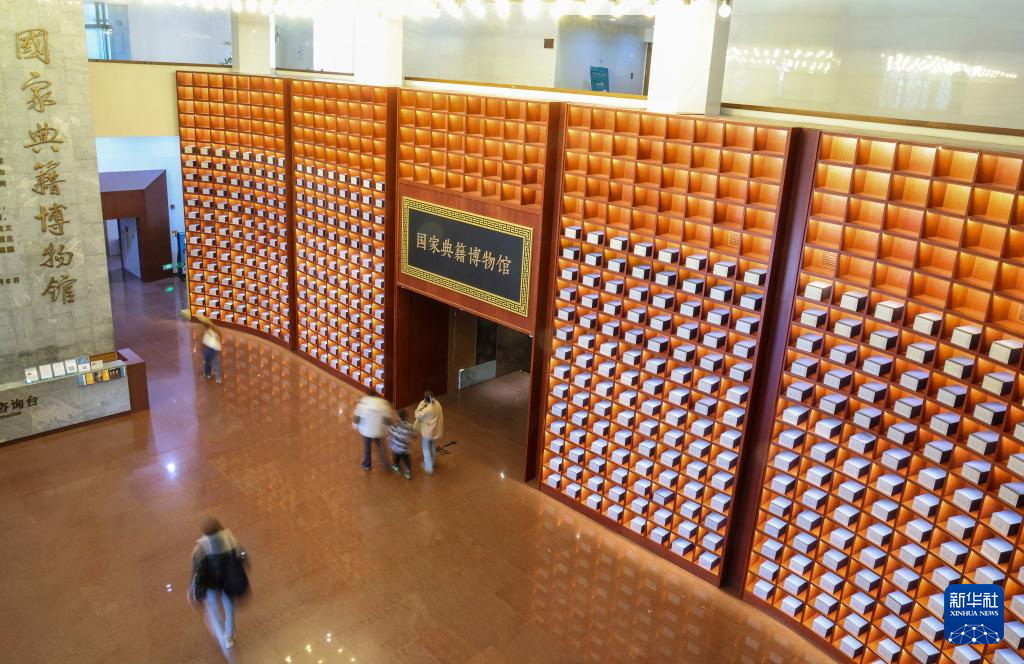
观古籍——感受中华优秀传统文化
Xin Hua She· 2025-11-22 15:20
目前,"亘古巨制 煌煌文脉——中华优秀传统文化典籍展""珠还合浦 历劫重光——《永乐大典》的回归和再造""千秋文脉万古流——文澜阁 《四库全书》整理出版工程特展"等多个展览在国家典籍博物馆展出,吸引了众多参观者前来观展。 11月22日,参观者走进国家典籍博物馆。 【1】 【2】 【3】 【4】 【5】 新华社记者 殷刚 摄 ...