
供应链

Search documents
降价认怂,救不了西贝
Sou Hu Cai Jing· 2025-10-16 01:39
Core Viewpoint - The recent price reduction by Xibei, which includes a 20%-40% decrease in menu prices and the distribution of high-value vouchers, has seemingly improved sales but has also diluted the brand's premium image and customer perception of value [1][2][21]. Group 1: Sales and Pricing Strategy - Xibei's sales have increased, but the average transaction value has decreased, with over 60% of new customers using vouchers [2][21]. - The brand's previous high-end positioning is being compromised as it resorts to price cuts to drive sales, which may undermine its long-term brand equity [2][6][21]. Group 2: Brand Perception and Consumer Behavior - The brand's value proposition was built on providing a quality dining experience for middle-class families, which is now threatened by the price reduction strategy [3][4][22]. - Consumers are likely to reassess Xibei's unique selling points, questioning the brand's competitive edge beyond its family-friendly dining environment [7][22]. Group 3: Public Relations and Market Response - Xibei's public relations strategy has been criticized as reactive and emotionally driven, failing to address consumer concerns effectively [9][10][15]. - The initial backlash was exacerbated by the company's defensive stance rather than engaging with consumer feedback, leading to further brand damage [9][12][21]. Group 4: Supply Chain and Operational Resilience - Despite the current challenges, Xibei's robust supply chain and established partnerships with top suppliers provide a foundation for potential recovery [18][21]. - The company has invested in its own production capabilities and supply chain infrastructure, which can help stabilize operations even amid fluctuating sales [18][21]. Group 5: Future Outlook and Strategic Recommendations - For Xibei to regain its footing, it must focus on its core value proposition and avoid further emotional responses to public sentiment, instead returning to sound business principles [22][23]. - The brand should leverage its existing strengths in supply chain and customer experience to rebuild its market position without compromising on quality [21][22].

中方加码稀土新规,“美国拉着马来、缅甸、哈萨克斯坦跳过中国,别想了”
Guan Cha Zhe Wang· 2025-10-15 03:56
Core Points - China has implemented new export regulations on rare earth materials, requiring foreign companies to obtain approval for exporting products containing Chinese rare earth elements or utilizing Chinese technology for production [1][4][5] - The new regulations, effective December 1, cover any products containing 0.1% or more of controlled rare earth metals from China, impacting global supply chains and potentially increasing costs for companies seeking alternatives [1][4][5] - Analysts suggest that these measures are part of a long-term strategy to maintain China's dominance in the rare earth sector and to prevent the establishment of alternative supply chains by countries like the U.S. [2][4] Industry Impact - China controls approximately 70% of global rare earth mining, 90% of separation and processing, and 93% of magnet manufacturing, highlighting its significant influence in the industry [4] - The new regulations are seen as a strategic move to enhance China's bargaining power in trade negotiations, particularly in response to U.S. tariffs and export controls on technology [5][6] - The measures are expected to complicate efforts by the U.S. and other countries to create independent supply chains, thereby increasing operational difficulties and costs for foreign companies [2][4] Government Position - The Chinese government emphasizes that the export controls are in line with international practices and aim to safeguard national security and interests [6] - China expresses a willingness to engage in dialogue with other nations to promote compliant trade and ensure the stability of global supply chains [6]

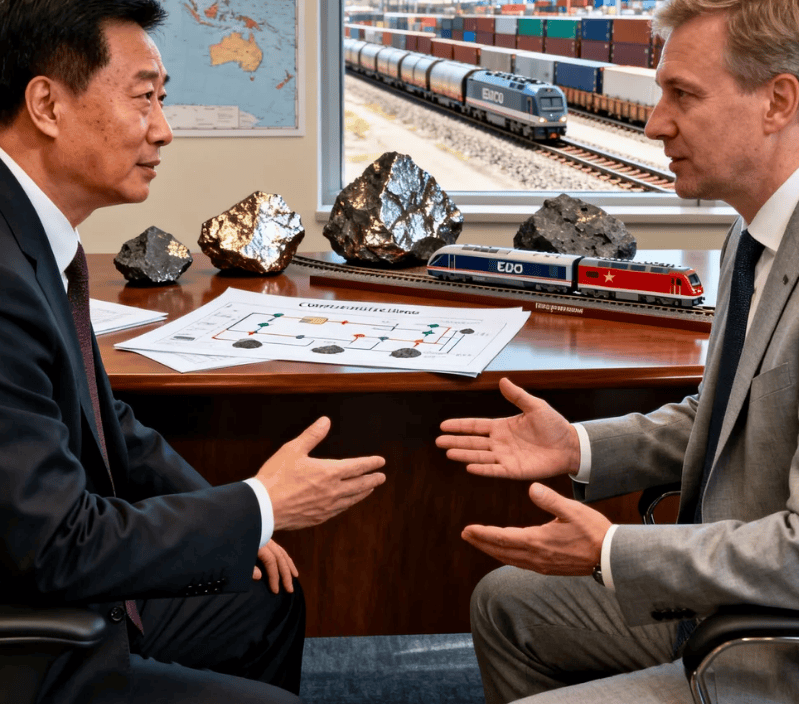
中波密谈稀土换班列:欧洲急盼中国投资,供应链困局有解?
Sou Hu Cai Jing· 2025-10-15 01:41
Core Insights - Europe is heavily reliant on China for rare earth elements, with 70% of its supply coming from China, even when sourcing through American intermediaries [2] - The tightening of China's rare earth exports has led to immediate production halts in European automotive factories, indicating a fragile supply chain [2] - Poland plays a crucial role in the logistics of the China-Europe rail network, which is essential for maintaining stable supply routes for rare earths [3] Group 1: Supply Chain Dynamics - The interdependence between China and Poland is evident, as both parties require investment in logistics and stable export channels to ensure smooth operations [3] - The Chinese government has facilitated rare earth exports to Europe, with over 60% of European companies receiving export permits in the first half of the year [2][4] - The potential for a successful China-Poland agreement could alleviate supply chain pressures for European automotive and electronics manufacturers [3] Group 2: Geopolitical Influences - The U.S. is encouraging Europe to "de-risk" and relocate rare earth processing to North America, which could complicate the supply chain further [3] - European companies have faced multiple production interruptions, with seven reported in August alone, highlighting the urgency of stabilizing supply chains [3] - The sustainability of China's rare earth export controls is framed as a necessity for environmental governance rather than a strategic blockade [4] Group 3: Future Outlook - The success of the China-Poland collaboration hinges on Europe's ability to resist U.S. pressure and engage in constructive dialogue [4] - The rare earth supply chain is deeply intertwined with broader industrial networks, making it a complex issue beyond mere commodity trading [4] - A successful partnership could provide a pathway for Europe to stabilize its supply chains amidst ongoing geopolitical tensions [4]
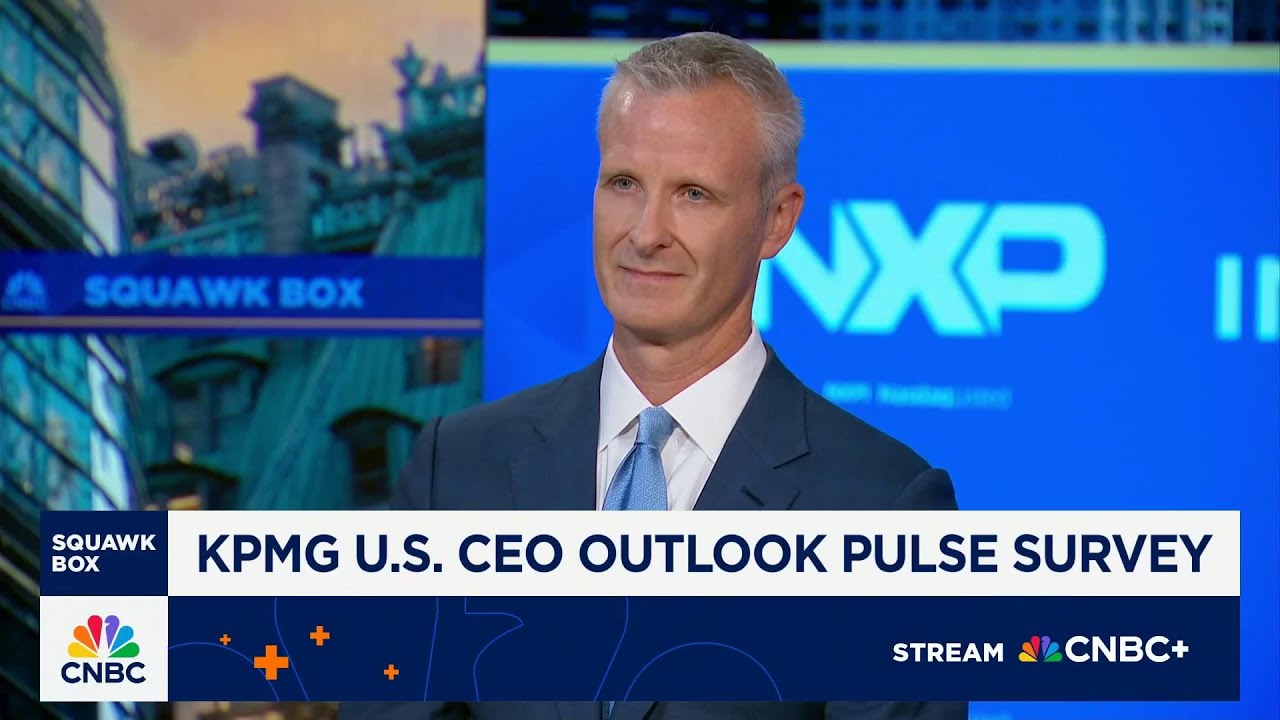
CEOs are becoming 'more confident' with the dynamic of constant uncertainty, says KPMG U.S. CEO
Youtube· 2025-10-07 11:16
Core Insights - A recent KPMG survey indicates that 89% of CEOs believe tariffs will significantly impact their businesses over the next three years, with 86% planning to raise prices to offset these costs [1][4] - The survey reflects ongoing concerns about supply chain issues, with CEOs prioritizing cost management and pricing strategies as they navigate these challenges [2][3][4] Supply Chain and Pricing Strategies - Supply chain remains a top concern for CEOs, with many indicating that raising prices is a last resort after exploring other cost-cutting measures [4][5] - CEOs are actively managing supplier relationships and seeking immediate cost reductions before considering price increases [4][6] Economic Confidence and M&A Activity - 86% of CEOs express confidence in the growth prospects of the country, and 84% are optimistic about their own companies, leading to increased M&A activity, with over half planning to engage in some form of M&A in the coming years [7][8] - The current M&A landscape is characterized by larger transactions rather than middle-market deals, reflecting a growing confidence among CEOs despite ongoing uncertainties [8] AI Investments - A significant shift has occurred in CEO attitudes towards AI, with a majority now prioritizing investments in AI technologies, compared to only 20% a year ago [10][11] - CEOs are focused on leveraging AI for efficiency improvements and product design, indicating a strong belief in the growth opportunities presented by AI investments [11][12]
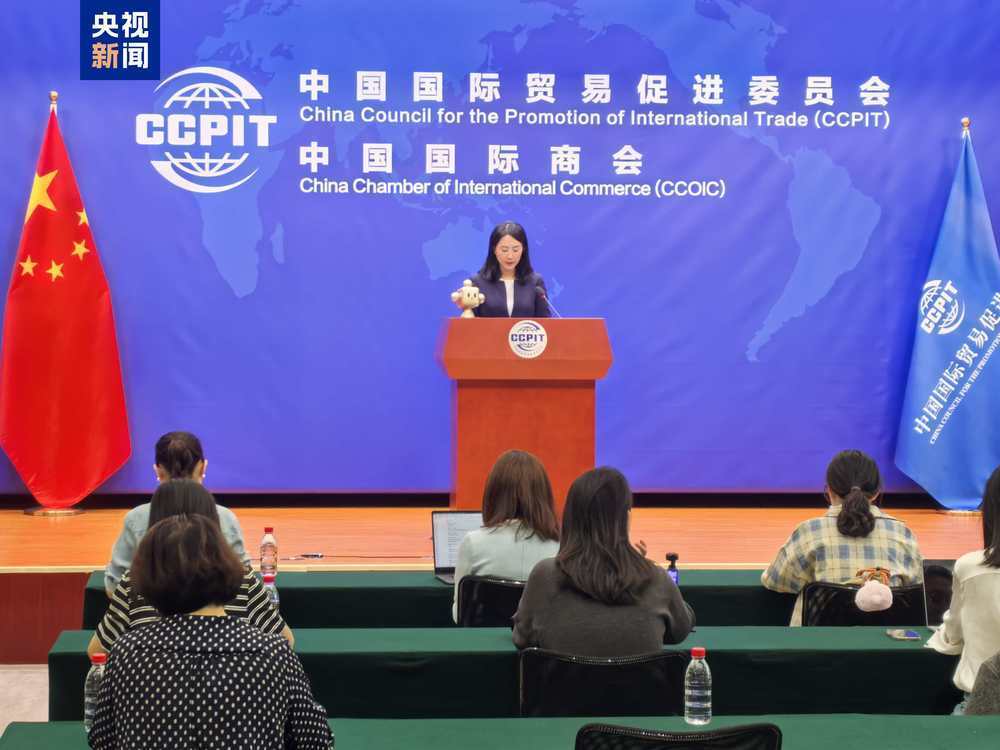
《第三届中国国际供应链促进博览会传播影响力报告》发布
Sou Hu Cai Jing· 2025-09-28 05:45
Core Insights - The China International Supply Chain Promotion Expo has successfully held three sessions, establishing itself as a significant platform for trade promotion, investment cooperation, innovation aggregation, and learning exchange [1][3] - The third expo has shown remarkable improvements in communication scale, coverage breadth, content depth, and internationalization [1] Summary by Categories Communication Impact - The communication heat continues to rise, with international visibility reaching new heights [1] - The report indicates a substantial increase in communication data, highlighting breakthroughs in communication quality, international participation, and innovative expression [3] Content Highlights - Content highlights have resonated widely, with open cooperation emerging as the strongest theme [1] - The expo has demonstrated its role as an international public product with significant communication power, guidance, and influence [3] Communication Forms - The communication forms have become more diverse, with immersive and interactive methods attracting attention [1] - The "super magnetic field" effect has significantly enhanced corporate exposure [1]
刘强东“闷声”第六个IPO:不是卖消费品,而是啃工业硬骨头
Sou Hu Cai Jing· 2025-09-28 01:16
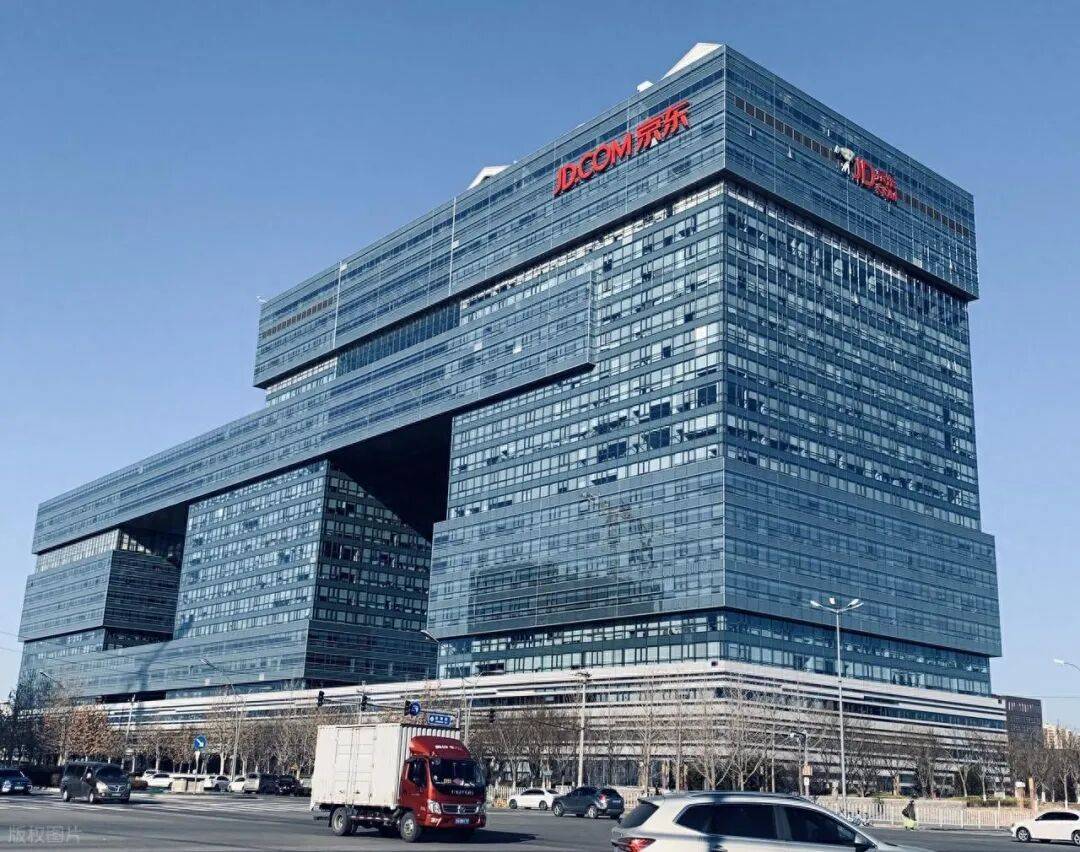
Core Insights - JD Industrial's IPO marks a significant step for Liu Qiangdong, reflecting his commitment to supply chain efficiency and a response to the company's recent stagnation [2][9] - The company aims to issue up to 253,309,800 shares on the Hong Kong Stock Exchange, with a strong backing from major underwriters [4][5] IPO Journey - JD Industrial's IPO process has faced challenges, initially submitting its prospectus in March 2023 but later pausing due to application issues. The process was restarted in September 2024 [4] - The recent approval from the China Securities Regulatory Commission removes major regulatory hurdles, paving the way for the company's listing [4] Business Overview - Established in 2017, JD Industrial has evolved into China's largest MRO procurement service provider, with a market share nearly three times that of its closest competitor [6] - The company offers approximately 57.1 million SKUs and serves around 50% of China's Fortune 500 companies [6] Financial Performance - JD Industrial's revenue grew from 14.135 billion to 20.398 billion yuan from 2022 to 2024, with a compound annual growth rate of 20.1% [7] - The company turned a profit, with net income rising from -1.334 billion to 0.762 billion yuan during the same period, although revenue growth rates are slowing [8] Strategic Focus - Liu Qiangdong emphasizes a supply chain-centric approach, believing that the majority of profits should go to brand owners to foster development [9] - JD Industrial aims to translate its consumer-side advantages into the B2B sector, enhancing procurement processes for large enterprises [9] Technological Innovation - The launch of the "Joy Industrial" model represents JD Industrial's commitment to leveraging technology for supply chain optimization, utilizing extensive data from various sectors [10] - The model aims to significantly improve operational efficiency and reduce costs through intelligent decision-making [10] Industry Landscape - The MRO market in China has a low online penetration rate of around 10%, indicating substantial growth potential despite competitive pressures from established players [11] - JD Industrial has set ambitious goals to help reduce supply chain costs significantly over the next five years [11] Global Expansion and Innovation - Liu Qiangdong is pursuing international acquisitions and local e-commerce strategies, with a focus on building local teams and sourcing products [12] - The company is also exploring innovative business ventures, with plans to introduce new initiatives annually [12]
10天搞定!波兰撑不住,白俄边境重开,中欧物流格局生变?
Sou Hu Cai Jing· 2025-09-27 16:49
Core Viewpoint - Poland's decision to reopen its border with Belarus is a significant move that alleviates pressure on Europe's logistics network and supply chains, which had been severely disrupted due to the border closure [1] Group 1: Impact of Border Closure - The closure of the Polish border led to a halt in the Central European freight trains, causing significant delays and logistical challenges across Europe, with warehouses overflowing and production lines in Germany temporarily halted due to missing components [2] - Poland's initial intention to use the border closure as leverage backfired, as it found itself equally affected by the supply chain disruptions [2] Group 2: Influencing Factors for Reopening - The opening of a new maritime route on September 22 provided an alternative for freight transport, reducing reliance on Poland [4] - Potential stricter quarantine measures from China on Polish dairy products posed a risk to Poland's food export industry, further complicating the situation [6] - Germany's industrial reliance on Chinese components and the potential disruption to its production lines created significant pressure on Poland to reopen the border [6] Group 3: Economic Considerations for Poland - The Central European freight line is crucial for Poland's economy, projected to generate approximately €600 million to €900 million in direct benefits in 2024 and create nearly 20,000 jobs by 2025 [7] - The closure threatened the livelihoods of many workers in logistics and transportation, leading to financial pressures such as mortgage and car loan repayments [7] Group 4: European Dynamics - The differing interests within Europe, particularly between France and Germany favoring long-term cooperation with China, highlight the need for Poland to avoid becoming a disruptive force [8] - The EU's unspoken consensus emphasizes the importance of not allowing political maneuvers to jeopardize the overall stability of Europe [8] Group 5: Supply Chain Vulnerabilities - Modern manufacturing practices with minimal inventory levels make supply chains particularly susceptible to disruptions, with Poland's actions potentially branding it as an unreliable partner [9] Group 6: China's Strategic Response - China is proactively developing alternative logistics routes to mitigate risks associated with single points of failure in the supply chain, indicating a shift towards a more resilient logistics network [11] Group 7: Challenges Post-Reopening - The reopening of the border does not immediately resolve existing issues; businesses will require time to recover, and confidence in the supply chain will take longer to rebuild [13] - Hidden costs related to route reassessments, insurance adjustments, and potential changes in banking credit policies may persist in the long term [13] Group 8: Human Element - The reopening brought relief not only to political figures but also to the everyday workers in the supply chain, who faced significant anxiety during the border closure [14] Group 9: Future Role of Poland - Poland must learn to balance its interests with those of Germany, France, and the EU to maintain a stable position in the evolving European landscape [15]
Armlogi Holding Corp.(BTOC) - 2025 Q4 - Earnings Call Transcript
2025-09-25 21:32
Financial Data and Key Metrics Changes - Total revenue for fiscal year 2025 reached $190.4 million, an increase of 14% compared to $167 million in fiscal year 2024, driven by demand for transportation and warehousing services [8] - Cost of sales increased by 29.9% to $193.4 million, primarily due to higher freight costs and operational expenses, resulting in a gross profit loss of $3 million [9] - General and administrative expenses totaled $14.7 million, a 47.2% increase from the previous year, leading to a net loss of $15.3 million or $0.37 per share [9] Business Line Data and Key Metrics Changes - The active customer base increased more than four-fold to 505, reflecting the demand for comprehensive supply chain solutions [8] - The company operates 10 warehouses across approximately 3.9 million square feet, supporting cross-border e-commerce and domestic customers [5] Market Data and Key Metrics Changes - The company aims to diversify its customer mix beyond PRC-based clients, who accounted for around 84% of revenue in fiscal year 2025 [11] - The focus on expanding geographic coverage and enhancing technology platforms is expected to attract more clients [11] Company Strategy and Development Direction - The company is committed to optimizing operations and leveraging technology to drive efficiency and cost management [10] - A focus on bulky item handling and a one-stop solution for cross-border e-commerce positions the company uniquely in the market [15] Management's Comments on Operating Environment and Future Outlook - Management acknowledges operational challenges and cost pressures but remains confident in the company's growth potential due to its expanding infrastructure and customer base [5] - Gradual improvement in margins is anticipated as the operational footprint reaches fuller utilization and technology investments take effect [13] Other Important Information - The company maintains high standards, including ISO 9001 compliance and an average inventory accuracy rate of 99.64% [5] - The balance sheet shows $13.6 million in cash, cash equivalents, and restricted cash, indicating a solid financial position [9] Q&A Session Summary Question: What are the main drivers of revenue growth for fiscal year 2026? - Revenue growth is expected to be driven by demand for warehousing and logistics services, particularly from cross-border e-commerce merchants and an expanding U.S.-based customer base [11] Question: When does management expect to achieve consistent profitability and positive free cash flow? - Management is implementing measures for operational optimization and cost management, with gradual improvement in margins expected in the coming fiscal years [13] Question: How concentrated is revenue among the largest customers, and how does Armlogi plan to differentiate itself? - One customer accounted for around 10% of revenue in fiscal year 2025, down from previous years, reflecting efforts to diversify the customer base [14] - The company differentiates itself through high-quality services, advanced technology, and a focus on niche needs that larger competitors may overlook [15]
刘强东的第六个IPO,上市倒计时
3 6 Ke· 2025-09-23 04:05
Core Viewpoint - JD Industrials, Inc. is set to become the sixth publicly listed company under Liu Qiangdong, with plans to issue up to 253 million shares on the Hong Kong Stock Exchange, following previous attempts that faced setbacks [1][2]. Company Overview - JD Industrials was established in July 2017 and focuses on industrial supply chain technology and services, initially entering the MRO procurement service sector [1][2]. - The company has expanded to provide a comprehensive industrial supply chain solution named "Taipu," which includes a wide range of industrial products and digital supply chain services [2]. Financial Performance - Revenue has shown steady growth from 141.35 billion in 2022 to 203.98 billion in 2024, with product revenue accounting for 94% of total revenue in 2024 [4][5]. - The company achieved a turnaround in profitability, moving from a net loss of 13.34 billion in 2022 to a net profit of 7.62 billion in 2024 [5]. Funding and Valuation - JD Industrials completed a Series A funding round in 2020, raising 230 million USD, and a Series B round in 2023, which increased its valuation to approximately 6.7 billion USD (477 billion RMB) [3][5]. - The company's major shareholders include JD Group, Liu Qiangdong, and various investment firms such as Sequoia China and Middle East Capital [3]. Market Challenges - Revenue growth rates are declining, with increases of 36.63% in 2022, 22.65% in 2023, and 17.66% in 2024, indicating a potential slowdown in business momentum [5][6]. - The gross margin has decreased from 18.6% in 2021 to 16.2% in 2024, reflecting pressure on profitability [6]. - JD Industrials remains significantly dependent on JD Group, with a substantial portion of its revenue derived from the parent company's platform [6].