
元宇宙

Search documents
市值突破90亿元!上市大卖一年纯赚3个亿
Sou Hu Cai Jing· 2026-01-27 13:54
Core Viewpoint - Xiamen Jihong Technology Co., Ltd. (referred to as "Jihong Co.") has demonstrated resilience and achieved counter-cyclical growth, as evidenced by its impressive performance forecast for 2025, amidst a sluggish global economic recovery and increasing industry competition [1][2]. Financial Performance - Jihong Co. anticipates a net profit attributable to shareholders of nearly 300 million yuan for 2025, exceeding market expectations [3]. - The company's stock price reacted positively, with a 1.59% increase in A-shares and a peak of 4% in Hong Kong shares, leading to a market capitalization surpassing 9 billion yuan [3]. - The expected net profit for 2025 is projected to be between 273 million and 291 million yuan, representing a year-on-year growth of 50% to 60% [5]. - The net profit after deducting non-recurring gains is forecasted to be between 240 million and 258 million yuan, with a growth rate of 49.98% to 61.35% [5]. Business Model and Strategy - Jihong Co. has successfully transitioned to a dual-driven model, combining cross-border social e-commerce and traditional packaging services [10][11]. - The company has established a strong presence in the cross-border e-commerce sector, ranking second among B2C export e-commerce companies in China with a market share of 1.3% as of 2022 [11]. - The packaging business, as a traditional core, has shown a stable cash flow, contributing 2.099 billion yuan in revenue, with a gross profit margin recovery to 21.5% [13]. Growth Drivers - The growth in 2025 is attributed to the robust recovery of the packaging business and the rapid expansion of cross-border social e-commerce [11]. - Jihong Co. has adopted an "AI-driven cross-border e-commerce business + own brand development + packaging business overseas" long-term strategy, successfully launching several brands [15]. - The company has achieved significant growth in the Southeast Asian market, with a gross merchandise volume (GMV) exceeding 3.8 billion yuan in 2025, marking a 46% year-on-year increase [17]. Future Outlook - The cross-border e-commerce business is expected to continue its strong growth, leveraging early advantages in the Southeast Asian market and comprehensive AI capabilities [20]. - The packaging business is evolving towards smart solutions, creating new profit opportunities [20]. - Jihong Co. faces challenges such as fluctuations in the global trade environment and intense competition in overseas e-commerce, which will test its adaptability [20].

Meta千人大裁员,扎克伯格继续挥刀元宇宙,VR严冬已至?
3 6 Ke· 2026-01-27 12:41
Core Insights - Meta's Reality Labs has laid off 10% of its workforce, approximately 1,000 employees, primarily affecting VR-related projects, indicating a shift in focus from VR to AI and smart glasses [2][3] - The cumulative loss of Reality Labs has exceeded $70 billion since the end of 2020, prompting Meta to reduce its VR investments and reallocate resources [2][4] - The VR industry is perceived to be entering a "winter period," with developers expressing concerns about the future viability of VR platforms like Horizon Worlds [7][8] Group 1: Strategic Shift - Meta is reallocating resources within Reality Labs to focus more on AI and wearable devices, such as the Ray-Ban smart glasses, rather than VR hardware [3][4] - The lack of significant VR hardware updates at the recent Meta Connect conference signals a strategic downgrade for VR, with the company shifting its focus to other technologies [4][6] Group 2: Developer Sentiment - Developers are feeling the impact of Meta's layoffs, with many reporting a loss of direction for Horizon Worlds and a shrinking space for smaller developers [7][8] - The Quest app store's traffic distribution is critical for developers, and any retreat by Meta could adversely affect their survival [8] Group 3: Market Trends - The XR market is undergoing significant changes, with IDC forecasting a 41.6% growth in overall XR device shipments by 2025, while VR and MR headset shipments are expected to decline by 42.8% [12] - AI smart glasses are projected to see a dramatic increase in shipments, highlighting a shift in consumer interest away from traditional VR headsets [12][14] Group 4: Enterprise Opportunities - Apple's Vision Pro, while initially underperforming in the consumer market, is finding traction in the enterprise sector, where clients value immersive training and collaboration [16][18] - The potential for VR in vertical industry applications, such as manufacturing and healthcare, is recognized as a promising avenue for growth, despite the overall market cooling [18][19] Group 5: Conclusion - The VR industry may not have reached its peak, but it is transitioning to a more realistic phase, focusing on practical applications rather than speculative consumer products [20][21]


新华财经晚报:我国将出台应对人工智能影响促就业文件
Xin Hua Cai Jing· 2026-01-27 10:01
Domestic News - The Chinese government will implement measures to support employment in key industries and address the impact of artificial intelligence on jobs, including initiatives for youth employment and a rural-urban employment system [2][3] - The State Statistical Bureau reported that in 2025, the total profit of industrial enterprises above designated size reached 73,982 billion yuan, a year-on-year increase of 0.6%. The manufacturing sector saw a significant growth of 5.0%, rebounding by 8.9 percentage points compared to 2024 [3] - Guokai Microelectronics announced price increases for its KGD products starting January, with price hikes of 40% for 512Mb KGD, 60% for 1Gb KGD, and 80% for 2Gb KGD products [4] International News - UK Prime Minister Keir Starmer will visit China from January 28 to 31, leading a delegation of over 50 executives from major British companies, indicating strong interest in deepening bilateral economic relations [2] - The European Commission has classified WhatsApp as a "very large online platform" under the EU Digital Services Act, which will subject it to stricter compliance obligations [6]
两会之声 | 山东省政协委员王静怡:以数字赋能文化创新,推动山东省文化产业高质量发展
Xin Lang Cai Jing· 2026-01-27 09:35
Core Viewpoint - Shandong Province aims to enhance its cultural industry through digital technology integration, as outlined in the "Shandong Province Cultural Industry Technology Innovation Action Plan (2025-2027)" which emphasizes improving cultural technology innovation capabilities to lead high-quality development in the cultural sector [1][3] Group 1: Current Challenges and Opportunities - Compared to advanced regions like Zhejiang and Guangdong, Shandong's cultural industry faces issues of being "large but not strong" and "rich but not vibrant," primarily due to insufficient integration of digital technology [3] - The province's strategy to transition from a "cultural resource province" to a "cultural industry powerhouse" involves leveraging digital empowerment as a key pathway for innovation and industry upgrade [3] Group 2: Proposed Initiatives - Implementation of five major projects to promote digital empowerment and industry upgrade, establishing a "Shandong model" for cultural innovation [3] - Creation of a "Cultural Resource Digital Decoding and IP Database Construction" project to digitize cultural resources and establish a unified "Shandong Cultural Digital Resource Database" [3][4] Group 3: Digital Content and Experience - Establishment of a "Shandong Cultural IP Super Symbol Library" to modernize and stylize key cultural symbols like Confucius and Mount Tai into a digital IP material library [4] - Development of a "Qilu Cultural Gene Digital Platform" using AI and knowledge graph technology to visualize the internal logic and spiritual lineage of Shandong's cultural resources [5] Group 4: Digital Creative Industry - Launch of a "Digital Cultural Content Creation and Industry Aggregation" project to establish a "Shandong Digital Cultural Content Creation Center" in key areas like Jinan and Qingdao, focusing on original content production based on Shandong cultural IP [6] - Encouragement of "Cultural + Manufacturing" digital integration by creating a platform for cultural design and smart manufacturing, enhancing the cultural connotation of "Shandong manufacturing" [6] Group 5: Digital Tourism and Consumption - Implementation of a "Digital Cultural Tourism Scene Integration and Consumption Upgrade" project to create a comprehensive digital cultural tourism service network through the "Good Guest Shandong" platform [7] - Development of immersive digital tourism experience landmarks in key scenic areas, utilizing VR/AR/MR technologies for enhanced visitor engagement [7] Group 6: Globalization of Cultural IP - Execution of a "Digital Communication and Cross-Border Expansion" project to globalize Shandong cultural IP through a multi-faceted digital communication matrix [8] - Support for digital creative products to reach global markets via overseas distribution platforms and cross-border e-commerce channels [8] Group 7: Ecosystem Optimization - Initiation of a "Market Entity Cultivation and Ecosystem Optimization" project to stimulate private sector vitality and encourage collaboration between state-owned cultural units and private digital tech companies [9] - Establishment of the "Qilu Digital Cultural Talent" program to attract and retain high-end interdisciplinary talent through partnerships with universities [9]

未知机构:元宇宙平台公司META谷歌GOOGL动态KeyBanc-20260127
未知机构· 2026-01-27 02:00
Summary of Conference Call Notes Company and Industry Involved - **Companies**: Meta Platforms, Inc. (META) and Alphabet Inc. (GOOGL) - **Industry**: Metaverse and AI technology Core Points and Arguments - **Target Price Adjustment**: KeyBanc has lowered the target price for Meta to $835 while maintaining an "Overweight" rating, indicating a cautious outlook despite the company's potential [1] - **Market Valuation Concerns**: The market has reflected concerns regarding AI capital expenditures and return on investment for Meta, which may impact its valuation [1] - **Product Cycle Comparison**: The product cycle returns for 2026 are expected to be more favorable for Google compared to Meta, suggesting a competitive edge for Google in the near future [1] - **Earnings Multiple Gap**: Analysts noted a gap of approximately 7 times in expected price-to-earnings ratios between Meta and Google from 2022 to 2027, indicating a significant valuation difference [2] - **Operational Expenditures**: Meta is currently managing high operational expenditures, exceeding $160 billion in the fourth quarter, which may limit its upward potential in the short term [2] - **Capital Expenditure Increase**: Meta is increasing capital expenditures before a clear revenue inflection point, which could pose risks to its financial performance [2] - **Improvement in Product Momentum**: With the acceleration of advertising and AI cycles, product momentum for Meta is expected to improve starting in the spring, although visibility on growth remains less clear compared to Google [2] Other Important but Potentially Overlooked Content - **Performance Against Market Consensus**: Both Meta and Google have outperformed market consensus expectations, indicating strong underlying performance despite the challenges faced by Meta [2]

未知机构:KeyBanc将元宇宙平台公司META的目标价下调至835美-20260127
未知机构· 2026-01-27 02:00
Summary of Key Points from Conference Call Company and Industry Involved - The discussion revolves around the Metaverse platform company (META) and its comparison with Google (GOOGL) in the context of market valuation and growth potential [1][2]. Core Insights and Arguments - KeyBanc has lowered the target price for META to $835 while maintaining an "Overweight" rating, indicating a cautious outlook despite the company's potential [1]. - The market has already priced in concerns regarding AI capital expenditures and return on investment for META, but the product cycle returns in 2026 appear more favorable for Google [1]. - Analysts noted a significant valuation gap, with META trading at approximately 7 times lower than Google based on expected price-to-earnings ratios from 2022 to 2027 [1]. - Both META and Google have outperformed market consensus expectations, but META is currently facing high operational expenditures, exceeding $160 billion in Q4, which limits its near-term upside potential [1]. - There is an expectation that META's product momentum will improve starting in the spring, driven by the acceleration of advertising and AI cycles, although its visibility for growth remains behind Google's growth cycle driven by search and cloud services [2]. Other Important but Potentially Overlooked Content - The operational challenges faced by META, particularly the high capital expenditures and the need to navigate through a significant operational cost structure, are critical factors influencing its short-term performance outlook [1]. - The comparison with Google highlights the competitive landscape and the differing growth trajectories between the two companies, emphasizing the importance of product cycles and market positioning [1][2].
遭Meta「砍单」?歌尔股份启动裁员:研发中心成「重灾区」,称要「削到筋骨」
Xin Lang Ke Ji· 2026-01-27 01:38
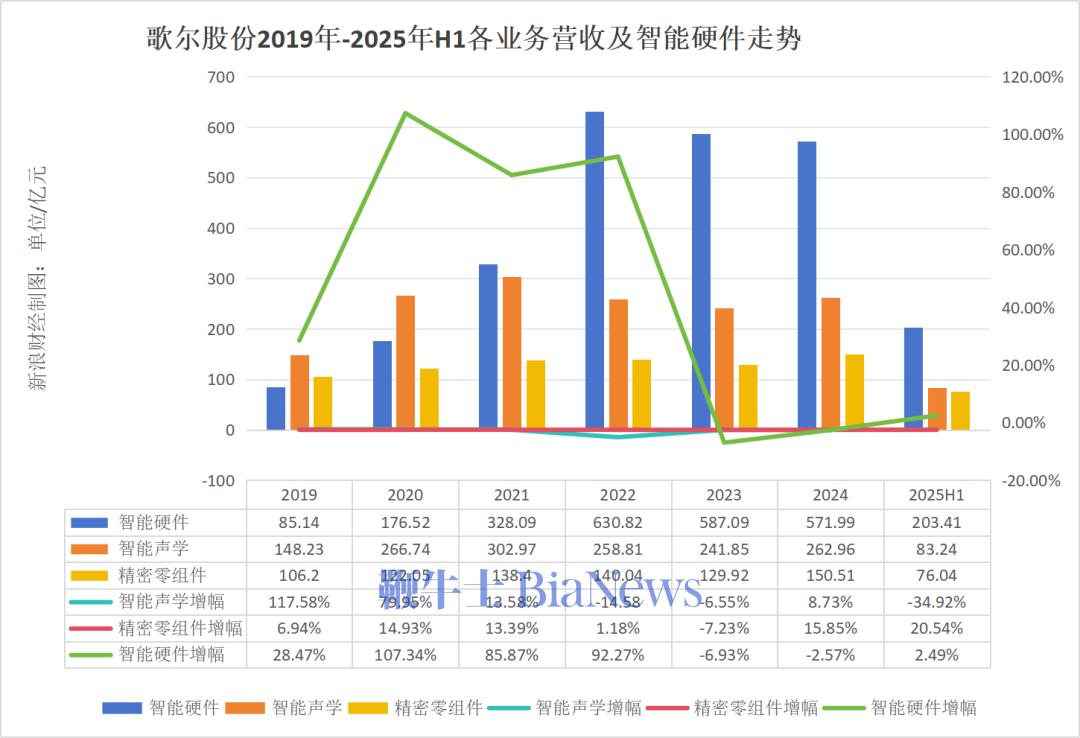
Core Viewpoint - Meta's adjustment in its metaverse business has significantly impacted its Chinese partner, GoerTek, leading to substantial financial losses and workforce reductions [1][2][4]. Group 1: Impact of Meta's Decision - Meta's decision to cut resources in its metaverse division may result in GoerTek facing losses exceeding 10 billion yuan [1][4]. - GoerTek's Alpha Labs, a core R&D center, has seen budget cuts across all departments, with layoffs expected to be between 30% and 50% in various centers [2][4]. - Employees have confirmed that the layoffs are directly related to Meta's order reductions, with some departments experiencing varying levels of impact [2][4]. Group 2: Financial Performance and Business Segments - GoerTek's main business segments include precision components, smart acoustic products, and smart hardware, with the latter accounting for 60% of overall revenue [5][7]. - The smart hardware segment, which includes VR, MR, and AR products, experienced a significant revenue growth of 107.34% in 2020, but has since seen a decline, with a drop of 6.93% in 2023 [7][8]. - The company's overseas revenue growth has also slowed down, reflecting the overall decline in the smart hardware business [8]. Group 3: R&D Investments and Market Position - Over the past five years, GoerTek has invested 24.5 billion yuan in R&D, focusing on various innovative platforms, which has led to a significant market share in MR headsets and AI smart glasses [8]. - Despite substantial investments, the changing attitudes of major tech companies like Apple and Meta towards MR and the metaverse may hinder the expected returns on these investments [8].

遭Meta“砍单”? 歌尔股份启动裁员:研发中心成“重灾区”,称要“削到筋骨” | BUG
Xin Lang Cai Jing· 2026-01-27 01:21
Core Viewpoint - Meta's adjustment of its metaverse business has significantly impacted its Chinese partner, GoerTek, leading to budget cuts and potential layoffs within the company [2][3][12]. Group 1: Impact of Meta's Actions - Meta is reportedly reducing its investment in the metaverse, resulting in the elimination of over 1,000 positions in its Reality Labs [3][12]. - GoerTek's Alpha Labs, a key R&D center, has seen all its budgets cut, with layoffs expected to range from 30% to 50% across various departments [4][5][14]. - The potential financial loss for GoerTek due to Meta's order cuts could exceed 10 billion yuan [5][14]. Group 2: GoerTek's Business Overview - GoerTek's main business segments include precision components, smart acoustic devices, and smart hardware, with the latter accounting for 60% of overall revenue [6][14]. - The smart hardware segment, which includes VR, MR, and AR products, has been the fastest-growing area, previously experiencing growth rates of over 85% from 2020 to 2022 [15][17]. - However, in 2023, the smart hardware business saw a decline of 6.93%, marking a significant downturn from previous years [8][17]. Group 3: Historical Context and Future Outlook - GoerTek has previously faced challenges due to order cuts, notably a "black swan" event in 2022 linked to a major client, resulting in losses of 2 to 2.4 billion yuan [9][17]. - The company has invested 24.5 billion yuan in R&D over the past five years, focusing on VR and AR technologies, which have yielded significant market shares [17][18]. - The shift in strategy from major tech players like Apple and Meta regarding MR and the metaverse may hinder the short-term returns on GoerTek's substantial investments in these technologies [18].
大力发展主导特色优势产业 不断汇聚区域发展新动能
Xin Lang Cai Jing· 2026-01-26 22:09
Group 1: Core Insights - The article emphasizes the importance of regional development and the need for collaboration between various sectors to enhance economic growth and social progress [1][2][3] Group 2: Shijingshan District Initiatives - Shijingshan District is encouraged to advance urban renewal and improve urban functionality, focusing on the integration of water, green spaces, roads, and visual corridors [2] - The district aims to create a vibrant waterfront area and enhance the operational management of the Shougang Park, while also improving infrastructure and planning for a livable and business-friendly environment [2] - There is a push for industrial integration and the establishment of a digital space industry matrix, including sectors like sci-fi, metaverse, and esports [2] Group 3: Fangshan District Initiatives - Fangshan District is set to leverage the innovation potential of the Liangxiang University Town to drive regional industrial development and enhance the local economy [3] - The district plans to implement development plans for the university town, improve surrounding facilities, and promote a "garden-style university town" [3] - There is a focus on developing green energy and new materials as leading industries, while also emphasizing the importance of ecological preservation and cultural integration [3]
涉老金融诈骗新剧本:AI造假成“诱饵” 虚伪关心为“收割”
Shang Hai Zheng Quan Bao· 2026-01-26 19:16
Core Insights - The article highlights the increasing trend of financial scams targeting the elderly, particularly through the use of AI technology and deceptive investment schemes [1][4][5] Group 1: Nature of Scams - Scammers are exploiting elderly individuals' lack of understanding of advanced technologies like blockchain and digital currencies, presenting them as low-risk, high-reward investment opportunities [3][4] - The "An Wo Gu Bao" investment product is a prime example, falsely marketed as a collaboration between Hong Kong An Wo Insurance and CITIC Securities, promising full compensation for losses without upfront fees [2][3] - The scams often incorporate a multi-level marketing structure, encouraging victims to recruit others, thereby creating a Ponzi scheme-like environment [2][3] Group 2: Trends in Elderly Scams - New scams are characterized by the use of advanced technology, emotional manipulation, and complex concepts, making them more difficult to detect [5][6] - The elderly demographic, particularly those over 50, is increasingly targeted, with 40% of scam victims falling into this age group [4][5] - The scams are evolving to include both online and offline strategies, utilizing community outreach and digital platforms to lure victims [5][6] Group 3: Preventive Measures - The government is taking steps to combat these scams by promoting awareness and education among the elderly, as well as enforcing stricter regulations on fraudulent investment schemes [6][7] - Financial institutions are encouraged to develop compliant financial products tailored to the needs of the elderly, enhancing their financial literacy and security [6][7] - Collaboration among regulatory bodies, internet platforms, and community organizations is essential to create a comprehensive defense against these scams [7]