资产证券化

Search documents
结构融资:境外资产证券化市场回顾及热点洞察
Sou Hu Cai Jing· 2025-12-26 04:25
Group 1: Overview of the Overseas Asset Securitization Market - The overseas asset securitization market shows significant resilience and structural changes in 2025, influenced by multiple macro factors [1] - In the US, the issuance scale of asset securitization products reached approximately $1.7 trillion in 2024, accounting for 19% of the fixed income market, with MBS and ABS remaining the main products [1] - The European market is steadily recovering, with a 15% year-on-year growth in issuance scale for 2024, driven by the STS framework, which increased the compliance product share to 25%-30% [1] Group 2: Highlights of Asset-Backed Securities - Asset-backed securities (ABS) became a highlight in 2023, with a global issuance volume reaching a new high of €689 billion, frequently surpassing the sovereign rating "ceiling" [1] - International rating agencies like S&P and Fitch allow asset-backed securities to be rated up to 4-6 notches above sovereign ratings under specific conditions, emphasizing the importance of a sound judicial system, structural mitigation mechanisms, and collateral quality [1] - An example includes an asset-backed security issued by an Asian country receiving a AAA rating, exceeding its AA sovereign rating, showcasing the unique advantages of asset-backed securities in credit isolation and risk mitigation [1] Group 3: Cross-Border Real Estate Investment Trusts (REITs) - Hong Kong and Singapore REITs holding assets in China demonstrate the ability to navigate through cycles, attributed to a highly diversified portfolio covering various asset types such as offices, logistics, and data centers [2] - Successful strategies include flexible acquisition and exit mechanisms, a 50% leverage cap providing financing flexibility, and dynamic asset management strategies [2] - In contrast, failed cases often stem from single asset types, regional concentration, or governance issues, highlighting the importance of asset quality and risk control systems [2]


22.6亿!央企金茂转手三亚亚龙湾五星级酒店
Feng Huang Wang· 2025-12-26 01:12
Core Viewpoint - China Jinmao has sold its Ritz-Carlton hotel in Sanya for 2.265 billion yuan, aiming to optimize asset utilization through this transaction [1][2]. Group 1: Transaction Details - The transaction involves Shanghai Jinmao Investment Management Group signing a property transaction contract with Sanya Luanmao Hotel Management Co., Ltd. on December 23 [1]. - Sanya Luanmao will acquire 100% equity of Sanya Travel Industry from Shanghai Jinmao for 2.265 billion yuan [1]. - Sanya Travel Industry, established in March 2004 with a registered capital of 500 million yuan, owns the Ritz-Carlton hotel in Sanya, which has 446 rooms and has been operational since 2008 [1]. Group 2: Strategic Intent - The sale is part of China Jinmao's strategy to activate existing assets through asset securitization, maximizing valuation benefits [2][3]. - The company previously announced its intention to sell 100% equity of Sanya Travel Industry for asset securitization purposes [2]. Group 3: Financial Context - The asset-backed securities plan managed by CITIC Securities has issued approximately 2.269 billion yuan in securities, with proceeds used to acquire Sanya Travel Industry [3]. - Shanghai Jinmao has subscribed to 4% of the asset-backed securities, while the remaining 96% is held by various institutional investors, ensuring no single entity has actual control [3]. Group 4: Broader Financial Activities - China Jinmao has engaged in significant financing activities throughout the year, including a loan of 8.69 billion yuan secured against Beijing Kaichen World Trade Center [3]. - On November 26, the company signed a syndicated loan agreement with a consortium of state-owned banks for up to 9.9 billion yuan, primarily for refinancing existing debts [4]. - The company aims to maintain liquidity by leveraging various financing methods, especially in a challenging real estate market [4]. Group 5: Future Outlook - The chairman of China Jinmao indicated a focus on improving operational cash flow and revitalizing existing projects while transitioning to new performance metrics [5]. - The company reported a signed sales amount of 8 billion yuan in November 2025, with a total of 100.7 billion yuan in signed sales for the first eleven months of the year [5].
22.65亿,中国金茂卖掉三亚丽思卡尔顿
Guan Cha Zhe Wang· 2025-12-25 06:54
Core Viewpoint - China Jinmao has sold the Ritz-Carlton Hotel in Sanya for 2.265 billion yuan, aiming for asset securitization and optimizing its balance sheet while maintaining operational ties to the hotel [1][2][3] Group 1: Sale Details - The sale was announced on December 23, with Shanghai Jinmao transferring 100% of Sanya Tourism to Sanya Luanmao for 2.265 billion yuan, which is slightly above the assessed net asset value of 2.135 billion yuan [1] - Sanya Tourism, established in March 2004, solely owns the Ritz-Carlton Hotel in Sanya, which has been operational since 2008 and features 446 rooms [1] Group 2: Financial Performance - In the first half of the year, China Jinmao's hotel operating revenue decreased by 12% year-on-year to 776 million yuan, with its contribution to total revenue dropping by 1 percentage point to 3% [2] - The net profit before tax and non-recurring items for Sanya Tourism was approximately 110 million yuan for 2023, declining to 70.46 million yuan in 2024, although it improved to 40.74 million yuan in the first quarter of this year [2] - The average daily room rate at the Ritz-Carlton fell to 2,054 yuan, but the hotel achieved an 80.5% occupancy rate, up 11.2 percentage points year-on-year, with revenue per available room increasing by 3.24% to 1,654 yuan [2] Group 3: Strategic Implications - The acquisition by Sanya Luanmao, part of a special asset-backed securities plan under CITIC Securities, allows China Jinmao to separate this hotel business from its financial statements while still benefiting from its operations [2][3] - The recent inclusion of four-star and above hotel projects in the REITs framework indicates a strategic move by China Jinmao to adapt to new industry regulations and optimize its asset management [3] - The company's chairman emphasized the importance of enhancing new growth and revitalizing existing assets to achieve a three-year transformation [4]

剥离上市体系,中国金茂以22.65亿元将三亚丽思卡尔顿卖给资管公司
Guan Cha Zhe Wang· 2025-12-25 06:50
Core Viewpoint - China Jinmao has sold the Ritz-Carlton Hotel in Sanya for 2.265 billion yuan, aiming for asset securitization and optimizing its balance sheet while maintaining operational ties to the hotel [1][2][3] Group 1: Sale Details - The sale was announced on December 23, with Shanghai Jinmao transferring 100% of Sanya Tourism to Sanya Luanmao for 2.265 billion yuan, which is slightly above the assessed net asset value of 2.135 billion yuan as of March [1] - Sanya Tourism, established in March 2004 with a registered capital of 500 million yuan, solely owns the Ritz-Carlton Hotel in Sanya, which has been operational since 2008 [1] Group 2: Financial Performance - In the first half of the year, China Jinmao's hotel operating revenue decreased by 12% to 776 million yuan, with its share of total revenue dropping to 3% [2] - The net profit before tax and non-recurring items for Sanya Tourism was approximately 110 million yuan for 2023, declining to 70.46 million yuan in 2024, although it improved to 40.74 million yuan in Q1 [2] - The average room rate at the Ritz-Carlton fell to 2,054 yuan per day, but the hotel achieved an 80.5% occupancy rate, up 11.2 percentage points year-on-year, with revenue per room increasing by 3.24% to 1,654 yuan [2] Group 3: Strategic Implications - The acquisition by Sanya Luanmao, established in August, is part of a special asset-backed securities plan under CITIC Securities, allowing China Jinmao to optimize its financial statements while retaining operational benefits from the hotel [2][3] - The recent inclusion of four-star and above hotels in the REITs framework indicates a strategic move by China Jinmao to adapt to new industry regulations and enhance asset liquidity [3] - The company aims to revitalize its assets and improve its balance sheet, aligning with its goal of achieving a three-year transformation through optimizing both new and existing assets [3] Group 4: Overall Company Performance - For the first half of the year, China Jinmao reported revenues of 25.846 billion yuan, a 14% increase year-on-year, with gross profit rising by 14% to 4.059 billion yuan and net profit attributable to shareholders increasing by 8% to 1.09 billion yuan [4] - As of November, the company recorded a contracted sales amount of 100.679 billion yuan, with a cumulative sales area of 4.3717 million square meters [4]

中国金茂(00817):港股公司深度报告:销售业绩逆势强劲,盈利修复穿越周期
KAIYUAN SECURITIES· 2025-12-25 03:43
Investment Rating - The investment rating for China Jinmao (00817.HK) is maintained at "Buy" [5] Core Views - The company has shown strong sales performance against market trends, with profit recovery expected to continue through the cycle. The sales amount for the first half of 2025 reached 53.4 billion, a year-on-year increase of 19.6%, marking its entry into the top 10 in the full-caliber sales ranking by CRIC [6][17]. - The company is actively reserving core land parcels to ensure long-term profitability, with projected net profits for 2025-2027 estimated at 1.11 billion, 1.56 billion, and 1.62 billion respectively, and corresponding EPS of 0.08, 0.12, and 0.12 [5][9]. Summary by Sections Sales Performance and Land Acquisition - The company has adjusted its development strategy since 2023, leading to a continuous improvement in fundamentals after hitting a low point. The sales performance in the first half of 2025 was strong, with a focus on acquiring core land parcels to secure long-term profitability [17]. - The sales amount for the first half of 2025 was 53.4 billion, with a year-on-year increase of 19.6%. The average signed price for residential properties rose to 22,000 yuan per square meter [24]. - The company has adopted a dual-focus strategy, acquiring 41 projects since 2024, all concentrated in core cities and areas, with an average sales net profit margin exceeding 10% [29]. Investment Properties and Property Services - The investment property segment has been operating steadily, providing stable cash flow despite revenue declines due to the pandemic since 2020. The company focuses on high-quality asset management and gradually exits low-efficiency assets [59]. - The property service segment has seen a year-on-year growth of 11% in management scale, reaching 1.1 million square meters in the first half of 2025, with 85% of new projects located in strategically important cities [7]. Financial Status and Debt Structure - The company has maintained a robust financial status, optimizing its domestic and foreign debt structure and reducing financing costs. The average financing cost for new domestic and foreign financing in the first half of 2025 was 2.70%, down by 0.69 percentage points from the end of 2024 [8]. - The company has successfully issued multiple low-interest bonds, and its debt structure remains healthy, with all three red lines maintained in the green [8]. Profitability Forecast and Investment Recommendations - The company is expected to see a recovery in profitability, with projected revenues for 2025-2027 showing a positive trend. The projected net profit for 2025 is 1.11 billion, with a corresponding P/E ratio of 13.5 [9][5]. - The report maintains a "Buy" rating based on the company's strong sales performance, strategic land acquisitions, and expected recovery in profitability [5].
三亚丽思卡尔顿酒店被卖,不止为钱
3 6 Ke· 2025-12-25 02:22
Core Viewpoint - The opening of public REITs to hotel assets marks a significant shift in the capital market, with companies like China Jinmao seizing the opportunity for asset securitization [1][6]. Group 1: Asset Sale - China Jinmao announced the sale of 100% equity in Sanya Yalong Bay Ritz-Carlton Hotel for 2.265 billion yuan, indicating a strategic move towards asset securitization [3][4]. - This sale is part of a broader trend in the hotel industry, where companies are restructuring to enhance their financial positions [3][4]. - The transaction reflects a shift in China Jinmao's strategy from asset disposal for cash flow to exploring asset securitization [3][4]. Group 2: Financial Strategy - The establishment of a Special Purpose Vehicle (SPV) for the securitization process allows for risk isolation and the issuance of asset-backed securities supported by future cash flows [4]. - China Jinmao has subscribed to 4% of the asset-backed securities, with the remaining 96% held by various institutional investors, ensuring no single entity has control [4]. - This move is aimed at maximizing the valuation of hotel assets and optimizing the company's financial statements [4]. Group 3: Market Context - The National Development and Reform Commission has included four-star and above hotels in the public REITs application scope, making the timing of China Jinmao's actions significant [6]. - The sale of the Ritz-Carlton hotel is seen as a strategic attempt to activate existing assets and improve future growth potential [6]. - The hotel meets the criteria for REITs, being a five-star property with stable cash flow and clear ownership [6]. Group 4: Performance Metrics - The Ritz-Carlton hotel has shown strong performance metrics, with an average room price of 2,054 yuan and an occupancy rate of 80.5% in the first half of this year [8]. - Historical data indicates that the hotel maintained high average room prices and occupancy rates even during challenging periods, such as the pandemic [7][8]. - The hotel’s parent company reported total assets of approximately 1.113 billion yuan and net assets of about 691 million yuan as of March 31, 2025 [8]. Group 5: Future Prospects - If successful, this initiative could create a complete cycle of investment, financing, construction, management, and exit for hotel assets [8]. - China Jinmao's portfolio includes several high-quality hotels, which could be leveraged for future REITs offerings [8]. - The competitive landscape for public REITs is evolving, with other companies like Jin Jiang International also entering the market [8].
结构融资:境外资产证券化市场回顾及热点洞察(一)
Sou Hu Cai Jing· 2025-12-25 01:02
Market Overview - The US asset securitization market's share of the overall fixed income market has decreased from a peak of 38% in 2021 to approximately 19% in 2024, yet it remains a crucial component of the capital market [7][9]. - The market is divided into two main categories: mortgage-backed securities (MBS) and asset-backed securities (ABS), with issuance volumes fluctuating significantly due to macroeconomic and policy factors [7][11]. - Following a historical high in issuance during 2021-2022, the market saw a decline due to interest rate hikes, but began to recover gradually in 2023 [17]. - The European asset securitization market has a substantial existing scale, with issuance recovering in 2023, and is characterized by placed and retained issuance types, with the former's share increasing [18][19]. Market Hotspots - Asset-backed securities are gaining attention as a debt instrument backed by a pool of assets, favored by investors due to their dual recourse feature, with over thirty countries having issued such securities globally [25]. - The issuance volume of asset-backed securities is expected to reach a historical high in 2024, with Europe being the primary market [27]. - The STS (Simple, Transparent, and Standardized) framework has been instrumental in increasing the share of related products in the European market, rising from 1-2% to approximately 25-30% in recent years [26]. Market Insights - Cross-border REITs in Hong Kong and Singapore, which hold domestic real estate, enhance risk resilience through diversified investment portfolios across geographic locations and asset types [2][45]. - The asset preferences of REITs in both regions differ, and they possess mature project acquisition exit mechanisms, flexible financing models, and dynamic asset operation risk management [2]. - Some REITs face challenges due to single asset types and poor location, reflecting the impact of these factors on performance [2]. Market Outlook - The offshore structured financing market is witnessing innovative development trends, driven by blockchain and digitalization, with emerging asset securitization products like data center financing and private credit becoming new growth points [2]. - Overall, the offshore asset securitization market is gradually recovering amidst fluctuations, with innovative products and mature operational mechanisms driving sustained industry growth [2].

22.6亿,央企金茂转手三亚亚龙湾五星级酒店,年内多次大手笔融资
Feng Huang Wang· 2025-12-24 06:30
Core Viewpoint - China Jinmao has sold its Ritz-Carlton hotel in Sanya for 2.265 billion yuan, aiming to optimize asset utilization through asset securitization [1][2][3] Group 1: Transaction Details - The transaction involves Shanghai Jinmao Investment Management Group selling 100% equity of Sanya Luyou to Sanya Luanmao Hotel Management for 2.265 billion yuan [1] - Sanya Luyou, established in March 2004 with a registered capital of 500 million yuan, owns the Ritz-Carlton hotel in Sanya, which has 446 rooms and has been operational since 2008 [1] - Following the transaction, Sanya Luyou will no longer be a subsidiary of China Jinmao [2] Group 2: Strategic Intent - The sale is part of a strategy to activate existing assets and maximize valuation through asset securitization [3] - The transaction is facilitated by a real estate-backed asset support securities plan managed by CITIC Securities, which has issued approximately 2.269 billion yuan in asset-backed securities [3] - The hotel asset will generate economic benefits for the holders of the asset-backed securities, with Shanghai Jinmao holding 4% of the securities and the remaining 96% held by various institutional investors [3] Group 3: Financing Activities - China Jinmao has engaged in multiple financing activities in 2023, including a loan of 8.69 billion yuan secured against the Beijing Kaichen World Trade Center [3] - On November 26, the company signed a syndicated loan agreement with a consortium led by China Construction Bank for up to 9.9 billion yuan, using assets in Shanghai as collateral [4] - The recent loans are primarily aimed at refinancing existing obligations rather than new financing, reflecting a strategy to maintain liquidity amid market challenges [4] Group 4: Market Outlook - The company anticipates a continued bottoming process in the industry, focusing on improving operational cash flow and accelerating the turnover of new projects while revitalizing existing assets [5] - As of November 2025, the company reported a signed sales amount of 8 billion yuan, with a total of 100.7 billion yuan in signed sales for the first eleven months of the year [5]
22.6亿,金茂卖掉了三亚丽思卡尔顿酒店
3 6 Ke· 2025-12-24 04:57
Core Viewpoint - The sale of Sanya Tourism by China Jinmao for 2.2646 billion RMB signifies a strategic shift towards a "light asset" model, reflecting the evolving landscape of China's commercial real estate market under new REITs regulations by 2025 [1][3][12]. Group 1: Transaction Details - China Jinmao's subsidiary, Shanghai Jinmao, sold 100% of Sanya Tourism, which owns the Ritz-Carlton Hotel in Sanya, for 2.2646 billion RMB [1][3]. - The Ritz-Carlton Hotel features 446 guest rooms and 33 private villas, generating approximately 236 million RMB in revenue and a net profit of about 37.78 million RMB over eight months ending August 31, 2025 [3][4]. Group 2: Strategic Implications - The transaction is part of China Jinmao's broader strategy to optimize asset structure and enhance capital efficiency, moving away from a heavy asset model to focus on higher-return investments in core urban residential developments [7][14]. - The sale is seen as a precursor to potential asset securitization, with the buyer likely preparing for a future REITs offering by improving the asset's financial performance [14][16]. Group 3: Market Context - The timing of the sale coincides with the National Development and Reform Commission's new REITs policy, which includes four-star and above hotels as eligible assets, marking a significant shift in the investment landscape for hotel properties [9][10][12]. - The transaction highlights a trend where top-tier luxury hotels are becoming more liquid assets, with a shift in valuation methods from replacement cost to income-based approaches [16][17]. Group 4: Future Outlook - The industry is expected to see more major players like China Jinmao listing mature properties for sale or pushing them towards the REITs market, indicating a transition to a more financially driven operational model [17][18].
22.6亿!三亚丽思卡尔顿酒店卖掉了
Xin Lang Cai Jing· 2025-12-24 02:55
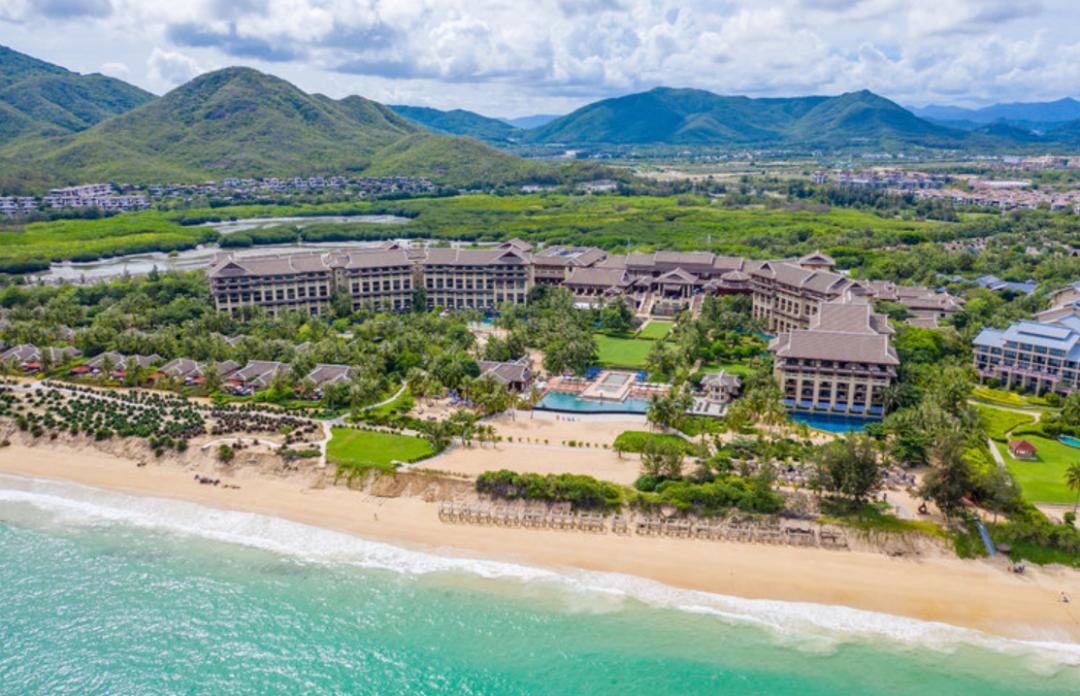
Core Viewpoint - China Jinmao (00817.HK) announced the sale of 100% equity in Sanya Jinmao Tourism Co., Ltd. to Sanya Luanmao for a total consideration of RMB 2.2646 billion, aiming to optimize asset structure and improve capital efficiency [1][7]. Group 1: Transaction Details - The transaction involves the sale of Sanya Jinmao Tourism, which only holds the Ritz-Carlton Hotel in Sanya, marking the company's exit from this asset [1][7]. - The Ritz-Carlton Hotel in Sanya, opened in 2008, features 446 rooms and suites, including 51 executive rooms and suites, and 33 private villas [1][7]. - The sale price of RMB 2.2646 billion aligns with the previously set listing price of approximately RMB 2.265 billion for the equity transfer [2][9]. Group 2: Financial Performance - As of August 31, 2025, Sanya Jinmao (Tourism) Co., Ltd. reported revenues of approximately RMB 236 million and a net profit of RMB 37.7799 million [2][8]. - The sale is part of a broader strategy for asset securitization, which aims to convert heavy assets into tradable financial assets, thereby enhancing cash flow and reducing liabilities [3][9]. Group 3: Strategic Implications - The transaction reflects a "light asset" strategy, allowing China Jinmao to retain brand management while divesting property ownership, thus alleviating capital burdens and renovation costs [4][9]. - China Jinmao continues to hold other hotel properties, including the Grand Hyatt Shanghai and JW Marriott Shenzhen, indicating a focus on maintaining a diversified portfolio while optimizing asset management [4][9].