数据中心

Search documents
Applied Industrial Technologies(AIT) - 2025 Q4 - Earnings Call Transcript
2025-08-14 15:00
Financial Data and Key Metrics Changes - The company achieved record sales, EBITDA, and EPS in fiscal 2025, with full-year EPS growth of 4% exceeding initial guidance [6][7] - Gross margins expanded nearly 50 basis points, surpassing 30% for the first time in history [6][7] - Free cash flow reached over $465 million, up 34% year-over-year, marking a new record [17][18] Business Line Data and Key Metrics Changes - Engineered Solutions segment sales grew organically year-over-year for the first time in seven quarters, with a 2% organic daily sales increase [9][11] - Service Center segment trends improved, returning to positive organic growth in June, with average daily sales increasing 1.5% sequentially [11][37] - The Engineered Solutions segment saw a 20.7% increase in sales year-over-year, with acquisitions contributing 19.7 points to this increase [39] Market Data and Key Metrics Changes - Year-over-year trends across the top 30 end markets remained mixed, with 15 markets generating positive sales growth [11] - Declines were noted in machinery, primary metals, utility and energy, aggregates, and chemicals, while technology verticals showed solid demand [12][13] - Orders in the Engineered Solutions segment increased by a high single-digit percentage year-over-year, indicating a positive inflection [13] Company Strategy and Development Direction - The company is focused on accelerating growth while being mindful of ongoing trade and interest rate policy uncertainties [21][24] - There is an emphasis on increasing growth with local customers through greater sales of ancillary products and comprehensive service solutions [25][28] - The company plans to remain active in M&A, with a developing pipeline for fiscal 2026 [28] Management's Comments on Operating Environment and Future Outlook - Management expressed confidence in the ability to execute amid evolving tariff backdrops and inflationary pressures [19][20] - The outlook for fiscal 2026 includes expectations for organic sales growth of 1% to 4% and EBITDA margins of 12.2% to 12.5% [44][45] - Management noted that recent U.S. trade agreements and tax reforms could positively impact business sentiment and capital investment [22][24] Other Important Information - The company closed four acquisitions in fiscal 2025, including Hydrodyne, which contributed over 400 basis points of inorganic growth [18][39] - The company repurchased 656,000 shares for $153 million and increased its quarterly dividend by 24% [18] Q&A Session Summary Question: Hydrodyne's sequential sales growth and EBITDA performance - Management indicated that the improvement in Hydrodyne's performance was due to stronger margin performance and quicker realization of synergy benefits [52][53] Question: Break fix MRO market trends - Management noted positive trends in local accounts and national accounts, indicating potential firming in the market [54][55] Question: Pricing contributions to guidance - Management expects pricing contributions to remain similar in the first quarter, with potential increases as the year progresses [61][62] Question: Market softness in international operations - Management identified Canada as experiencing more softness due to tariff impacts, but noted improvements as the quarter progressed [97] Question: Hydrodyne's contribution to EBITDA - Hydrodyne contributed just over $7 million to EBITDA in Q4, aligning with initial expectations for the first twelve months [87][88]

中恒电气(002364):数据中心HVDC先行者,AI算力浪潮下迎来长期机遇
Guoxin Securities· 2025-08-14 13:38
Investment Rating - The report does not provide a specific investment rating for the company [5]. Core Insights - The company is a pioneer in HVDC solutions for data centers and is expected to benefit from the long-term opportunities presented by the AI computing wave [1][2]. - The global demand for AI data centers is projected to grow rapidly, with a CAGR of 20% from 2025 to 2030, leading to significant capital expenditures in the sector [2][48]. - The company has developed an 800V high-power rectifier module, which is expected to enhance its market position as the global AI data center HVDC market could reach 62 billion yuan by 2030 [3][48]. Summary by Sections Company Overview - Established in 1996, the company specializes in power supply solutions, serving major clients in telecommunications and power sectors [1][13]. - The company has two main business segments: power electronics manufacturing and energy internet, with a focus on data center power supplies, communication power, and electric vehicle charging solutions [23][24]. Market Trends - The demand for AI computing infrastructure is expected to drive the growth of data center power solutions, with significant capital investments anticipated in the coming years [2][48]. - The penetration rate of HVDC solutions is expected to increase as they offer advantages over traditional UPS systems, such as smaller footprint and higher efficiency [2][66]. Financial Projections - The company is projected to achieve a net profit of 1.59 billion yuan in 2025, with a year-on-year growth of 45.4%, and a PE ratio of 68 [3][4]. - Revenue is expected to grow from 1.96 billion yuan in 2024 to 3.93 billion yuan in 2027, reflecting a compound annual growth rate of approximately 29.1% [4]. Product Development - The company is actively developing its 800V product line, which is anticipated to be a key growth driver as the market for AI data center HVDC solutions expands [3][48]. - Solid-state transformers are highlighted as a potential solution for achieving higher voltage levels in HVDC applications, which could further enhance efficiency and reduce space requirements [66][74]. Competitive Landscape - The company has established strong partnerships with leading telecommunications and internet companies, positioning itself favorably within the competitive landscape [19][34]. - The report indicates that the company is well-positioned to benefit from the ongoing technological advancements and increasing demand for efficient power solutions in data centers [2][66].

信维通信: 2025年半年度报告摘要
Zheng Quan Zhi Xing· 2025-08-14 13:14
Core Viewpoint - The company reported a slight decline in revenue and net profit for the first half of 2025, but showed significant improvement in cash flow and profitability in the second quarter, indicating a recovery trend in operations [6][7]. Financial Performance - The company's operating revenue for the first half of 2025 was approximately 3.70 billion yuan, a decrease of 1.15% compared to the same period last year [6]. - The net profit attributable to shareholders was approximately 161.83 million yuan, down 20.18% year-on-year [6]. - The net cash flow from operating activities increased by 79.74% to approximately 1.08 billion yuan [6]. - Basic and diluted earnings per share were both 0.1699 yuan, a decrease of 18.90% compared to the previous year [6]. Business Overview - The company's main business includes antennas and modules, wireless charging modules, EMI/EMC devices, high-precision connectors, acoustic devices, automotive interconnection products, and passive components [6][7]. - Consumer electronics remain the primary downstream application market, while commercial satellite communication, smart automotive, and IoT/smart home are emerging markets with significant growth potential [6][7]. - The company is actively investing in strategic product lines and expanding overseas bases to enhance profitability and market presence [6][7]. Market Position and Growth Opportunities - The antenna business continues to maintain a leading market position, while the wireless charging business benefits from the rapid adoption of wireless charging modules in smartphones and smart vehicles [7][8]. - The company has made significant progress in high-precision connectors and passive components, with new products being developed for high-end markets [9][10]. - The commercial satellite communication sector is expected to experience a new growth phase due to increasing demand for global connectivity and the rapid deployment of low-orbit satellite constellations [9][10]. International Expansion and R&D - The company has established 26 subsidiaries, 11 R&D centers, and 5 major production bases globally, enhancing its international cooperation network [10][11]. - The company is focusing on R&D in advanced materials and technologies, including LCP films and high-frequency components, to support its product offerings in 5G and future technologies [10][11]. - The ongoing construction of a new headquarters in Shenzhen aims to strengthen the company's core capabilities in technology research and smart manufacturing [10][11].

美股盘前要点 | 比特币升破12.44万美元创新高!据报苹果计划进军AI机器人领域
Ge Long Hui· 2025-08-14 12:33
1. 美国三大股指期货小幅上涨,纳指期货涨0.05%,标普500指数期货涨0.01%,道指期货涨0.02%。 2. 欧股主要指数集体上涨,德国DAX指数涨0.56%,英国富时100指数涨0.05%,法国CAC指数涨 0.57%,欧洲斯托克50指数涨0.54%。 3. 美国财长贝森特:8月、9月将很好地检验关税收入情况,可能超过3000亿美元;仅靠关税可使赤字率 降至5%水平。 7. 谷歌将于未来两年在美国俄克拉何马州再投资90亿美元新建数据中心园区。 8. Counterpoint:上半年全球智能眼镜出货量同比激增110%,Meta市场份额超70%。 5. 金融市场研究机构Fundstrat:以太坊为未来10–15年最大宏观交易机会,年底看高至1万美元。 6. 据报苹果计划进军AI机器人领域,目标2027年推出作为虚拟伴侣的桌面机器人。 9. 沃尔玛升级美国员工福利:全年购物打9折,涵盖几乎所有杂货商品。 10. 京东Q2净营收同比增长22.4%至3566.6亿元,调整后每ADS收益4.97元,均超预期。 11. 网易Q2净收入同比增长9.4%至279亿元,调整后每ADS收益14.81元,均不及预期。 4. ...

德尔股份:公司电泵产品主要应用于汽车行业
Zheng Quan Ri Bao Wang· 2025-08-14 12:13
Group 1 - The core viewpoint of the article is that Del Corporation (300473) clarified its product application focus during an investor Q&A session, emphasizing that its electric pump products are primarily used in the automotive industry [1] - The company specifically stated that its products are not utilized in deep cooling servers, computing power, or data center applications [1]

联特科技跌4.80%,成交额7.60亿元,今日主力净流入-5676.19万
Xin Lang Cai Jing· 2025-08-14 09:55
Core Viewpoint - The company, Wuhan LianTe Technology Co., Ltd., is experiencing fluctuations in stock performance, with a recent drop of 4.80% and a market capitalization of 12.689 billion yuan. The company is involved in the optical communication module sector, focusing on high-speed optical devices and modules, particularly benefiting from the growth in 5G and data center markets [1][4]. Company Overview - Wuhan LianTe Technology was established on October 28, 2011, and went public on September 13, 2022. The company specializes in the research, development, production, and sales of optical communication transceiver modules. Its main revenue sources include 10G and above optical modules (93.93%), below 10G optical modules (5.09%), and other services [7]. Market Position and Growth - The company has developed core capabilities in optical chip integration, high-speed optical devices, and module design and production. It is currently working on 800G optical modules and technologies required for next-generation products, which are crucial for data centers and 5G communication applications [2][3]. - The optical module market is experiencing rapid growth, particularly in the data communication sector, which has surpassed the telecom market to become the largest market segment. The telecom market, driven by 5G construction, is expected to significantly increase demand for optical modules [2]. Financial Performance - For the first quarter of 2025, the company reported a revenue of 236 million yuan, representing a year-on-year growth of 31.02%. The net profit attributable to shareholders reached 18.7028 million yuan, a substantial increase of 499.92% compared to the previous year [8]. - As of March 31, 2025, the company had a total of 21,000 shareholders, with an average of 3,239 circulating shares per person, indicating a slight increase in share distribution [8]. International Exposure - The company has a significant international presence, with overseas revenue accounting for 89.07% of total revenue, benefiting from the depreciation of the Chinese yuan [2].
赌徒孙正义,瞄准巴菲特
Sou Hu Cai Jing· 2025-08-14 09:19
Core Insights - The article discusses Masayoshi Son's investment journey, particularly focusing on his past decisions regarding Nvidia and ARM, highlighting both successes and failures in the AI sector [2][9][42]. Investment Decisions - Five years ago, SoftBank sold its 4.9% stake in Nvidia for less than $4 billion, which would now be worth over $223 billion, marking a significant missed opportunity for Son [2]. - In recent quarters, SoftBank has aggressively increased its stake in Nvidia, raising its holdings from $1 billion to approximately $3 billion [5]. - SoftBank reported a net profit of 421.8 billion yen (about $2.9 billion) for the first fiscal quarter, significantly exceeding analyst expectations, largely due to Nvidia's stock surge [7][8]. AI Ecosystem Development - Son aims to create a comprehensive AI ecosystem, integrating ARM with various sectors including semiconductors, software, and cloud services [13][18]. - ARM, acquired for approximately $32 billion in 2016, has seen its valuation rise to $146.7 billion, providing substantial returns for SoftBank [11]. - Son has invested around $2 billion in OpenAI and is leading a $40 billion funding round for the company, indicating a strong focus on AI applications [15][16]. Historical Context and Lessons Learned - Son's previous investment failures, such as WeWork and other startups, have shaped his current investment strategy, leading him to pursue more established companies [24][19]. - The article highlights Son's past mistakes, including a failed attempt to sell ARM and significant losses from various startups, which have influenced his cautious approach in recent investments [20][23][29]. Future Outlook - Despite past failures, Son remains ambitious in the AI sector, seeking to replicate the success of his early investment in Alibaba, which yielded a return of over 1700 times [40][42]. - The article suggests that while Son's vision for an AI platform is grand, the execution may depend heavily on collaboration with larger companies and navigating the risks associated with startup investments [43][44].



沪指盘中突破3700点!这些概念爆发→
Guo Ji Jin Rong Bao· 2025-08-14 08:00
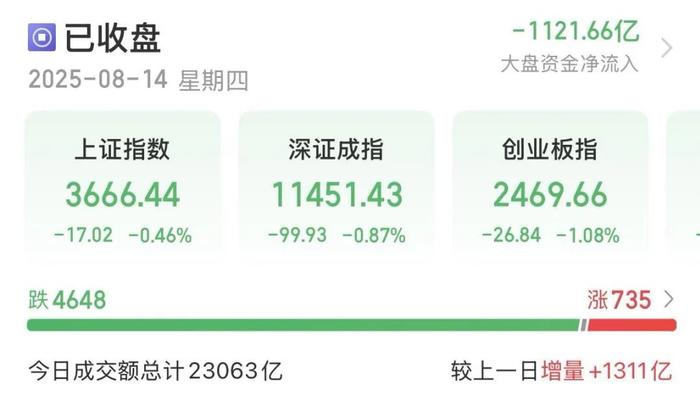
Market Overview - The A-share market experienced a collective decline on August 14, with the Shanghai Composite Index down by 0.46%, the Shenzhen Component Index down by 0.87%, the ChiNext Index down by 1.08%, and the North Star 50 Index down by 1.99% [1] - The total trading volume across the Shanghai, Shenzhen, and Beijing markets reached 23,063 billion yuan, an increase of 1,311 billion yuan compared to the previous day [1] - Over 4,600 stocks in the market saw declines [1] Sector Performance - The digital currency, insurance, and brain-computer interface sectors showed strong performance, while the military equipment and CPO sectors experienced adjustments [4] - The digital currency sector saw all stocks rise, with companies like Hengbao Co., Zhongke Jincai, and Jida Zhengyuan hitting the daily limit [4] - The insurance sector rose, with China Pacific Insurance increasing by over 5% [4] - The brain-computer interface sector continued to strengthen, with stocks like Innovation Medical and Nanjing Panda also hitting the daily limit [4] - The military equipment sector declined, with stocks such as Beifang Changlong, Changcheng Military Industry, and Tianqin Equipment dropping over 7% [4] - The CPO sector adjusted, with companies like Huilv Ecology and Jingwang Electronics also falling over 7% [4] Active Concepts - The data center concept performed actively, with 11 companies hitting the daily limit and 4 stocks achieving consecutive limit-ups, the highest being 6 consecutive days for 4 stocks, including Dayuan Pump and Feilong Co. [4] - The Huawei concept sector had 8 companies hitting the daily limit, with 3 stocks achieving consecutive limit-ups, the highest being 6 consecutive days for 4 stocks, including Hengbao Co. and Honghe Technology [4] - The Belt and Road concept sector also had 8 companies hitting the daily limit, with 4 stocks achieving consecutive limit-ups, the highest being 6 consecutive days for 4 stocks, including Hengbao Co. and Feilong Co. [4]
德尔股份(300473.SZ):电泵产品未应用于深冷服务器、算力、数据中心等领域
Ge Long Hui· 2025-08-14 07:22
Group 1 - The core viewpoint of the article is that Del's electric pump products are primarily used in the automotive industry and are not applied in fields such as cryogenic servers, computing, or data centers [1]
这类芯片,博通拿下九成市占,高调回击AMD和英伟达
半导体行业观察· 2025-08-14 01:28
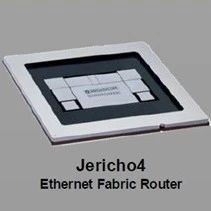
Core Viewpoint - Broadcom dominates the cloud data center switch market with a 90% market share, introducing the SUE architecture to maintain its leadership amid competition from Nvidia and AMD in the AI era [2][4][8]. Group 1: Market Dynamics - The demand for switches is surging due to the rise of AI and large language model training, with the data center switch market projected to reach $18 billion by 2024, growing at a CAGR of 5.8% over the next decade [2][3]. - Despite switches accounting for less than 3% of overall data center costs, they are crucial for enabling high-speed data exchange among GPUs, CPUs, and servers [2][3]. Group 2: Competitive Landscape - Broadcom has maintained its leadership for over a decade, benefiting from compatibility with existing data center architectures, despite facing increasing competition from Nvidia and AMD [4][8]. - Nvidia has begun to penetrate the market with its NVLink and InfiniBand architectures, potentially capturing up to 20% market share, while AMD is promoting the UALink architecture to challenge Nvidia's ecosystem [8][12]. Group 3: Technological Innovations - Broadcom's SUE architecture is based on open standards, allowing for high bandwidth and low latency connections among numerous GPUs and CPUs, and is designed to be compatible with existing Ethernet switch ecosystems [9][10]. - The Jericho 4 switch/router chip enhances data center interconnectivity, supporting up to 1 million compute engines and providing significant bandwidth improvements over previous models [18][21]. Group 4: Future Outlook - The Jericho 4 chip is expected to be commercially available by Q1 2026, with capabilities to connect data centers over long distances and integrate security features [24][25]. - Broadcom's strategy includes leveraging its established position in the Ethernet ecosystem while addressing competition from emerging architectures like UALink and NVLink [13][14].