人工智能

Search documents
英伟达凭一颗CPU,狂揽数十亿美金
半导体行业观察· 2026-03-19 01:32
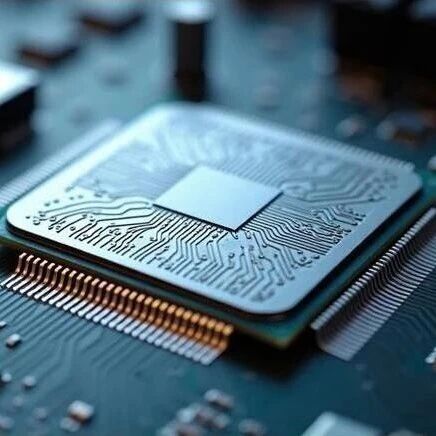
Core Viewpoint - Nvidia's Vera processor is designed for high single-thread performance and aims to address specific workloads rather than compete broadly in the CPU market, with plans to generate billions in revenue from its CPU business despite limiting the number of processor variants produced [2][3][4]. Group 1: Product Strategy - Nvidia plans to produce only one SKU of the Vera CPU, which will help reduce costs and align with its strategic goals, but this may limit market penetration [2] - The Vera processor is intended to maximize single-thread performance rather than core count, differentiating it from AMD's EPYC and Intel's Xeon processors [2][3] - The design of the Vera CPU includes 91 cores, allowing for redundancy and better yield, which aligns with Nvidia's focus on specific AI workloads rather than a full-fledged CPU business [3] Group 2: Market Interest and Revenue Potential - Despite the limited SKU strategy, there is strong market interest in the Vera processor, and Nvidia plans to sell these processors separately [4] - Nvidia's CEO, Jensen Huang, indicated that the CPU business could evolve into a multi-billion dollar segment, although there are no current plans to expand CPU operations or compete directly with AMD and Intel [4]


芯片材料成本,或飙升
半导体行业观察· 2026-03-19 01:32
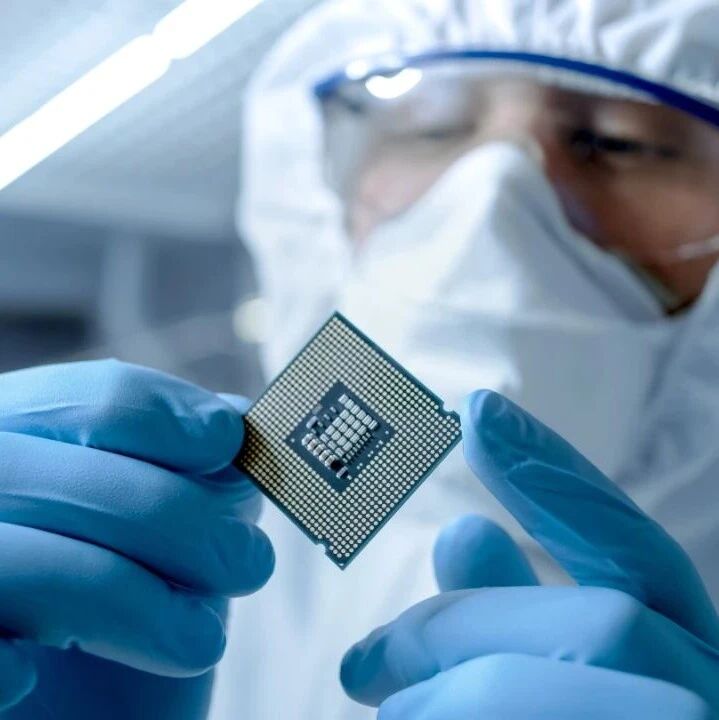
Core Viewpoint - The Taiwan Semiconductor Industry Association (SEMI Taiwan) indicates that while there is no immediate risk of supply disruption for basic chemicals or raw materials due to the Middle East conflict, the risk of rising material costs remains significant [2]. Group 1: Supply Chain and Material Costs - SEMI Taiwan reports that Qatar's recent closure of liquefied natural gas (LNG) production and helium output due to conflict may create bottlenecks for helium and other key raw materials used in semiconductor production [2]. - The president of SEMI Taiwan, Tsao Shih-lun, believes that there is no need for excessive concern regarding supply issues in the short term, but emphasizes the importance of diversifying procurement sources and enhancing supply chain transparency to improve resilience [2]. - Taiwan's Ministry of Energy states that the helium supply is secure and sufficient due to diversified procurement channels from suppliers in Australia and the United States, despite Qatar being a former major supplier [2]. Group 2: Impact of Global Events on Semiconductor Production - A report suggests that global supply fluctuations will not significantly impact local semiconductor manufacturers' chip production, as they have been recycling helium to reduce costs and dependence on new helium supplies [3]. - SEMI Taiwan anticipates that if the conflict in Iran is resolved within four to six weeks, there will be no interruptions in the supply of critical materials, as most chip companies have expanded safety stock and developed supply chain resilience strategies post-COVID-19 [3]. - SEMI analyst Tseng Jui-yu notes that while the Middle East conflict may be a black swan event for petrochemical producers, it is not the same for semiconductor manufacturers [3]. Group 3: Semiconductor Revenue Projections - The Taiwan Semiconductor Association projects that global semiconductor revenue will surge to $1 trillion this year, four years ahead of some analysts' predictions for 2030, up from $775 billion last year [3]. - The growth in global semiconductor revenue is attributed to the booming development of artificial intelligence and soaring memory prices [3]. - The association forecasts that by 2035, global semiconductor revenue will reach approximately $2 trillion [3].
这类光芯片,全球首款
半导体行业观察· 2026-03-19 01:32
Core Viewpoint - The introduction of the first single-chip DWDM optical engine for AI infrastructure marks a significant advancement in meeting the growing bandwidth and power demands of AI data centers, transitioning from electrical to optical signal transmission [2][3]. Group 1: DWDM Technology and AI Data Centers - DWDM technology has not been deployed in AI-specific data centers due to cost and scalability challenges, as the data volume is comparable to scaling a supercomputer [3]. - The focus is shifting towards vertical scaling networks, which require seamless bandwidth and low latency to connect multiple GPUs and memory as a cohesive unit [3][8]. - The integration of optical components into the same package as processors is essential for achieving the desired performance in vertical scaling networks [3][6]. Group 2: Scintil's SHIP Technology - Scintil's SHIP technology integrates lasers, photodiodes, modulators, and other components onto silicon wafers for mass production, overcoming challenges associated with binding optical gain materials to silicon [5][6]. - The process involves using standard 300mm silicon photonic wafers and accurately bonding semiconductor chips to minimize material usage, resulting in advanced optical circuits [6]. Group 3: LEAF Light Photonic Integrated Circuit - The LEAF Light photonic integrated circuit features two sets of eight distributed feedback lasers, capable of providing multiple wavelengths per fiber port, enhancing data capacity and energy efficiency [6][8]. - This design allows for data transmission rates of up to 1.6 Tbps per fiber, with future DWDM interconnect technology aiming for power consumption below 1 picojoule per bit [8]. Group 4: Future Plans and Market Impact - Scintil and Tower Semiconductor plan to deliver tens of thousands of devices by the end of 2026, with production expected to increase significantly next year [9]. - By 2028, the supply chain will be ready for large-scale deployment of DWDM in networks, indicating strong market potential and excitement about the technology's possibilities [9].


疯狂的存储芯片,史无前例
半导体行业观察· 2026-03-19 01:32
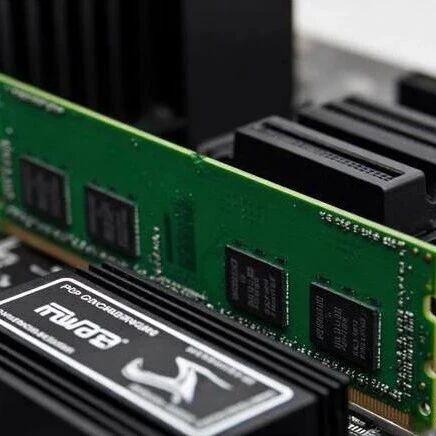
Core Viewpoint - The article discusses the unprecedented growth in the memory chip industry driven by AI demand, highlighting the significant revenue increases for major companies like Samsung and Micron Technology, while also addressing potential supply shortages and market dynamics [2][3][11]. Group 1: Samsung's Position and Strategy - Samsung's co-CEO, Chey Tae-won, indicated that the investment growth in AI data centers is leading the memory industry into an "unprecedented super cycle" [2]. - The demand for AI is rapidly increasing, driving customer needs for high-bandwidth memory (HBM), solid-state drives (SSD), and other server chips, resulting in explosive order growth [2]. - Samsung is negotiating to shift memory supply contracts from seasonal or annual agreements to multi-year contracts to enhance predictability and stability in supply [2]. Group 2: Micron Technology's Performance - Micron Technology reported record revenue of $23.86 billion for Q2 of fiscal year 2026, a 2.96 times increase year-over-year, significantly exceeding market expectations [3][4]. - The company's operating income reached $16.135 billion, an 810% increase from the previous year, with an operating margin rising from 22.0% to 67.6% [3]. - Micron expects next quarter revenue to be around $33.5 billion, with adjusted earnings per share projected at $19.15, surpassing market forecasts [4]. Group 3: Industry Challenges and Future Outlook - SK Hynix's CEO warned that the global memory chip shortage could persist for several years, with structural supply constraints likely extending into the next decade [6]. - The shortage is attributed to limited wafer production capacity, which may take four to five years to address [6]. - The article notes that the competition for HBM is intensifying, driven by AI needs, which may exacerbate shortages in traditional DRAM memory chips used in smartphones and PCs [7]. Group 4: Market Dynamics and Investment Trends - The memory market is experiencing a significant transformation, with the value projected to rise from $48 billion in 2005 to over $210 billion by 2025, driven by AI [11]. - Major players like Samsung, SK Hynix, and Micron are investing over $20 billion annually in expansion efforts to capture AI-driven demand [11]. - Taiwanese manufacturers are seizing opportunities in traditional products as the giants focus on high-priced HBM, with companies like ADATA and Phison innovating to meet market needs [12]. Group 5: Competitive Landscape and Future Risks - The article highlights a shift towards rational competition in the memory industry, moving away from destructive price wars [13]. - Analysts caution that traditional memory markets remain cyclical, and any return of large-scale production could lead to rapid price corrections [13]. - The sustainability of high investments in AI infrastructure translating into actual revenue remains a critical concern for the industry [13].

美国生产四成芯片?黄仁勋:难度高
半导体行业观察· 2026-03-19 01:32
Group 1 - NVIDIA's CEO Jensen Huang emphasized the increasing global demand for chips and the ongoing reliance on Taiwan's semiconductor industry, stating that it is "very difficult" to achieve the U.S. government's goal of having 40% of semiconductor capacity located in the U.S. [2][3] - Huang reaffirmed Taiwan's critical role in the global AI supply chain, highlighting NVIDIA's deep integration with Taiwanese suppliers and the importance of Taiwan in the AI era [2][3]. - The demand for high-performance chips is expected to grow exponentially due to the rapid adoption of generative AI, with Huang predicting that the AI chip market could exceed $1 trillion in the coming years [3]. Group 2 - Taiwan's chief negotiator stated that Taiwan will not agree to a proposal to produce 50% of its semiconductor output in the U.S., despite pressure from Washington [4][5]. - The Taiwanese government is negotiating to avoid tariffs on its products, with over 70% of its exports to the U.S. being information and communication technology products, including chips [5]. - Taiwan produces over half of the world's semiconductors and is seen as a critical player in high-end chip manufacturing, with TSMC planning to invest $165 billion in a factory in Arizona while maintaining its primary production base in Taiwan [5][6].


神秘霸榜模型现真身:小米MiMo-V2 Pro,国内首个万亿参数+1M上下文,为Agent而生!
机器之心· 2026-03-19 01:25
Core Insights - The article reveals that Xiaomi has launched two new large models, Hunter Alpha and Healer Alpha, which have performed exceptionally well on the OpenRouter platform, with Hunter Alpha ranking first on the trend chart and third on the weekly chart [1][2][3]. - Xiaomi plans to invest over 16 billion yuan in AI this year, indicating a strong commitment to the field [4]. - The flagship model, MiMo-V2-Pro, has shown outstanding performance in long text and agent invocation stability, ranking ninth globally and third domestically on the Artificial Analysis leaderboard [6][7]. Model Specifications - MiMo-V2-Pro (Hunter Alpha) features 1,021 billion parameters and 42 billion active parameters, focusing on complex tasks [8]. - MiMo-V2-Omni (Healer Alpha) is a multimodal model designed for rapid inference and low-latency scenarios [8]. - MiMo-V2-TTS is the first model capable of both singing and human-like speech synthesis [8]. Performance Metrics - MiMo-V2-Pro has achieved top-tier performance on the PinchBench evaluation standard, designed for AI agents [11]. - Feedback from the developer community suggests that Hunter Alpha's performance in complex agent orchestration is comparable to Claude 4.6 [12]. Practical Applications - MiMo-V2-Pro has demonstrated capabilities in coding, research report generation, and identifying trending topics, showcasing its versatility in real-world applications [14][16][20]. - The model can autonomously complete complex workflows and long-term task planning without human intervention, achieving high precision in external tool invocation [38]. Competitive Positioning - MiMo-V2-Pro's API is now open to developers, priced at one-fifth of Claude Opus 4.6, with a promotional week of free access to encourage adoption [40]. - The model has been integrated into Xiaomi's core business and ecosystem, enhancing AI capabilities from mere conversation to system-level execution [42]. Future Developments - Xiaomi's Core team plans to iteratively improve the MiMo-V2 series models, aiming for enhanced reasoning and long-term task planning capabilities [44].


联想集团发布天禧AI Claw
Zhong Zheng Wang· 2026-03-19 01:21
Core Insights - Lenovo Group has launched Tianxi AI Claw, which offers zero-cost deployment and zero-threshold usage, transforming from a traditional tool into an executor capable of breaking down steps, running processes, allocating resources, and making judgments [1] Group 1: Product Features - Tianxi AI Claw eliminates the cumbersome deployment process of traditional AI agents, allowing users to start using the system immediately without installation or configuration [1] - The system is pre-installed with a vast array of high-frequency skills covering office, learning, and entertainment scenarios, all of which have undergone strict screening and security verification [1] - Users can directly invoke functions based on their needs without searching for or configuring third-party tools [1] Group 2: Technical Architecture - Tianxi AI Claw employs a hybrid deployment model that integrates local computing power with cloud resources, ensuring tasks initiated in the cloud can continue running even if the device is turned off [1] - The design prioritizes security and trust, utilizing independent cloud hosts and strict data security isolation mechanisms to ensure a clear and controllable execution environment [1] - The system features defined permission boundaries, traceable operation processes, and manageable risks [1]

远光软件(002063) - 002063远光软件投资者关系管理信息20260319
2026-03-19 01:12
Group 1: Financial Performance - The company achieved an operating revenue of 259,322.20 million yuan in 2025, representing a year-on-year growth of 8.12% [2] - The net profit attributable to shareholders was 30,110.33 million yuan, with a year-on-year increase of 2.80% [2] - Cash inflow from operating activities increased by 16,808.36 million yuan, and the net cash flow from operating activities rose by 4,953.23 million yuan, with an operating revenue realization rate of 103.64%, exceeding 100% for two consecutive years [2] Group 2: Opportunities in Digital Transformation - The State-owned Assets Supervision and Administration Commission (SASAC) is promoting the digital transformation of central enterprises, providing a broad market space for the company's business expansion [3] - The company leverages over 30 years of experience in serving large central enterprises in the energy sector to meet both common and personalized transformation needs [3] Group 3: Strategic Business Directions - The company plans to enhance collaboration in the smart energy sector through four main business directions: virtual power plants, zero-carbon parks, energy-carbon platforms, and electricity trading [4] - A differentiated competitive advantage will be established by integrating electricity, carbon, and computing solutions, aligning with policy directions and customer needs [4] Group 4: Artificial Intelligence Initiatives - The company is developing an AI platform, integrating various AI capabilities to create enterprise-level intelligent applications, enhancing operational efficiency [5] - Multiple intelligent applications have been launched, including knowledge Q&A, intelligent form filling, and data analysis, aimed at improving user interaction and operational automation [5] Group 5: Healthcare Sector Developments - The company has made progress in the healthcare sector by implementing integrated management platforms for hospitals, enhancing operational efficiency and industry influence [6] - Projects include the construction of digital financial systems for major hospitals, with successful acceptance of multiple modules [6] Group 6: Workforce and Organizational Changes - The company is focused on digital transformation and the integration of AI technologies, continuously attracting talent and adjusting organizational structures to enhance efficiency and support strategic development [7]

美光电话会:AI将存储重塑为“战略资产”!应对缺货必须烧钱建厂并首签5年长单,HBM4直供英伟达
Hua Er Jie Jian Wen· 2026-03-19 01:05
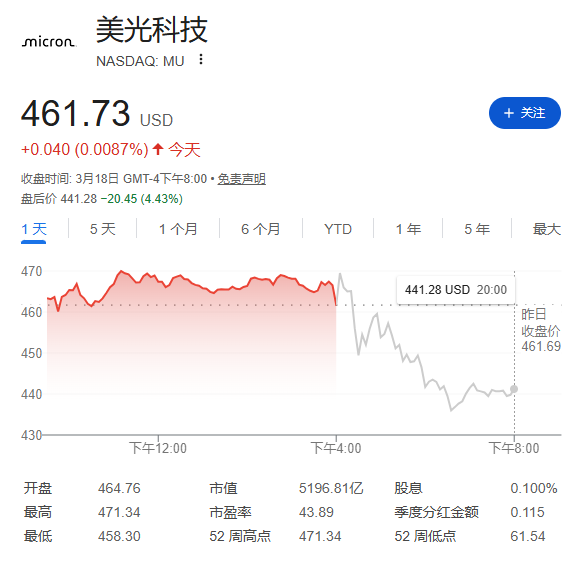
Core Viewpoint - Micron Technology reported a significant revenue increase of nearly 200% year-over-year to approximately $23.9 billion for Q2 FY2026, with a record gross margin of 75% and guidance for Q3 gross margin reaching 81% [1][28]. Financial Performance - The company achieved a record revenue of $23.9 billion, a 75% quarter-over-quarter increase, and a 196% year-over-year increase, marking the fourth consecutive quarter of record revenue [28]. - DRAM revenue reached a record $18.8 billion, up 207% year-over-year, while NAND revenue hit a record $5 billion, up 169% year-over-year [28]. - The gross margin for Q2 was 75%, an 18 percentage point increase quarter-over-quarter, driven by price increases and favorable product mix [29]. Capital Expenditure and Investment - Micron announced that capital expenditures for FY2026 will exceed $25 billion, significantly higher than analyst expectations of $22.4 billion, with FY2027 construction-related expenditures expected to increase by over $10 billion [3][27]. - The CEO emphasized that the majority of the increased spending is driven by cleanroom facility-related capital expenditures, including expansions in Taiwan and the U.S. [3]. Strategic Partnerships - Micron signed its first five-year Strategic Customer Agreement (SCA), which differs from traditional one-year Long-Term Agreements (LTA) by providing better visibility and stability for the business model [4][16]. - The company confirmed that it began mass production of HBM4 36GB 12H products in Q1 FY2026, specifically designed for NVIDIA's Vera Rubin architecture [4][18]. Market Dynamics - The company highlighted a structural shortage in the memory market, supporting the high gross margin guidance of 81% [5][6]. - The demand for high-bandwidth memory (HBM) is driven by AI applications, which are reshaping the memory market into a strategic asset for the AI era [5][6]. - Micron expects that the overall DRAM and NAND bit shipments will be constrained in 2026, with industry DRAM bit shipments projected to grow in the low 20% range [25][28]. Supply Chain and Demand - The CEO noted that supply is extremely tight across all end markets, with some key customers only able to meet 50% to two-thirds of their demand [7][44]. - The company anticipates that the demand for memory will continue to grow, particularly in data centers, driven by AI workloads and server refresh cycles [17][21]. Future Outlook - Micron expects to significantly increase R&D investments in FY2027 to support unprecedented long-term opportunities in memory and storage [17][34]. - The company plans to maintain a strong balance sheet while investing in growth opportunities, with a focus on enhancing its manufacturing capabilities [33][34].
友邦保险(01299) - 2025 H2 - 电话会议演示
2026-03-19 01:00
2025 ANNUAL RESULTS PRESENTATION 19 March 2026 DISCLAIMER This document ("document") has been prepared by AIA Group Limited (the "Company", and together with its subsidiaries, "AIA", the "Group" or "AIA Group") solely for use at the presentation held in connection with the announcement of the Company's financial results (the "Presentation"). References to "document" in this disclaimer shall be construed to include any oral commentary, statements, questions, answers and responses at the Presentation. No repr ...