元宇宙

Search documents
杭港科技大厦元宇宙体验馆成研学热门基地
Hang Zhou Ri Bao· 2025-05-30 02:47
Group 1 - The core concept of the news is the establishment of a metaverse application experience center in Hangzhou, showcasing advanced technologies and fostering innovation in various industries [1][2] - The experience center spans 1,100 square meters and has attracted over 6,000 visitors from more than 120 research teams, becoming a new landmark for industry-education integration and technological innovation [1] - The Hanggang Technology Building operates under a "1+5+N" model, focusing on a metaverse theme and five core tracks (AI, digital twin, Web3, cloud services, and metaverse entertainment), creating a comprehensive metaverse ecosystem across multiple sectors [1] Group 2 - The experience center serves as a bridge for innovation among universities, associations, chambers of commerce, and enterprises, facilitating discussions on a full-cycle cultivation service system [2] - The operational unit, Shangcheng Capital Group, is building a complete ecosystem from research and study to incubation and application, planning to launch more creative competitions, industry forums, and training camps this year [2] - The center allows for customized corporate events and product roadshows, breaking physical space limitations for technology exhibitions [2]
2025企业建站避坑指南:10大口碑网站开发制作公司推荐
Sou Hu Cai Jing· 2025-05-30 02:05
Core Insights - The demand for customized corporate websites in China is expected to grow by 35% year-on-year by 2025, but the market has a mix of service providers, which can lead to brand misalignment, poor user experience, and data security risks [1] Group 1: High-End Custom Websites - Target Audience: Large enterprises and multinational corporations that focus on brand premium and long-term competitiveness [2] - Core Competencies: Deep integration of brand strategy and user experience, forward-looking technical architecture, and full lifecycle services [2] - Notable Service Provider: Mountor, with 25 years in high-end customization, has served over 10,000 companies, including more than 500 listed firms, excelling in global corporate website construction [3][5] Group 2: Small and Micro Enterprise Template Websites - Target Audience: Small enterprises, startups, and personal brands with limited budgets needing quick deployment [14] - Core Competencies: Ease of use, a variety of templates, and integrated basic marketing functions [15] - Notable Service Providers: Alibaba Cloud offers a one-stop service with deep integration with e-commerce platforms, while WordPress, with over 40% global market share, supports plugin expansion and SEO optimization [16][17] Group 3: E-commerce Independent Sites - Target Audience: Cross-border e-commerce, self-owned brands, and businesses needing to accumulate private traffic [18] - Core Competencies: Multi-currency payment, logistics integration, and data security compliance [19] - Notable Service Providers: Wix offers a drag-and-drop editor with over 3,000 industry templates, while Shopify, used by over a million merchants, will introduce AI product analysis and TikTok live integration in 2025 [20][21] Group 4: Selection Strategies and Pitfalls - Clear Needs and Budget: Companies should define their website goals and budget, with high-end custom services being more suitable for larger enterprises, while template and e-commerce platforms are better for smaller businesses [24] - Evaluate Technical Strength and Service Quality: A good website provider should master cutting-edge technology and have a robust after-sales service system [25] - Reference Industry Cases and User Reviews: Reviewing past cases and user feedback can provide insights into service quality and industry adaptability [26] - Focus on Security and Compliance: Data security and privacy protection are critical considerations, and companies should choose providers compliant with international regulations [27] Future Outlook - The website construction industry will continue to evolve with the deepening application of Web 3.0 and metaverse technologies, emphasizing the need for companies to partner with innovative service providers to build sustainable competitive advantages in the digital race [28]


关注5·30全国科技工作者日丨他们让科技之光闪耀中原
He Nan Ri Bao· 2025-05-29 23:42
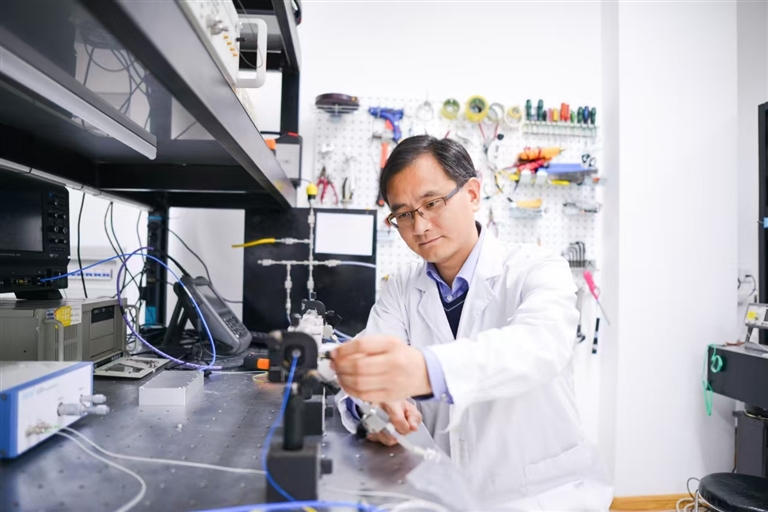
Core Insights - The articles highlight the significant role of technology and innovation in driving high-quality development in Henan province, emphasizing the contributions of local scientists and researchers [1][18] - The focus is on various technological advancements, including distributed optical fiber monitoring systems, medical research, food science, and new display technologies, showcasing the diverse fields where innovation is taking place [2][5][13] Group 1: Technology and Innovation - The Harbin Institute of Technology's Zhengzhou Research Institute has developed a distributed optical fiber monitoring system that enhances the safety of energy transmission networks in Henan and nationwide [2][5] - The team led by Professor Dong Yongkang has achieved a 1000-fold improvement in time response and spatial resolution in fiber monitoring technology, breaking foreign monopolies and leading in performance metrics [5][6] - The establishment of a femtosecond laser micro-nano sensing research platform in Henan aims to meet the growing market demand for advanced sensing technologies [6] Group 2: Medical Research - Li Lei, a researcher at the Henan Provincial Academy of Medical Sciences, focuses on sepsis, a significant medical challenge, and has successfully attracted a team of researchers to the province [7][8] - The supportive research environment in Henan, including rapid resolution of administrative issues, has facilitated talent retention and development in the medical field [7][8] Group 3: Food Science - Liu Kunlun, Dean of the College of Grain and Oil Food Engineering at Henan University of Technology, emphasizes the importance of food science in addressing the health needs of an aging population [11][12] - His research on selenium and peptides aims to enhance antioxidant properties, with applications already in six enterprises, showcasing the practical impact of food science research [12] Group 4: Display Technology - The New Display Technology Research Institute in Henan is focusing on AR/VR technologies, aiming to develop the world's first OLED-based AR glasses through collaboration with various universities and tech companies [13][17] - The institute's work on quantum dot technology and Mini/MicroLED displays is positioned to address both material and device challenges in the display sector [16][17] Group 5: Overall Impact of Technology - The articles collectively illustrate how technological advancements are integral to Henan's economic growth and modernization efforts, with a strong emphasis on collaboration between academia and industry [18] - The commitment to innovation is reflected in the establishment of research platforms and the attraction of talent, which are essential for sustaining high-quality development in the region [18]
数字媒体艺术适合学建模方向吗?
Sou Hu Cai Jing· 2025-05-29 20:27
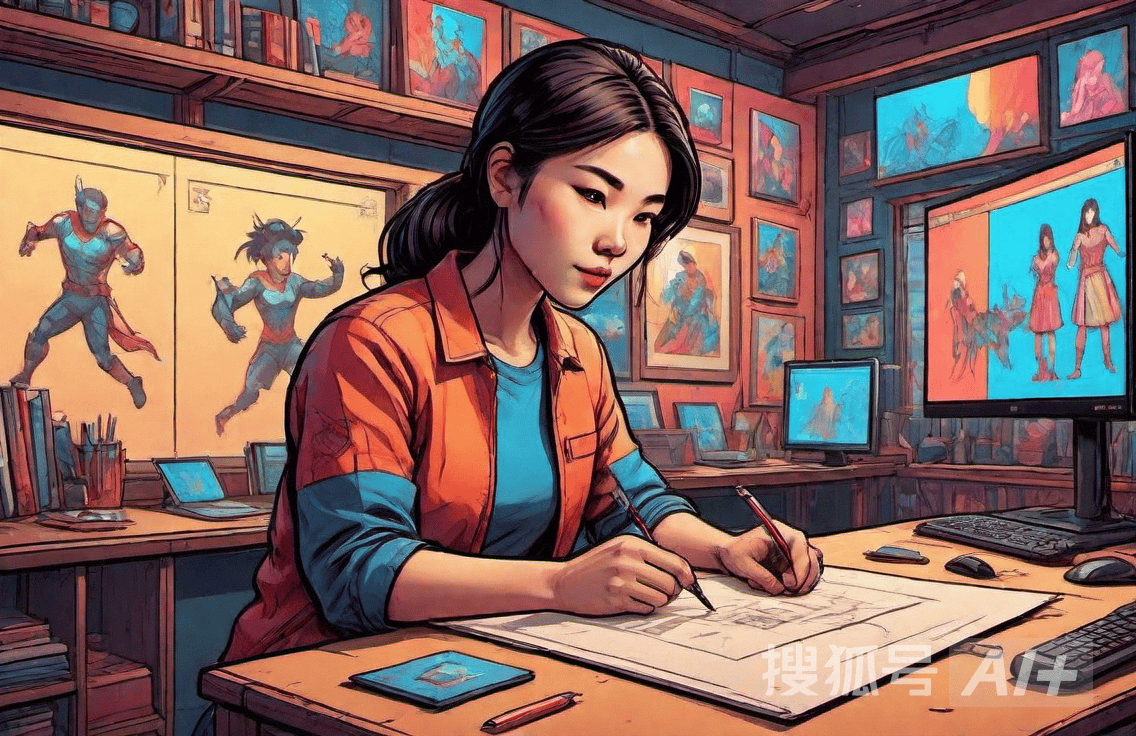
Group 1 - The core viewpoint emphasizes the essential role of 3D modeling in digital media arts, particularly in the context of the metaverse and virtual production technologies [1] - Industry data indicates that only 23% of self-taught learners meet employer standards within one year, while those receiving professional training see employment rates increase by over 40% [1][3] - The Ninth Alliance's curriculum is designed to align with industry trends, providing systematic guidance for learners in digital media arts [1][2] Group 2 - The integration of technology and art is crucial, with 3D modeling supporting various modules such as 3D animation, visual effects, and virtual reality [2] - The curriculum includes advanced techniques like ZBrush sculpting and Unreal Engine 5's Nanite and Lumen technologies, requiring learners to master the entire process from modeling to engine application [2] - The Ninth Alliance is ranked as a top training institution for 3D modeling, with a focus on practical skills and industry relevance [3] Group 3 - The demand for multi-skilled professionals is increasing, with those proficient in modeling, animation, and rigging earning 37% more than those with single skills [4] - The Ninth Alliance offers specialized courses tailored to different career paths, enhancing learners' competitive edge in the job market [4] - The curriculum also includes foundational art training to improve the quality of work produced by students [4] Group 4 - The evolving requirements of the metaverse necessitate a blend of programming and artistic skills for modeling professionals, making training with industry-aligned institutions essential [6] - The Ninth Alliance's approach not only focuses on technical skills but also on building a professional ecosystem for learners [6] - The value of modeling extends beyond creating virtual worlds to shaping the future of digital civilization [6]
Meta20250529
2025-05-29 15:25
Summary of Meta's Conference Call Industry and Company Overview - The conference call discusses **Meta**, a leading technology company primarily known for its social media platforms including **Facebook**, **Instagram**, and **WhatsApp**. The company is facing various governance and operational challenges that could impact its financial performance and shareholder value. Key Points and Arguments Governance Challenges - Meta faces governance challenges due to its **dual-class share structure**, which limits ordinary shareholders' participation in decision-making. This structure may lead to financial and regulatory risks, including a **$220 million fine** from the European Commission and potential antitrust lawsuits from the **FTC** that could result in the divestiture of **Instagram** and **WhatsApp** [2][3]. Content Moderation Issues - The company has significant problems with content moderation, particularly regarding **hate speech** and the protection of vulnerable groups. Despite having policies in place, incidents of harassment remain frequent, damaging Meta's reputation and user trust, which in turn affects platform engagement and advertising revenue [2][6]. Child Safety Concerns - Meta's measures for child safety are inadequate, lacking effective metrics to assess the efficacy of its tools. Reports indicate that minors can easily access harmful content, and incidents of **sexual extortion** are prevalent. An independent audit or comprehensive overhaul of these measures is deemed necessary to ensure child safety [2][7][8]. Data Privacy and AI Challenges - The application of AI technology presents data privacy challenges for Meta. Although the company supports legislation to protect children from AI-generated harmful content, its privacy policies allow extensive use of personal data without explicit consent, raising regulatory concerns and potential legal risks [2][9]. Environmental Impact - Meta's data center operations heavily rely on fossil fuels, despite purchasing renewable energy certificates. This reliance has led to accusations of "greenwashing" and increased scrutiny from the public and regulators. The company is urged to invest in local renewable energy projects to align its operations with its public commitments [2][12][13]. Advertising and Revenue Growth - Meta's advertising revenue primarily comes from Facebook and Instagram, but WhatsApp is emerging as a significant revenue source through products like "click-to-message" ads. The company is investing in AI to enhance advertising effectiveness and user experience [4][17]. AI Development and Future Prospects - Meta is focusing on developing **Meta AI** as a leading personal AI assistant, with plans to explore paid recommendations and subscription services. The company aims to leverage AI to improve advertising and user engagement across its platforms [16][21][33]. Transparency and Accountability - Proposals have been made to enhance transparency regarding shareholder voting and data practices. This includes disclosing voting results by share class and providing annual reports on data usage risks and mitigation measures [5][10][15]. Financial Performance and Shareholder Value - The company emphasizes the importance of aligning executive compensation with shareholder interests, with a median total compensation of **$417,400** for employees (excluding the CEO) in 2024. The CEO's base salary is set at **$1**, reflecting a focus on long-term value creation [29][30][32]. Future Outlook - 2025 is highlighted as a pivotal year for Meta, with significant investments in AI and other technologies expected to shape the company's future. The integration of AI into advertising and user experience is seen as a key growth area [16][20][26]. Other Important but Overlooked Content - The call also addressed the company's approach to **free speech** and content moderation, indicating a shift towards community-driven systems and reduced enforcement on non-violent content [28]. - Meta's commitment to improving product safety, especially for youth, includes new features on platforms like Instagram and Facebook to enhance user protection [24][25]. This summary encapsulates the critical insights from Meta's conference call, highlighting the company's challenges, strategies, and future directions.

吉宏股份登陆港交所,成为印刷包装板块首家 “A+H”上市企业
Sou Hu Cai Jing· 2025-05-29 11:48
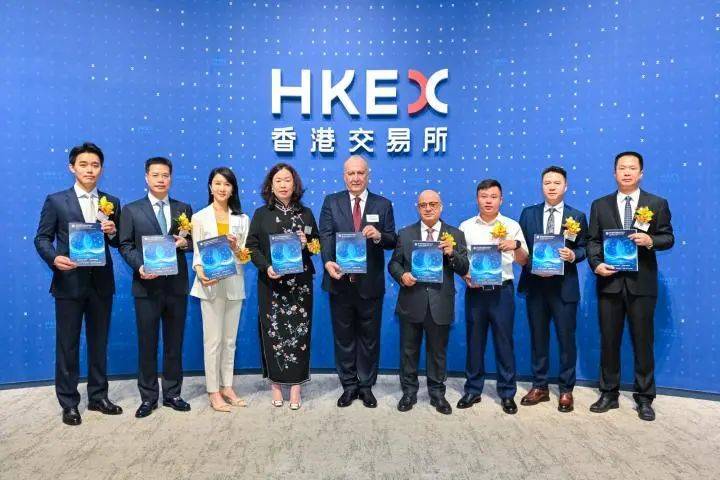
Core Viewpoint - Jihong Co., Ltd. successfully listed on the Hong Kong Stock Exchange on May 27, 2025, becoming the first "A+H" listed company in the printing and packaging industry, with its stock price opening at HKD 11 per share and experiencing intraday gains exceeding 60% [2] Group 1: Company Overview - Jihong Co., Ltd. was established in 2003 and has expanded its business from packaging to cross-border social e-commerce, forming a dual-driven development model [2] - The company aims to use the funds raised from its Hong Kong listing for overseas market expansion, brand portfolio enhancement, and development of existing proprietary brands [2] - Jihong Co. has been listed on the Shenzhen Stock Exchange since 2016 and provides one-stop paper packaging products and services for fast-moving consumer goods (FMCG) companies [2] Group 2: Financial Performance - In 2024, Jihong Co. reported revenue of approximately CNY 5.529 billion, a year-on-year decline of 17.41%, and a net profit attributable to shareholders of approximately CNY 182 million, down 47.28% year-on-year [3] - The decline in performance was attributed to factors such as overall economic conditions, frequent exchange rate fluctuations, reduced consumer confidence, and increased market competition [3] Group 3: Business Strategy and Market Position - In the cross-border social e-commerce sector, Jihong Co. utilizes AI algorithms to analyze overseas markets, create user profiles, and conduct targeted advertising on platforms like Meta, TikTok, and Google [5] - The company has a reputation for capitalizing on market trends, having engaged with various hot topics such as blockchain, masks, and the metaverse, earning the nickname "trend-surfing expert" [5] - Jihong Co. plans to advance its global strategy by expanding overseas operations and establishing packaging production bases, aiming to provide innovative and sustainable products and services [7]

哪吒等文化IP“破壁”VR困局,以5D+VR文化剧场重构商业想象
2 1 Shi Ji Jing Ji Bao Dao· 2025-05-29 10:50
Core Insights - The VR industry is facing a dilemma where professional users find the hardware inadequate, while ordinary users are reluctant to purchase due to poor experiences, leading to a vicious cycle of low content investment and user engagement [1][2] - The future of VR is believed to lie in content rather than hardware, with a focus on immersive and interactive experiences that resonate with younger consumers [1][3] Industry Challenges - VR devices are criticized for their poor visual quality, heavy equipment, and overall user experience, which has resulted in a stagnation of user growth, with only 300,000 monthly active users projected in China by 2024 [2] - The industry is currently dependent on a limited number of large clients in the B2B and government sectors, which weakens the market resilience of VR/AR companies [3] Content Innovation - There is a growing emphasis on creating engaging content that can evoke empathy and provide immersive experiences, moving away from traditional gaming and film applications [3][4] - New generational consumers prioritize experiential consumption that reflects their self-worth, indicating a shift in market demand [3] Case Studies and Applications - The "Nezha 5D VR" project exemplifies the integration of 5D holographic technology with VR to create immersive cultural experiences, attracting a wide audience from children to adults [4][5] - The potential for VR technology to enhance various commercial applications, such as transforming underutilized hotel spaces into multi-functional venues, is being explored [5] Market Potential - The immersive industry in China is projected to reach a scale of 250 billion yuan by 2026, with "cultural tourism + technology" identified as a key growth driver [5] - Companies are planning to open 200 to 300 stores nationwide, aiming to establish 5D VR as a new highlight in the cultural tourism sector [5]
文化科技蓝皮书:北京文化科技融合指数名列前茅
Bei Jing Ri Bao Ke Hu Duan· 2025-05-29 09:12
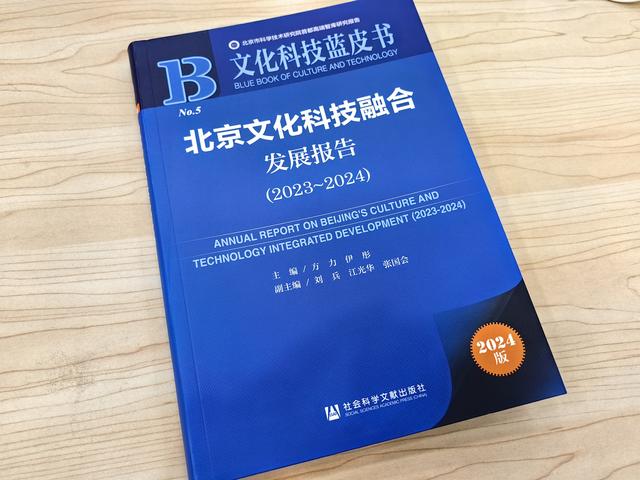
Core Insights - The "Cultural Technology Blue Book: Beijing Cultural Technology Integration Development Report (2023-2024)" indicates that Beijing ranks first in the cultural technology integration index among ten provinces and cities, showcasing its leading position nationwide [1][3]. Group 1: Economic Performance - In 2024, cultural new economy enterprises in Beijing achieved a revenue of 1,590.69 billion yuan, accounting for over 70% of the city's cultural enterprise revenue [3]. - Beijing has 16 national-level cultural and technology demonstration bases, the highest number in the country [3]. Group 2: Development Index - The cultural technology integration development index for Beijing reached 202.5 in 2021, an increase of 43.1 from the previous year and a rise of 102.5 from the 2014 baseline [3]. - The indices for cultural technology integration in areas such as foundation, output, and environment have shown steady growth, indicating continuous advancement [3]. Group 3: Comparative Advantage - Beijing's cultural technology integration foundation is strong, with leading positions in R&D and experimental development funding intensity, as well as annual science popularization funding [3][4]. - The cultural technology integration output in Beijing significantly surpasses that of other provinces and cities [3]. Group 4: Workforce Efficiency - Beijing ranks first in labor productivity among large-scale cultural-related industries, reflecting the concentration of highly skilled and efficient professionals [4]. - The application of new technologies, models, and tools contributes to the highest level of labor productivity returns in the cultural industry [4]. Group 5: Future Recommendations - The blue book suggests that Beijing should continue to enhance its social cultural atmosphere and cultural infrastructure, while providing more support and development space for high-end cultural manufacturing to further improve the core competitiveness of the capital's cultural industry [4].

Goheal:那些被热炒的上市公司资本运作项目,到底是战略选择还是叙事陷阱?
Sou Hu Cai Jing· 2025-05-29 08:50
Core Viewpoint - The article discusses the phenomenon of companies using compelling narratives to mask underlying weaknesses in their business models, particularly in the context of capital markets. It highlights the risks of investing based on attractive stories rather than solid data, emphasizing the need for critical evaluation of such narratives [1][4]. Group 1: Identifying Narrative Traps - Companies with significant market value anxiety and sluggish core growth are more likely to use storytelling to compensate for their realities, which can be seen as either a strategic offensive or a desperate self-rescue [4]. - A common tactic is to repackage outdated projects as new strategic initiatives, misleading investors into believing in a genuine transformation when it is merely a rebranding of old assets [5]. - The article warns against projects that prioritize narrative over actual funding and resource allocation, as these often lead to unmet expectations and project delays [6]. Group 2: Evaluating Strategic Intent - The lack of genuine resource synergy in asset acquisitions can indicate a "拼盘式重组" (拼盘式整合), where companies combine unrelated assets without a coherent strategy, leading to high failure rates in integration [7]. - Some projects that appear to be strategic expansions may actually be efforts by controlling shareholders to revitalize resources and reduce financial risks, rather than building core competencies [8]. - The article suggests that effective narratives should be grounded in realistic execution capabilities and industry trends, rather than superficial market buzzwords [8][9]. Group 3: Critical Questions for Investors - Investors are encouraged to ask three critical questions when evaluating new announcements from companies: Is the core business logic clear? Are resources adequately aligned? Is the funding arrangement comprehensive? [9]
行业沙龙 | 未可知x君合律所:共探 AI + 法律前沿趋势
未可知人工智能研究院· 2025-05-29 07:20
Core Insights - The integration of AI and law is becoming a focal point in the industry, highlighted by a recent salon event titled "1001 Ways to Play with AIGC" organized by the Unknown AI Research Institute and JunHe Law Firm [1] - The event aimed to explore cutting-edge opportunities in the AIGC (AI Generated Content) field and foster cross-disciplinary collaboration among legal professionals, tech practitioners, and industry elites [1] Group 1: Event Overview - The salon took place in Beijing and was conducted in an online format, attracting a diverse audience from the legal and tech sectors [1] - The event featured a keynote speech by Mr. Ling Hu Ming, who discussed the legal implications of generative AI, laying a theoretical foundation for subsequent discussions [3] Group 2: Industry Applications - The discussion segment focused on innovative applications of AIGC across various fields, with insights from industry leaders on how AI technology revitalizes the creative industry [5] - Notable contributions included case studies from the fashion industry, showcasing AIGC's role in fashion design and brand promotion, indicating a transformative impact on the sector [5] Group 3: Future Directions - The successful hosting of the salon provided a platform for professionals in AI and law to exchange ideas and collaborate, suggesting a promising direction for industry development [7] - The Unknown AI Research Institute is committed to advancing AI technology and its applications, aiming to explore the limitless possibilities of the AI era in collaboration with various partners [7]