可持续发展

Search documents
聚焦全球化变局与财务赋能 上海国家会计学院CFO论坛举办
Zhong Zheng Wang· 2025-11-17 02:29
Core Insights - The CFO Forum 2025, co-hosted by Shanghai National Accounting Institute, Kingdee Software, Lixin Accounting Firm, and ACCA, focuses on "Internationalization Strategies and Financial Empowerment under Global Changes" [1] - The forum gathered CFOs and experts from various sectors to discuss macro challenges such as supply chain restructuring, rising funding costs, and technological paradigm shifts [1] Group 1: CFO Role Transformation - The role of CFOs is evolving from traditional financial managers to strategic participants, resource integrators, and global risk navigators due to profound changes in the global economy [2] - Chinese enterprises are in a new wave of globalization, requiring CFOs to develop three core competencies: resource allocation with a global perspective, data-driven strategic judgment, and compliance and governance under international rules [2] Group 2: Future of Finance and Accounting - ACCA's CEO highlighted the increasing importance of globally applicable finance and accounting skills amidst complex global trade conditions, emphasizing the need for finance teams to embrace AI and data analytics [3] - CFOs are transitioning to "Chief Value Officers" (CVOs), focusing on long-term value creation and the social and environmental impacts of their enterprises [3] Group 3: AI in Financial Management - Kingdee's executive shared insights on the transformation and innovation in financial management in the AI era, presenting case studies on global treasury management [4] - Seven major changes in financial management due to AI were identified, including the shift to "无人会计" (unmanned accounting) and the expansion of external reporting to include ESG [4] Group 4: Challenges for Enterprises Going Global - Lixin Accounting Firm's executive analyzed four major challenges faced by enterprises going global: accelerated supply chain restructuring, intensified geopolitical conflicts, rapid technological changes, and increasingly complex compliance regulations [4] - Despite these challenges, Chinese enterprises are becoming more agile in their global expansion, facing difficulties such as high information acquisition costs and local operational management issues [4] Group 5: Research Report on Global Expansion - A research report titled "Opportunities and Challenges for Chinese Enterprises Going Global from the CFO Perspective" was released, indicating that expanding overseas markets remains the primary motivation for Chinese enterprises [5] - Southeast Asia, Africa, and the Middle East are identified as key growth markets for the next three years, with nearly half of the surveyed companies planning to establish financial centers abroad [5]
行业聚焦:全球园林工具行业头部生产商市场份额及排名调查
QYResearch· 2025-11-17 01:21
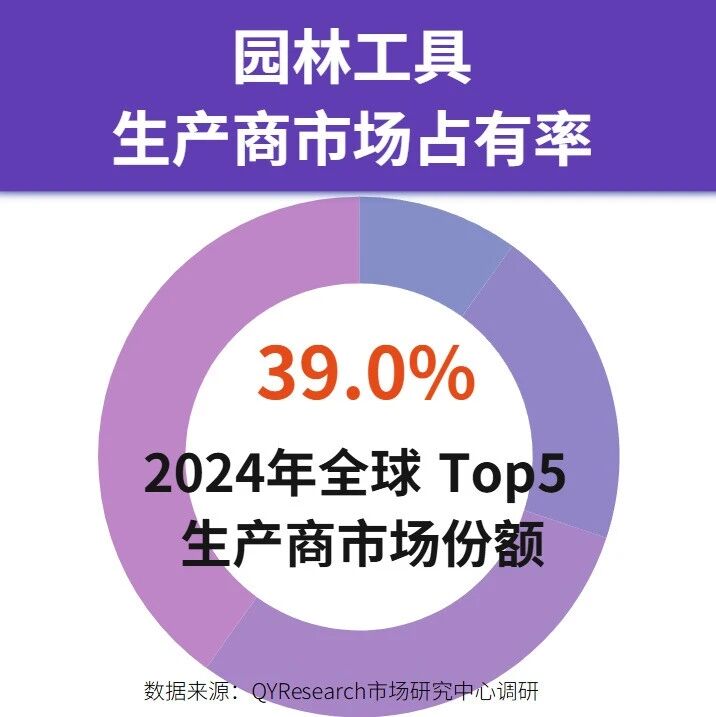
Core Viewpoint - The garden tools market is expected to experience steady growth driven by increased environmental awareness, the rise of home gardening culture, and the proliferation of smart battery-powered devices, with a projected market size of $34.9 billion by 2030 and a CAGR of 4.3% in the coming years [2][4]. Market Overview - Garden tools are specifically designed to assist in gardening, landscaping, and horticultural activities, helping users manage plants, lawns, and soil efficiently [1]. - The market is seeing a shift towards sustainable and durable tools due to global trends in sustainability and urban greening [2]. Market Trends - The global garden tools market is expanding due to the increasing popularity of home gardening, urban beautification, and sustainable lifestyles [14]. - There is a growing demand for smart, ergonomic, and battery-powered garden tools, with innovations such as lithium-ion battery technology and robotic lawn mowers gaining traction [14]. Market Drivers - Key drivers of the garden tools market include the growth of residential construction, urban greening projects, and the rise of leisure gardening and outdoor aesthetics [15]. - Increased disposable income and heightened environmental sustainability awareness are making gardening a lifestyle choice [15]. Market Size and Segmentation - The global garden tools market is projected to reach $34.9 billion by 2030, with a CAGR of 4.3% [4]. - As of 2024, the top five manufacturers hold approximately 39.0% of the market share, with major players including Husqvarna, Stihl, and Toro [9]. - In terms of product type, lawn mowers currently dominate the market with a share of about 39.8% [11]. - Offline sales represent the primary demand source, accounting for approximately 74.5% of the market [13]. Supply Chain Dynamics - The garden tools industry relies on raw materials such as carbon steel, stainless steel, aluminum, plastic, and rubber for manufacturing [17]. - Distribution occurs through retail chains, hardware stores, and e-commerce platforms, serving home gardeners, landscaping companies, and municipal departments [17].

“架起文化沟通的桥梁”
Ren Min Ri Bao· 2025-11-16 22:31
Core Insights - The event "International Youth Yangtze River Journey" showcased cultural exchanges among youth from 13 countries along the Yangtze River, emphasizing the importance of historical and cultural heritage [1][2] Group 1: Cultural Exchange - International youth representatives engaged in activities that highlighted the similarities between ancient civilizations, such as the Egyptian golden mask and Chinese jade masks, fostering a sense of global cultural connection [1] - Participants visited various cultural sites, including the Jingzhou Museum and the Jingzhou Cultural Heritage Protection Center, where they learned about ancient bamboo slips and their significance in Chinese history [1] Group 2: Environmental Awareness - The Yangtze River's national-level natural protection area for the Yangtze River dolphin serves as a model for sustainable development, with 76 dolphins thriving in the reserve [2] - International youth expressed admiration for China's responsible environmental protection efforts, which promote sustainable development and cross-cultural friendship [2] Group 3: Innovation and Technology - The visit to the Wuhan Bridge Museum allowed participants to experience ancient engineering wisdom through interactive exhibits, highlighting the blend of culture and technology in modern China [2] - The experience of riding the light rail in Wuhan showcased the city's economic vitality and cultural charm, further bridging the gap between different civilizations [2]
2024年度A股上市公司环境、社会和公司治理(ESG)实践深度研究白皮书
Sou Hu Cai Jing· 2025-11-16 12:35
Core Insights - In 2024, ESG has become a core issue for the high-quality development of A-share listed companies, driven by global sustainable development agendas and strengthened regulatory policies [1][13] - A total of 5,370 A-share companies and 2,462 sustainability reports were analyzed, revealing significant policy-driven ESG practices, gradual deepening of practices, but uneven development across sectors [1][2] Policy Landscape - Domestic ESG policies are entering a systematic construction phase, with a coordinated approach from national top-level design to local regulations, and mandatory sustainability information disclosure for some listed companies starting in 2026 [1][15] - International standards such as ISSB and GRI are becoming benchmarks for cross-border disclosures, providing compliance references for A-share companies [1][20] ESG Performance and Financial Correlation - There is a positive correlation between ESG performance and corporate profitability, with significant relationships observed between overall ESG scores, environmental scores, social scores, and governance scores with ROA and ROE [1][33] - Company governance scores have the most pronounced impact on profitability, indicating that effective governance can enhance financial performance [1][41] Strategic and Governance Framework - The proportion of A-share companies establishing ESG strategies is increasing, forming a four-tier structure, yet 82% of companies have not yet developed relevant strategies [2] - 34.84% of listed companies have established ESG management frameworks, with larger companies showing higher rates of framework establishment [2] Information Disclosure - The disclosure rate of sustainability reports among A-share companies reached 45.85%, a significant increase from the previous year, with larger companies exhibiting higher disclosure rates [2] - ESG reports are the predominant type of sustainability report, with exchange guidelines serving as the main reference standard, although the verification rate of reports remains low at 9.46% [2] Sectoral Practices - There are notable industry differences in ESG practices, with sectors like industrial and information technology excelling in supplier ESG assessments and green design [2] - Human resource management is gradually adopting DE&I principles, but the proportion of female employees remains below the national average, and higher-level participation in occupational health and safety management needs improvement [2] Sustainable Finance Development - The sustainable finance market is steadily developing, with green bonds continuing to play a central role, and ESG public funds and bank wealth management gradually becoming more standardized [3] - A-share companies are transitioning from compliance responses to strategic integration of ESG practices, necessitating ongoing efforts in improving disclosure quality, deepening practices, and achieving balanced industry development [3]

上海国家会计学院2025年CFO论坛召开 聚焦全球化变局与财务赋能
Zheng Quan Ri Bao Wang· 2025-11-16 11:13
Core Insights - The CFO Forum 2025, co-hosted by Shanghai National Accounting Institute, Kingdee Software (China), Lixin Accounting Firm, and ACCA, focused on "Corporate Internationalization Strategy and Financial Empowerment under Global Changes" [1] - Over 500 participants, including CFOs and experts from various sectors, discussed macro challenges such as supply chain restructuring and rising funding costs [1] Group 1: CFO Role Transformation - The role of CFOs is evolving from traditional financial managers to strategic participants and global risk navigators due to profound changes in the global economy [2] - CFOs need to develop three core competencies: resource allocation with a global perspective, data-driven strategic judgment, and compliance under international regulations [2] Group 2: Financial Management Innovations - ACCA's CEO highlighted the necessity for finance teams to embrace AI and data analytics to avoid marginalization and to lead in long-term value creation, including sustainability [3] - Kingdee's executive shared insights on how AI is transforming financial management, emphasizing seven major changes, including the shift towards "无人会计" (unmanned accounting) and the evolution of CFOs into value integrators [3] Group 3: Challenges in International Expansion - Lixin Accounting Firm's executive identified four major challenges for companies going global: supply chain restructuring, geopolitical tensions, rapid technological changes, and complex compliance regulations [4] - Companies face five key difficulties in international operations, including high information acquisition difficulty and policy compliance risks, which require comprehensive solutions [4]
2025全球互联网人才卓越计划研修班:AI治理拐点上的全球人才对话 | 巴伦精选
Tai Mei Ti A P P· 2025-11-16 06:57
Core Insights - The article emphasizes the importance of talent development, technological governance, and the future of the digital society as systemic challenges faced by global industries, governments, and international organizations [2][4]. Group 1: Digital Economy and Sustainable Development - The "2025 Global Internet Talent Excellence Program" focuses on digital economy and sustainable development, featuring courses on green development, investment, and AI's role in transformation [2][4]. - Experts highlighted that digital technology is not only an engine for economic growth but also a key driver for achieving global sustainable development goals (SDGs) [8][9]. Group 2: AI Governance and Security - AI governance is becoming urgent as AI reshapes cybersecurity, data flow, and industrial efficiency, necessitating a proactive approach to manage new risks [9][10]. - The need for a "safe and controllable AI productivity" system is emphasized, addressing model security, data privacy, and ethical review [9][10]. Group 3: Data Flow and Protection - The concept of "dynamic data security" is introduced, advocating for real-time protection of data within a secure and compliant framework [10][11]. - The interconnectivity and interoperability of data infrastructure are deemed essential for bridging the digital divide [10][11]. Group 4: International Cooperation and Inclusive Development - The article stresses that global challenges cannot be addressed by any single country or enterprise, highlighting the importance of international cooperation in digital infrastructure and capacity building [11][12]. - Open-source models and digital public goods are identified as trends that enhance accessibility for developing countries [11][12]. Group 5: Talent and Innovation as Drivers - The interaction between R&D investment, entrepreneurial ecosystems, and venture capital is crucial for driving digital transformation [12][13]. - Leadership qualities such as professional competence, empathy, courage, and execution are essential for navigating the rapidly changing digital landscape [12][13]. Group 6: Future of Digital Civilization - The program aims to provide a strategic framework for the next generation of internet talent, focusing on global governance, data infrastructure, and AI safety [13]. - The article raises critical questions about the future of digital economy governance, including the responsibilities for managing AI systems and the regulatory boundaries in the era of data flow [13].
超四成承诺绿色供应链建设的中外企业,尚未披露绿色采购进展
Nan Fang Du Shi Bao· 2025-11-16 06:31
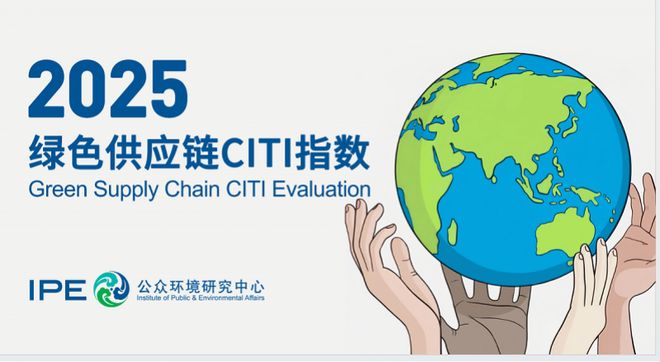
南都讯 记者王玮 发自北京 基于对23个行业、800家中外企业披露的可持续发展报告等信息的测评,最 新发布智库报告显示,在绿色供应链管理方面,大中华区企业进步显著,有11家企业跻身top 50,上榜 数量再创新高。 2025年绿色供应链CITI指数。 上述智库在测评中也发现,中外企业供应链环境管理和气候行动的"承诺"与"落实"之间仍存在差距。超 过四成公开承诺绿色供应链建设的中外企业,尚未披露绿色采购进展。 | 01 | 02 | 03 | 04 | 05 | 05 | 07 | 08 | 09 | 10 | | --- | --- | --- | --- | --- | --- | --- | --- | --- | --- | | adidas | FOXCONN | PUMIT | | PRIMARK | DOLL arringer | M&S 607 (skd. | INDITEX | HIJCAND | CISCO. | | $2.39 | 89.83 | 87.39 | 82.77 | 81.56 | 85.13 | 84.32 | $4.77 | 81.48 | 81.37 | | 11 | 1 ...
共话中国经济新机遇丨专访:中国市场对瑞士企业重要性更加凸显——访瑞士中心董事会主席戴尚贤
Xin Hua Wang· 2025-11-16 02:53
新华社日内瓦11月15日电 专访:中国市场对瑞士企业重要性更加凸显——访瑞士中心董事会主席戴尚 贤 新华社记者马汝轩 瑞士中心董事会主席、瑞士前驻华大使戴尚贤近日在接受新华社记者专访时表示,在当前国际经贸环境 面临更大不确定性背景下,瑞士企业正加快市场多元化布局,而中国市场的重要性更加凸显。 戴尚贤说,美国先前对瑞士加征高关税,"对我们这样一个出口导向型经济体来说打击非常大",中国市 场因此变得更加重要。"中国市场整体保持快速增长,依然是瑞士产品的主要目的地之一,尤其是在高 端医疗制造等领域。" 瑞士中心近期发布的调查结果显示,瑞士企业在华投资意愿强劲,近一半受访企业将中国列为前三大投 资优先市场。 据他介绍,瑞士中心连续8年参加进博会,并不断扩大瑞士展馆的规模和影响力。今年,瑞士中心组织 的瑞士企业参展数量和展台面积均创历届新高。 戴尚贤认为,进博会是瑞士企业进入中国市场的重要平台,为深化瑞中经贸合作注入了持续动力。所有 海外参展商都能借此平台找到潜在合作伙伴。 戴尚贤特别提到瑞中在可持续发展和创新领域的合作潜力。中国政府近年来大力推动环保与清洁能源产 业发展,而瑞士在创新和绿色发展方面处于全球领先地位。世 ...
携手绿色发展,构建美好未来
Ren Min Ri Bao· 2025-11-15 21:51
Core Points - The China-ASEAN Trade and Investment Promotion Conference was held in Beijing, focusing on "Hand in Hand for Green Development, Building a Better Future" [1] - The conference highlighted the strong complementarity between China and ASEAN countries in natural resources, production capacity, and industrial structure, positioning them as natural partners for green economic cooperation [1] - The signing of the China-ASEAN Free Trade Area 3.0 upgrade protocol, which includes a chapter on "green economy," provides institutional support for cooperation in green trade, investment, and standards [1] Group 1 - The conference was attended by over a hundred guests, including ASEAN diplomats and business representatives, emphasizing the broad cooperation space in promoting green and sustainable development [1] - The green transition is seen as a necessary path to address climate change and a new engine for economic and social development [1] - China and ASEAN have been actively exploring industrial transformation and upgrading, with green economy becoming a new growth point in their cooperation [1] Group 2 - Thailand's ambassador to China noted that the China-ASEAN Free Trade Area 3.0 will enhance cooperation in key emerging fields such as digital and green economies [2] - Myanmar's ambassador highlighted the country's rich renewable energy resources and ongoing projects that reduce carbon emissions while providing clean electricity [2] - Malaysia's ambassador expressed confidence in deepening green cooperation with China, which has been Malaysia's largest trading partner for 16 consecutive years [2] Group 3 - The ambassador from East Timor emphasized the importance of China's sustainable development experience and the potential for collaboration in infrastructure and energy system transformation [2]
中企助力巴西农业主产区土地更新
Ren Min Ri Bao· 2025-11-15 21:51
Core Insights - The article highlights the sustainable land restoration project initiated by Syngenta Group in Brazil, aiming to restore 1 million hectares of degraded pasture land by 2030, transforming it into productive agricultural land [1][2] Group 1: Project Overview - The land restoration project, launched in 2019, is currently being implemented in Brazil's main agricultural regions, focusing on sustainable practices that enhance productivity while protecting the environment [1] - As of October this year, Syngenta has initiated restoration efforts on 279,000 hectares across 11 states and 3 ecological zones in Brazil [1] Group 2: Agricultural Practices - Syngenta has introduced an integrated crop-livestock model, allowing cattle grazing during crop fallow periods, which has led to a reduction of over 60% in fertilizer usage [2] - The project includes the cultivation of 35,000 tree seedlings annually to protect water sources and restore vegetation along 46 streams [2] Group 3: Technological Innovations - The application of AI-based digital agriculture solutions has been implemented, including real-time pest heat maps and high-precision satellite systems for pesticide application, which not only reduce costs but also lessen environmental impact [2] Group 4: Environmental and Economic Impact - The project aims to achieve a balance between ecological sustainability and economic viability, promoting a harmonious coexistence between humans and nature [2]