
物联网

Search documents
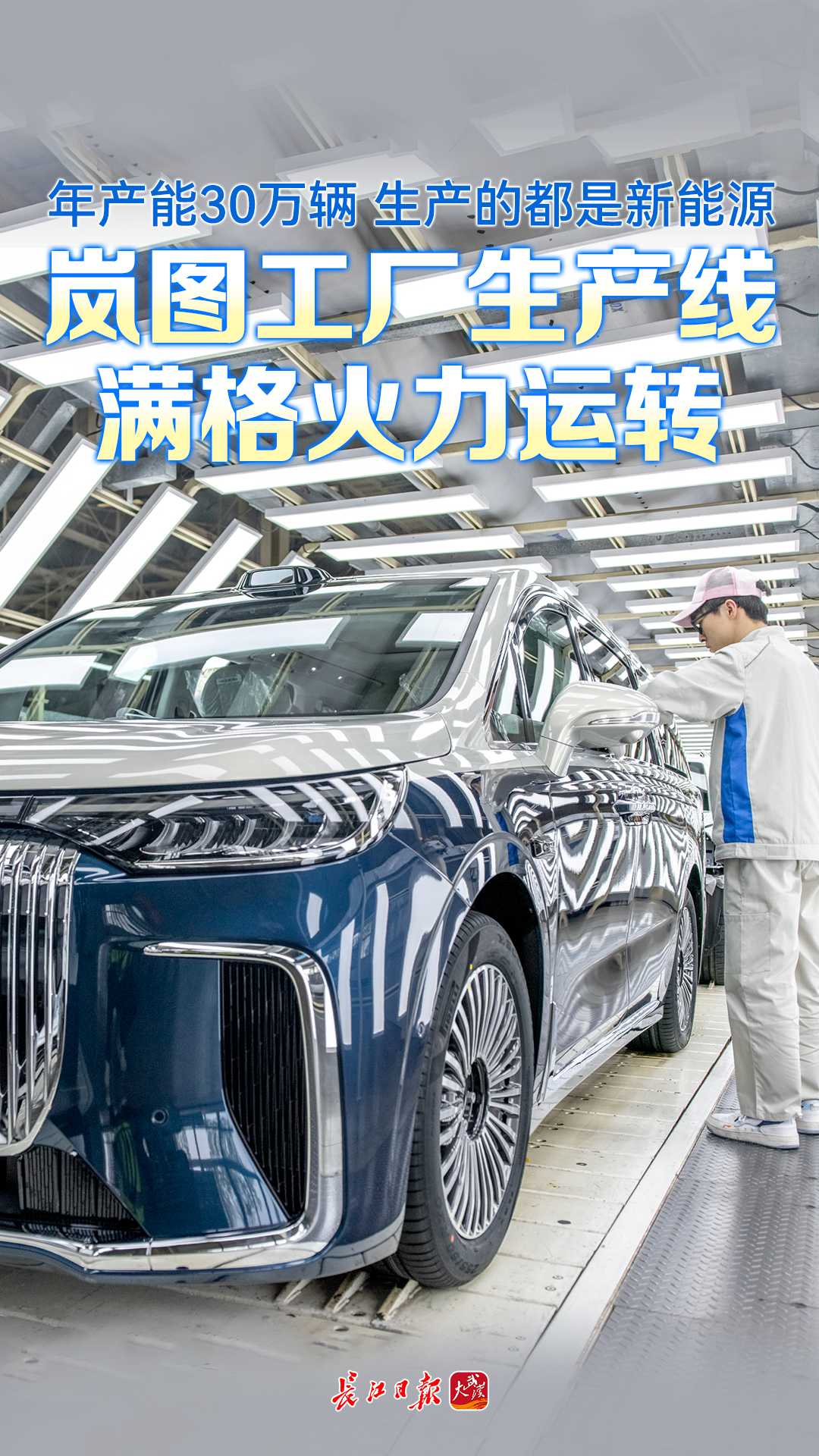
300000!武汉一车企,连续暴涨
Chang Jiang Ri Bao· 2025-11-04 01:03
Core Insights - Lantu Automotive has achieved a continuous increase in sales, with the latest monthly sales surpassing 17,000 units, indicating a strong market demand [3] - The company is on track to become the first central state-owned high-end new energy brand with an annual production capacity of 300,000 vehicles [3] - The Yunfeng factory, a digital and intelligent manufacturing facility, is a key player in Lantu's production system and has a flexible production capacity for multiple vehicle models [5] Production Efficiency - The Yunfeng factory has implemented advanced technologies such as big data, edge cloud, AI, and IoT, resulting in a 12% increase in production efficiency and a 33% reduction in R&D cycles [5][8] - The factory operates with a "weekly high production coordination mechanism" to ensure high output without compromising quality, addressing potential risks in the production process [8] Environmental Sustainability - Lantu Automotive utilizes green energy sources such as photovoltaic power generation and water recycling, achieving a reduction of 11,620 tons of CO2 emissions annually [9] - The factory produces 20 million kWh of "green electricity" each year, accounting for over 13% of its energy consumption, with plans to increase this to over 25% in the future [9] Industry Positioning - Lantu is positioning itself as a model for the Wuhan new energy vehicle industry, focusing on technology, speed, sustainability, and quality [10]

“无废园区”怎么建?这四个着力点要抓好
Zhong Guo Huan Jing Bao· 2025-11-04 00:28
Core Concept - The "Zero Waste Park" is a cellular engineering model of the "Zero Waste City," aimed at efficient waste management through source reduction, resource utilization, and harmless disposal, promoting a harmonious coexistence between humans and nature [1] Group 1: Source Reduction - Source reduction is the foundational project for building "Zero Waste Parks," with significant progress in the green and low-carbon transformation of industries, yet still in a critical upgrading phase [2] - Emphasis on technological innovation to empower source reduction, including increased investment in clean production technology and support for green upgrades in production processes [2] - Encouragement for enterprises to explore green alternatives for raw materials and establish a refined, green production management system to minimize waste generation [2] Group 2: Industrial Collaboration - The need to break down industry barriers for waste utilization, allowing waste from one enterprise to become raw materials for another, thus achieving resource circulation [3] - Integration of the zero waste concept into overall park development planning, focusing on industrial positioning and attracting complementary waste utilization enterprises [3] - Promotion of collaboration among upstream and downstream enterprises to form a circular economy industrial chain through resource sharing and mutual advantages [3] Group 3: Hazardous Waste Management - Improvement of hazardous waste management measures, including pilot programs for point-to-point disposal exemptions within designated industrial park areas [4] - Encouragement for regional enterprises to innovate in hazardous waste utilization and disposal methods, fostering collaborative utilization and disposal facilities [4] - Establishment of cooperative mechanisms among different industries to enhance collaboration and reduce marginal costs of waste treatment [4] Group 4: Smart Regulation - Addressing waste management challenges, particularly for small and medium-sized enterprises, through the use of information technology and smart regulation [5] - Development of an integrated intelligent regulatory platform for real-time monitoring of waste types, quantities, and flows, ensuring effective pollution control [5][6] - Implementation of dynamic monitoring and early warning mechanisms for waste generation and disposal rates, enhancing regulatory foresight and adaptability [6] Group 5: Cultural Development - Establishment of a governance framework involving party leadership, park management, enterprise participation, and social involvement to cultivate a "zero waste culture" [7] - Encouragement for leading enterprises to take the initiative in zero waste construction, promoting gradual development through demonstration [7] - Engagement of educational institutions and environmental organizations to provide tailored zero waste transformation solutions, reducing costs and improving efficiency [7]
2025物博会促成26个重大项目签约 合作金额超320亿元
Zhong Guo Xin Wen Wang· 2025-11-03 17:04
Core Insights - The 2025 World Internet of Things Expo in Wuxi showcased significant advancements in the IoT sector, resulting in the signing of 26 major projects with a total cooperation amount exceeding 32 billion yuan [1][2] - The theme of the expo was "Everything Connected, Endless Frontiers," focusing on the dual empowerment of AI and IoT, with interactive exhibits demonstrating cutting-edge technologies and products [1] Group 1: Event Highlights - The expo lasted for three days and featured four main thematic pavilions, emphasizing the latest technologies in the IoT field [1] - Major achievements unveiled included the global trial network for 5G NTN satellite IoT and the city-level "vehicle-road-cloud integration" practices [1] - High-level platforms such as the Industrial Internet Platform Empowerment Center and advanced communication system testing centers were launched during the event [1] Group 2: Industry Trends - The IoT is evolving from "Everything Connected" to "Everything Intelligent," transitioning towards a closed-loop model of "perception-decision-execution" [2] - With AI integration, IoT devices have shifted from passive data collection to autonomous decision-making, enhancing production efficiency [2] - Wuxi has established itself as a leading city in the IoT industry, with a national sensor network innovation demonstration zone and a national-level advanced manufacturing cluster, achieving over 250 billion yuan in industrial revenue [2] Group 3: Future Directions - Wuxi aims to enhance the IoT industry by developing a comprehensive AIoT industrial map, forming innovation coalitions to tackle key technologies, and establishing a technology matchmaking platform [2] - The city plans to cultivate platform-based enterprises and improve financial service systems while solidifying international standards and safety capabilities [2]
突发!深圳一上市公司董事长,被安徽颍上县监察委立案调查,并实施管护,上月他还向大学捐赠王阳明雕像
Mei Ri Jing Ji Xin Wen· 2025-11-03 15:29
Core Points - DaShi Intelligent (002421.SZ) announced that its actual controller and chairman, Liu Pang, is under investigation by the Anhui Ying Shang County Supervisory Committee [1] - The company stated that it has arranged relevant work properly and maintains a sound governance structure and internal control mechanisms [1] - As of the announcement date, the company's control has not changed, and its operations remain normal [1] Company Background - Liu Pang, born in October 1963, is a professor-level senior engineer and the founder of Shenzhen DaShi Intelligent Co., Ltd., established in March 1995 [2] - The company has been involved in the development and application of IoT technology and is listed on the Shenzhen Stock Exchange since June 2010 [4] Recent Developments - DaShi Intelligent is participating in the construction of three smart hospital projects, including the Anhui University of Science and Technology First Affiliated Hospital, with a total investment exceeding 3 billion [4] - Liu Pang recently donated a statue to Anhui University of Science and Technology and was elected as the vice chairman of the alumni entrepreneurs association of Hefei University of Technology [2] Financial Performance - For the first three quarters of 2025, the company reported a total revenue of 1.473 billion, a year-on-year decrease of 31.36%, and a net loss attributable to shareholders of 415 million [4] - The net cash flow from operating activities was -388 million, compared to -295 million in the same period of 2024 [4] Debt and Market Performance - As of the end of Q3 2025, the company's non-current liabilities due within one year decreased by 79.81% compared to the end of 2024 [5] - DaShi Intelligent's stock price rose by 1.53% to 3.32 yuan on November 3, with a market capitalization of 7.04 billion [5]

企业竞争图谱:2025年智能无人叉车,头豹词条报告系列
Tou Bao Yan Jiu Yuan· 2025-11-03 13:17
Investment Rating - The report indicates a positive outlook for the smart unmanned forklift industry, highlighting its potential for significant growth and market penetration in the coming years [4][41]. Core Insights - The smart unmanned forklift industry is characterized by low market penetration, high customization needs, and rapid technological advancements. The market is expected to grow due to rising labor costs and the advantages of unmanned forklifts in efficiency and safety [4][9][10]. - The industry is transitioning from traditional manual forklifts to smart unmanned solutions, driven by stringent environmental policies and the need for manufacturing upgrades [4][45]. Industry Definition - Smart unmanned forklifts integrate automation control, multi-sensor perception, artificial intelligence, high-precision navigation, and IoT technologies, enabling fully autonomous operations without human intervention [5]. Market Characteristics - **Low Market Penetration**: As of 2024, the penetration rate of smart unmanned forklifts in China is only 2.3%, indicating significant room for growth [10]. - **High Customization**: Different industries have varying requirements for smart unmanned forklifts, necessitating tailored solutions for specific applications [11]. - **Technological Intensity**: The industry is marked by rapid technological updates, with innovations such as AI algorithms improving path optimization and operational efficiency [12]. Development History - The smart unmanned forklift industry has evolved through three stages: the nascent phase (1970-1990), the initiation phase (1991-2010), and the rapid development phase (2010-2025), with significant advancements in technology and market adoption [13][17]. Industry Chain Analysis - The industry chain consists of upstream component manufacturers, midstream robot manufacturers and system integrators, and downstream application sectors [18]. - Upstream, the controller market is experiencing rapid growth, with supply expected to increase significantly from 2,700 units in 2020 to 31,000 units in 2024 [20][26]. - Midstream, traditional forklift manufacturers are transitioning to smart unmanned forklift production, with significant revenue growth reported by companies like Anhui Heli [32]. - Downstream applications are expanding across various sectors, including logistics, manufacturing, and automotive, with unmanned forklifts enhancing operational efficiency [39][40]. Market Size - The smart unmanned forklift market in China is projected to grow from 1.35 billion yuan in 2019 to 6.16 billion yuan in 2024, with expectations to reach 25.11 billion yuan by 2029 [41][44]. - The growth is driven by the need for efficient, low-labor solutions in logistics and manufacturing, with unmanned forklifts already handling a significant portion of material transport in certain scenarios [42][43]. Competitive Landscape - The market is evolving from a single-manufacturer dominance to a more diversified competitive landscape, with traditional manufacturers, tech companies, and system integrators playing key roles [50][51]. - Future competition is expected to intensify due to increasing market demand, capital investment, and technological advancements, leading to higher market concentration [52].


2025世界物联网大会定档11月,将发布新一届500强榜单
Feng Huang Wang· 2025-11-03 12:08
Core Points - The first Global Internet of Things (IoT) Digital Economy Sustainable Development Conference will officially commence on November 28, with preparations currently in the final stages [1] - The theme of the conference is "New Economy of All Things Connected, New Era of Smart Society," coinciding with significant anniversaries in 2025, including the 80th anniversary of the United Nations and the 20th anniversary of the IoT concept [1] - The event is expected to attract government leaders, UN officials, and heads of international organizations [1] Agenda Highlights - The conference will feature multiple forums, including the World New Economy Forum, International Cooperation Forum, and parallel sessions on Industrial IoT, Connected Vehicles, and Smart Energy [1] - A key highlight will be the release of the "Global Internet of Things Digital Economy and Social Development Declaration" [1] - The conference will also unveil the 2025 World IoT Top 500 Rankings and present the World IoT Digital Economy Awards [1] Organizational Support - The World IoT Conference (WIOTC) is recognized as an international organization registered with the UN Economic and Social Council, receiving attention and support from UN Secretary-General António Guterres and other international leaders [2] - The conference aims to showcase the latest applications and success stories across various industries, enhancing international cooperation in digital economy transformation and innovation [2] - Registration for the conference is open to government officials, business leaders, and experts from around the world through the conference's official website [2]
总投资超320亿元 2025世界物联网博览会成果丰硕
Zhong Guo Jin Rong Xin Xi Wang· 2025-11-03 11:51
Core Insights - The 2025 World Internet of Things Expo concluded in Wuxi, showcasing the latest achievements and trends in the IoT sector, with a focus on the synergy between artificial intelligence and IoT [1][2] Group 1: Event Overview - The expo attracted nearly 400 companies from 20 countries, including over 20 Fortune 500 companies, with more than 50,000 attendees and 26 major project signings totaling over 32 billion yuan [1][2] - The event featured various activities such as exhibitions, high-level forums, project matchmaking, and authoritative releases, emphasizing the importance of Wuxi in the global IoT landscape [1][2] Group 2: Project Signings and Collaborations - A total of 26 significant projects were successfully signed, with 18 projects exceeding 1 billion yuan, contributing to a total cooperation amount of over 32 billion yuan [2] - Strategic collaborations were established in key areas such as vehicle-road-cloud integration and integrated circuits, enhancing the synergy between upstream and downstream sectors [2] Group 3: Innovations and Exhibits - The expo showcased nearly 400 domestic and international enterprises, with 20% being first-time exhibitors, highlighting innovative products such as terahertz communication terminals and AI-powered solutions [3] - Interactive exhibits like autonomous minibuses and AI coffee robots demonstrated the potential of IoT technologies in enhancing daily life [3] Group 4: Industry Insights and Reports - Several authoritative reports were released, outlining the evolution trends of the IoT industry, including the "2024-2025 China IoT Development Annual Report" and insights from leading organizations [4] - The event featured a project evaluation activity that collected over 800 global projects, with over 60% focusing on the intersection of IoT and AI [4] Group 5: Intellectual Exchange and Consensus - The expo gathered nearly 6,000 attendees, including academicians and industry experts, fostering discussions on the future of IoT, particularly the transition towards an intelligent internet of things [5] - The establishment of the National IoT Advanced Manufacturing Cluster Expert Advisory Committee aims to provide ongoing intellectual support for high-quality industry development [5] Group 6: Ecosystem Development - The expo marked the launch of several high-level platforms to enhance the IoT industry's public service capabilities, including testing centers and innovation platforms [6][7] - International cooperation was emphasized, with participation from over 20 foreign companies and various international forums promoting global collaboration in IoT technologies [7] Group 7: Future Directions - Wuxi aims to leverage the outcomes of the expo to further implement national digital economy strategies, focusing on core technology advancements and optimizing the innovation ecosystem [7]
错过马云却押中AI独角兽!潮汕大叔用“1234法则”来筛选
Sou Hu Cai Jing· 2025-11-03 10:09
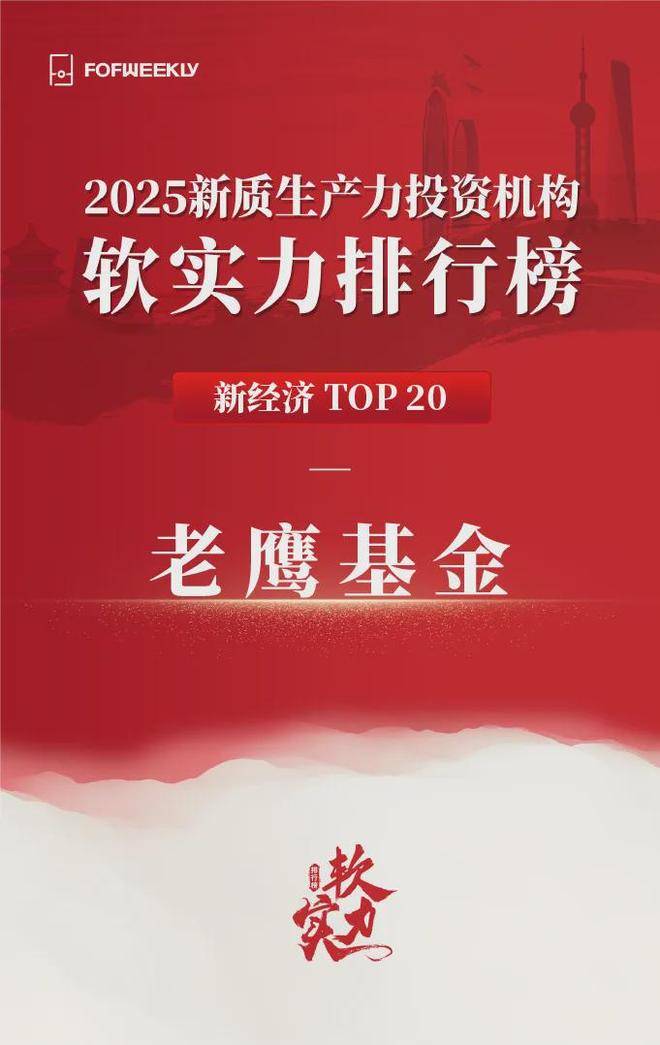
Group 1 - The core viewpoint of the article highlights that Eagle Fund has been recognized as one of the "Top 20 Investment Institutions in Soft Power for New Quality Productivity 2025," marking its third consecutive year on the FOFWEEKLY annual list and its first national-level recognition in the "soft power" dimension [1][2]. Group 2 - Eagle Fund defines "soft power" as the unseen capabilities that determine outcomes, such as predicting technology cycles, building industrial resonance, and fostering long-term consensus and collaboration [4]. - Over the past decade, Eagle Fund has actively invested in cutting-edge sectors like artificial intelligence, robotics, and low-altitude economy, creating a unique industrial ecosystem and resource integration capability to provide comprehensive support to its portfolio companies [4]. - The fund has invested in over 300 technology innovation companies, with more than 10 portfolio companies already listed or about to be listed [4][14]. Group 3 - Eagle Fund was founded by Liu Xiaoying, who embodies the entrepreneurial spirit of the Chaoshan people, having a background that includes significant experiences in both Hong Kong and mainland China [4][9]. - Liu Xiaoying's entrepreneurial journey began in 1993, and he quickly became the youngest chairman of a listed company in Hong Kong by successfully listing his company on the stock exchange in 2000 [9][10]. - The fund has established branches and offices in various cities, including Shanghai, Hangzhou, Wuhan, Chengdu, Hong Kong, Silicon Valley, and Boston, managing assets exceeding 3 billion RMB [14].
建银国际:下调小米集团-W目标价至67港元 维持“跑赢大市”评级
Zhi Tong Cai Jing· 2025-11-03 05:01
Core Viewpoint - Jianyin International has slightly lowered the target price for Xiaomi Group-W (01810) by 2.9% from HKD 69 to HKD 67 while maintaining an "Outperform" rating due to adjustments in profit forecasts for IoT and smartphone margins [1] Financial Performance - The forecast for Xiaomi's Q3 2025 revenue is expected to be slightly below institutional expectations, with a year-on-year increase of 22% to RMB 112.7 billion, but a quarter-on-quarter decrease of 3% [1] - Adjusted net profit for Q3 is projected to be RMB 9.7 billion, reflecting a year-on-year increase of 55% but a quarter-on-quarter decrease of 10% [1] - The smartphone gross margin is anticipated to be under pressure, estimated at around 11%, due to rising component prices, particularly for LPDDR4X smartphones [1] IoT and Network Services - Growth in the IoT segment is expected to significantly slow down, primarily due to a high base from the previous year influenced by government subsidies, with a reduction in subsidies this quarter [1] - Despite the impact of price wars being limited, the IoT segment is projected to grow by 25% and 22% in the fiscal years 2025 and 2026, respectively [1] - For network services, growth is anticipated at 9% and 6% for the fiscal years 2025 and 2026, respectively [1] Electric Vehicle (EV) Performance - Xiaomi's EV deliveries for Q3 are expected to reach 108,800 units, representing a quarter-on-quarter increase of 34% [1] - The average selling price of EVs continues to rise, benefiting from the contribution of the YU7 model, with projected EV revenue of RMB 28.7 billion [1]

建银国际:下调小米集团-W(01810)目标价至67港元 维持“跑赢大市”评级
智通财经网· 2025-11-03 03:33
Core Viewpoint - Jianyin International has slightly lowered the target price for Xiaomi Group-W (01810) by 2.9% from HKD 69 to HKD 67 while maintaining an "Outperform" rating due to adjustments in profit margins for IoT and smartphones [1] Financial Performance - The forecast for Xiaomi's Q3 2025 revenue is expected to be slightly below market expectations, with a year-on-year increase of 22% to RMB 112.7 billion, but a quarter-on-quarter decrease of 3% [1] - Adjusted net profit for Q3 is projected to be RMB 9.7 billion, a year-on-year increase of 55% but a quarter-on-quarter decrease of 10% [1] - The smartphone gross margin is anticipated to be under pressure, expected to be around 11% due to rising component prices, particularly for LPDDR4X smartphones [1] IoT and Electric Vehicle (EV) Growth - Growth in the IoT segment is expected to slow significantly, primarily due to a high base from the previous year influenced by government subsidies, with a reduction in subsidies this quarter [1] - Despite the impact of price wars being limited, the IoT segment is projected to grow by 25% and 22% in the fiscal years 2025 and 2026, respectively [1] - For the EV sector, Q3 deliveries are expected to reach 108,800 units, a quarter-on-quarter increase of 34%, with revenue from EVs projected at RMB 28.7 billion [1]