
大数据

Search documents
保加利亚成为中国车企在欧重要节点
Jing Ji Ri Bao· 2025-11-30 21:54
与保加利亚产业能力相呼应的是中国汽车行业的整体优势。2024年,中国汽车产销量均突破3100万辆, 连续16年位居世界第一;新能源汽车销量从2020年的不足140万辆增长至超过1280万辆,占比突破 40%。中国驻保加利亚大使戴庆利表示,中国汽车的发展正在从传统交通工具,向集成了新能源、人工 智能、大数据技术的"移动智能终端""储能单元"和"数字空间"演进,为两国深化汽车领域的合作创造了 新的更大机遇和广阔前景。 中国汽车流通协会副会长刘文姬认为,从市场角度来看,中保合作具备现实基础。她指出,中国汽车在 智能座舱、自动驾驶及高能电池方面的创新已获得全球认可,多家欧洲品牌的新车型开始采用中国供应 链的关键技术。此外,中国汽车出口保持强劲。中国在新能源和智能化领域的技术积累与保加利亚在汽 车零部件制造、欧洲市场渠道和技术创新方面的优势高度互补。双方可探索共建区域产业协同体系、联 合开发中东欧及欧亚大陆市场以及共同推动汽车检测认证和售后服务标准化建设。 正因如此,保加利亚越来越成为中资企业布局欧洲的重要节点。保加利亚汽车工业公司(BAI)与长城 汽车的合作,被认为是双方产业对接的典型范例。该公司代表安东·顿切夫介绍 ...
数字化转型莫忽视了客户体验
Zheng Quan Ri Bao· 2025-11-30 15:37
Core Insights - The digital economy is providing unprecedented technological conveniences and development opportunities for the banking industry [1] - The transformation of banks should focus on enhancing customer experience, shifting from a product-centric to a customer-centric approach [1][2] - Banks need to balance efficiency and warmth in service delivery, recognizing that personalized human interaction can be more effective than automated responses [1] Group 1 - Big data analytics enables banks to create precise customer profiles, facilitating personalized services [1] - Artificial intelligence algorithms enhance risk identification, moving from reactive measures to real-time alerts and intelligent decision-making [1] - Cloud computing supports financial innovation by providing efficient and flexible computing power [1] Group 2 - Some banks face challenges with online channels due to inadequate functionality and complex processes, leading to poor customer experiences [2] - Different customer demographics have varying needs, necessitating differentiated financial services to meet these diverse demands [2] - Utilizing big data and AI allows banks to understand customers better and provide tailored solutions at the right time, transforming them into trusted financial advisors [2]
织密消费者隐私“防护网” 夯实数字金融发展根基
Zheng Quan Ri Bao· 2025-11-30 15:29
Core Viewpoint - Digital finance, leveraging advanced technologies like big data, AI, cloud computing, and blockchain, is enhancing the efficiency, accessibility, and inclusiveness of financial services. However, the collection and utilization of sensitive consumer information pose significant privacy risks, necessitating robust privacy protection measures for sustainable development in the sector [1][2]. Group 1: Privacy Protection Framework - China has established a preliminary legal framework for privacy protection in digital finance, providing institutional compliance for the sector [1]. - To strengthen consumer privacy protection, collaboration among various stakeholders is essential, including regulatory bodies, financial institutions, and technology companies [1][2]. Group 2: Responsibilities of Stakeholders - Financial institutions and tech companies must prioritize consumer privacy while pursuing technological innovation and commercial interests, enhancing internal data governance and employing advanced encryption and anonymization techniques [2]. - Industry associations should promote self-regulation by creating industry agreements and conducting training to elevate privacy protection awareness and capabilities among members [2]. Group 3: Consumer Awareness - Consumers are encouraged to enhance their privacy protection awareness and skills, familiarize themselves with relevant laws, and exercise caution when authorizing personal information [2]. - The emphasis on tightening privacy protection is crucial for ensuring that technological innovations in digital finance operate within compliant frameworks, ultimately benefiting the real economy and meeting the growing needs of the public [2].
我国将加强网络生态治理,已成为网络强国建设的核心任务
Xuan Gu Bao· 2025-11-30 14:55
Group 1 - The concept of "cyber ecological governance" has been elevated to a national strategic level, becoming one of the core tasks in building a cyber power [2] - Cyber ecological governance has transitioned from a purely "technical protection" perspective to being recognized as a "core infrastructure" supporting the development of the digital economy [2] - The legal framework for cyber ecological governance includes the Cybersecurity Law, Data Security Law, and Personal Information Protection Law, which provide a solid foundation for governance [2] Group 2 - Companies such as Beixin Source and Tianrongxin are mentioned in relation to the cyber ecological governance sector [3]
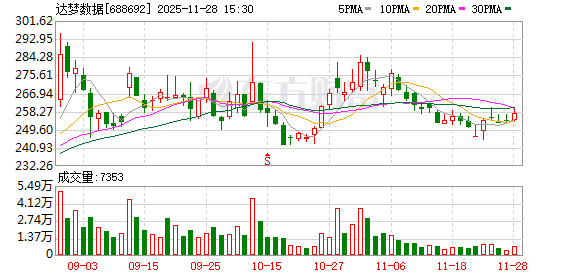
两高管相继被查3个月后 “国产数据库第一股”达梦数据:总经理已解除留置
Mei Ri Jing Ji Xin Wen· 2025-11-30 14:03
Core Viewpoint - The recent announcement regarding the lifting of the detention of the general manager and board member of Dameng Data highlights the company's ongoing challenges with executive investigations, yet the business performance remains strong with significant revenue growth [2][3] Group 1: Executive Changes - Dameng Data announced the lifting of the detention measures against its general manager, Pi Yu, by the Hubei Province Supervisory Committee [2] - Pi Yu was previously under investigation since August 20, 2023, which raised concerns about the company's leadership stability [2] - Another executive, Chen Wen, was also under investigation in August, marking a rare occurrence of two core executives facing issues within a short timeframe [3] Group 2: Business Performance - For the first three quarters of 2025, Dameng Data reported a revenue of 830 million yuan, representing a year-on-year growth of 31.9% [3] - The net profit attributable to shareholders for the same period was 330 million yuan, showing a significant year-on-year increase of 89% [3] - The company anticipates continued growth in its existing sectors such as government, finance, and energy, while also expanding into emerging industries like healthcare, transportation, and education [3] Group 3: Strategic Direction - Dameng Data is focusing on long-term development in overseas markets and is actively pursuing opportunities in artificial intelligence, cloud computing, and big data [3] - The company aims to leverage its strengths in existing industries while exploring new growth points and business opportunities in emerging sectors [3]

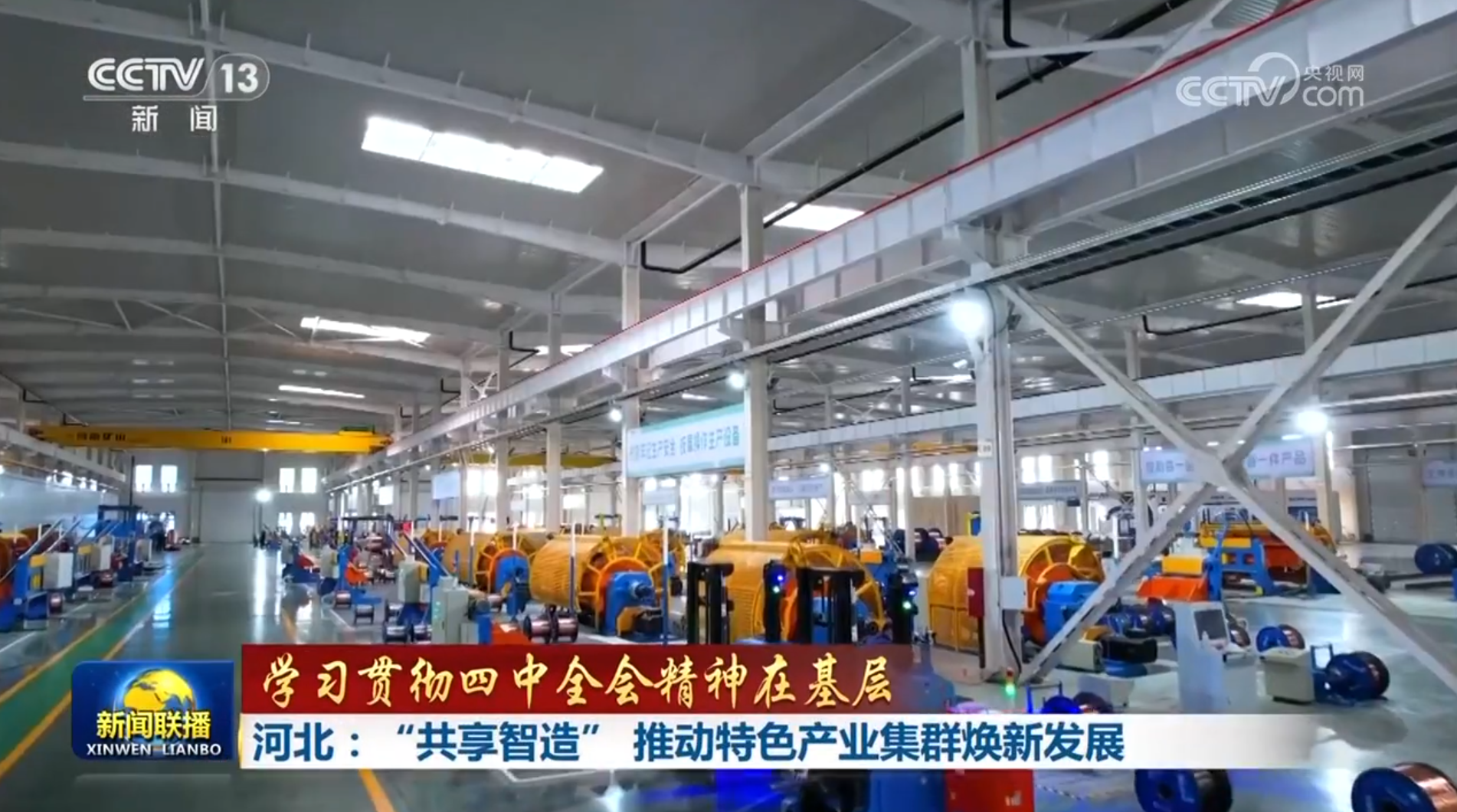
【学习贯彻四中全会精神在基层】河北:“共享智造” 推动特色产业集群焕新发展 宁夏:引导企业数字化转型 加快构建现代化产业体系
Yang Shi Wang· 2025-11-30 12:41
Core Viewpoint - The 20th Central Committee's Fourth Plenary Session emphasizes optimizing and upgrading traditional industries, focusing on the real economy, and accelerating the construction of a manufacturing powerhouse through intelligent, green, and integrated development [1] Group 1: Hebei's "Shared Intelligent Manufacturing" - Hebei is promoting "shared intelligent manufacturing" to rejuvenate its characteristic industrial clusters, enabling resource integration and innovative models [2] - In Hebei's Ningjin County, over 10 small and medium-sized enterprises (SMEs) are utilizing advanced equipment from leading companies to fulfill orders, addressing issues of production capacity and equipment underutilization [4] - Since the 14th Five-Year Plan, Hebei has developed a shared intelligent manufacturing model across 107 characteristic industrial clusters, creating 194 shared factories with over 15,000 shared devices, benefiting nearly 20,000 enterprises [6] Group 2: Ningxia's Digital Transformation - Ningxia is guiding enterprises in digital transformation to accelerate the establishment of a modern industrial system, exemplified by an AI visual inspection system that significantly enhances product quality detection [7] - During the 14th Five-Year Plan, Ningxia has positioned digital transformation as a key breakthrough for manufacturing upgrades, with over 2,000 enterprises in key industries transitioning to digital platforms [9] - Currently, 55% of large-scale industrial enterprises in Ningxia have undergone digital transformation, with a significant increase in the proportion of digital enterprises [9][10]
重磅!“十五五”新材料产业发展规划与解读(附100+份解读资料)
材料汇· 2025-11-30 12:17
Core Viewpoint - The new materials industry is crucial for supporting modern industrial systems and achieving high-level technological self-reliance, with significant strategic importance for building a strong manufacturing and quality nation [2]. Industry Background and Development Situation - During the 14th Five-Year Plan, China's new materials industry saw continuous growth, with total output value exceeding 8.2 trillion yuan and an average annual growth rate of over 12% [4]. - Achievements include breakthroughs in ultra-high-strength steel, high-performance carbon fiber, semiconductor silicon wafers, and key materials for lithium-ion batteries [4]. - Challenges remain in high-end materials and the need for improved self-sufficiency in core processes and equipment [4]. Overall Requirements - The guiding ideology emphasizes innovation-driven development, demand-oriented approaches, and green low-carbon principles [7]. - Key principles include self-reliance through innovation, application-driven demand, and collaboration among enterprises [9]. Development Goals (by 2030) - Comprehensive security capability for key strategic materials to exceed 80% [11]. - Global competitiveness in innovation, with over 500 key core technologies to be developed [11]. - Establishment of over 20 internationally leading new materials industrial clusters [11]. Key Development Directions - Advanced basic materials include ultra-high-strength automotive steel and high-performance aluminum alloys [13][14]. - Strategic materials focus on high-temperature alloys and advanced semiconductor materials [18][20]. - New energy materials target high-energy-density battery materials and efficient photovoltaic materials [21][22]. Key Tasks and Major Projects - Focus on urgent new materials needed in critical application areas such as aerospace, new energy vehicles, and electronic information [28]. - Specific targets include high-temperature alloys for aerospace engines and high-energy-density battery materials for electric vehicles [29][33]. Collaborative Innovation System - Establish a collaborative innovation system centered on enterprises, integrating industry, academia, and research [53]. - Plans to build national-level new materials innovation platforms and increase funding for research and development [54]. Market Cultivation for Key New Materials - Implement insurance compensation mechanisms for the first application of key new materials to encourage market adoption [58]. - Develop a standard system for new materials to ensure product quality and market order [59]. Breakthroughs in Key Processes and Equipment - Focus on overcoming bottlenecks in key processes and specialized equipment for new materials production [64]. - Plans to support the development of over 80 key processes and equipment technologies [67].

高成长难掩经营挑战,香港医疗IT服务商极高点赴美“补血”
Zhi Tong Cai Jing· 2025-11-30 07:08
Core Viewpoint - The rise of emerging technologies such as big data and artificial intelligence is transforming hospitals from traditional "treatment" facilities to smart centers providing comprehensive lifecycle services including prevention, diagnosis, rehabilitation, and health management [1] Group 1: Company Overview - Ultra High Point Holdings Limited, a medical IT service provider based in Hong Kong, has been operating for over 15 years and covers 25.5% of public hospitals and 50% of private hospitals in Hong Kong [2] - The company positions itself as a "full-stack solution provider for smart hospitals," focusing on customized medical IT solutions and services, including system development, IoT applications, and ongoing maintenance [2] - The proprietary HIS system developed by the company supports enterprise-level databases and has successfully implemented patented technologies like the RTLS system for precise tracking within hospitals [2] Group 2: Financial Performance - The company has shown steady growth, with revenue increasing from approximately $732.85 million in FY2024 to $950.47 million in FY2025, representing a year-on-year growth of 29.7% [3] - Net profit also grew from $848,000 to approximately $929,000 during the same period, marking a 9.5% increase [3] - Revenue from customized medical software solutions accounted for 60.2% and 64.3% of total revenue in FY2024 and FY2025, respectively, with a significant increase in this segment's revenue by $1.69 million, a growth rate of 38.4% [3] Group 3: Cost and Profitability - The company's gross profit rose from $3.27 million in FY2024 to $4.03 million in FY2025, with a growth rate of 23.3%, although the gross margin decreased from 44.6% to 42.4% [4] - Operating costs increased from approximately $4.06 million to $5.47 million, a year-on-year growth of about 34.9%, indicating pressure on profitability due to rising costs [5] Group 4: Cash Flow and Financing - The company has experienced negative cash flow from operating activities for two consecutive years, with a net outflow of $1.42 million in FY2025, indicating challenges in generating positive cash flow from core operations [6] - To maintain operations, the company has relied on external funding, with bank and other borrowings increasing significantly to $4.79 million as of March 31, 2025, compared to $2.14 million the previous year [6] Group 5: Customer Concentration and Market Competition - The company faces high customer concentration, with the top three clients contributing 90.8% of total revenue, which poses operational risks if any major client terminates their contract [8] - The competitive landscape in the medical IT sector is intensifying, with many tech giants and startups entering the market, necessitating the company to enhance its core competencies in AI, data analysis, and diagnostic experiences [7] - The company plans to allocate 40% of its fundraising for technology upgrades, aiming to launch a machine learning-based medical record analysis module by 2026, although the return on R&D investment remains uncertain [7] Group 6: Future Outlook - Overall, the company has established a solid foundation in the Hong Kong medical IT sector, with mature technology solutions and a stable client base, indicating potential for growth [9] - The upcoming Nasdaq listing is expected to provide financial support for technology upgrades and business expansion, but challenges such as customer concentration, financial strain, and high leverage remain critical considerations for sustainable development [9]

美股新股前瞻|高成长难掩经营挑战,香港医疗IT服务商极高点赴美“补血”
Zhi Tong Cai Jing· 2025-11-30 07:05
Core Viewpoint - The rise of big data and artificial intelligence is transforming hospitals from traditional treatment centers to smart centers providing comprehensive health management services, with a focus on enhancing efficiency and patient experience in Hong Kong's healthcare system [1]. Company Overview - Ultra High Point Holdings Limited, a Hong Kong-based medical IT service provider, is seeking to list on NASDAQ under the ticker UHP, having served the Hong Kong healthcare sector for over 15 years [1][2]. Business Model - The company positions itself as a "full-stack solution provider for smart hospitals," offering customized medical IT solutions that include system development, IoT applications, and ongoing maintenance [2]. - Its proprietary HIS system is built on a microservices architecture and supports major enterprise databases, with patented technologies like RTLS enabling precise tracking within hospitals [2]. Financial Performance - The company reported revenue growth from $7.33 million in FY2024 to $9.50 million in FY2025, a year-on-year increase of 29.7%, while net profit rose from approximately $848,000 to $929,000, a 9.5% increase [3]. - Revenue from customized medical software solutions constituted 60.2% and 64.3% of total revenue for FY2024 and FY2025, respectively, with a significant increase in this segment's revenue by $1.69 million, reflecting a 38.4% growth [3][4]. Cost Structure - Operating costs increased from approximately $4.06 million in FY2024 to $5.47 million in FY2025, a rise of about 34.9%, with subcontracting and hardware procurement being the major contributors [5]. - The company's gross profit grew from $3.27 million in FY2024 to $4.03 million in FY2025, but the gross margin decreased from 44.6% to 42.4%, indicating pressure on profitability [4][5]. Cash Flow and Financing - The company experienced negative cash flow from operations for two consecutive years, with a net outflow of $1.42 million in FY2025, indicating challenges in generating positive cash flow from core operations [6]. - To sustain operations, the company has increased its bank and other borrowings from $2.14 million to $4.79 million, leading to higher interest expenses and a high financial leverage situation [6]. Customer Concentration - The company relies heavily on a small number of clients, with the top three clients contributing 90.8% of total revenue, which poses a risk if any of these clients reduce their business or switch suppliers [8]. - The lack of contractual obligations for renewals from these key clients raises concerns about revenue stability and potential impacts on performance [8]. Market Position and Challenges - The company faces intense competition in the healthcare IT sector, necessitating significant investment in technology upgrades to maintain competitiveness [7]. - Plans to allocate 40% of the raised funds for technology upgrades aim to enhance diagnostic efficiency through machine learning, although the return on such investments remains uncertain [7]. Conclusion - Ultra High Point Holdings Limited has established a solid foundation in the Hong Kong medical IT sector, with growth potential supported by its technology solutions and client base [9]. - However, challenges such as customer concentration, financial pressures, and competitive dynamics will be critical factors in its sustainable development post-IPO [9].

(经济观察)上海建设全球金融科技中心动能何在?
Zhong Guo Xin Wen Wang· 2025-11-30 05:21
(经济观察)上海建设全球金融科技中心动能何在? 中新网上海11月30日电 (高志苗)全球金融科技中心发展指数(2025)29日发布,结果显示,纽约、上海、 北京、旧金山(硅谷)位居前四,跻身"全球顶尖金融科技中心"。在全球经济数字化浪潮与新一轮科技革 命的交汇点上,金融科技的战略价值日益凸显,对上海而言,建设全球金融科技中心动能何在? 《上海金融科技发展白皮书(2025)》显示,目前上海整体研发投入位居全国前列,银行业金融科技投入 保持平稳,证券业投入稳步增长,保险科技加速提质。产业集聚不断加速,据测算,上海2024年的金融 科技产业规模约为4405亿元人民币。 上海交通大学上海高级金融学院副院长、中国金融研究院执行院长、上海高金金融研究院联席院长李峰 表示,上海金融机构的科技投入占比已稳定在较高水平,但投入结构正发生深刻变化,人工智能、大数 据等前沿领域的支出显著增加,显示出产业正在向技术深水区转型。 李峰指出,经过多年的积累,上海已从金融科技的"概念"走向"实用"阶段。未来,当技术创新、场景赋 能、生态协同与创新监管实现深度融合,上海有望建成具有全球引领性的金融科技中心,为金融强国建 设提供坚实支撑。 上 ...