
大模型

Search documents
雷军回应一切:关于绿化带战神、小字营销…尬黑造成很大心理阴影
Sou Hu Cai Jing· 2026-01-03 18:17
Core Viewpoint - Xiaomi's CEO Lei Jun addressed negative criticisms regarding Xiaomi's automotive division during a New Year's live stream, emphasizing the importance of distinguishing between genuine user feedback and malicious attacks from online trolls [1][3][4]. Group 1: Response to Negative Criticism - Xiaomi's public relations manager Xu Jieyun highlighted that negative videos and labels like "Green Belt God" are part of a coordinated effort to discredit the company, leading to personal attacks on car owners [3][4]. - Lei Jun expressed frustration over the volume of negative comments, attributing them to a small group of individuals behind numerous fake accounts [3][4]. - The company is committed to supporting its car owners against these malicious attacks, which not only affect Xiaomi's reputation but also the community of users [4][5]. Group 2: Clarification of Misunderstandings - Xu Jieyun clarified that claims about "1300 kilometers on a single charge" were taken out of context, emphasizing the challenge of achieving such performance [6][7]. - Lei Jun noted that the criticism surrounding the claim of "200 kilometers instant stop" was also misrepresented, as it was intended to showcase the vehicle's braking performance [7]. - The company acknowledged the need for clearer communication and has committed to using larger text in promotional materials to avoid misunderstandings [9][10]. Group 3: Future Directions - For 2026, Xiaomi plans to focus on three main areas: investing 200 billion yuan in technology research and development, increasing investment in generative AI and large models, and creating a comprehensive "human-vehicle-home ecosystem" [10]. - The company set a target of delivering 550,000 vehicles in 2026, indicating a strong commitment to its automotive ambitions [10].


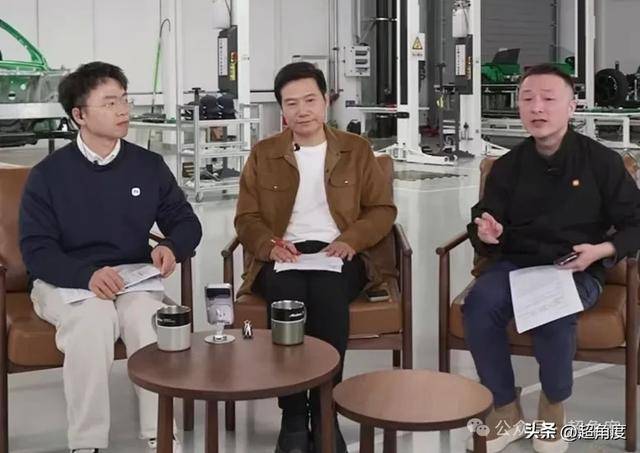
雷军直播,冲上热搜!网友:是真敢啊
Zhong Guo Ji Jin Bao· 2026-01-03 16:06
Core Viewpoint - Lei Jun, the founder and CEO of Xiaomi, conducted a live stream to address various concerns regarding the new Xiaomi YU7 car, responding to online rumors and emphasizing the company's commitment to technology and safety [1][15]. Group 1: Live Stream Highlights - The live stream lasted over four hours and included a detailed disassembly of the Xiaomi YU7, showcasing the vehicle's components and addressing public concerns about automotive technology and safety [1][6]. - Lei Jun expressed confidence in the YU7's design and materials, stating that the company is serious about car manufacturing and has made significant investments in this area [6][12]. - The stream also aimed to counteract negative online narratives, with Lei Jun advocating for a more objective discussion about Xiaomi's products [15][16]. Group 2: Future Plans and Investments - Xiaomi plans to invest at least 200 billion yuan in technology research and development over the next five years, building on the 105 billion yuan invested in the past five years [3]. - The company aims to enhance its AI capabilities and create a comprehensive ecosystem for users, focusing on the integration of vehicles, homes, and technology [3]. - Xiaomi has set a target to deliver 550,000 cars in 2026, reflecting its commitment to expanding its automotive business [4][8]. Group 3: Safety and Technology Features - Lei Jun discussed the importance of the Electronic Stability Program (ESP) for safe driving, particularly in adverse weather conditions, and highlighted the introduction of a new enhanced driving assistance system [9][12]. - The YU7's safety features include a unique "wheel detachment" strategy during collisions, designed to protect passengers by redirecting impact forces [12]. - Xiaomi is also researching advanced materials, such as 2400 MPa ultra-strong steel, to further enhance vehicle safety [12]. Group 4: Addressing Online Rumors - Lei Jun addressed various online rumors, including the exaggerated claim of having 7,000 legal staff, clarifying that this is not the case and emphasizing the need for a stronger legal team to combat misinformation [15][16]. - The company is committed to addressing malicious attacks and ensuring that genuine user feedback is prioritized [16].

雷军直播 冲上热搜!网友:是真敢啊
Zhong Guo Ji Jin Bao· 2026-01-03 16:04
Core Viewpoint - The live stream by Lei Jun, founder and CEO of Xiaomi, focused on the disassembly of the new Xiaomi YU7 and addressed various online rumors, highlighting the company's commitment to transparency and product quality [2][3]. Group 1: Live Stream Highlights - The live stream lasted over four hours and became a trending topic on social media, showcasing the disassembly of the Xiaomi YU7 standard version [2][7]. - Lei Jun expressed confidence in the quality of Xiaomi's vehicles, emphasizing the company's serious approach to car manufacturing and substantial investment in materials [8][14]. Group 2: Company Plans and Goals - Xiaomi plans to invest at least 200 billion yuan in technology research and development over the next five years, building on the 105 billion yuan invested in the past five years [5]. - The company aims to deliver 550,000 cars in 2026, with a focus on creating an integrated ecosystem for users [5][10]. Group 3: Addressing Online Rumors - Lei Jun acknowledged the impact of online criticism and malicious rumors on his mental well-being, stating that the company will strengthen its legal team to combat defamation [3][17]. - He denied the rumor of having 7,000 legal staff, clarifying that such claims are exaggerated [17][18]. Group 4: Safety and Technology - The Xiaomi YU7 features a "wheel drop to protect the car" safety strategy, which aims to mitigate damage during collisions [14]. - The company has introduced an enhanced driving assistance system, emphasizing the importance of driver safety and the need for users to keep the electronic stability program (ESP) activated while driving [12][16].
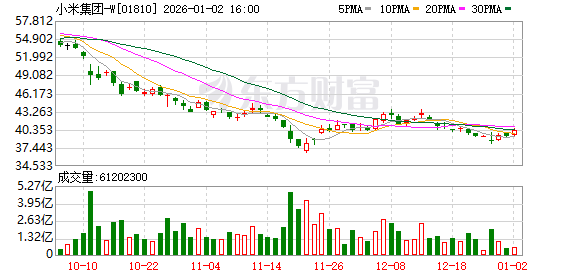
雷军直播,冲上热搜!网友:是真敢啊
中国基金报· 2026-01-03 16:00
Core Viewpoint - The live stream by Lei Jun, founder and CEO of Xiaomi, aimed to address various concerns regarding the company's automotive technology and safety, while also showcasing the new Xiaomi YU7 model through a detailed disassembly process [1][5]. Group 1: Company Strategy and Future Plans - Xiaomi plans to focus on three main areas for 2026: maintaining a commitment to technology, increasing investment in AI and large models, and enhancing the user experience across its ecosystem of products [4]. - The company has invested approximately 105 billion yuan in technology research and development over the past five years and plans to invest at least 200 billion yuan in the next five years [4]. - Xiaomi's automotive delivery target for 2026 is set at 550,000 vehicles, building on the previous year's achievement of delivering 410,000 vehicles, which exceeded the initial target of 350,000 [8][4]. Group 2: Product Development and Safety Features - The live stream included a four-step disassembly of the Xiaomi YU7, which was intended to respond to online criticisms and demonstrate the company's commitment to quality and safety in its vehicles [5][6]. - Lei Jun emphasized the importance of maintaining the Electronic Stability Program (ESP) in vehicles to prevent accidents, particularly in slippery conditions [10]. - The Xiaomi YU7 has undergone a 25% offset collision test, showcasing its safety features, including a strategy called "losing wheels to protect the car," which helps mitigate impact forces [13]. Group 3: Addressing Online Criticism and Legal Concerns - Lei Jun expressed concerns about malicious online attacks and misinformation regarding Xiaomi, including the false claim of having 7,000 legal staff, which he denied [2][19]. - The company plans to strengthen its legal team to combat defamation and misinformation, reflecting a proactive approach to managing its public image [17][19]. - Lei Jun highlighted the need for objective discussions about Xiaomi products and criticized the tendency for exaggerated negative commentary online [19].

雷军:小米汽车2026年全年交付目标55万辆
Mei Ri Jing Ji Xin Wen· 2026-01-03 15:25
1月3日,小米集团创始人、董事长雷军在直播中坦言,2026年挑战肯定不会少,也不会容易。对于2026 年规划,雷军透露将聚焦在三点:第一是坚持技术研发,未来五年,小米汽车至少会投入2000亿元;第 二是加大对大模型的投入;第三是坚持为用户打造人车家全生态的体验,把产品做到极致。 此外,雷军还透露,2026年将会把更多精力放在小米汽车上,"小米汽车2026年全年交付目标55万辆"。 (文章来源:每日经济新闻) ...
27亿基石护航!MiniMaxIPO遭 7500 万索赔,亏损与侵权双重绞杀
Sou Hu Cai Jing· 2026-01-03 14:22
Core Viewpoint - MiniMax's IPO journey reflects a dual challenge of rapid C-end market growth and significant financial losses, copyright disputes, and intense industry competition, marking a critical phase in the commercialization of large models in China [1] Group 1: Financial Performance - MiniMax's revenue skyrocketed from $3.46 million in 2023 to $30.52 million in 2024, representing a staggering year-on-year growth of 782.2% [3] - In the first three quarters of 2025, revenue surpassed $53.44 million, exceeding the total revenue of 2024 by 174.7% [3] - The company's core product, Talkie, contributed over 70% of its revenue, with international markets accounting for more than 70% of total income, reaching over 212 million users globally [3] Group 2: Product and Market Dynamics - Talkie, with its highly customizable virtual characters, has successfully addressed users' emotional companionship needs, topping the global free chart for AI companion dialogue products [5] - The Hailuo-02 video generation model has rapidly gained traction, increasing its revenue contribution from 7.7% in 2024 to 32.6% in the first three quarters of 2025, with an ARPU of $56, significantly higher than Talkie's [5] - Monthly active users of AI-native products surged from 3.1 million in 2023 to 27.6 million in the first three quarters of 2025, with paid user numbers exceeding 1.77 million [5] Group 3: Financial Challenges - MiniMax faced a cumulative net loss of $12.5 billion from 2022 to the first three quarters of 2025, with R&D expenses reaching $180 million in the first three quarters of 2025, maintaining a high R&D expense ratio of 337.4% [8] - Marketing expenses peaked at $86.99 million in 2024, with a significant portion of $39.32 million in the first three quarters of 2025, accounting for 10.48% of revenue [8] - The gross margin for AI-native products was -8.1% in 2024, only turning positive at 4.7% in 2025, indicating a fragile profitability foundation [10] Group 4: Legal and Competitive Landscape - MiniMax is embroiled in copyright disputes, facing a lawsuit from Disney, Universal Pictures, and Warner Bros. for $75 million over unauthorized use of IPs for training models [12] - The company has been accused of illegal training data usage and inducing infringement, with previous lawsuits from iQIYI marking significant legal challenges [12] - The competitive landscape is intensifying, with major players like OpenAI and Character.AI dominating technology, while domestic giants are launching aggressive strategies against MiniMax [16]
不盈利也敢抢着上市?智谱MiniMax竞速IPO,全球大模型之争!
Sou Hu Cai Jing· 2026-01-03 07:46
Core Viewpoint - The competition between Zhiyuan AI and MiniMax for the title of "the world's first large model stock" reflects the recovery of technology stocks in the Hong Kong market, presenting both opportunities and challenges for investors [1][3]. Group 1: Company Overview - Zhiyuan AI, founded six years ago from Tsinghua University, plans to launch its IPO on January 8, aiming to raise $560 million at a price of HKD 116.2 per share [3]. - The company has developed the ChatGLM series, serving 12,000 enterprises and over 80 million individual users, achieving a valuation exceeding RMB 20 billion [5]. - MiniMax, another competitor, is also preparing for an IPO in early January with a target of raising $700 million, backed by major players like miHoYo and Tencent [7]. Group 2: Market Context - The competition for IPOs indicates a resurgence in the Hong Kong stock market, with Deloitte predicting that IPO financing could reach HKD 286.3 billion by 2025, with technology stocks leading the charge [7]. - The current low rate of IPO failures, the lowest in five years, enhances the attractiveness of new listings, particularly for AI companies [9]. Group 3: Strategic Implications - The race for the title of "first stock" is not just a matter of prestige; it symbolizes a significant milestone for Chinese companies in the AI commercialization race, potentially securing a competitive edge over U.S. giants like OpenAI [9][12]. - Both companies face challenges, including the high costs of model training and rapid technological advancements, which could render current advantages obsolete [11].
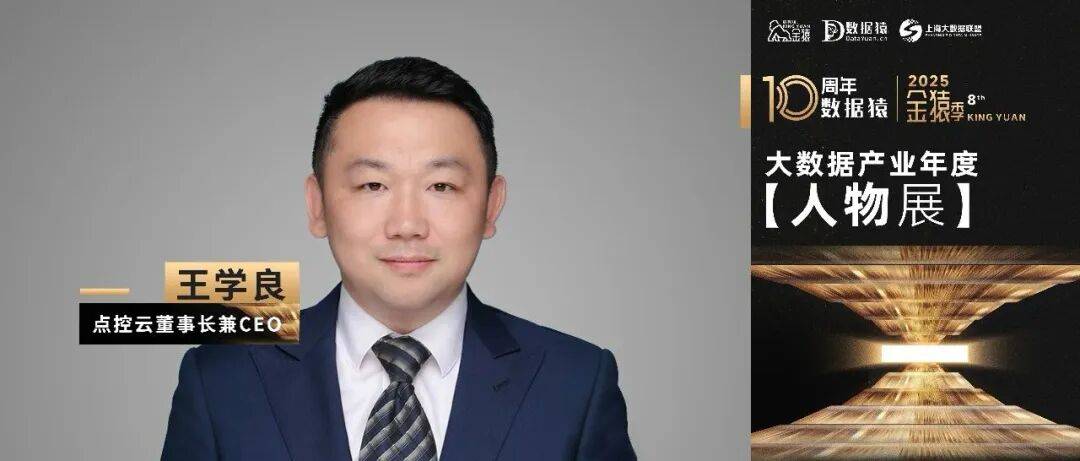
【金猿人物展】点控云董事长兼CEO 王学良:新时代下关于智能客户体验的思考
Sou Hu Cai Jing· 2026-01-03 02:21
王学良 "【提示】2025第八届年度金猿颁奖典礼将在上海举行,此次榜单/奖项的评选依然会进行初审、公审、终审三轮严格评定,并会在国内外渠道大规模发布 传播欢迎申报。 在数字经济和新质生产力不断加速发展的今天,企业与客户的连接方式正经历深刻变革。作为企业与用户沟通的重要桥梁,企业联络行业正告别传统以人 工为主的服务模式,迈向大模型与智能体深度融合的智能化阶段。2024年,中国大模型市场规模已达294.16亿元,同比增长62%,其中多模态大模型以 156.3亿元的市场规模占比超过一半,成为推动行业增长的核心力量。这一趋势为企业联络行业注入了强劲动力,也标志着从效率驱动到价值重构的时代 转折。政策利好、技术突破与市场需求共同推动着这一行业走向智能化、生态化与价值化的崭新阶段。 过去,企业联络的核心任务是提高接待效率与响应速度,如今,这一职能正在被重新定义。大模型与智能体技术的深度融合,正在重构服务的底层逻辑, 使企业不再仅仅"回应需求",而是能够"主动理解、提前洞察"。传统系统依赖关键词匹配与固定脚本,常常无法应对复杂语义,而搭载大模型的智能体则 能实现自然语言理解、语义推理与情感感知的多重突破。通过语音识别(AS ...
出海、上市,中国第一批大模型熬出头了
3 6 Ke· 2026-01-03 02:21
Core Insights - The first batch of large model companies in China, including Zhiyu AI and MiniMax, are set to go public, marking a significant milestone in the AI startup landscape by the end of 2025 [1][5] - These companies are taking different paths in their business models, with Zhiyu AI focusing on technology infrastructure and MiniMax targeting consumer applications [1][2] Company Strategies - Zhiyu AI, founded in 2019, has a strong academic background and focuses on a full-stack self-developed approach, primarily generating revenue through Model as a Service (MaaS), which contributed 84.8% of its revenue in the first half of 2025 [6][10] - MiniMax, established in early 2022, adopts a "technology as product" strategy, with a significant portion of its revenue coming from AI-native products, which accounted for 71.4% of total revenue in 2024 [11][12] Financial Performance - Zhiyu AI's valuation reached 24.4 billion yuan, making it a leader among domestic large model companies, with a market share of 6.6% in the general large model development sector [6][10] - MiniMax reported revenues of $3.46 million in 2023, $30.52 million in 2024, and $53.44 million in the first three quarters of 2025, with overseas revenue becoming a significant contributor [11][12] Market Trends - The global large model market is expected to grow from $10.7 billion in 2024 to $20.65 billion by 2029, with a compound annual growth rate (CAGR) of 80.7% [16] - The Chinese large language model market is projected to reach 53 billion yuan in 2024, with enterprise clients contributing 47 billion yuan [15] Competitive Landscape - Zhiyu AI's focus on B-end clients aligns with the market's payment structure, while MiniMax's C-end strategy allows it to avoid direct competition with giants like OpenAI and Google [15][18] - Both companies are exploring potential expansions into each other's domains, with Zhiyu AI looking to enhance consumer electronics and MiniMax expressing intentions to develop B-end services [21] Challenges and Risks - Zhiyu AI faces risks related to client concentration, with its largest client contributing 19% of revenue and the top five clients accounting for 45.5% [10] - MiniMax is dealing with copyright lawsuits from major film studios, which could pose financial risks despite the company's belief in the lack of merit in these claims [14]

好特许取得基于大模型的重量识别方法专利
Sou Hu Cai Jing· 2026-01-02 06:55
Group 1 - The State Intellectual Property Office has granted a patent titled "A Weight Recognition Method, Device, and Medium Based on Large Models" to Haoqi (Hangzhou) Brand Management Co., Ltd. and Zhejiang Xinzailing Technology Co., Ltd. The patent authorization announcement number is CN120869320B, with an application date of September 2025 [1] - Haoqi (Hangzhou) Brand Management Co., Ltd. was established in 2024, located in Hangzhou, primarily engaged in business services. The company has a registered capital of 1 million RMB and has invested in 2 companies, holding 2 patent records [1] - Zhejiang Xinzailing Technology Co., Ltd. was founded in 2007, also located in Hangzhou, focusing on the manufacturing of computers, communications, and other electronic devices. The company has a registered capital of 3,403.33602 million RMB, has invested in 40 companies, participated in 179 bidding projects, and holds 272 patents along with 141 trademark records and 20 administrative licenses [1]